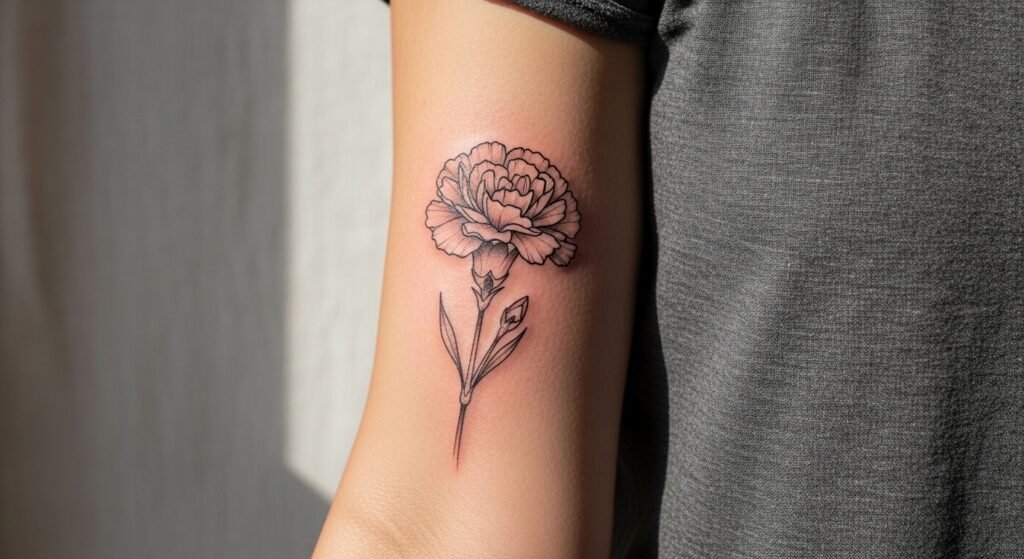
Sitting in a consultation, scrolling at midnight, or finally booking your appointment — choosing a carnation and where to place it feels personal. You want a design that flatters your body, matches your aesthetic, and heals cleanly. These 30 carnation flower tattoo placement ideas are organized to help you pick a look and location that suits your style and pain tolerance.
This guide covers everything from tiny delicate buds on the finger to bold neo-traditional carnations across the chest. You’ll find placement-specific tips, recommended styles, size guidance, how certain designs age, and what to ask your artist. For prep, I often recommend applying a thin layer of Zensa numbing cream about 45 minutes before longer sessions. For healing, leaving a Saniderm second-skin bandage on for the first 3–5 days keeps the area protected and cleaner.
Bookmark a few favorites, screenshot the image prompts for your artist, and let’s find the carnation placement that feels like you.
- Petite Inner Wrist Carnation — Subtle Everyday Bloom
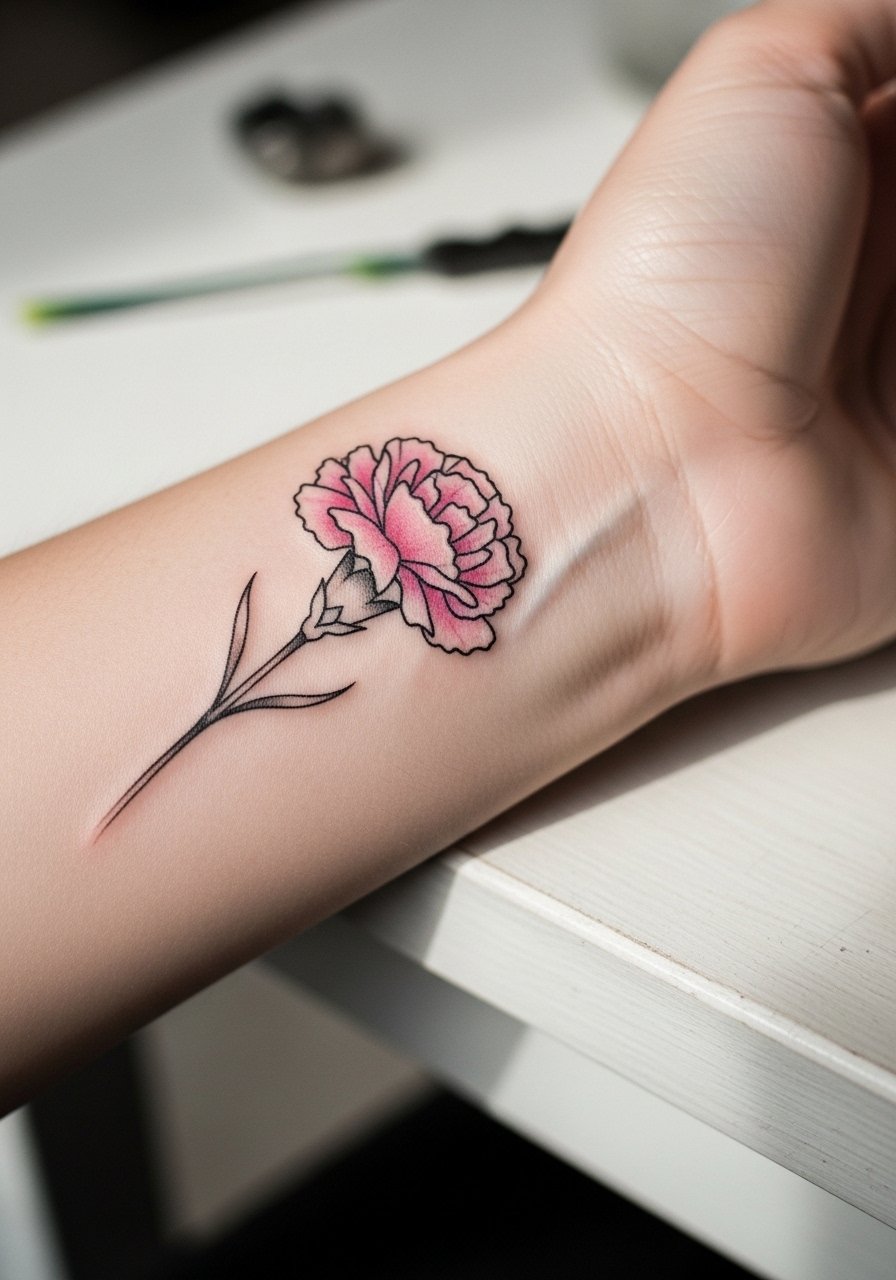
A tiny carnation on the inner wrist reads like a personal charm. This dainty single-flower design sits naturally under a bracelet and peeks out with movement. It’s ideal if you want a meaningful piece that’s easy to show or hide with a watch or sleeve.
Style & Design Details
- Tattoo style: Fine line, light watercolor wash
- Recommended size: 1–2 inches
- Best placement(s): inner wrist, near tendon (visible but subtle)
- Color vs. blackwork: pale pink/soft red wash over black outline to keep detail alive
- Design elements: single-needle outlines, soft petal washes, tiny stamen dots, slight negative-space highlights
- Longevity note: fine line on the wrist fades faster with sun and wrist movement
- Who it suits: first-timers, minimalists, sentimental placements
Finding the Right Artist
Look for portfolios with healed fine-line florals and light watercolor pieces. Ask about needle size (single-needle vs. 3RL) and how the artist prevents blowout near tendons. Avoid artists who oversaturate color on delicate pieces. Apprentices can do small pieces, but choose an experienced hand for single-needle precision. Search Instagram tags like #finelinetattoo and local shop walk-ins.
Aftercare & Healing Tips
Keep the wrap on if your artist uses Saniderm for 48–72 hours. Wash gently twice daily with a fragrance-free soap like Dr. Bronner's Unscented Castile and pat dry. Once peeling starts, use a thin layer of an unscented lotion such as Lubriderm Daily Moisture Lotion. Expect slight scabbing around lines during week 1; avoid heavy rubbing and sunscreen until fully healed.
- Carnation Flower Tattoo Placement Ideas — Side Rib Cage Bloom
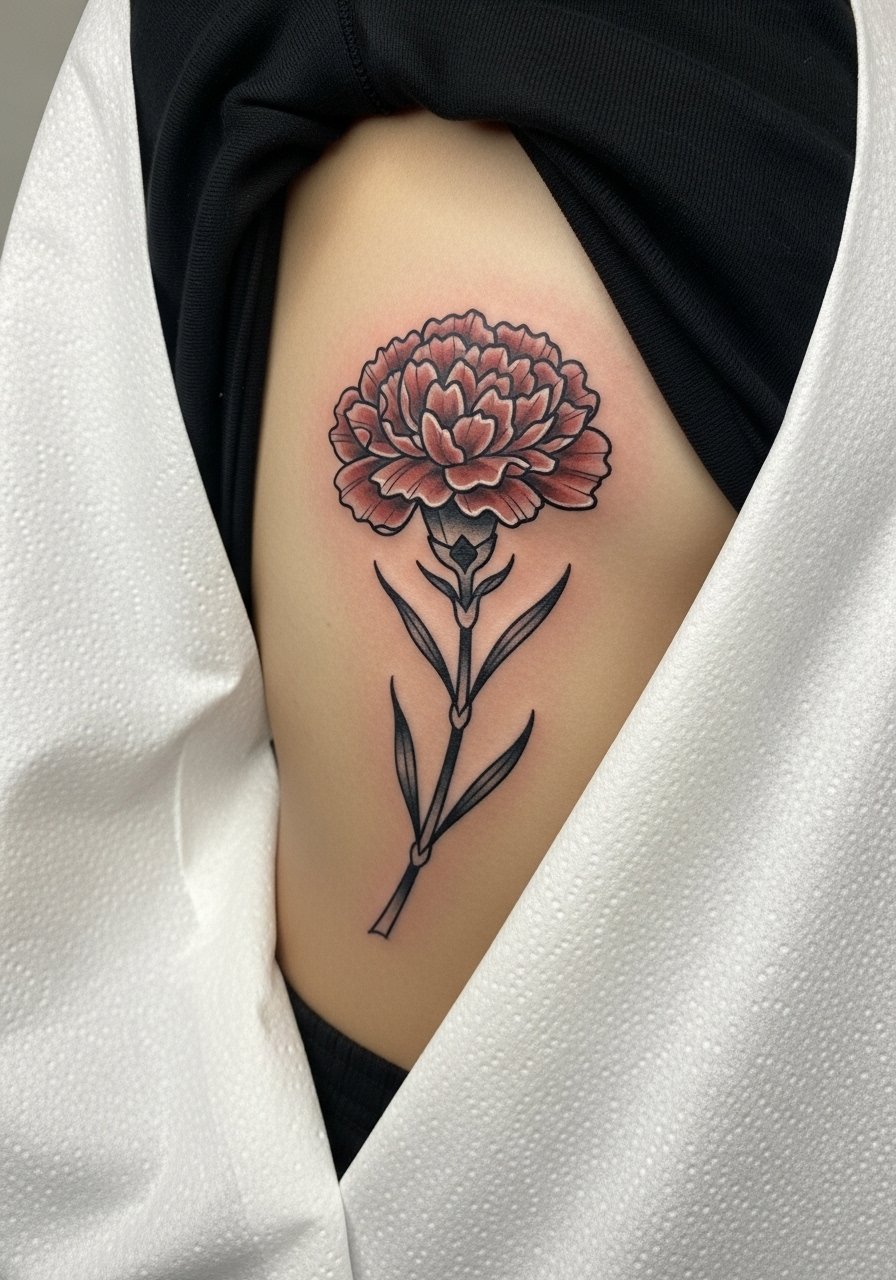
A ribcage carnation drapes along the curve of your body and reads as intimate and feminine. Because ribs are a stretch-sensitive area, a rib placement suits a larger, flowing carnation that wraps slightly toward the hip or sternum. It’s dramatic when revealed and personal when covered.
Style & Design Details
- Tattoo style: Neo-traditional with bold outlines and painterly shading
- Recommended size: palm-sized to large (4–8 inches)
- Best placement(s): ribcage, underboob edge, lateral torso for body flow
- Color vs. blackwork: rich reds and muted greens keep neo-traditional depth
- Design elements: bold outline, layered petals, subtle stipple background, complementary leaves, slight dotwork highlight
- Longevity note: larger, bold work holds up well; color may fade faster near the torso due to friction
- Who it suits: collectors, cottagecore aesthetics, people wanting a private statement
Finding the Right Artist
Pick an artist known for neo-traditional florals and figure-friendly compositions. Ask to see ribcage placements that healed well. Confirm their approach to shading on curved surfaces. Avoid shops that book inexperienced artists for long rib sessions. Use portfolios on Tattoodo or Instagram hashtag #neotraditionaltattoo.
Aftercare & Healing Tips
Rib pieces often use longer sessions and may benefit from a topical numbing cream like EMLA numbing cream if you’re nervous. Leave the Saniderm wrap on per artist instructions, usually 3–5 days. Clean with a gentle castile soap and moisturize with a fragrance-free balm like Hustle Butter Deluxe. Expect tightness when breathing deeply for the first week; loosen clothing to avoid friction.
- Behind-the-Ear Tiny Carnation — Secret Floral Accent
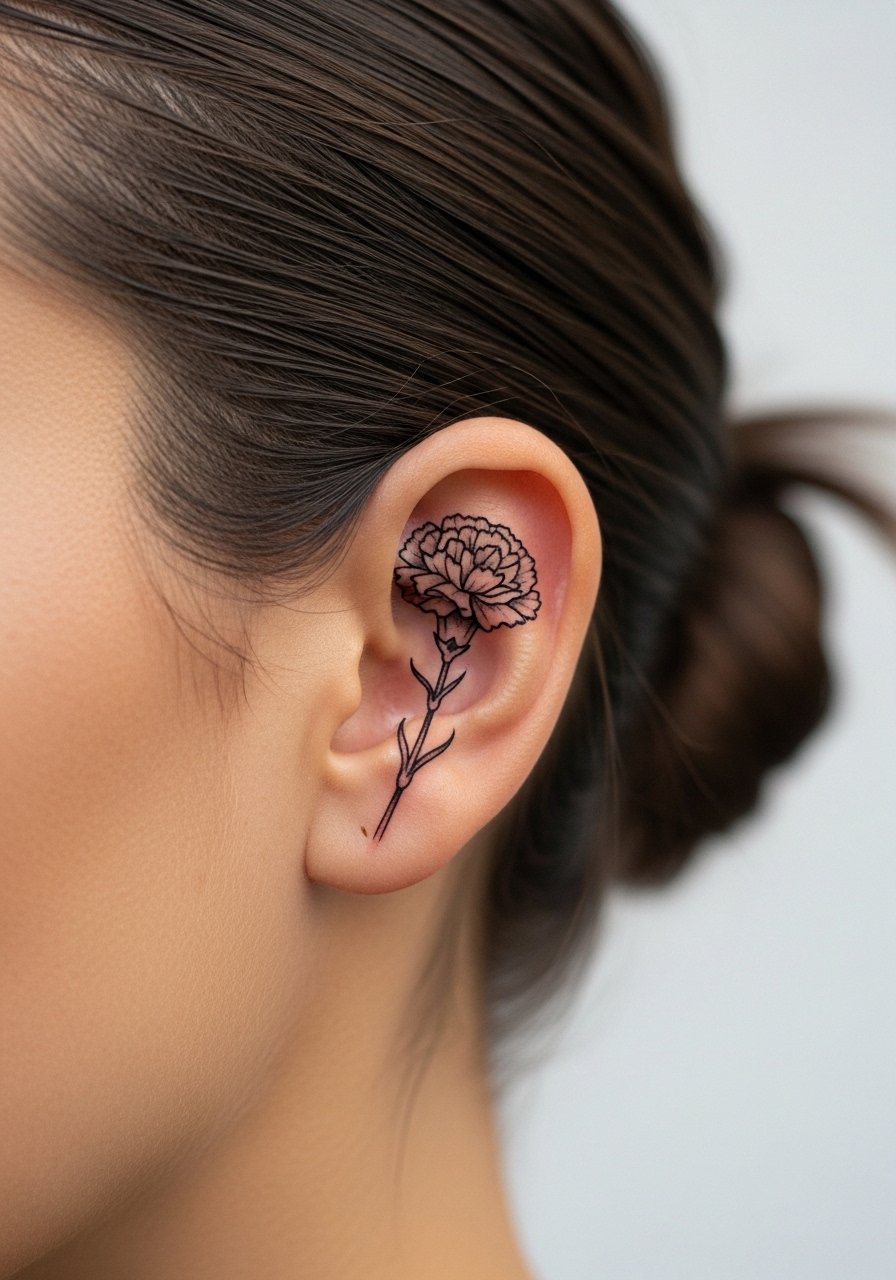
A behind-the-ear carnation is whisper-quiet and adds a whimsical accent. Small, single-needle carnations work best here since the area is tight and curves around bone. It’s a playful location that’s easily hidden by hair for professional settings.
Style & Design Details
- Tattoo style: Single-needle blackwork or micro-realism
- Recommended size: 0.5–1 inch
- Best placement(s): behind the ear, mastoid area, small spot on the neck
- Color vs. blackwork: black or very subtle gray wash helps longevity
- Design elements: micro petals, fine stamen lines, tiny leaves, negative space highlights
- Longevity note: tiny linework can blur if too dense; blackwork ages best here
- Who it suits: minimalists, trend-followers, those wanting a small secret tattoo
Finding the Right Artist
Search for micro and single-needle florals in portfolios. Ask about needle spacing to avoid overcrowding. Avoid heavy shading artists; seek someone skilled in micro detail. Instagram searches like #microsleeve or #eartattoo can help.
Aftercare & Healing Tips
Because this spot sloughs and gets hair contact, keep it clean and dry. Use a thin layer of fragrance-free lotion like After Inked Tattoo Moisturizer during peeling. Avoid tight hats or earbuds for the first two weeks. Expect 2–4 weeks for full settling and consider a touch-up after 3 months if lines soften.
- Carnation Ankle Wrap — Delicate Band of Petals
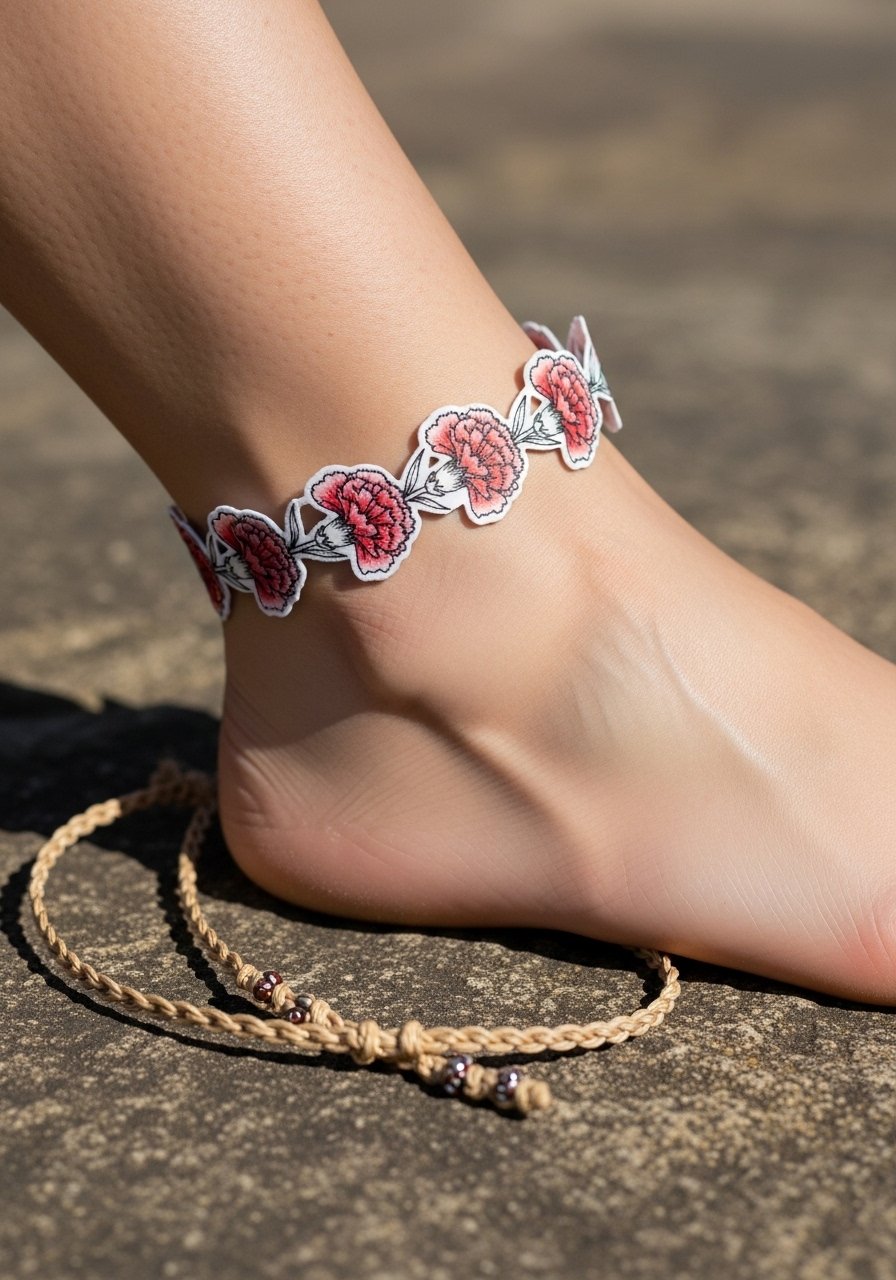
An ankle carnation that wraps like a garland creates graceful movement with every step. It’s perfect for seasonal showing, with medium detail that reads from a short distance. Placement on the outer ankle avoids tendon pain and scuffing.
Style & Design Details
- Tattoo style: Illustrative with light shading and thin linework
- Recommended size: 2–4 inches circling the ankle
- Best placement(s): outer ankle, around Achilles (avoid direct tendon)
- Color vs. blackwork: soft pinks or reds with muted greens for leaves
- Design elements: looping stems, tiny buds, lace-like negative space, thin petal veins
- Longevity note: ankle area subject to friction from socks and shoes; avoid very small lines
- Who it suits: boho/cottagecore lovers, seasonal show-offs, first-timers wanting a small wrap
Finding the Right Artist
Look for artists who have healed ankle bands in their portfolios. Ask how they’ll space lines to prevent blowout when the skin moves. Avoid artists who suggest too much dense shading in small areas. Procreate mockups help visualize the curve—ask for a stencil test.
Aftercare & Healing Tips
Keep footwear loose for the first 5–7 days to limit rubbing. Clean with gentle soap and apply a thin coat of Hustle Butter Deluxe after the initial wrap comes off. Avoid long baths and swimming during week 1–2. If scabs form, let them flake naturally and apply unscented lotion as needed.
- Carnation Finger Dotwork — Subtle Stackable Bloom
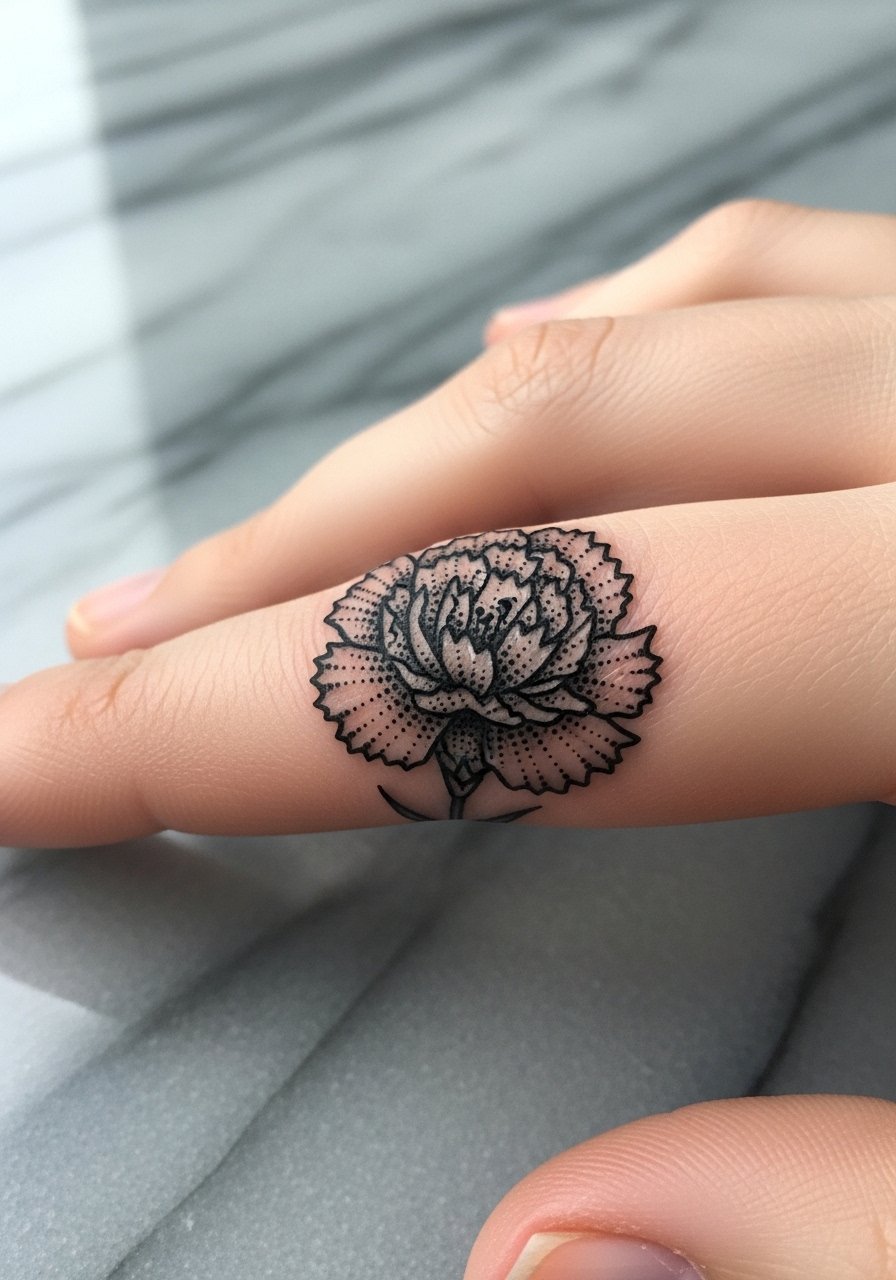
Finger carnations are discreet and feel like daily jewelry. Dotwork or tiny line pieces work well here, but expect faster fading. Consider stacking with rings or other micro symbols.
Style & Design Details
- Tattoo style: Dotwork/micro or single-line
- Recommended size: 0.5–1 inch
- Best placement(s): side of ring finger, base of index, near cuticle (avoid nail bed)
- Color vs. blackwork: black dotwork ages best; color tends to blur faster
- Design elements: stipple shading, minimalist stem, tiny leaf accents, negative space
- Longevity note: fingers fade quickly; expect touch-ups every 1–2 years
- Who it suits: ring-style seekers, minimalists, people who like matching sets
Finding the Right Artist
Pick someone experienced with finger tattoos and stippling. Ask for past finger pieces and how they handle ink depth to prevent blowout. Avoid artists who over-saturate fingers. Consider semi-permanent tests with an Inkbox kit to test placement.
Aftercare & Healing Tips
Fingers interact with everything—wash carefully with a gentle soap and keep slightly more moisturized. Avoid heavy soaping and dish detergents; wear gloves for chores during week 1. Use a thin layer of unscented lotion like Aveeno Fragrance-Free Daily Moisturizer. Plan for a touch-up around month 3–6.
- Forearm Sleeve Accent Carnation — Flowing Botanical Column
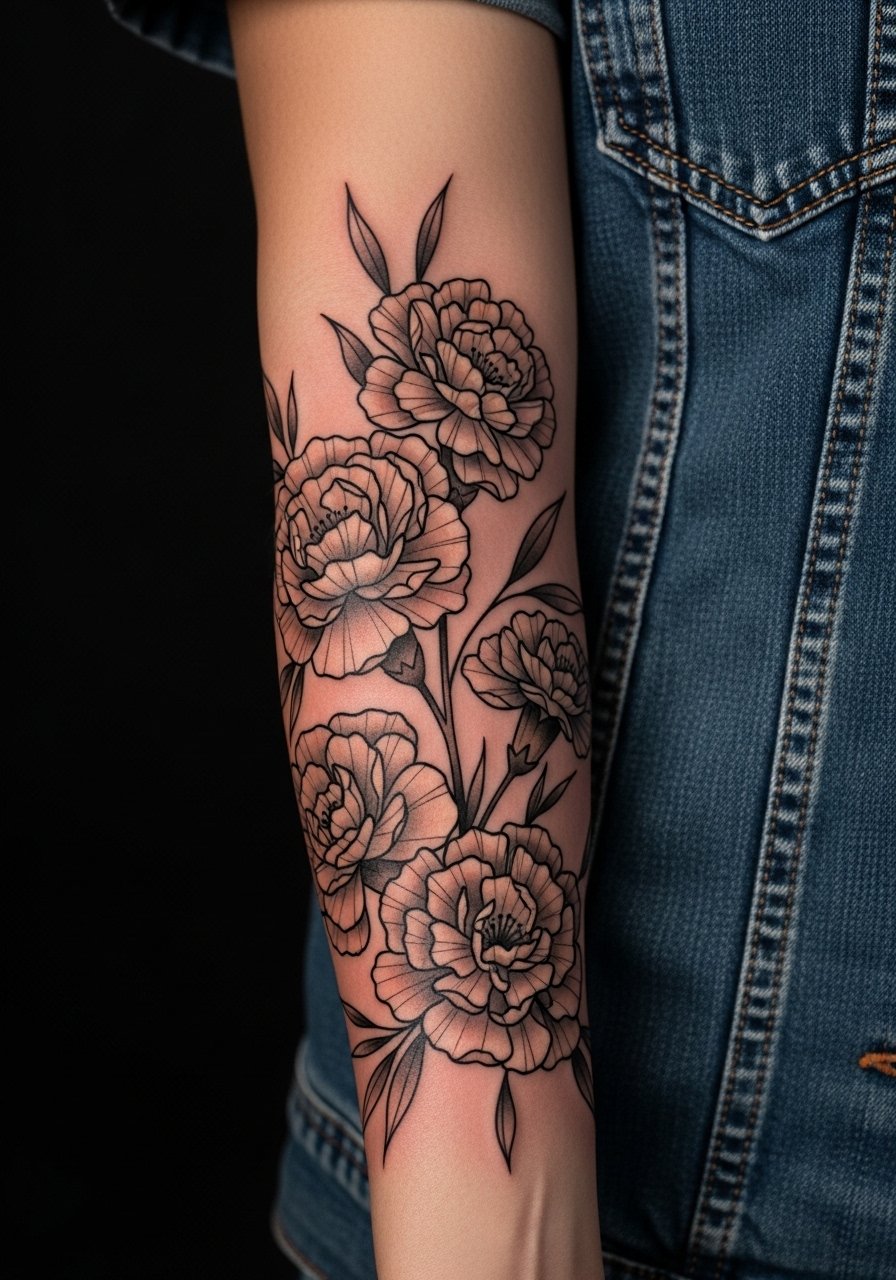
A carnation integrated into a forearm composition becomes a focal point in a sleeve. Multiple blooms, leaves, and negative space can create vertical flow that flatters long forearms. This placement lets you play with styles from illustrative to dark academia blackwork.
Style & Design Details
- Tattoo style: Illustrative or blackwork column with floral motifs
- Recommended size: palm-sized blooms repeating across forearm length
- Best placement(s): inner or outer forearm, wrapping slightly toward elbow
- Color vs. blackwork: both work; blackwork for bold contrast, color for softer vibe
- Design elements: stacked carnations, flowing stems, dotwork accents, negative-space bands, background shading
- Longevity note: forearm ages well; color may require annual SPF care
- Who it suits: collectors, people who want visible art, fans of dark academia
Finding the Right Artist
Look for artists with sleeve composition experience; ask to see forearm sequences that age well. Discuss how pieces will connect over time. Avoid artists who can't show healed progression for large works. Use portfolio sites and in-studio consults.
Aftercare & Healing Tips
Larger forearm work often uses multiple sessions. Keep initial bandaging per artist instructions and use Saniderm if advised. Clean gently and use a fragrance-free balm like Hustle Butter Deluxe during peeling. Once healed, apply an SPF 50 stick like Neutrogena SPF 50 sunscreen stick to protect color.
- Collarbone Single Carnation — Feminine and Framed
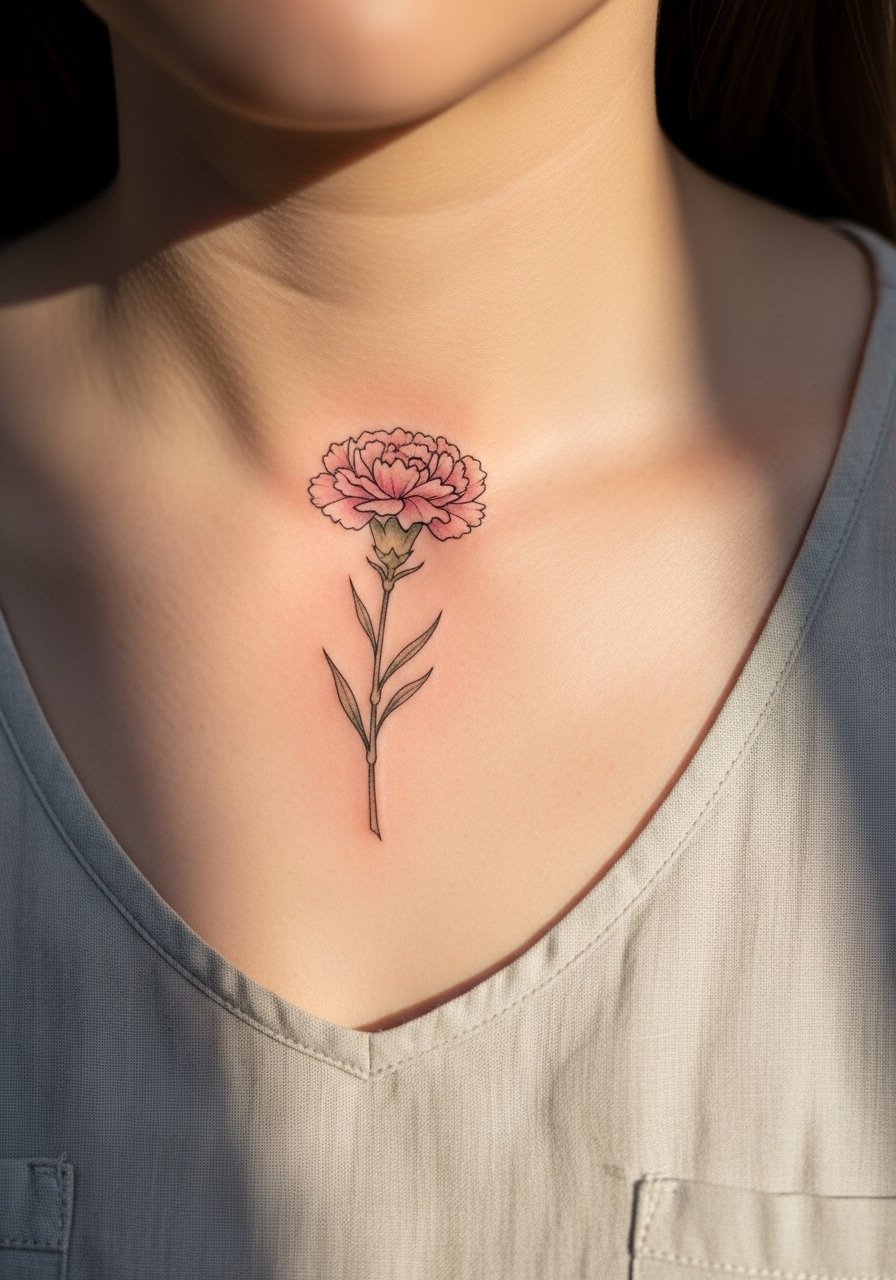
A collarbone carnation frames the neckline and reads as delicate and elegant. Horizontal placement across the bone catches light and photographs beautifully. This spot is great for medium-detail carnations that can be shown off with low-neck tops.
Style & Design Details
- Tattoo style: Fine line or watercolor accent
- Recommended size: 2–4 inches
- Best placement(s): collarbone ridge, clavicle center, off-center near shoulder
- Color vs. blackwork: soft color for feminine effect; black works for minimalist looks
- Design elements: petal veins, light wash of color, thin stem trailing to shoulder, small leaf sprigs
- Longevity note: collarbone sees little friction; color lasts well with SPF protection
- Who it suits: romantic aesthetics, cottagecore lovers, people wanting a visible, classy piece
Finding the Right Artist
Find artists who photograph collarbone tattoos well. Ask about needle angle on bone to avoid excess trauma. Avoid artists who rush stencil placement—this area needs exact alignment. Use Procreate mockups or printed stencil for preview.
Aftercare & Healing Tips
Keep necklaces and clothing off the fresh collarbone to reduce rubbing. Wash with a gentle soap and apply a thin unscented lotion like Lubriderm during peeling. Expect tenderness over the bone for a few days. Use SPF regularly once healed to prevent color fade.
- Shoulder Blade Watercolor Carnation — Painterly Back Accent
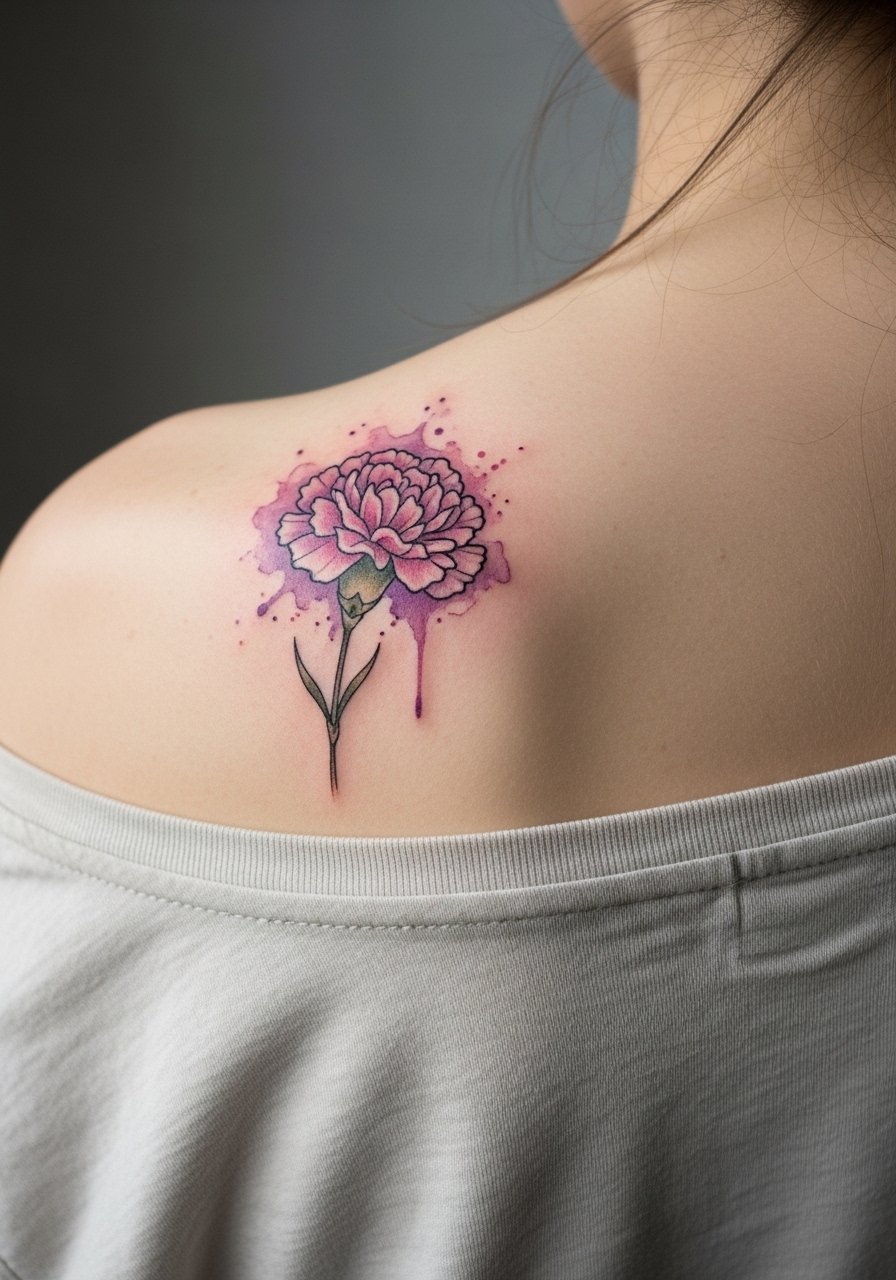
A carnation on the shoulder blade gives a painterly, ethereal vibe. Watercolor carnations look like they were brushed onto skin, which suits off-shoulder tops and summer dresses. The flat plane of the blade helps larger washes sit smoothly.
Style & Design Details
- Tattoo style: Watercolor with light or no outline
- Recommended size: 3–6 inches
- Best placement(s): shoulder blade, upper back, lateral scapula for clothing peek
- Color vs. blackwork: wash of color with soft pigment transitions
- Design elements: watercolor bleed, soft petal edges, subtle negative-space veins, light stem or none
- Longevity note: watercolor can fade faster; pigments vary in staying power
- Who it suits: cottagecore, feminine palettes, people wanting painterly art
Finding the Right Artist
Select an artist with proven watercolor work and healed examples. Ask about pigment choices and how they layer color for longevity. Avoid artists who over-dilute or over-saturate washes. Bring reference photos and discuss how the piece will look after 6–12 months.
Aftercare & Healing Tips
Watercolor pieces often benefit from Saniderm to protect washes in the first days. Use a mild castile soap and follow with a lightweight, unscented lotion like After Inked for peeling. Avoid direct sun until fully healed and apply SPF thereafter.
- Sternum Cluster Carnation — Centered and Bold
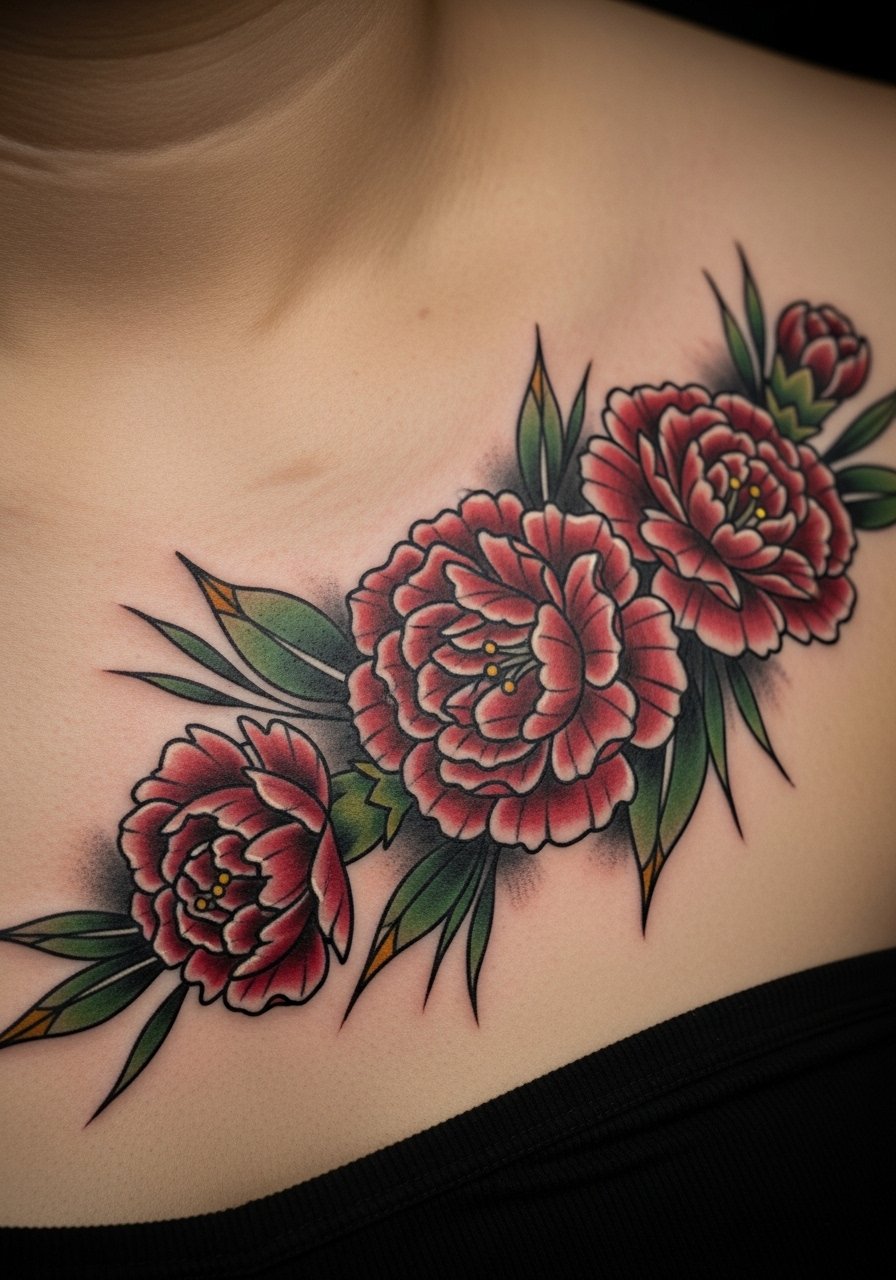
A sternum cluster creates a centered, intimate statement. This area suits symmetrical compositions or a vertical stack that follows the breastbone. Pain can be moderate to high, but the result is striking.
Style & Design Details
- Tattoo style: Neo-traditional or illustrative
- Recommended size: 3–6 inches, depending on chest width
- Best placement(s): center sternum, between breasts, below collarbone for extension
- Color vs. blackwork: rich colors create depth; blackwork can be dramatic and longer-lasting
- Design elements: layered blooms, symmetrical leaves, ornamental linework, subtle dotwork filler
- Longevity note: chest gets less friction; color retains well with SPF care
- Who it suits: bold collectors, those comfortable with pain and intimate placements
Finding the Right Artist
Choose an artist who does sternum and chest pieces often. Confirm how they plan to center the design relative to anatomy. Avoid studios that rush stencil placement. Bring examples of chest florals that healed well.
Aftercare & Healing Tips
Patch-test any numbing like Zensa if you plan to use one. Keep clothing loose and avoid bras that press on the area during early healing. Clean gently and use an unscented balm such as Hustle Butter Deluxe. Full settling can take 4–6 weeks; schedule touch-ups after 3 months if needed.
- Carnation Behind the Knee — Unexpected Botanical Bend
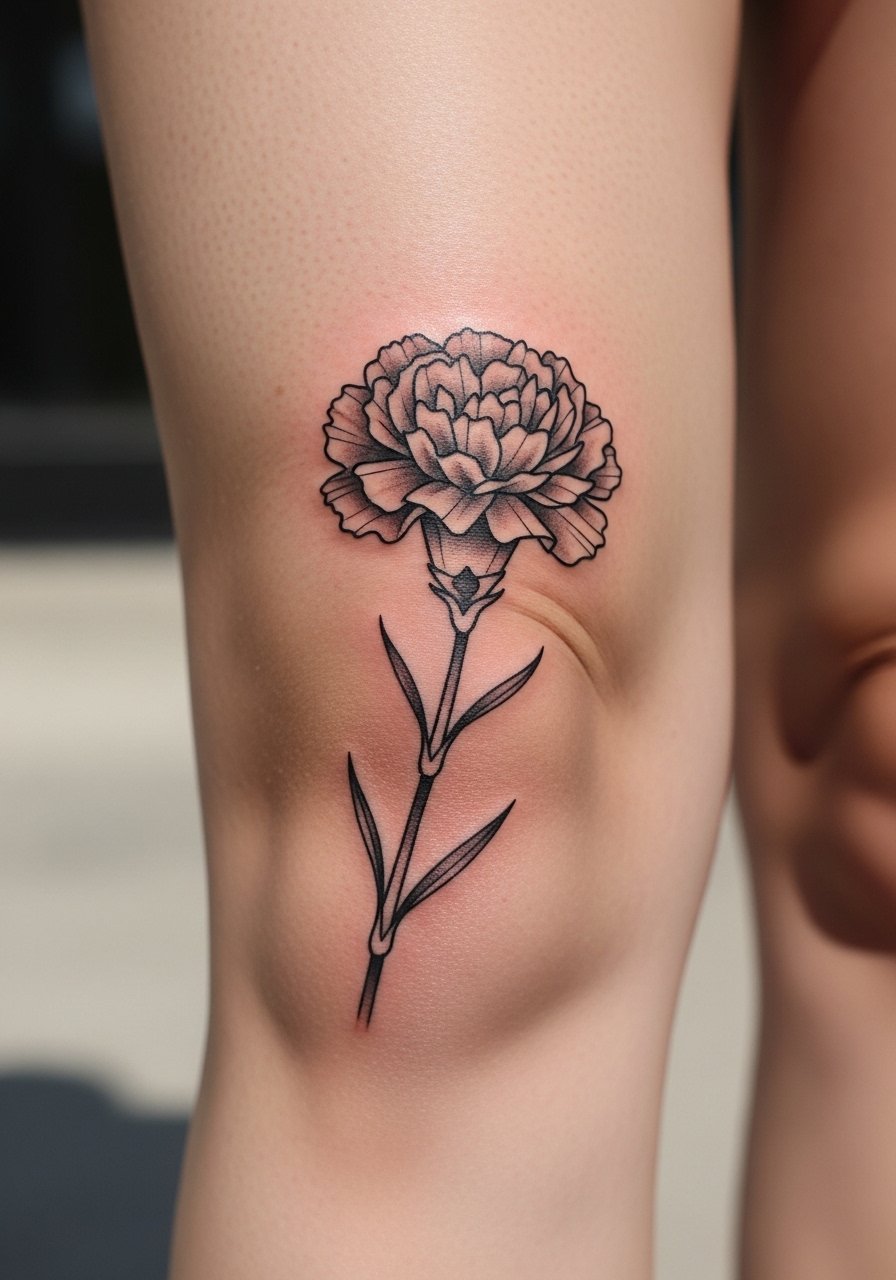
A behind-the-knee carnation is playful and provides a curved canvas that moves with you. This area can be sensitive, and the skin flexes a lot, so designs should be slightly larger to avoid distortion.
Style & Design Details
- Tattoo style: Blackwork or illustrative with moderate shading
- Recommended size: 2–4 inches for clarity
- Best placement(s): popliteal fossa (behind knee), upper calf crease for visibility
- Color vs. blackwork: black or muted color is best due to movement
- Design elements: bold petal edges, curved stem wrapping, small leaf clusters, dotwork shading
- Longevity note: flexion can cause early blurring; larger lines are preferable
- Who it suits: trend-seekers, festival-goers, people wanting unique placements
Finding the Right Artist
Seek artists with experience on joints and flexion areas. Ask how they scale lines for movement. Avoid apprentices who haven’t handled bending spots. Portfolio searches can reveal healed behind-knee examples.
Aftercare & Healing Tips
Keep the knee slightly elevated when possible and avoid tight pants during week 1. Clean gently and apply a thin layer of Hustle Butter Deluxe or an unscented lotion. Expect mobility sensitivity for several days; light stretching helps blood flow and healing.
- Nape of Neck Carnation — Hidden Romantic Petal
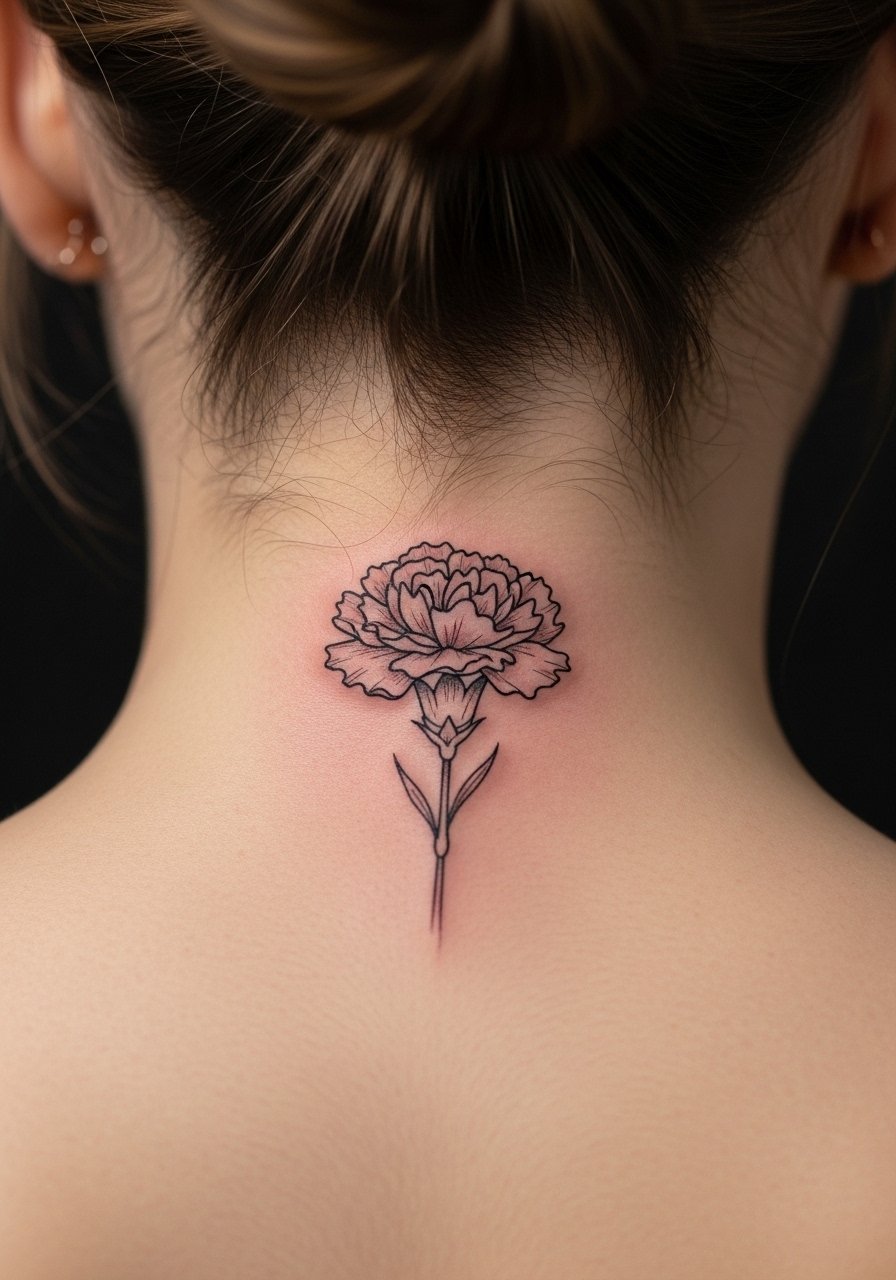
The nape is discreet yet flirty. Small carnation designs tuck neatly under hair and peek through updos. It’s a spot with moderate pain that heals quickly if properly protected from hair oils.
Style & Design Details
- Tattoo style: Fine line or micro watercolor
- Recommended size: 1–2 inches
- Best placement(s): nape center, slightly off-center near hairline
- Color vs. blackwork: soft color blends well with hair contrast
- Design elements: tiny veins, light wash, single-stem drop, minimal leaves
- Longevity note: exposed to hair products; protect during healing
- Who it suits: office workers wanting hidden ink, romantic aesthetics
Finding the Right Artist
Pick an artist who shows healed nape work and understands hairline anatomy. Ask how they’ll protect ink from hair oils during healing. Avoid artists who place thick lines close to hair follicles. Instagram tag searches like #napeoftanecktattoo help.
Aftercare & Healing Tips
Keep hair clean and away from the fresh tattoo. Use a gentle surfactant like Dr. Bronner's Unscented Castile Soap. A thin layer of After Inked helps with peeling. Avoid heavy conditioners or oils near the area until healed.
- Hip-side Carnation Spray — Flirty Low-Slung Bouquet
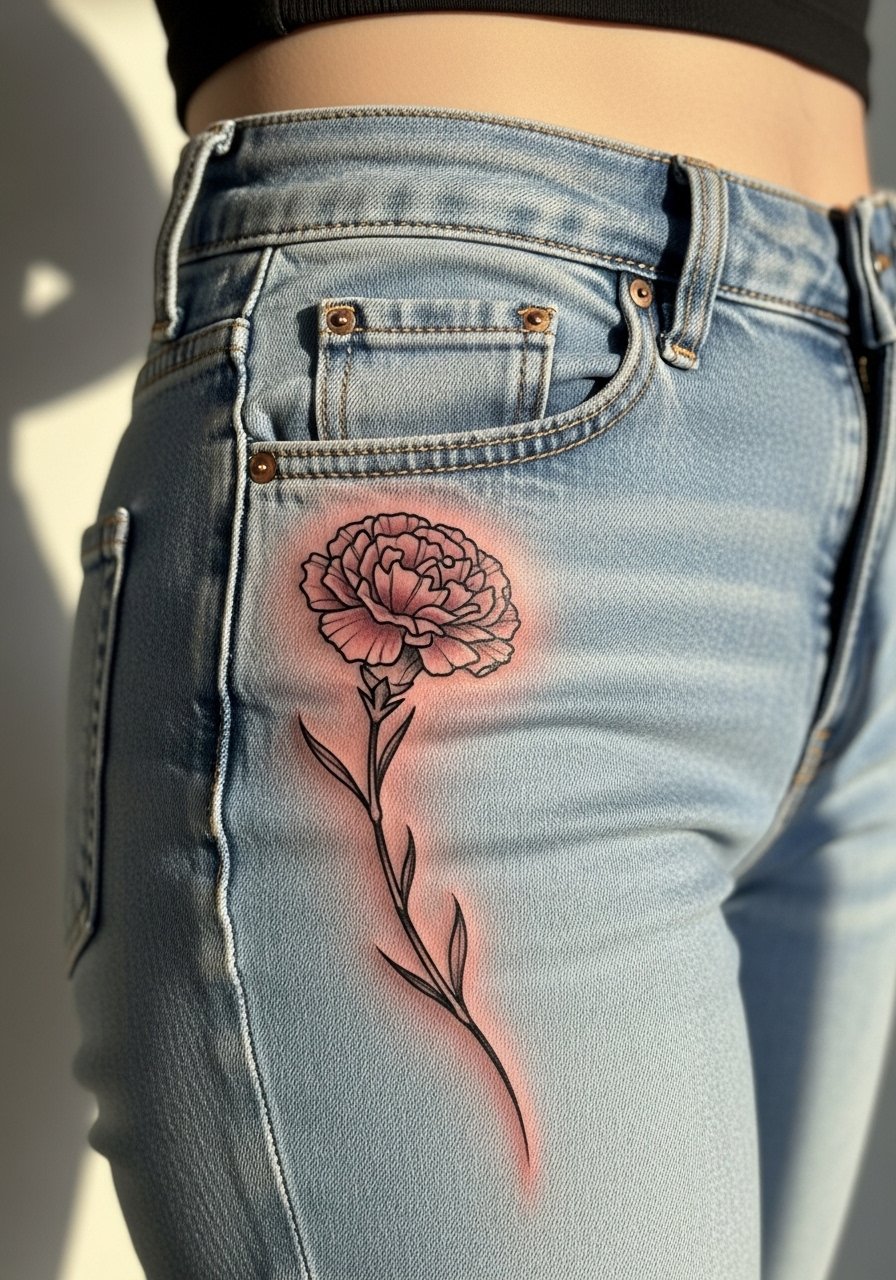
A hip carnation spray flatters curves and works well with swimwear. The low-slung placement accentuates waistlines and can be extended into rib or thigh pieces later.
Style & Design Details
- Tattoo style: Illustrative with gentle color transitions
- Recommended size: 3–5 inches trailing along the hip
- Best placement(s): hip bone, upper thigh junction, groin-side panel (avoid inner groin)
- Color vs. blackwork: soft color compliments body curves
- Design elements: cascading stems, small buds, lace-like negative space, petal overlays
- Longevity note: minimal friction if placed on hip; thigh junctions may experience rubbing
- Who it suits: beachgoers, romantic or sensual aesthetics, people wanting extendable pieces
Finding the Right Artist
Choose an artist familiar with curved body placements and healing across the hip area. Ask about mapping the curve to ensure the design sits correctly when standing. Avoid artists who flatten the design in the stencil.
Aftercare & Healing Tips
Wear loose clothing and avoid tight waistbands while healing. Clean with a gentle soap and apply a thin layer of Hustle Butter Deluxe. Avoid prolonged sitting on hard surfaces for week 1 if pain occurs. SPF on the hip helps keep colors true if exposed.
- Carnation Flower Tattoo Placement Ideas — Upper Thigh Single Bloom
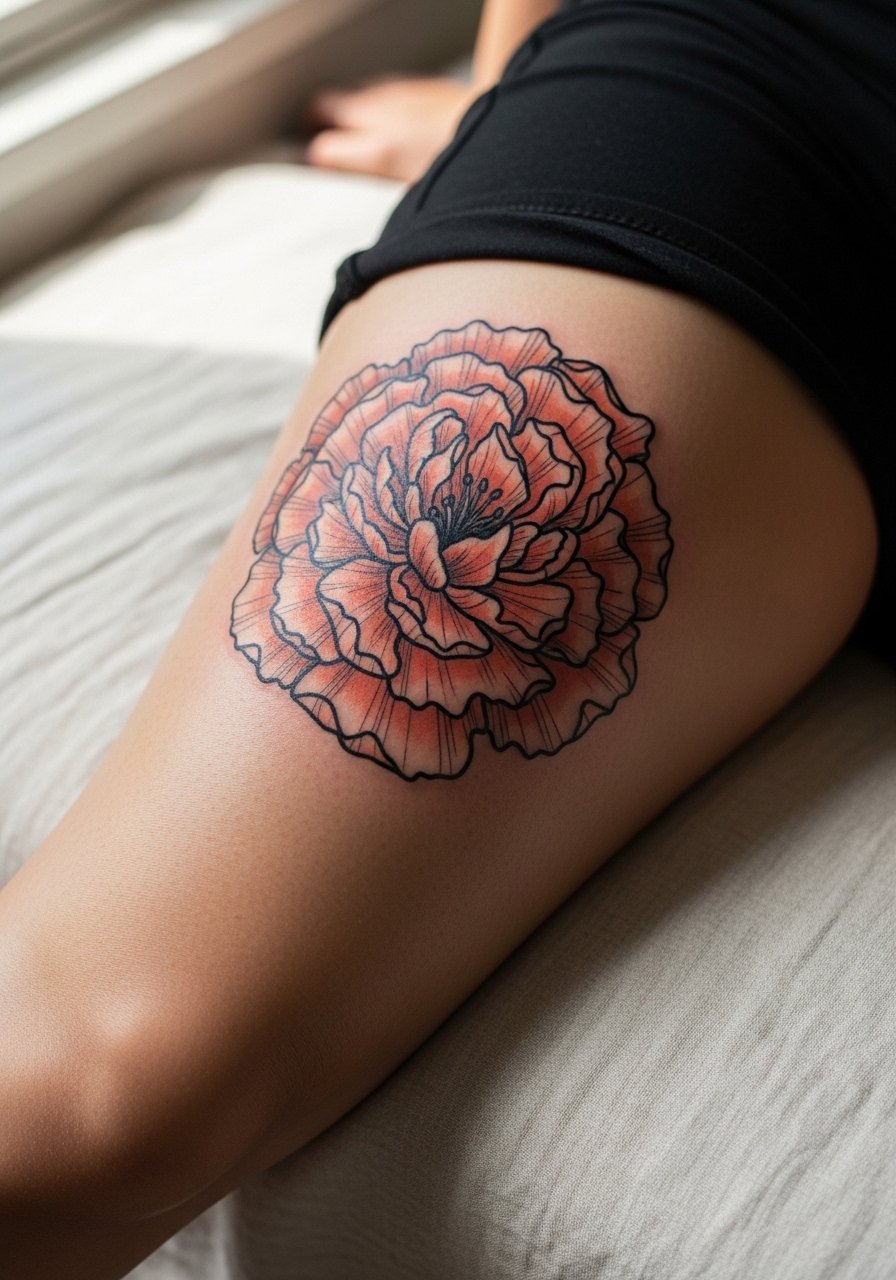
The upper thigh gives space for a bold, detailed carnation and is easy to hide or reveal. Thigh canvases are forgiving for larger petals and complex shading. Pain is moderate and healing is usually straightforward.
Style & Design Details
- Tattoo style: Illustrative or neo-traditional
- Recommended size: 4–7 inches for detailed work
- Best placement(s): outer upper thigh, front thigh for visibility, inner thigh for intimate pieces
- Color vs. blackwork: full color enhances sculptural petals
- Design elements: layered petals, deep shading, leaf sprays, decorative dotwork
- Longevity note: less sun and friction here, color holds well
- Who it suits: larger piece lovers, people who want a private canvas
Finding the Right Artist
Pick an artist who shows large floral thighs in healed portfolios. Confirm sitting/positioning for long sessions. Avoid rushed tattoos over uneven stencils. Use artist consultations for placement mockups.
Aftercare & Healing Tips
Thighs can sweat, so keep them dry and clean. Use a fragrance-free soap and then a thin layer of After Inked for peeling. Avoid hot tubs and intense workouts for the first week to reduce irritation.
- Carnation Flower Tattoo Placement Ideas — Chest Bridge Carnation (Keyword Title)
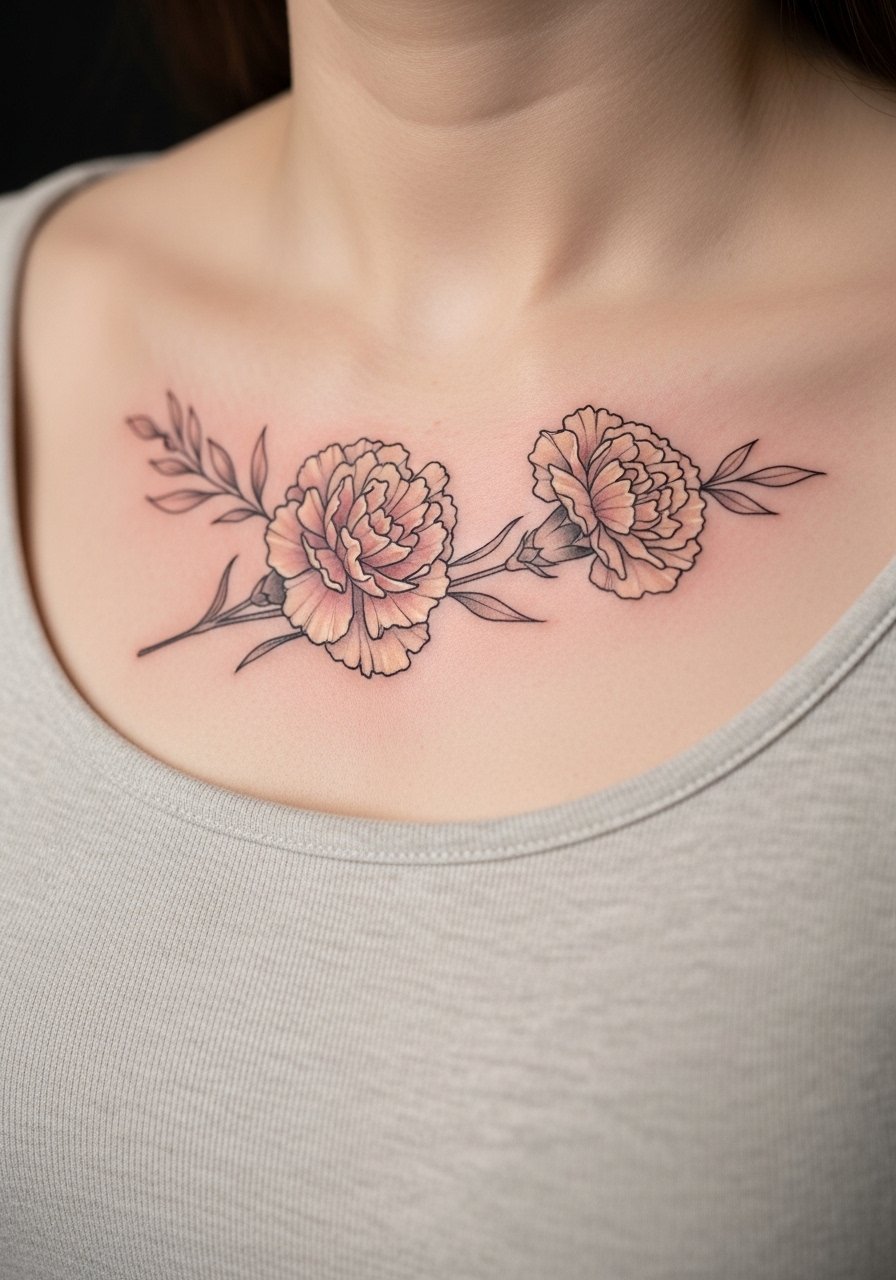
A chest-bridge carnation connects both sides and feels like wearable art. It can be symmetrical or slightly off-center. This design flatters many chest shapes and is visible in low-cut tops, offering a bold feminine statement.
Style & Design Details
- Tattoo style: Fine line with soft color washes or blackwork for bold contrast
- Recommended size: 3–6 inches across the chest
- Best placement(s): upper chest across sternum, bridging clavicles, central sternum
- Color vs. blackwork: soft pastels for romantic looks; blackwork for high-contrast aesthetics
- Design elements: mirrored petals, central stamen emphasis, thin connecting vines, light dotwork filler
- Longevity note: chest skin is stable; color lasts well with sunscreen
- Who it suits: people wanting visible chest art, romantic/cottagecore lovers
Finding the Right Artist
Look for artists with symmetrical chest tattoos in their portfolio and ask about stenciling across the sternum. Avoid snippets of chest pieces without healed examples. Use Tattoodo or local shop consults for recommendations.
Aftercare & Healing Tips
Loose tops and no bras that press on the area until healed. Clean with gentle soap and moisturize with a thin layer of Hustle Butter Deluxe. Apply SPF 50 when exposed after healing to protect color.
- Small Behind-the-Arm (Tricep) Carnation — Hidden Petal Panel
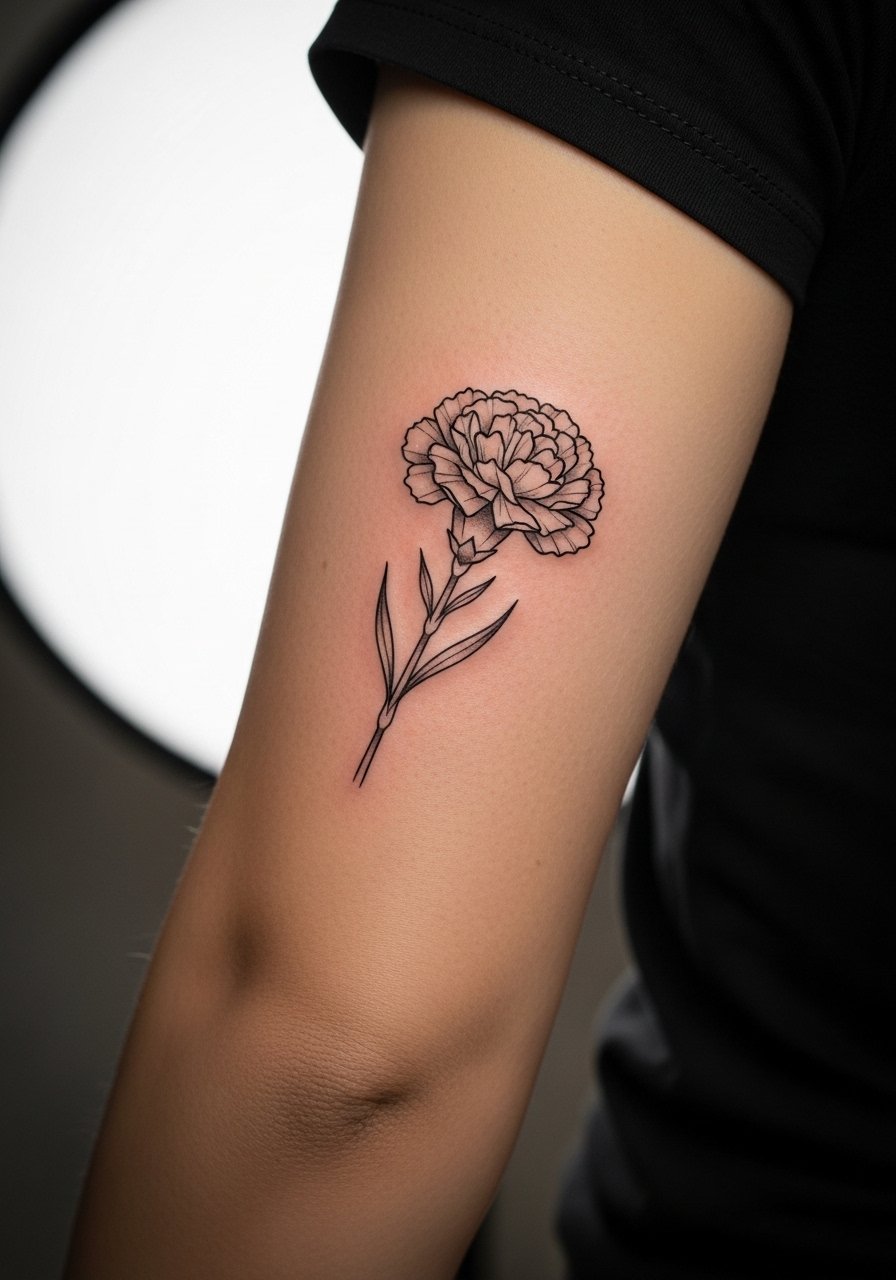
A tricep carnation hides when your arms are down and shows with movement. This is a great mid-sleeve filler or a discreet single piece. Skin here is slightly thicker, so lines hold well.
Style & Design Details
- Tattoo style: Blackwork or illustrative
- Recommended size: 2–3 inches
- Best placement(s): outer tricep, midway between shoulder and elbow
- Color vs. blackwork: both work; black lasts slightly longer
- Design elements: curved stems, layered petals, subtle shading on the outer edge
- Longevity note: less sun exposure; lines hold well
- Who it suits: people wanting semi-hidden ink, sleeve builders
Finding the Right Artist
Pick an artist used to arm placements and ask for healed tricep examples. Ask how they’ll integrate the piece into future sleeves. Avoid artists who ignore placement curvature.
Aftercare & Healing Tips
Keep the area free from tight sleeves for a week. Clean with a fragrance-free soap and moisturize with Lubriderm while peeling. Expect slight tightness for a few days.
- Carnation Behind the Calf — Vertical Botanical Runner
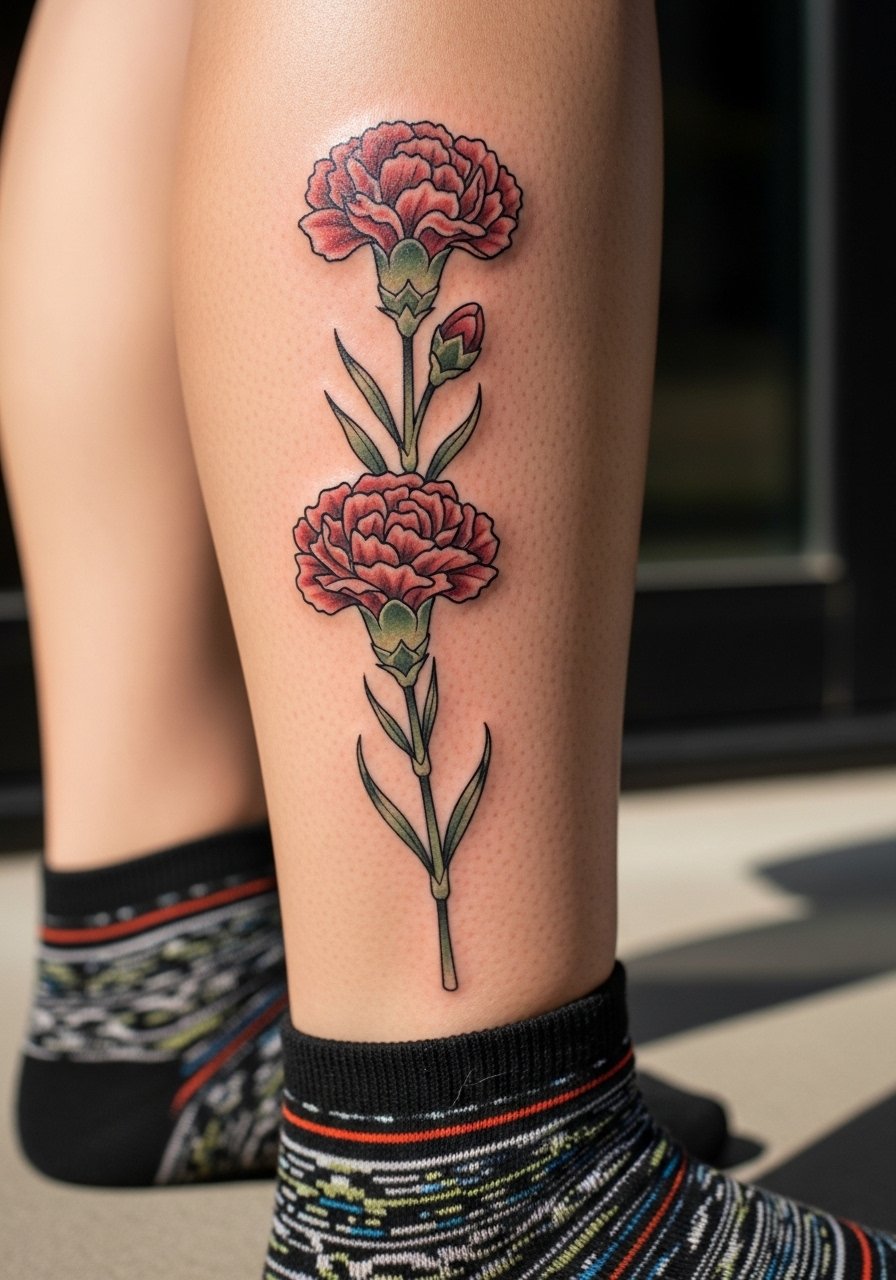
A vertical carnation behind the calf elongates the leg and moves with muscle anatomy. This elongated placement is ideal for a long-stemmed, elegant carnation design.
Style & Design Details
- Tattoo style: Illustrative or realistic
- Recommended size: 4–6 inches vertically
- Best placement(s): outer calf, back of calf along muscle line
- Color vs. blackwork: color enhances botanical realism
- Design elements: long stem, spaced petals, leaf alternation, subtle background shading
- Longevity note: low friction area—color holds nicely
- Who it suits: leg-showers, people wanting a visible vertical piece
Finding the Right Artist
Look for leg florals and calf compositions. Ask about sitting positions to keep muscle relaxed. Avoid artists without leg-healing photos.
Aftercare & Healing Tips
Avoid tight socks and boots for the first 5–7 days. Clean with a gentle soap and apply a balm like After Inked. Keep elevated if swelling occurs.
- Ear Lobe Mini Carnation — Pinprick Floral
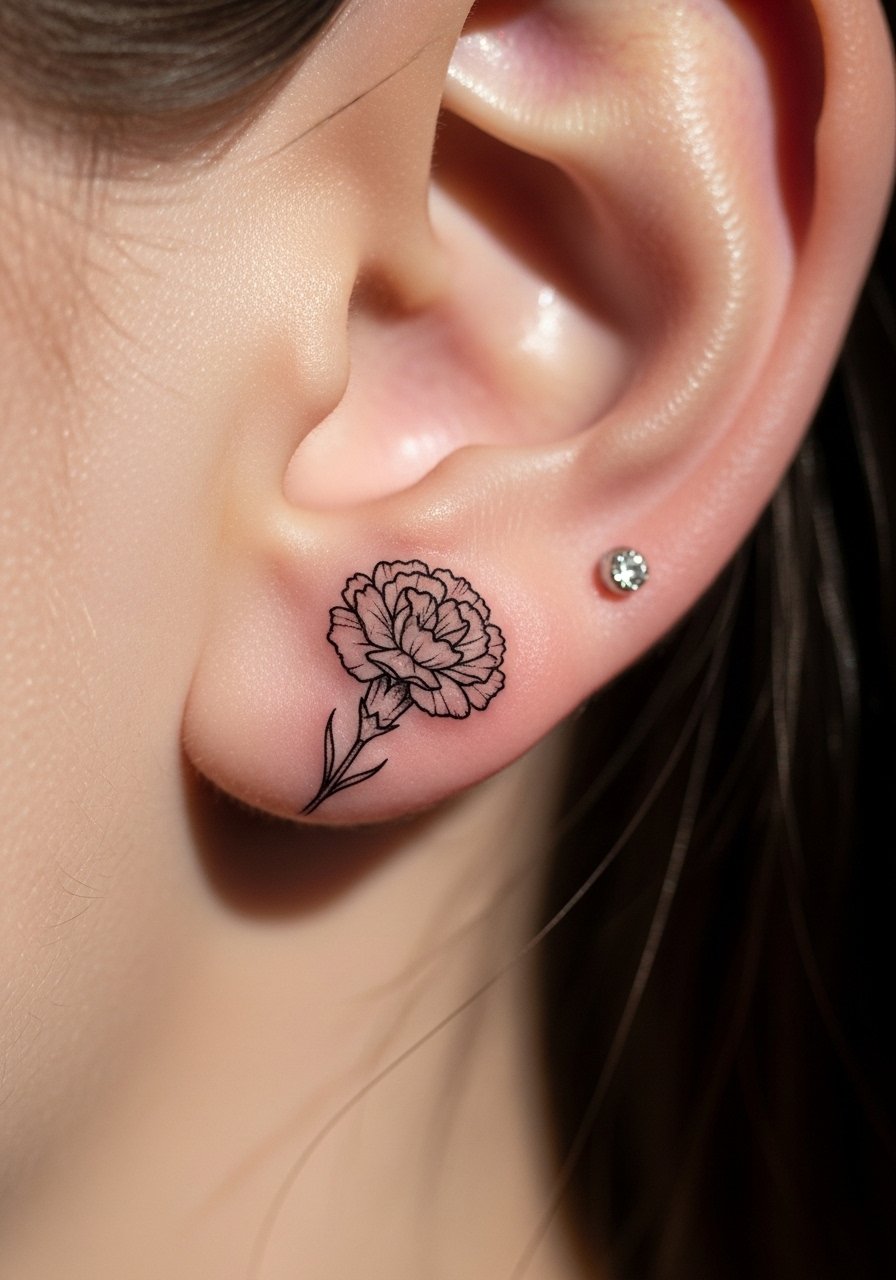
A lobe carnation is as tiny as a stud and plays like jewelry. Because of limited space, this works best as a tiny single bloom or bud. Pain is minimal and healing is quick.
Style & Design Details
- Tattoo style: Micro or single-needle
- Recommended size: 0.2–0.5 inches
- Best placement(s): ear lobe, inner helix small area
- Color vs. blackwork: black ages best; color risks early blur
- Design elements: minute petals, dot stamen, negative space
- Longevity note: micro areas may require touch-ups
- Who it suits: jewelry-lovers, tiny-tattoo collectors
Finding the Right Artist
Choose an artist with micro tattoo experience. Ask about needles and placement near cartilage. Avoid shops without micro portfolios.
Aftercare & Healing Tips
Keep hair and products away from the area. Clean gently and apply an unscented balm like Hustle Butter Deluxe. Expect full healing in 2–4 weeks.
- Lower Back Carnation Garland — Classic and Feminine
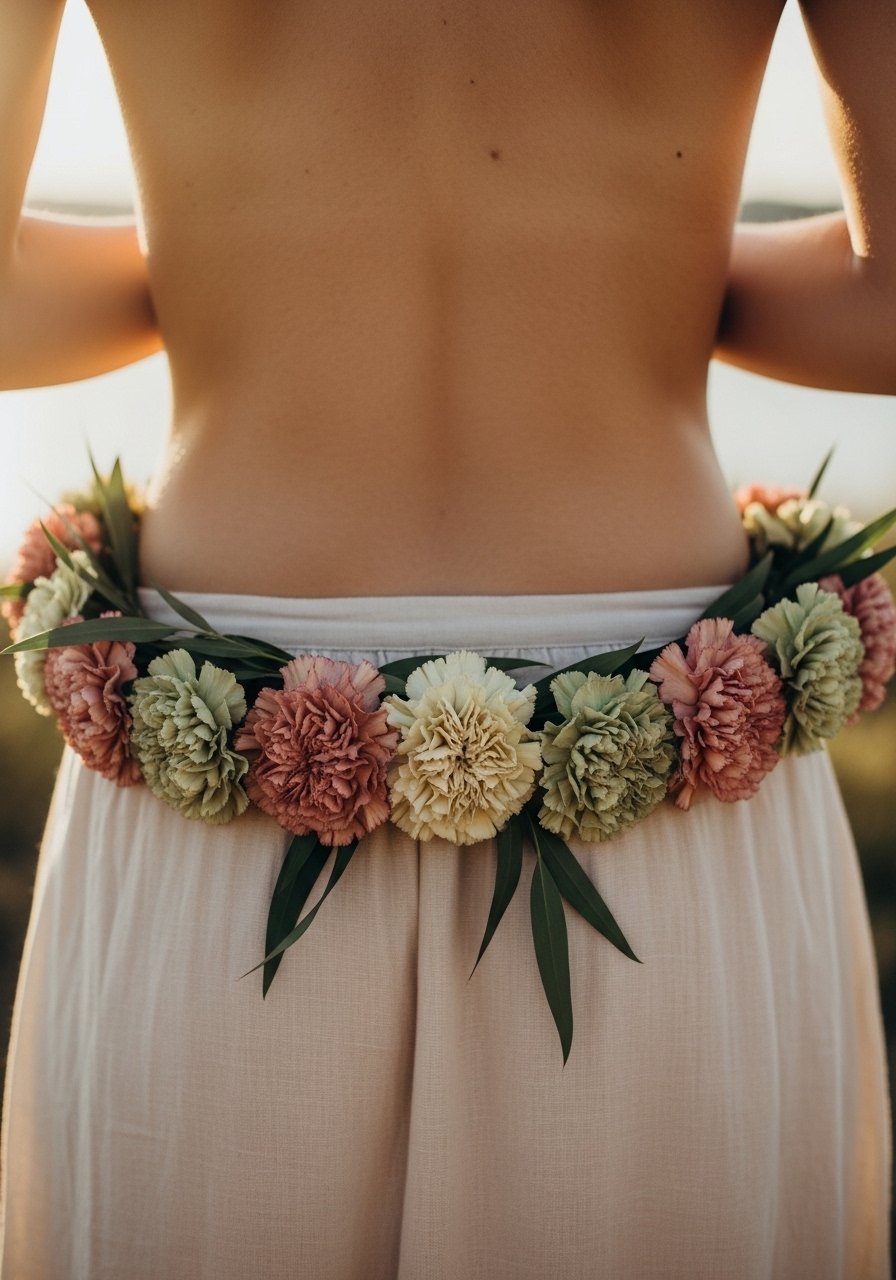
A lower back carnation garland is a classic placement that flatters the curve of the waist. It can be a standalone statement or part of a larger back piece. Pain is moderate and healing is easy with minimal rubbing.
Style & Design Details
- Tattoo style: Illustrative or neo-traditional
- Recommended size: 6–10 inches across the lower back
- Best placement(s): lower back centered above the tailbone, hip-to-hip spans
- Color vs. blackwork: color for feminine look; black for bold lines
- Design elements: symmetrical blooms, trailing leaves, small dotwork accents
- Longevity note: moderate sun exposure if worn with low tops; use SPF
- Who it suits: lovers of classic placements and skirt-suitable tattoos
Finding the Right Artist
Pick an artist with lower back composition experience. Ask to see healed photos of similar spans. Avoid artists who skimp on symmetry planning.
Aftercare & Healing Tips
Wear loose waistbands and avoid sitting on hard surfaces for long in week 1. Clean gently and use After Inked while peeling. Apply SPF to exposed areas after healing.
- Inner Bicep Carnation — Hidden Strength Floral
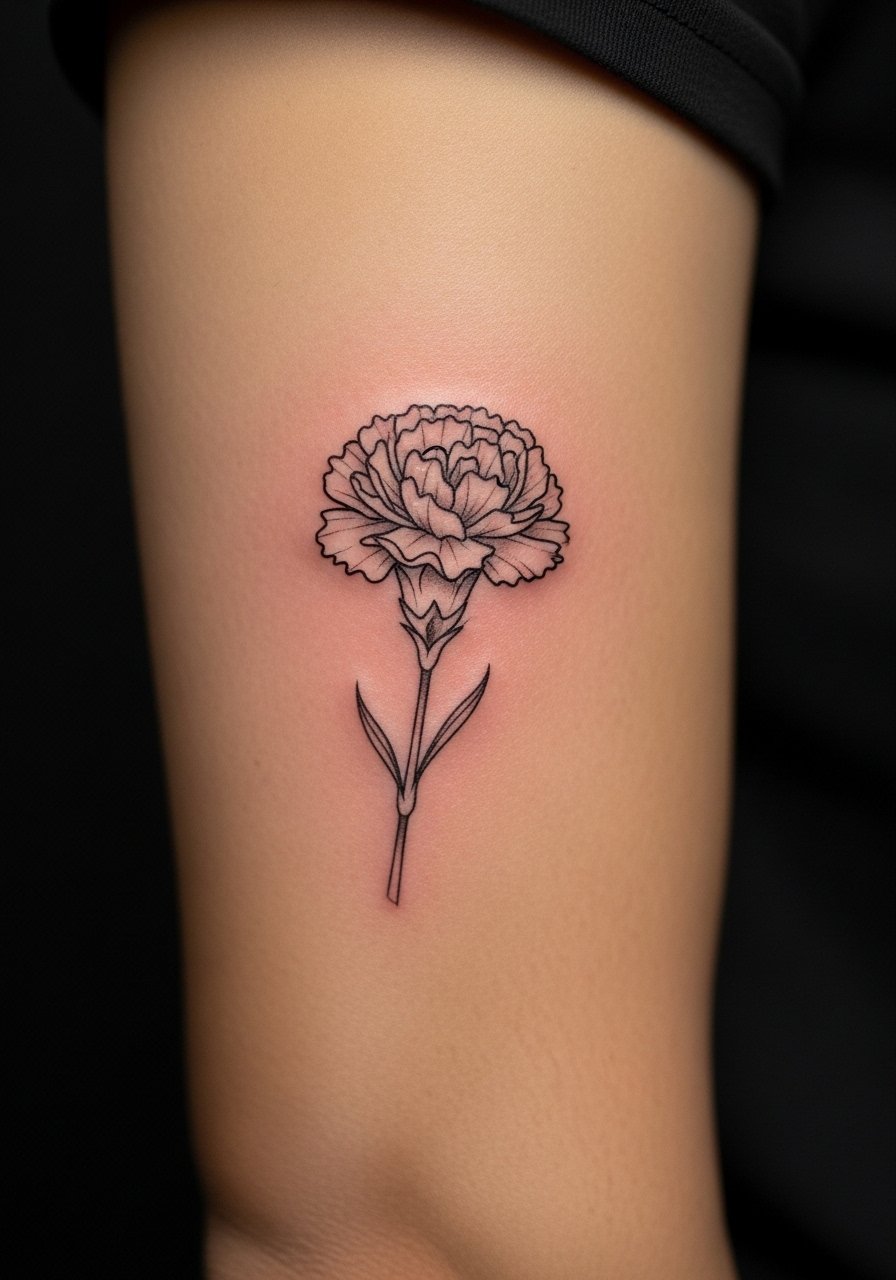
The inner bicep is personal and discreet. Carnations here look intimate and are often hidden under sleeves, making them a quieter statement. Skin on the inner arm is softer, so lines can remain crisp if done properly.
Style & Design Details
- Tattoo style: Fine line or illustrative
- Recommended size: 2–3 inches
- Best placement(s): inner bicep midline, above elbow crease
- Color vs. blackwork: soft color or black both work well
- Design elements: slight shading, thin stem, leaf details, petal veins
- Longevity note: low sun exposure helps longevity; friction from clothing can affect edges
- Who it suits: private collectors, those who prefer hidden artwork
Finding the Right Artist
Look for artists with healed inner-arm florals. Discuss holding tension during the session to keep lines steady. Avoid artists who don't test stencils on flexed arm positions.
Aftercare & Healing Tips
Keep the arm elevated if swelling occurs and avoid tight sleeves. Clean with gentle soap and follow with Hustle Butter Deluxe. Expect some tenderness when flexing for a few days.
- Rib-to-Hip Carnation Cascade — Dramatic Vertical Flow
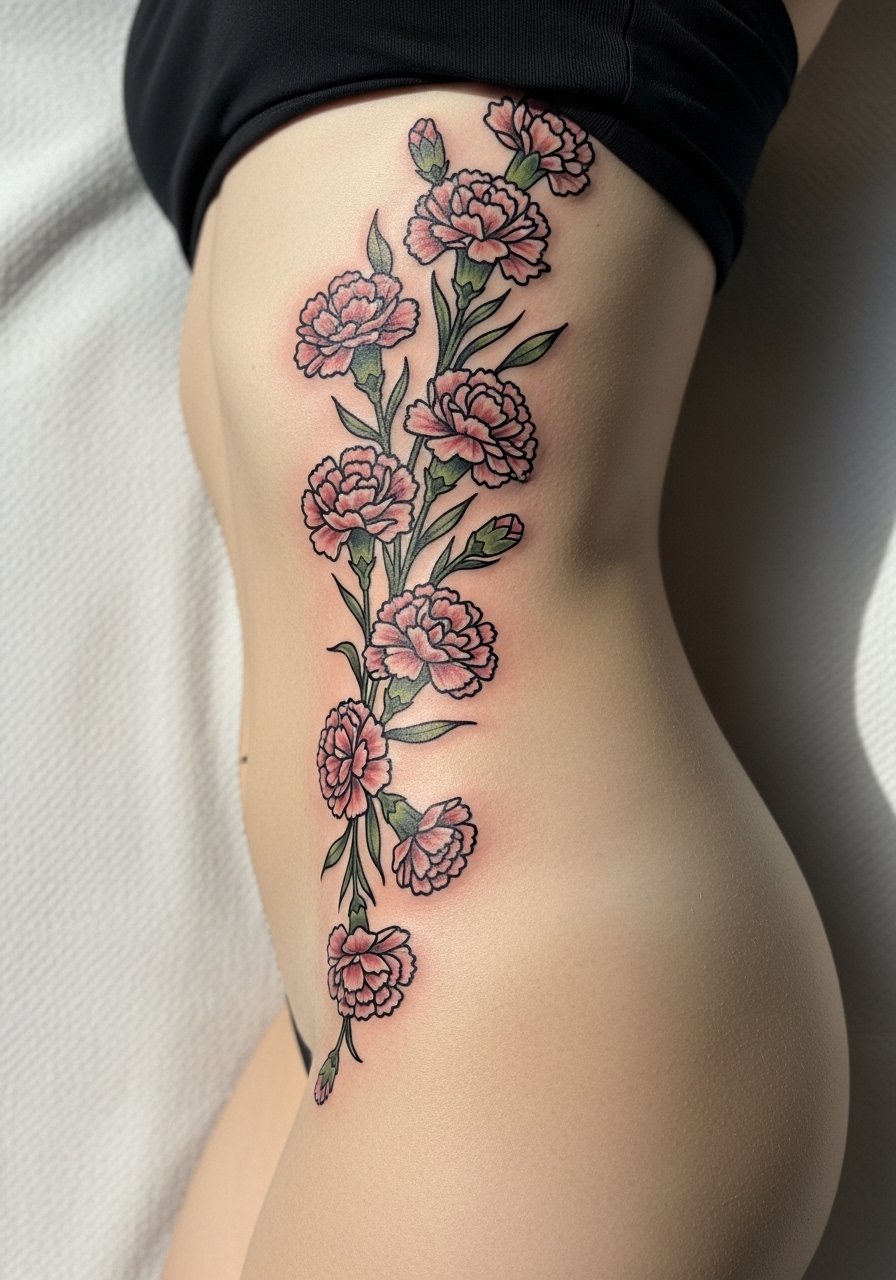
A rib-to-hip cascade is dramatic and body-flattering. The vertical movement elongates the torso and is a gorgeous choice for more extensive floral statements. Pain varies across the ribs and hip.
Style & Design Details
- Tattoo style: Illustrative or neo-traditional
- Recommended size: 6–10 inches vertically
- Best placement(s): from lower rib down to hip, side torso runs
- Color vs. blackwork: full color helps separate blooms visually
- Design elements: layered blooms, long stems, leaf clusters, negative space for breathing room
- Longevity note: torso skin handles color decently; friction near waistbands can affect edges
- Who it suits: those wanting a striking, elongating piece
Finding the Right Artist
Pick an artist comfortable with long, flowing compositions. Ask how they map the vertical curve. Avoid artists without long-session experience.
Aftercare & Healing Tips
Consider EMLA if you want numbing for long sessions. Keep clothing loose and follow Saniderm or bandaging guidelines. Use Hustle Butter Deluxe for moisturizing during healing.
- Sternum Single Petal Accent — Minimalist Centerpiece
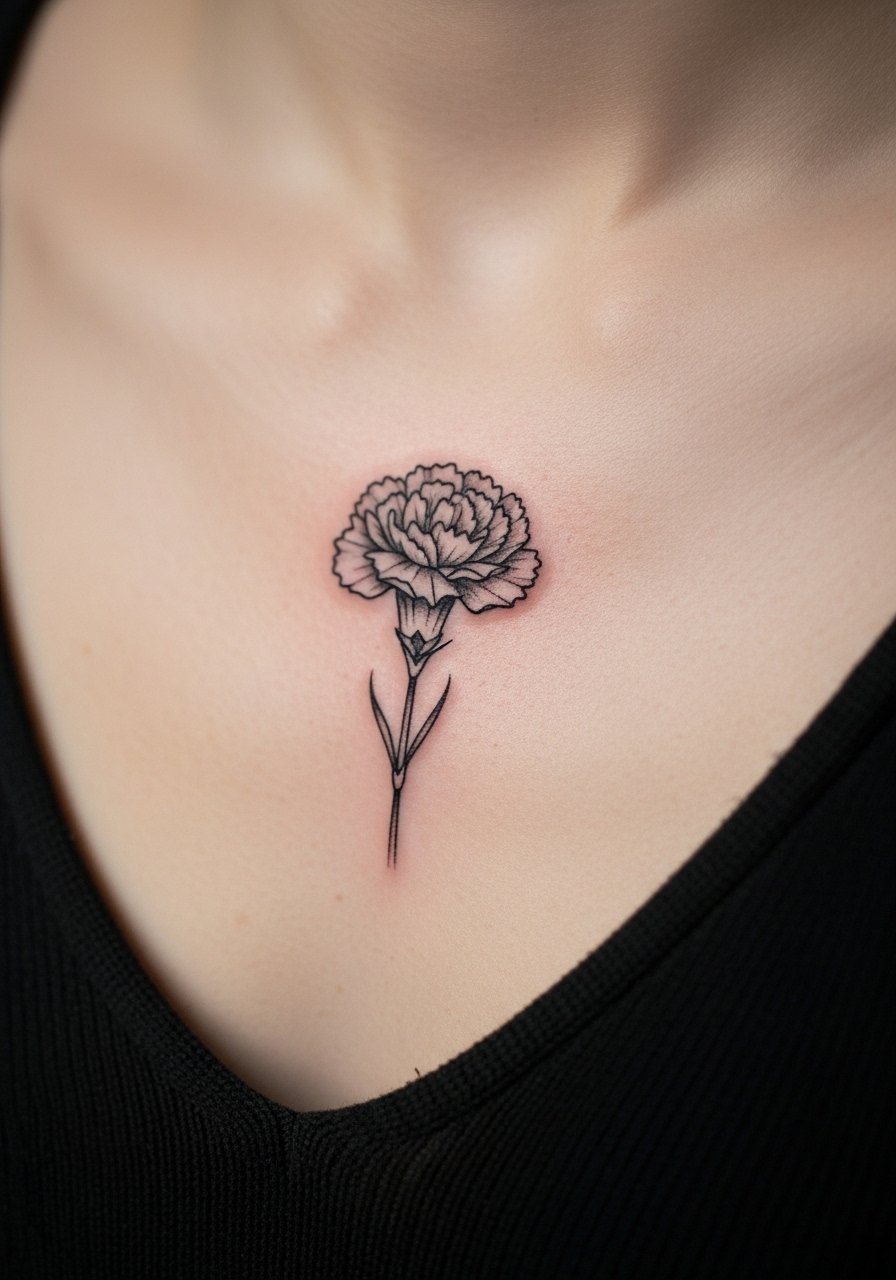
A single-petal sternum tattoo reads modern and minimal. It’s a great choice if you want chest art without a large commitment, and it pairs nicely with necklaces.
Style & Design Details
- Tattoo style: Minimal fine line
- Recommended size: 0.5–1 inch
- Best placement(s): center sternum, just above cleavage
- Color vs. blackwork: black single-needle preferred for longevity
- Design elements: thin petal veins, single stamen dot, delicate negative space
- Longevity note: small single lines can blur over time; choose a skilled micro artist
- Who it suits: minimalists, jewelry-pairing, first-timers testing chest placement
Finding the Right Artist
Search for micro-chest works in portfolios and ask about needle sizes. Avoid heavy-handed artists in tiny areas. Consider an Inkbox test to preview look.
Aftercare & Healing Tips
Follow standard chest aftercare—Saniderm if used, gentle cleansing, and After Inked for peeling phase. Avoid bras that press on the spot for 7–10 days.
- Carnation Ankle Side — Slim Vertical Accent
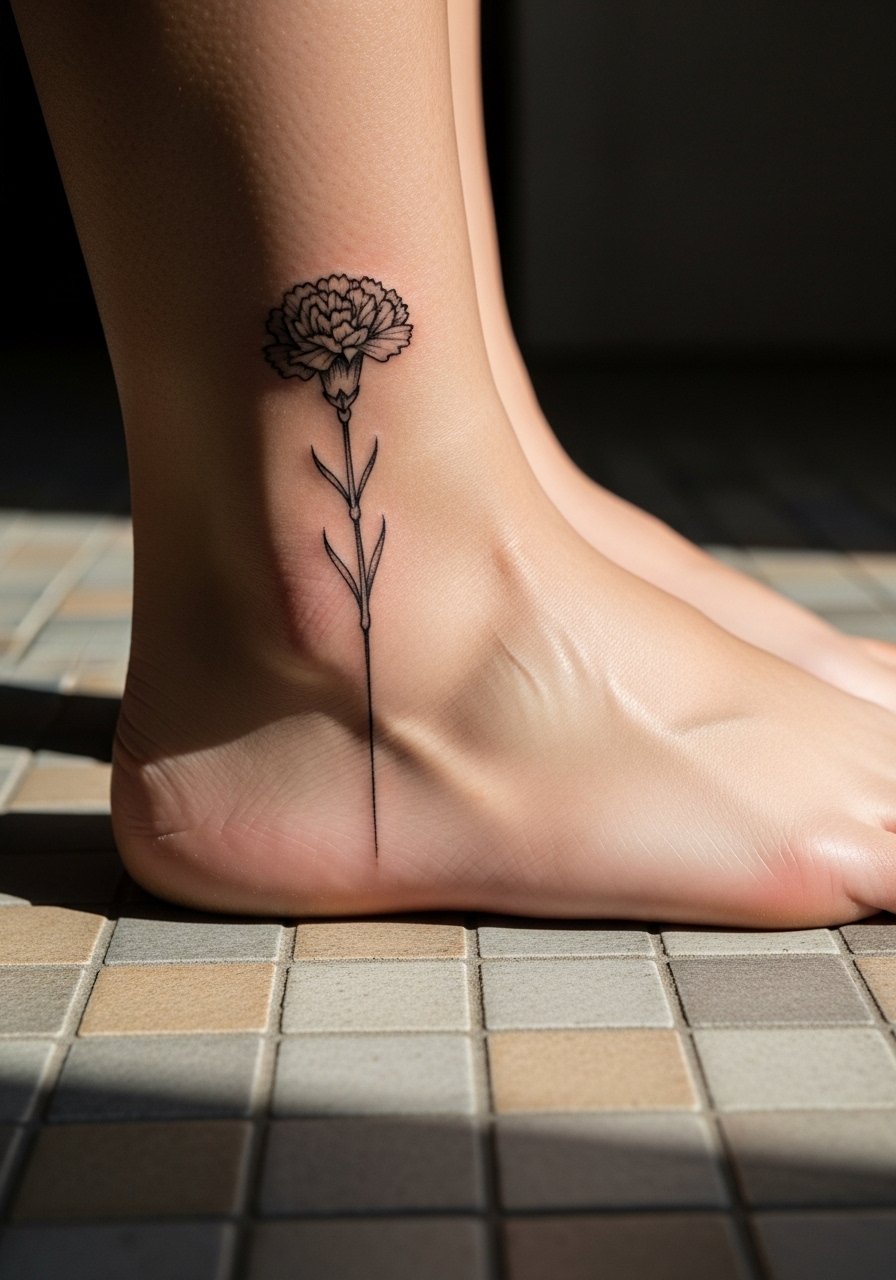
A side-ankle carnation gives height to the foot and is great for vertical accents. It’s small but visible with sandals or barefoot.
Style & Design Details
- Tattoo style: Fine line or illustrative
- Recommended size: 2–3 inches vertical
- Best placement(s): outer ankle, lateral foot edge (avoid sole)
- Color vs. blackwork: minimal color or black works best
- Design elements: streamlined stem, single bloom, tiny leaf sprigs, slight dotwork
- Longevity note: ankles face friction; choose slightly bolder lines
- Who it suits: sandal-wearers, minimalists, foot-art collectors
Finding the Right Artist
Pick an artist comfortable with ankle curves and healed photos. Avoid tattooists who suggest heavy shading in the small area.
Aftercare & Healing Tips
Wear loose footwear during early healing. Clean gently and use Hustle Butter Deluxe for moisturization. Expect a touch-up in 6–12 months for high-movement areas.
- Carnation Behind the Shoulder Cap — Subtle Upper Back Bloom
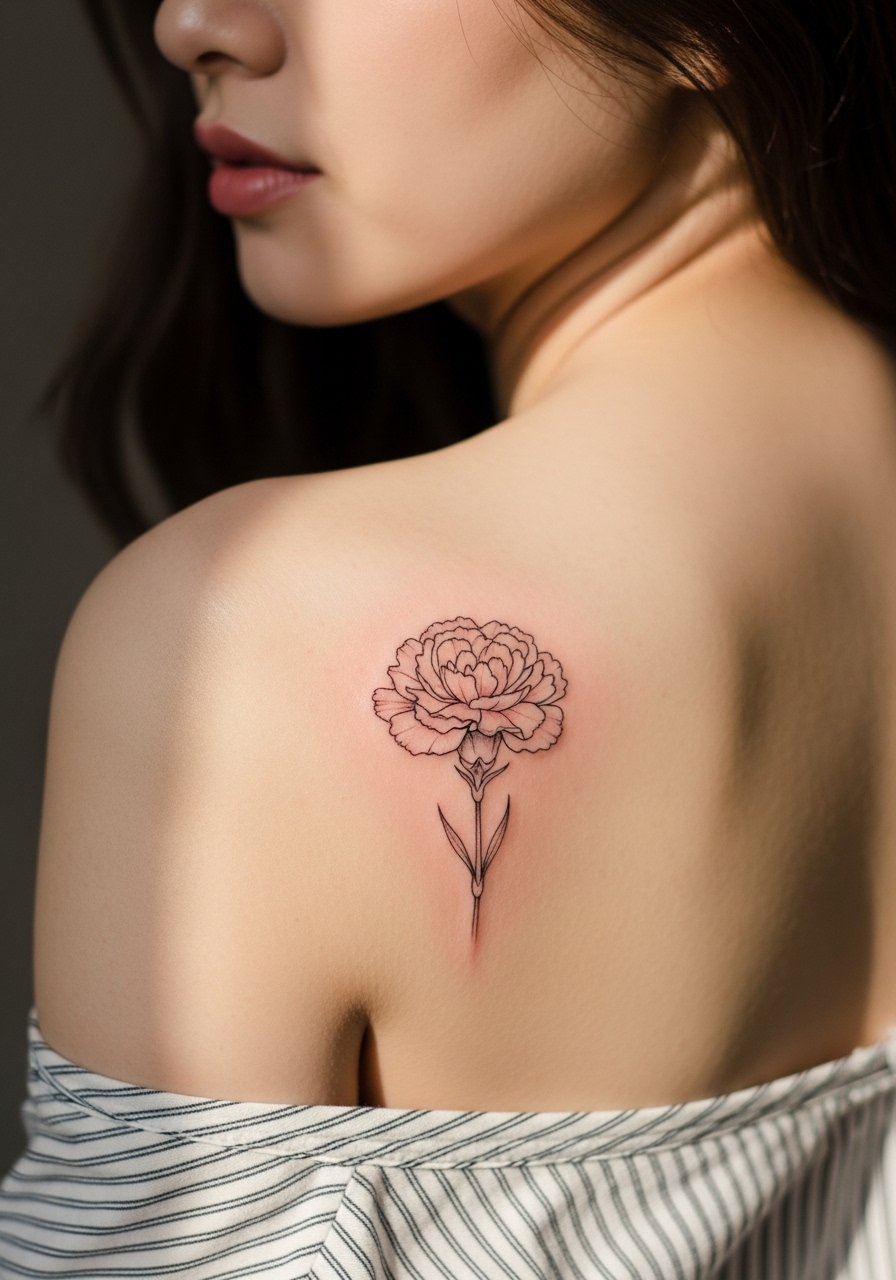
Placed just below the shoulder, this carnation peeks from straplines and swimsuits. It’s a feminine and flirty spot that adapts well to small-to-medium designs.
Style & Design Details
- Tattoo style: Fine line or watercolor
- Recommended size: 2–4 inches
- Best placement(s): posterior shoulder cap, upper back corner
- Color vs. blackwork: soft color often looks best when clothing exposes the area
- Design elements: delicate petals, stem angled toward back, small leaf accents, light wash
- Longevity note: limited sun exposure keeps color stable; friction from straps may affect edges
- Who it suits: beach lovers, strapline-showing outfits, collectors
Finding the Right Artist
Seek artists with healed shoulder pasts. Ask about how they’ll place the piece relative to movement and clothing. Avoid heavy-handed shading in the small upper-back plane.
Aftercare & Healing Tips
Avoid bra straps or tight camisoles that rub the area until healed. Clean with a mild soap and moisturize with After Inked. SPF on exposed areas prevents fading.
- Inner Wrist Carnation Branch — Delicate Wrist Vine
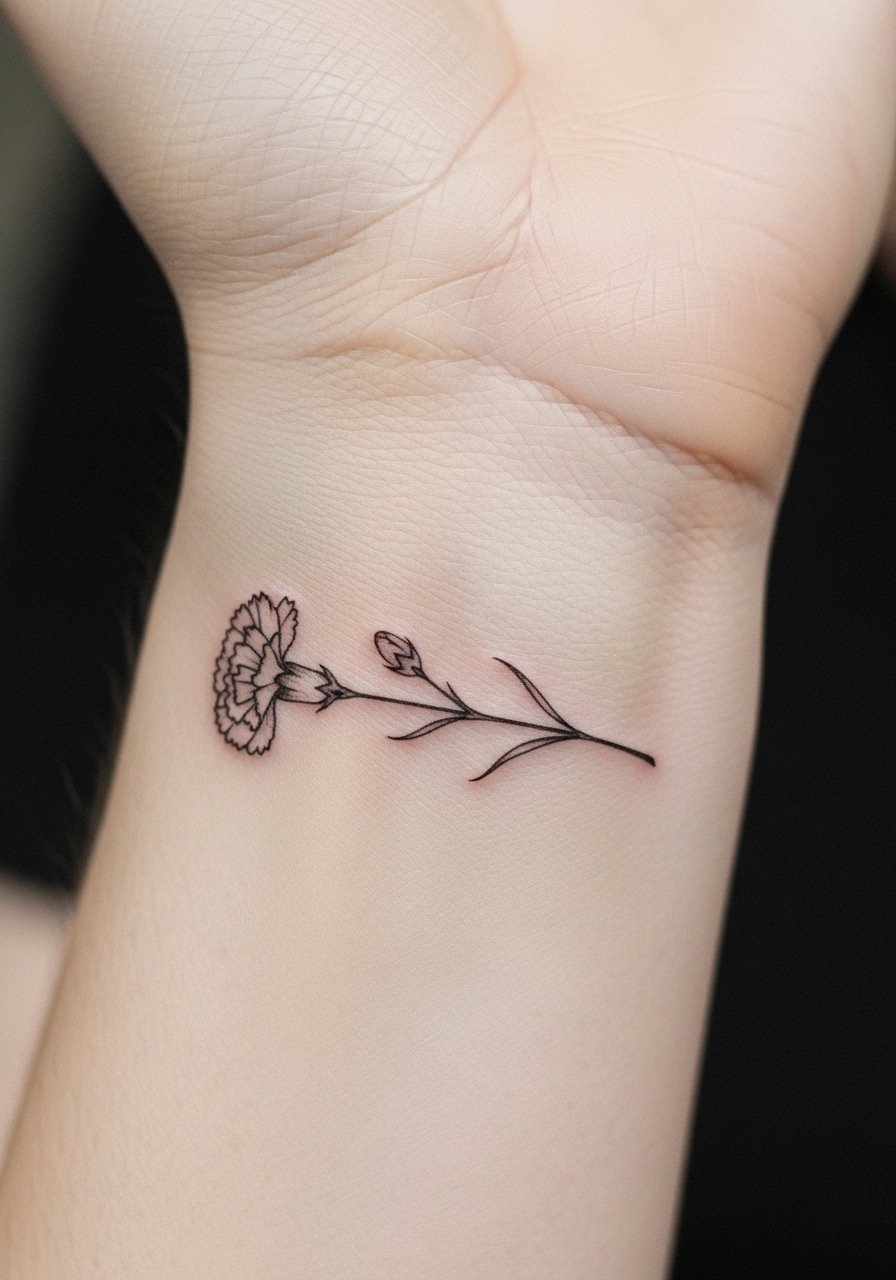
A branch-length carnation on the inner wrist elongates the arm and reads like a bracelet. It’s elegant, subtle, and can be combined with script or dates for personalization.
Style & Design Details
- Tattoo style: Fine line or illustrative
- Recommended size: 2–3 inches in length
- Best placement(s): inner wrist running toward forearm, near radial artery but avoid too close
- Color vs. blackwork: small color accents work but black is longer-lasting
- Design elements: thin stem, small alternating leaves, single bloom and bud, negative space
- Longevity note: wrist ink fades faster; use SPF and careful moisturizing
- Who it suits: sentimental wearers, bracelet-style lovers, minimalists
Finding the Right Artist
Find fine-line artists with steady portfolios. Ask about scaling and how lines will age with wrist movement. Avoid heavy saturation suggestions.
Aftercare & Healing Tips
Keep it covered at night and avoid watch straps during early healing. Clean gently and use Lubriderm when peeling. Apply SPF once healed to slow fading.
- Carnation Thigh Wrap — Lace-like Flower Band
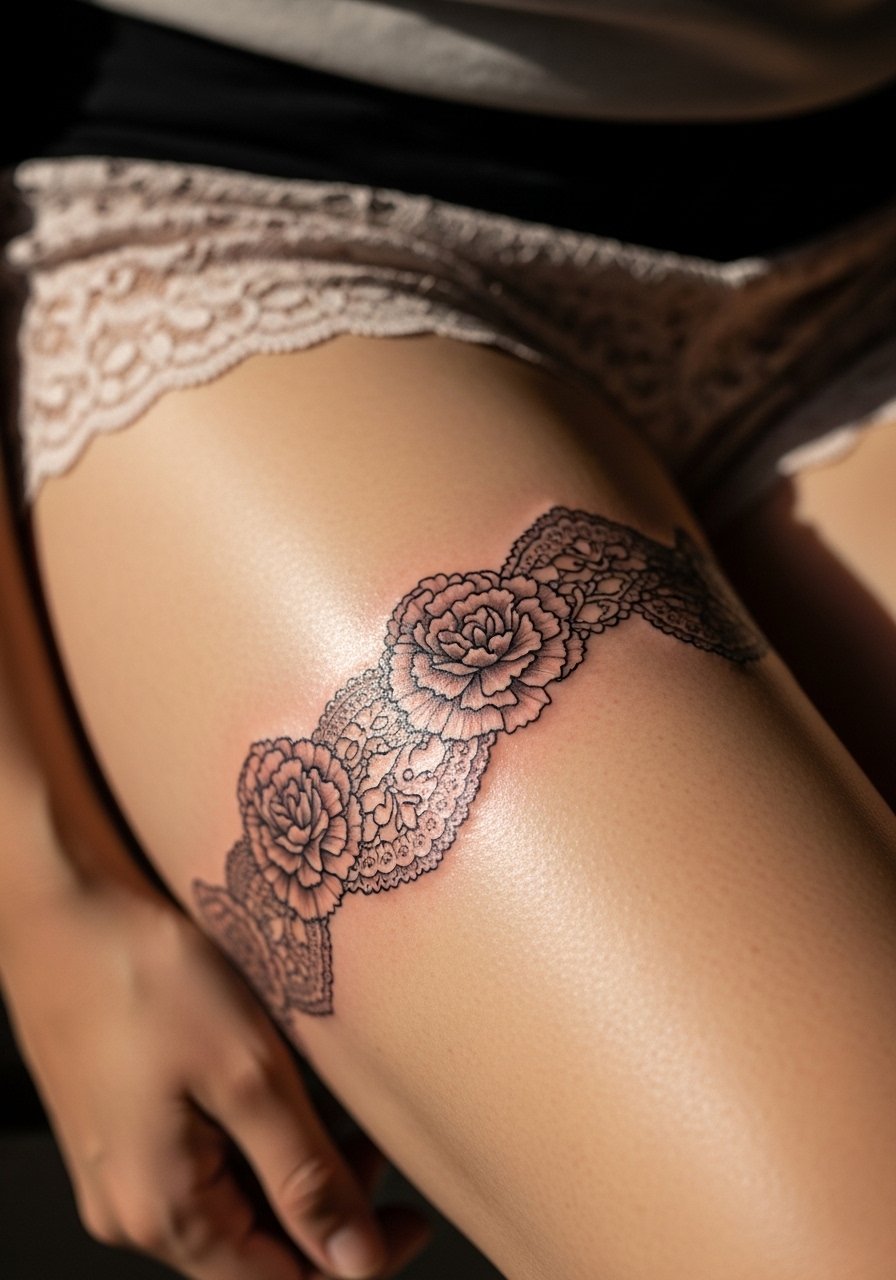
A thigh wrap that mimics lace can be sensual and elegant. The band can be slim or broader depending on how bold you want the look. Thigh skin accepts pigment well and heals robustly.
Style & Design Details
- Tattoo style: Illustrative with decorative lace elements
- Recommended size: band 3–6 inches wide depending on design
- Best placement(s): upper thigh, circumference wrap, back-of-thigh variation
- Color vs. blackwork: black and gray for lace effect; color for a softer touch
- Design elements: repeating carnation motifs, filigree, negative-space lace, thin connecting vines
- Longevity note: thigh color retains well with limited sun exposure
- Who it suits: boudoir aesthetics, larger-painting lovers, people wanting a band tattoo
Finding the Right Artist
Look for artists who do decorative bands and thigh work. Ask how the band will sit when walking and sitting. Avoid artists without clear band symmetry portfolios.
Aftercare & Healing Tips
Avoid tight underwear or clothing that rubs the area. Clean with gentle soap and apply After Inked while peeling. Expect full settling in 4–6 weeks.
- Carnation Clavicle Accent — Tiny Edge Bloom
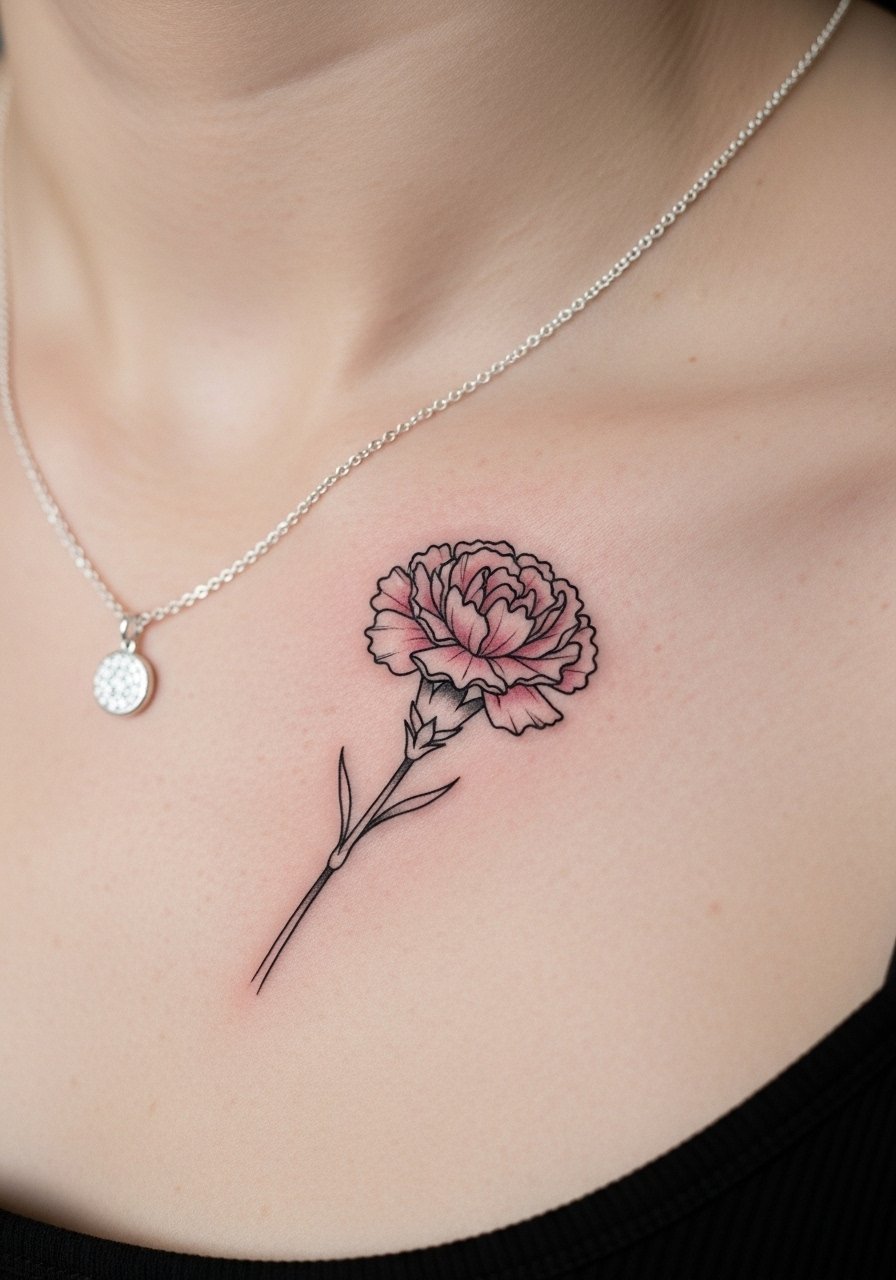
A little carnation near the clavicle is subtle and frames necklaces beautifully. It’s a safe visible spot that's elegant and low-profile.
Style & Design Details
- Tattoo style: Fine line or micro watercolor
- Recommended size: 0.8–2 inches
- Best placement(s): just above clavicle, near shoulder intersection
- Color vs. blackwork: soft color for gentle contrast; black for minimalist looks
- Design elements: small petal clusters, light stem, faint dotwork
- Longevity note: low friction area; color holds well with SPF
- Who it suits: jewelry-lovers, minimalists, casual wearers
Finding the Right Artist
Look for delicate collarbone pieces in portfolios. Ask about stencil placement relative to necklace lines. Avoid artists who recommend large shading for small designs.
Aftercare & Healing Tips
Avoid necklaces and tight straps until healed. Clean with a fragrance-free soap and use Hustle Butter Deluxe for peeling. Apply SPF when exposed.
- Carnation Flower Tattoo Placement Ideas — Palm-Side Wrist Carnation (Keyword Title)
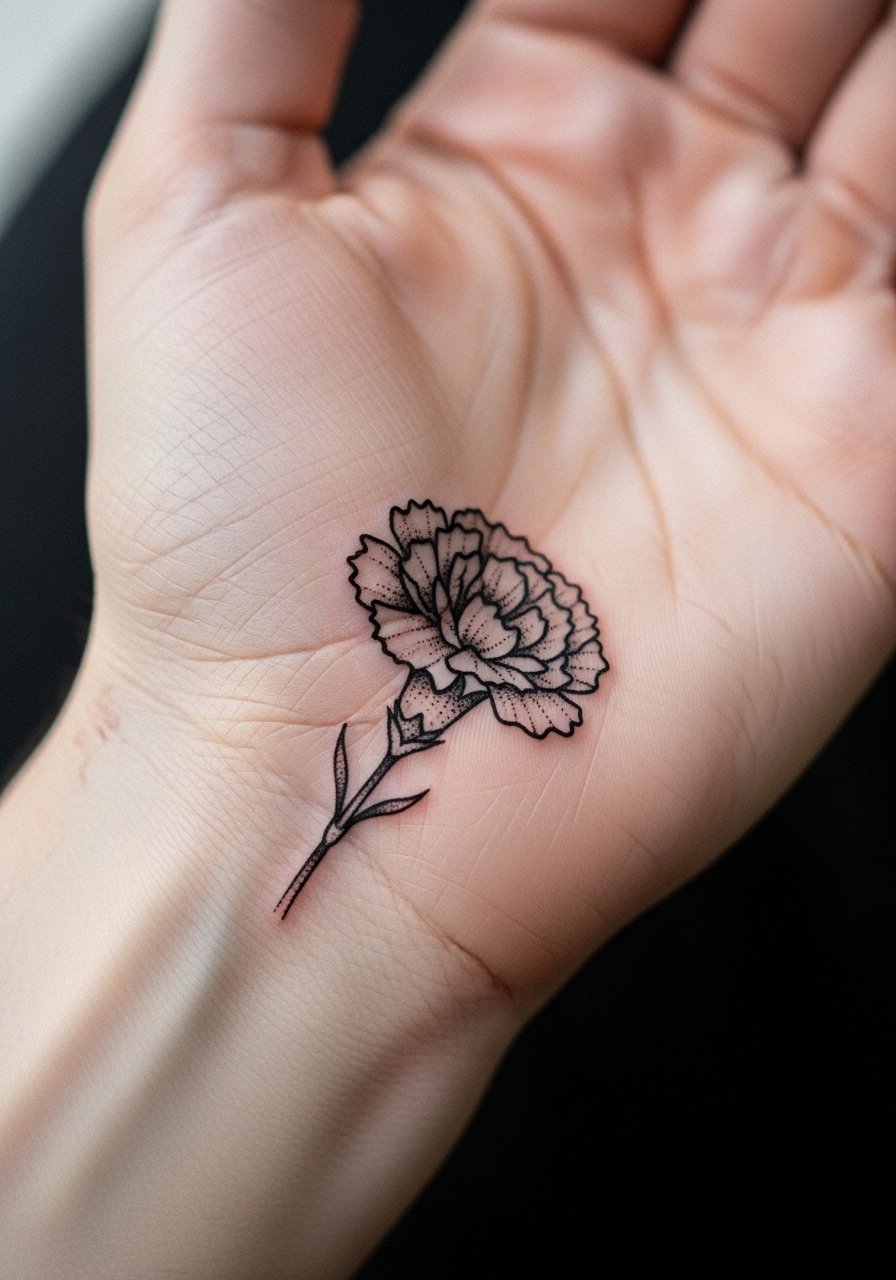
The palm-side wrist placement is subtle and intimate; it faces inward and is often a private reminder. Because skin here is soft and washes often, choose bold, slightly thicker lines for longevity.
Style & Design Details
- Tattoo style: Fine line with slightly bolder line weights
- Recommended size: 1–2 inches
- Best placement(s): palm-side inner wrist, near crease but not on the crease
- Color vs. blackwork: black holds better with frequent washing
- Design elements: small bloom, thicker outline to prevent fading, minimal stem
- Longevity note: wrist palms see friction and washing—expect quicker fading
- Who it suits: people wanting private visible reminders, sentimental placements
Finding the Right Artist
Choose an artist experienced with wrist inner placements. Ask them to test needle depth and suggest line thickness for longevity. Avoid artists who sketch ultra-fine single-needle lines for this spot.
Aftercare & Healing Tips
Keep hands away from chemicals during early healing and use a gentle soap. Apply Lubriderm often during peeling. Expect to revisit for touch-up within a year.
- Full Shoulder Carnation Cluster — Bold Upper-Arm Canvas
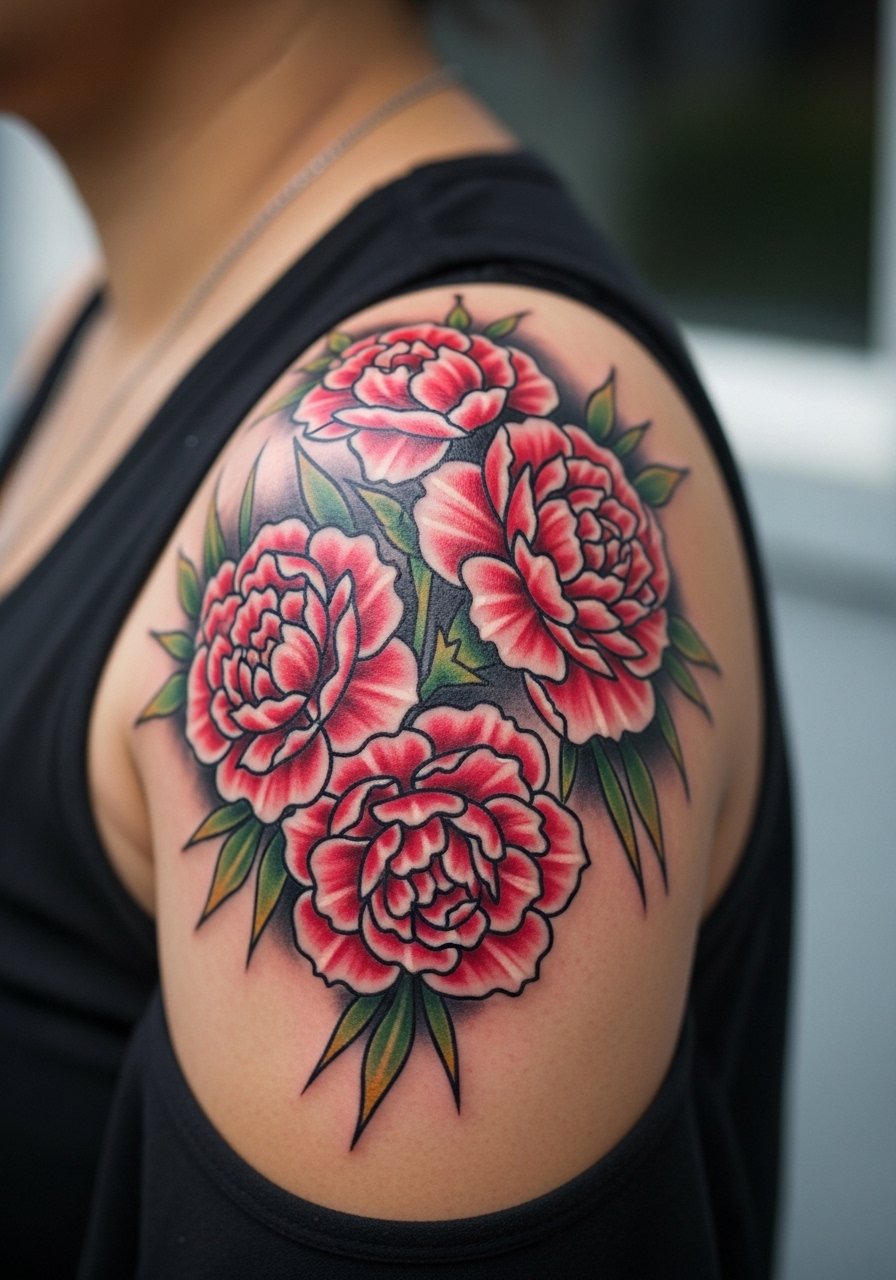
A full-shoulder carnation cluster makes the shoulder into a dramatic canvas perfect for extension into sleeves. This placement photographs well and can be a stand-alone statement or a part of a larger narrative.
Style & Design Details
- Tattoo style: Neo-traditional or illustrative
- Recommended size: 6–10 inches covering shoulder cap
- Best placement(s): full shoulder, cap wrap toward upper arm and chest
- Color vs. blackwork: vivid color for bold statements; blackwork for high-contrast compositions
- Design elements: multiple layered blooms, bold outlines, leaf fill, ornamental background shading
- Longevity note: shoulder sees some sun; SPF helps color longevity
- Who it suits: collectors, statement-makers, people planning sleeves
Finding the Right Artist
Pick an artist experienced with shoulder caps and large compositions. Ask about session breakdown and color layering. Avoid artists who lack cohesive composition examples.
Aftercare & Healing Tips
Keep tops loose and avoid strap pressure. Clean with a mild soap and use Saniderm or a recommended wrap. Use a tattoo-safe sunscreen after healing to keep colors vibrant.
- Carnation Finger-Web Tattoo — Tiny Petal Connector
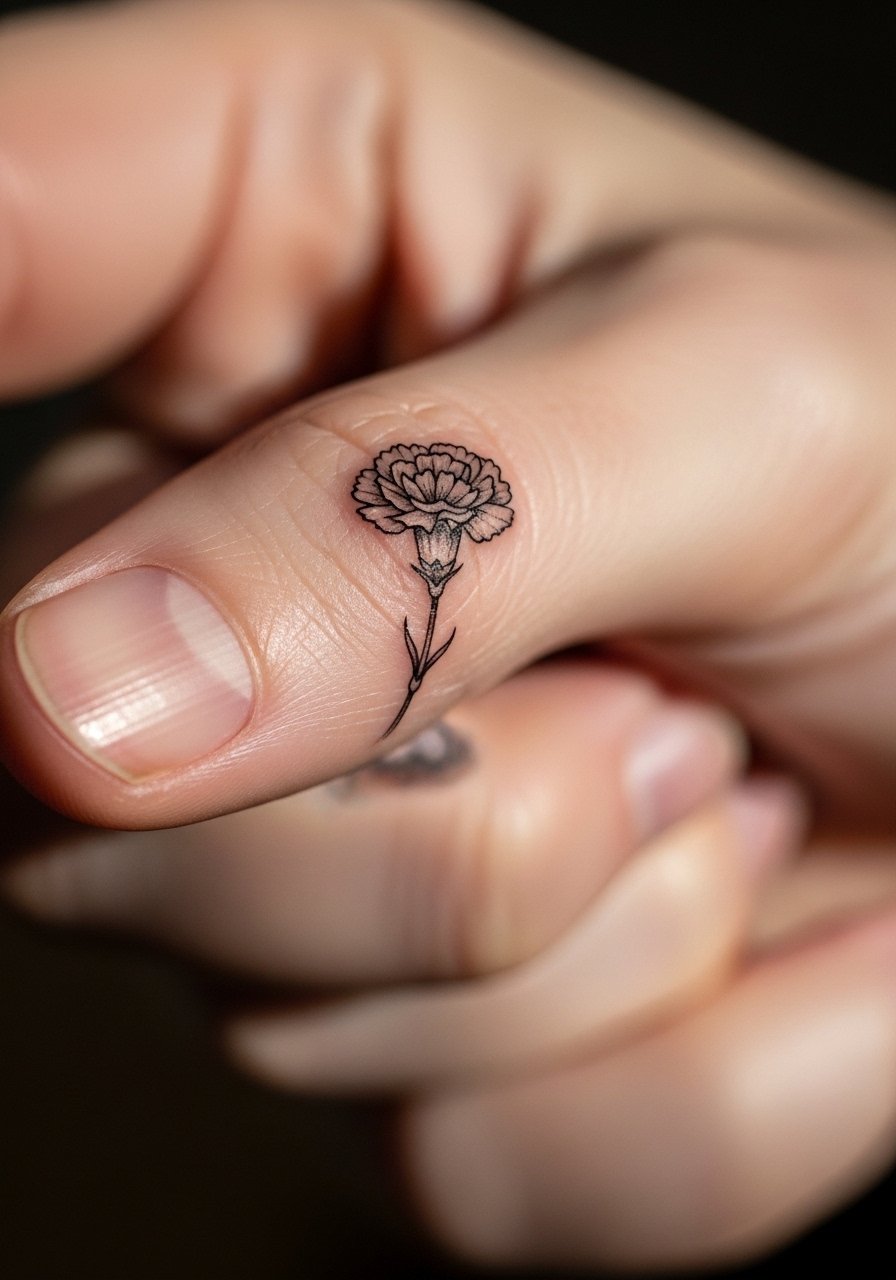
The finger-web is playful and small but can be long-lasting with proper care. It’s visible in hand gestures and makes a delicate statement.
Style & Design Details
- Tattoo style: Micro blackwork
- Recommended size: 0.3–0.8 inches
- Best placement(s): webbing between fingers, avoid joint creases
- Color vs. blackwork: black is recommended for durability
- Design elements: tiny petals, dot stamen, short stem or none
- Longevity note: high-wear area; expect faster fading
- Who it suits: subtle statement lovers, palmography fans
Finding the Right Artist
Choose micro-experienced artists and ask about ink depth in high-motion areas. Avoid artists who over-saturate tiny designs.
Aftercare & Healing Tips
Hands are busy—avoid soaking and wear gloves for heavy chores. Clean carefully and use After Inked frequently. Plan for a touch-up after initial settling.
- Full Back Carnation Mural — Statement Botanical Backpiece
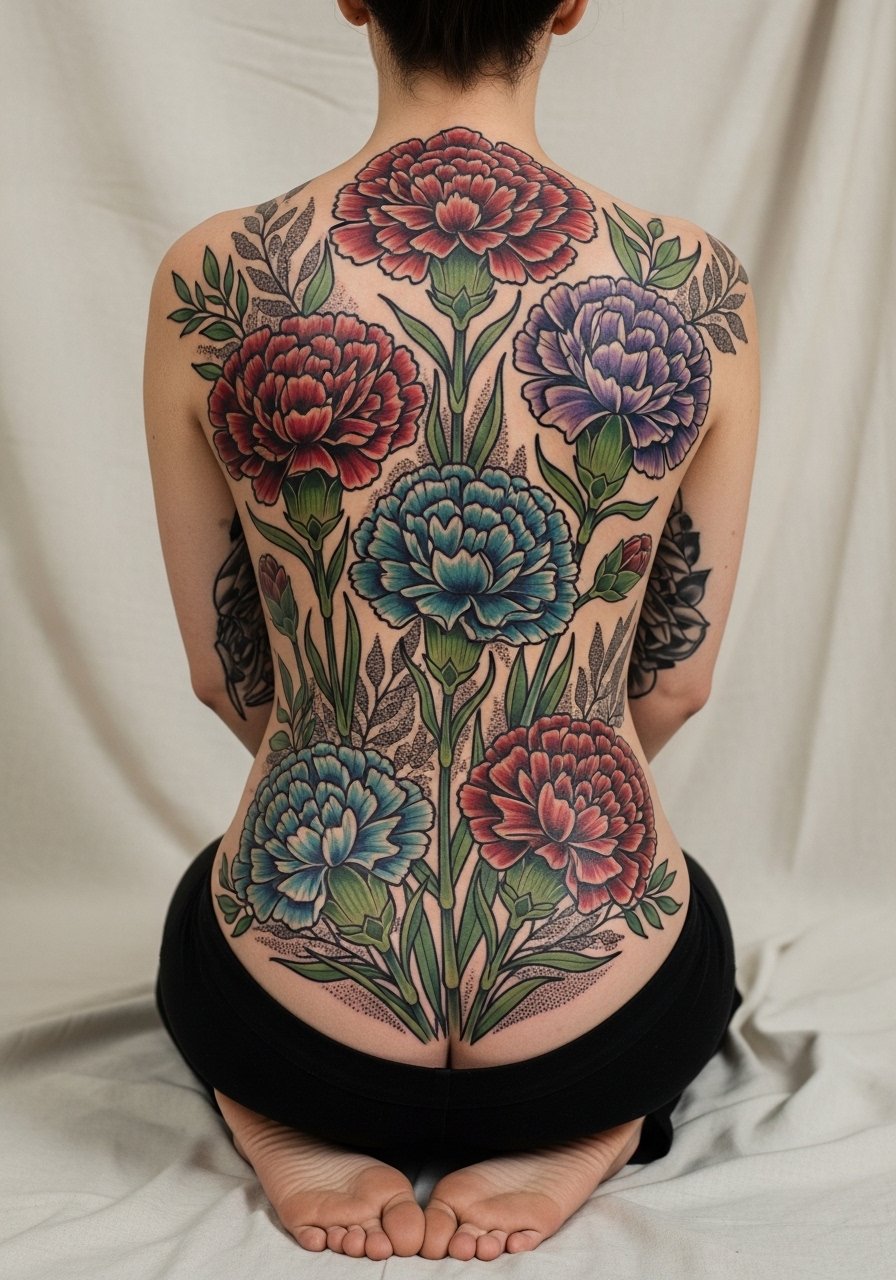
A full-back carnation mural is for those who want a major botanical statement. It allows for intricate composition, color depth, and storytelling across a broad canvas. Sessions are multiple and healing is progressive.
Style & Design Details
- Tattoo style: Neo-traditional/illustrative mural
- Recommended size: full back (12–20+ inches depending on torso)
- Best placement(s): full back, upper back, extending to shoulders or lower back
- Color vs. blackwork: full color for depth; blackwork for moodier drama
- Design elements: layered carnations, filler florals, ornamental backgrounds, large leaf planes, negative space for breathability
- Longevity note: large color pieces require SPF and occasional refreshers
- Who it suits: serious collectors, statement-makers, people planning multi-session work
Finding the Right Artist
Book an artist experienced in large-scale composition and multi-session flow. Ask to see full-back healed galleries and discuss session scheduling. Avoid artists who lack endurance for multi-session projects.
Aftercare & Healing Tips
Large pieces likely involve staged sessions. Follow artist bandaging instructions and consider Saniderm for covered stages. Use a rich but unscented lotion like Hustle Butter Deluxe during peeling. Protect with SPF once healed and schedule touch-ups 3–6 months after completion if needed.
Thanks for scrolling to the end — you’ve got 30 carnation flower tattoo placement ideas to match almost any body type and style. Whether you’re into tiny secret buds behind the ear or a bold back mural, these placements and style breakdowns should help you start a clear conversation with your artist. Save this guide, pin your favorites, and bring the image prompts to your consultation for an exact visual.
Which placement are you leaning toward — a secret wrist bloom or a shoulder statement? Before your appointment, consider grabbing a Saniderm second-skin bandage and a tub of Hustle Butter Deluxe tattoo aftercare so you’re ready the moment you come home. Pin this and share with your tattoo-buddy — I’d love to hear which style you pick.