Sitting in a consultation, scrolling at midnight, or finally booking your appointment — deciding on a colorful carnation flower tattoo is one of those sweet, personal moments. You want something bold enough to catch the eye, but refined enough to wear every day. These ideas are built for that exact purpose: fresh color palettes, smart placement choices, and design notes that help the ink age well.
This collection of 26 colorful carnation flower tattoo ideas covers everything from fine line single-carnation wrist pieces to neo-traditional thigh bouquets and tiny cottagecore ankle accents. You’ll find style breakdowns, placement suggestions, realistic pain notes, and aftercare tips that mention trusted products like Saniderm second-skin bandage rolls and Zensa numbing cream when they genuinely help the process.
Pin the looks you like and bring them to your consultation. Each idea below includes a clear image prompt to visualize the design, plus the products and practices that help color stay vibrant longer. Let’s find the colorful carnation flower tattoo that feels like yours.
- Vivid Single Carnation Wrist Band
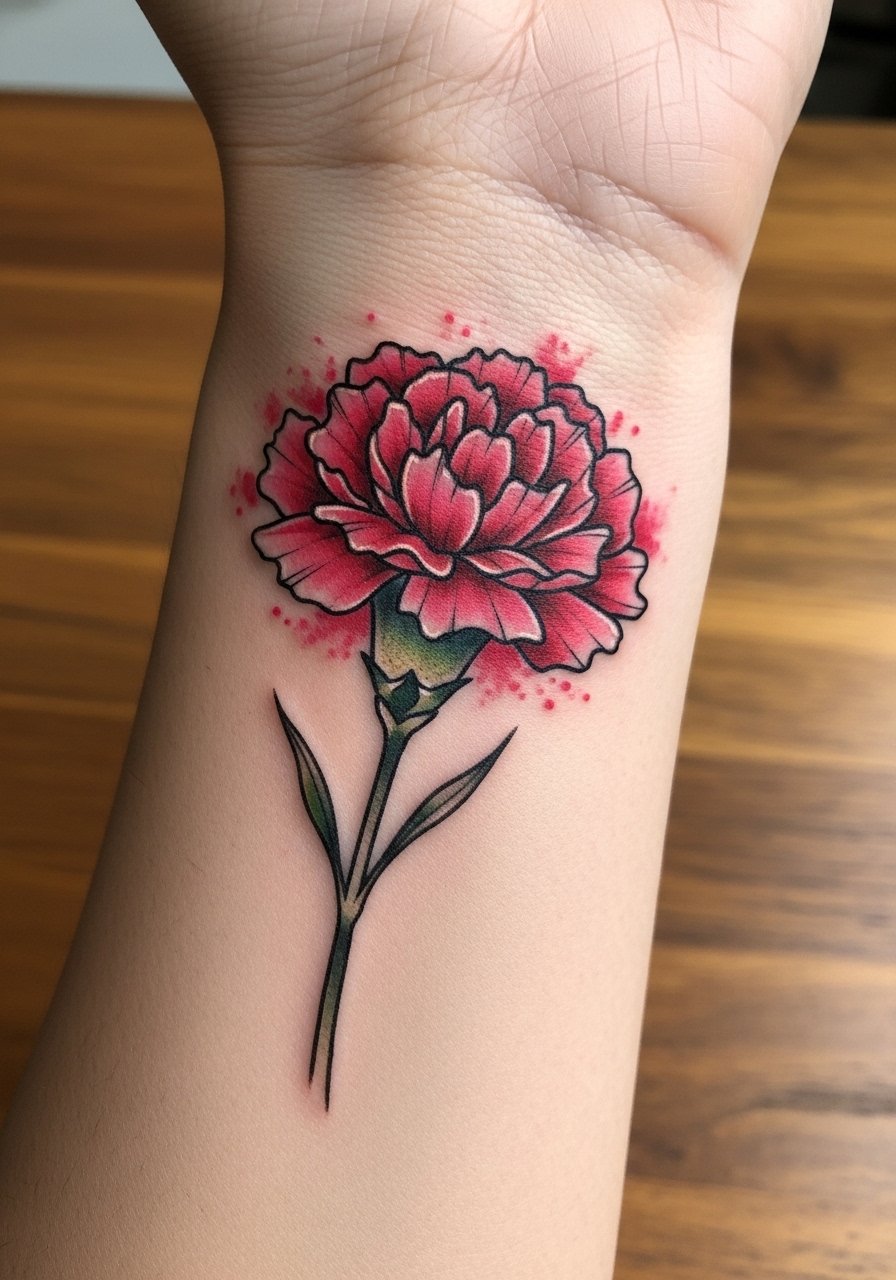
A single, bold carnation wrapping slightly around the wrist reads like a delicate bracelet. This idea blends crisp fine line outlines with saturated watercolor fills for petals that seem to move when you flex your wrist. It's symbolic, compact, and shows well under short sleeves. If you're nervous about pain on the wrist, try applying Zensa numbing cream about 45 minutes before—many people say it takes the edge off.
Style & Design Details
- Tattoo style: Fine line + watercolor
- Recommended size: 2–3 inches (wraps the wrist)
- Best placement(s): outer wrist, inner wrist, forearm edge
- Color vs. blackwork: Color-forward — saturated magenta, coral, and soft greens
- Design elements: single-needle outline, wet-on-wet watercolor blending, light white highlights, subtle dotwork center, negative-space veins
- Longevity note: Fine line edges need SPF protection; watercolor fades faster without touchups
- Who it suits: first-timers, minimalists, sentimental pieces
Finding the Right Artist
Look for portfolios where fine line meets watercolor without muddying. Ask to see healed photos of wrist work and scaled examples. Avoid an artist who primarily does heavy blackwork for this delicate finish. An experienced color artist is preferable over an apprentice. If you want custom tweaks, sketching in Procreate can help — try Procreate if you create references.
Aftercare & Healing Tips
Leave a short Saniderm wrap on for 24–48 hours if your artist uses it, then wash gently twice daily with a fragrance-free soap like Dr. Bronner’s unscented castile soap. After peeling, a thin layer of unscented Lubriderm lotion keeps the skin supple. Expect light scabbing around fine lines; don’t pick. Apply an SPF 50 stick to protect the color once fully healed.
- Mini Carnation Behind the Ear (Subtle Color Pop)
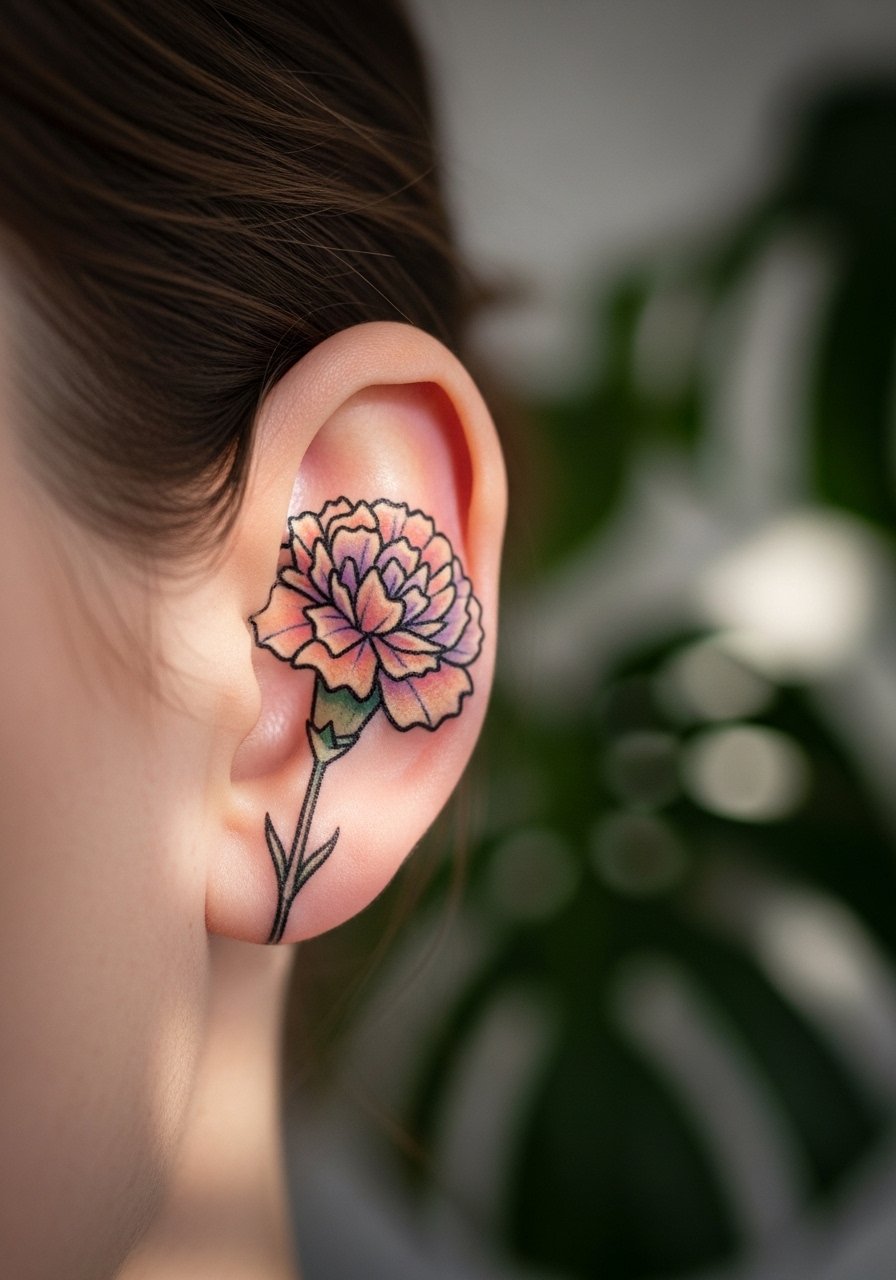
A behind-the-ear carnation gives a discreet color pop when you tuck hair back. This tiny placement favors single-needle detail and soft pastel fills so it reads delicate rather than sticker-like. Pain is moderate — the area is thin-skinned but small. For tiny placements, a light topical anesthetic like EMLA cream can help, but always check with your artist first.
Style & Design Details
- Tattoo style: Single-needle / minimalist color
- Recommended size: 0.5–1 inch
- Best placement(s): behind ear, behind earlobe, nape hairline
- Color vs. blackwork: Pastel color recommended for subtlety
- Design elements: single-needle contour, soft gradient fill, tiny stem, micro dots, minimal white highlights
- Longevity note: Pastels can fade faster; touch-ups may be needed every few years
- Who it suits: subtle aesthetic lovers, first-timers, hair-flip romantics
Finding the Right Artist
Search Instagram tags for healed micro color or single-needle work. Ask to see healed micro tattoos, not just fresh shots. Avoid artists who only do bold work; this needs a steady hand. Apprentices may handle minis, but pick someone with documented micro color pieces.
Aftercare & Healing Tips
Small tattoos heal fast but require careful cleaning. Use gentle soap and light moisturization with an unscented lotion. Avoid earrings or friction for the first two weeks. If you prefer a protective barrier, small strips of Saniderm can prevent rubbing. A tiny SPF stick after healing prevents pastel washout.
- Neo-Traditional Carnation Thigh Bouquet
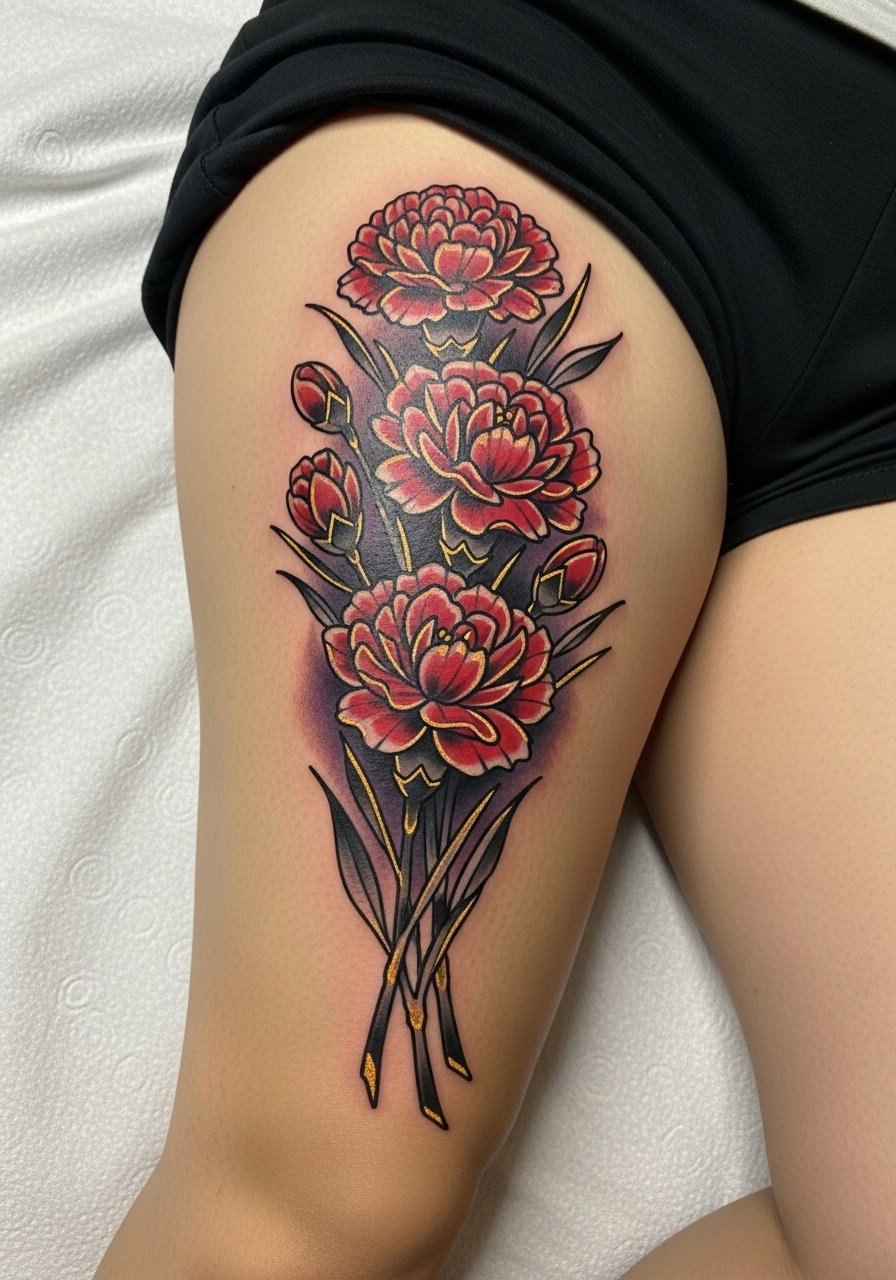
This idea takes the carnation into neo-traditional territory: bold outlines, saturated jewel tones, and stylized shading. A thigh bouquet gives room for petals, leaves, and ornamental details like banner work or geometric accents. Thighs tolerate color well, and the area is less prone to sun, so color stays vibrant longer. Consider an Emla numbing cream for longer sessions.
Style & Design Details
- Tattoo style: Neo-traditional
- Recommended size: palm-sized to half-thigh
- Best placement(s): outer thigh, upper thigh, hip wrap
- Color vs. blackwork: Heavy color with strong black outlines
- Design elements: thick linework, saturated fill, ornamental scrolls, stipple shading, small banner option
- Longevity note: Bold outlines age well; color retention benefits from minimal sun exposure
- Who it suits: collectors, anyone wanting statement floral art, lovers of bold palettes
Finding the Right Artist
Look for artists with neo-traditional florals in their deck. Ask for healed thigh photos and how they layer color in sessions. Don’t book someone who has no solid color layering examples. For complex compositions, a seasoned artist is preferable.
Aftercare & Healing Tips
Large thigh pieces can be wrapped with Saniderm for the first 48 hours, then washed gently twice daily. Use Hustle Butter Deluxe tattoo aftercare balm during peeling to keep color lustrous. Keep the area loose and avoid tight pants while it heals. Plan for touch-ups at 8–12 weeks if saturation looks uneven.
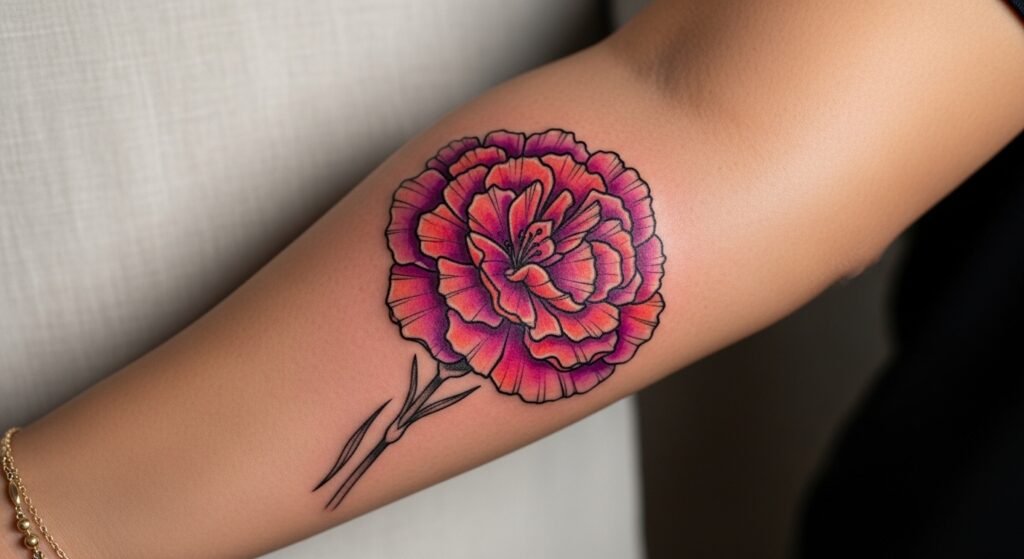
- Black Outline Carnation with Neon Color Fill
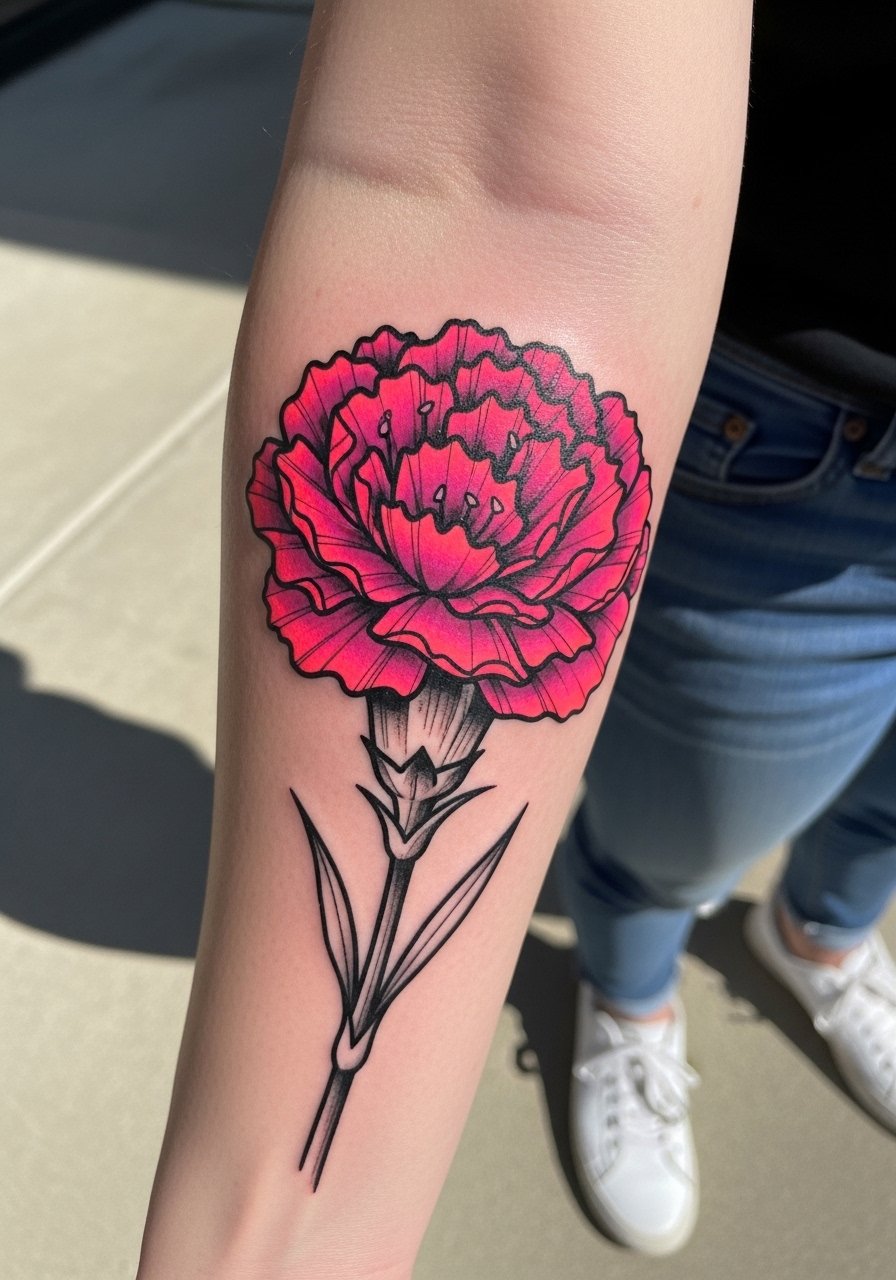
A crisp black outline plus neon or high-saturation color makes carnation petals pop like stained glass. This hybrid feels modern and bright without losing structure. Neon hues can be more prone to subtle fading, so plan for color-booster touch-ups and use a top-grade tattoo sunscreen stick once healed.
Style & Design Details
- Tattoo style: Illustrative black-outline + neon color
- Recommended size: 2–4 inches
- Best placement(s): forearm, calf, outer bicep
- Color vs. blackwork: Bold black outlines with neon/punchy color fills
- Design elements: thick contour, flat color blocks, light stippling for depth, minimal white sparkles, negative space petals
- Longevity note: Neon pigments can dull; good color density and SPF help
- Who it suits: bold color lovers, modern aesthetics, people wanting graphic florals
Finding the Right Artist
Find artists known for color saturation and clean lineweight. Ask to see healed photos under natural light. Avoid artists who lack neon/heavy-saturation experience. A mid-career color specialist is best.
Aftercare & Healing Tips
Keep heavy-color pieces moisturized with an unscented lotion like After Inked tattoo lotion. Once healed, apply an SPF 50 tattoo sunscreen stick before sun exposure to avoid neon washout.
- Watercolor Carnation Shoulder Splash
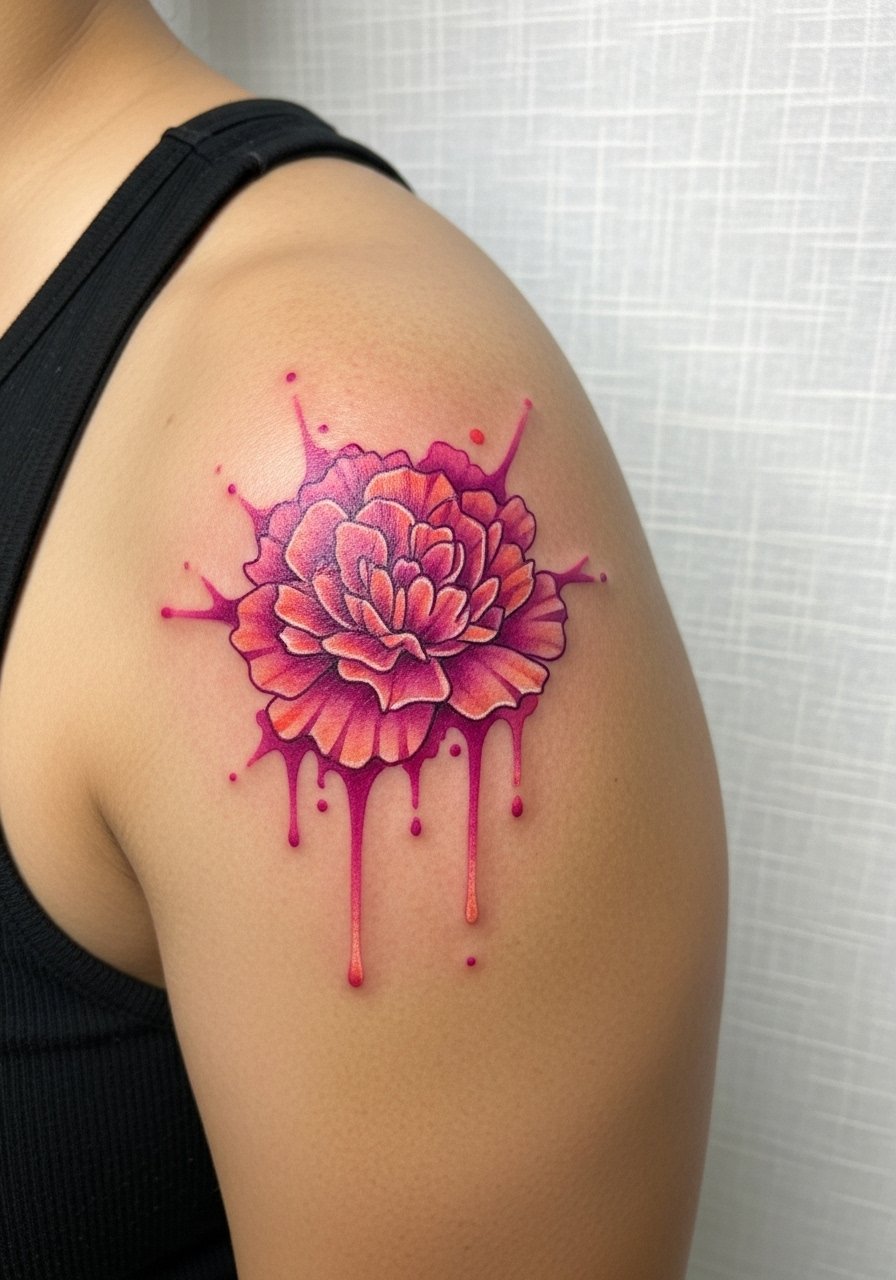
A shoulder splash uses the curvature of the shoulder to make watercolor petals flow naturally. This style feels airy and painterly, and the rounded canvas helps colors refract with movement. Shoulders experience mild pain and are an excellent place for larger color experiments. Bring a mockup to your artist — reference sheets help them translate brush-stroke effects into tattoo techniques.
Style & Design Details
- Tattoo style: Watercolor / painterly
- Recommended size: palm-sized to shoulder cap wrap
- Best placement(s): shoulder cap, upper back, clavicle wrap
- Color vs. blackwork: color-dominant with soft ink edges
- Design elements: wet-on-wet gradients, feathered edges, light white highlights, loose stemwork, color bleed
- Longevity note: Watercolor edges can soften over time; touch-ups maintain vibrancy
- Who it suits: free-spirited aesthetics, cottagecore fans, painters and creatives
Finding the Right Artist
Look for artists with strong watercolor portfolios and healed photos. Ask how they layer color and avoid artists who only simulate watercolor with heavy blackwork. For custom digital mockups, a reference drawn in Procreate helps.
Aftercare & Healing Tips
Watercolor pieces benefit from initial Saniderm protection if your artist uses it. Keep the area out of sun during healing, and use a fragrance-free soap. For color longevity, an occasional application of a tattoo brightening balm like Redemption tattoo color balm after fully healed helps maintain pop.
- Fine Line Mini Carnation on Finger
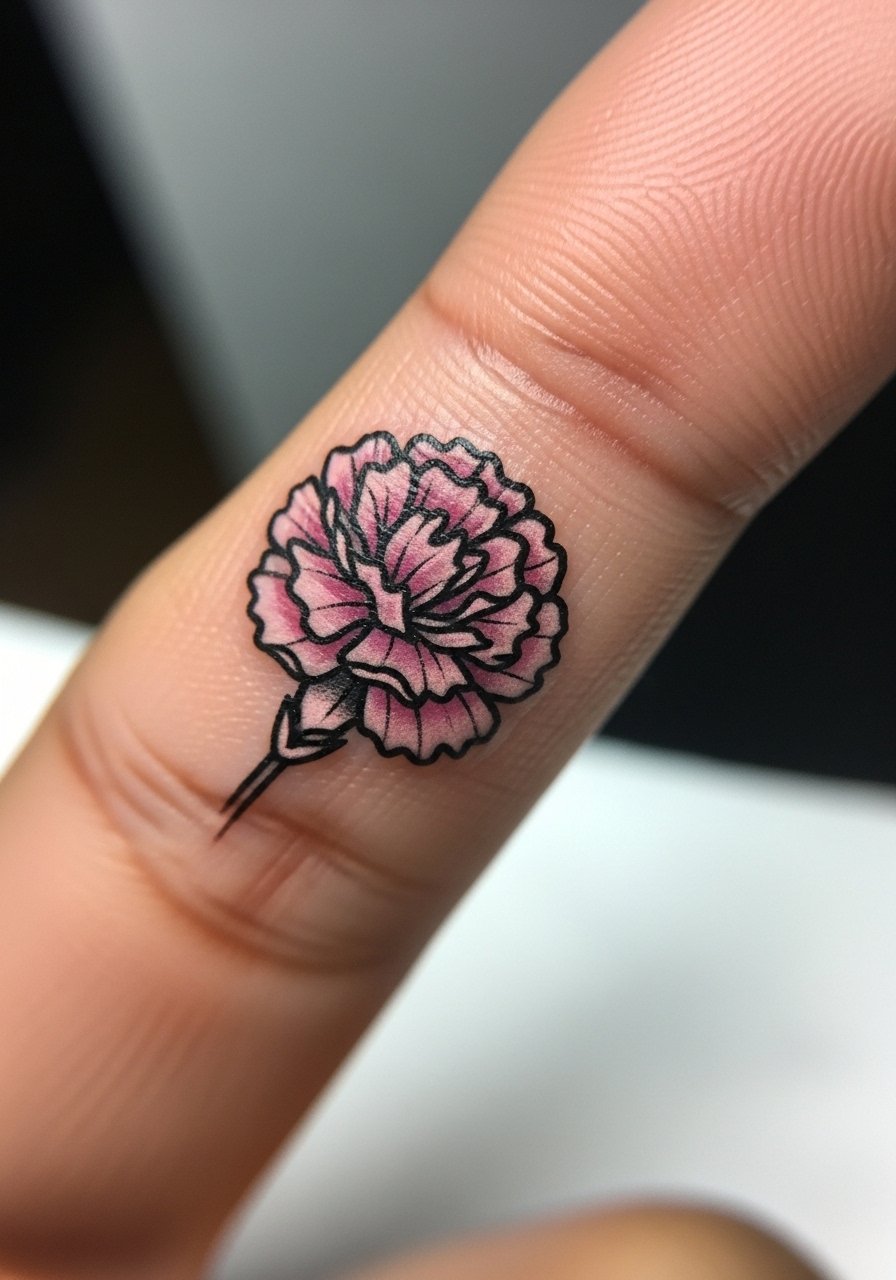
Finger tattoos are intimate and on-trend, but they face fast fading. A tiny fine-line carnation on the finger is charming if you accept likely annual touch-ups. For better longevity, place the design on the side of the finger rather than the tip. A thin coat of unscented lotion keeps skin from drying during healing.
Style & Design Details
- Tattoo style: Fine line / micro
- Recommended size: 0.5–1 inch
- Best placement(s): finger side, ring finger base, pinky side
- Color vs. blackwork: Subtle color or blackwork recommended; heavy color fades quickly
- Design elements: single-needle line, micro shading, tiny stem, negative-space petal tips
- Longevity note: High fade risk; plan for touch-ups yearly
- Who it suits: tiny-tattoo lovers, commitment-light clients, jewelry-replacement enthusiasts
Finding the Right Artist
Book an artist experienced in micro finger work. Ask to see healed finger photos months out. Avoid artists who can’t show long-term healed examples. Apprentices rarely have enough micro experience for durable finger work.
Aftercare & Healing Tips
Keep fingers out of heavy water and chemicals while healing. Use a gentle soap and thin layers of an unscented lotion. Expect finer line softening; plan a touch-up at 6–12 months. If you want to test placement, try an Inkbox semi-permanent kit first.
- Vintage Botanical Carnation Sleeve Accent
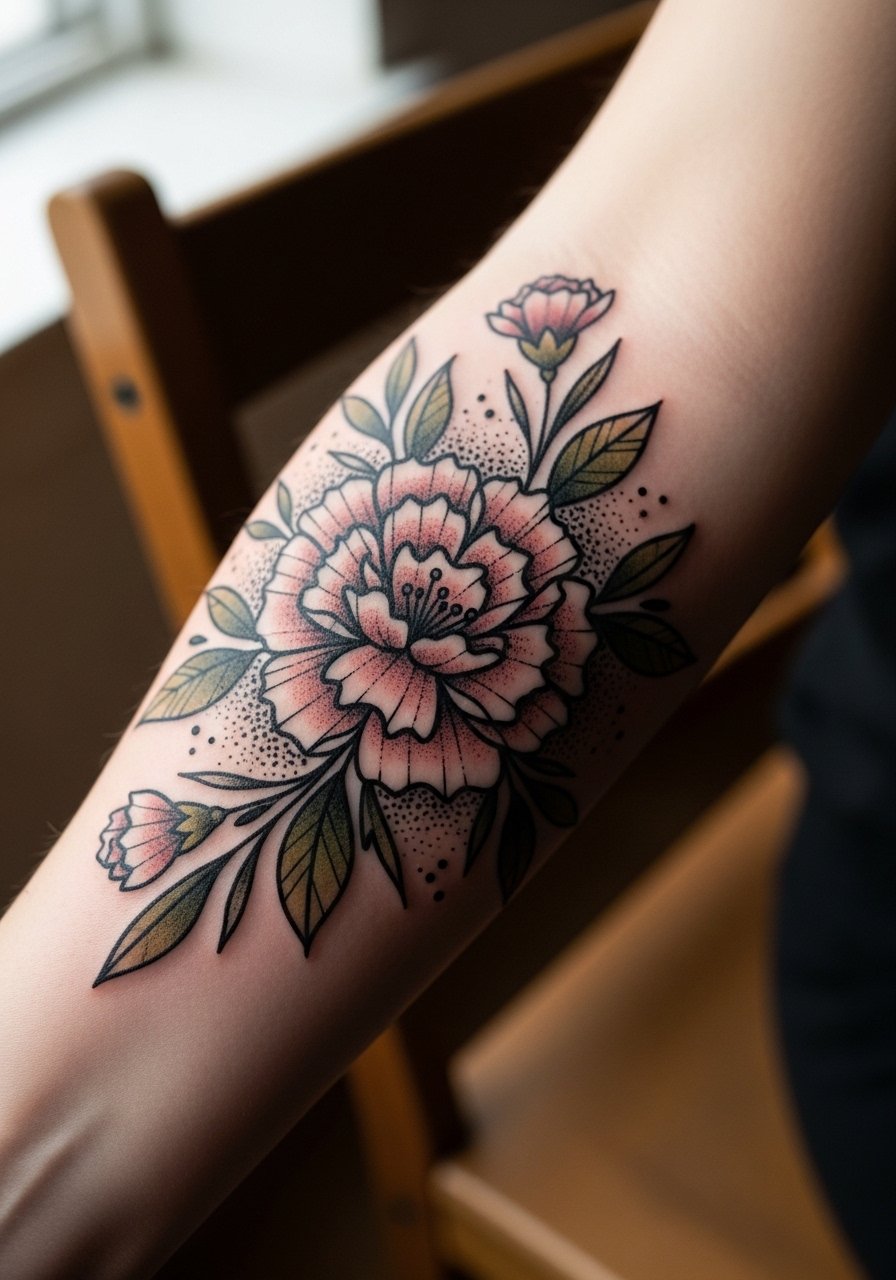
A vintage botanical study pairs carnations with other florals and leaves for a cohesive sleeve accent. This look leans on illustrative linework, stipple shading, and muted color palettes for that aged botanical-print feel. Sleeves are multi-session projects, so plan for staged saturation work and maintenance.
Style & Design Details
- Tattoo style: Illustrative / vintage botanical
- Recommended size: quarter to half sleeve
- Best placement(s): forearm sleeve, full sleeve, inner arm bouquet
- Color vs. blackwork: Muted color accents with drawn blackwork anchors
- Design elements: stipple shading, technical linework, layered petals, botanical labels (optional), soft color washes
- Longevity note: Lines and stippling age well; muted pigments may need periodic refresh
- Who it suits: collectors, botanical nerds, those who want a classic look
Finding the Right Artist
Find artists with portfolio consistency in botanical illustration. Ask about session planning and color saturation strategy. Avoid artists who rush session pacing; botanical layering should be deliberate. A well-reviewed color artist or illustrative specialist is ideal.
Aftercare & Healing Tips
Large areas need thorough care: Saniderm for the first 48 hours, soap washing, and Hustle Butter during the peeling phase. Protect with SPF 50 once healed. Expect to book touch-ups after the initial healing cycle.
- Geometric Carnation with Color Blocks
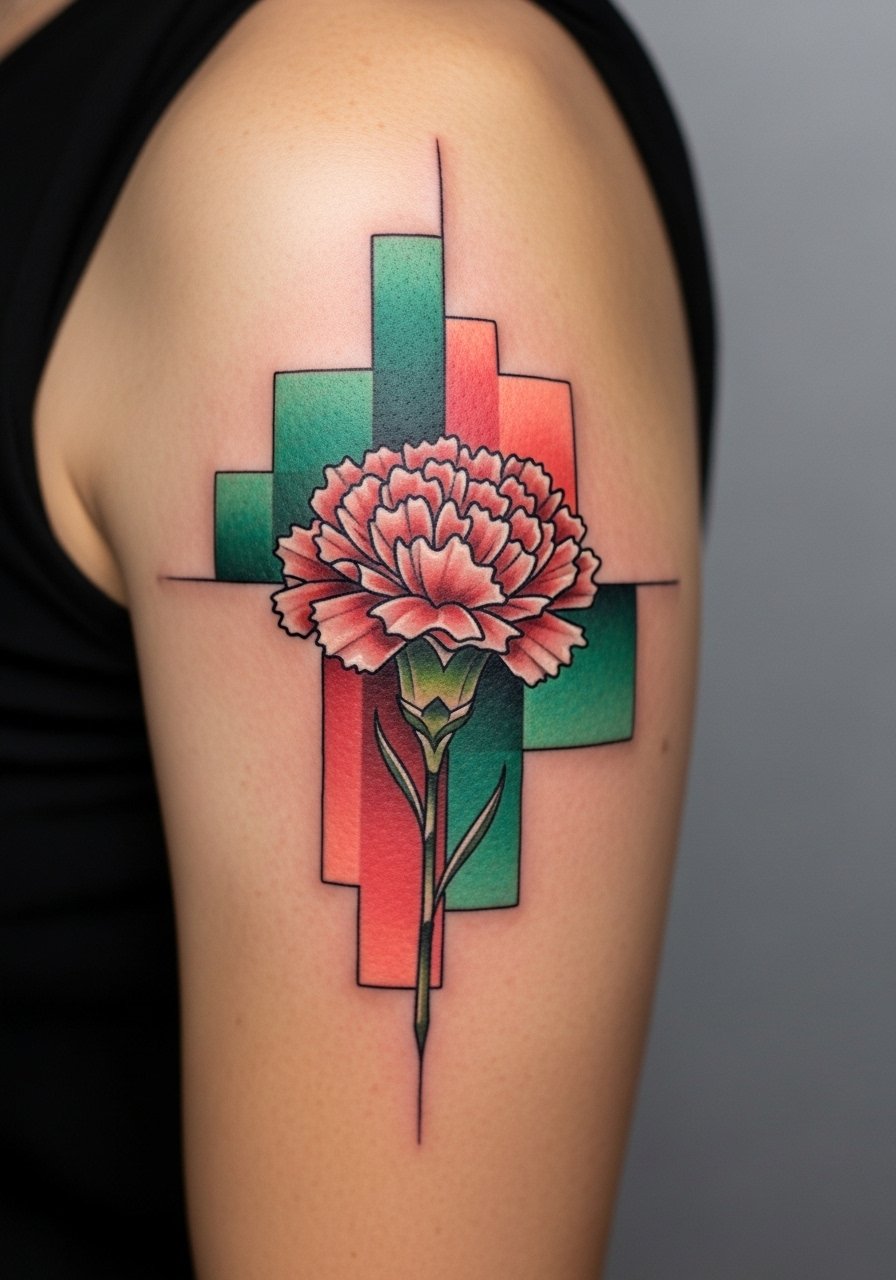
Pairing a carnation with geometric shapes creates a modern contrast between organic petals and sharp forms. This look is great for people who like structure and color. Use solid color blocks and crisp lines to keep the design graphic and eye-catching.
Style & Design Details
- Tattoo style: Geometric + illustrative
- Recommended size: 2–5 inches
- Best placement(s): upper arm, outer forearm, calf
- Color vs. blackwork: Balanced — bold color blocks with black contour
- Design elements: geometric negative space, flat color fills, precise line anchors, layered petals, small dotwork accents
- Longevity note: Solid blocks of color age reliably; crisp lines need SPF
- Who it suits: modern-minimalists, graphic-design lovers, those wanting a contemporary floral twist
Finding the Right Artist
Look for artists who execute clean geometric tattoos and color blocking. Ask about stencil precision and how they prevent color bleed. A precise line artist with color experience is ideal.
Aftercare & Healing Tips
Large color blocks can scab more noticeably. Keep them moisturized with a fragrance-free lotion like Lubriderm, and avoid heavy friction. Once healed, use a mineral SPF stick to protect the blocks from UV damage.
- Tiny Carnation Behind Collarbone (Subtle Romance)
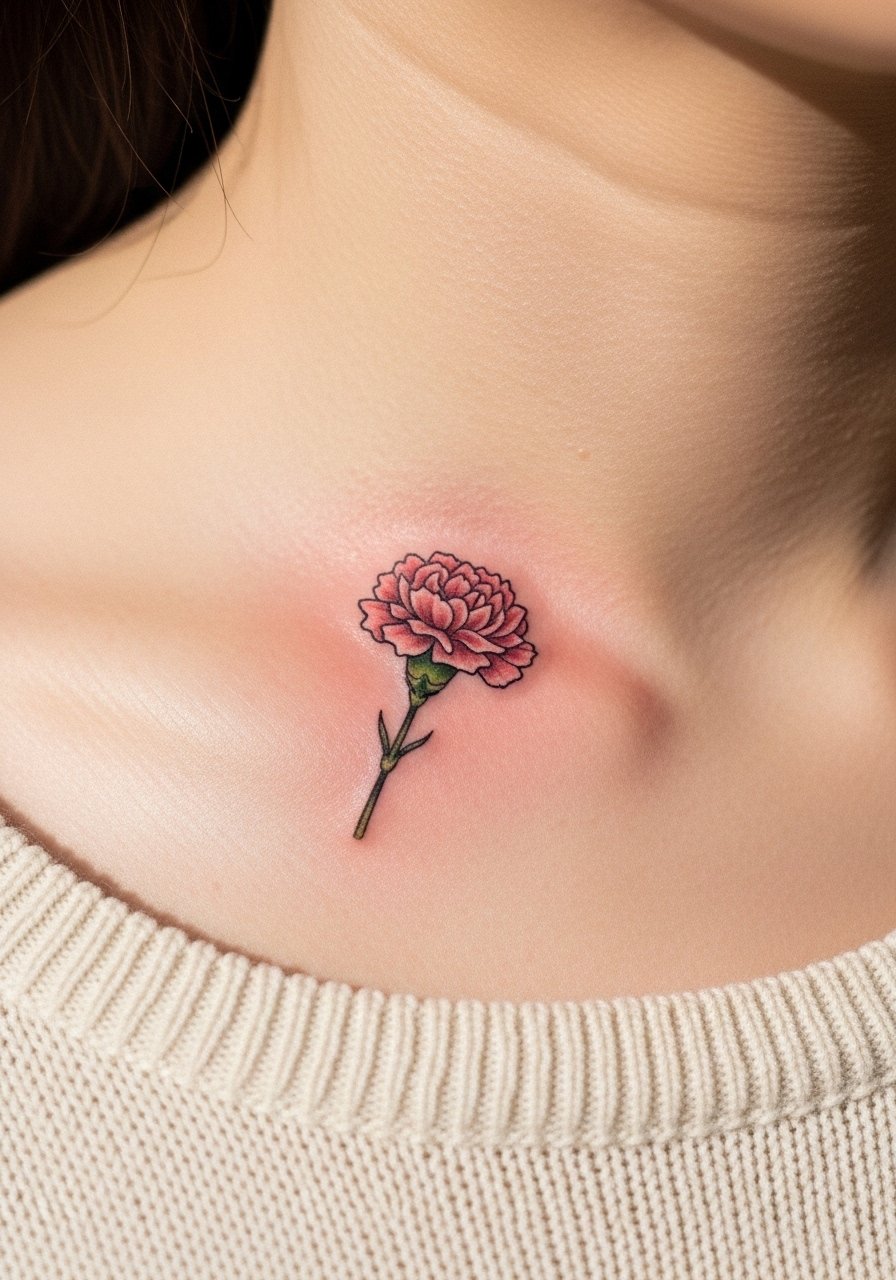
Tucked behind the collarbone, a little carnation feels flirtatious and private. This placement is slightly tender during inking but photographs beautifully with low necklines. Pastel shading and slim stems keep it feminine and wearable.
Style & Design Details
- Tattoo style: Delicate illustrative
- Recommended size: 1–2 inches
- Best placement(s): behind collarbone, clavicle, upper chest
- Color vs. blackwork: Soft color recommended
- Design elements: single-needle outlines, soft shading, leaflet details, negative space highlights
- Longevity note: Chest area holds color well, but sun exposure (through low-cut tops) can affect longevity
- Who it suits: romantic aesthetics, sentimental placements, first-timers
Finding the Right Artist
Seek artists with elegant chest placements and healed photos. Ask how they handle stencil movement on the body. Experienced artists who work well with skin curvature are preferred.
Aftercare & Healing Tips
Chest tattoos often appreciate Saniderm for the first 24 hours if recommended by your artist. Use gentle soap and an unscented lotion like After Inked while peeling. Avoid tight necklaces that could rub the area.
- Carnation and Script Memorial Piece
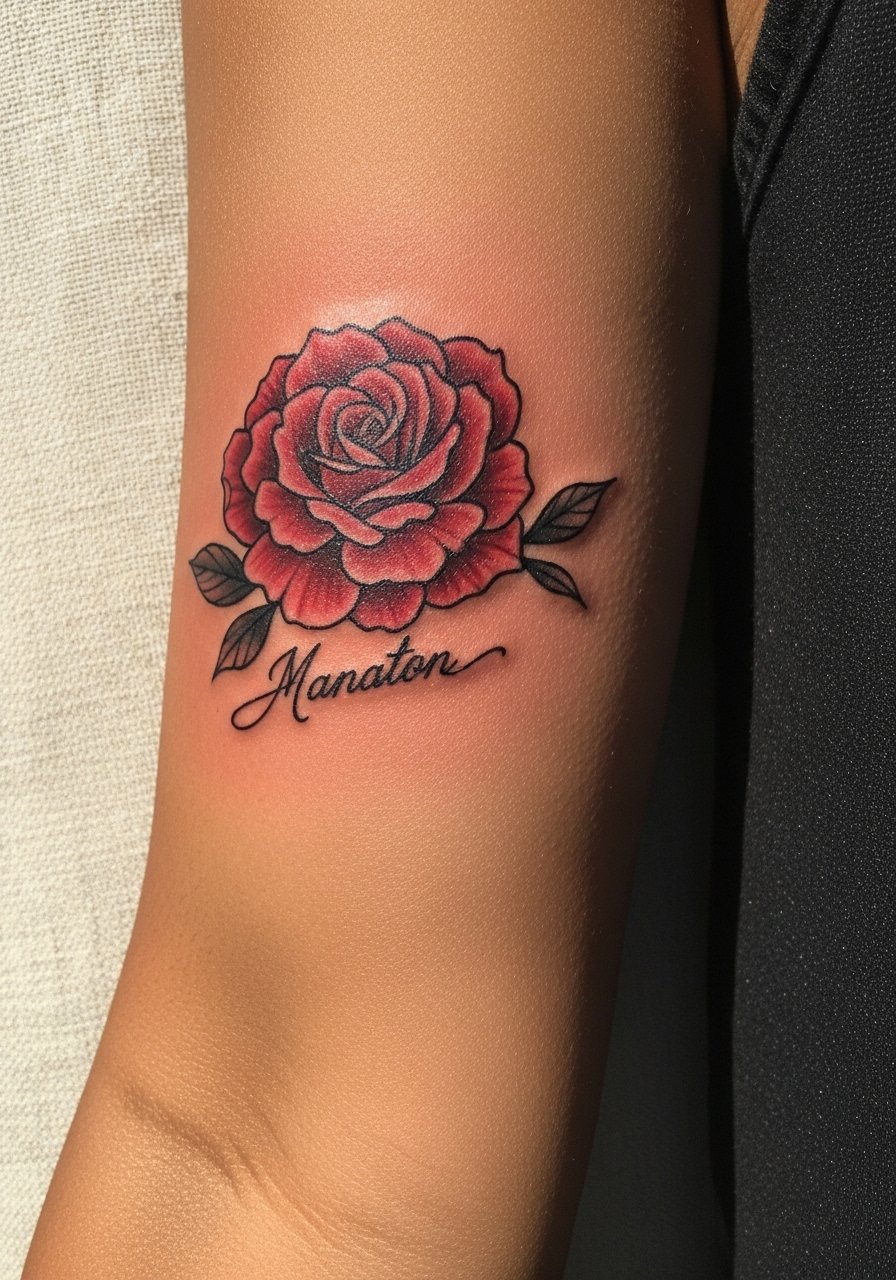
Carnations are classic memorial flowers. Pairing a single carnation with fine script makes a quiet, meaningful piece. Use illustrative blackwork for the script and colored petals for emotional emphasis. Inner bicep placement keeps it private and easy to cover.
Style & Design Details
- Tattoo style: Illustrative + script
- Recommended size: 2–3 inches (including script)
- Best placement(s): inner bicep, ribcage, chest
- Color vs. blackwork: Color for flower, black for script
- Design elements: cursive script, single-needle contours, shaded petals, small heart or date optional, thin stem
- Longevity note: Script thin lines can blur over many years; pick a slightly bolder script weight
- Who it suits: memorial tattoos, sentimental people, those wanting discreet placements
Finding the Right Artist
Look for artists with clean script samples and color florals. Ask how they size the script for readability over time. Avoid artists who primarily do block lettering if you want fine cursive.
Aftercare & Healing Tips
Inner-arm pieces respond well to Saniderm for the first 48 hours. Use fragrance-free soap and a thin layer of Hustle Butter during the peeling stage. Expect possible slight script fading; schedule a touch-up after the initial healing.
- Tiny Colorful Carnation Ankle Accent
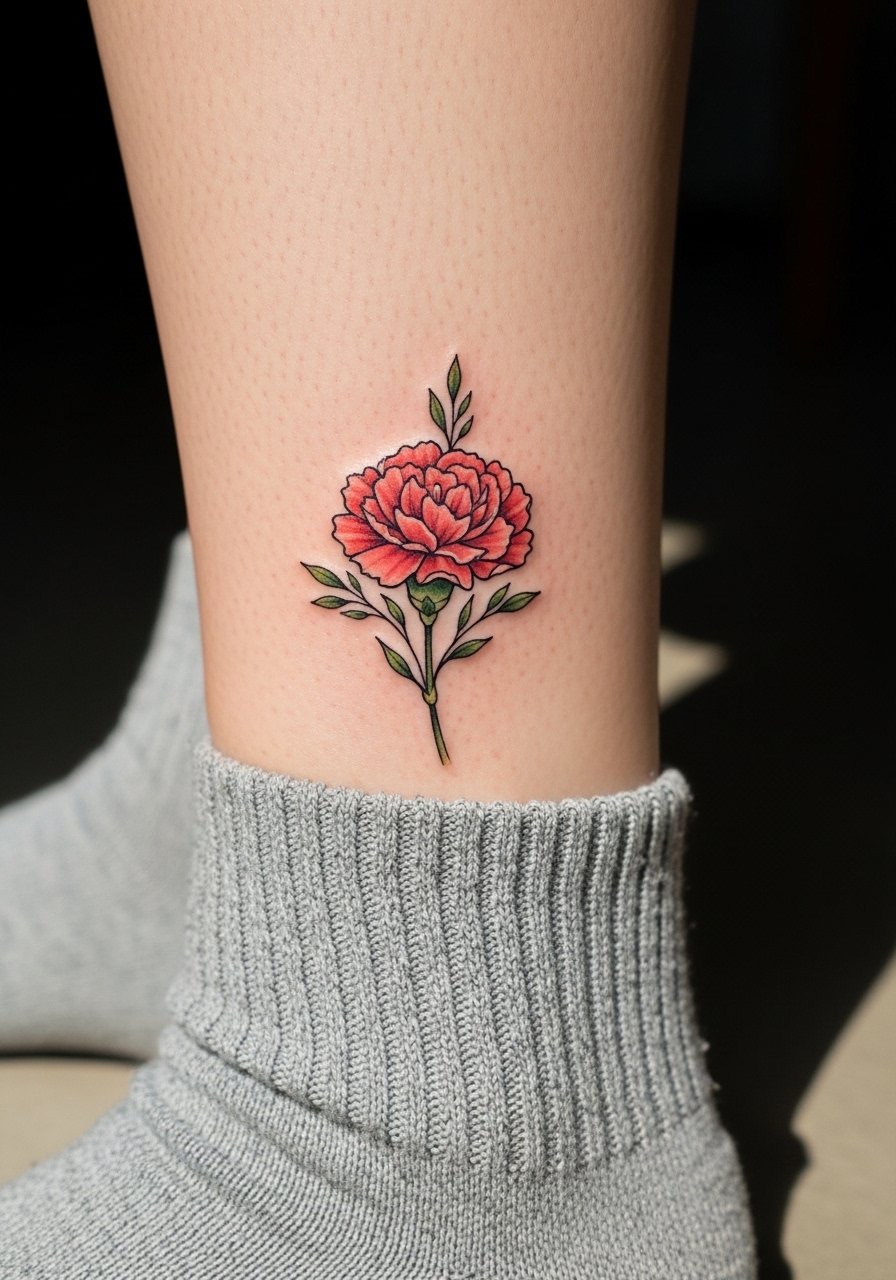
Ankle carnations are cute, mobile, and great for seasonal showing off. The ankle can be more sensitive and prone to movement, so size down to increase longevity. For a little extra comfort, apply a numbing gel if you prefer.
Style & Design Details
- Tattoo style: Micro color botanical
- Recommended size: 0.75–1.5 inches
- Best placement(s): outer ankle, inner ankle, just above heel
- Color vs. blackwork: Color-forward but small
- Design elements: compact petals, small leaves, micro dot accents, delicate stem
- Longevity note: Ankles experience friction from socks and shoes; expect maintenance
- Who it suits: seasonal-showoff people, minimalists, travel-inclined tattoo owners
Finding the Right Artist
Find artists with healed ankle images. Ask about needle depth for moving skin. Avoid inexperienced micro artists with no foot/ankle portfolio.
Aftercare & Healing Tips
Keep shoes loose and avoid ankle friction for two weeks. Wash with gentle soap and use unscented lotion. Consider a second-skin barrier like Saniderm if your artist recommends it for ankle placements.
- Bold Neo-Traditional Carnation on Calf
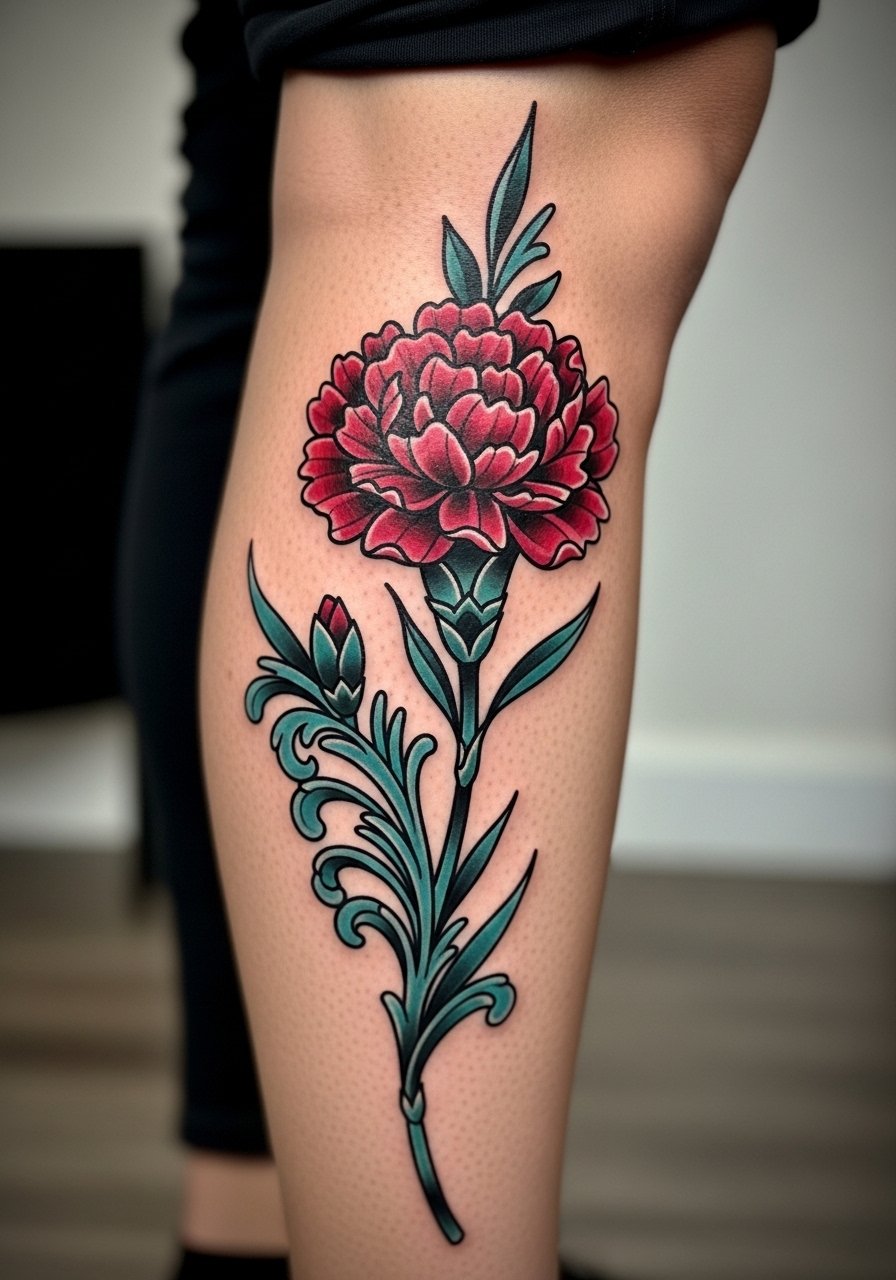
A calf offers room for size and drama. Neo-traditional carnations on the calf can be bold, saturated, and wearable in both casual and dressier settings. Calves tend to hold color well and are less affected by clothing abrasion.
Style & Design Details
- Tattoo style: Neo-traditional
- Recommended size: 4–8 inches
- Best placement(s): outer calf, inner calf, lower leg wrap
- Color vs. blackwork: Heavy color with thick outlines
- Design elements: ornamental leaves, bold contour, layered petals, small background shading, optional banner
- Longevity note: Calf skin maintains saturation; protect from long-term sun exposure
- Who it suits: statement-seekers, leg-sleeve enthusiasts, bold-color fans
Finding the Right Artist
Choose an artist experienced with large neo-traditional florals. Look for balanced color saturation and clean outlines. Ask about session length and healing expectations.
Aftercare & Healing Tips
Large color pieces should be kept clean and moisturized. Use Hustle Butter for long sessions of peeling. Avoid long hot baths during healing and keep the area shaded until fully settled.
- Delicate Carnation Ear Cuff Tattoo
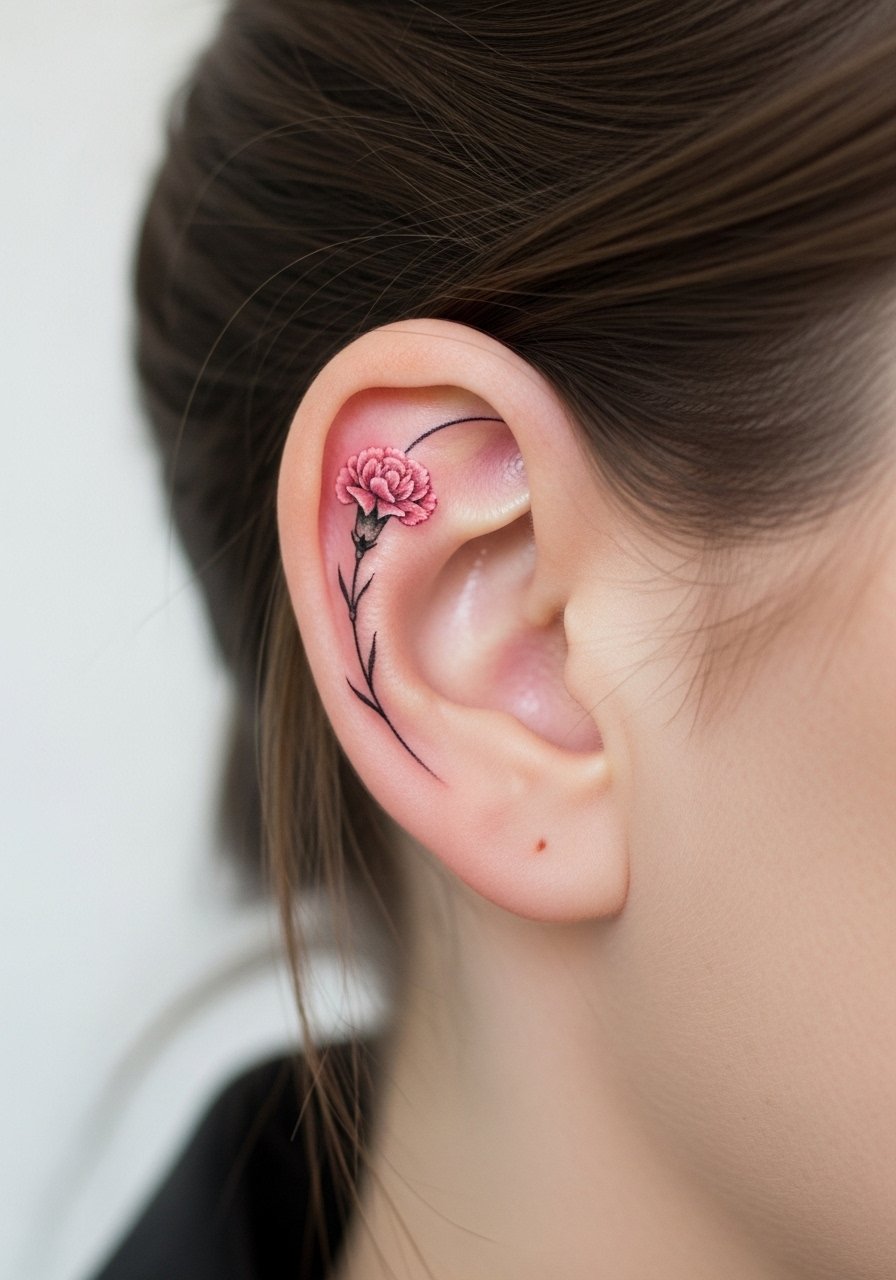
An ear-cuff carnation follows the curve of the helix for a feminine, slightly edgy vibe. The area is thin and sensitive, so sessions are short. Pain is higher but tolerable for most. Keep the design microscopic and single-needle for the cleanest look.
Style & Design Details
- Tattoo style: Micro illustrative
- Recommended size: 0.5–1 inch arc
- Best placement(s): helix, behind upper ear, conch edge
- Color vs. blackwork: Minimal color — small pops better than dense fill
- Design elements: tiny petals, micro dots, curved stem, accent leaf
- Longevity note: High friction with headphones; expect faster fade
- Who it suits: bold jewelry-alternative lovers, micro-tattoo collectors
Finding the Right Artist
Select an artist who posts healed ear tattoos. Ask about technique for thin cartilage. An experienced micro artist is recommended.
Aftercare & Healing Tips
Avoid headphones and earrings rubbing during healing. Clean gently and apply a small amount of unscented lotion. Consider Saniderm if recommended by your pro to prevent infection.
- Blackwork Carnation with Color Center
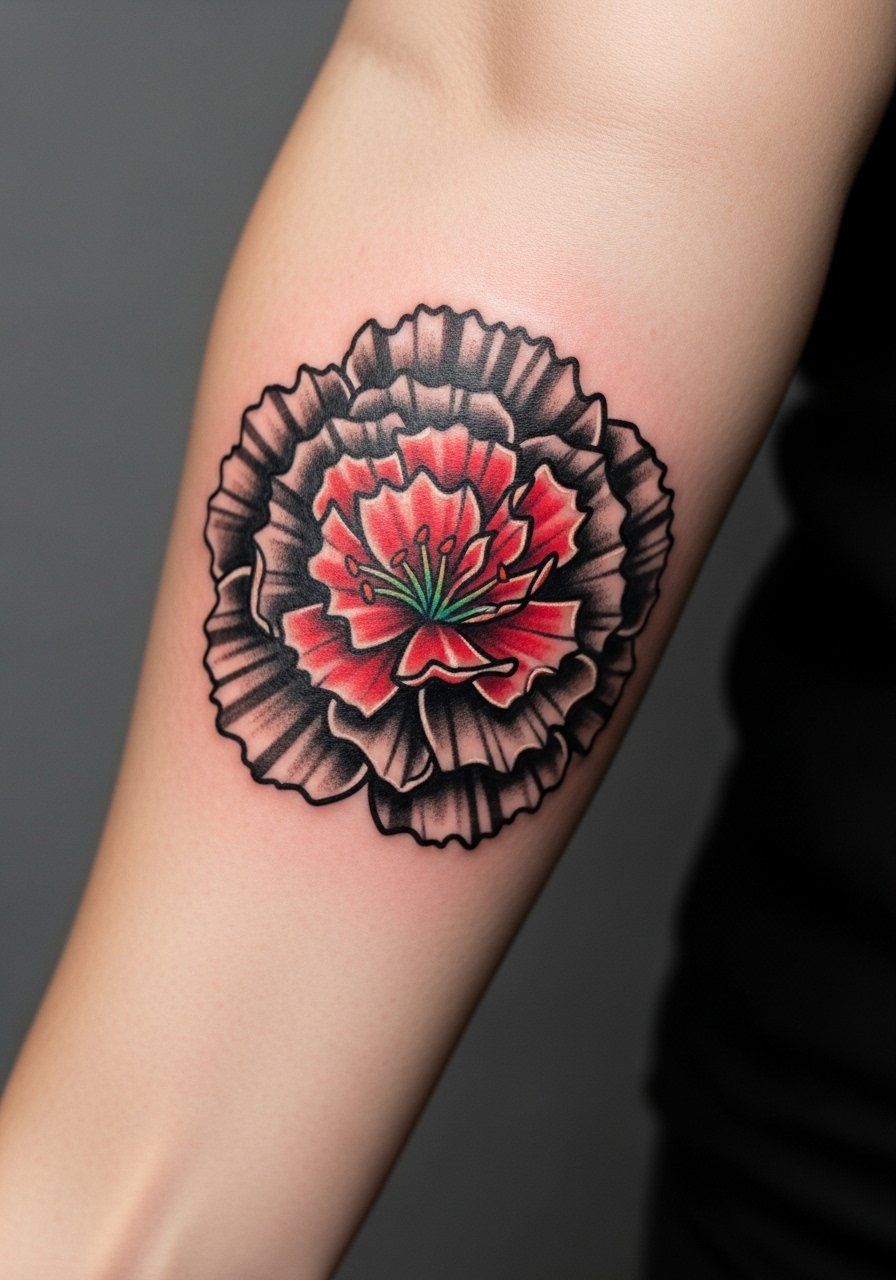
This inversion — heavy blackwork petals with a bright colored center — makes a graphic statement. The contrast draws the eye inward and plays with negative space. Black ages well; the colored core offers the vibrancy people want.
Style & Design Details
- Tattoo style: Blackwork + color focal point
- Recommended size: 2–4 inches
- Best placement(s): inner forearm, chest, thigh
- Color vs. blackwork: Dominantly black with a color focal point
- Design elements: bold black fills, color center, negative space highlights, stipple transitions, leaf silhouettes
- Longevity note: Blackwork holds well; color center needs SPF
- Who it suits: contrast lovers, modern minimalists, graphic enthusiasts
Finding the Right Artist
Find blackwork specialists who also show accurate color insertion. Ask how they layer black next to color. Avoid artists who don’t understand pigment separation for contrast pieces.
Aftercare & Healing Tips
Blackwork can scab differently; keep it clean and moisturized. Use an unscented lotion like After Inked and protect the color center with SPF after healing.
- Watercolor Carnation Ribcage Statement
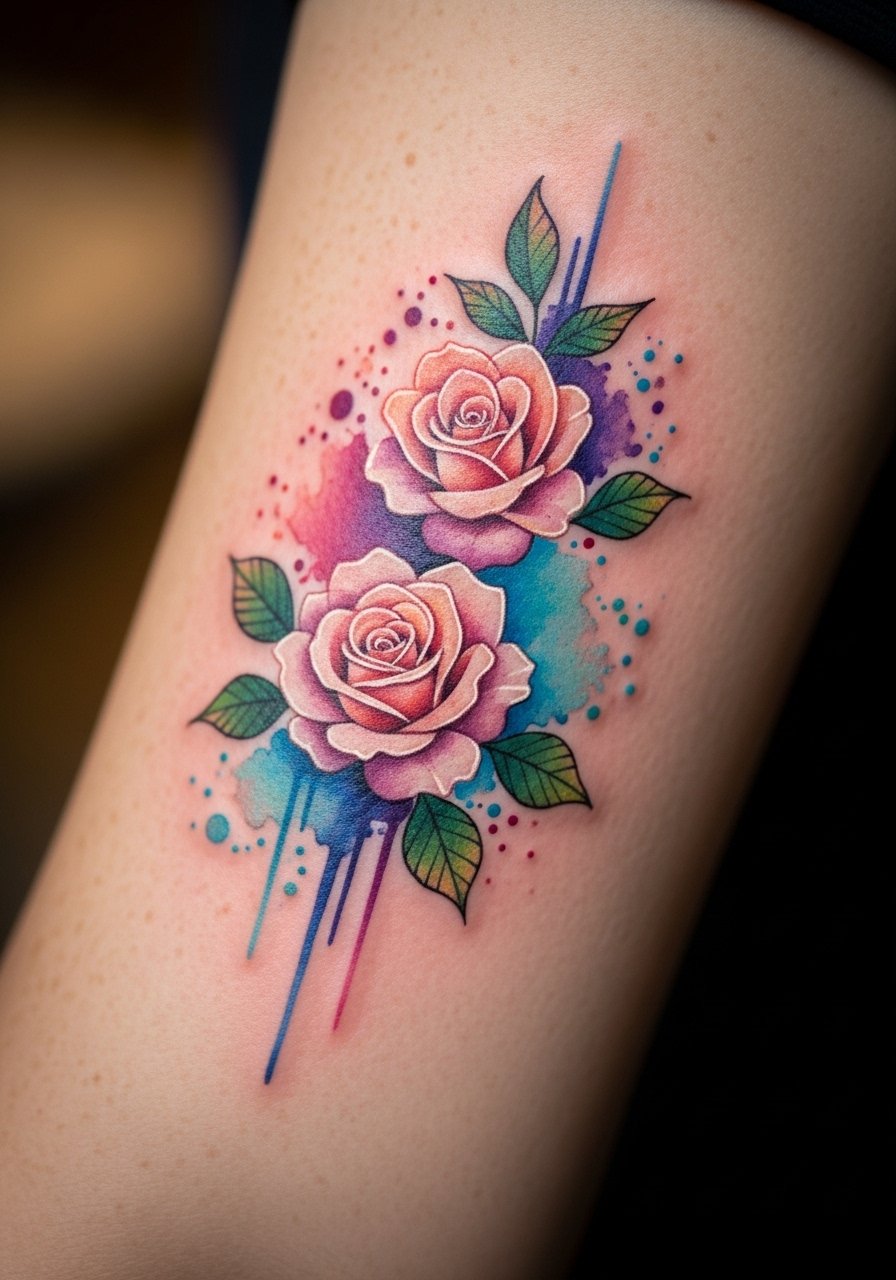
Ribcage tattoos are dramatic and intimate. A watercolor carnation here reads like a brushstroke across the torso. Pain is higher in this placement, so consider Zensa numbing cream if you’re anxious.
Style & Design Details
- Tattoo style: Watercolor / large illustrative
- Recommended size: 5–8 inches
- Best placement(s): ribcage, side torso, upper abdomen
- Color vs. blackwork: Color-dominant watercolor washes
- Design elements: soft fades, loose stems, large petal shapes, light white highlights, airy negative space
- Longevity note: Body movement may affect pigment settlement; careful layering helps
- Who it suits: statement-makers, emotive art lovers, those prepared for ribcage pain
Finding the Right Artist
Choose an artist with large watercolor bodies in their portfolio. Ask about session pacing to manage pain. A seasoned color specialist is recommended.
Aftercare & Healing Tips
Ribcage areas benefit from Saniderm for the first 24–48 hours if your artist supports it. Keep clothing loose, avoid sleeping on the piece, and moisturize with Hustle Butter during peeling. Plan for a touch-up at 8–12 weeks.
- Minimalist Single-Color Carnation on Index Finger
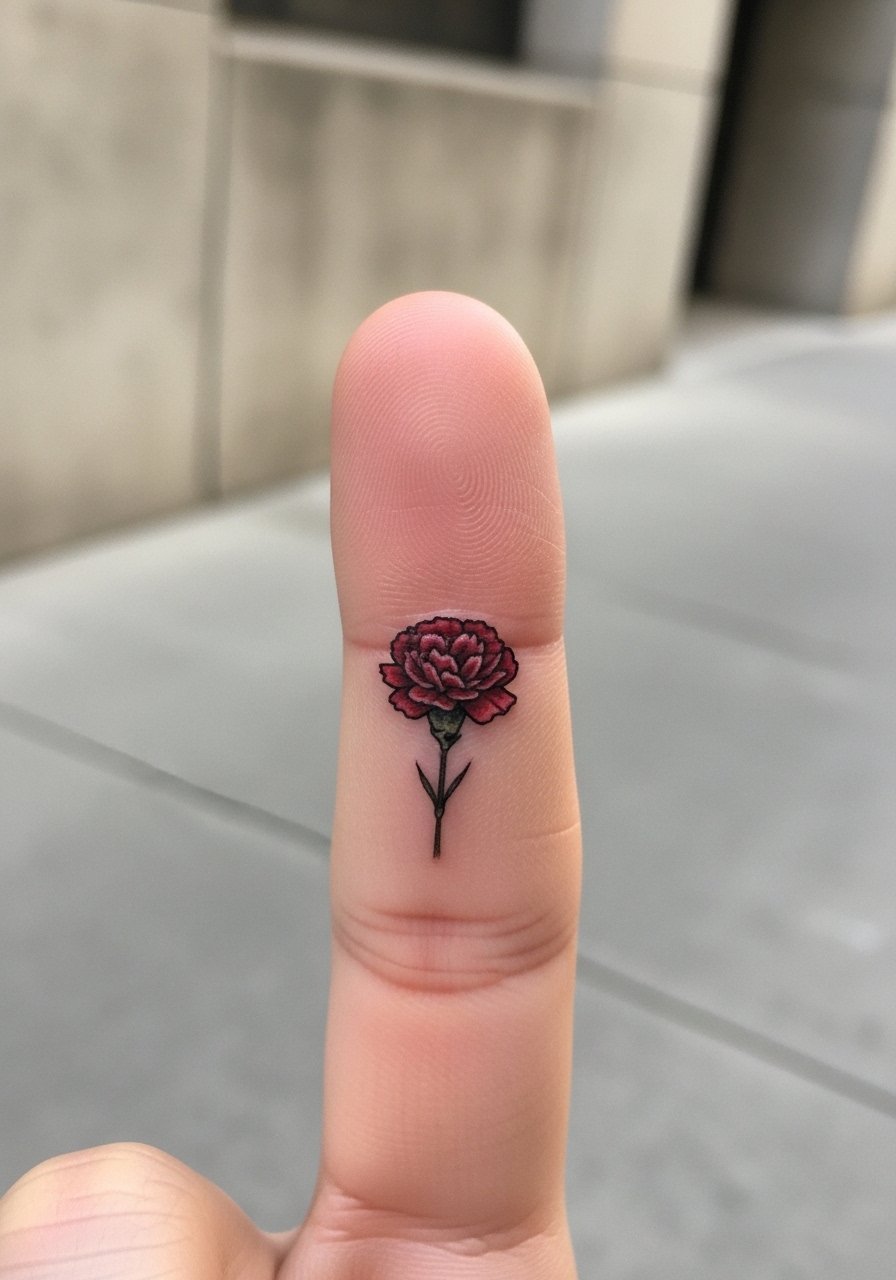
A single-color micro carnation on the index finger reads bold in a small scale. Stick to one pigment to minimize blowout risk and make touch-ups predictable. Fingers need frequent maintenance, but single-color makes it easier and faster.
Style & Design Details
- Tattoo style: Micro single-color
- Recommended size: 0.5–1 inch
- Best placement(s): index finger outer, side of finger, between knuckles
- Color vs. blackwork: Single saturated pigment suggested (dark maroon, deep teal)
- Design elements: micro outline, solid petal shading, tiny stem
- Longevity note: High fade; expect border softening and annual touch-ups
- Who it suits: bold minimalists, people who like easy color maintenance
Finding the Right Artist
Find experienced micro artists with finger work portfolios. Ask about needle depth for fingers. Experienced practitioners are preferable.
Aftercare & Healing Tips
Avoid heavy handwork for a week. Keep it dry and clean; moisturize with an unscented lotion. Consider an annual color refresh. Test placement first with Inkbox temporary tattoos to preview.
- Cottagecore Carnation Wrist Cluster
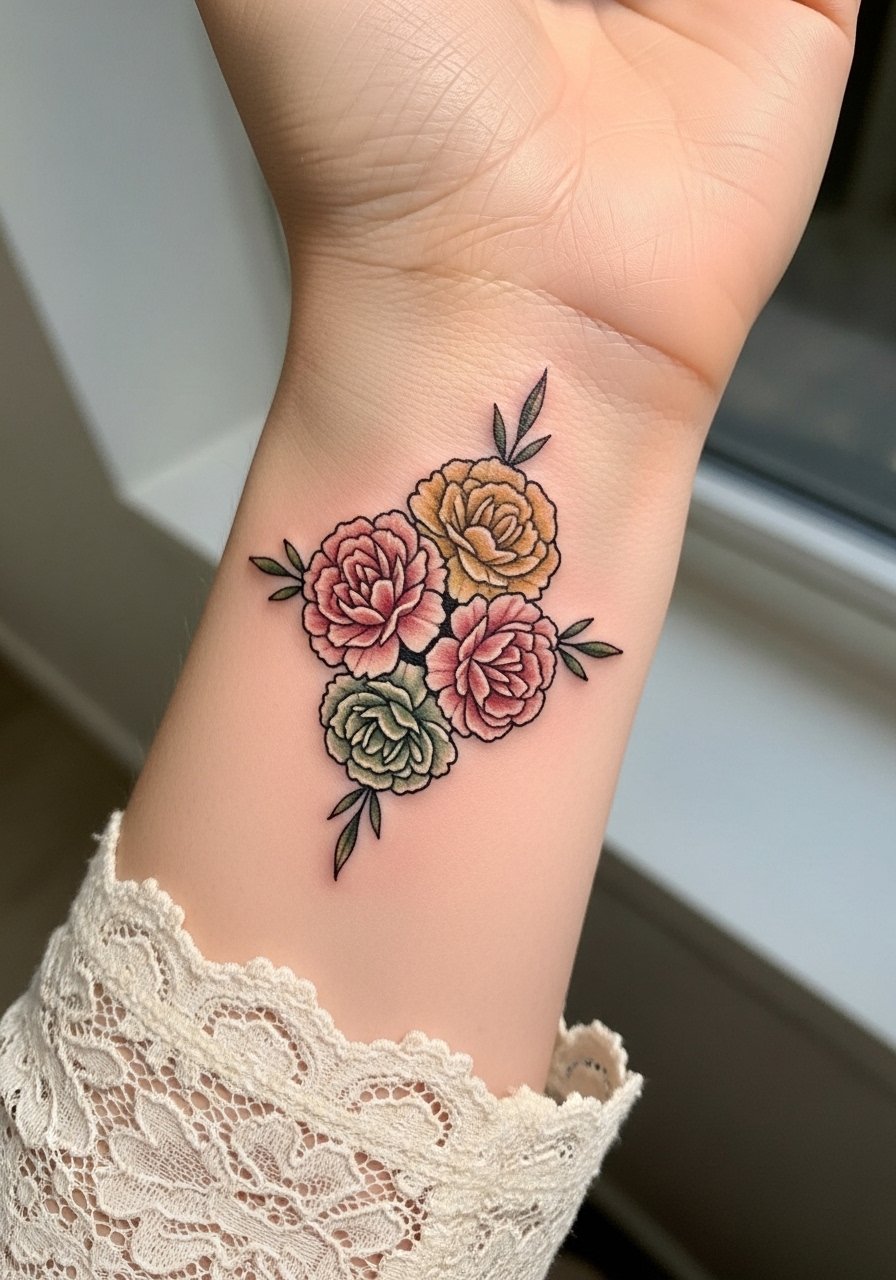
Cottagecore vibes are still trending — soft combinations of carnations and tiny wildflowers make a cozy wrist cuff. This aesthetic favors muted pigments and light linework for a lived-in look.
Style & Design Details
- Tattoo style: Cottagecore / delicate illustrative
- Recommended size: 2–3 inches (wrap)
- Best placement(s): inner wrist, outer wrist, forearm cuff
- Color vs. blackwork: Muted, earthy color palette
- Design elements: small complementary blooms, stemwork, light stippling, faded edge technique, tiny flora accents
- Longevity note: Muted pigments need SPF and regular moisturizing to keep warmth
- Who it suits: cottagecore lovers, romantics, soft-core trend followers
Finding the Right Artist
Pick an artist who shows soft color palettes and healed shots. Ask about pigment selection for muted tones. Avoid artists who only do bright, saturated work.
Aftercare & Healing Tips
Wrap for 24 hours if recommended, wash gently, and moisturize with After Inked. Keep the area out of direct sun during the healing window.
- Bold Carnation Chest Cluster (Centerpiece)
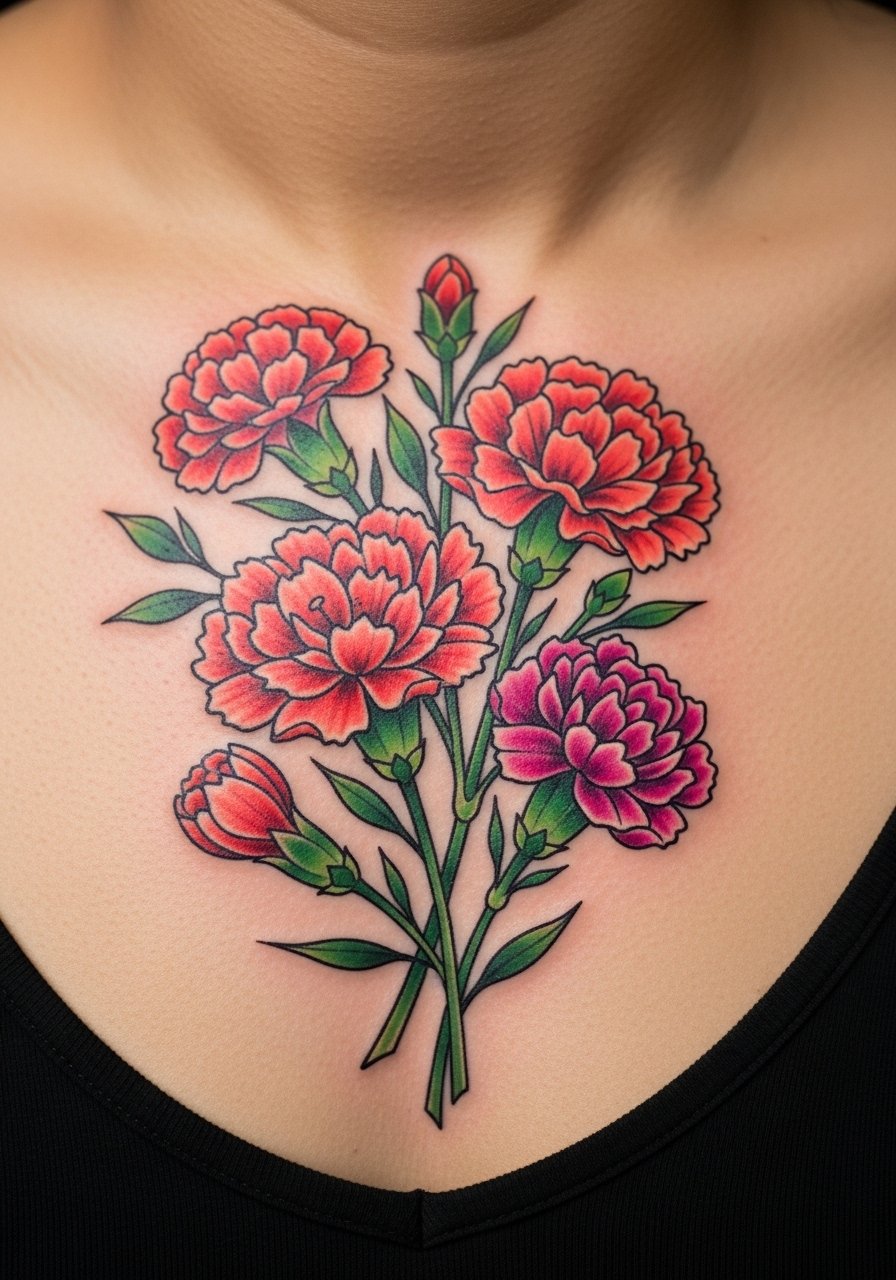
Centered chest pieces feel ceremonial. A bold carnation cluster over the sternum makes a confident statement and photographs well. Expect a moderate to higher pain level. Bring snacks and hydration for longer sessions.
Style & Design Details
- Tattoo style: Bold illustrative
- Recommended size: 3–6 inches
- Best placement(s): sternum, center chest, over heart
- Color vs. blackwork: Bright color with strong black anchors
- Design elements: layered petals, deep vein shading, ornamental leaves, small drop highlights
- Longevity note: Chest holds color well but avoid heavy sun exposure
- Who it suits: statement-tattoo lovers, sentimental commemorations, bold aesthetes
Finding the Right Artist
Seek artists with chest centerpiece work in their galleries. Ask about session length and pain mitigation. Experienced color artists are best for large centerpieces.
Aftercare & Healing Tips
Saniderm for the first day helps reduce friction from clothes. Use Hustle Butter during peeling and avoid tight bras or straps. Schedule a possible touch-up after complete settling.
- Monochrome Pink Carnation on Inner Wrist
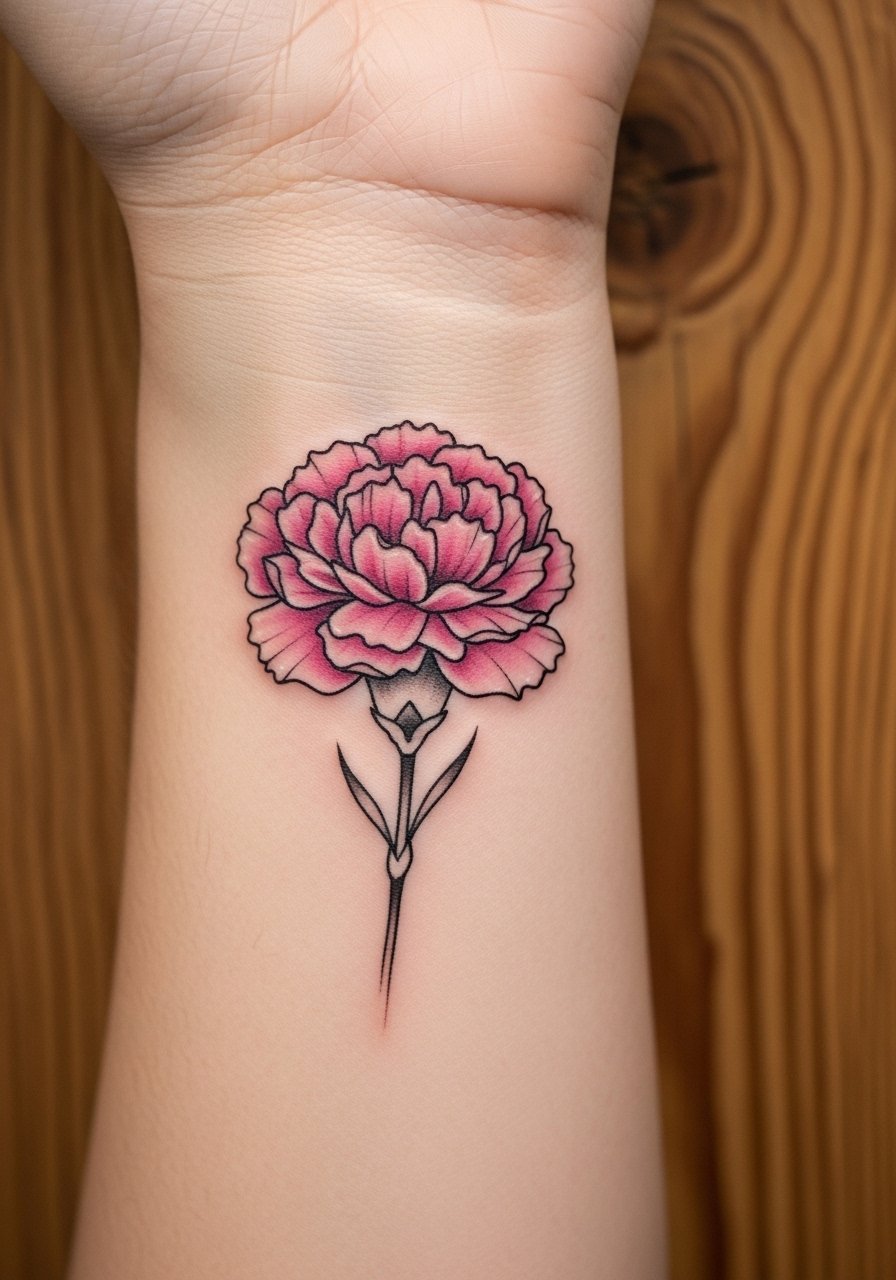
Monochrome colorways can be surprisingly powerful. A single pink shade across the petals simplifies touch-ups and creates a cohesive visual. Inner wrist placement keeps the piece intimate.
Style & Design Details
- Tattoo style: Monochrome illustrative
- Recommended size: 1.5–3 inches
- Best placement(s): inner wrist, inner arm, small forearm
- Color vs. blackwork: One color tone with subtle shading
- Design elements: tonal shading, micro veins, thin stem, small leaf cluster
- Longevity note: Single-tone fades evenly, making touch-ups less complex
- Who it suits: tonal-lovers, understated color fans, first-timers
Finding the Right Artist
Pick artists showing strong monochrome work. Ask how they blend using just one pigment for depth. Mid-level color artists often excel here.
Aftercare & Healing Tips
Use gentle soap and unscented lotion like Lubriderm during peeling. Avoid wrist bracelets that could rub while healing. SPF post-healing keeps tone even.
- Large Realistic Carnation on Back Shoulder Blade
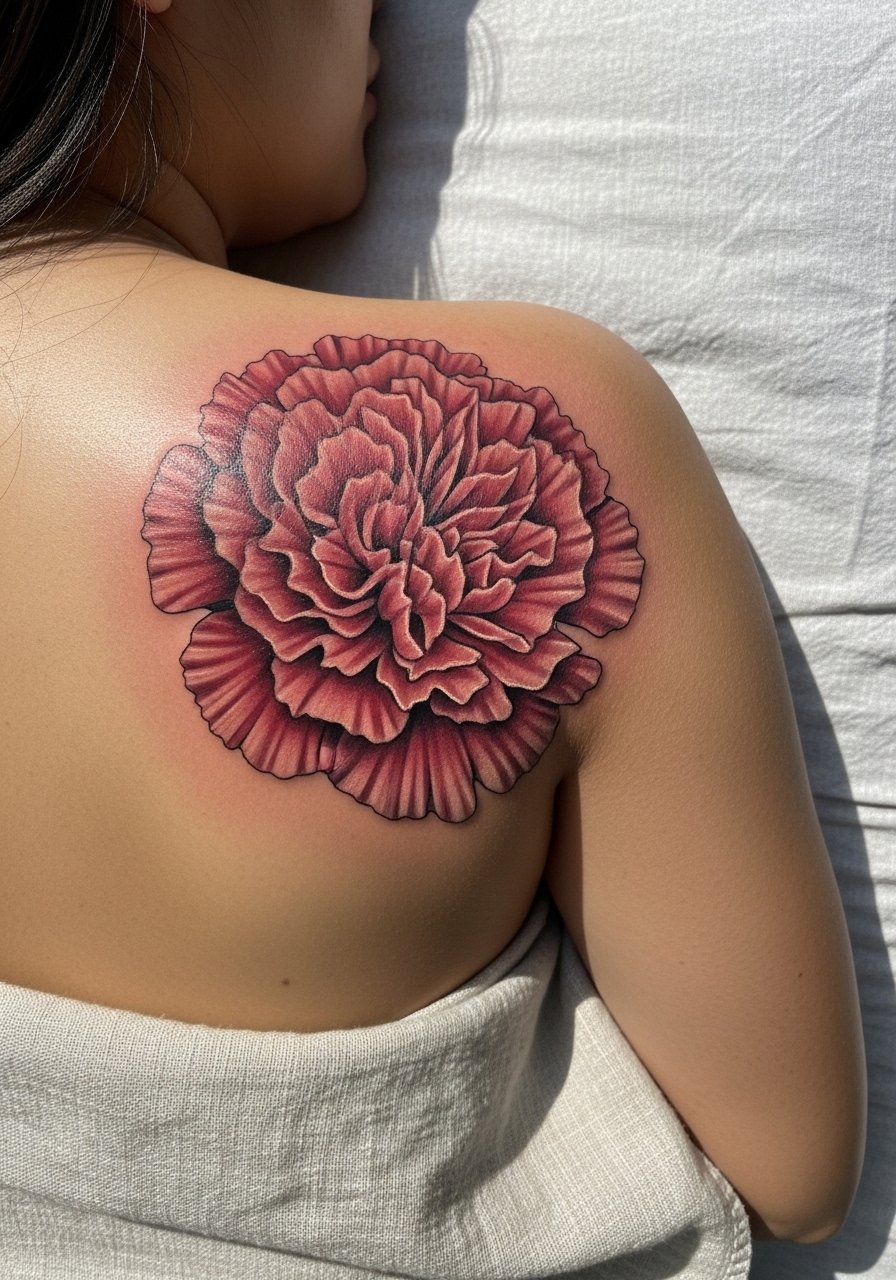
If you love botanical realism, a large carnation on the shoulder blade lets the artist show petal detail and depth. Realistic shading and layered color create a living-plant effect that photographs beautifully.
Style & Design Details
- Tattoo style: Realism / botanical
- Recommended size: 4–7 inches
- Best placement(s): shoulder blade, upper back, scapula area
- Color vs. blackwork: Realistic color gradients recommended
- Design elements: layered petal shading, detailed pistil center, subtle leaf veins, soft background shading
- Longevity note: Realistic works age gracefully when placed away from sun
- Who it suits: botanical realism fans, photography-minded clients, collectors
Finding the Right Artist
Only book artists with proven realism portfolios and healed examples. Ask to see the same artist's color realism months after healing. Avoid people who lack long-term healed realism shots.
Aftercare & Healing Tips
Keep shoulder blade tattoos out of direct sun while healing. Use Hustle Butter for moisture during peeling and apply SPF 50 when exposed.
- Carnation and Moth Combo on Ribcage
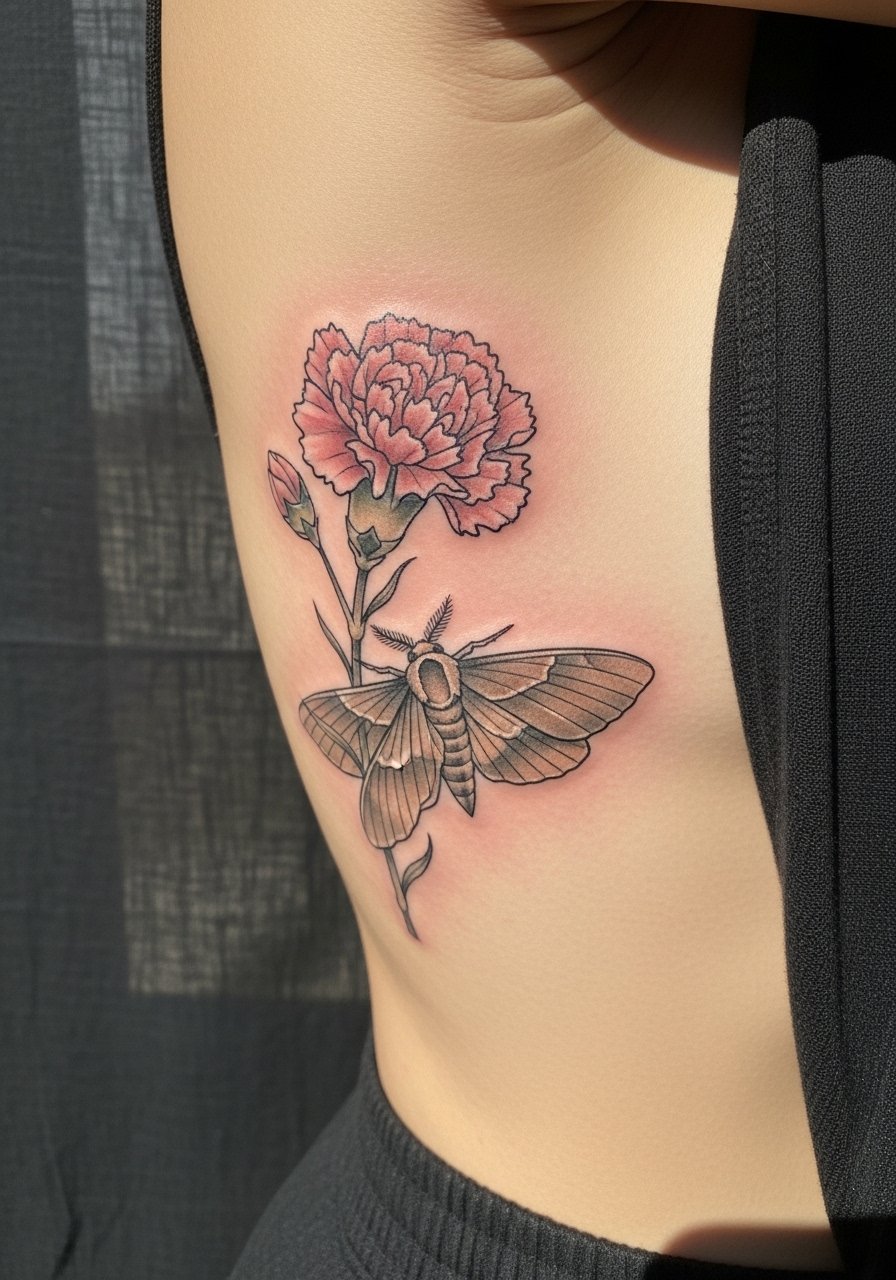
Combining carnations with moths introduces symbolism — transformation and memory. Ribcage gives room for wings and flowing petals. Expect higher pain on the ribs; numbing cream and shorter sessions help.
Style & Design Details
- Tattoo style: Illustrative + neo-realism
- Recommended size: 4–6 inches
- Best placement(s): ribcage, side torso, underboob
- Color vs. blackwork: Mixed — detailed wings with color petals
- Design elements: moth veining, petal layers, fine stippling, subtle background wash
- Longevity note: Ribcage takes color well when sessions are paced
- Who it suits: symbolic-art lovers, collectors, people who want narrative tattoos
Finding the Right Artist
Choose an artist who has done insect realism and florals together. Ask about session timelines and pain management. Avoid artists without combined subject experience.
Aftercare & Healing Tips
Use Saniderm for initial protection if suggested. Clean gently, moisturize, and avoid heavy side-sleeping. A post-heal touch-up is common to refresh wing detail.
- Two-Color Gradient Carnation Behind Knee
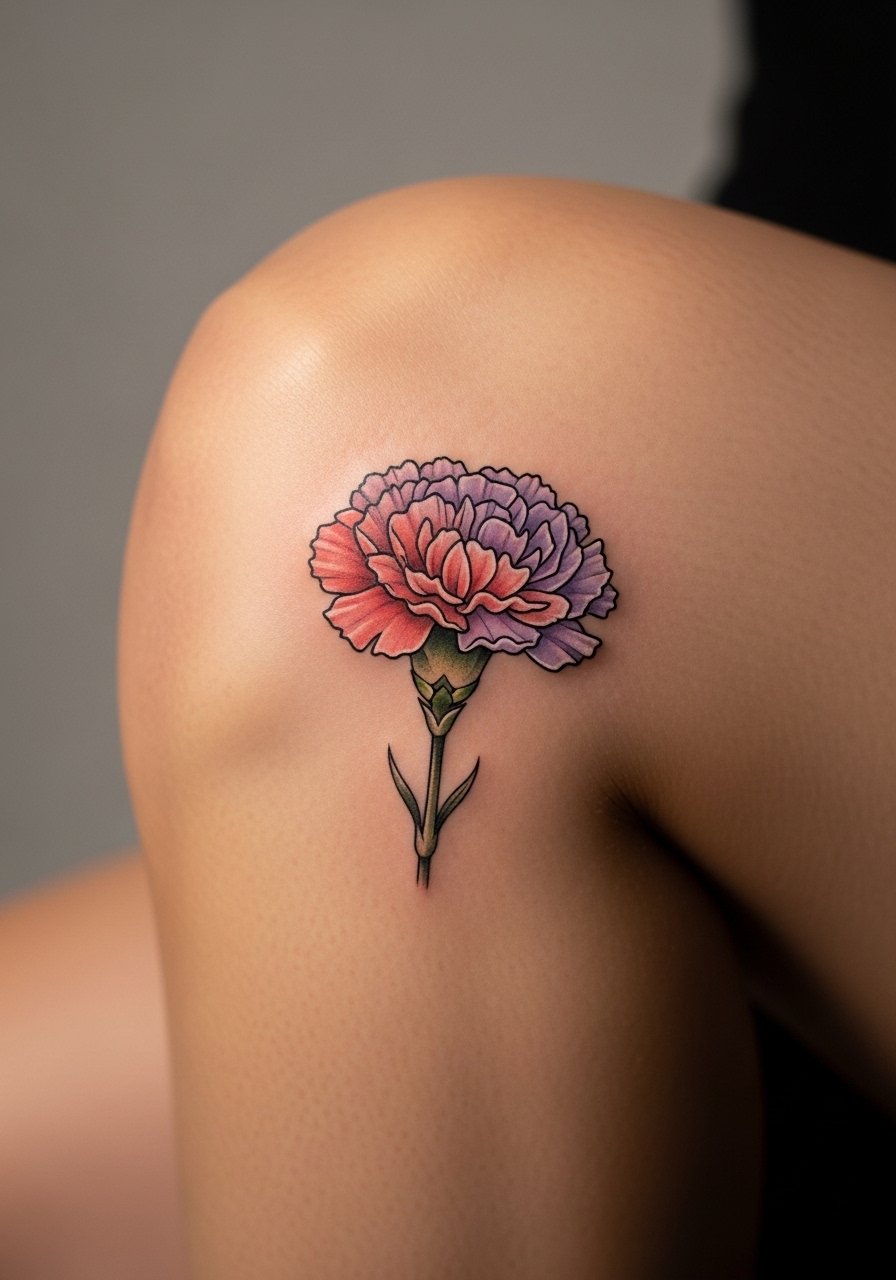
A behind-the-knee placement is playful and unexpected. Two-color gradients across petals create a sunset effect. This area gets movement and tension, so smaller designs are safer for lasting clarity.
Style & Design Details
- Tattoo style: Gradient color illustrative
- Recommended size: 1–2.5 inches
- Best placement(s): behind knee, popliteal fossa, upper calf crease
- Color vs. blackwork: Gradient color transitions recommended
- Design elements: gradient fill, light outline, tiny leaf accents, dotwork center
- Longevity note: Movement can soften edges; choose smaller scale
- Who it suits: experimental placements, trend-forward clients, playful aesthetics
Finding the Right Artist
Find artists who have done gradient work in moving skin areas. Ask for healed examples from flexing zones. Experienced color artists recommended.
Aftercare & Healing Tips
Keep the area clean and avoid tight clothing while healing. Use an unscented lotion and keep the area out of prolonged sun. Touch-ups may be needed if motion blurs detail.
- Carnation and Crescent Moon Forearm Band
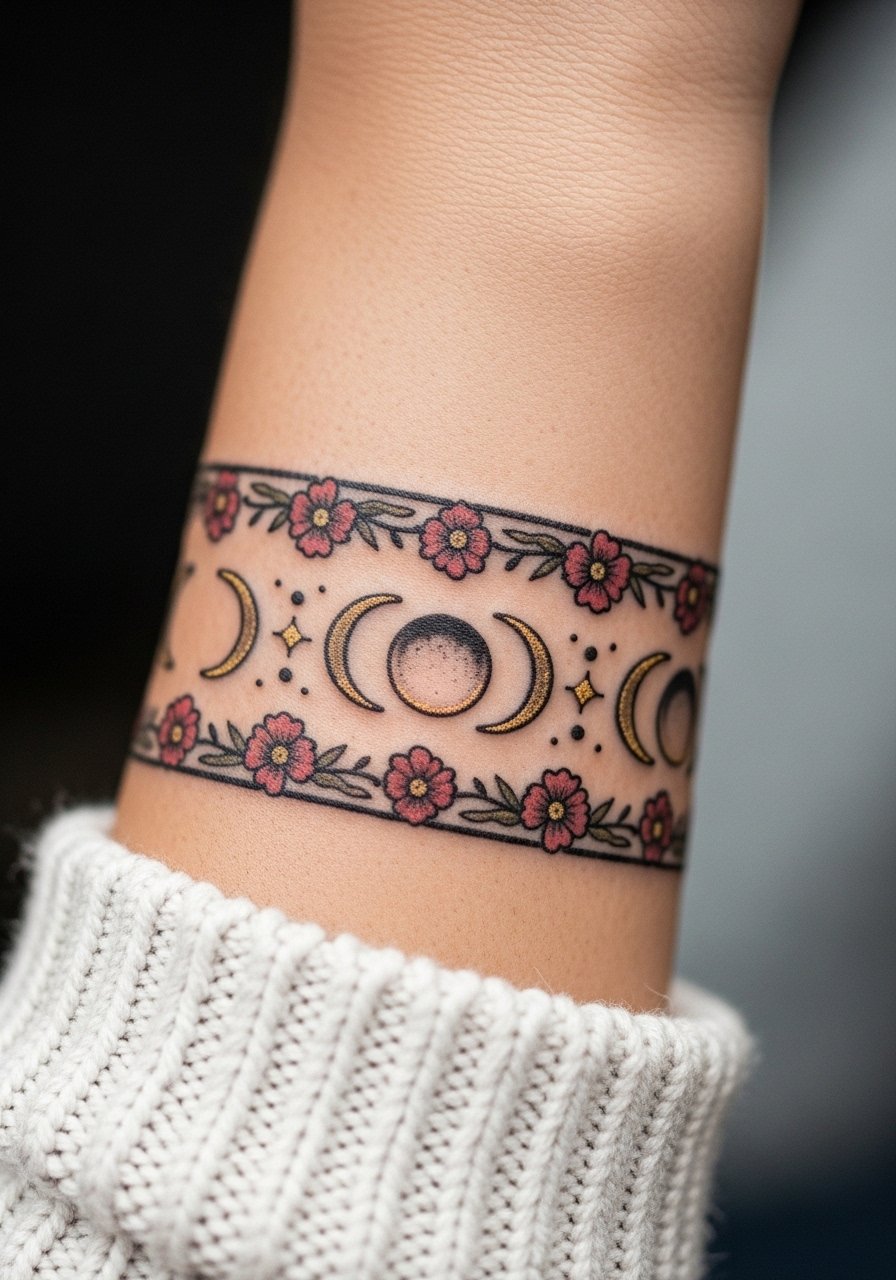
A band of carnations punctuated with celestial elements is whimsical and wearable. Forearm bands can be symmetrical or staggered for a more organic feel. This layout looks great with both color and black accents.
Style & Design Details
- Tattoo style: Illustrative band / ornamental
- Recommended size: band-width 1–2 inches around forearm
- Best placement(s): forearm band, upper arm, wrist cuff
- Color vs. blackwork: Color accents with black anchors
- Design elements: repeating carnations, crescent moon icon, tiny stars, ornamental dots, thin connecting lines
- Longevity note: Forearms hold color well; keep band out of harsh sun
- Who it suits: jewelry-alternative seekers, organized aesthetics, celestial lovers
Finding the Right Artist
Seek artists who execute even repetition and symmetry. Ask about stencil alignment and how they guarantee wrap consistency. Mid-to-advanced artists recommended.
Aftercare & Healing Tips
Wrap for 24 hours if needed, wash and moisturize regularly. Use a fragrance-free lotion and keep the band shaded. Apply SPF 50 stick once healed for protection.
- High-Contrast Carnation on Nape of Neck
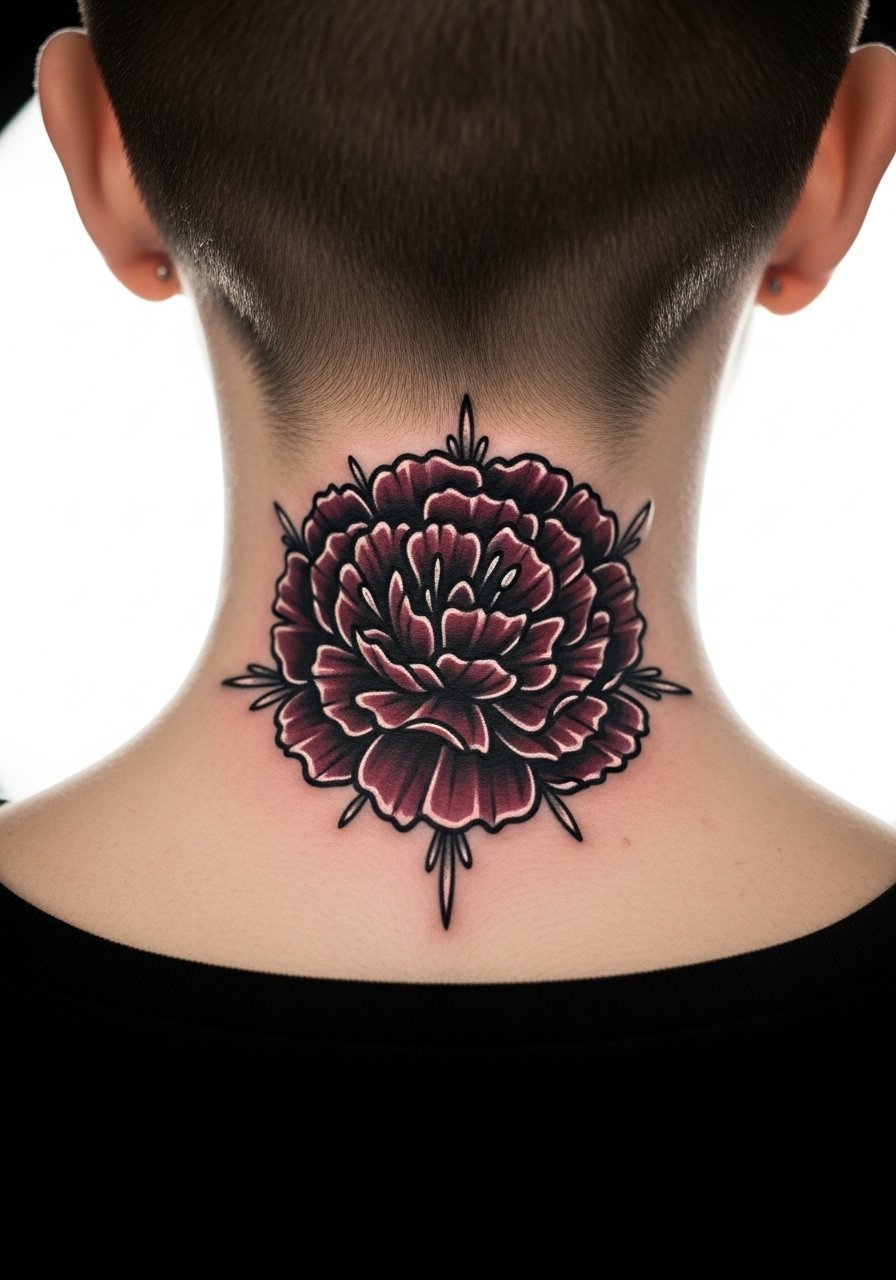
A nape carnation feels secretive and sultry, popping when hair is up. High-contrast palettes work especially well here because the neck shows detail and is often partially covered, reducing sun exposure.
Style & Design Details
- Tattoo style: High-contrast illustrative
- Recommended size: 2–3 inches
- Best placement(s): nape, back of neck, hairline
- Color vs. blackwork: Balanced — deep color with black contour
- Design elements: heavy outline, white highlight spots, tiny leaves, stem accent
- Longevity note: Lower sun exposure helps color retention
- Who it suits: hair-up stylists, secretive placements, bold-yet-hidden tastes
Finding the Right Artist
Choose an artist with strong neck placement examples. Ask how they accommodate hair movement and sleeping. Experienced artists preferred.
Aftercare & Healing Tips
Nape tattoos can get rubbed by collars and hair. Use short Saniderm coverings initially if recommended, and moisturize with unscented lotion. Keep hair out of the area while it heals.
- Carnation and Geometric Mandala Combination on Thigh
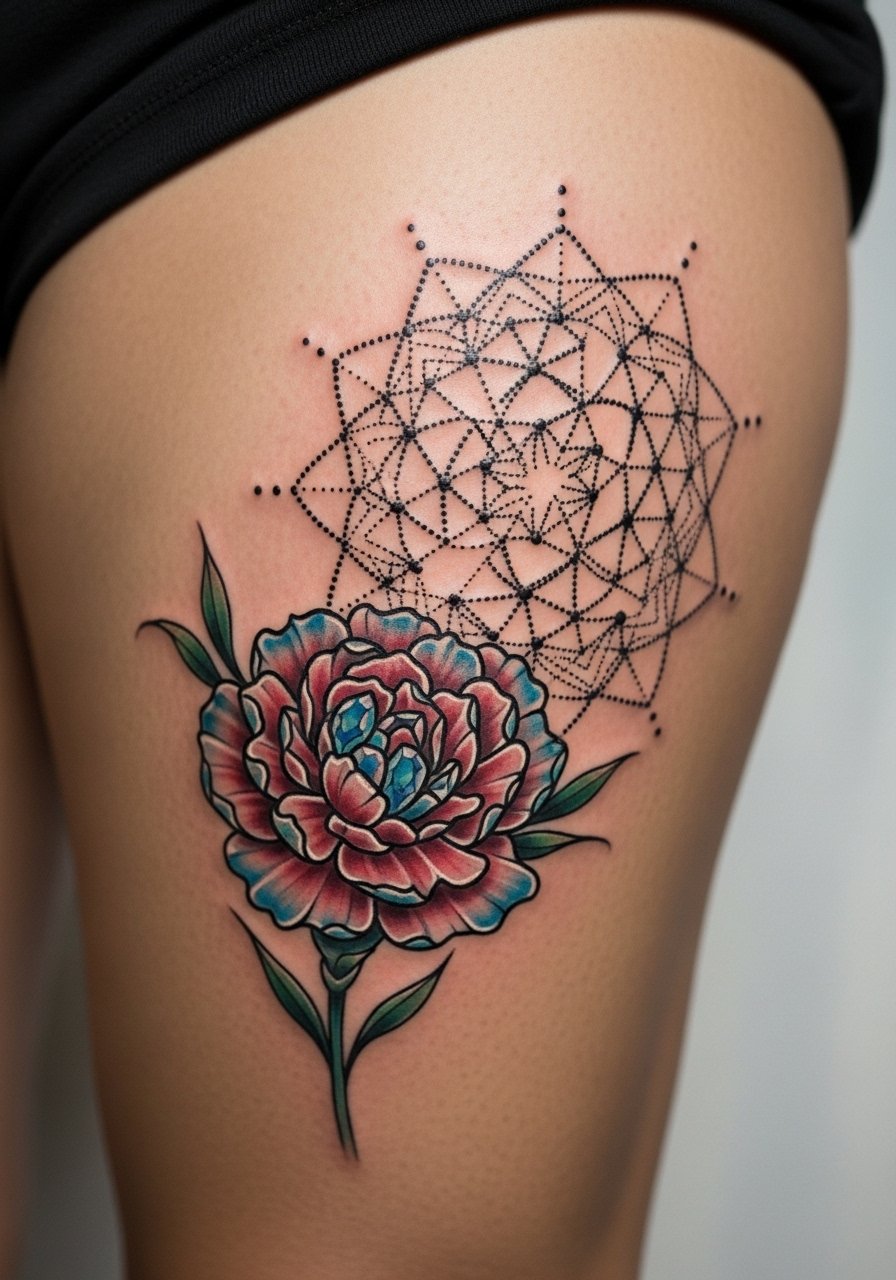
Pairing a carnation with a mandala blends organic shape with symmetry. The thigh gives space for large mandala elements and layered floral structure. This hybrid suits people who want both softness and structure.
Style & Design Details
- Tattoo style: Mandala + illustrative floral
- Recommended size: 4–7 inches
- Best placement(s): upper thigh, outer thigh, hip wrap
- Color vs. blackwork: Color flower with black mandala for contrast
- Design elements: dotwork mandala, concentric geometry, layered petals, leaf filigree, small negative space details
- Longevity note: Thigh skin holds both black and color well
- Who it suits: people wanting symmetry + florals, spiritual-leaning clients, leg-art collectors
Finding the Right Artist
Choose an artist with both mandala and floral portfolios. Ask how they balance dotwork density with color saturation. An experienced artist is recommended for complex compositions.
Aftercare & Healing Tips
Compression from clothing can affect healing—wear loose clothing. Use Saniderm if recommended and a fragrance-free lotion like Lubriderm while peeling. Touch-ups for mandala lines are common for crispness.
- Sunset Gradient Carnation Sleeve Starter (Upper Arm)
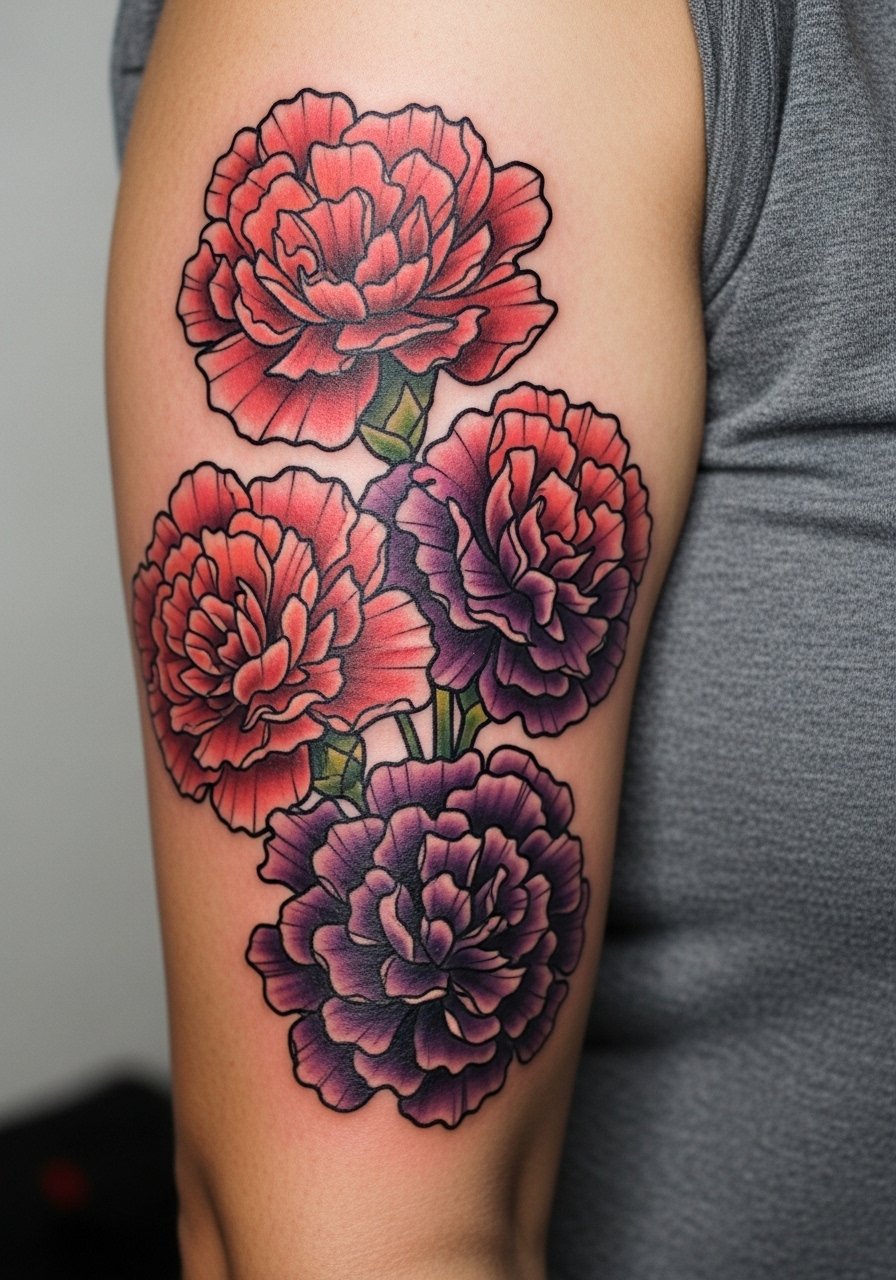
This starter sleeve uses carnations in a warm gradient to begin a larger arm project. Upper-arm canvases are forgiving and can be extended later. Gradients across multiple flowers create a cohesive sleeve feel from the start.
Style & Design Details
- Tattoo style: Gradient illustrative sleeve
- Recommended size: starter panel 3–6 inches expandable
- Best placement(s): upper arm, outer arm, half-sleeve starter
- Color vs. blackwork: Warm gradient palette with black shading anchors
- Design elements: progressive color transitions, layered petals overlapping, background wash, optional stems for flow, small filler elements for continuity
- Longevity note: Upper arm holds color reliably; plan for expansion sessions
- Who it suits: sleeve-builders, collectors, people who want staged commitment
Finding the Right Artist
Pick an artist who plans sleeves in stages and shows coherent color flow across sessions. Ask about session breakdown and how they ensure hue continuity between visits.
Aftercare & Healing Tips
Large starters should be cared for with Saniderm initially if suggested. Use Hustle Butter during peeling and keep the area moisturized. Plan follow-up sessions to fill and refine.
You’ve just scrolled through 26 ways to wear a carnation — from tiny behind-the-ear pops to full-color thigh statements. There’s a mix of delicate fine line choices, bold neo-traditional pieces, watercolor moods, and modern geometric pairings so you can find a colorful carnation flower tattoo that matches your aesthetic and pain comfort.
Save this article to your Pinterest board and bring your favorite prompts to your consultation. Which style caught you first — the tiny finger carnation, the watercolor ribcage splash, or a neo-traditional thigh bouquet? Tell me which placement you’re considering, and I’ll help you narrow down artist questions.
Honestly, having a quality aftercare balm (I use Hustle Butter Deluxe tattoo aftercare balm) and a reliable SPF 50 tattoo sunscreen stick ready before your session makes healing less stressful and color longevity easier to manage. Pin the ones you love and bring them to your artist — they’ll help translate the idea perfectly.