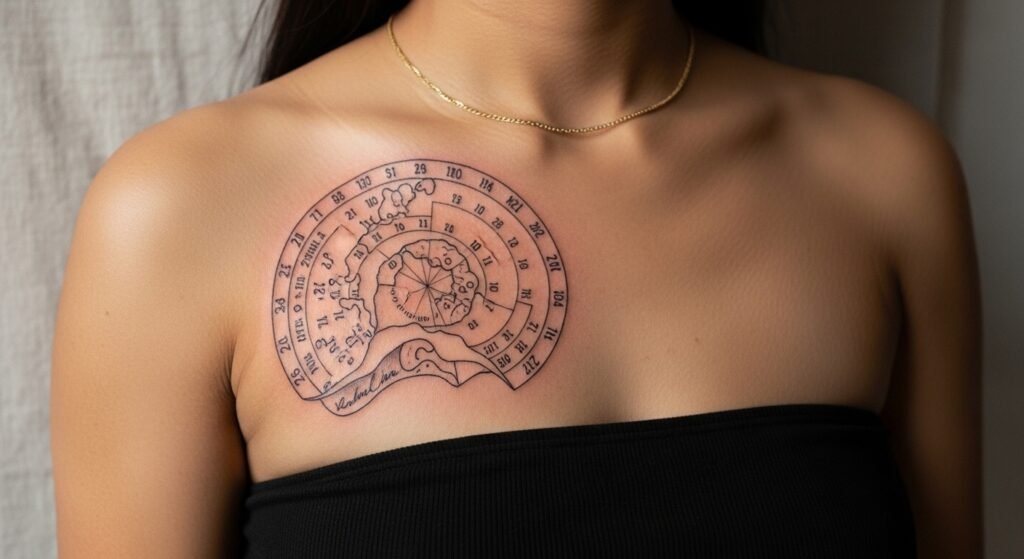
You’re sitting in a consultation at 11pm, scrolling through saved photos and muttering about which planet deserves prime real estate on your body. Those late-night hunts are why this list exists — the right birth chart astrology tattoo idea helps you pin down imagery, placement, and style so your tattoo actually feels like you.
This collection of birth chart astrology tattoo ideas walks through personal, cosmic, and one-of-a-kind options — from minimalist single-needle natal maps to ornate neo-traditional charts that read like family heirlooms. You’ll find size guides, placement suggestions, and real aftercare tips that’ll help your linework stay crisp for years.
Prep and pain help: I recommend applying a numbing cream like Zensa tattoo numbing cream about 45–60 minutes before longer sessions. For protection after your appointment, leaving a second-skin bandage such as Saniderm on for the first 2–4 days is a reliable option. Now let’s explore 29 birth chart astrology tattoo ideas you can bring to your consult.
1. Single-Needle Natal Wheel (Fine Line Wrist Wrap)
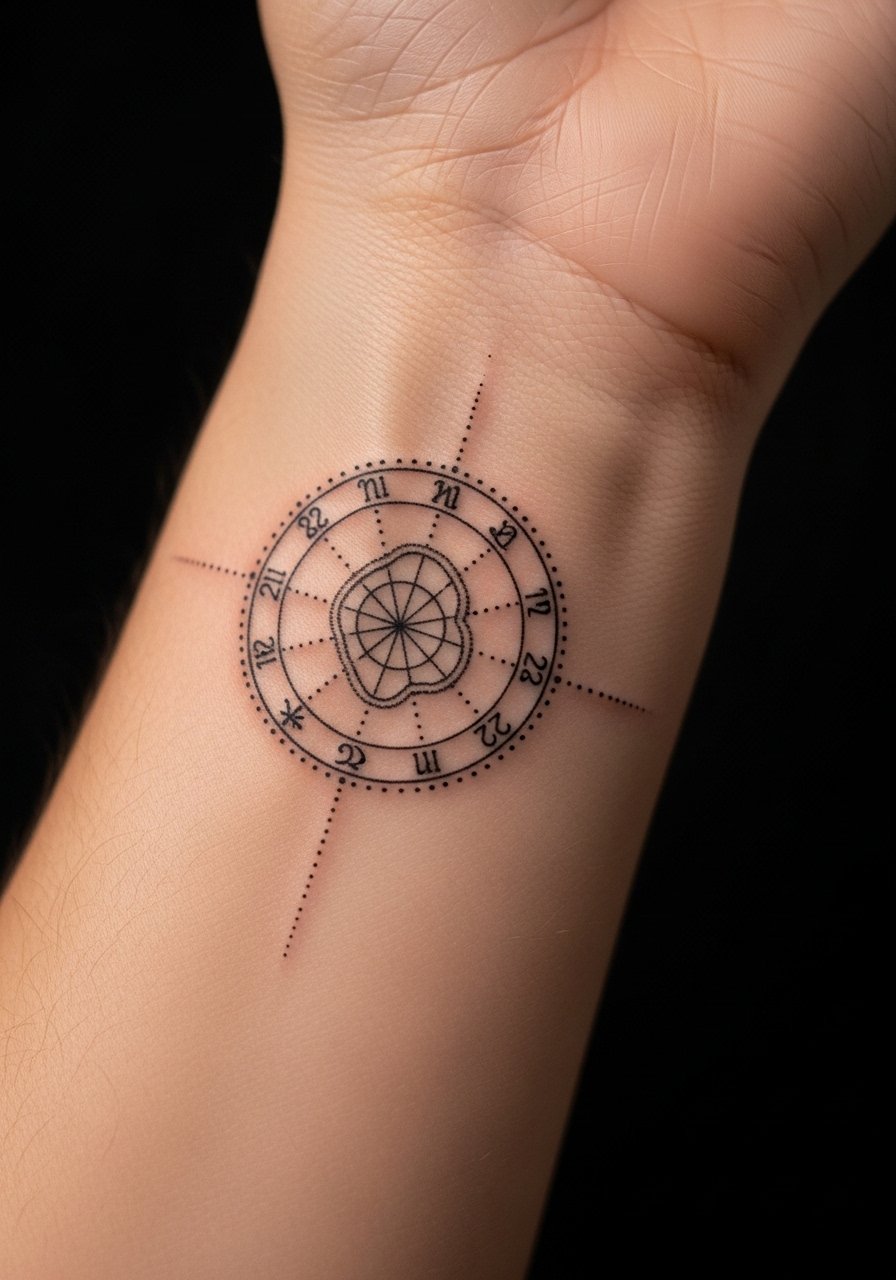
A compact natal wheel reduced to its essentials — houses, angular lines, and glyphs — looks elegant as a wrist wrap. It reads like a personal code and sits flat against the skin, so the detail stays readable even at small size. Minimalists and first-timers will love it for being discreet but meaningful. The tactile feel of the single-needle line is delicate; it catches the light differently than bolder ink.
Style & Design Details
- Tattoo style: single-needle fine line, minimalist glyphs
- Recommended size: 1.5–2.5 inches (wrist circumference friendly)
- Best placement(s): inner wrist, outer forearm, ankle (readability and visibility)
- Color vs. blackwork: blackwork for longevity and crisp glyphs
- Design elements: precise zodiac glyphs, thin house lines, tiny degree dots, negative space segments, micro-stippling
- Longevity note: fine lines fade faster with sun exposure; SPF matters
- Who it suits: pale-to-medium skin tones show lines clearly; great for beginners
Finding the Right Artist
Look for portfolios that show consistent single-needle work and small script. Ask about needle configuration (single vs. 3RL) and whether the artist recommends slight size increases for longevity. Avoid artists who only do bold flash if you want micro detail. An experienced fine-line artist is ideal; check Instagram tags like #finelinetattoo and Tattoodo galleries.
Aftercare & Healing Tips
Keep wrapped according to your artist’s plan — using Saniderm for the first 48–72 hours helps avoid scabbing. Wash gently twice a day with a fragrance-free soap like Dr. Bronner's unscented castile and switch to a thin layer of unscented Lubriderm while peeling. Apply SPF 50 once healed to keep lines crisp.
2. Full Birth Chart Sternum Map (Illustrative, Symmetrical)
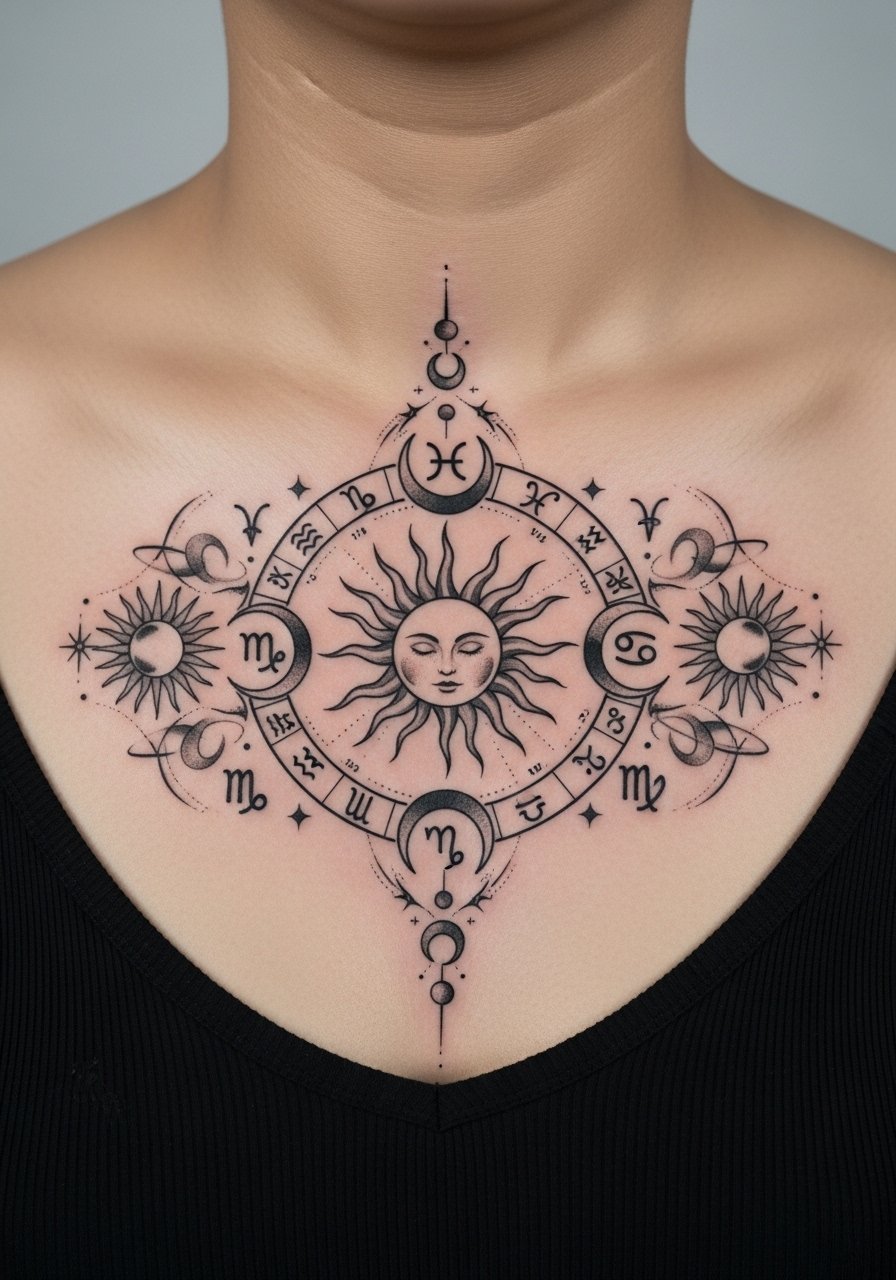
A sternum-centered birth chart turns your chest into a celestial map. This symmetrical design uses illustrative shading and ornamentation to balance the chart’s geometry with organic flourishes like laurel or crescent moons. It’s dramatic but personal — great if you want a statement piece that still reads like a map rather than a portrait.
Style & Design Details
- Tattoo style: illustrative black-and-gray with ornamental accents
- Recommended size: palm-sized to hand-sized (about 3–6 inches)
- Best placement(s): sternum, upper chest, center back (symmetry and canvas)
- Color vs. blackwork: black-and-gray for depth; subtle color highlights optional
- Design elements: concentric natal wheel, planet glyphs, laurel frames, dotwork halos, soft gradient shading
- Longevity note: shading can soften; regular moisturization helps
- Who it suits: medium-to-deeper skin tones handle shading well; collectors who want visible art
Finding the Right Artist
Seek artists experienced in symmetrical ornamental work and black-and-gray shading. Ask to see chest or sternum placements in their portfolio. Avoid artists who lack experience with centerline anatomy — the sternum requires careful placement. A seasoned illustrative artist is best; request mockups to ensure symmetry.
Aftercare & Healing Tips
Sternum pieces may be itchy as they heal due to movement and clothing friction. Use a second-skin like Tegaderm/Saniderm if your artist recommends it. Clean with fragrance-free soap, then apply a thin layer of Hustle Butter Deluxe during the peeling phase to keep shading smooth.
3. Minimal Zodiac Glyph Line-up (Subtle Collarbone Script)
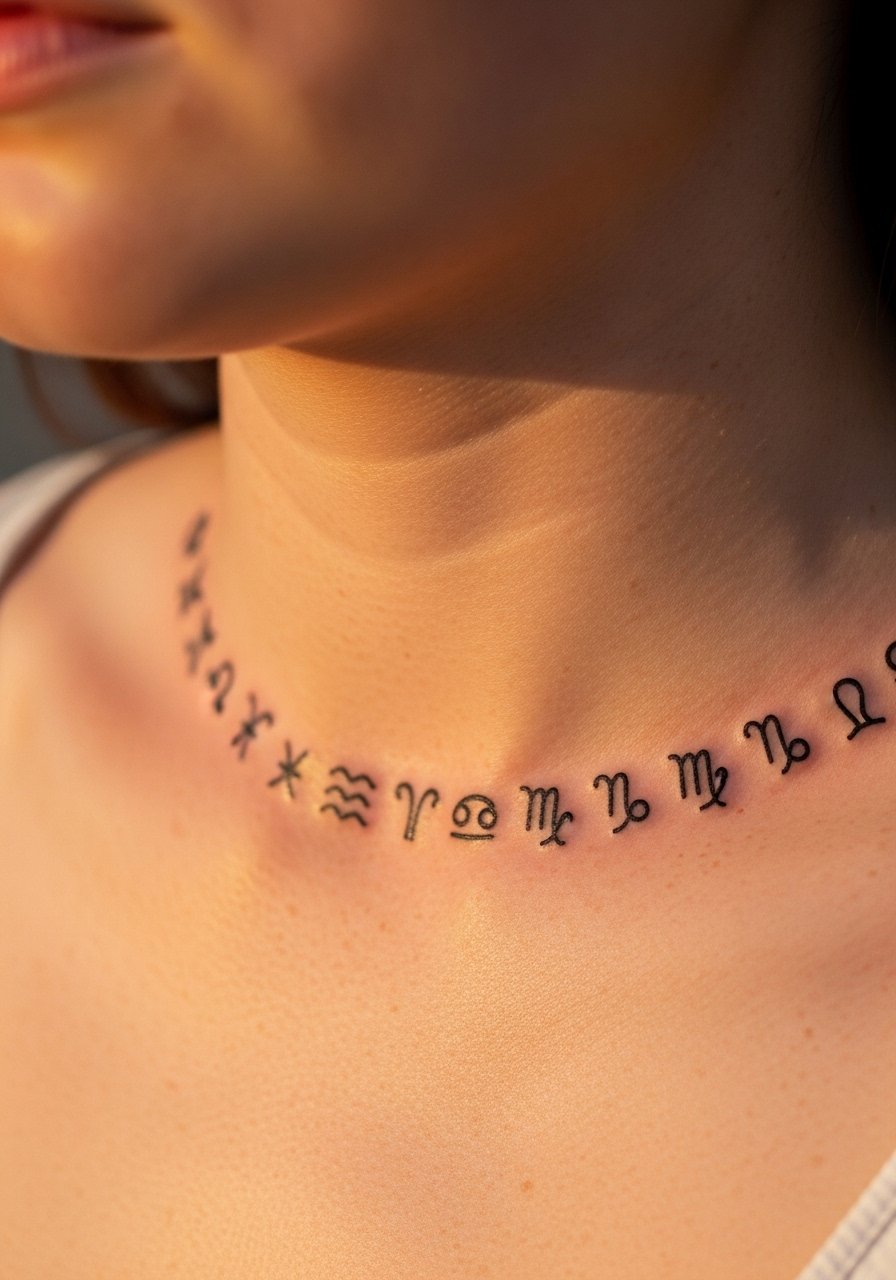
A linear sequence of your sun, moon, and rising glyphs along the collarbone reads like a secret mantra. It’s subtle, spaced, and wearable with every neckline. The visual rhythm of three small symbols creates balance and feels personal without shouting. Collarbone placement gives a flirty reveal with off-shoulder tops.
Style & Design Details
- Tattoo style: minimal fine line script with micro-glyphs
- Recommended size: each glyph 0.3–0.6 inches, total line ~3 inches
- Best placement(s): collarbone, behind ear, nape (visibility control)
- Color vs. blackwork: black ink for clarity; tiny color accents optional
- Design elements: single-needle glyphs, subtle dot spacers, tiny connector line, micro-ornaments
- Longevity note: thin glyphs need SPF; darker skin tones may need slightly bolder lines
- Who it suits: first-timers, minimalists, anyone wanting a tiny daily reminder
Finding the Right Artist
Look for artists who do small script and glyphs well on the collarbone. Ask about scaling — tiny work often needs slight enlargement to avoid blowout. Avoid studios that only do large pieces. Apprentices can execute small pieces if supervised; prefer artists with steady, tiny-line portfolios.
Aftercare & Healing Tips
Small collarbone tattoos heal quickly but move with clothing. Wear soft fabrics during healing and wash with an unscented soap. Keep the area moisturized with a fragrance-free lotion like Aveeno unscented. After healed, protect the area with an SPF 50 stick when exposed.
4. Planet Portraits Along the Spine (Blackwork Neo-Traditional)
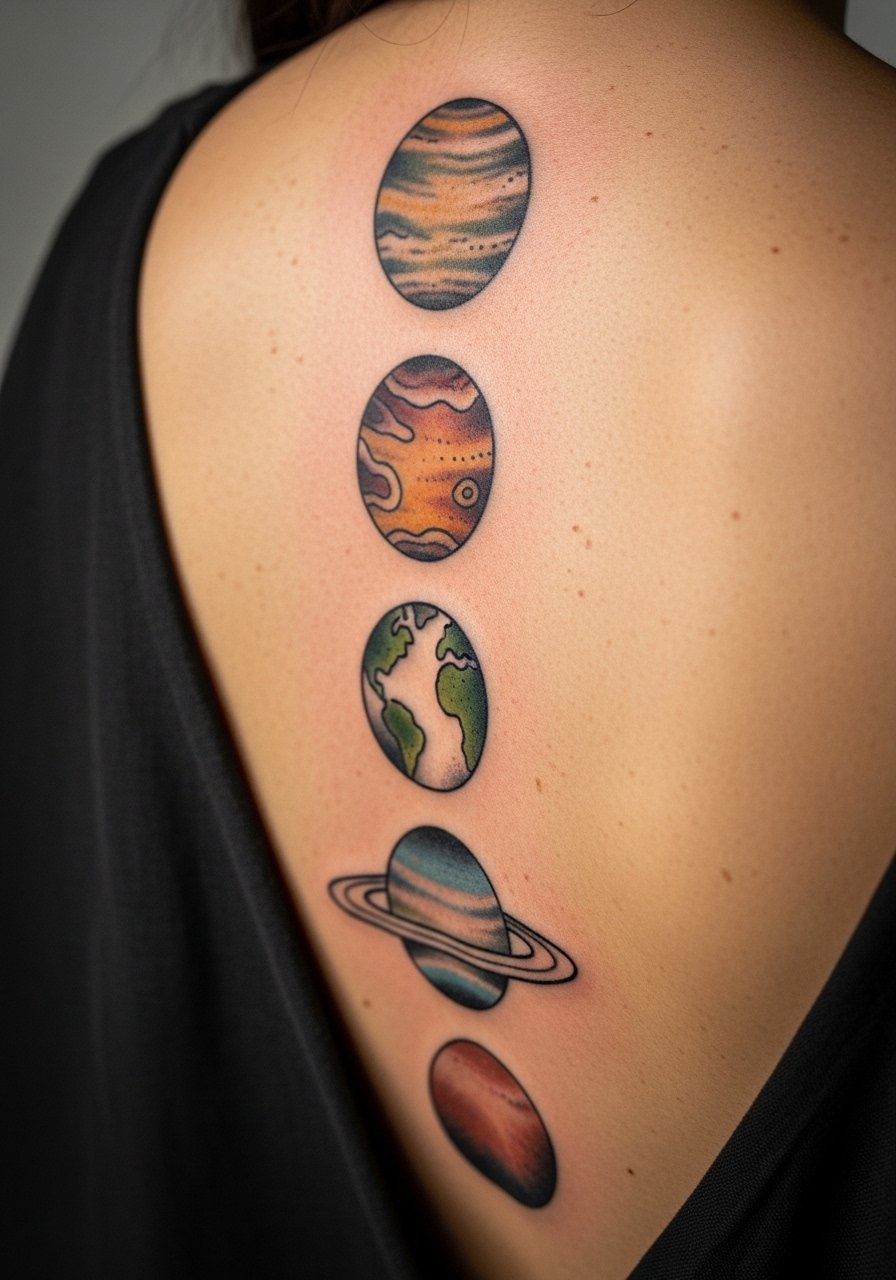
Turn your spine into a vertical narrative of your planetary placements. Each planet rendered as a small portrait or sigil with neo-traditional line weight adds personality while following your natal vertical axis. The spine's natural column emphasizes the story-like quality of the chart.
Style & Design Details
- Tattoo style: neo-traditional small-portrait with black outlines
- Recommended size: each planet 1–2 inches, full column varies
- Best placement(s): midline spine, thoracic spine, back of the neck
- Color vs. blackwork: bold black outlines with muted color blocks for depth
- Design elements: planet glyphs integrated into portraits, bold shading, muted palette, ornamental separators, anchoring dotwork
- Longevity note: black outlines age well; color may fade faster on sun-exposed backs
- Who it suits: collectors, lovers of storytelling tattoos, those OK with moderate pain
Finding the Right Artist
Choose an artist skilled in small neo-trad portraits and consistent color saturation. Ask for healed photos of spine work. Avoid artists who lack experience tattooing over the spine’s curvature. A mid-to-senior artist with solid color packing is preferable.
Aftercare & Healing Tips
Spine tattoos can be tender and rub against clothing. A second-skin like Saniderm helps the surface, and a fragrance-free lotion like Lubriderm unscented works well afterward. Expect 4–6 weeks to fully settle; avoid heavy backpacks during healing.
5. House-Number Roman Script (Ribcage Ribbon)
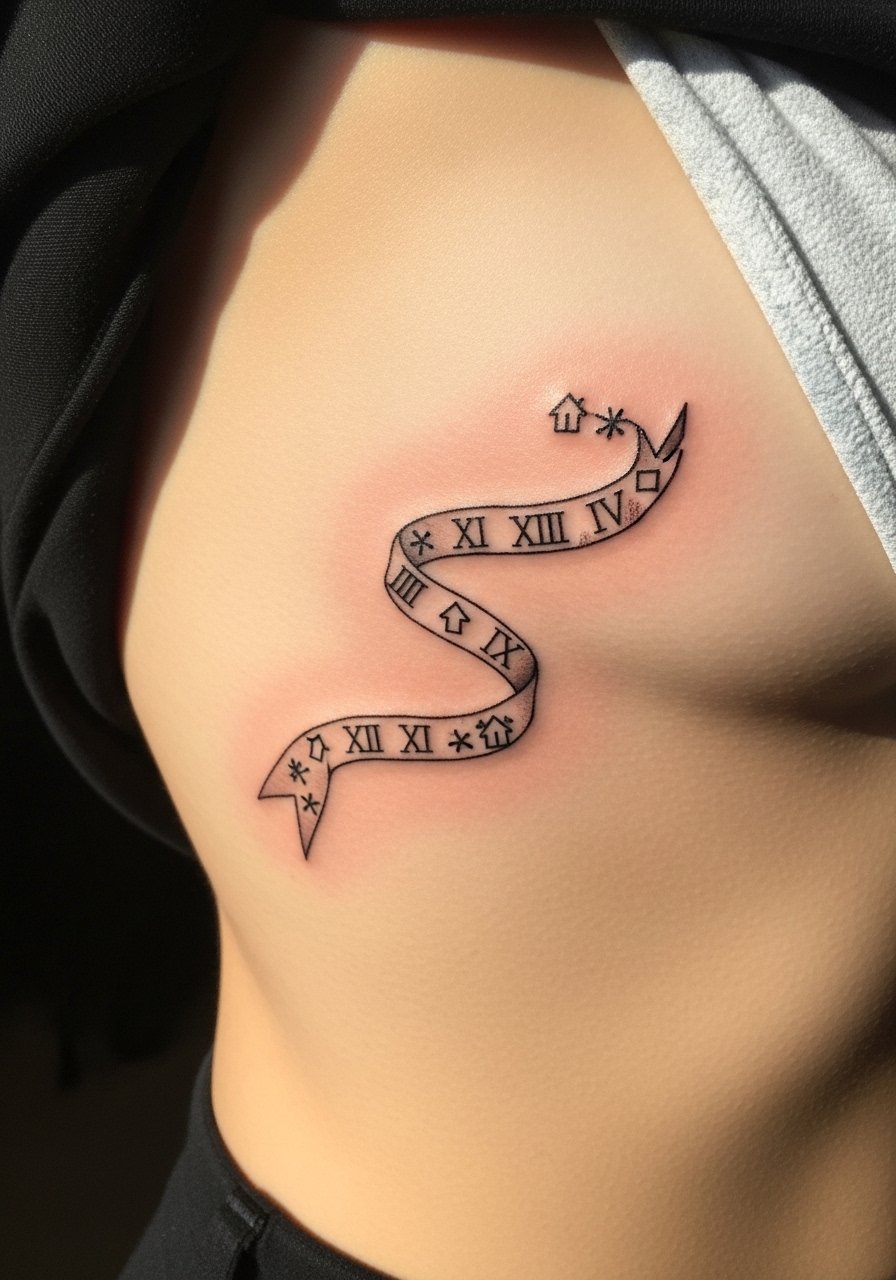
Roman numerals marking key house cusps or degrees can be elegant on the ribs. A ribboned composition follows rib curvature, making the piece intimate and easy to conceal. Rib spacing highlights the numeric rhythm of your chart.
Style & Design Details
- Tattoo style: scripted numerals with fine line accents
- Recommended size: 3–5 inches depending on rib area
- Best placement(s): ribcage, side torso, underboob
- Color vs. blackwork: blackwork recommended for text clarity
- Design elements: roman numerals, small house glyphs, subtle connector lines, negative-space ribbon
- Longevity note: ribs stretch less, but friction from clothing causes irritation during healing
- Who it suits: memorial pieces or those with significant house placements, lovers of script
Finding the Right Artist
Find script artists who maintain spacing and thickness in curved placements. Ask whether the artist will stencil and allow you to see rib placement while standing. Avoid rushed sketches; this placement needs patience.
Aftercare & Healing Tips
Rib tattoos are among the more painful placements; consider a numbing cream like EMLA if you’re sensitive. Keep garments loose, clean with unscented soap, and use Hustle Butter Deluxe or Lubriderm during peeling. Return for touch-ups after 8–12 weeks if numerals softened.
6. Astrological Constellation Sleeve (Dotwork & Stipple)
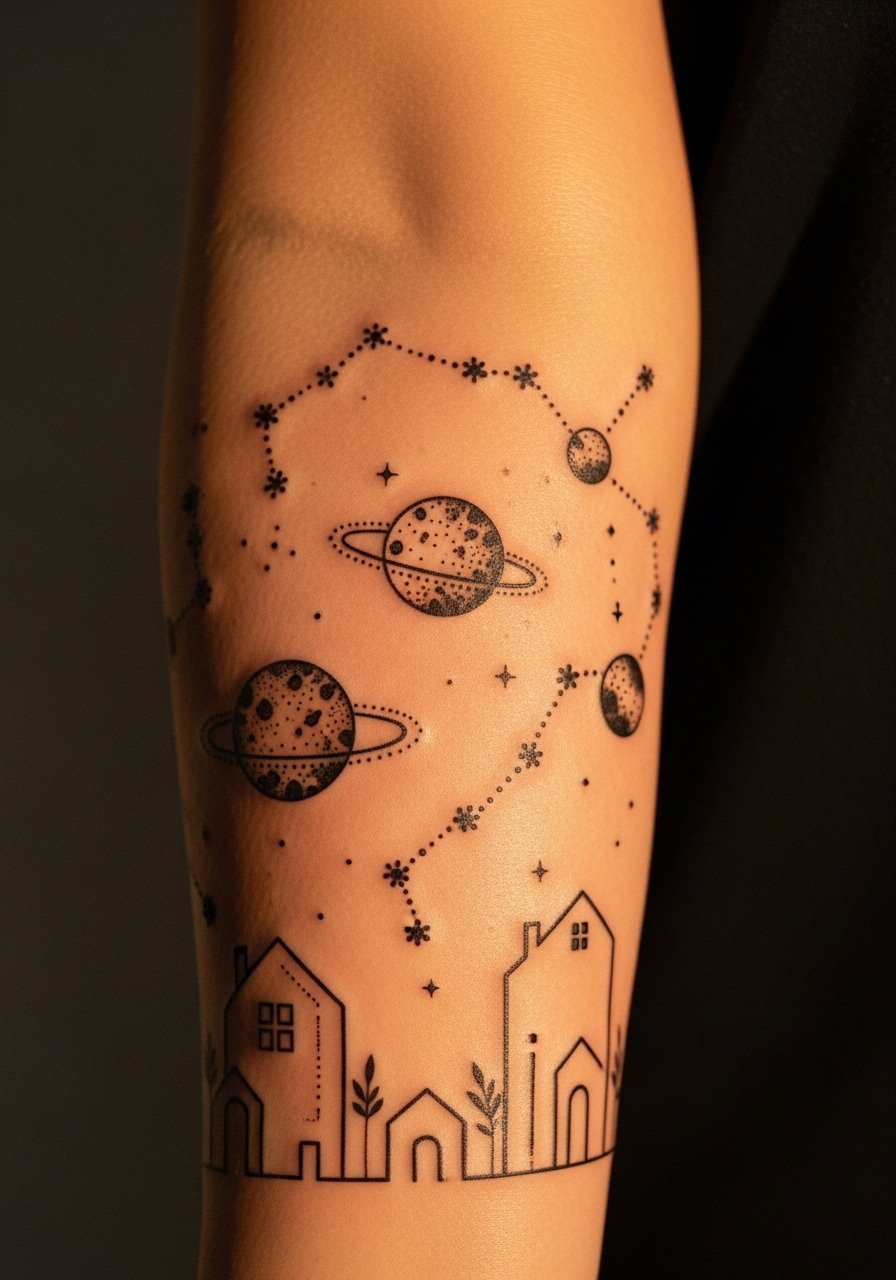
A sleeve made of your natal constellations blends astronomy and astrology. Stipple shading and dotwork create texture without heavy fills, so the sleeve feels airy and cosmic. Constellations can be spaced to represent house relationships and aspects, giving a map-like narrative.
Style & Design Details
- Tattoo style: dotwork and stipple, illustrative constellations
- Recommended size: quarter sleeve to half sleeve
- Best placement(s): outer forearm, full arm sleeve, calf
- Color vs. blackwork: blackwork with light gray stipple; small color stars optional
- Design elements: line constellations, dot halos, micro-planet glyphs, connecting aspect lines, negative space
- Longevity note: dotwork holds well if dots are slightly bolder; sun exposure affects contrast
- Who it suits: collectors, lovers of intricate sleeves, astronomy fans
Finding the Right Artist
Pick artists known for dotwork detail and even stippling density. Ask to see full-arm healed sleeves to judge how the texture ages. Avoid artists who lack patience with dotwork density.
Aftercare & Healing Tips
Sleeves need careful aftercare due to larger surface area. Use Saniderm for sections if recommended, then switch to unscented lotion. Keep hydrated and consider spreading sessions across multiple appointments to reduce trauma. Use SPF 50 for long-term preservation.
7. Planetary Mandala Behind the Ear (Mini Meditative Mark)
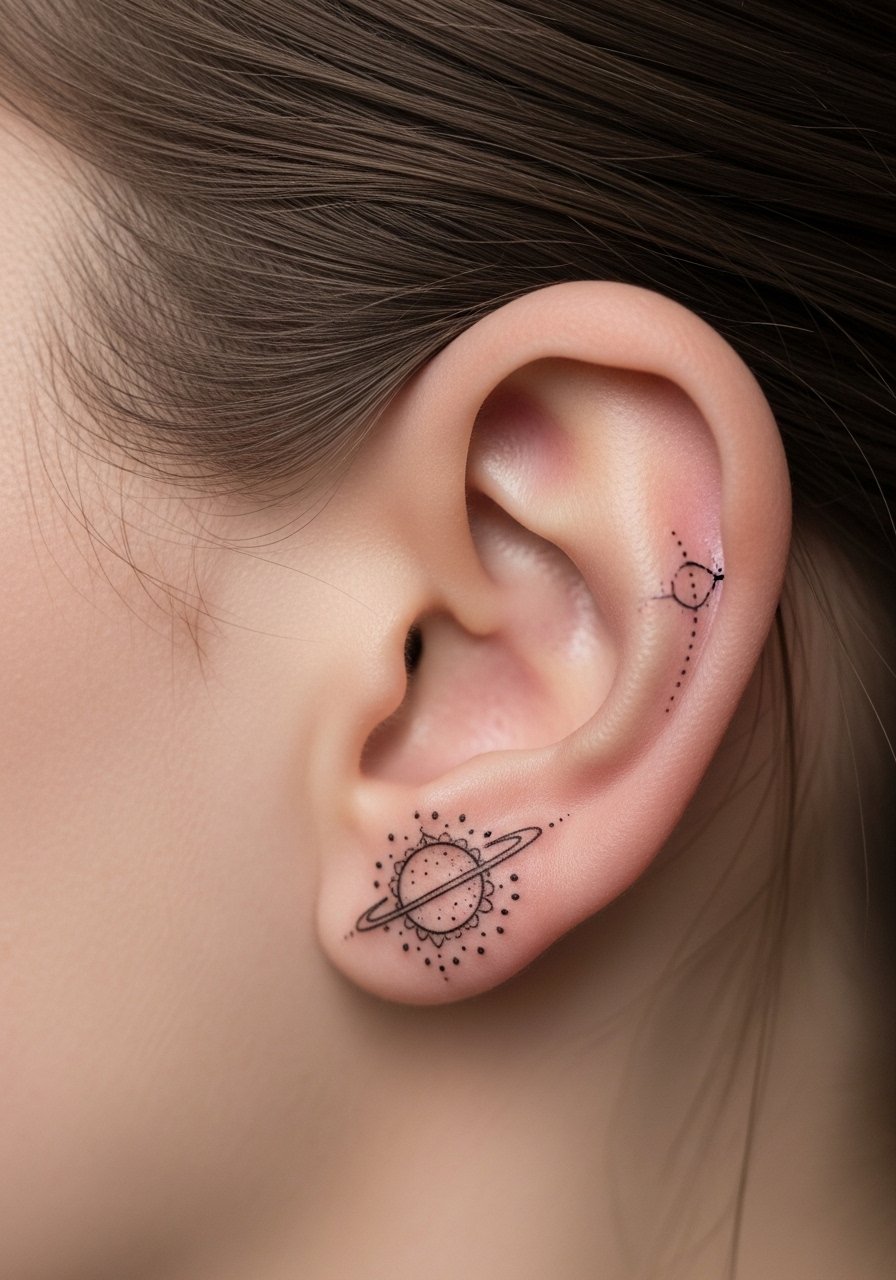
A planetary mandala fits neatly behind the ear for a micro meditation piece. The circular form echoes natal wheels but stays tiny and decorative. It’s a discreet spot that feels personal, like jewelry that’s always with you.
Style & Design Details
- Tattoo style: mini mandala, fine line and dotwork
- Recommended size: 0.7–1.2 inches
- Best placement(s): behind the ear, behind the collar of the neck, tricep back
- Color vs. blackwork: blackwork recommended; small color washes for contrast
- Design elements: concentric circles, planet glyph center, dot halos, micro-linework
- Longevity note: tiny lines behind ear can blur over time; slightly thicker lines reduce risk
- Who it suits: minimalists, people wanting discreet astrology nods
Finding the Right Artist
Choose someone with steady tiny-line portfolios and experience tattooing delicate areas near cartilage. Ask about needle choice for longevity. Avoid apprentices unless supervised.
Aftercare & Healing Tips
Keep hair away and sleep on the opposite side. Clean carefully with fragrance-free soap and apply a small amount of Hustle Butter Deluxe. Once healed, protect behind-ear ink from styling products and UV.
8. Birth Chart Linework Thigh Map (Geometric + Botanical)
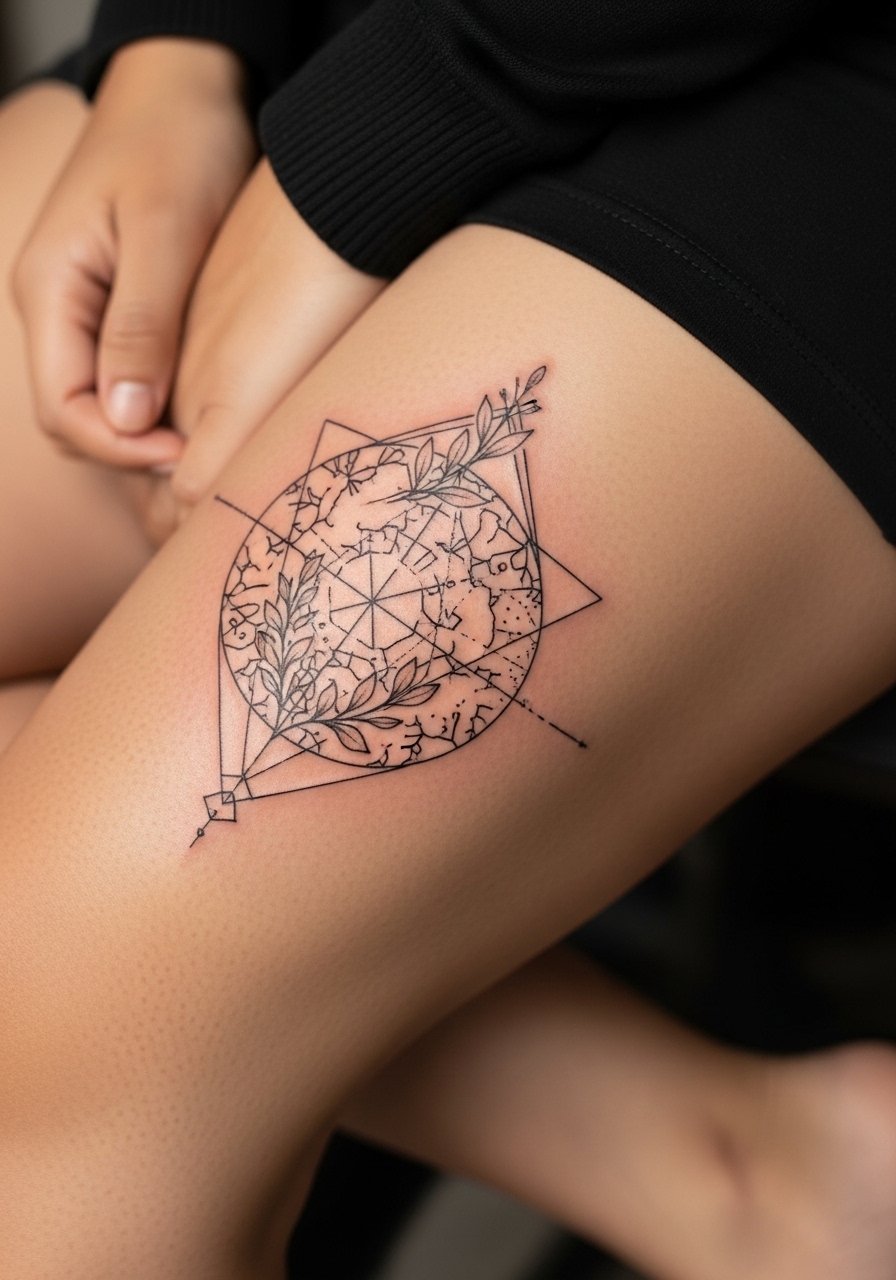
Your thigh is a generous canvas for an intricate birth chart mixing geometry and flora. Interleaving botanical motifs gives the map an organic feel. Thigh placement means you can reveal it with shorts or keep it private.
Style & Design Details
- Tattoo style: geometric illustration with botanical overlays
- Recommended size: hand-sized to larger thigh panel (4–8 inches)
- Best placement(s): outer thigh, upper thigh, hip
- Color vs. blackwork: blackwork with muted greens or sepia washes for plants
- Design elements: intersecting house lines, planet glyphs, botanical sprigs, negative space triangles, stipple shading
- Longevity note: thigh skin holds detail well; less sun exposure means less fading
- Who it suits: lovers of feminine or cottagecore aesthetics, collectors
Finding the Right Artist
Book an artist who blends geometry and botanical illustration. Bring reference images of plant shapes you want. Avoid artists who overfill geometric patterns; you want crisp lines.
Aftercare & Healing Tips
Thighs are forgiving but can rub against clothing. Keep clothing loose for the first week and use Saniderm if recommended. Switch to Aveeno fragrance-free lotion during the peeling phase.
9. Solar Return Chest Medallion (Mandala + Sunburst)
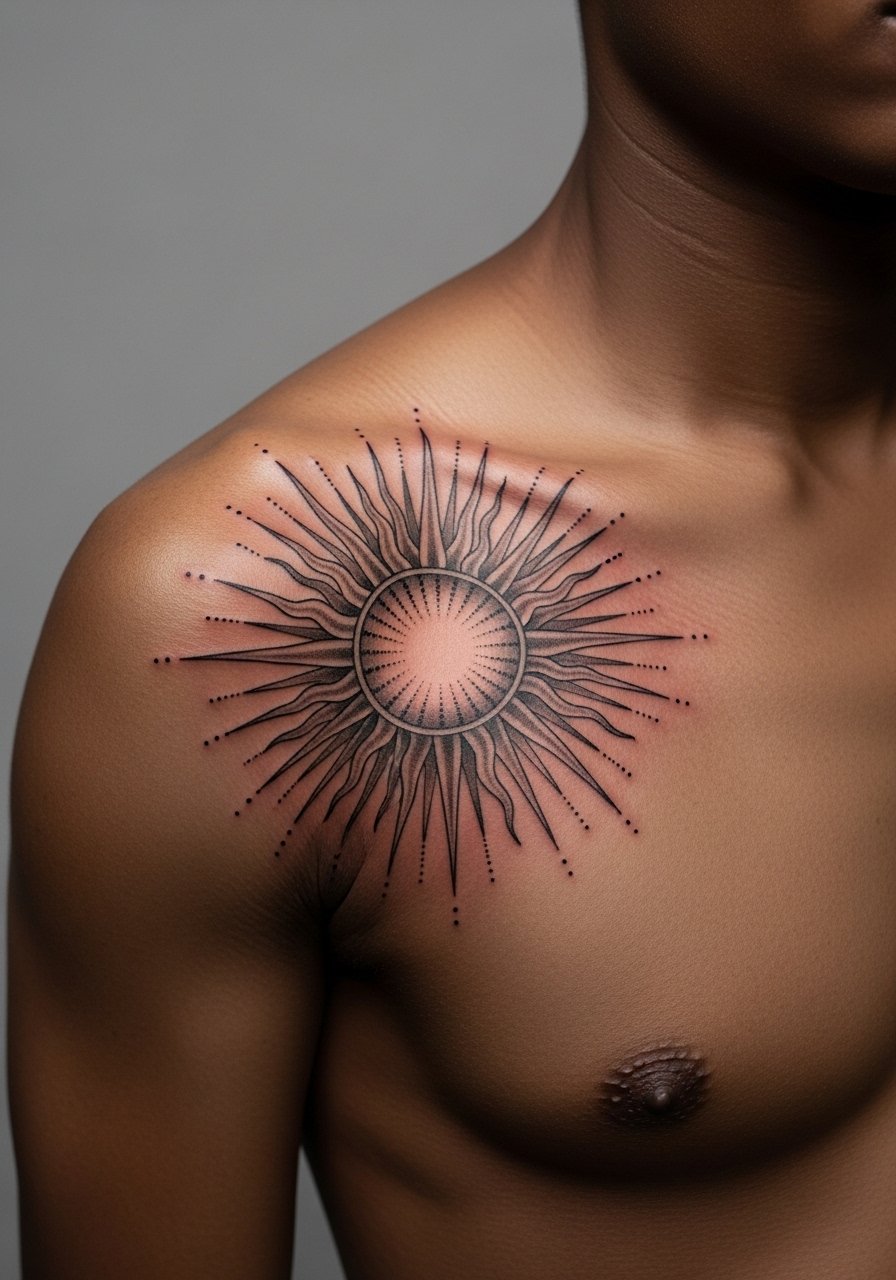
A solar return medallion marks your sun placement with sunburst rays and mandala geometry. It’s symbolic of rebirth and yearly cycles. As a chest piece, it’s close to the heart — literal and figurative significance.
Style & Design Details
- Tattoo style: mandala with ornamental sunburst
- Recommended size: 2–4 inches
- Best placement(s): upper chest, left pectoral, sternum
- Color vs. blackwork: black or warm gold tones; black provides longevity
- Design elements: radial lines, sunburst rays, center sun glyph, dotted shading, thin ornamental filigree
- Longevity note: chest skin is stable; keep moisturized
- Who it suits: those marking a solar milestone, sentimental collectors
Finding the Right Artist
Look for mandala and ornamental artists who maintain radial symmetry. Ask about stenciling and how they compensate for body curvature. Avoid artists unfamiliar with mandala centering.
Aftercare & Healing Tips
Chest tattoos can scab if rubbed by bras or shirts. Use a non-comedogenic lotion like Lubriderm during healing and wear soft clothing. Expect full settling at 4–6 weeks.
10. Comet Trajectory Forearm Band (Motion + Aspect Lines)
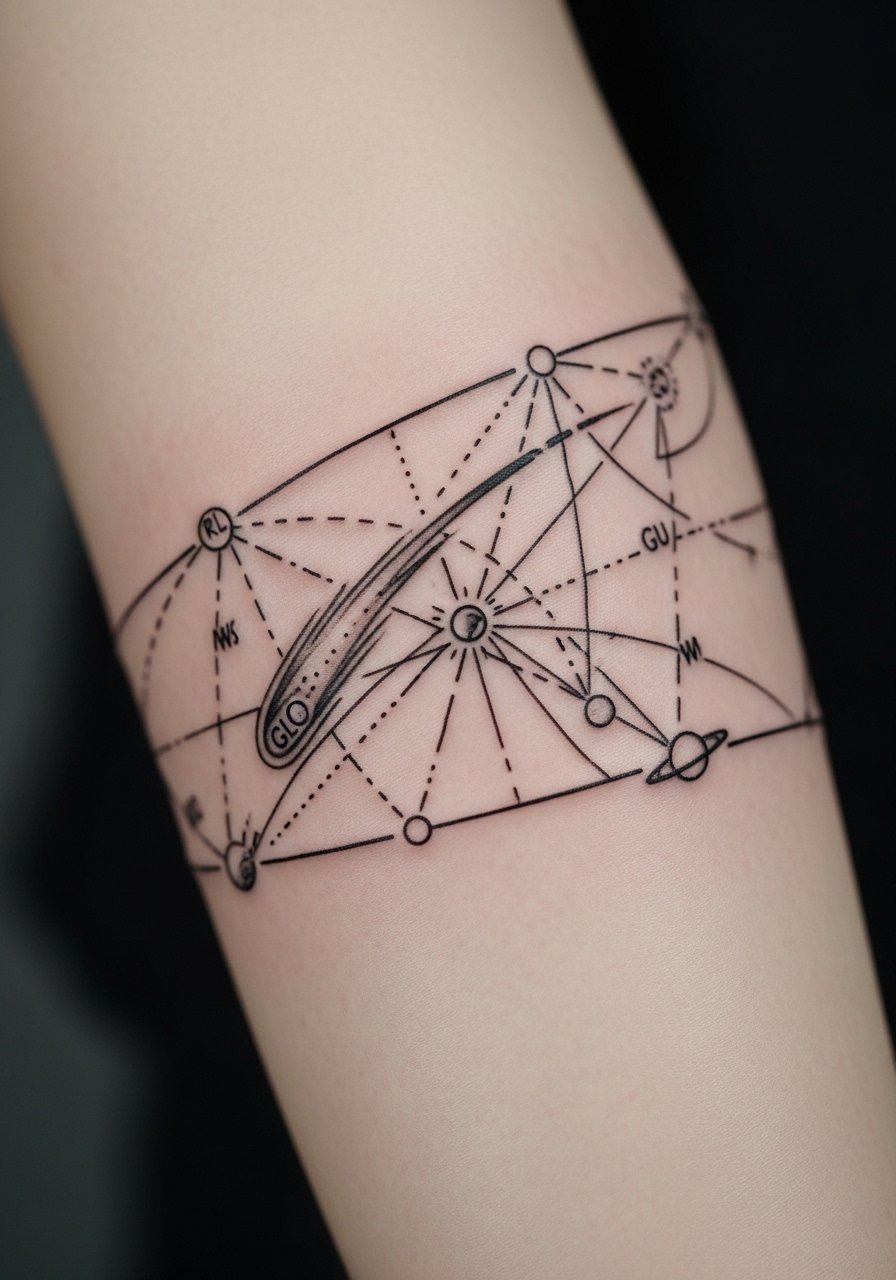
A comet trajectory band frames your forearm while mapping major aspects between planets. The motion element gives the chart a sense of narrative — forces moving through your life. It’s a modern, sleek way to show relationships in the chart.
Style & Design Details
- Tattoo style: linework band with micro-illustrative elements
- Recommended size: 2–3 cm band width, full-forearm wrap optional
- Best placement(s): outer forearm, wrists, bicep band
- Color vs. blackwork: blackwork with gray motion shading
- Design elements: sweeping comet tail, aspect lines, tiny planet glyphs, negative-space breaks, motion dots
- Longevity note: bands can distort if placed over muscular changes; forearm stable
- Who it suits: active people who want a wearable band with meaning
Finding the Right Artist
Pick an artist who keeps circular bands consistent and who can plan wrap-around stencils. Ask about how the design will look in motion. Avoid artists who rush band symmetry.
Aftercare & Healing Tips
Band tattoos can feel tight during healing. Clean gently and use Saniderm if recommended. Apply mild lotion and protect from sun.
11. Aspect Line Anklet (Micro-Map with Dots)
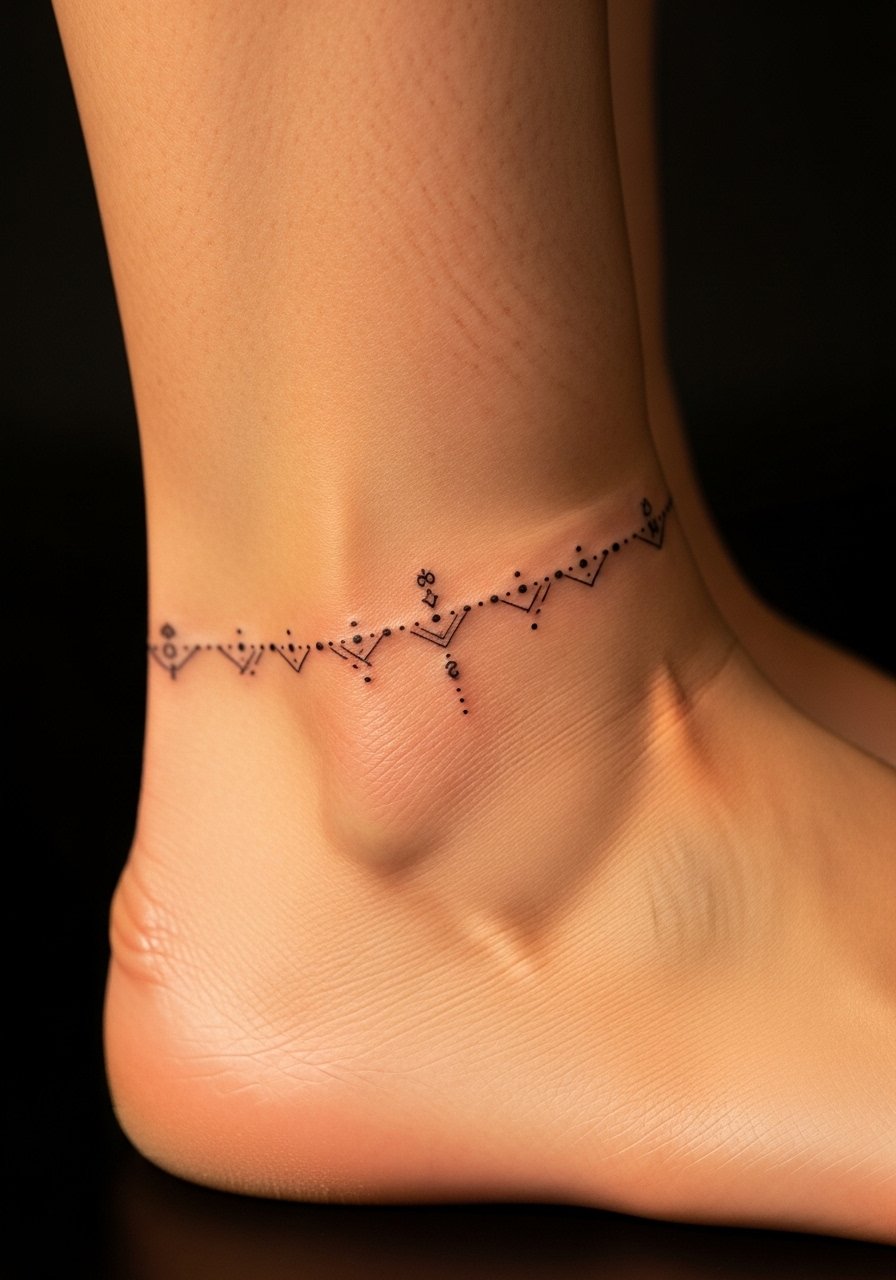
An aspect-line anklet encircles your ankle as a subtle natal reference. Tiny dots mark major aspects, and little glyphs sit like charms. It’s delicate, wearable, and maps relational energy around your movement.
Style & Design Details
- Tattoo style: micro linework and dotwork
- Recommended size: anklet circumference with tiny elements
- Best placement(s): ankle, ankle bone, below calf
- Color vs. blackwork: blackwork recommended for contrast
- Design elements: thin aspect lines, dot clusters, mini glyph charms, negative space beads
- Longevity note: ankles can blur slightly; slightly bolder dots age better
- Who it suits: minimalists, beachgoers, footwear enthusiasts
Finding the Right Artist
Artists who do micro jewelry tattoos are ideal. Ask for healed ankle photos. Avoid artists inexperienced with tattooing near bone.
Aftercare & Healing Tips
Avoid tight socks and shoes during the first week. Wash with fragrance-free soap and keep moisturized with a light lotion. Use SPF on the area once healed.
12. Moon Phase Birth Chart (Circular Moon Cycle Integration)
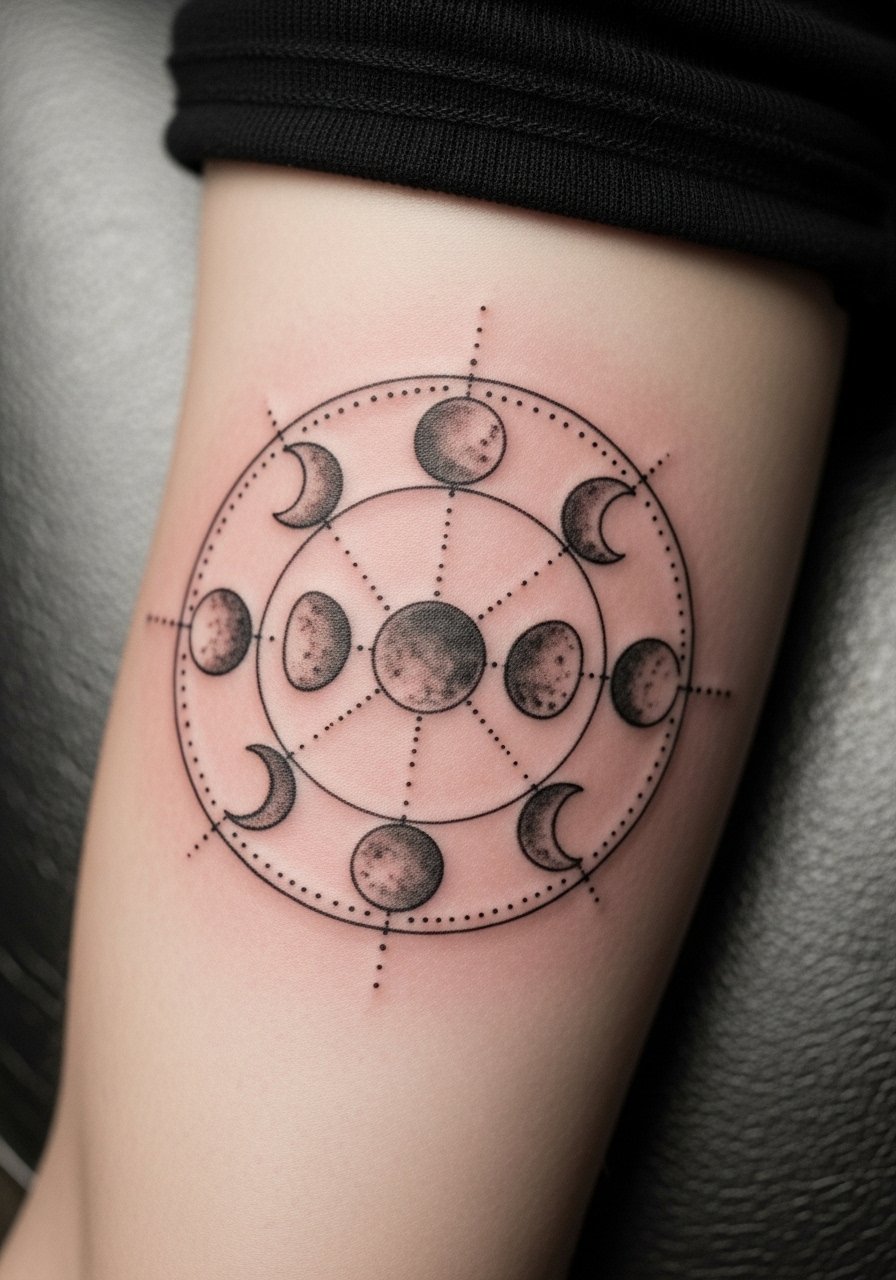
Combine your moon placement with the lunar cycle for a personal moon-phase birth chart. Each phase frames the wheel, connecting your emotional core to its cyclical nature. This design reads like a visual diary of feeling.
Style & Design Details
- Tattoo style: black-and-gray fine line with moon phases
- Recommended size: 2–4 inches
- Best placement(s): inner bicep, upper arm, inner forearm
- Color vs. blackwork: gray shading for phase contrast; black outlines
- Design elements: moon phase crescents, natal wheel center, tiny degree markers, stippling
- Longevity note: gray shades can soften; thicker outlines keep structure
- Who it suits: emotionally oriented people, fans of lunar aesthetics
Finding the Right Artist
Pick an artist with crisp moon-phase work and consistent gray washes. Ask for phase shading samples on similar skin tones.
Aftercare & Healing Tips
Inner-arm placements can get friction; keep clothing loose. Use a fragrance-free soap and a thin layer of Hustle Butter Deluxe during peeling, then SPF once healed.
13. Solar Plexus Mandala with Ascendant Ribbon (Geometric Spiritual)
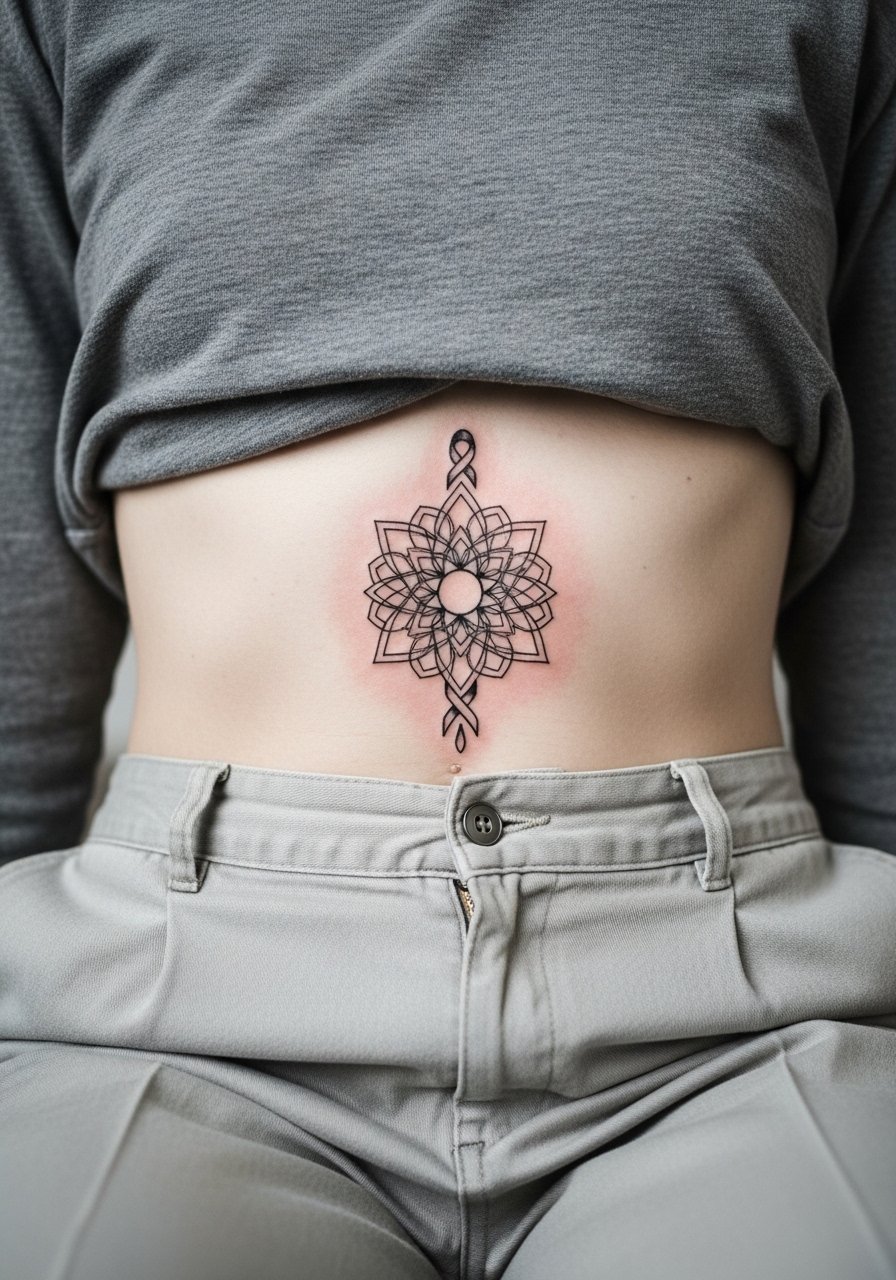
A solar plexus mandala anchors your personal power center to your ascendant. The ribbon-like ascendant line creates movement across the design. This placement feels central and symbolic — ideal for people marking a transformational period.
Style & Design Details
- Tattoo style: geometric mandala with flowing linework
- Recommended size: 3–5 inches
- Best placement(s): upper abdomen (solar plexus), sternum, lower chest
- Color vs. blackwork: black-and-gray suggested for clarity
- Design elements: radial mandala, ascendant ribbon, small planet glyphs, dot halos
- Longevity note: stomach area can change with weight fluctuations; discuss sizing
- Who it suits: spiritually-minded folks, people with body-positive intentions
Finding the Right Artist
Find an artist experienced with abdominal placements and radial symmetry. Ask about how the design will move with breathing and posture.
Aftercare & Healing Tips
Avoid tight waistbands and heavy bending for the first days. Use a gentle soap and apply a thin layer of unscented lotion during peeling. Consider Saniderm for the initial phase.
14. Negative Space Chart Cube (Geometric Cube on Shoulder)
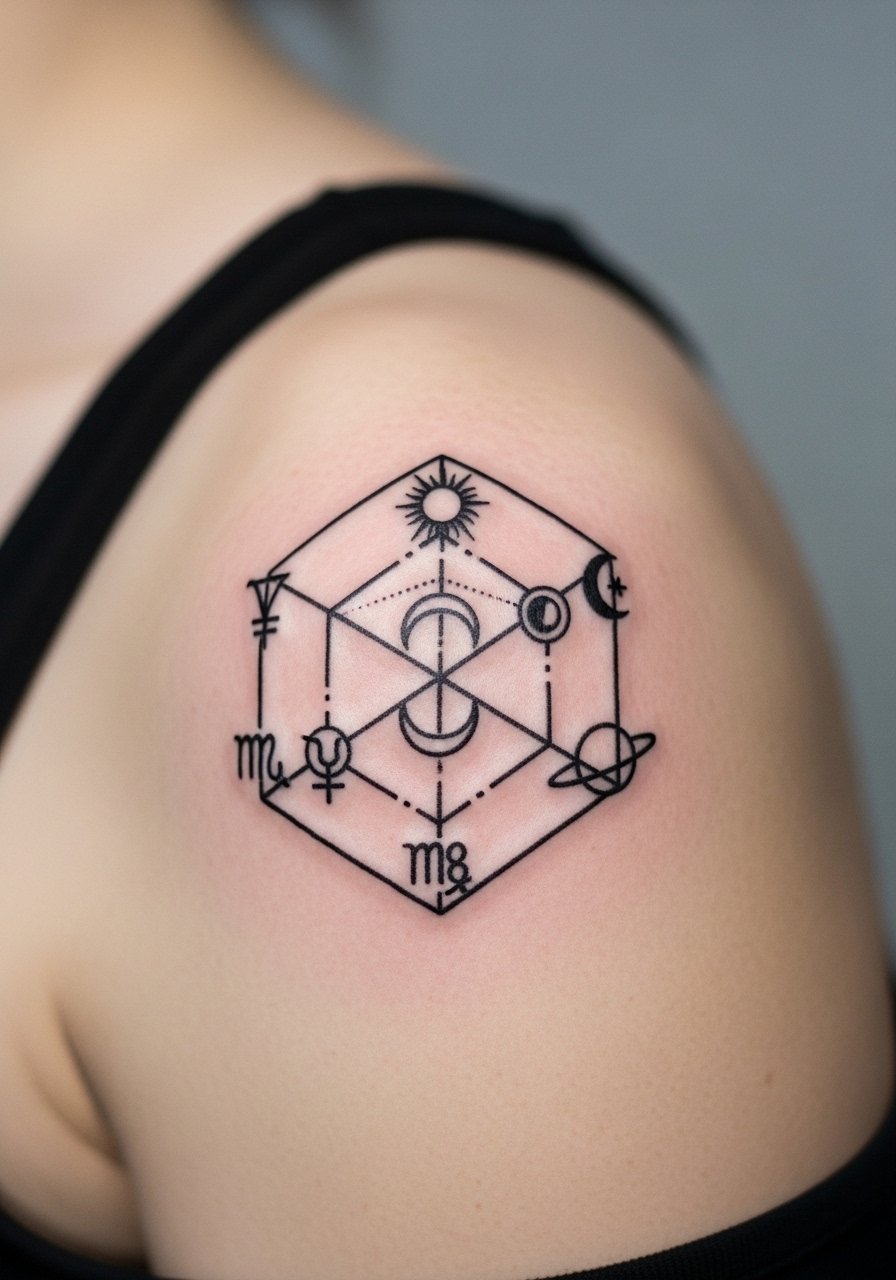
A geometric cube that incorporates your chart into negative-space planes reads modern and abstract. On the shoulder, it looks architectural and wearable with both casual and formal looks. Negative space helps the design breathe.
Style & Design Details
- Tattoo style: geometric negative-space linework
- Recommended size: 2–3 inches
- Best placement(s): shoulder cap, deltoid, upper back
- Color vs. blackwork: black outlines with skin-negative panels
- Design elements: cube planes, house demarcations, tiny planet glyphs, negative space shading
- Longevity note: sharp lines hold well on shoulders; rotation of clothing affects fading
- Who it suits: minimalist-geometry enthusiasts, architecture fans
Finding the Right Artist
Look for geometric artists who use crisp linework and precise stenciling. Ask how they plan to keep edges straight on curved anatomy. Avoid artists not comfortable with negative-space compositions.
Aftercare & Healing Tips
Shoulder tattoos heal well due to lower friction. Clean with gentle soap and moisturize with Lubriderm unscented. Apply SPF 50 when wearing sleeveless tops.
15. Retro Celestial Neo-Traditional Hip Panel (Color + Bold Lines)
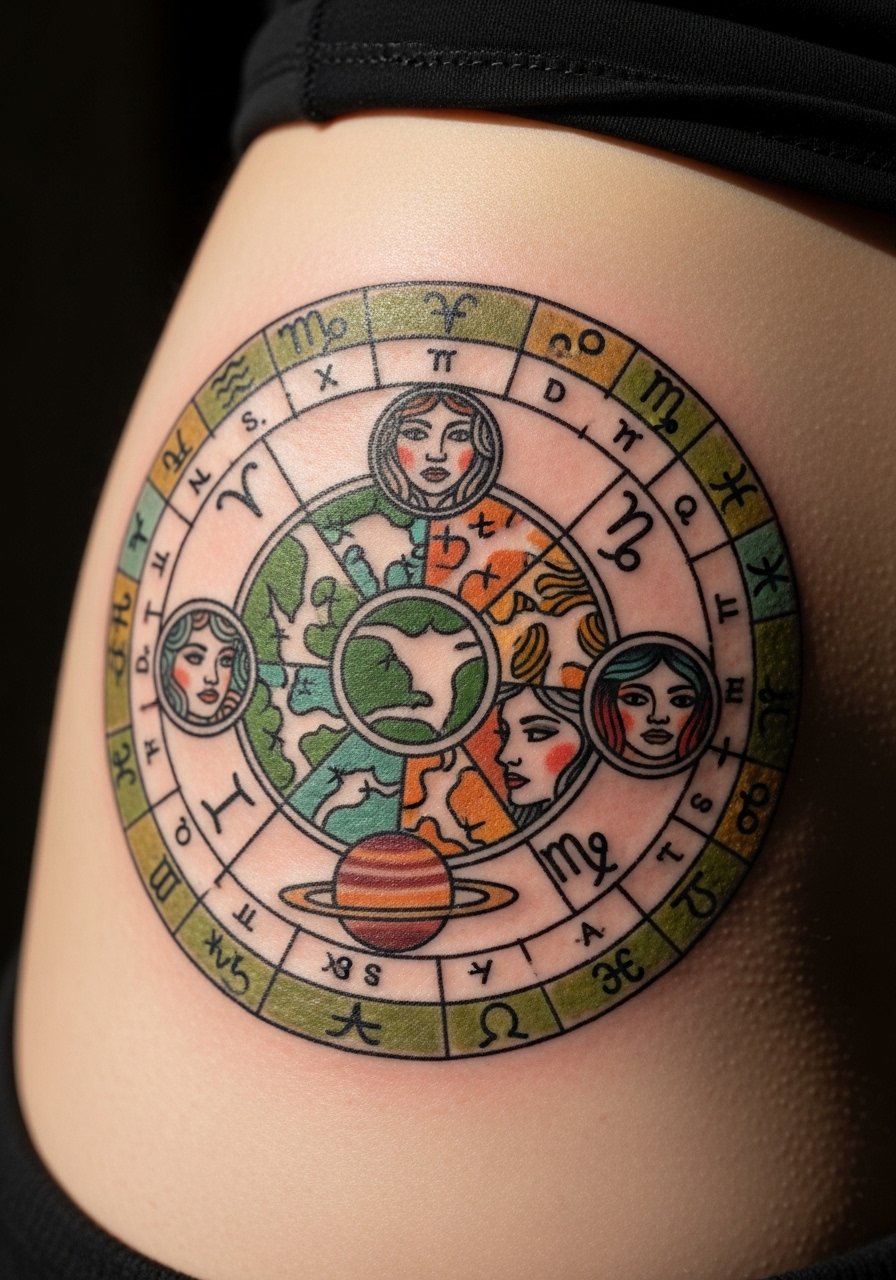
Neo-traditional elements give your chart a vintage postcard vibe. On the hip, a colorful medallion or panel reads sensual and playful. Bold lines help maintain color saturation over time, especially in areas that see clothing friction.
Style & Design Details
- Tattoo style: neo-traditional with color fills
- Recommended size: hand-sized to larger hip panel
- Best placement(s): hip, upper thigh, side torso
- Color vs. blackwork: color palette with bold outlines ensures longevity
- Design elements: planet portraits, ribbon banners, muted fills, decorative borders, vintage flourishes
- Longevity note: color on hips can rub against clothing; choose high-saturation inks
- Who it suits: lovers of neo-trad aesthetics and bold color
Finding the Right Artist
Choose artists with strong neo-traditional portfolios and consistent color packing. Ask which pigments they recommend for longevity on skin tone. Avoid artists without healed color photos.
Aftercare & Healing Tips
Hip tattoos may rub against waistbands; wear soft, loose bottoms. Clean and moisturize with Hustle Butter or Lubriderm, and avoid tight clothing while healing.
16. Tiny House Cusps Finger Stamps (Micro-Placement)
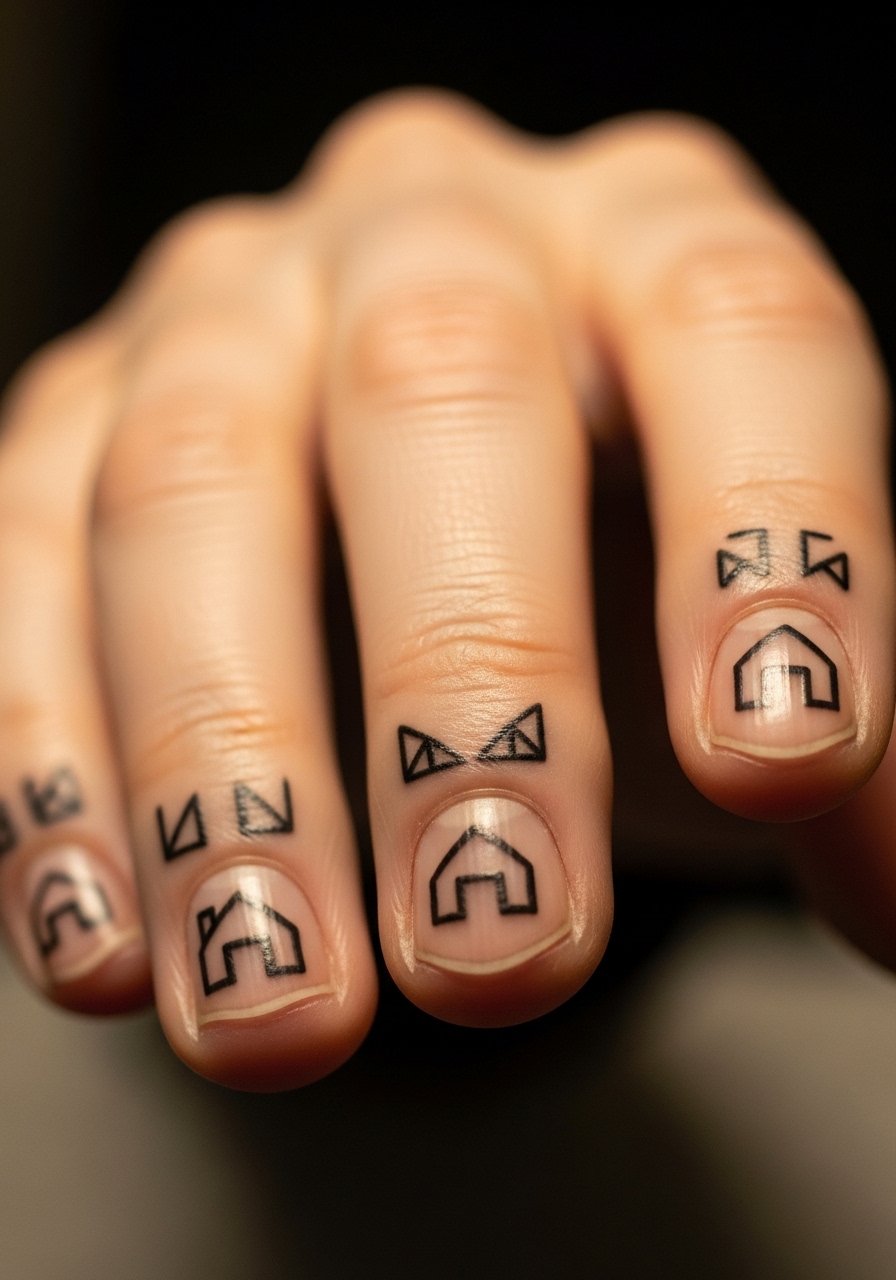
Finger tattoos are intimate and tactile. Stamping house cusps across fingers feels like carrying your chart wherever you go. Keep designs bold enough for longevity — micro-fine lines rarely survive frequent hand use.
Style & Design Details
- Tattoo style: micro-symbol bold lines for durability
- Recommended size: 0.2–0.5 inches per glyph
- Best placement(s): side or top of finger, knuckles
- Color vs. blackwork: pure black with slightly heavier line weight
- Design elements: tiny house glyphs, bold negative-space, compact spacing
- Longevity note: finger tattoos fade faster; plan touch-ups
- Who it suits: fans of jewelry-like tattoos, people who accept maintenance
Finding the Right Artist
Find artists who successfully tattoo hands and fingers; request healed finger photos. Ask about expected touch-up schedules. Avoid artists inexperienced with the high-fade nature of fingers.
Aftercare & Healing Tips
Hands are exposed a lot. Wash gently, keep moisturized, and expect to schedule touch-ups around 6–12 months. Use a tattoo-friendly SPF stick on hands when out in the sun.
17. Natal Chart Lockets (Micro Portrait on Inner Wrist)
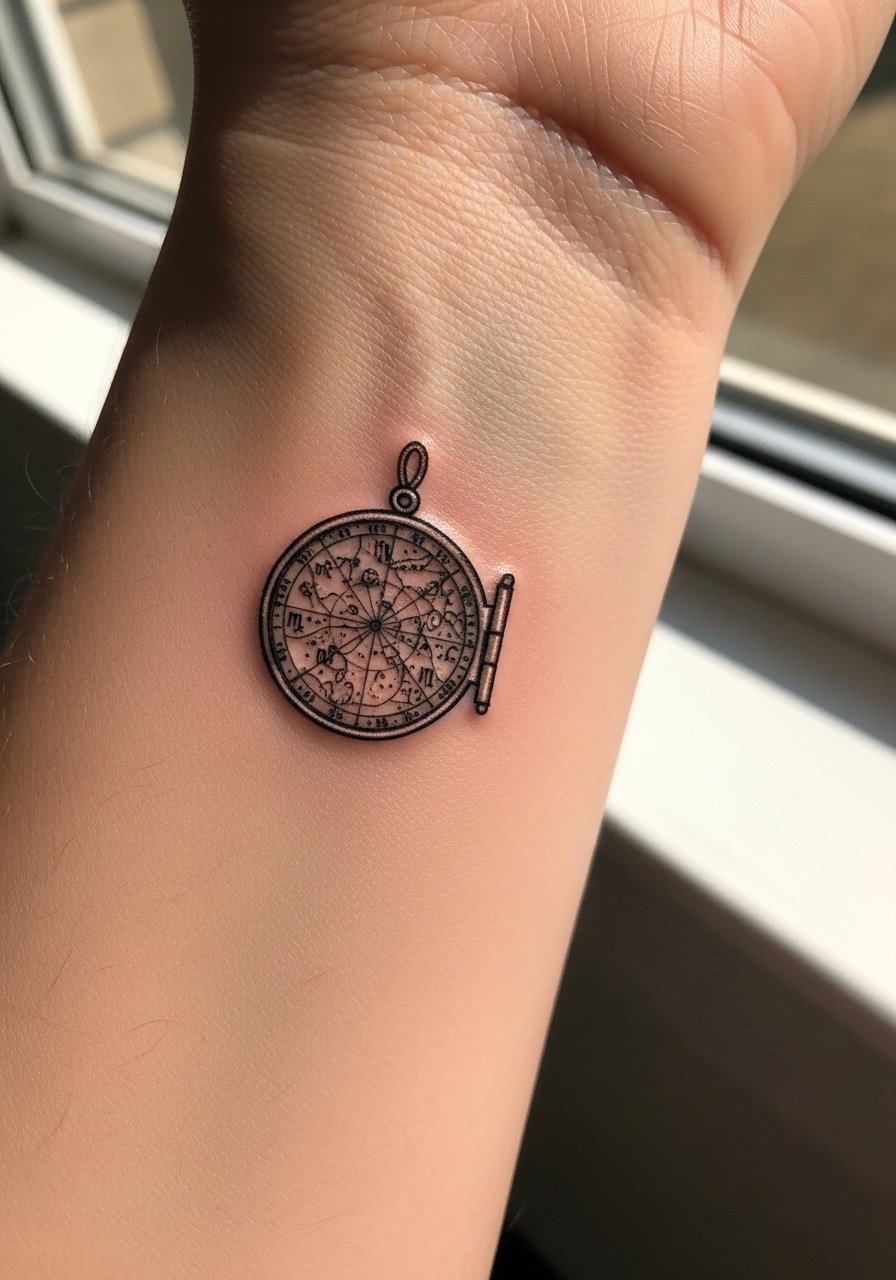
A locket-style micro portrait compresses your chart into a small pendant-like piece. Inner wrist placement makes it feel like a wearable talisman. It’s especially sweet as a memorial or ancestry nod.
Style & Design Details
- Tattoo style: micro-illustrative enclosed portrait
- Recommended size: 0.8–1.5 inches
- Best placement(s): inner wrist, behind collar, inner arm
- Color vs. blackwork: blackwork with gray accents; gold wash optional
- Design elements: circular locket frame, tiny natal wheel, delicate filigree, dot halos
- Longevity note: enclosed shapes age well; keep edges bold
- Who it suits: sentimental wearers, memorial pieces, personal keepsakes
Finding the Right Artist
Look for artists comfortable with tiny enclosed illustrations and consistent circular shapes. Ask for mockups and healed photos.
Aftercare & Healing Tips
Wrist tattoos are visible and touch often; keep them clean and moisturized. Apply a thin layer of fragrance-free lotion and protect with SPF when exposed.
18. Full-Arm Planet Line Column (Linear Portraits with Names)
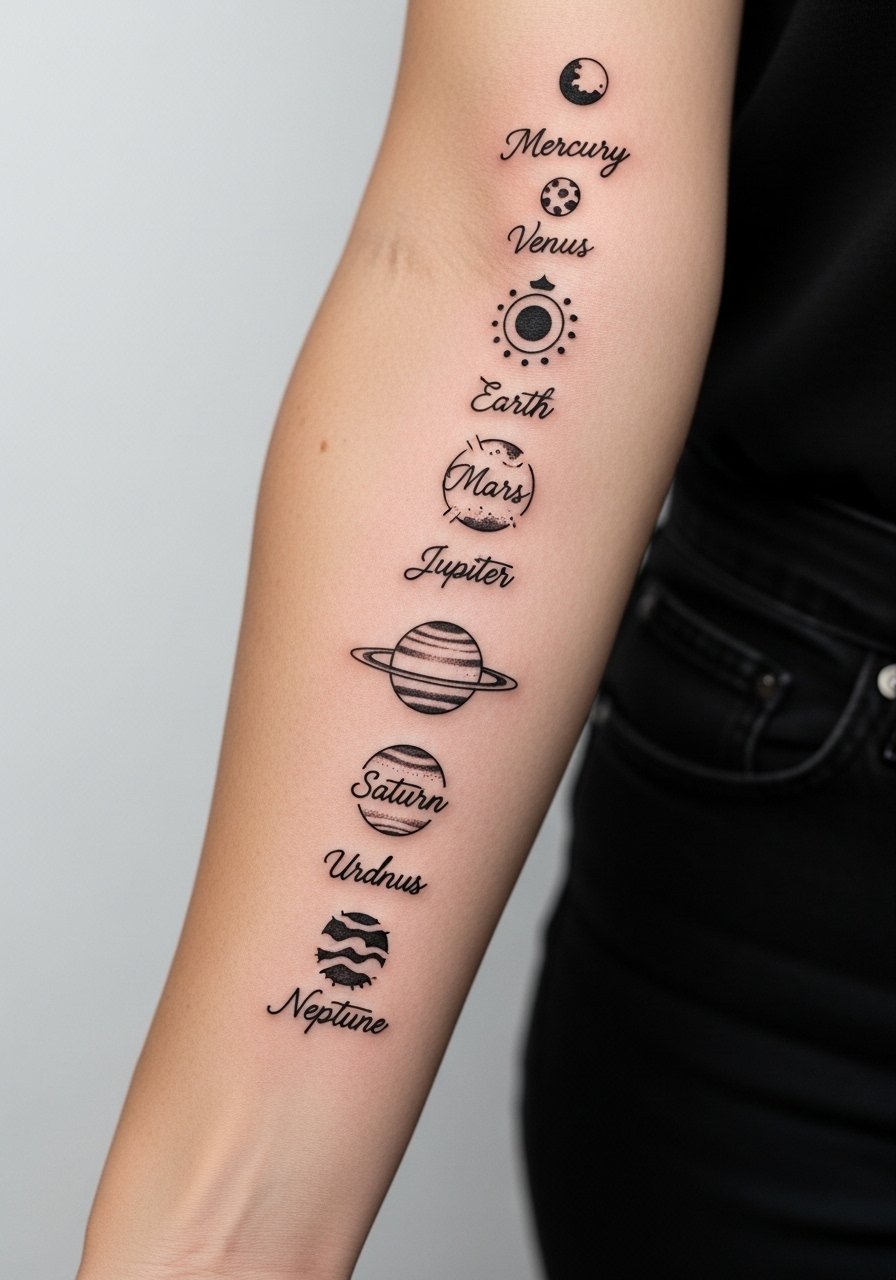
Line up planets vertically along the arm with small type-like name scripts beneath each glyph. It reads almost like a catalogue of celestial influences. The long vertical allows you to add more planets or aspects over time.
Style & Design Details
- Tattoo style: linear illustrative column with micro-script
- Recommended size: full arm column or half-arm
- Best placement(s): inner forearm, outer arm, bicep
- Color vs. blackwork: blackwork with minimal shading; scripts in fine line
- Design elements: planet glyphs, small name script, spacing markers, light stippling
- Longevity note: script can blur small; slightly bolder type retains readability
- Who it suits: people who enjoy cataloguing and adding to a collection
Finding the Right Artist
Pick someone who does consistent column work and readable small text. Ask about font sizing and how it will age in ink.
Aftercare & Healing Tips
For longer columns, healing may happen in sections if done over multiple sessions. Keep each area clean and moisturized; expect minor touch-ups after settle.
19. Compass Rose North Node (Travel + Destiny Theme, Calf)
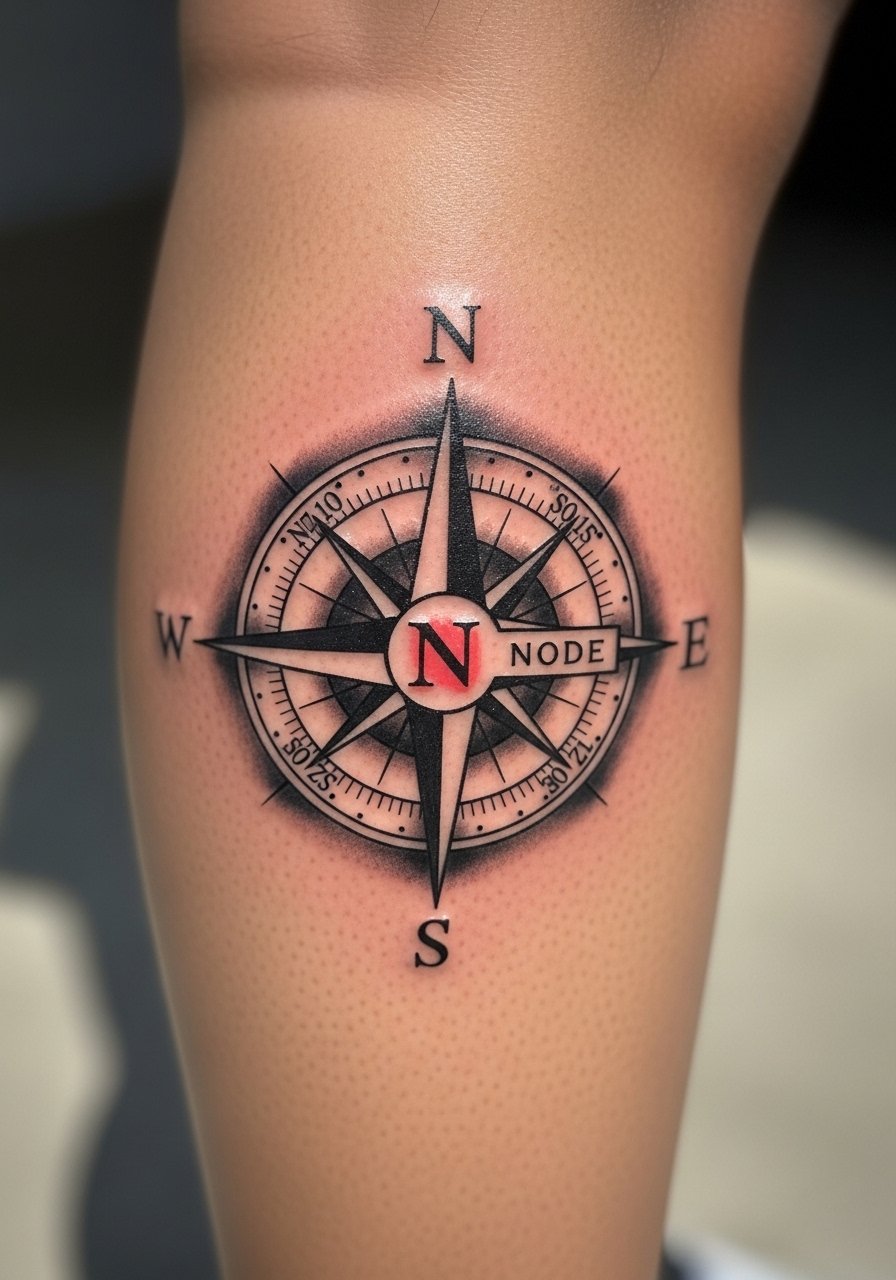
A compass rose with your North Node at the center is perfect for those treating astrology as a roadmap. Calf placement shows off the motif and moves with your gait. It’s symbolic of direction and future path.
Style & Design Details
- Tattoo style: ornamental compass with illustrative shading
- Recommended size: 3–5 inches
- Best placement(s): calf, outer thigh, lower leg
- Color vs. blackwork: black-and-gray; small color for the North Node accent
- Design elements: compass points, North Node glyph, subtle map lines, dot shading
- Longevity note: calf is stable; sun exposure minimal
- Who it suits: travelers, destiny-oriented folks, people who like map aesthetics
Finding the Right Artist
Find artists who do mapwork and compass details. Ask for examples of healed compass pieces on calves.
Aftercare & Healing Tips
Calf tattoos heal reliably; keep garments loose. Apply unscented lotion during peeling and wear SPF when exposing to sun.
20. Birth Chart Hourglass (Time + Node Focus, Side Rib)
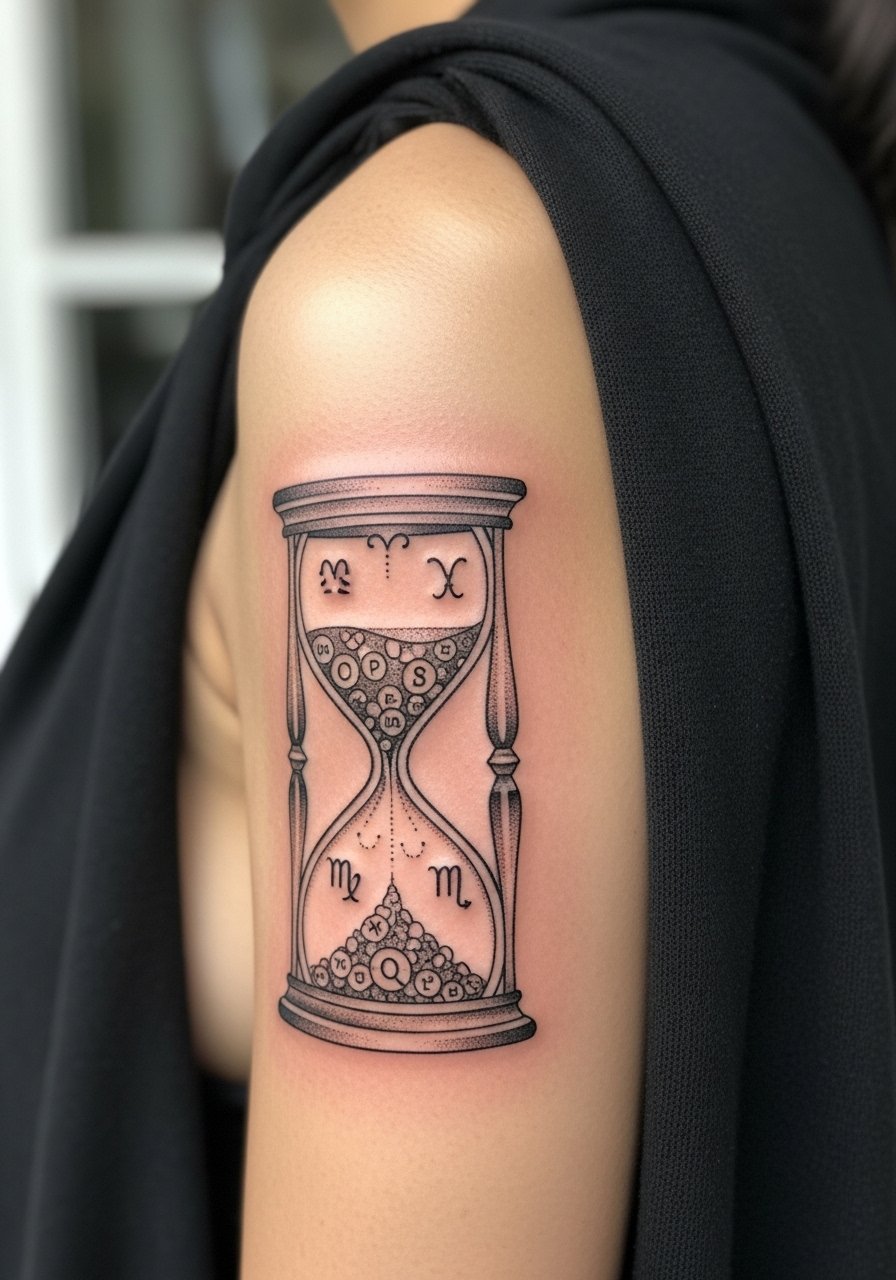
An hourglass pairs time imagery with your chart to symbolize timing and nodes. Side-rib placement is intimate and dramatic, with the hourglass shape hugging the torso curve.
Style & Design Details
- Tattoo style: illustrative with fine line and stipple
- Recommended size: 3–5 inches
- Best placement(s): side rib, oblique, upper hip
- Color vs. blackwork: blackwork with gray stipple to suggest sand
- Design elements: hourglass frame, interior natal wheel or node, tiny sands, ornate supports
- Longevity note: ribs hold detail but may be sensitive during tattooing
- Who it suits: contemplative clients, people reflecting on timing
Finding the Right Artist
Pick an artist experienced with oblique anatomy and elongated motifs. Ask for previous rib/side work.
Aftercare & Healing Tips
Consider numbing for this tender placement. Keep clothing loose and use Hustle Butter Deluxe post-wrap. Rib tattoos may require extra patience while healing.
21. Conjunction Knot Behind the Knee (Intertwined Lines)
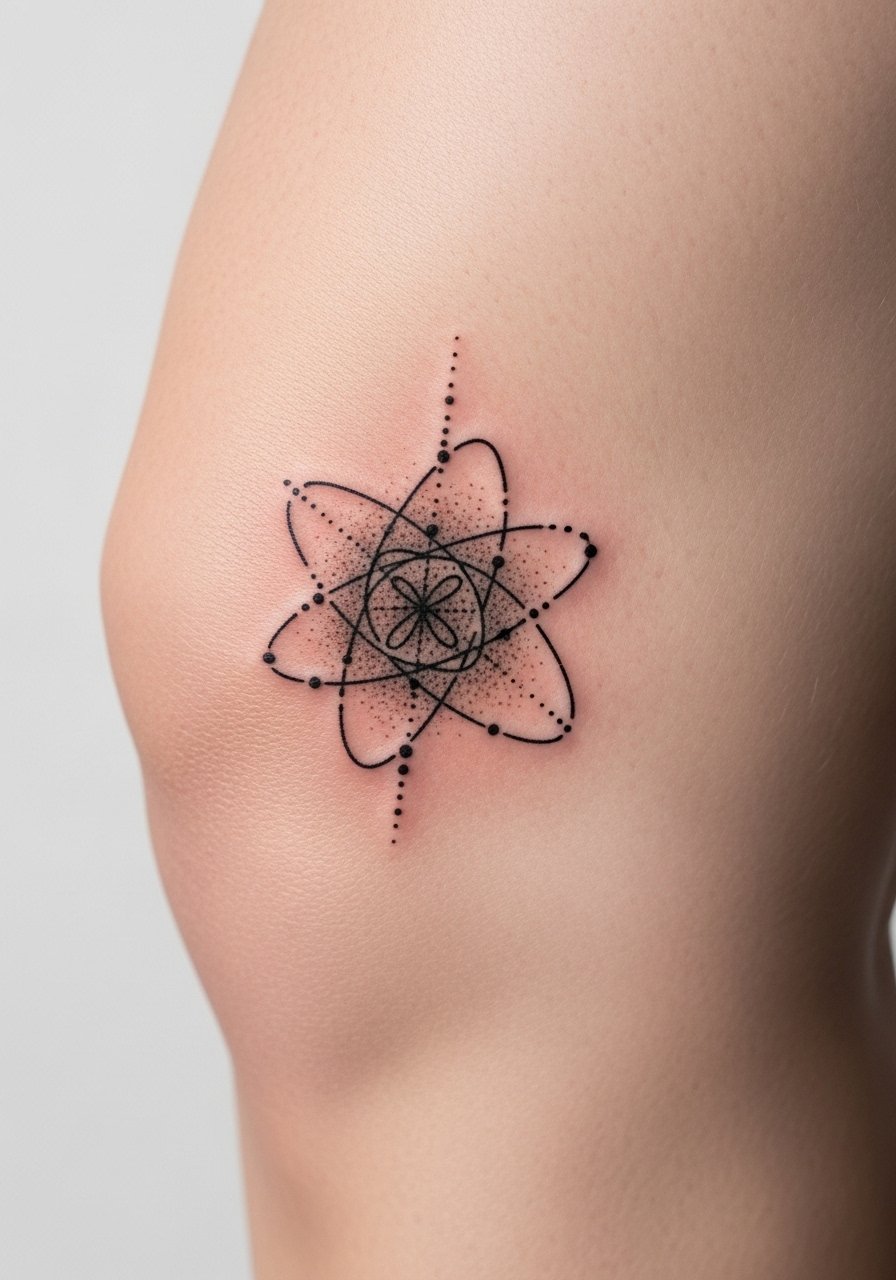
A small interlaced knot marks conjunction-heavy charts behind the knee. It’s playful, hidden, and a little cheeky. Movement adds to the dynamic look as lines shift with bending.
Style & Design Details
- Tattoo style: interlaced geometric linework
- Recommended size: 1.5–2.5 inches
- Best placement(s): behind the knee, popliteal fossa, inner calf
- Color vs. blackwork: blackwork recommended
- Design elements: intertwined lines, knots, tiny planet dots, subtle shading at intersections
- Longevity note: behind-knee tattoos endure friction; boldening lines help
- Who it suits: adventurous clients and secretive placements fans
Finding the Right Artist
Choose an artist comfortable tattooing behind the knee; ask for healed photos from that area. Avoid inexperienced artists for tricky movement spots.
Aftercare & Healing Tips
Movement increases scabbing risk; keep the area clean and limit prolonged bending early on. Use gentle soap and apply unscented lotion. Protect from tight clothing.
22. Retro Linework Epaulette (Shoulder-Top Military-Inspired)
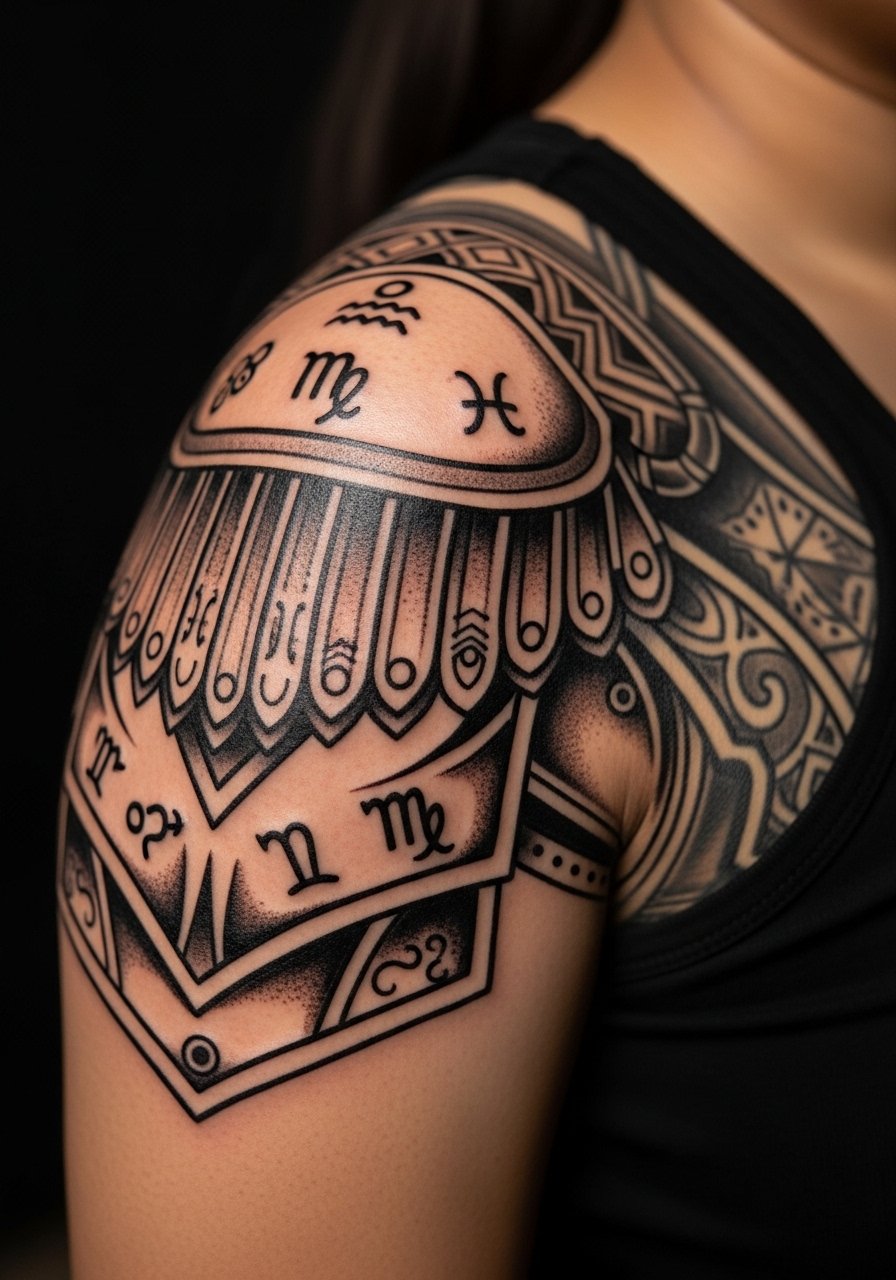
An epaulette-inspired birth chart sits like decorative armor on your shoulder. It’s graphic and bold, perfect for someone wanting a structured, retro military vibe.
Style & Design Details
- Tattoo style: retro linework with emblematic ornament
- Recommended size: 3–5 inches across the shoulder
- Best placement(s): shoulder cap, deltoid, upper back
- Color vs. blackwork: blackwork with minimal shading; small gold tint optional
- Design elements: epaulette fringe, central natal glyph, laurel borders, bold outlines
- Longevity note: shoulder placement holds well; keep moisturized
- Who it suits: people drawn to structured symbols and vintage flair
Finding the Right Artist
Find bold-line artists who design emblematic pieces and work well on rounded anatomy.
Aftercare & Healing Tips
Shoulder tattoos are lower friction but still need SPF. Clean, moisturize, and avoid heavy backpacks during healing.
23. Family Natal Tree (Interconnected Charts on Upper Back)
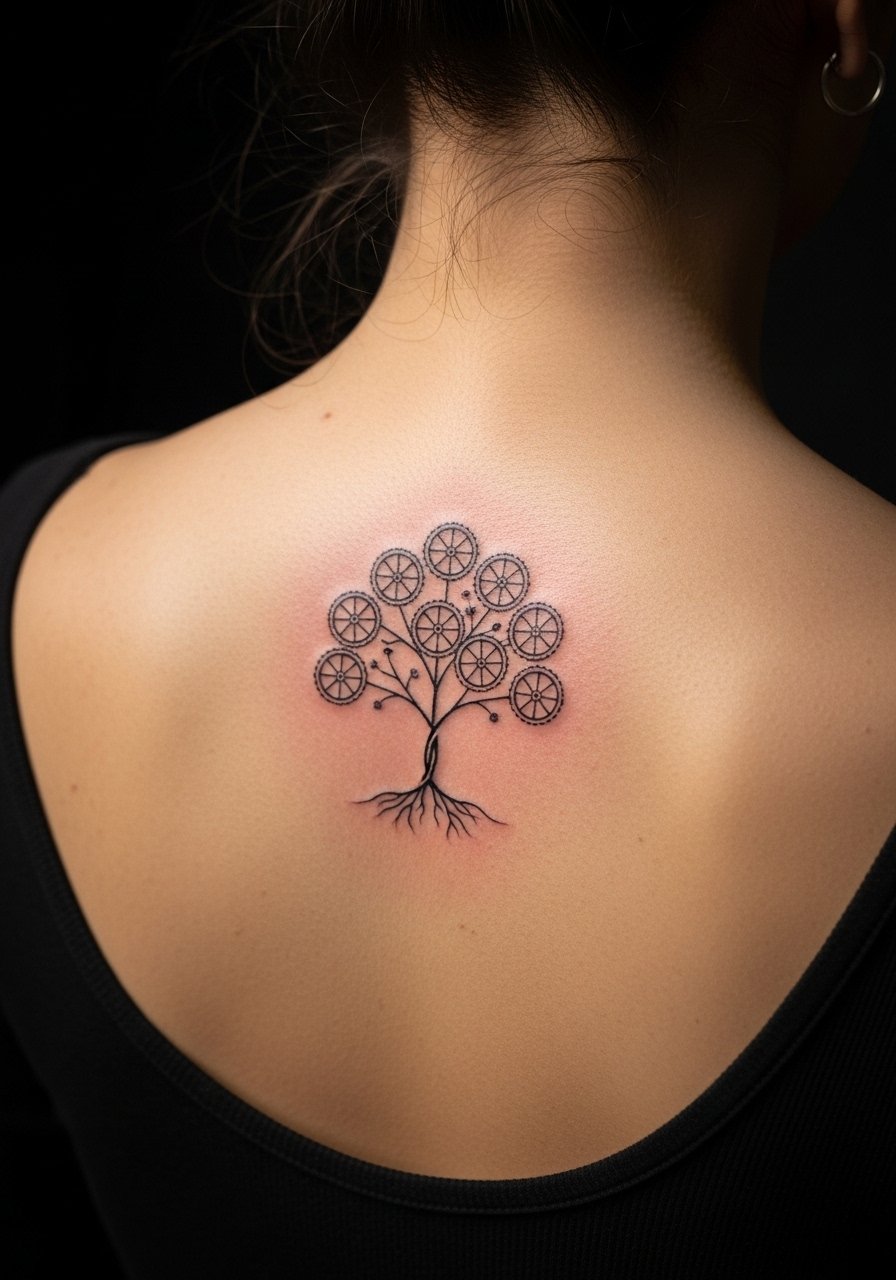
Map multiple family members’ birth charts as branches on an upper-back tree. This combination of genealogy and astrology is intimate and visually coherent across a larger canvas.
Style & Design Details
- Tattoo style: illustrative cluster with fine line linking
- Recommended size: panel-sized, 6–10 inches across
- Best placement(s): upper back, between shoulder blades, full back
- Color vs. blackwork: blackwork with gray shading for depth
- Design elements: small natal wheels, connecting branch lines, leaf motifs, tiny glyph tags
- Longevity note: upper back aging stable, minimal sun exposure if covered
- Who it suits: family-oriented collectors, memorial projects
Finding the Right Artist
Pick a composition-focused artist who can balance multiple small wheels. Ask to see other cluster or modular work they’ve done.
Aftercare & Healing Tips
Large panels mean staged sessions and larger healing areas. Keep each section moisturized and protected. Saniderm on particularly sensitive sections can be helpful.
24. Aspect Wheel Pocket Watch (Victorian Inspiration on Forearm)
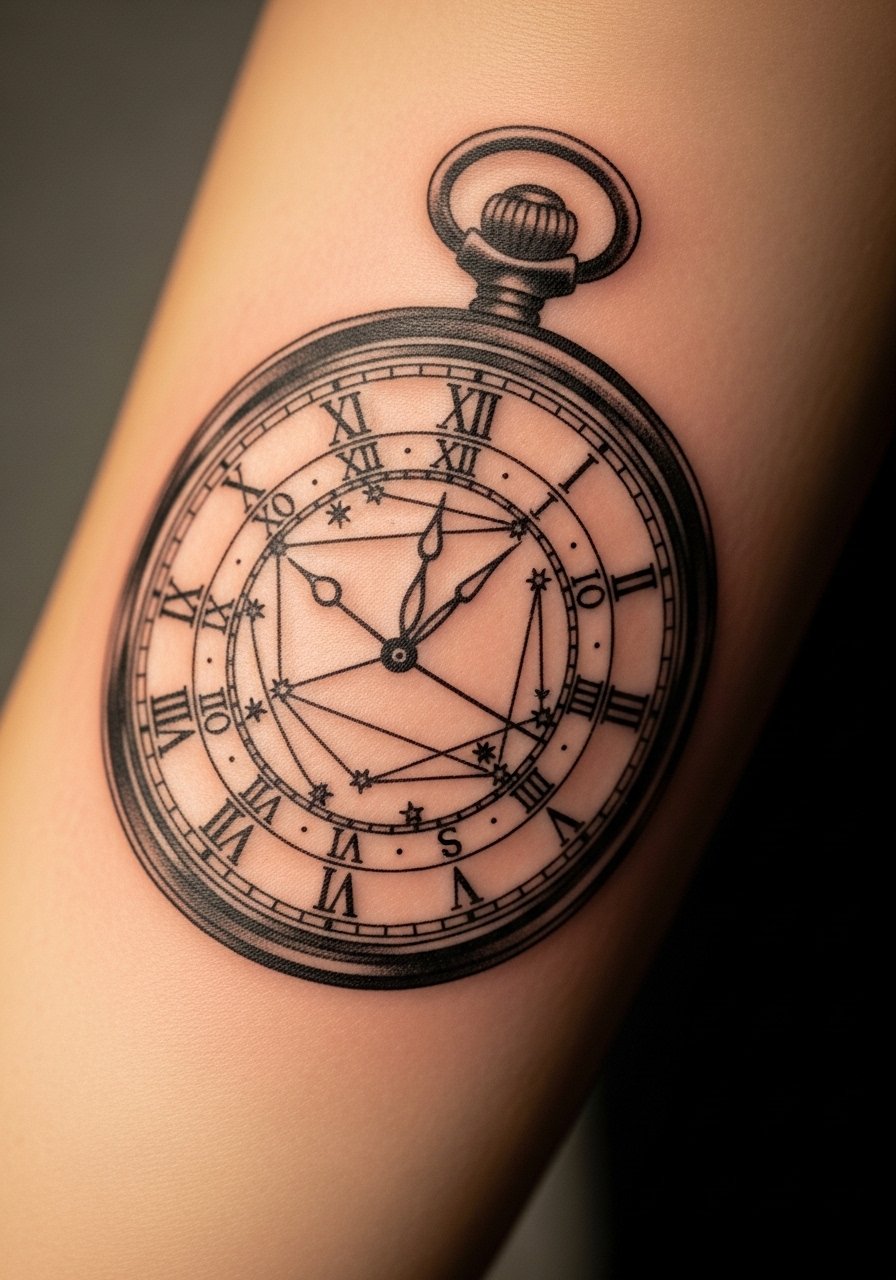
A pocket-watch aspect wheel merges timekeeping with aspect relationships. It pockets the chart like a keepsake. Inner forearm placement turns it into something you can glance at like a talisman.
Style & Design Details
- Tattoo style: Victorian illustrative with fine line detail
- Recommended size: 2–4 inches
- Best placement(s): inner forearm, outer forearm, ventral wrist
- Color vs. blackwork: black-and-gray with thin linework
- Design elements: watch face, Roman numerals, aspect lines, tiny planet glyphs, ornate border
- Longevity note: forearm visibility means more sun exposure; SPF advised
- Who it suits: vintage-lovers, sentimental clients, collectors who like readable pieces
Finding the Right Artist
Look for artists who do ornamental watchwork and fine inner-forearm pieces. Ask about line thickness for readability over time.
Aftercare & Healing Tips
Forearms heal relatively quickly; keep clean and moisturized. Apply Hustle Butter Deluxe during peeling and switch to SPF 50 when you’re outside.
25. Inkbox Test Placement of Major Aspects (Temporary Trial)
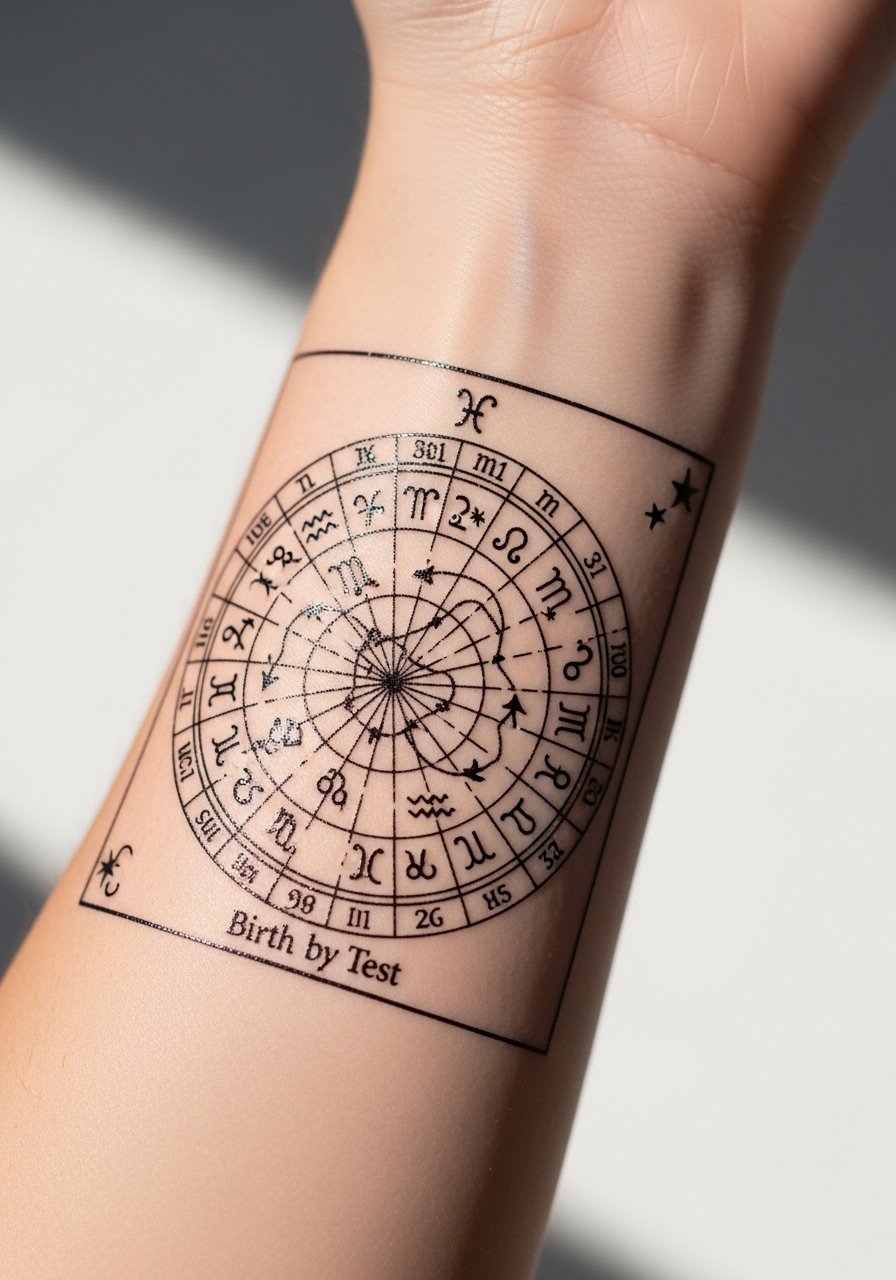
If you’re unsure about placement scale, test it with a semi-permanent kit like Inkbox. This helps you feel the weight of the design and whether you want the chart visible daily.
Style & Design Details
- Tattoo style: temporary mimic of chosen permanent style
- Recommended size: match the intended permanent size for accurate feel
- Best placement(s): test multiple spots: inner forearm, ribs, collarbone
- Color vs. blackwork: temporary black mimics fine line well
- Design elements: major aspects highlighted, glyphs, aspect lines repeated
- Longevity note: temporary lasts ~1–2 weeks and helps finalize decisions
- Who it suits: indecisive clients, placement testers, commitment-wary folks
Finding the Right Artist
Not artist-specific — use temporary stencils or Inkbox kits. Try placing the test in different clothing and movement contexts.
Aftercare & Healing Tips
No healing required, but use this trial to plan future aftercare (how shirts rub, chafing, comfort).
Product recommendation: try an Inkbox semi-permanent tattoo kit before committing.
26. Tiny Degree Dots on the Back of the Neck (Micro-Anchor)
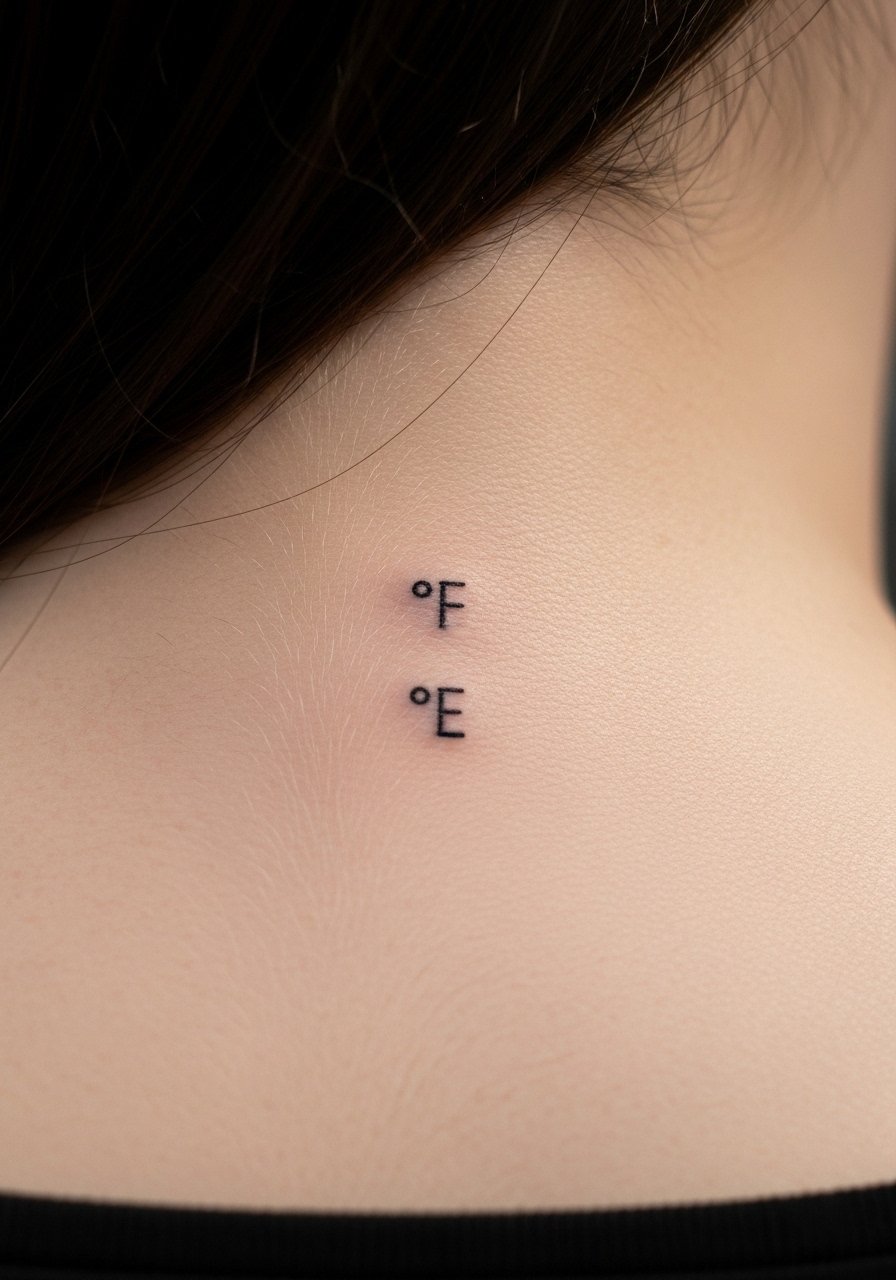
Three tiny degree dots down your nape can mark exact degrees from your chart formula. It’s coded, simple, and intimate — great for people who prefer subtlety.
Style & Design Details
- Tattoo style: micro-dot anchor
- Recommended size: dots 1–2 mm
- Best placement(s): nape/back of neck, behind ear, upper spine
- Color vs. blackwork: solid black dots
- Design elements: tiny solid dots, vertical alignment, small connective line optional
- Longevity note: micro dots can migrate; ask for slightly bolder dots for longevity
- Who it suits: secret-keepers, minimalists, those who like symbolic anchors
Finding the Right Artist
Micro dot artists or fine-line specialists can do this well. Ask to see healed micro-dot work. Apprentices can usually handle dots if supervised.
Aftercare & Healing Tips
Keep hair and necklaces away during healing. Clean gently, then moisturize. Protect with sunscreen once healed.
27. Solar System Belt (Waist-Level Continuous Map)
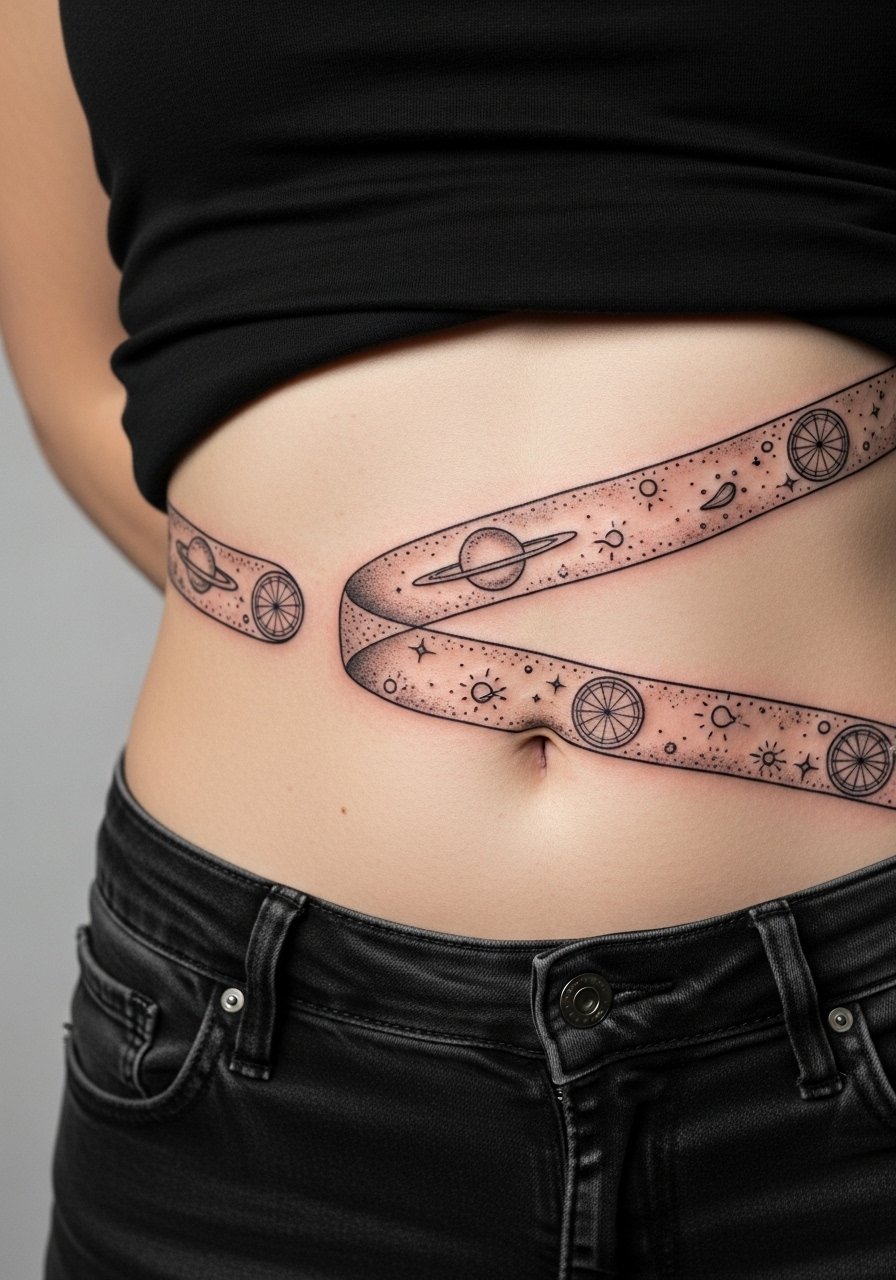
A waist-level solar system belt is bold but wearable, like a cosmic sash. It’s playful and customizable — planets can be spaced to reflect relationships in your chart.
Style & Design Details
- Tattoo style: continuous illustrative band
- Recommended size: wrap-around band, 1–2 inches tall
- Best placement(s): waist, hip line, lower abdomen
- Color vs. blackwork: black with muted color accents if desired
- Design elements: planet icons, orbit lines, natal wheel nodes, tiny stars, negative-space breaks
- Longevity note: waist area can shift with waist size changes; plan sizing
- Who it suits: trend-forward clients, festival-goers, statement-lovers
Finding the Right Artist
Find an artist who can plan wrap-around stencils and scale consistently. Ask about how the band looks with clothing and movement.
Aftercare & Healing Tips
Wear soft waistbands and avoid belts for initial healing. Clean, moisturize, and protect with SPF when wearing crop styles.
28. Split-Chart Bicep (Facing Halves on Each Arm)
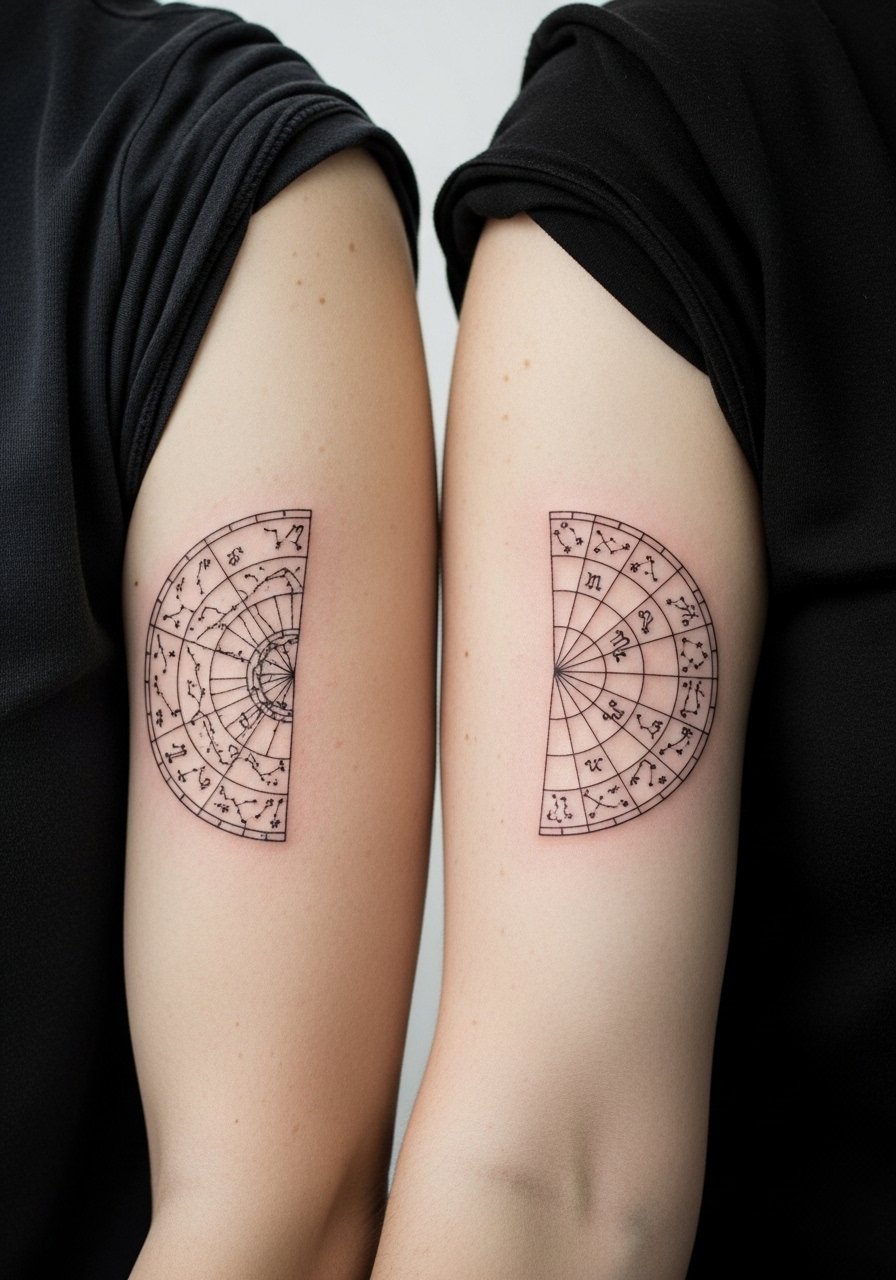
Split the wheel across both biceps for a playful interactive piece that completes only when you bring your arms together. It reads both separately and as a whole — a clever take on natal unity.
Style & Design Details
- Tattoo style: split illustrative halves with matching lines
- Recommended size: each half 2–4 inches
- Best placement(s): outer biceps, inner biceps
- Color vs. blackwork: blackwork for matching clarity
- Design elements: semicircular natal halves, matching glyph mirrors, thin connector lines, shared dotwork
- Longevity note: biceps handle detail well; sun is a factor if often exposed
- Who it suits: playful clients, couples might do matching halves
Finding the Right Artist
Pick someone who plans symmetry across two sessions. Ask how they ensure alignment when arms meet. Avoid artists who don’t test the merge stance.
Aftercare & Healing Tips
Each arm may heal slightly differently; treat both areas consistently. Keep wrapped if needed and moisturize. Avoid intensive lifting until soreness passes.
29. Personalized Glyph Constellation Necklace (Chest to Sternum)
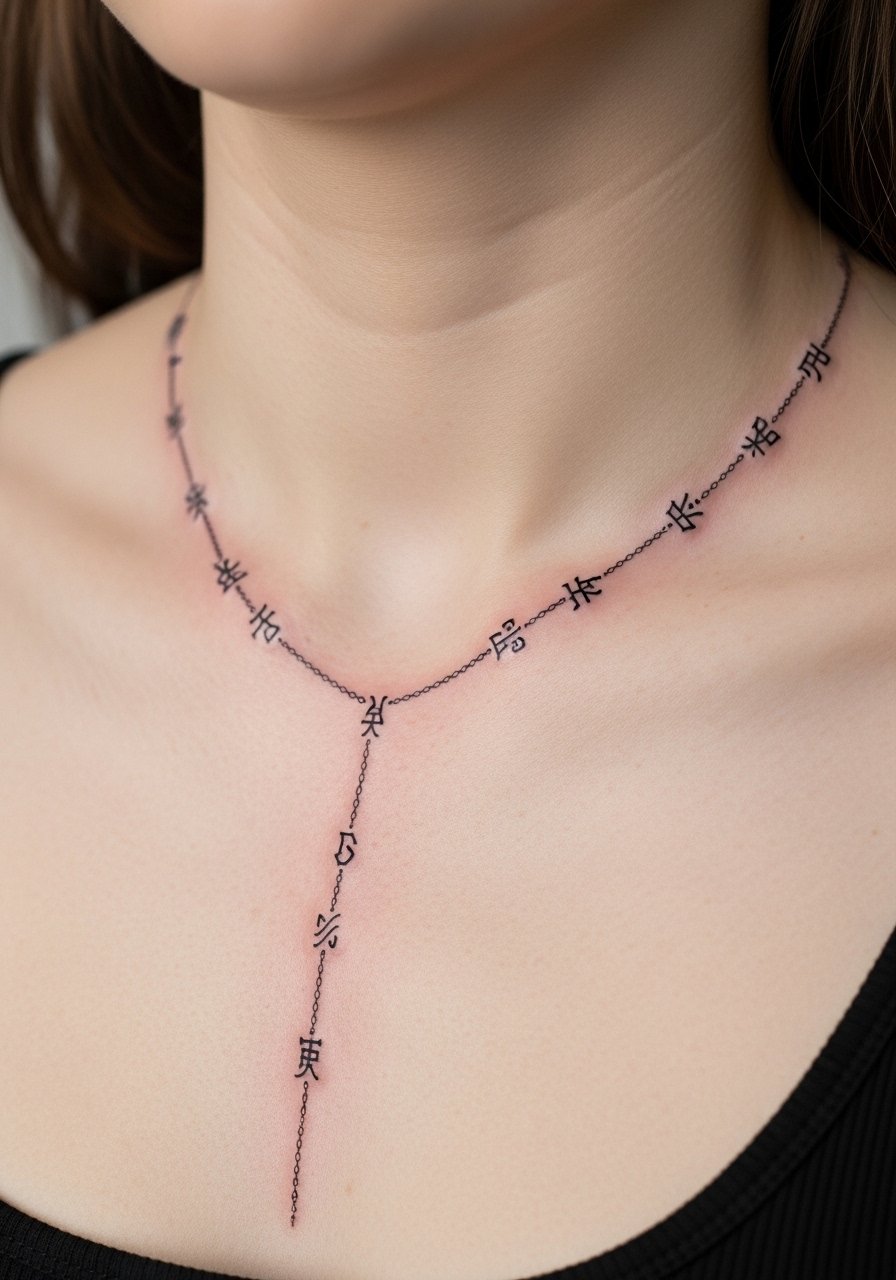
Make your natal glyphs into a permanent necklace — a chain of symbols that sits from collarbone to sternum. It reads as jewelry and astrology combined, always close to the heart.
Style & Design Details
- Tattoo style: micro-jewelry fine line
- Recommended size: length 3–6 inches depending on neckline
- Best placement(s): center chest, collarbone to sternum, along clavicle
- Color vs. blackwork: blackwork or subtle metallic ink suggestion
- Design elements: linked glyphs, tiny chain connectors, small decorative beads, subtle shading
- Longevity note: chest linework holds well but needs SPF
- Who it suits: jewelry-lovers, symbolic minimalists
Finding the Right Artist
Choose an artist who does micro-jewelry tattoos and steady linework. Ask for healed jewelry-style pieces and discuss chain spacing.
Aftercare & Healing Tips
Wear open-neck clothing during healing and avoid necklaces for the first week. Clean with fragrance-free soap and apply Hustle Butter Deluxe or unscented lotion as it peels.
You’ve just scrolled through 29 distinct birth chart astrology tattoo ideas — everything from tiny glyphs to full-panel family trees — so you can find the design and placement that feels like yours. Save this article, pin your favorites, and bring the images to your consultation so your artist can tailor the geometry to your anatomy and astrological specifics.
If you want a single product that’ll help across almost every idea here, pre-order a reliable aftercare kit like Hustle Butter Deluxe tattoo aftercare balm and have a roll of Saniderm on hand. Which of these birth chart astrology tattoo ideas resonates most with you — are you team micro-glyph or full-panel collector? Pin, share, and bring your top picks to your next consult.