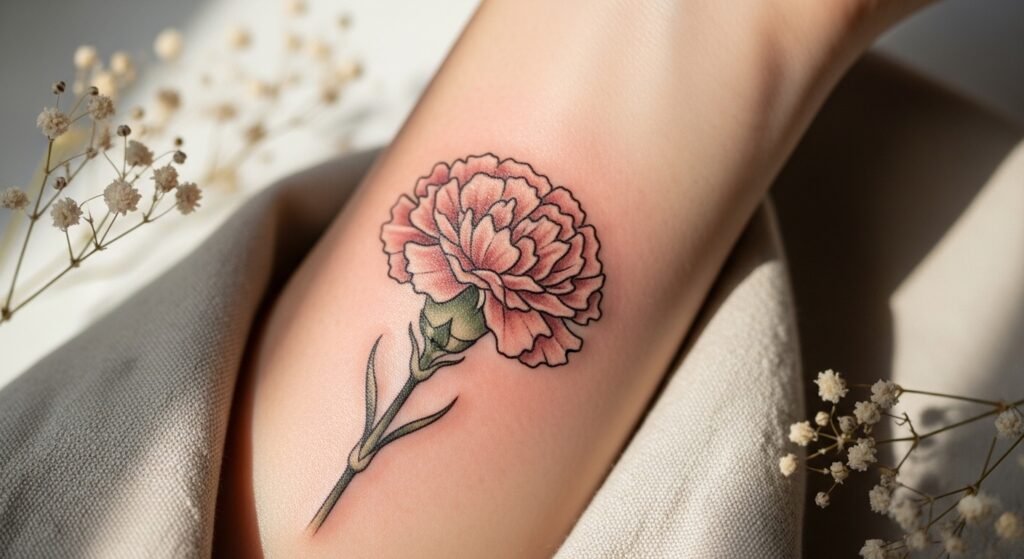
You’re scrolling references at 2 a.m., full of ideas for how to design a carnation flower tattoo that feels personal — maybe a fine line single-stem, maybe a neo-traditional bloom. You want something meaningful, not a straight rip from a flash sheet. This guide walks you through concept, placement, working with an artist, and a practical aftercare routine so your carnation heals the way you pictured it.
I keep a roll of Saniderm tattoo bandage roll in my kit and a tube of EMLA numbing cream for sensitive spots — they really change the appointment and early healing. Below you’ll get placement tips, style choices (fine line, minimalist, neo-traditional), artist talk, and exact aftercare timing.
Start with meaning and a moodboard (fine line, minimalist references)
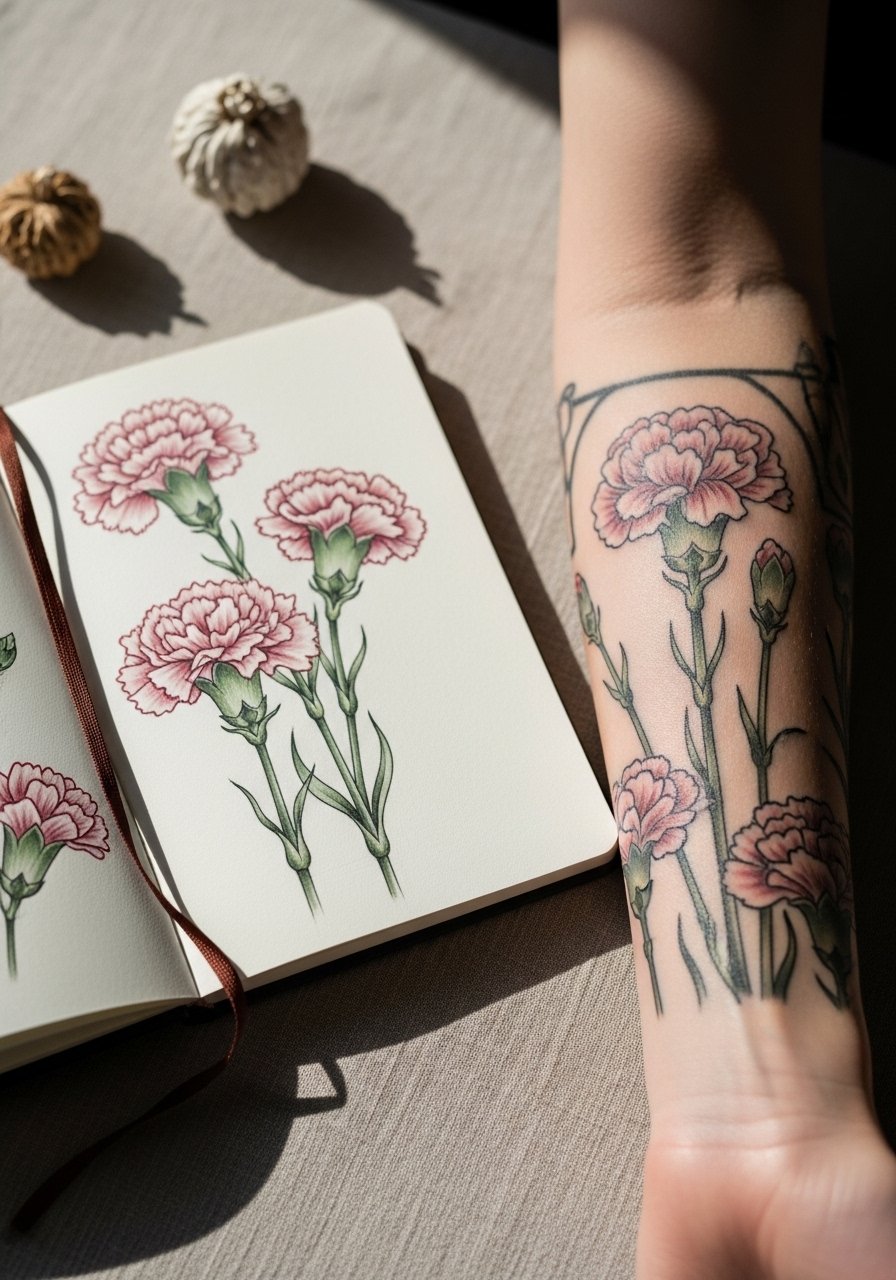
Before you design a carnation flower tattoo, pin what it means to you. Carnations can symbolize love, remembrance, or a birth month — decide your emotional anchor first. Build a reference folder with:
- photos of carnations (petal shape, bud vs. full bloom)
- fine line and blackwork examples to compare contrast and scale
- a test placement using an Inkbox semi-permanent tattoo kit or a printed stencil
Test with a temporary piece for a few days to see how movement and clothing affect the look.
Choose style, size, and beginner placement (beginner placement, pain notes)
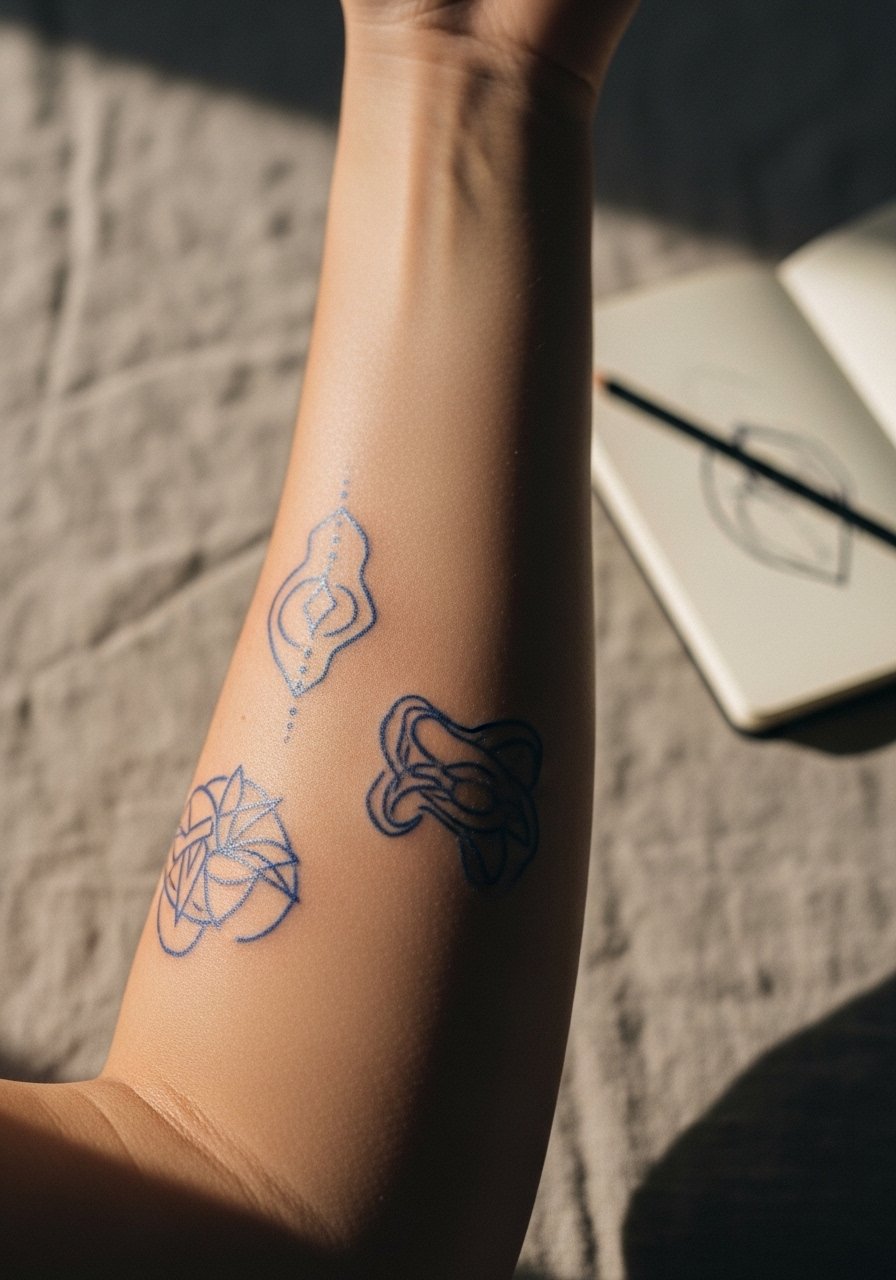
Style dictates detail and pain: fine line and minimalist carnations work great on wrists, ankles, or behind the ear for low pain and quick healing. Neo-traditional or shaded color needs larger canvas — ribs, thigh, or upper arm. Practical tips:
- For sensitive ribs or sternum, apply a thin coat of Zensa numbing cream about 60 minutes before the appointment.
- Shave the area with a disposable prep razor the night before to avoid irritation.
Expect more swelling and a slightly longer healing window (4–6 weeks) for bigger, colored pieces.
Work with your artist and finalize the custom design (touch-up, healed results)
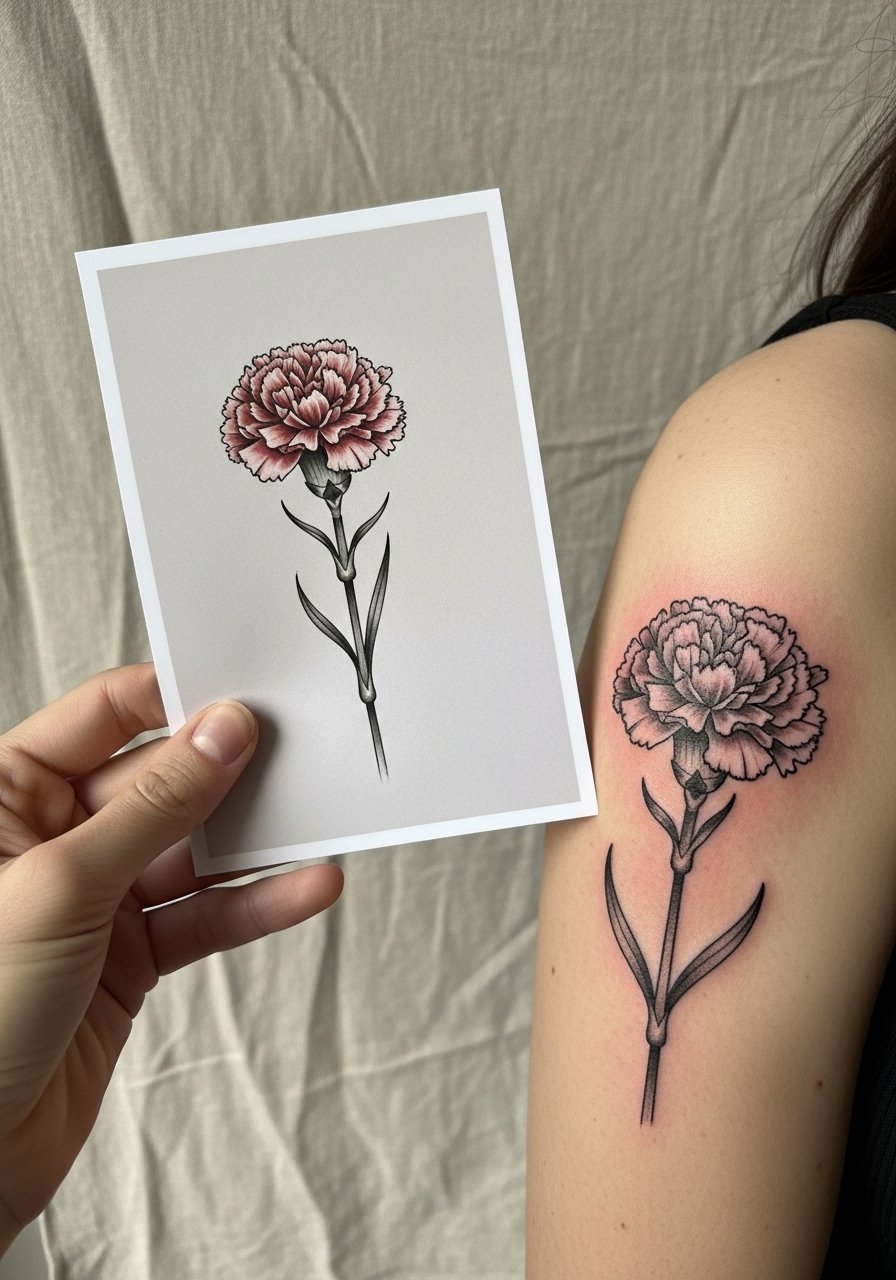
Bring clear references but let the artist adapt for skin flow. Discuss:
- exact scale and line weight for fine line carnations
- color saturation choices for long-term vibrancy
- anticipated touch-up timing (plan a touch-up around 3–6 months if needed)
Ask the artist to print a stencil and tape it in place so you can see movement. If you want to protect early healing and reduce scabbing, try a second-skin approach with a Saniderm tattoo bandage roll or plan to use a small amount of Hustle Butter Deluxe after the first wash.
Aftercare routine and long-term care (aftercare routine, healed results)
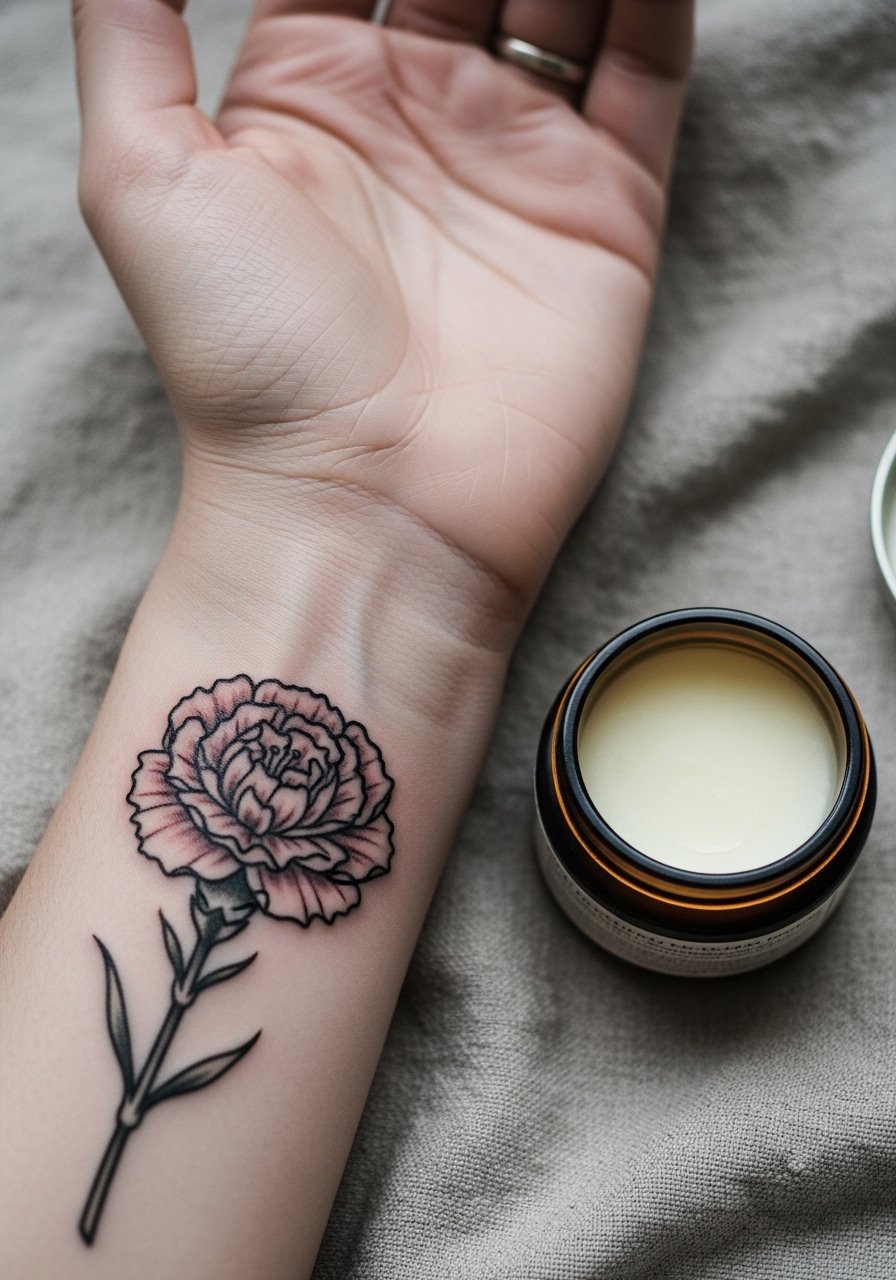
First 24–48 hours: if using Saniderm, leave the second-skin on for 3–5 days, then remove carefully and wash. Otherwise:
- Wash gently twice a day with a fragrance-free antibacterial soap like Dr. Bronner’s unscented.
- Pat dry and apply a thin layer of After Inked tattoo lotion 2–3 times daily during peeling.
- Avoid picking scabs; expect peeling around days 5–14.
For long-term vibrancy, apply a mineral SPF stick on healed ink daily and consider a tattoo brightening lotion or vitamin E oil occasionally. If you want to trial placement or tweak sizing at home, use tattoo stencil transfer paper to re-evaluate before committing to a larger piece.
Your carnation can read delicate or bold depending on scale and ink choices — plan for a small touch-up after the ink fully settles and keep a lightweight aftercare kit ready with Saniderm and a soothing balm like Hustle Butter Deluxe.
You’ve got the blueprint to design a carnation flower tattoo that’s personal and practical. Book that consult, test a placement with an Inkbox if you’re unsure, and pack your aftercare kit the night before with Saniderm, fragrance-free soap, and a gentle lotion. Pin this guide before your appointment — which placement are you leaning toward?