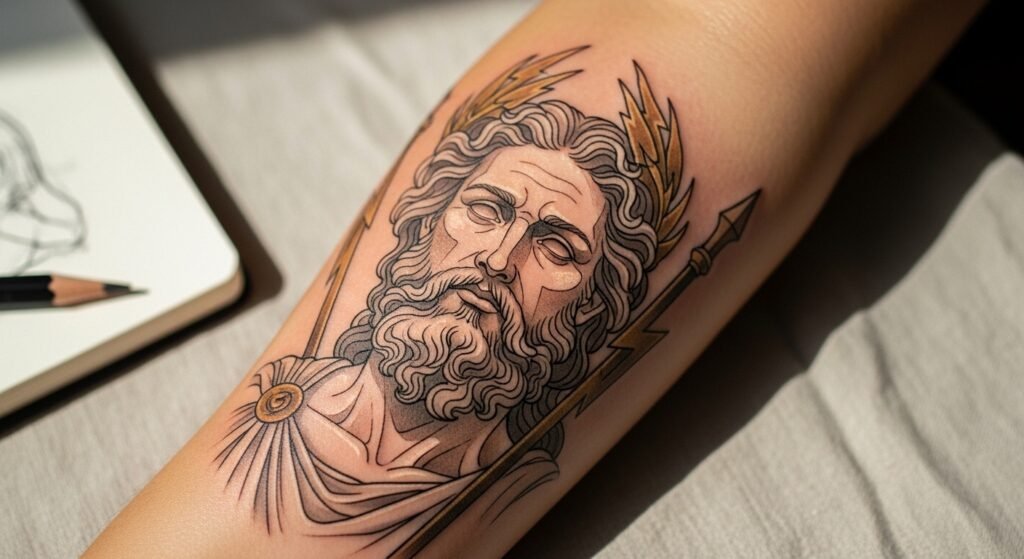
You’re scrolling reference boards at 2 a.m., finally committing to that lightning‑bolt Zeus head you sketched months ago. Placing a Zeus tattoo is as much about posture and flow as it is about the design—where it sits on your body will change how commanding and flattering it reads.
If you want a striking Zeus tattoo that reads powerful at a glance, plan placement, test the scale, and prep your skin. I keep a Saniderm second-skin roll in my kit and a tube of EMLA numbing cream for sensitive ribs. Both make the appointment and healing easier. This guide covers placement advice, testing tricks, what to tell your artist, and a realistic aftercare routine.
Choose the right placement for a Zeus tattoo (flow, scale, beginner placement)
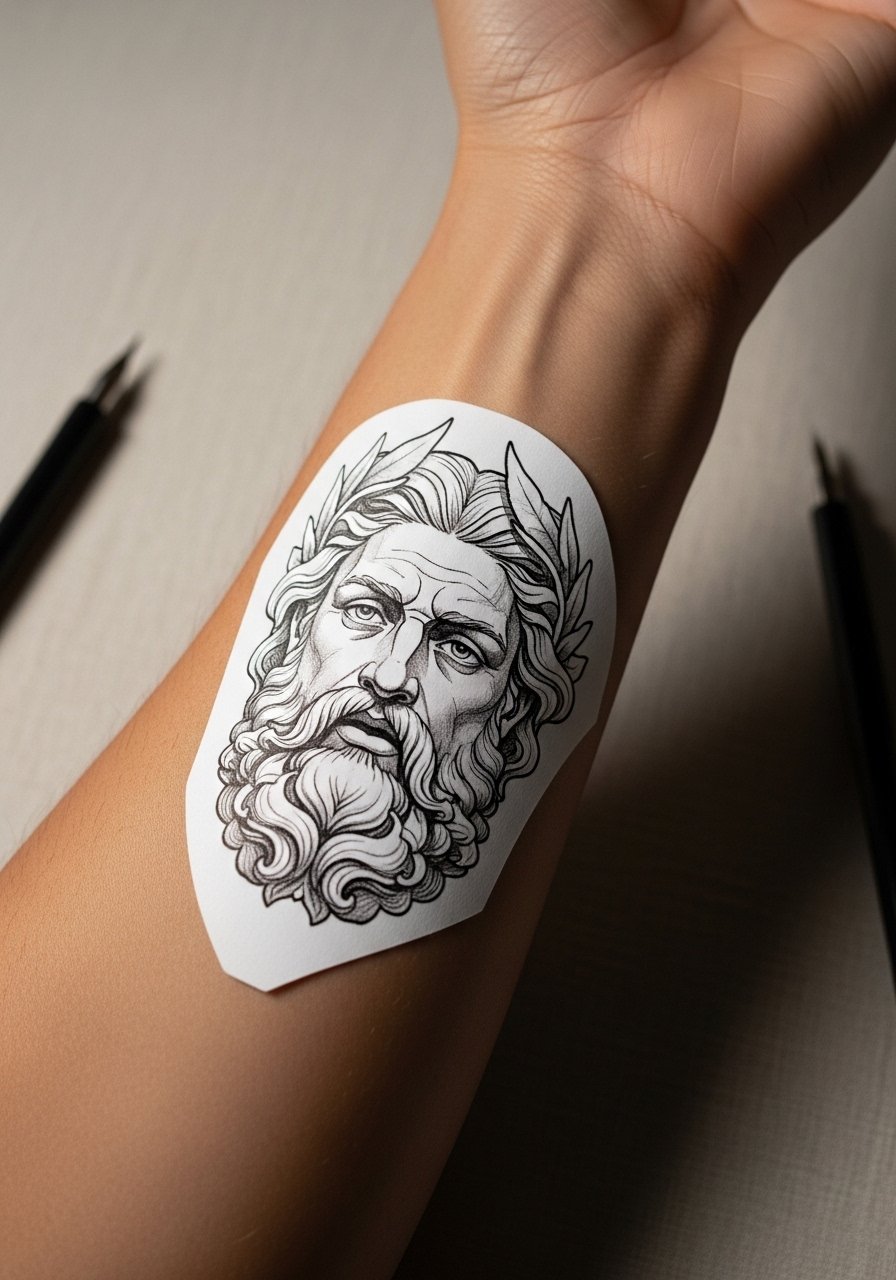
Placement dictates how commanding your Zeus tattoo reads—chest and upper back feel heroic, forearm and calf feel confident, rib and sternum feel intimate but painful. For a bold Zeus head that still flatters:
- Consider curvature: place the face where muscle/bone contours accentuate the jawline or brow.
- Scale it: a 4–8 inch Zeus head often reads best on chest or thigh; smaller (2–4 inch) on forearm or calf for fine line details.
- Beginner placement: forearm or outer calf is forgiving for touch‑ups and visibility.
Try a temporary version to check flow: apply an Inkbox semi‑permanent kit to live with the scale for a week.
Test placement before you commit (stencil tricks and temporary tattoos)
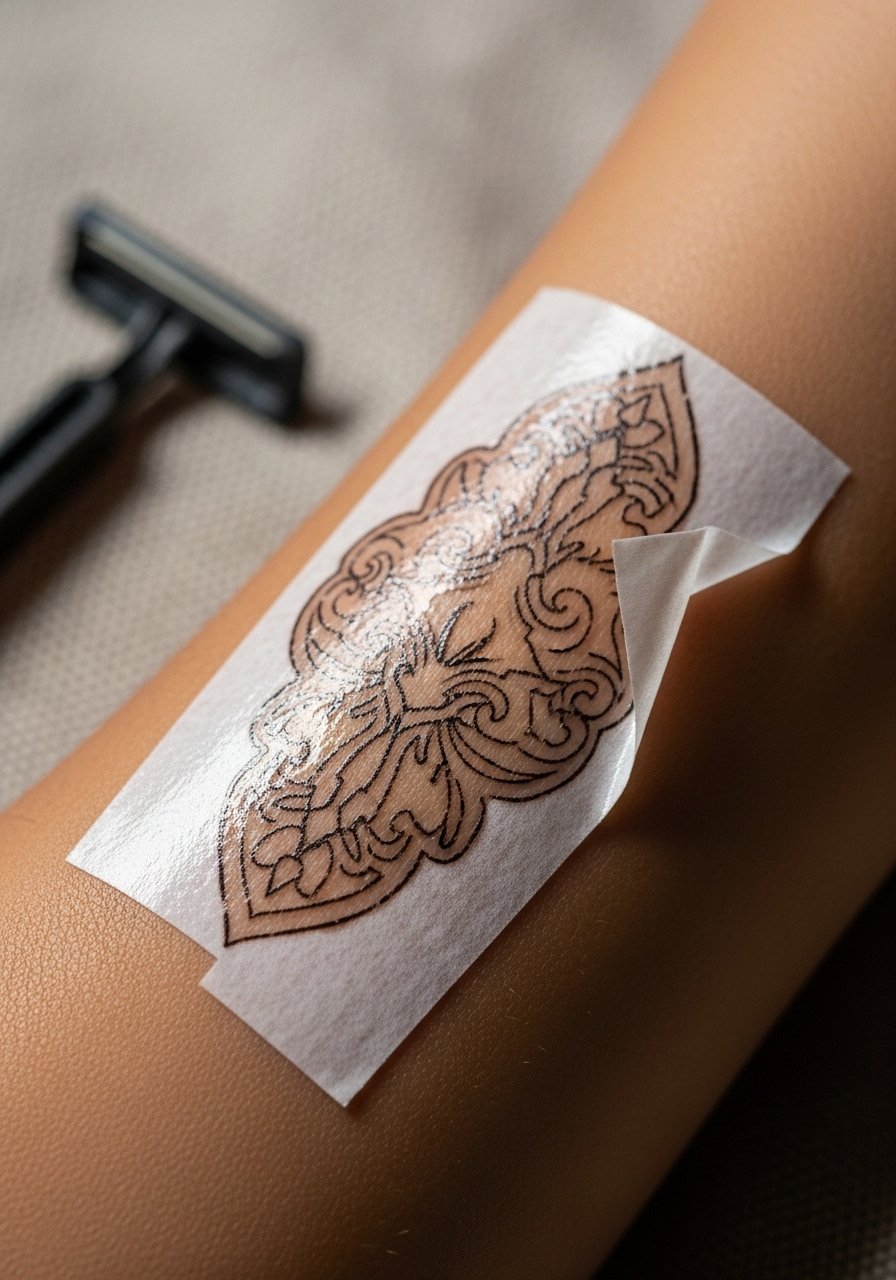
Testing stops surprises. Use these steps:
- Print or draw the design to scale.
- Transfer with tattoo stencil paper and wear it during movement.
- Shave the area with a single‑use prep razor the night before to see true placement on the skin.
Wear the stencil for 24–72 hours to see how it sits when you bend, sleep, and wear clothes. If it pulls or warps, move it.
Talk to your artist and manage pain for sensitive placements (fine line, neo‑traditional, touch-up notes)
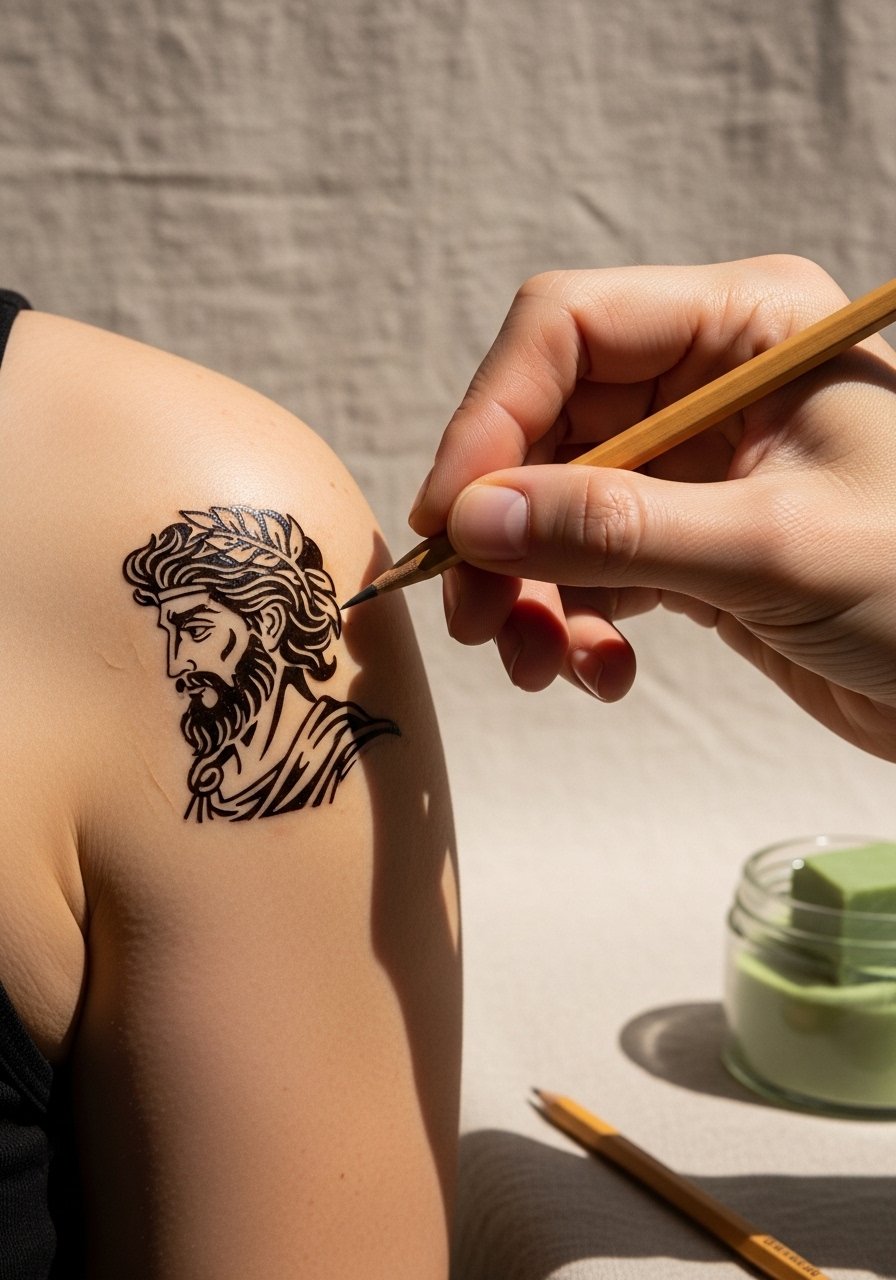
Tell your artist your style goals—fine line detailing for a minimalist Zeus, blackwork or neo‑traditional for bolder shading. Ask these during consultation:
- “How will this scale at 3 inches vs 6 inches?” (Artists can explain detail loss.)
- “What needle grouping suits fine line vs neo‑traditional here?”
- Discuss touch-ups: plan a follow-up at 8–12 weeks once the ink has settled.
For painful spots (ribs, sternum), apply EMLA numbing cream about 60–90 minutes before your session, following the product directions.
Aftercare routine to keep Zeus fresh and eye‑catching (first wash, peeling, long‑term care)
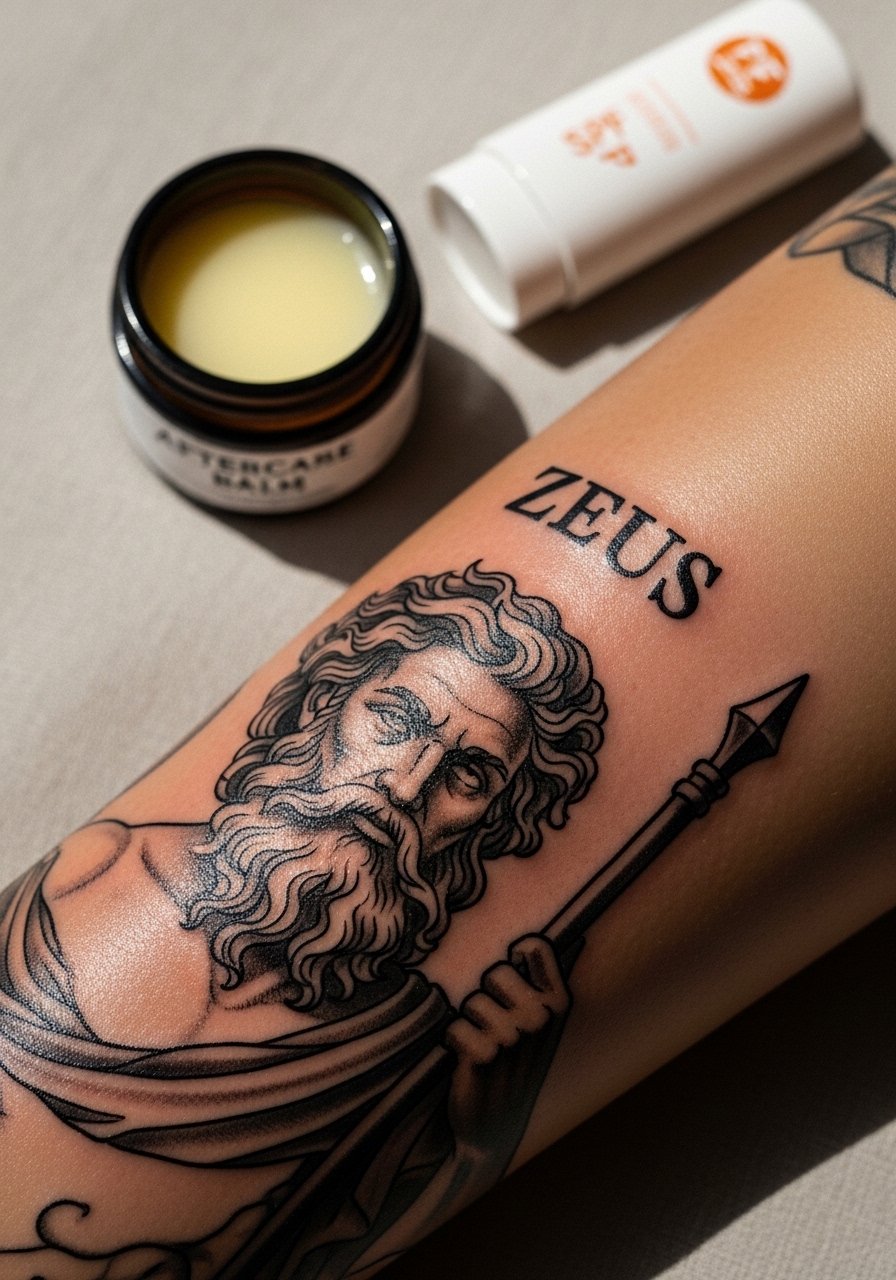
Healing is when the tattoo earns its presence. Follow this timeline and product guidance:
- First 24 hours: Leave the studio wrap on until your artist says (often 2–24 hours). If using a second skin, apply Saniderm second-skin roll and leave 3–5 days.
- First wash (after wrap removal): Gently wash twice daily with a fragrance‑free antibacterial soap. Pat dry—don’t rub.
- Moisturize during peeling (days 3–14): Apply a thin layer of After Inked tattoo lotion 2–3 times daily. If you prefer a balm for flakes, use Hustle Butter Deluxe sparingly.
- Long term: Once healed, protect color with a mineral SPF 50 stick when exposed. For brightness, a light application of vitamin E oil can help skin health months later.
Warnings: avoid picking scabs, heavy scented lotions, and prolonged sun for at least 3 months. If excess plasma or odd redness persists beyond 7–10 days, contact your artist or a clinic.
You’ve planned placement, tested the scale, talked through pain and detail, and set up a solid aftercare routine—your Zeus tattoo will read commanding and flattering. Build your aftercare kit tonight: a roll of Saniderm, fragrance‑free soap, and a trusty lotion will cover most scenarios. Pin this before your consultation and save it for the night before your appointment. Which placement are you leaning toward for your Zeus tattoo? Drop it below!