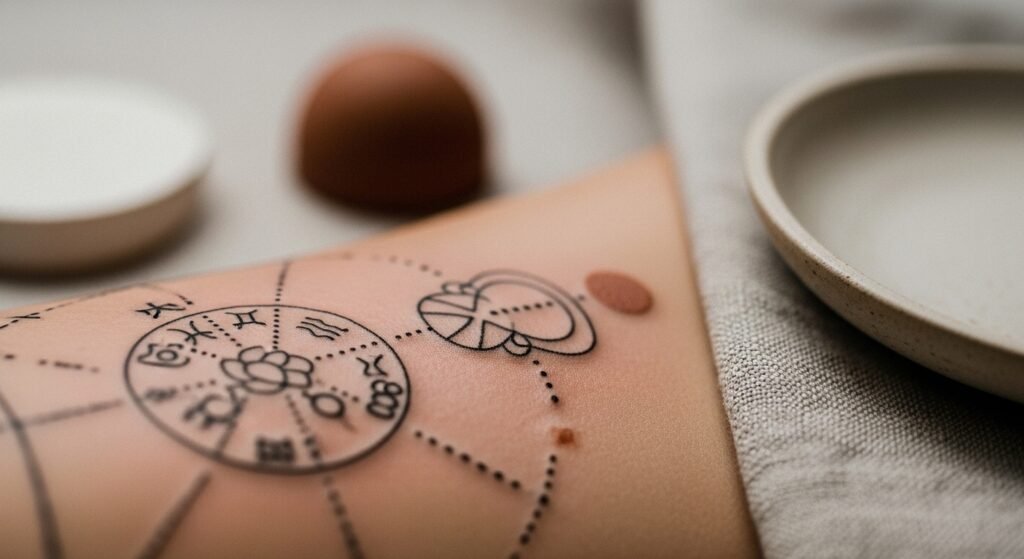
You’re scrolling at 2 a.m., staring at a constellation you’ve sketched for months, wondering where on your body it will actually sing. Placing an astrology tattoo well isn’t just about the art — it’s about flow, skin texture, and everyday life. A well-placed astrology tattoo can read like jewelry, peek at the right moments, and heal cleanly.
Prep the night before: I keep a roll of Saniderm bandage roll in my kit and a numbing cream if a sensitive spot is on the table. This guide walks you through choosing placement, testing stencils, the aftercare routine, and how to protect your design long-term.
Choose the placement that flatters the design and your body
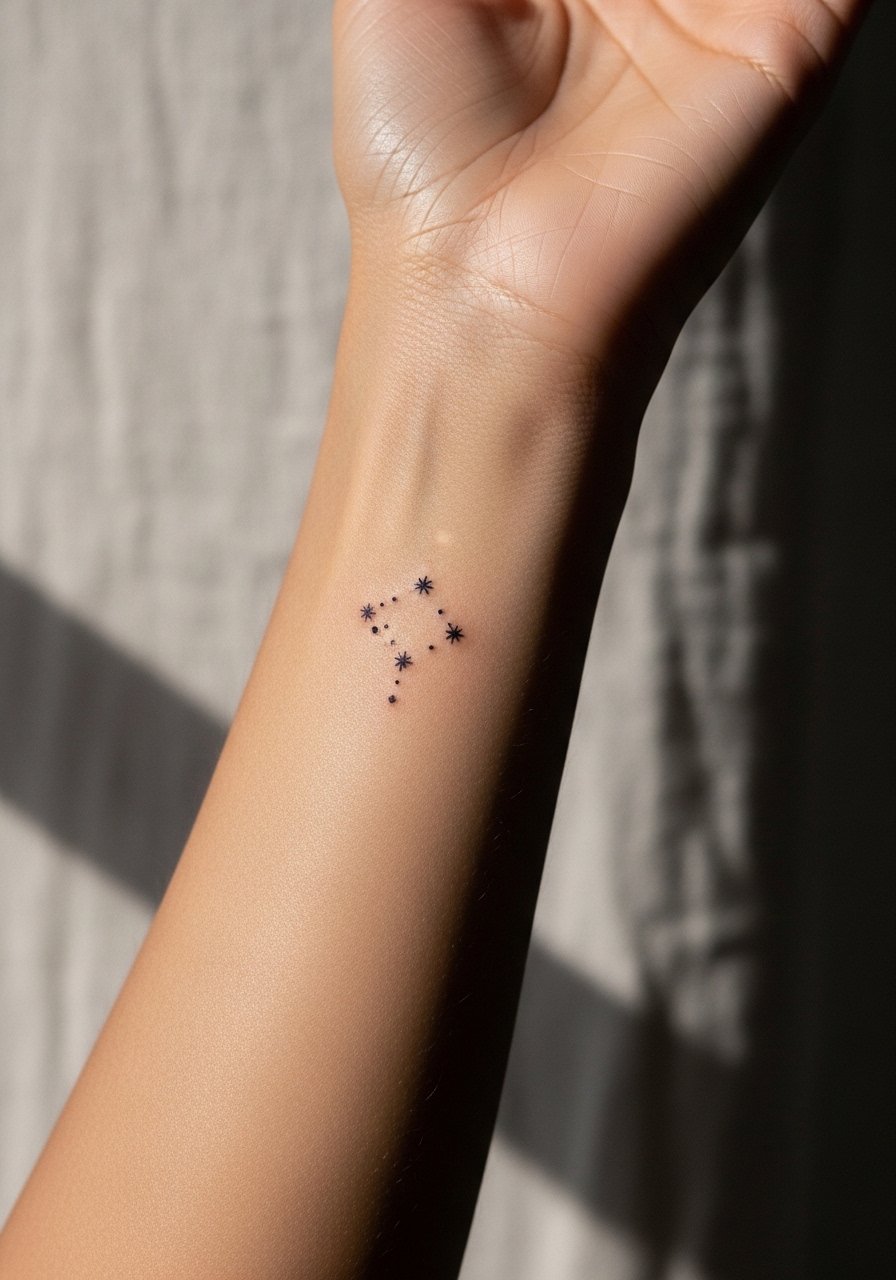
Start by matching design scale to body curvature — fine line astrology tattoos often read best on flatter, less stretchy skin like the inner forearm, collarbone, or side of the ribcage. Consider visibility: do you want daily show or a secret sign? Think about movement; joints and high-friction areas blur faster.
Tips:
- Hold a printed stencil to the spot while standing, sitting, and raising your arm.
- If the design is tiny, scale up slightly so lines don’t bleed over years.
- Use an Inkbox semi-permanent tattoo kit to test how a small constellation reads on your skin for a week.
Test placement with stencils and simple tools
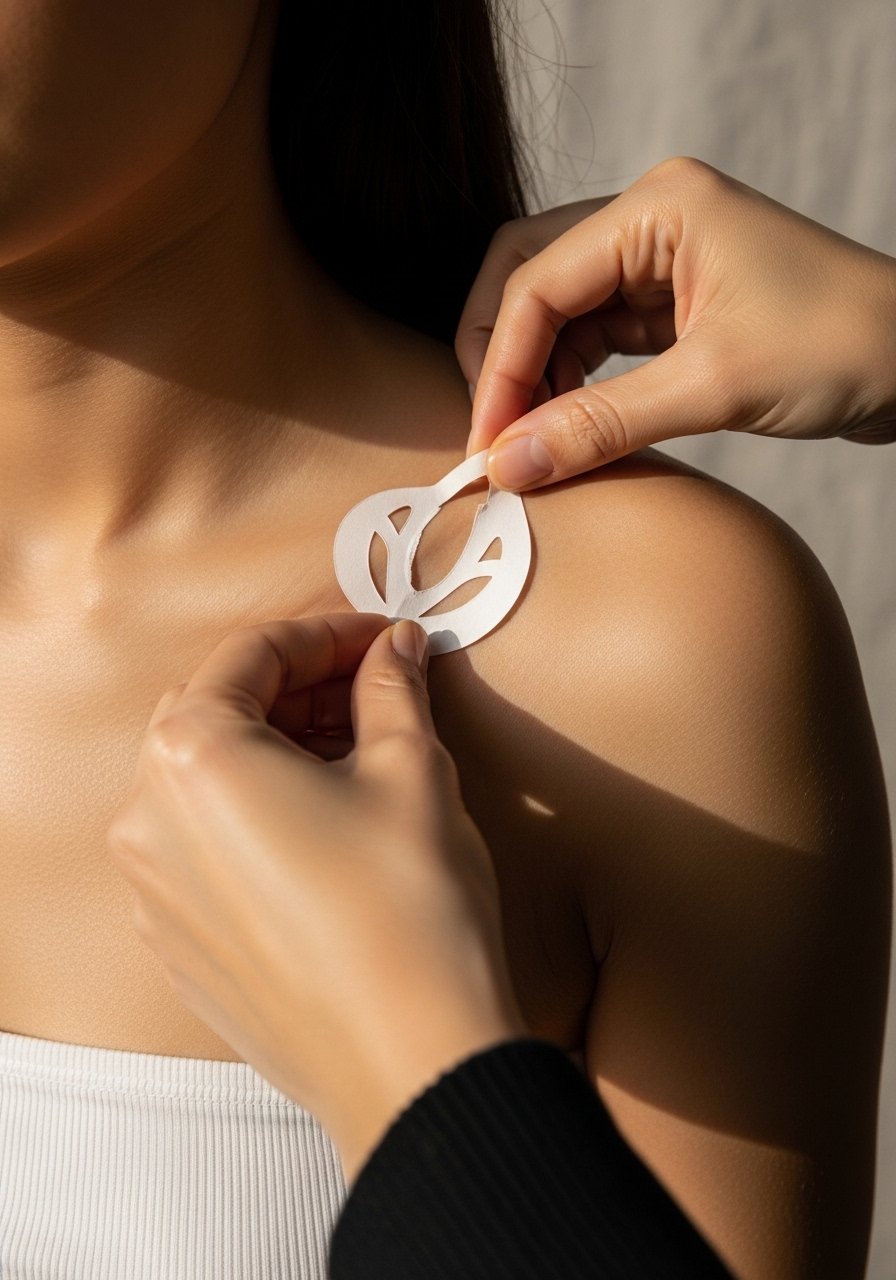
Before you book, try these quick tests:
- Use stencil transfer paper to draw and transfer your design.
- Shave only the tiny area with a single-use prep razor the night before for a clean stencil.
- Live with the test for 24–48 hours to see how clothing and sleep affect placement.
During consultation, bring references (a simple sketchbook or a photo from your test). Ask your artist about line weight for fine-line astrology tattoos; they’ll often scale line thickness to avoid future blowout.
Handle pain, healing stages, and first-week aftercare
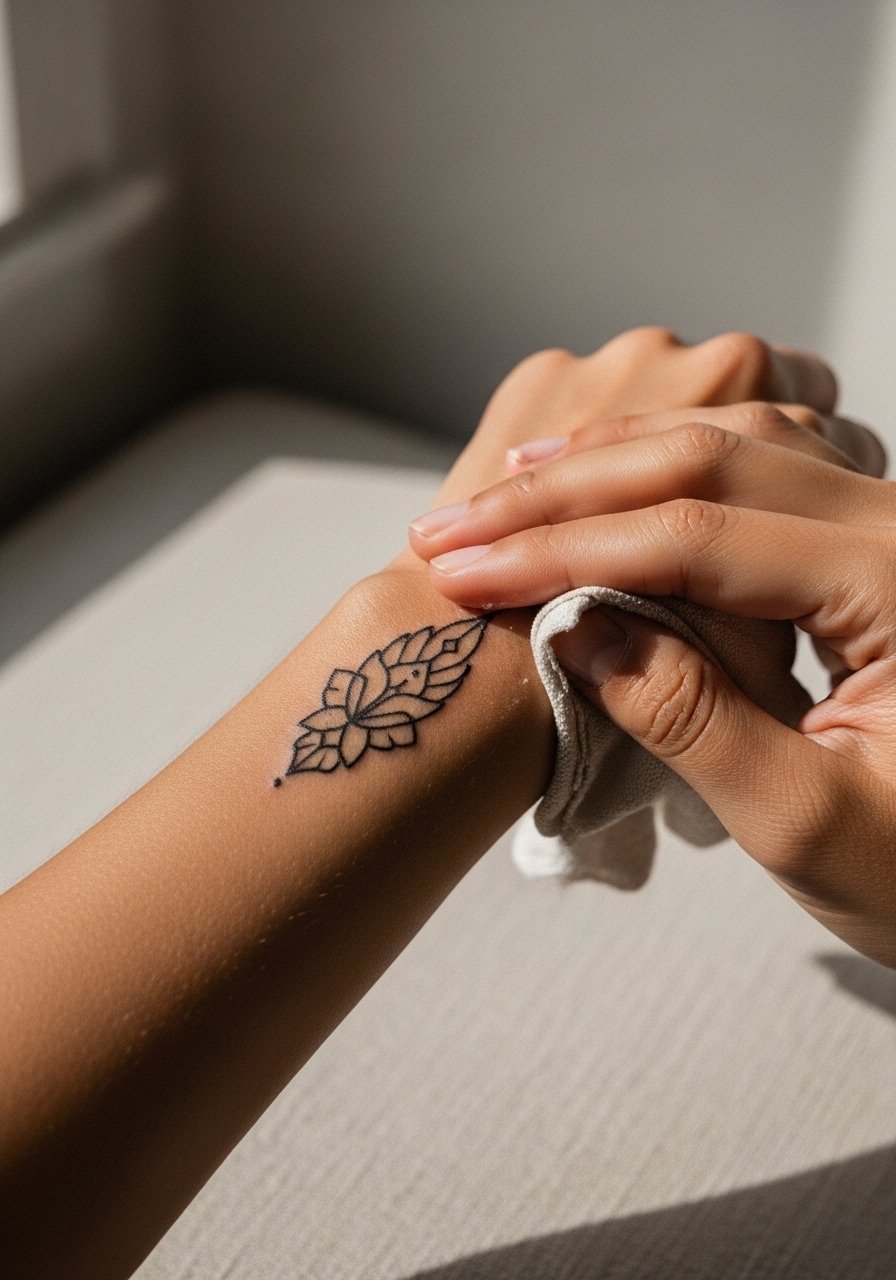
Expect four rough stages: open wound (first 24 hours), peeling (days 3–7), itchy scabbing (7–14 days), and settled skin (4–6 weeks). Immediate steps:
- Leave the studio wrap on for 2–6 hours unless artist advises otherwise.
- Gently wash twice daily with a fragrance-free antibacterial soap and pat dry.
- Apply a thin layer of unscented tattoo aftercare lotion twice a day during peeling.
If you prefer barrier healing, a second-skin like Saniderm left for 3–5 days can reduce scabbing and protect lines. For very dry patches, a dab of Hustle Butter Deluxe after initial peeling can soothe without over-suffocating.
Warning signs: heavy swelling, increasing heat, green/yellow discharge — contact your artist or a clinician if those appear.
Keep your astrology tattoo crisp long-term
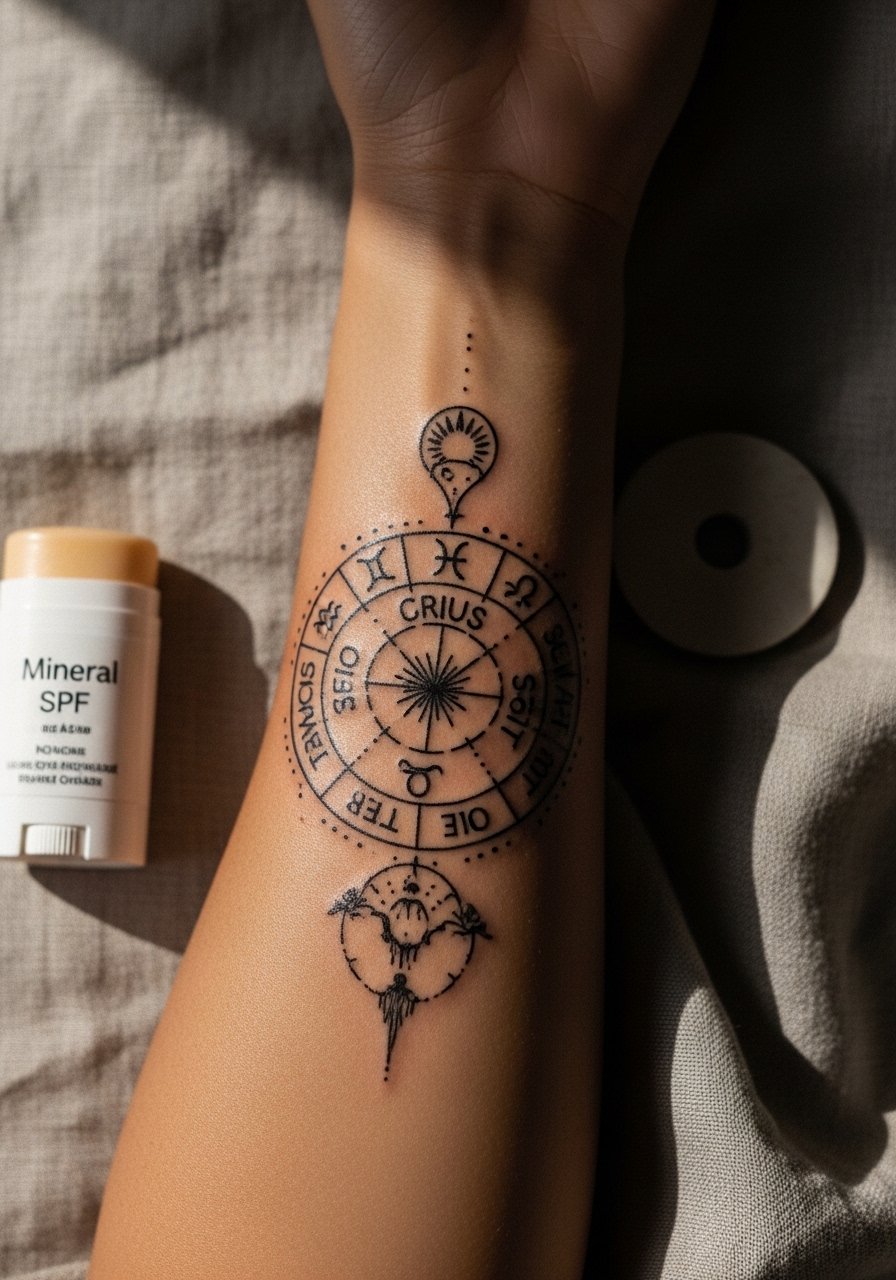
Sun is the number-one fade culprit. After your tattoo is fully healed (after 4–6 weeks), apply a mineral SPF stick daily to any placement that sees sun. For maintenance:
- Use a tattoo brightening lotion or Vitamin E oil a few times a week to keep skin supple.
- Schedule touch-ups after 6–12 months if lines soften; fine-line astrology tattoos can need a light refresh earlier than bold blackwork.
Common mistakes: picking scabs, over-moisturizing during peeling, and skipping sun protection. Keep your kit together so you aren’t improvising when a flare-up happens.
When to book a touch-up and what to tell your artist
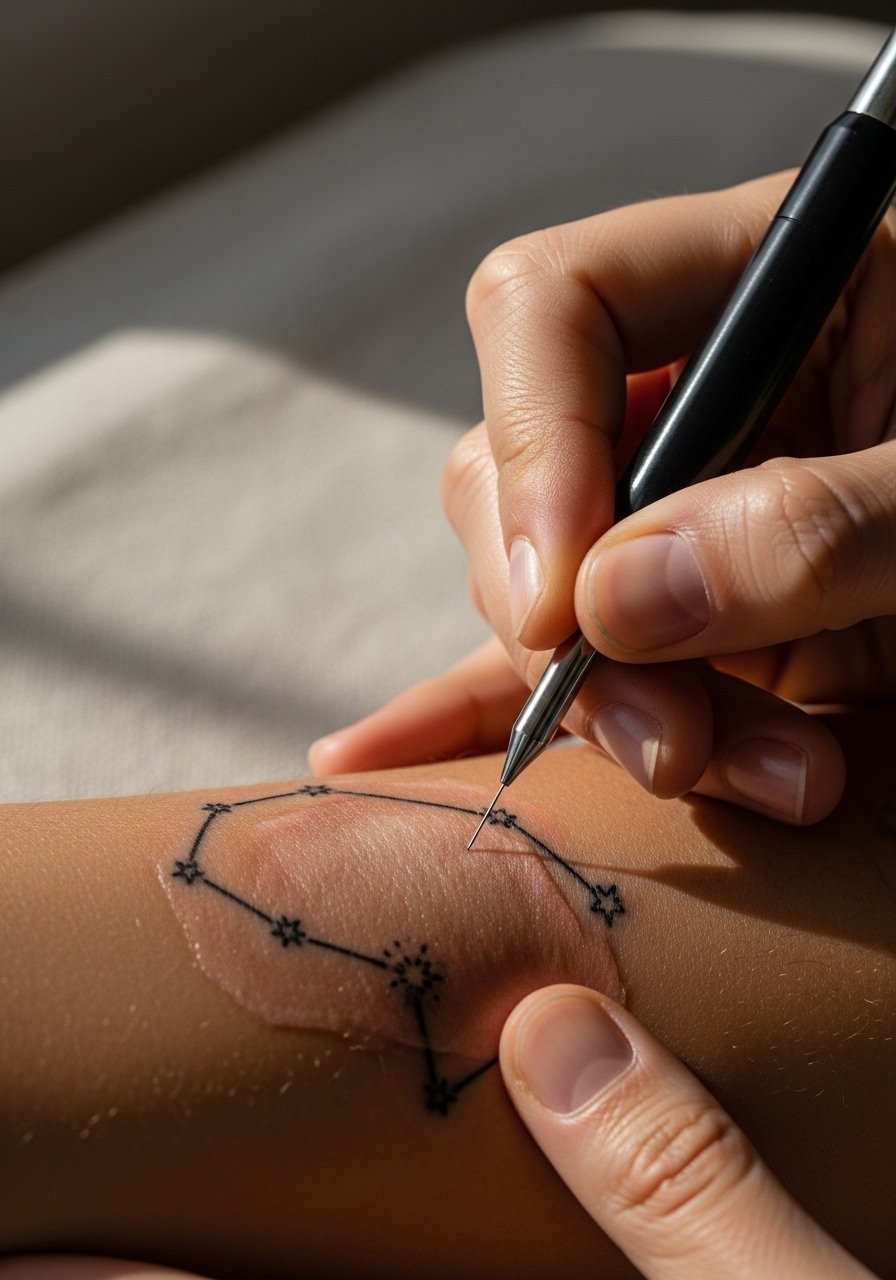
If lines look patchy or thin after 6–12 months, book a touch-up and bring photos of the healed ink. Ask for slightly thicker starter lines if you want more longevity, especially for tiny dotwork stars. Be honest about sun exposure and friction spots; the artist can modify placement or technique for better longevity.
Honestly, planning your aftercare kit before the session makes the whole process smoother. Keep these items ready and your astrology tattoo will read like a deliberate, personal piece for years.
Pin this before your consultation! Which placement are you leaning toward — collarbone, forearm, or rib?