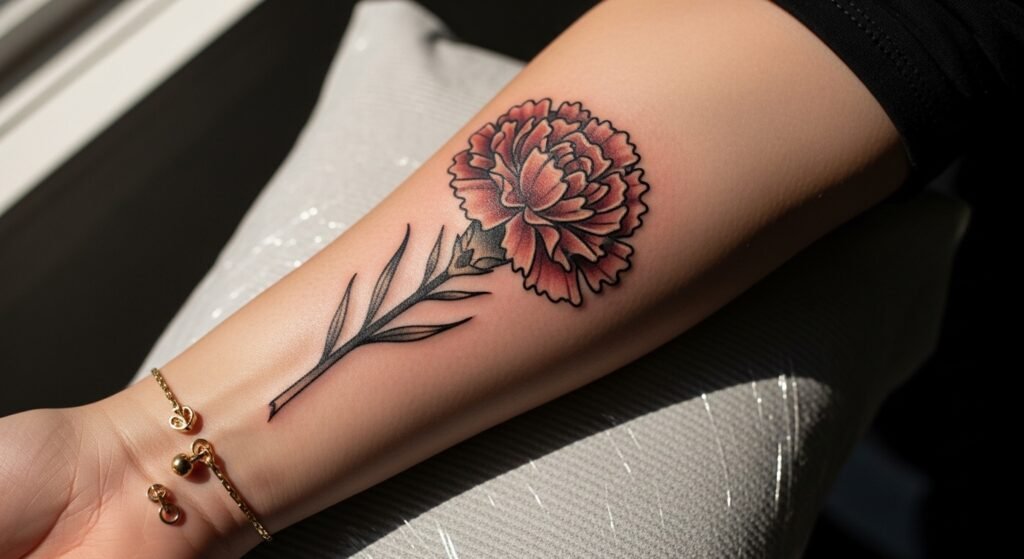
Sitting in a consultation, scrolling for midnight inspo, or finally booking that first appointment — a vintage carnation has a way of feeling inevitable. Vintage carnation flower tattoo designs strike a balance between old-school charm and elegant femininity, and they work for memorial pieces, romantic florals, or classic Americana nods.
This list pulls together 22 viral vintage carnation flower tattoo ideas so you can find the style, size, and placement that fits you. Expect old-school outlines, neo-traditional color palettes, fine-line memorial pieces, and blackwork silhouettes. I mention trusted prep and aftercare options like a Zensa numbing cream for sensitive placements and Saniderm for first-wrap protection so your design heals cleanly. Zensa topical anesthetic cream and a roll of Saniderm second-skin bandage are both things I recommend having ready before you sit.
Below are 22 distinct vintage carnation flower tattoo ideas with photo prompts, style breakdowns, artist guidance, and healing tips — bring the ones you love to your consult and pin the whole list for reference.
- Classic Old-School Carnation with Bold Outline
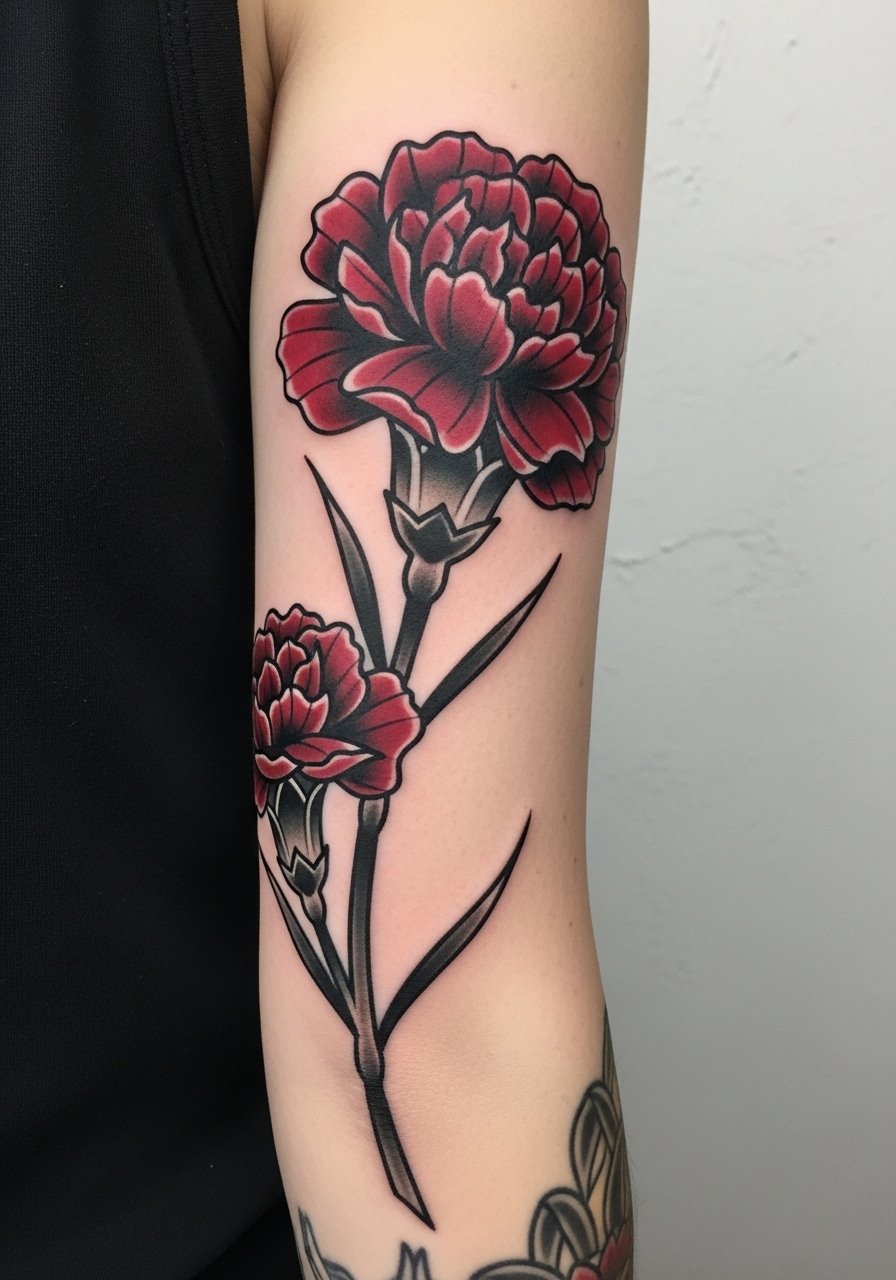
This is the image people picture when they think “vintage carnation flower tattoo.” Thick, confident black outlines paired with saturated reds make a statement that ages gracefully. It’s the kind of flash-inspired piece collectors and first-timers both reach for because it reads clearly at any distance.
For numbing and comfort on the bicep, some people use a light application of EMLA numbing cream beforehand, though many find the bicep very manageable without it.
Style & Design Details
- Tattoo style: Old-school / Traditional
- Recommended size: 3–4 inches (palm-sized)
- Best placement(s): outer bicep, calf, upper chest — places that take saturated color well
- Color vs. blackwork: Color-forward (deep reds, muted greens, heavy black outlines)
- Design elements: bold outline, saturated petal fill, simple shadowing, banner or name option, classic star accents
- Longevity note: Bold outlines help prevent blowout and keep the silhouette readable for decades
- Who it suits: vintage lovers, collectors, folks who want a readable, low-maintenance piece
Finding the Right Artist
Look for portfolios tagged traditional or old school; strong linework and saturated fills are key. Ask how they cure color and whether they’ll scale the piece for aging. Red flags: patchy fills on the artist’s recent work or inconsistent lineweight. Apprentices can do this style if supervised, but experienced trad artists will nail saturation and contrast. Search Instagram tags like #traditionaltattoo and check local shop flash walls.
Aftercare & Healing Tips
Keep the initial wrap on per your artist’s instructions; many prefer a Saniderm-style film for 48–72 hours. Wash gently twice daily with a fragrance-free soap like Dr. Bronner’s unscented castile and follow with a thin layer of Hustle Butter Deluxe during peeling. Touch-ups on saturated color are uncommon in the first year if healed properly. Use SPF 50 when exposed to sun to keep reds vivid.
- Single-Needle Vintage Carnation Fine Line Wrist Tattoo
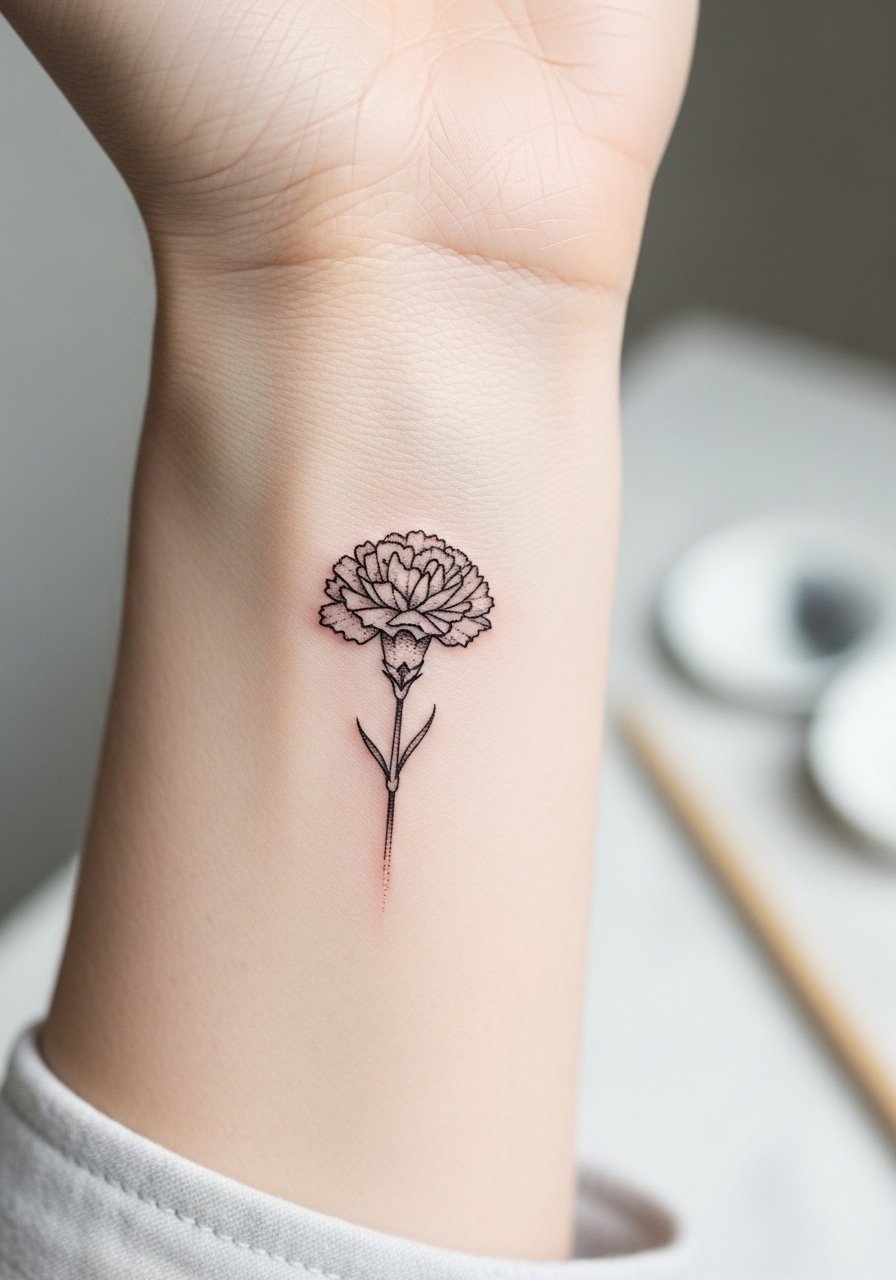
A fine-line vintage carnation offers a whisper of nostalgia. This minimalist take keeps the recognizable silhouette but uses single-needle precision and dotwork shading for a delicate, almost sketch-like effect. It’s perfect if you want floral symbolism without bold color.
I suggest testing placement with a temporary kit like Inkbox semi-permanent tattoos — wrists fade faster, and Inkbox helps preview daily wear.
Style & Design Details
- Tattoo style: Fine line / Single-needle
- Recommended size: 1–2 inches (wrist-friendly)
- Best placement(s): inner wrist, behind-ear, ancle — small flat areas for crisp lines
- Color vs. blackwork: Blackwork fine line recommended for longevity
- Design elements: single-needle stem, stipple shading, negative space petals, tiny name script option, subtle thorns
- Longevity note: Fine lines can blur over time on high-motion areas; keep it small and plan for a light refresh in 3–5 years
- Who it suits: minimalists, first-timers, memorial small-scale seekers
Finding the Right Artist
Search for artists who advertise fine line or single-needle work. Review healed photos in their feed — healed detail matters more than fresh work. Ask about needle size, ink viscosity, and how they prevent blowout near tendons. An experienced fine-line artist is strongly recommended over an apprentice for the best crispness. Use Procreate mockups for custom tiny scripts if you create your own reference.
Aftercare & Healing Tips
Keep the site clean and avoid jewelry rubbing the first two weeks. Wash with a gentle soap and switch to an unscented lotion like Aveeno fragrance-free once the wrap comes off. Avoid heavy friction or wrist straps. Expect light scabbing and a softened look after two weeks; plan a touch-up if any lines soften.
- Memorial Vintage Carnation Bouquet (keyword in title)
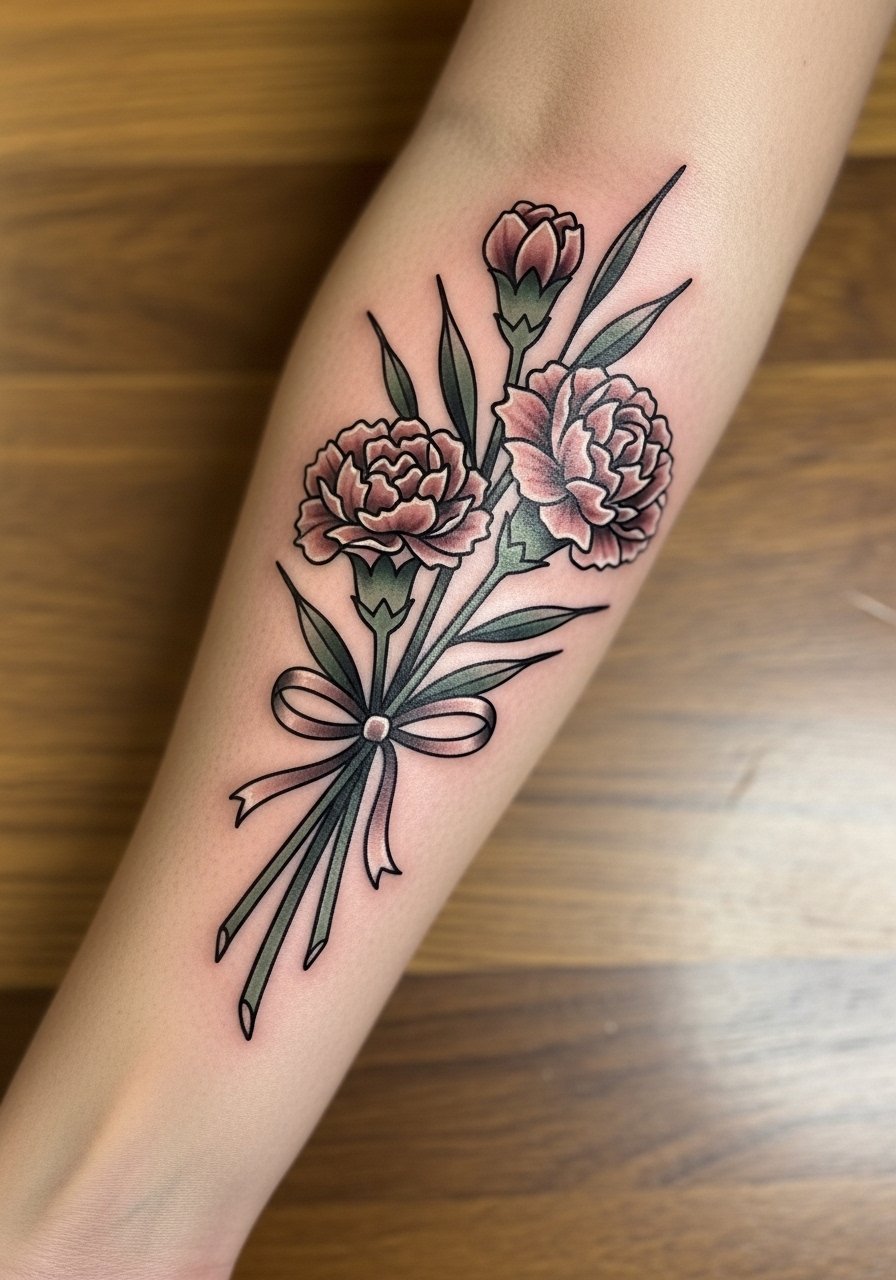
A memorial vintage carnation tattoo pairs floral symbolism with a ribbon or small name banner for remembrance. Multiple stems, slightly muted colors, and old-school outlines help the piece read like a classic tribute. It sits beautifully along the forearm where it can be shared and seen.
If this is a sentimental piece, consider printing reference photos and bringing them to consult. A small sketchbook or iPad mockup with Procreate helps the artist compose the bouquet.
Style & Design Details
- Tattoo style: Neo-traditional / illustrative
- Recommended size: 4–6 inches (forearm-length bouquet)
- Best placement(s): outer forearm, ribcage (for private memorial), sternum — places that allow a vertical layout
- Color vs. blackwork: Muted color palette (dusty pinks, green-gray foliage) maintains vintage vibe
- Design elements: layered petals, soft shading, banner with script, fine stipple shadows, slight background wash
- Longevity note: Color fades unevenly if frequently sun-exposed; keep covered when outside and use SPF after healing
- Who it suits: memorial clients, sentimental collectors, lovers of feminine vintage florals
Finding the Right Artist
Look for portfolios showing neo-traditional florals with tasteful color washes and script. Ask how they scale script over time and whether they’ll do a stencil preview on your arm. Avoid artists whose flowers lack depth or whose script inconsistently spaces letters. Mid-level to senior artists are ideal for bouquet composition.
Aftercare & Healing Tips
For larger forearm pieces, many artists prefer an initial Saniderm cover for 48 hours. Clean with fragrance-free soap, then apply a thin layer of Tattoo Goo Aftercare Kit or Hustle Butter during the peeling phase. Plan a 6–8 week follow-up to check for any color loss in shaded areas and schedule a touch-up if needed.
- Blackwork Silhouette Carnation on the Back of Neck
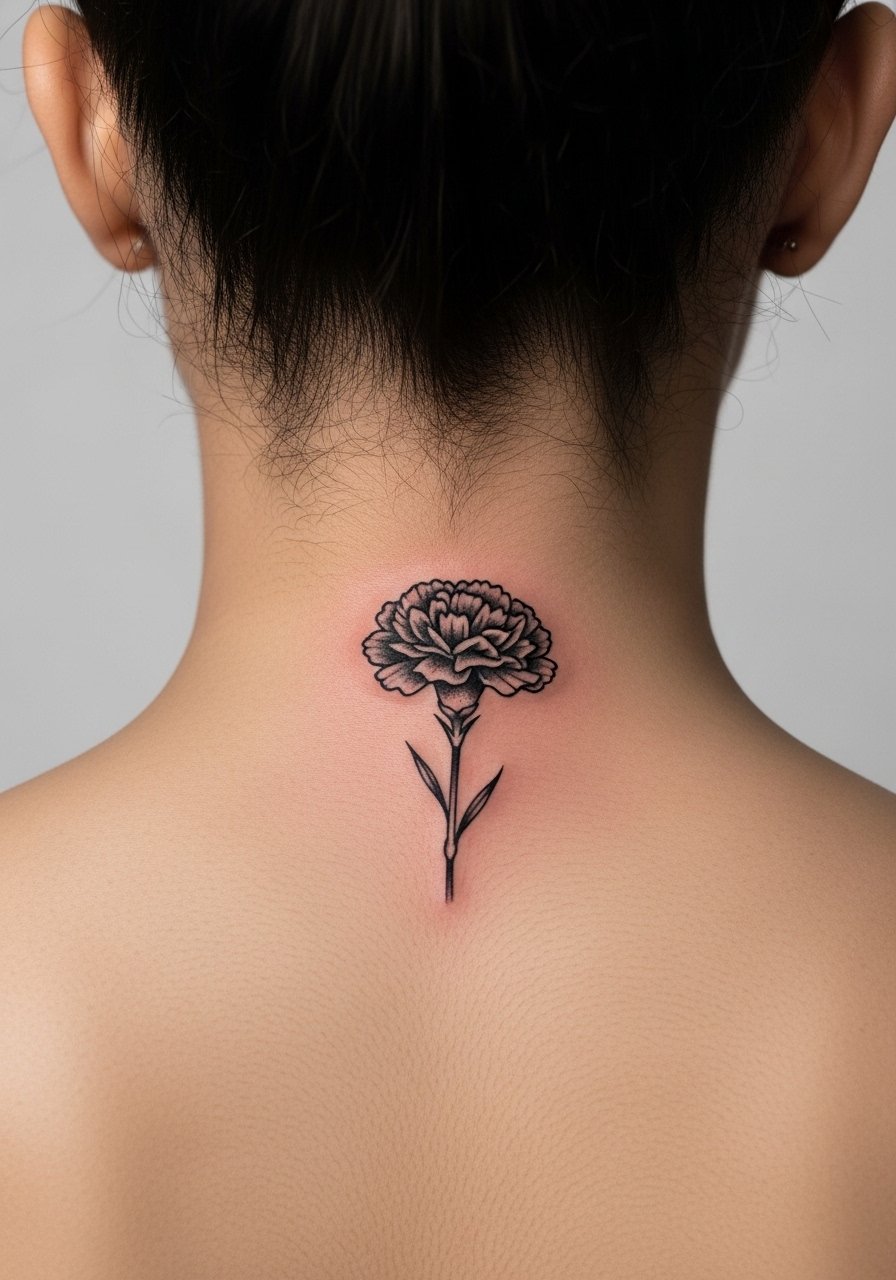
A blackwork silhouette feels modern while nodding to vintage botanical prints. The solid black keeps the piece readable and graphic, which works great for a low-maintenance neck placement that peeks under hair.
Blackwork heals predictably if lines are thick enough; discuss edge crispness with your artist to avoid feathering on the thin skin of the neck.
Style & Design Details
- Tattoo style: Blackwork / Graphic
- Recommended size: 1.5–3 inches
- Best placement(s): nape, behind-ear, collarbone — spots that peek through hair or clothing
- Color vs. blackwork: Solid black for longevity and contrast
- Design elements: full black petal fills, bold outline, minimal negative-space highlights, geometric backing possible
- Longevity note: Solid fills age well if properly saturated; thin edges may soften in high-motion areas
- Who it suits: lovers of bold graphic tattoos, low-touch-up preference, dark-academia or cottagecore aesthetics
Finding the Right Artist
Seek artists with a strong blackwork portfolio, paying attention to healed solid fills. Ask about how they prevent patchy fills on thinner skin. Avoid artists without healed blackwork examples. Experienced blackwork specialists or tattooists with a heavy graphic portfolio are ideal.
Aftercare & Healing Tips
Neck skin is thin and mobile — keep it protected from friction with clothing for the first week. Consider Saniderm roll bandage if your artist recommends it for the area. Use fragrance-free soap and a light unscented lotion like Lubriderm daily moisture during peeling. Avoid sun and saltwater exposure until fully settled.
- Small Vintage Carnation Behind-the-Ear Accent
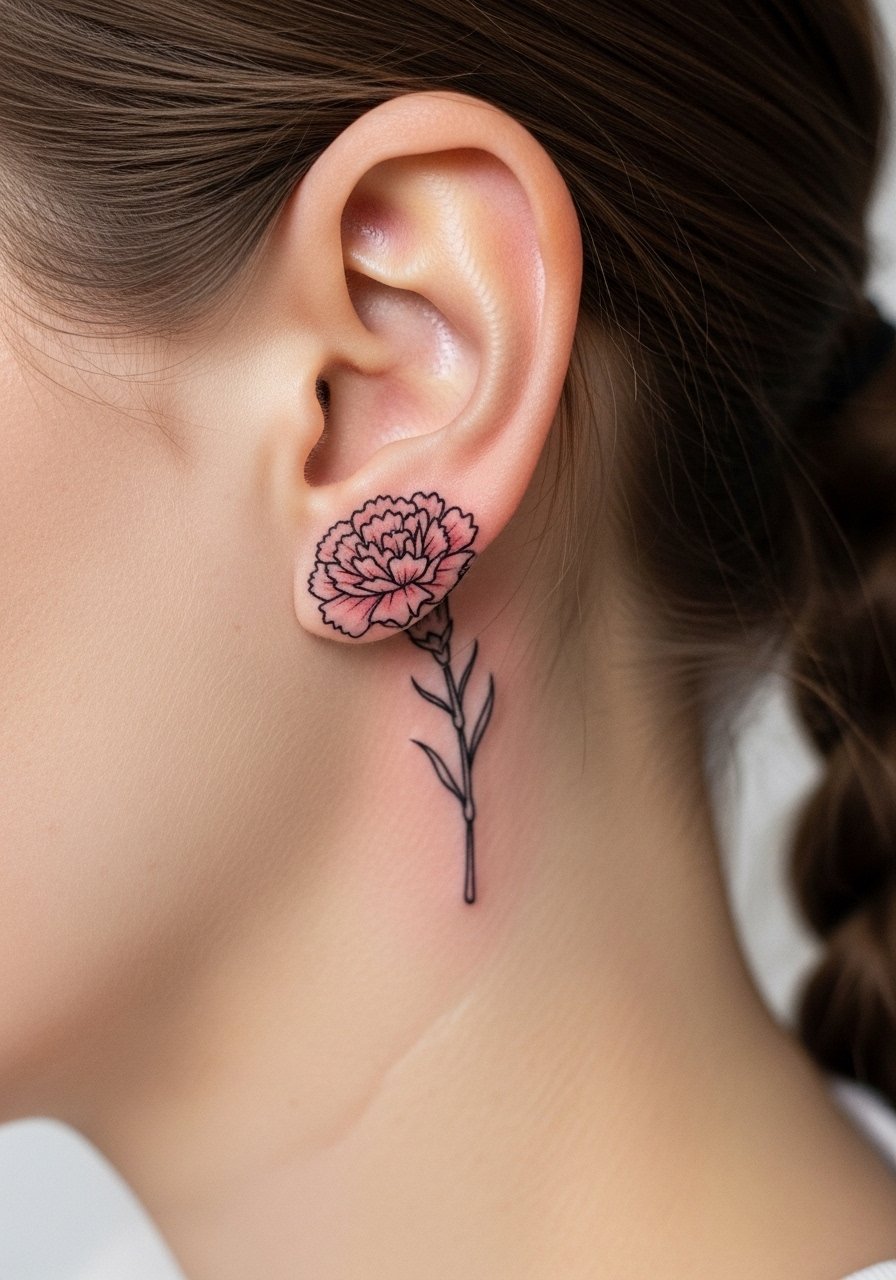
Tiny behind-the-ear carnations are discreet but charming. This placement is subtle, flirty, and ideal for small single-stem designs that mimic vintage ear-adornments. The spot is sensitive but quick.
For a tiny placement, the artist will likely use a single session under 30 minutes. Bring a sting-relief numbing patch or EMLA cream if you're nervous about sensitivity behind the ear.
Style & Design Details
- Tattoo style: Minimal vintage / small neo-trad
- Recommended size: 0.5–1 inch
- Best placement(s): behind-ear, earlobe edge, small lunar behind the ear — very discreet spots
- Color vs. blackwork: light color wash or black outline with pale fill works well
- Design elements: tiny bud, minimalist stem, small leaf, subtle negative space, optional micro-script date
- Longevity note: Tiny tattoos near hairlines can fade faster; expect a touch-up after a few years
- Who it suits: subtleists, music-lovers, those wanting a hidden sentimental mark
Finding the Right Artist
Find an artist who specializes in small, delicate work and can show healed behind-ear examples. Ask about needle size and how they avoid overworking the area. Avoid artists who rush small pieces or don’t offer healed photos.
Aftercare & Healing Tips
Keep hair away from the area and avoid heavy fragrance or sprays. Clean twice daily and apply a tiny amount of unscented lotion after washing. A sanitary adhesive bandage for the first 24 hours can prevent hair oils from sticking. Keep sunscreen on the area after healing when exposed.
- Lined-Up Vintage Carnation Wristband (Repeating Motif)
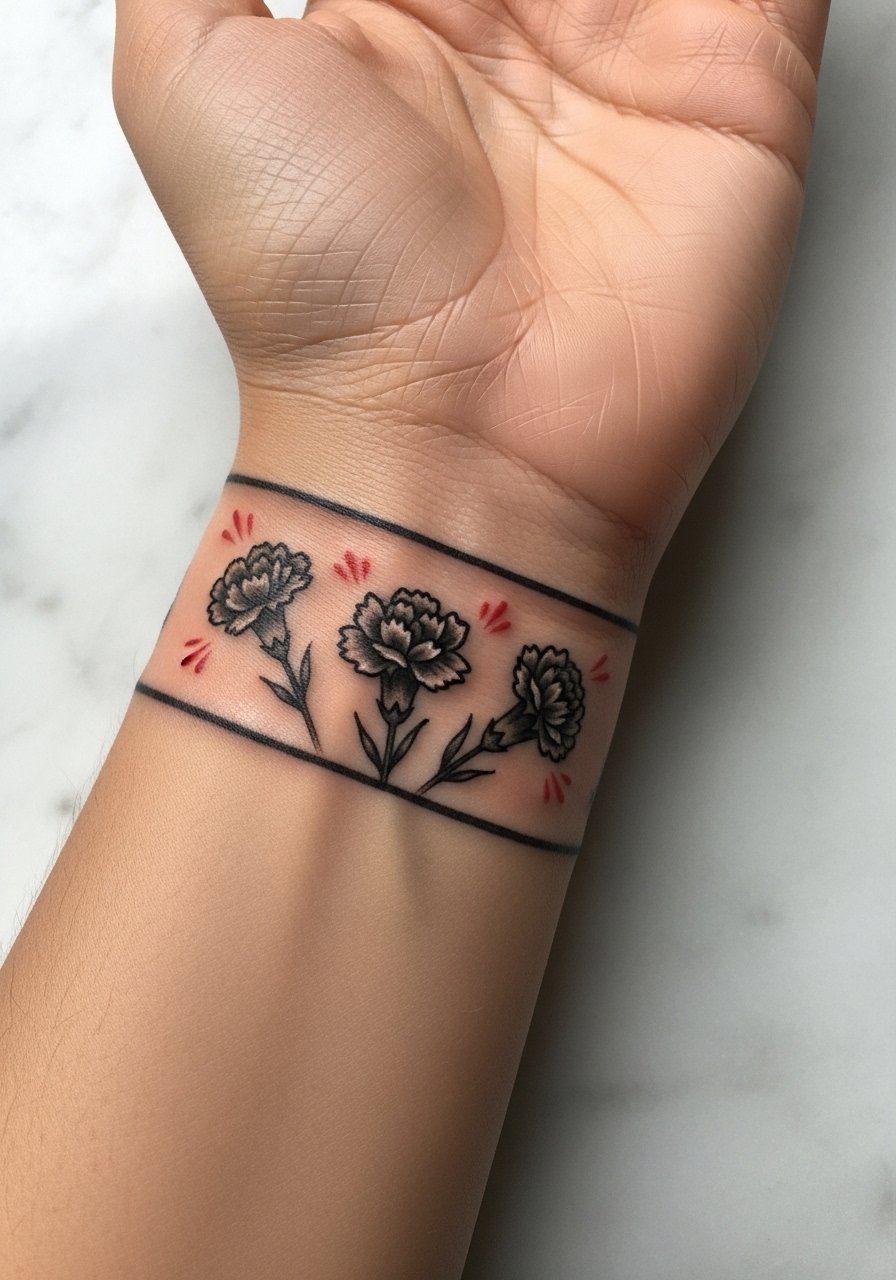
A repeating carnation wristband borrows from old-school sailor bands and decorative trim. The rhythm of multiple blooms creates visual interest and works well with watches and bracelets. It’s a wearable vintage piece that’s both classic and feminine.
Style & Design Details
- Tattoo style: Neo-traditional band / illustrative repeat
- Recommended size: 1.5–3 inches across band length, small repeat elements
- Best placement(s): wrist, ankle, forearm wrap — locations that curve nicely
- Color vs. blackwork: small color accents (muted reds) on black outlines keep vintage vibe
- Design elements: repeating stems, alternating leaf patterns, tiny dot filler, soft shading, optional thin script between blooms
- Longevity note: Bands experience friction; inner wrist tends to blur faster than outer wrist
- Who it suits: bracelet-lovers, symmetry fans, folks who want cuff-like statement without jewelry
Finding the Right Artist
Pick an artist who’s done bands and wrap-around pieces; accurate stencil placement and flow are essential. Ask how they account for wrist motion and how they’ll finish edges to avoid early spread. Mid-level experienced artists are typically ideal for these.
Aftercare & Healing Tips
Protect the area from watches and bracelets during healing. Use Saniderm for the first 48 hours if your artist recommends it. Wash gently and switch to a fragrance-free lotion like Lubriderm as scabbing resolves. Expect potential softening of lines at the inner wrist — touch-ups may be needed after 6–12 months.
- Vintage Carnation Heart (keyword in title) — Neo-Traditional Chest Piece
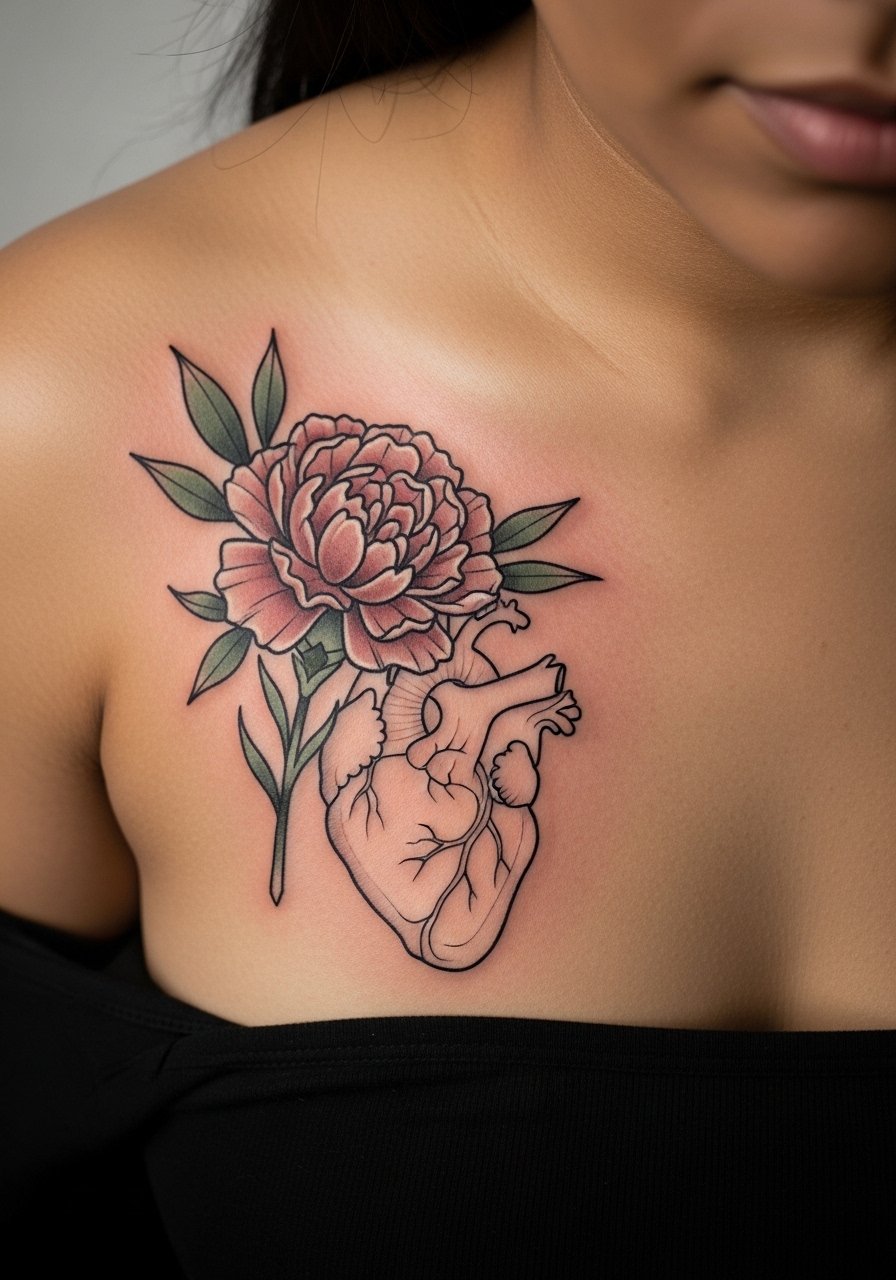
Merging a vintage carnation with an anatomical heart creates a bold, meaningful chest piece. The neo-traditional treatment — textured shading, muted colors — gives the work an old print feel while staying current.
Upper chest placements can be tender; many choose topical numbing like Zensa numbing cream to ease sessions if larger.
Style & Design Details
- Tattoo style: Neo-traditional / illustrative
- Recommended size: 3–5 inches depending on chest anatomy
- Best placement(s): upper chest, sternum offset, left chest for sentimental meaning
- Color vs. blackwork: Muted color palette enhances vintage feel while keeping depth
- Design elements: anatomical heart linework, layered petals, stipple shading, thin highlight lines, subtle background shading
- Longevity note: Chest pieces can show early fading at high-motion junctions; SPF and regular moisturization help maintain color
- Who it suits: bold romantics, sentimental collectors, anyone wanting a meaningful centerpiece
Finding the Right Artist
Look for neo-traditional portfolios showing clean anatomy blends and smooth color transitions. Ask about session length, pain management, and how they’ll layer color to avoid patchiness. Experienced artists with chest-piece examples are preferable.
Aftercare & Healing Tips
Chest tattoos are prone to friction from clothing. Keep breathable fabrics against your skin and avoid compression for two weeks. A second-skin product like Saniderm may be suggested for the first 48 hours. For moisturization, Hustle Butter or a fragrance-free lotion keeps the area supple. Expect full settle in 6–8 weeks and plan a touch-up if any color needs evening.
- Black-and-Gray Vintage Carnation Sleeve Accent
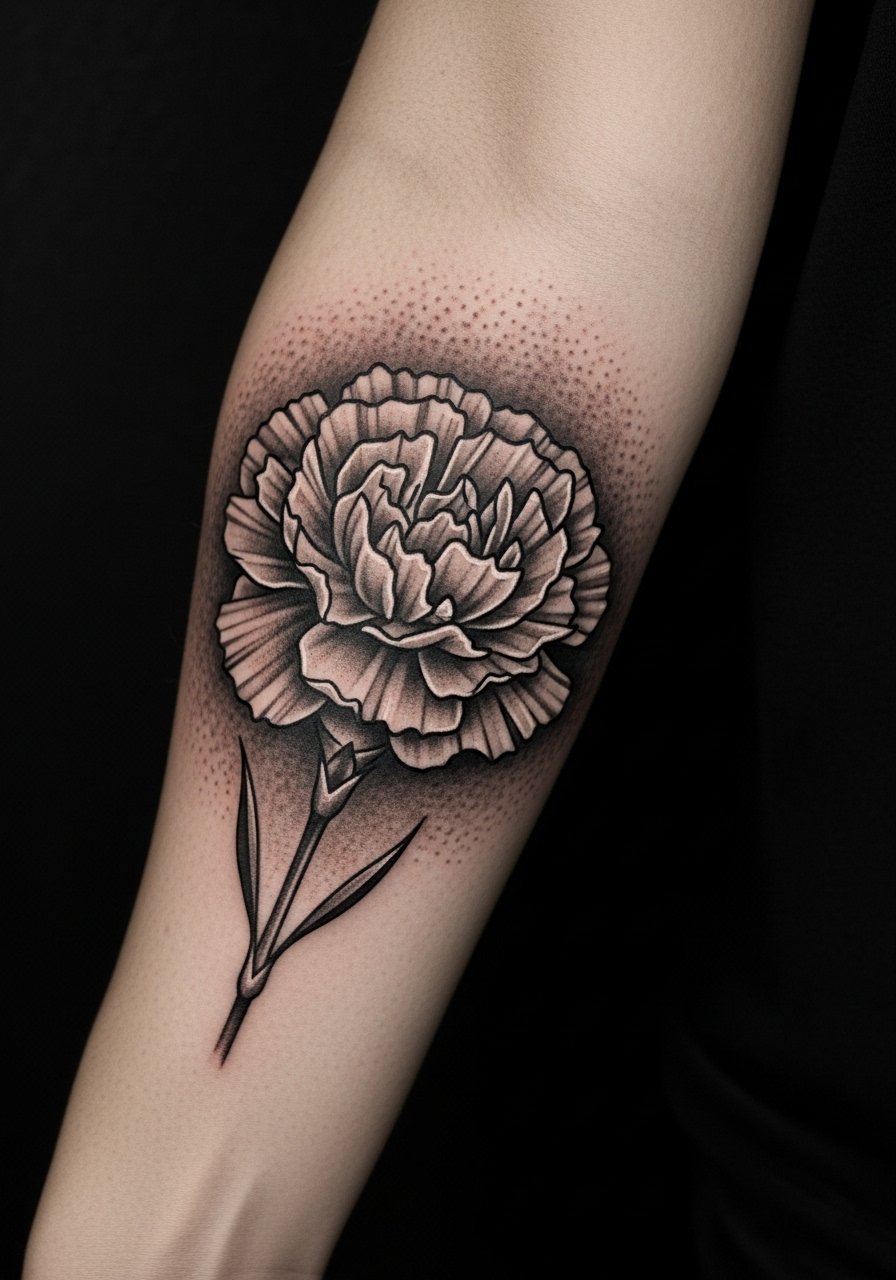
A black-and-gray carnation pairs easily with existing sleeve elements. The vintage look leans into fine shading and line detail instead of color, making it great for cohesive monochrome sleeves.
Style & Design Details
- Tattoo style: Black-and-gray realism / illustrative
- Recommended size: palm-sized to forearm panel
- Best placement(s): outer forearm, upper arm, mid-thigh as a panel within a sleeve
- Color vs. blackwork: Black-and-gray allows smooth transitions with other monochrome pieces
- Design elements: soft gradient shading, petal veining, negative-space highlights, layered foliage, texture lines
- Longevity note: Graywork ages well if shaded smoothly; avoid heavy dotwork in high-friction zones
- Who it suits: sleeve-builders, grayscale fans, collectors integrating florals with portraits
Finding the Right Artist
Choose artists with strong black-and-gray botanical panels in their portfolio. Ask how they map shading for mid-tones and how they prevent muddy fills as the tattoo ages. Experienced grayscale specialists are best — apprentices can assist but a senior artist should lead.
Aftercare & Healing Tips
Large black-and-gray panels need steady hydration during peeling. Use gentle soap and a neutral lotion like Aveeno fragrance-free. Keep the area out of direct sun for at least three months and use a mineral SPF 50 tattoo sunscreen stick for long-term preservation.
- Tiny Dotwork Carnation Finger Tattoo
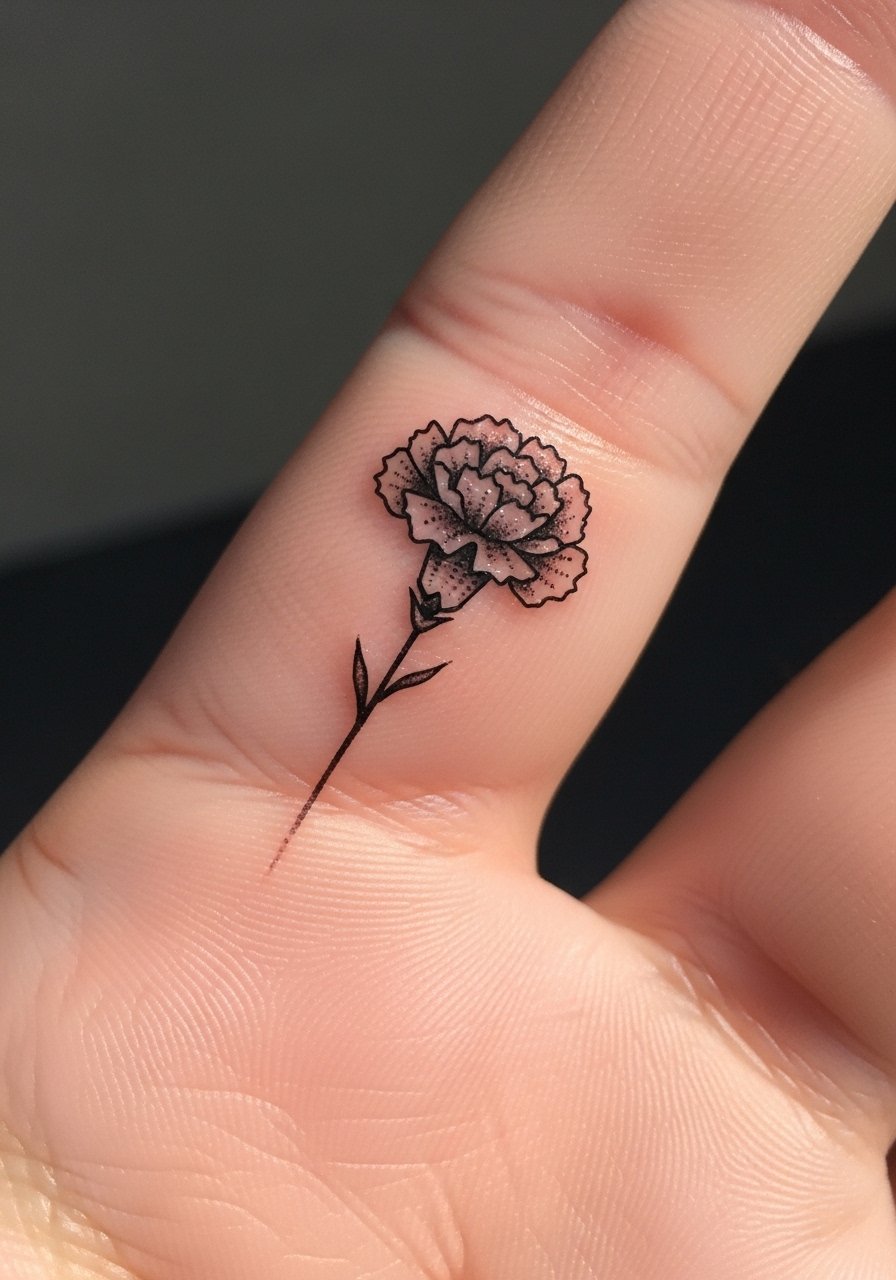
Finger tattoos are intimate and perfectly placed for micro-carnations with dotwork textures. They require special consideration because fingers move and weather quickly.
Consider a temporary Inkbox test to see how you feel about the placement and visibility before committing.
Style & Design Details
- Tattoo style: Micro / dotwork
- Recommended size: 0.5–1 inch
- Best placement(s): finger side, knuckle edge, small pinky placement — high-contact but visible
- Color vs. blackwork: Black dotwork preferred for longevity
- Design elements: tiny stippling, single-needle outlines, minimal stem, micro-leaves, small negative-space center
- Longevity note: Finger ink fades fast due to constant washing and motion; expect yearly touch-ups or accept a distressed look
- Who it suits: micro tattoo fans, those wanting hands-on symbolism, brave minimalists
Finding the Right Artist
Pick artists experienced in hand/finger work; ask for healed finger photos. Discuss realistic expectations for longevity and touch-up frequency. Avoid artists who assure long-term permanence without caveats.
Aftercare & Healing Tips
Hands contact everything; keep the finger clean and avoid soaking for the first two weeks. A light application of unscented lotion keeps the area from cracking. Accept that touch-ups are normal; plan for one within 6–12 months. Consider using a protective barrier during heavy manual work.
- Carnation and Dagger — Vintage Americana Combo
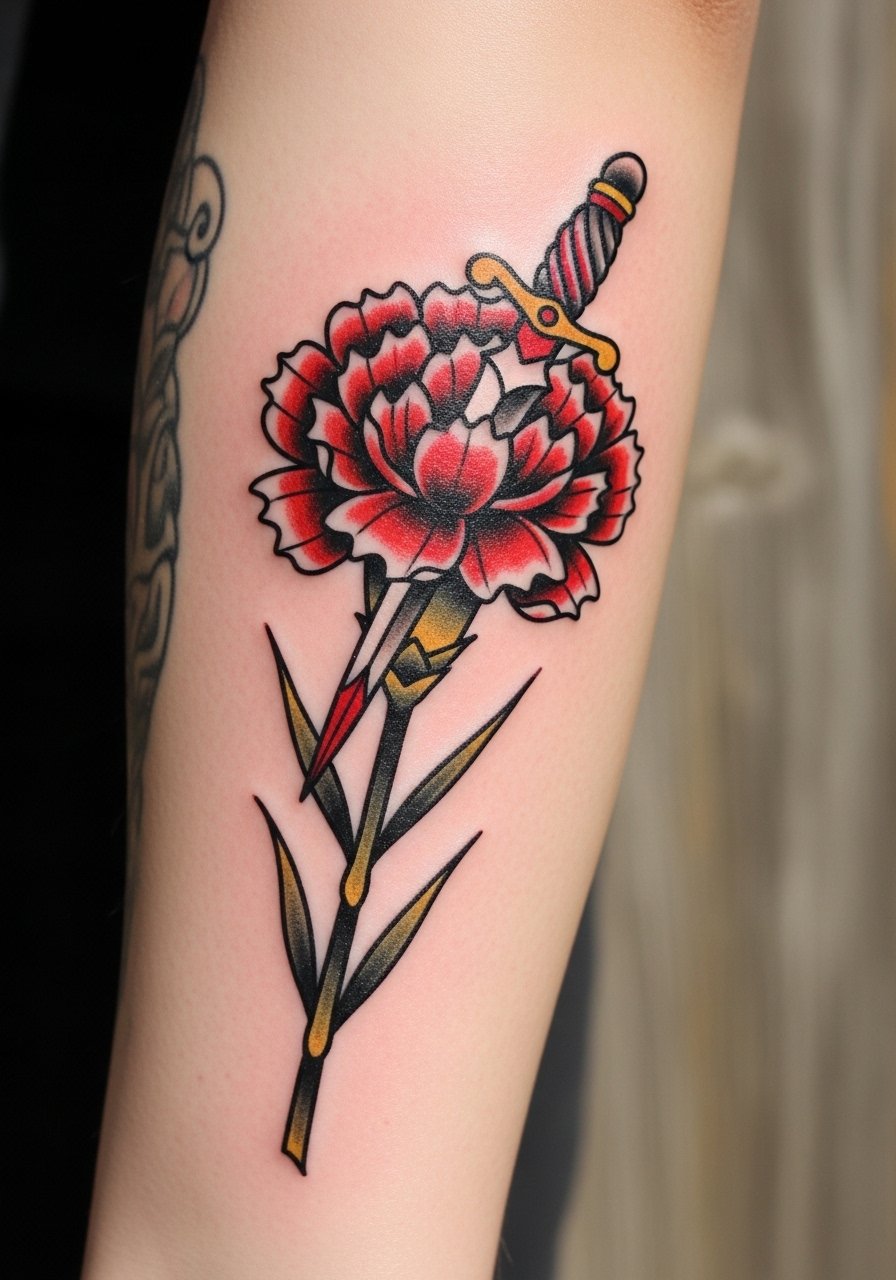
The carnation-and-dagger motif is a vintage combination that reads both romantic and rebellious. Bold outlines and saturated fills keep the design readable and visually punchy.
Style & Design Details
- Tattoo style: Traditional Americana / neo-trad hybrid
- Recommended size: 3–4 inches
- Best placement(s): forearm, calf, upper arm — areas that let the dagger align with the stem
- Color vs. blackwork: Color-forward with classic trad palette (red, green, black)
- Design elements: bold dagger line, saturated carnation petals, blood-drop accents optional, banner for a name, symmetrical shading
- Longevity note: Strong outlines keep the dagger crisp; color requires sun protection to prevent dulling
- Who it suits: tattoo collectors, lovers of Americana, folks who want symbolic duality
Finding the Right Artist
Seek an artist with both traditional and neo-traditional pieces showing solid fills and crisp blackwork. Ask how they’ll make the dagger and petals read clearly from a distance. Avoid soft-line artists for this style.
Aftercare & Healing Tips
Keep large saturated areas moisturized with Hustle Butter Deluxe during peeling to avoid scabby pigment loss. Use SPF 50 on exposed areas after healing to keep colors vivid.
- Vintage Carnation Ankle Garland
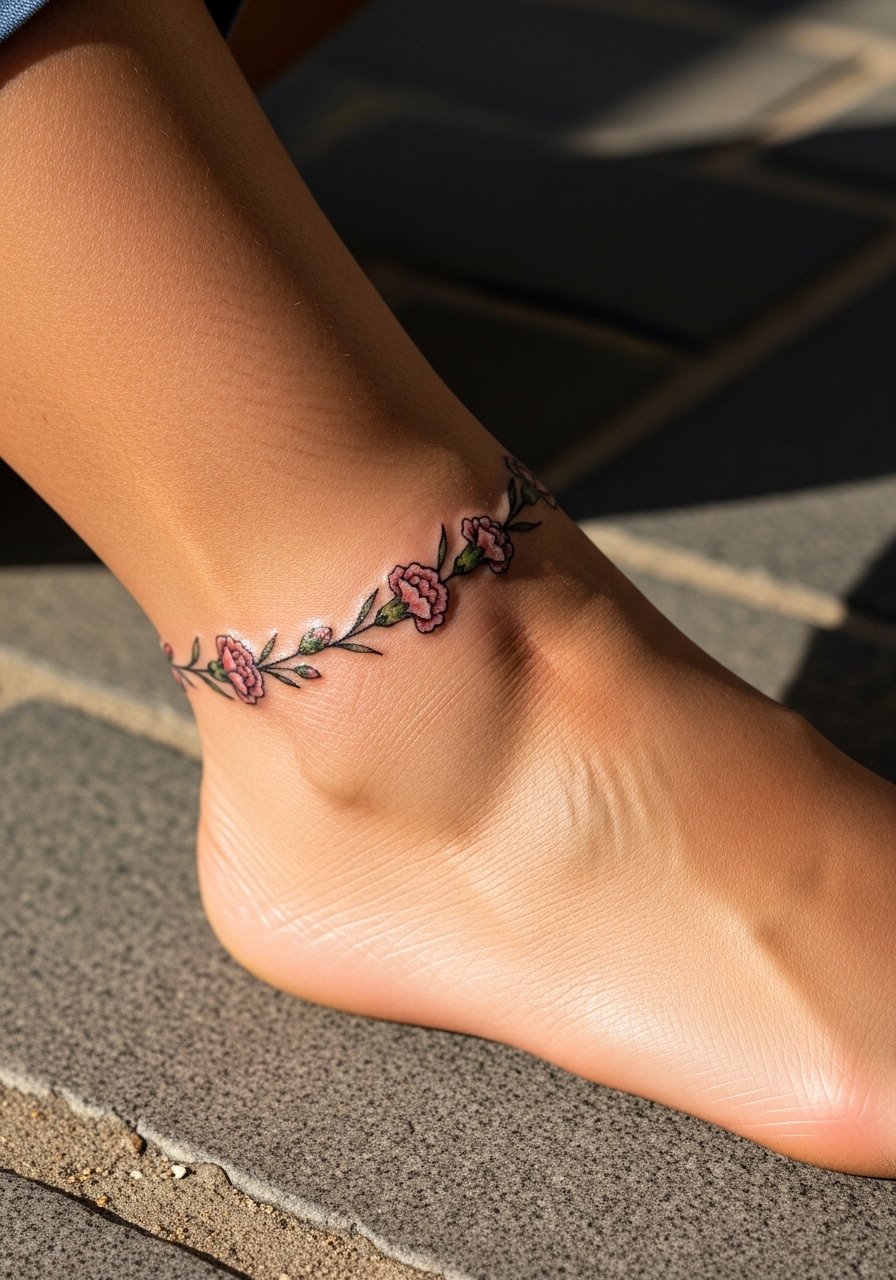
An ankle garland is delicate and wearable. The circular flow appeals to those who want floral jewelry in ink form without a heavy commitment.
Style & Design Details
- Tattoo style: Illustrative / botanical garland
- Recommended size: wrap around ankle, 2–4 inches per bloom spacing
- Best placement(s): ankle, top of foot, near Achilles — places that mimic jewelry
- Color vs. blackwork: muted color accents or black-and-gray both work well
- Design elements: repeating stems, small buds, negative space loops, thin vines, subtle dot filler
- Longevity note: Foot and ankle fade faster; careful aftercare and barefoot exposure control help
- Who it suits: jewelry-replacement fans, cottagecore aesthetic, those wanting ankle focal point
Finding the Right Artist
Find artists with foot/ankle healed examples; ask how they account for curvature and movement. Avoid artists who lack consistency in spacing for repeating motifs.
Aftercare & Healing Tips
Avoid tight socks or shoes that rub the area for two weeks. Keep footwear minimal during initial healing and apply a light unscented lotion. Saniderm can be useful if your shoes will contact the area frequently.
- Single-Petal Micro Carnation on Collarbone
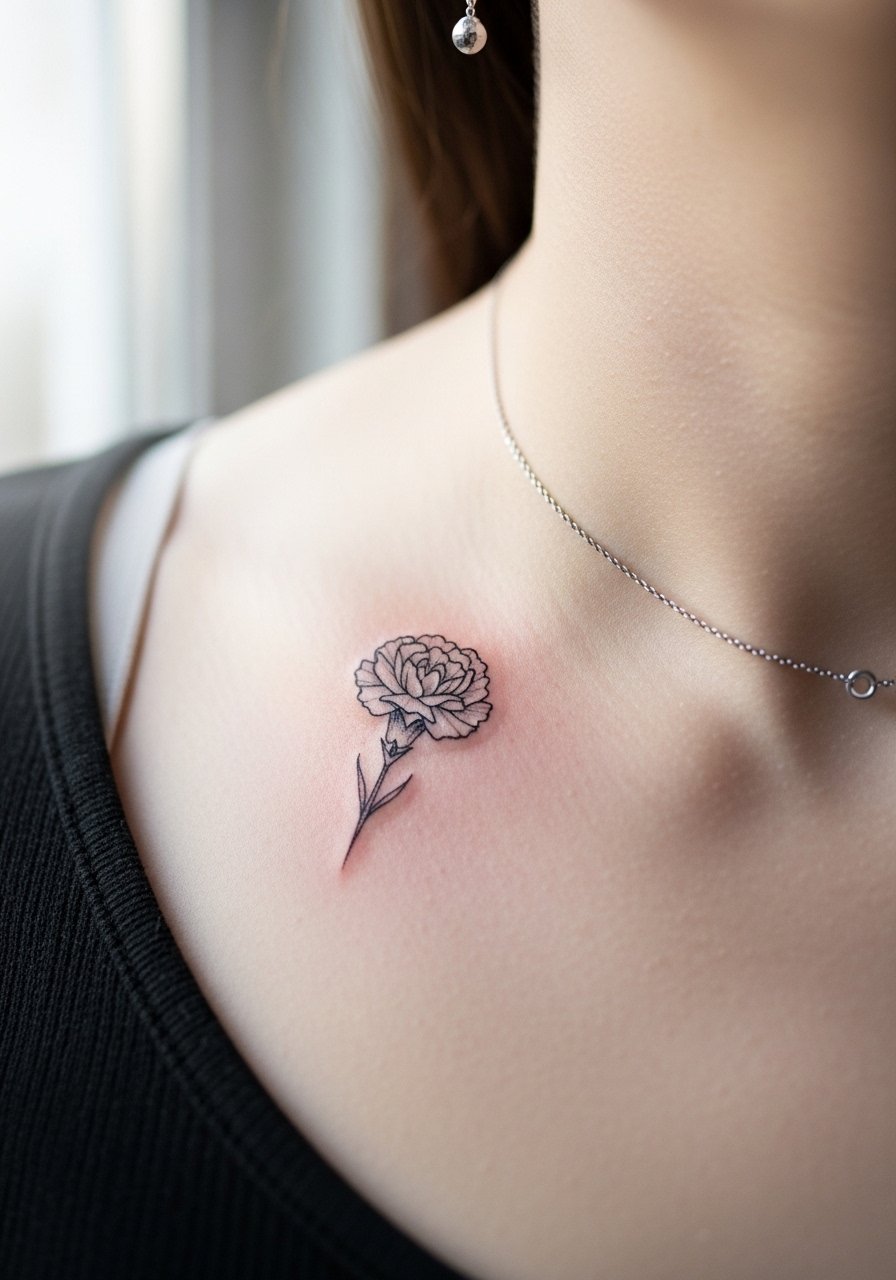
A single-petal or single-stem carnation on the collarbone reads like a delicate badge. The collarbone's contours lend a natural stage for a small vintage-inspired floral.
Style & Design Details
- Tattoo style: Minimal vintage / fine line
- Recommended size: 1–2 inches
- Best placement(s): collarbone, near clavicle notch, upper sternum edge — shows softly with low necklines
- Color vs. blackwork: subtle color wash or black linework works; keep tones soft for vintage feel
- Design elements: micro-petal detail, thin stem, small leaf pair, negative space highlights, optional micro-script date near stem
- Longevity note: Collarbone area ages well if not frequently sun-exposed; SPF helps preserve light tones
- Who it suits: subtle romantics, those who prefer pieces that peek through clothing
Finding the Right Artist
Choose artists with fine-line collarbone placements in their portfolio. Ask about stencil mapping over the clavicle and how they adjust for anatomy. An experienced fine-line tattooist is recommended.
Aftercare & Healing Tips
Avoid tight tops and necklaces for a week. Clean gently and apply a light unscented lotion like Aveeno fragrance-free as scabbing resolves. Use SPF when showing off the area in sunlight.
- Cottagecore Carnation with Wildflower Sprigs
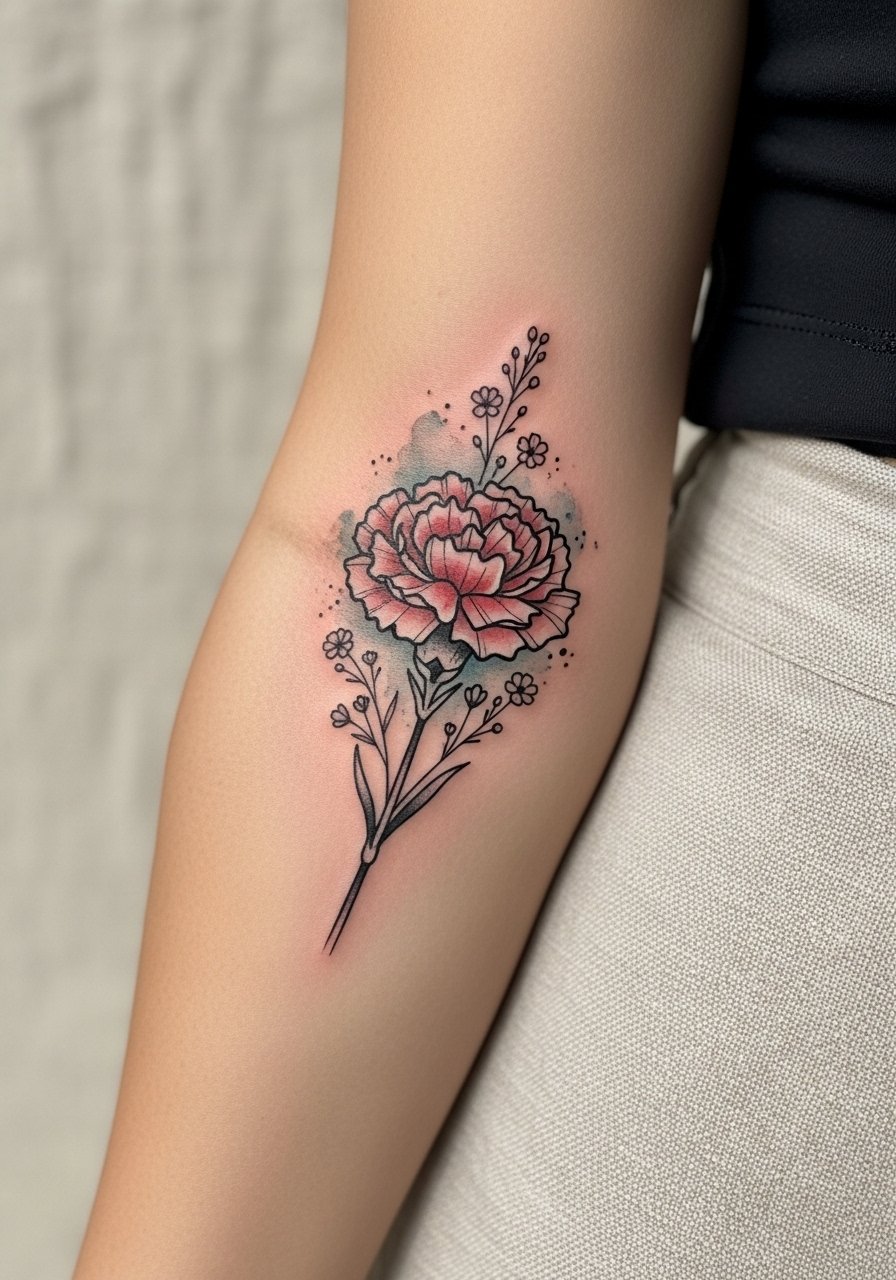
If you love cottagecore aesthetics, combine a vintage carnation with tiny wildflower sprigs and a faint watercolor wash. The effect is romantic and soft, like an old pressed flower.
Style & Design Details
- Tattoo style: Illustrative / watercolor-accent
- Recommended size: 3–4 inches as a panel
- Best placement(s): outer forearm, rib side, upper thigh — places that allow a landscape composition
- Color vs. blackwork: soft watercolor accents behind crisp linework preserve detail while adding vintage softness
- Design elements: light wash background, tiny accent blooms, layered leaves, faint stippling, reserved negative space
- Longevity note: Watercolor fades faster; keep washes light and rely on linework for longevity
- Who it suits: cottagecore fans, soft romantics, those who want artful, wearable florals
Finding the Right Artist
Seek an artist who balances linework and watercolor without bleeding. Ask to see healed watercolor pieces. Avoid shops that only do heavy black shading without subtle wash control.
Aftercare & Healing Tips
Watercolor areas may need careful touch-ups; ask your artist about layering in follow-up sessions. Use Hustle Butter during peeling and apply SPF when exposed to sun to protect delicate washes.
- Vintage Carnation Bouquet for Ribcage (keyword in title)
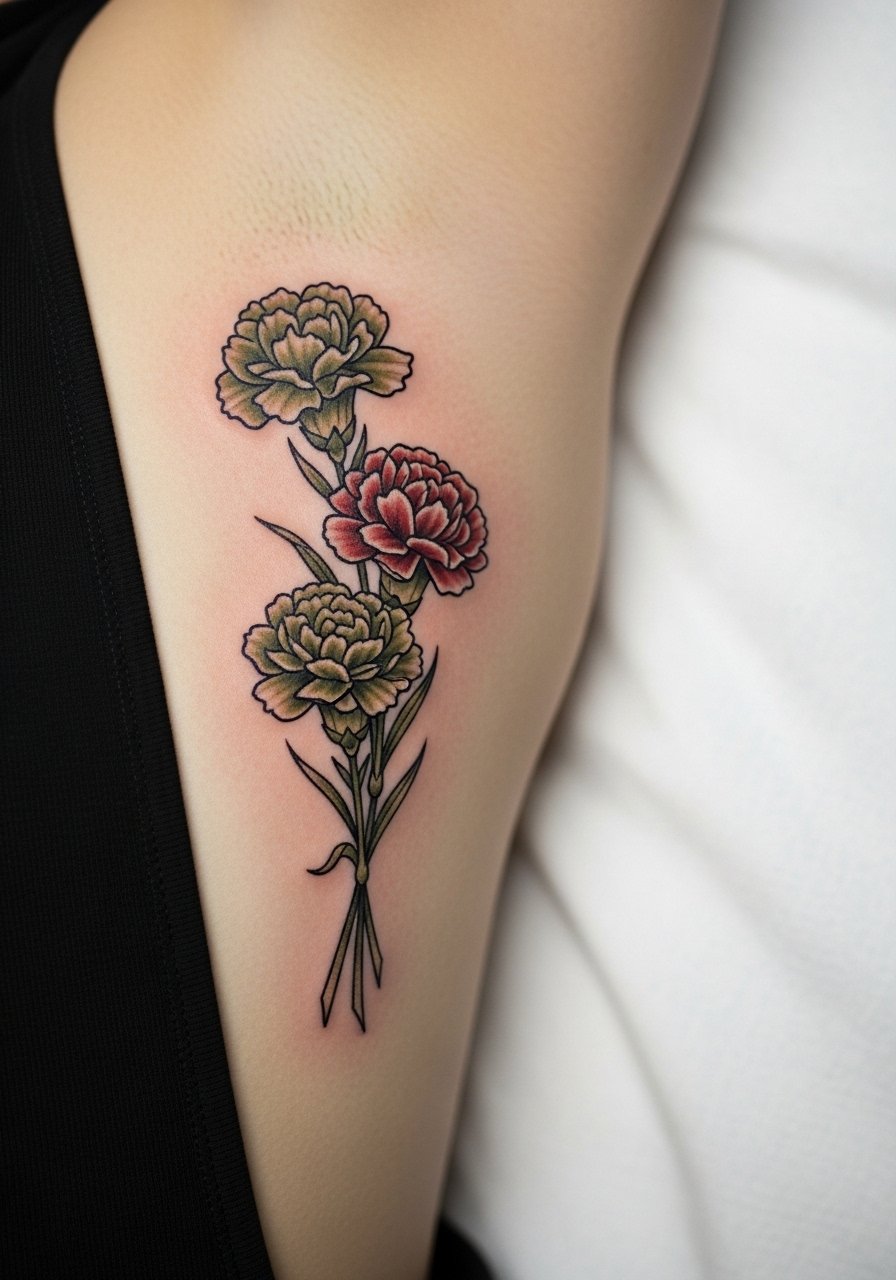
Ribcage bouquets read intimate and personal. A vintage carnation bouquet on the ribs allows for vertical composition and meaningful placement near the heart.
Rib sessions are known to be more painful; consider discussing numbing options like Zensa if you’re sensitive.
Style & Design Details
- Tattoo style: Neo-traditional / botanical bouquet
- Recommended size: 4–7 inches vertical
- Best placement(s): ribcage, side torso, hip — spots that accommodate vertical flow
- Color vs. blackwork: muted colors or black-and-gray both suit vintage bouquet look
- Design elements: layered stems, varied bloom sizes, soft shadowing, thin script ribbon option, subtle background shading
- Longevity note: Ribs heal with movement; tight clothing can irritate during healing. Color holds well if protected from sun.
- Who it suits: sentimental tattoo-seekers, people comfortable with longer sessions, chest/rib collectors
Finding the Right Artist
Choose an artist experienced with rib placements and vertical compositions. Ask about session pacing, how they manage breathing and stance, and whether they’ll use breaks. Avoid artists who have limited torso experience.
Aftercare & Healing Tips
Ribcage tattoos need a loose shirt and minimal compression for two weeks. Clean with fragrance-free soap and apply a thin layer of tattoo balm like Tattoo Goo during the peeling phase. Plan a touch-up once healed fully if any shading needs evening.
- Neo-Vintage Carnation Sleeve Connector
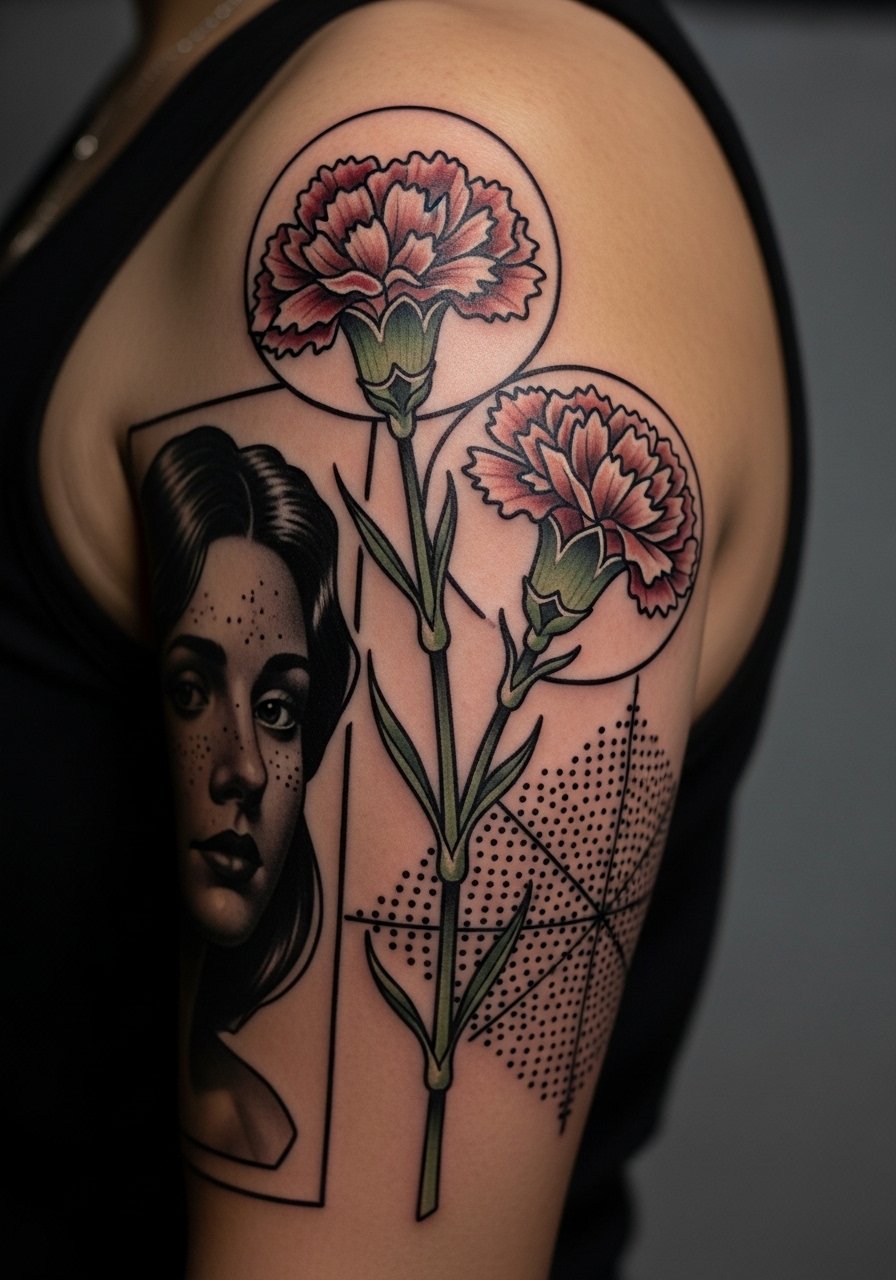
Use vintage carnations as connectors in a sleeve to bridge different motifs — portraits, script, geometric bits. The floral shape acts as filler that reads classic yet ties the whole sleeve together.
Style & Design Details
- Tattoo style: Neo-traditional connector / sleeve filler
- Recommended size: integrates into a sleeve (varied)
- Best placement(s): full or half-sleeve, thigh sleeve, side panel — anywhere needing visual flow
- Color vs. blackwork: pair carnations with the sleeve’s existing palette for cohesion
- Design elements: layered petals, flowing stems, filler leaves, negative space curves, small background dotwork
- Longevity note: Integrated pieces can be maintained during sleeve touch-ups; carnations tend to age with the surrounding work
- Who it suits: sleeve-builders, long-term collectors, those combining varied elements
Finding the Right Artist
Work with a sleeve artist or someone versed in integrating motifs. Ask to see sleeve photos pre- and post-touch-up. Avoid artists lacking compositional examples.
Aftercare & Healing Tips
Larger sessions need staged aftercare: gentle cleansing, regular balm application, and SPF after healing. A follow-up visit is often scheduled within 2–6 months to ensure cohesion and color saturation.
- Art Deco Carnation with Geometric Accents
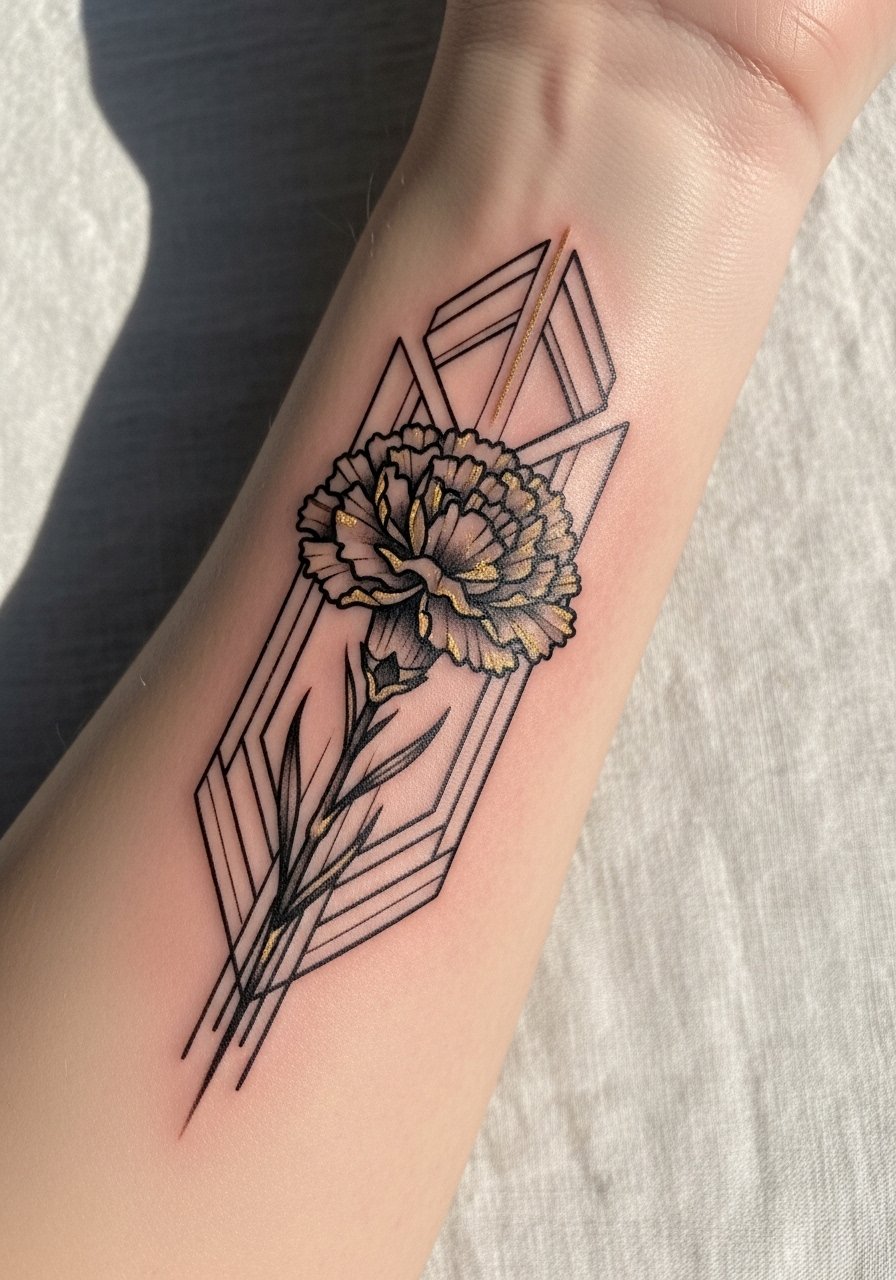
Pairing vintage carnations with Art Deco geometry gives a nod to early 20th-century glamour. The juxtaposition of organic petals and clean lines creates a refined look.
Style & Design Details
- Tattoo style: Illustrative / Art Deco fusion
- Recommended size: 2–4 inches depending on geometric framing
- Best placement(s): inner forearm, upper arm, sternum — flatter areas that showcase lines
- Color vs. blackwork: blackline with muted gold or tan wash elevates the vintage feel
- Design elements: straight-line framing, symmetrical geometry, petal texturing, fine dot highlights, thin shadowed fills
- Longevity note: Crisp geometry needs solid linework to prevent early softening; keep out of direct sun
- Who it suits: lovers of vintage design, dark academia aesthetic lovers, minimalists with artful taste
Finding the Right Artist
Find artists who can handle both clean geometry and delicate botanical detail. Ask about stencil precision and how they align lines on curved areas. Mid-to-senior artists are best.
Aftercare & Healing Tips
Sharp lines need protection; avoid excess movement and sun exposure. Clean with fragrance-free soap and follow with a light unscented lotion. Long-term, use SPF for the geometric lines to stay crisp.
- Mini Watercolor Vintage Carnation on Thigh
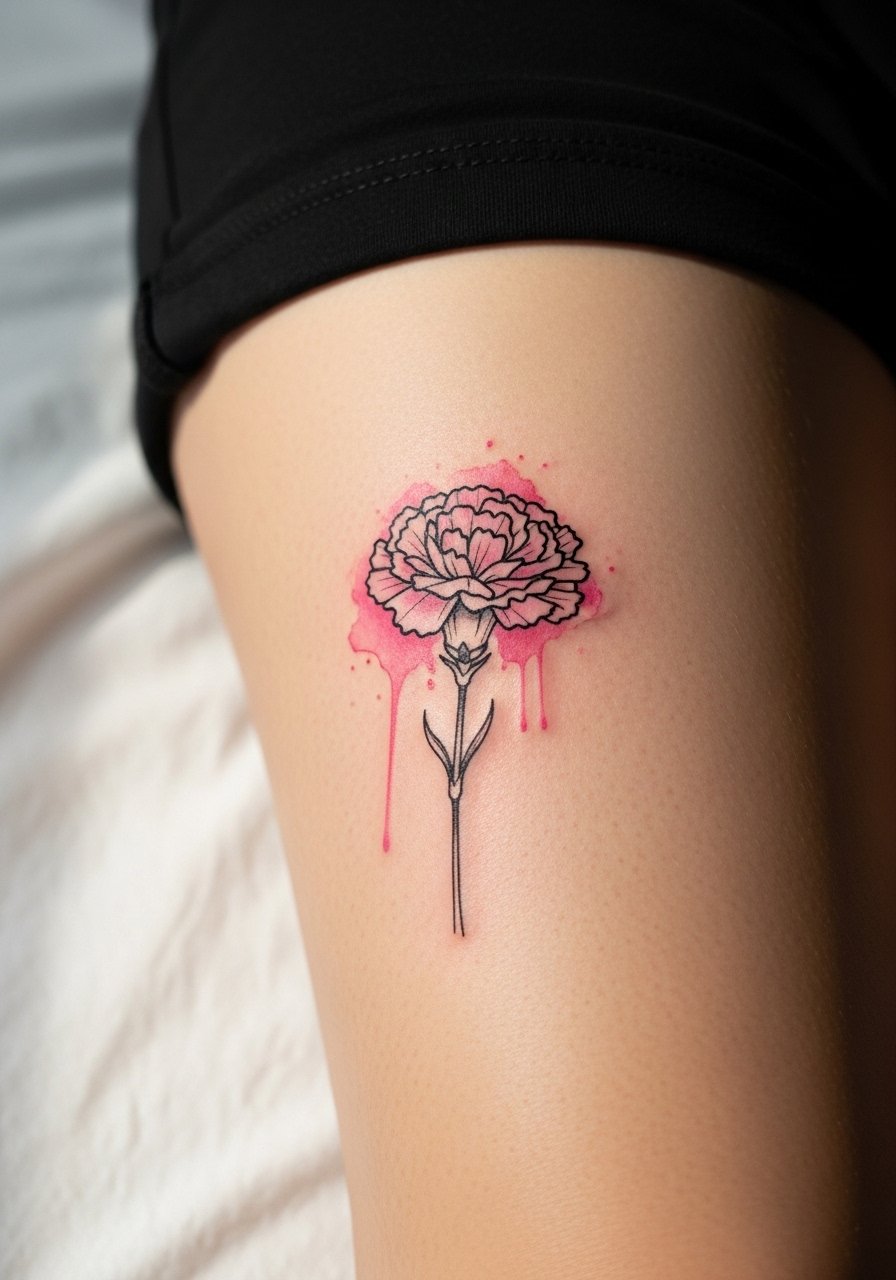
Thigh placements lend well to slightly larger, painterly watercolor carnations. The space lets the artist play with washes that look like vintage postcards.
Style & Design Details
- Tattoo style: Watercolor / illustrative
- Recommended size: 3–5 inches on thigh panel
- Best placement(s): upper thigh, outer hip, quad — larger canvas with privacy
- Color vs. blackwork: watercolor washes behind clear linework for an antique impression
- Design elements: soft color bleeds, sketchy linework, layered leaves, faint stippling, naturalistic stem curve
- Longevity note: Watercolor areas fade faster; rely on linework to maintain design definition and plan for touch-ups
- Who it suits: those wanting painterly florals, cottagecore/romantic aesthetics, people who favor private placements
Finding the Right Artist
Select an artist who balances watercolor techniques with crisp outlines. Ask for healed watercolor photos and discuss layering to prevent early pigment loss. Avoid purely painterly-only artists for pieces needing line durability.
Aftercare & Healing Tips
Thigh tattoos are protected naturally by clothing but avoid tight fabrics during early healing. Use fragrance-free soap and a thin layer of Hustle Butter or an unscented lotion during peeling. Apply SPF after healing if the area will see sun exposure.
- Minimal Negative-Space Carnation Finger Band
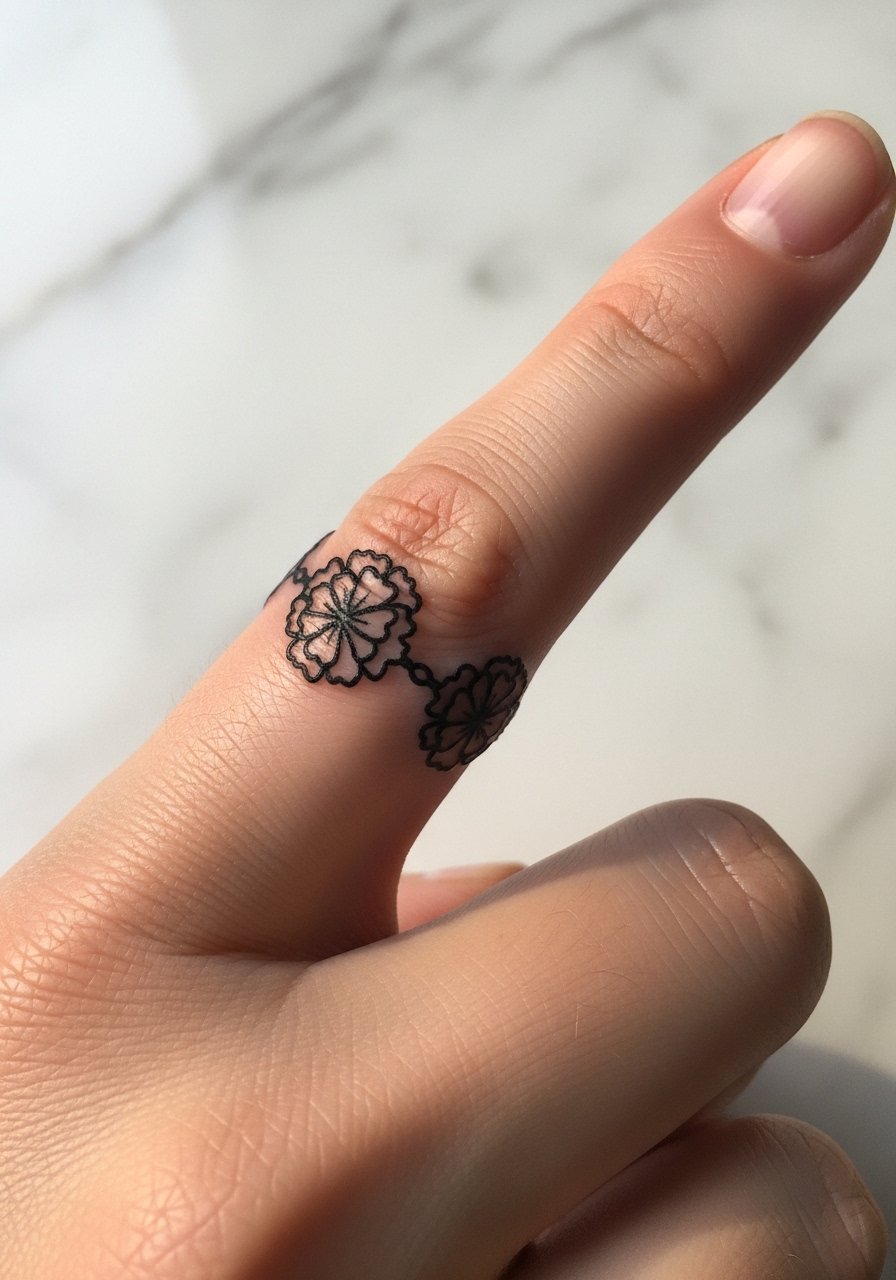
Negative-space bands are modern and understated. A carnation band around the base of a finger reads as jewelry, subtle but intentional.
Style & Design Details
- Tattoo style: Minimal / negative-space
- Recommended size: thin band, 1–2 inches circumference coverage
- Best placement(s): ring finger base, pinky, thumb base — ring-like positions
- Color vs. blackwork: Black band with negative-space petals for contrast
- Design elements: continuous band, petal-shaped cutouts, thin stem wrap, symmetrical spacing
- Longevity note: Finger bands need frequent touch-ups; negative space helps retain design clarity as black fades
- Who it suits: jewelry lovers, minimalist aesthetic, those who want a subtle symbolic band
Finding the Right Artist
Pick an artist skilled in hand placements and negative-space techniques. Ask how they’ll maintain even ink depth to avoid patchiness. Avoid artists with no healed hand photos.
Aftercare & Healing Tips
Keep hands dry as much as possible and avoid heavy washing or chemicals for the first two weeks. Light moisturizer and acceptance that yearly touch-ups are normal will help this placement age gracefully.
- Carnation with Scripted Date — Memorial Wrist Strip
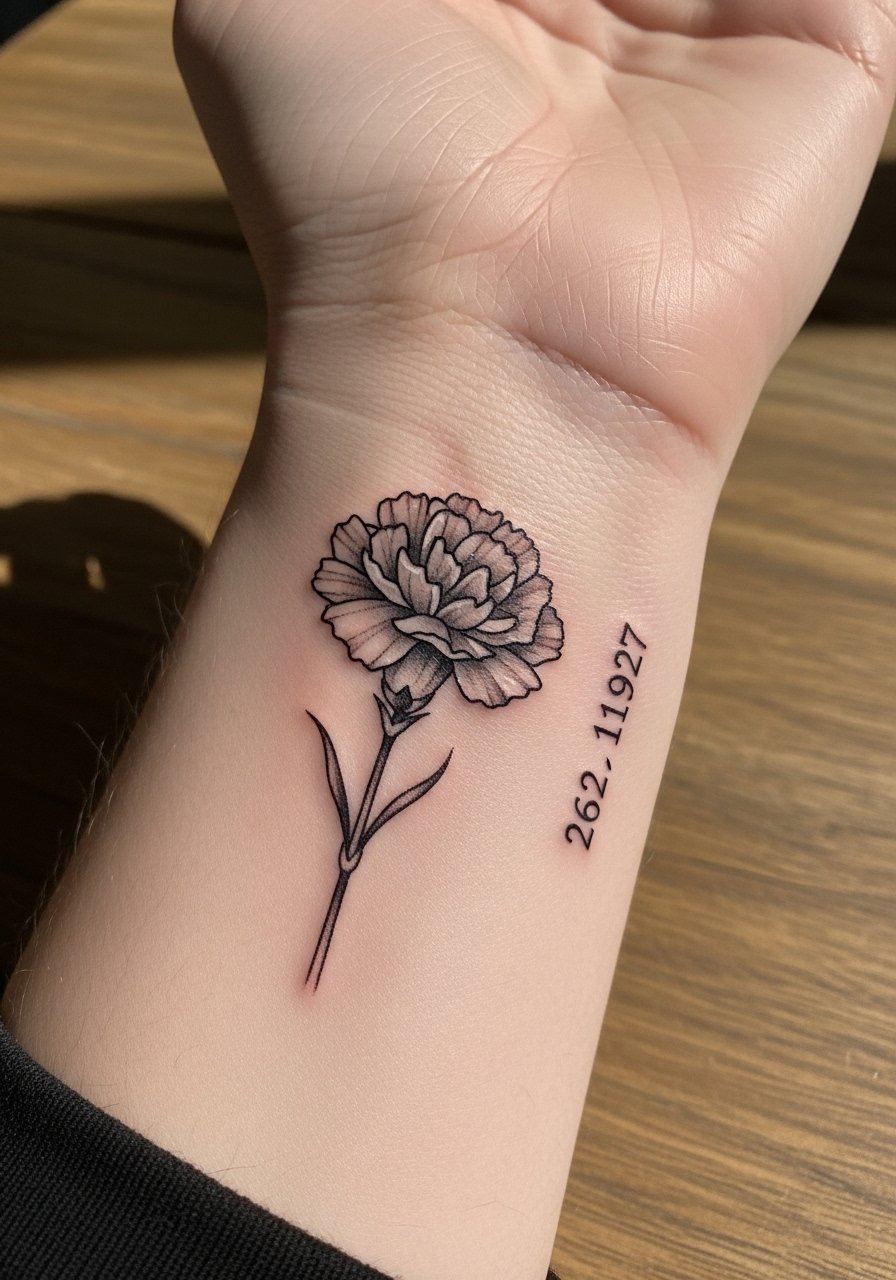
Pair a small carnation with a scripted date for a clean memorial wrist strip. The design reads intimate and the wrist placement makes it easy to glance at when you need a quiet reminder.
Style & Design Details
- Tattoo style: Fine line / memorial script
- Recommended size: 1.5–3 inches depending on script length
- Best placement(s): inner wrist, forearm side, near pulse — discreet and personal spots
- Color vs. blackwork: Black fine-line for crisp script and longevity
- Design elements: micro-carnation bloom, delicate stem, handwritten-style script, small dot separators, negative space
- Longevity note: Fine scripts need care to avoid blur; choose a slightly larger type if you want legibility for years
- Who it suits: memorial keepers, minimalists, people who favor meaningful wrist pieces
Finding the Right Artist
Find artists who show clear script work paired with micro-florals. Ask to see healed script examples and how they space characters. Avoid artists who can’t provide healed close-ups of thin-letter tattoos.
Aftercare & Healing Tips
Wrist areas move constantly; keep the site clean, and avoid bracelets during healing. Clean with fragrance-free soap and apply a thin unscented lotion. Expect to return for touch-ups if the script softens.
- Vintage Carnation with Lace Background on Upper Arm
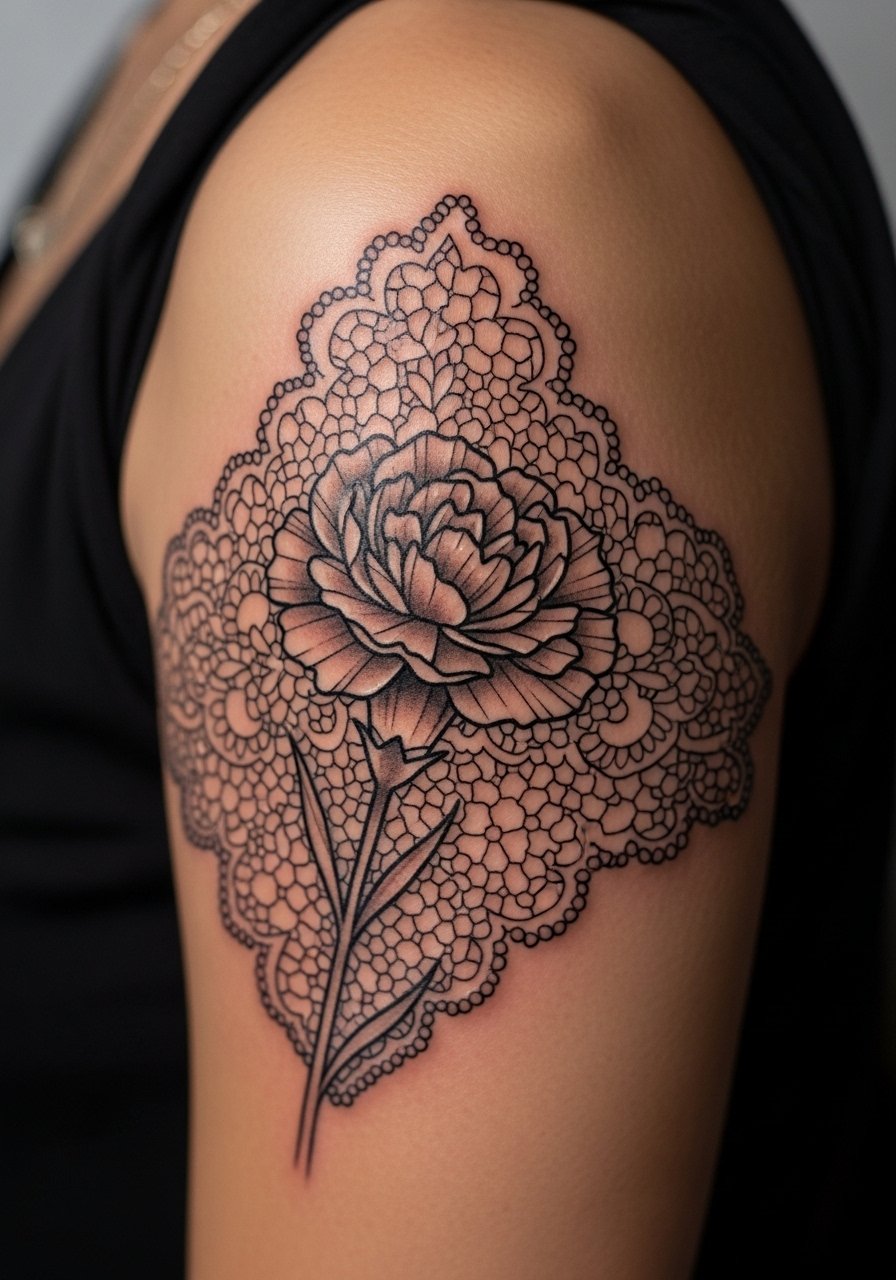
A lace background under a vintage carnation creates a bridal or Victorian-inspired piece. The contrast of delicate lace lines with bold flower forms a refined statement on the upper arm.
Style & Design Details
- Tattoo style: Illustrative / ornamental
- Recommended size: 3–5 inches to capture lace detail
- Best placement(s): upper arm, shoulder cap, lower bicep — flatter areas for detail
- Color vs. blackwork: black-and-gray lace with a muted carnation color or black-only works well
- Design elements: intricate lace lines, layered petal shadows, subtle negative space, vein-like petal detailing, ornamental filigree
- Longevity note: Fine lace lines need solid spacing and will require sun protection to avoid early loss of crispness
- Who it suits: vintage brides, romantic aesthetic fans, anyone wanting ornamental botanical work
Finding the Right Artist
Choose an artist who shows delicate filigree and lace work in healed photos. Ask how they’ll keep line spacing to avoid merging lines over time. Experienced ornamental tattooists are preferred.
Aftercare & Healing Tips
Lace details can suffer from scab loss; keep moisturized with Hustle Butter or a gentle unscented lotion. Protect from sun and avoid friction from straps and bras while healing.
- Carnation and Crescent Moon — Small Spirit Floral
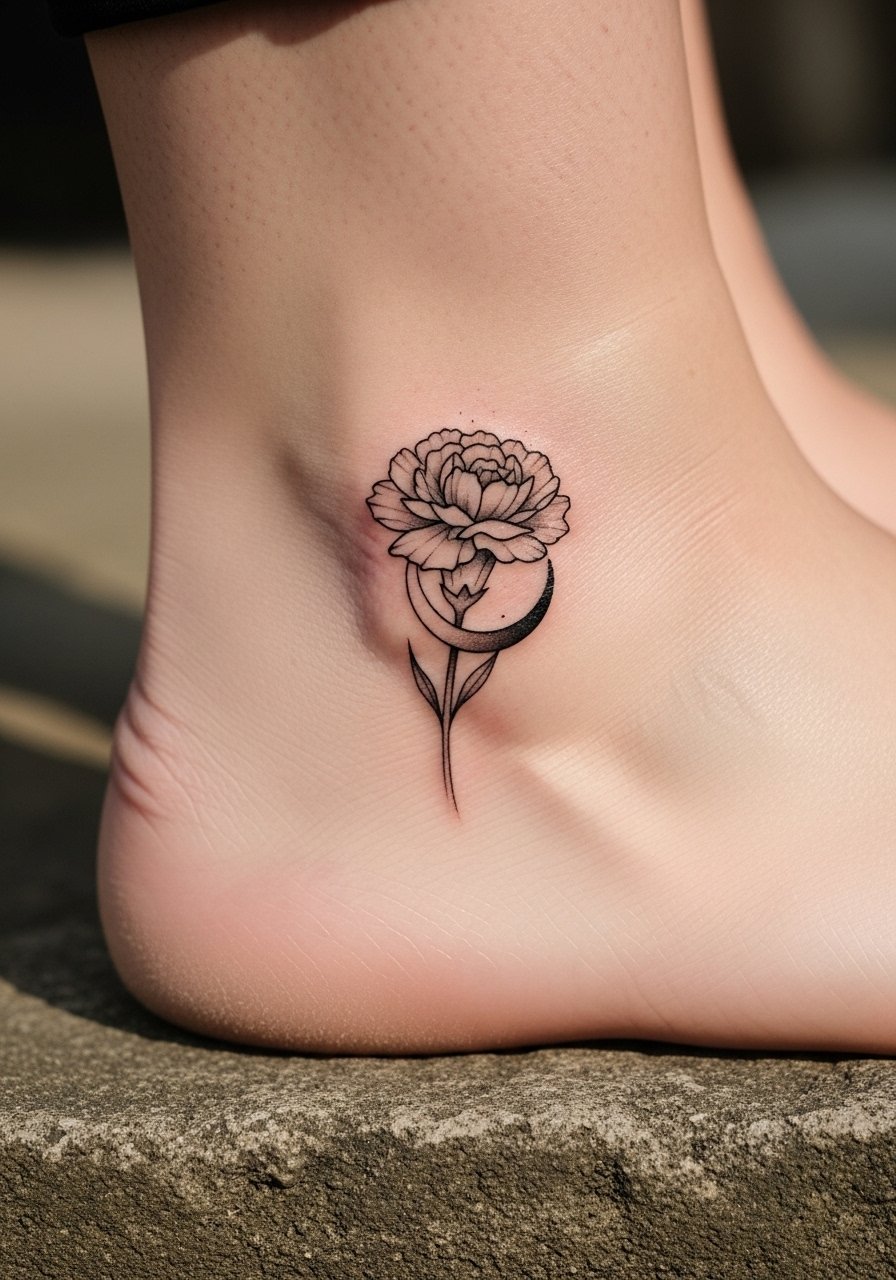
A carnation paired with a crescent moon reads quietly spiritual and vintage. The moon adds celestial narrative to the flower and suits small placements.
Style & Design Details
- Tattoo style: Fine line / illustrative
- Recommended size: 1–2.5 inches
- Best placement(s): inner ankle, wrist inner, behind the ear — intimate spots that feel personal
- Color vs. blackwork: black fine-line with grey shading keeps it timeless
- Design elements: crescent tucked into petals, thin stems, small dot halo, faint stippling
- Longevity note: Small celestial elements age similarly to fine-line florals; keep out of heavy sun exposure
- Who it suits: mystical aesthetic fans, those seeking symbolism in small forms
Finding the Right Artist
Find artists with small celestial and floral pairings. Ask about spacing and how they’ll keep the moon’s curve crisp next to petal lines. Experienced fine-line artists are a good fit.
Aftercare & Healing Tips
Avoid tight socks and ankle bracelets during healing. Clean gently and apply an unscented lotion as it peels. After healing, protect with SPF when the area will see sun.
- Bold Petal Shoulder Cap Carnation (Statement Vintage)
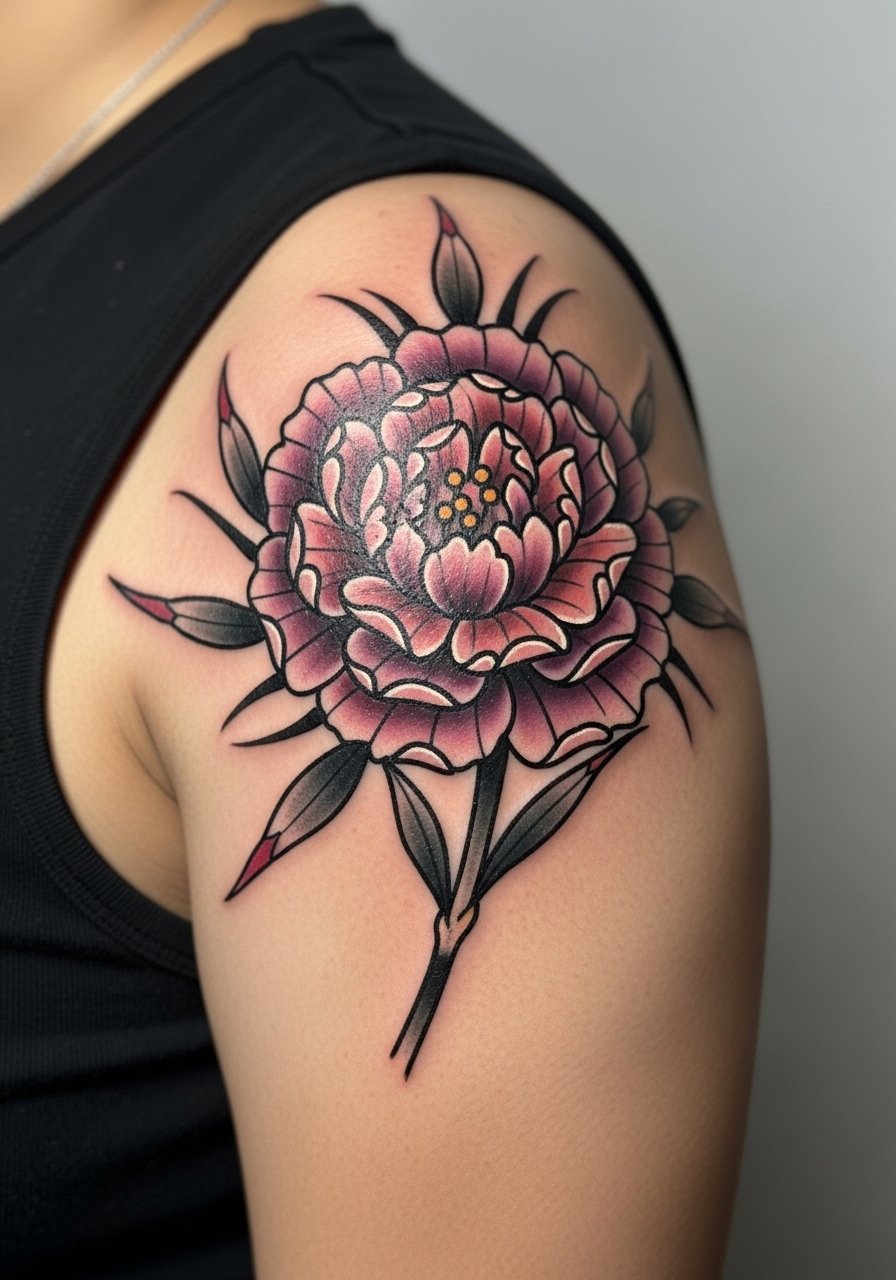
A shoulder cap carnation reads like a wearable emblem. It’s large enough to show vintage detail but sits where movement is natural and it can be shown off easily. Bold petals and deep tones make this a statement piece that still feels classic.
Style & Design Details
- Tattoo style: Neo-traditional / bold vintage
- Recommended size: 4–7 inches across the shoulder cap
- Best placement(s): shoulder cap, upper arm wrap, deltoid — excellent for display and coverage
- Color vs. blackwork: Color-forward with deep plum, rose, and olive greens for a vintage palette
- Design elements: heavy petal layering, thick outline contrast, soft shadow under petals, leaf network, optional small background dots
- Longevity note: Shoulder areas handle pigment well; keep moisturized and use SPF for color longevity
- Who it suits: bold stylists, collectors wanting upper-body statements, vintage and neo-traditional fans
Finding the Right Artist
Find a seasoned neo-traditional artist with big-shoulder pieces in their portfolio. Ask about session length and how they’ll map the curve of your deltoid. Mid-to-senior artists are the right call.
Aftercare & Healing Tips
Large shoulder pieces benefit from Saniderm initially if recommended. Keep clothing loose and avoid straps that rub for two weeks. Use a fragrance-free lotion during peeling and a tattoo sunscreen stick once healed for long-term vividness.
I hope these 22 vintage carnation flower tattoo ideas sparked a bunch of directions for your next piece. Save this article to your Pinterest board and bring your favorite image prompts to your consultation — they help artists see scale and mood quickly. Which style felt most like you: the tiny fine-line wrist bloom, the bold shoulder cap, or the neo-traditional rib bouquet? If you’re getting supplies ready, having a Saniderm roll and a tub of Hustle Butter Deluxe on hand before your session will make the first 72 hours less stressful.
Pin your favorite ideas and bring them along — artists love a clear visual and a conversation starter. Which placement are you leaning toward?