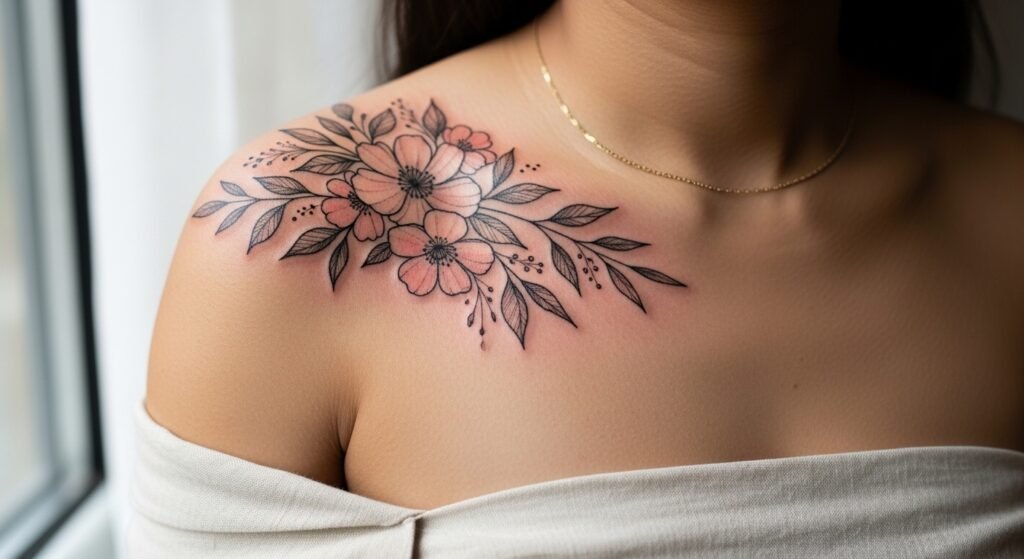
You’re finally in that consultation, or it’s midnight and you’re scrolling for one last idea before booking. The shoulder cap is one of the most forgiving, flattering places to plant a floral piece — it sits beautifully with jewelry, dresses, and movement. Whether you want a tiny token or an elegant cascade, a floral shoulder cap tattoo can feel feminine, delicate, and quietly expressive.
This guide collects 20 floral shoulder cap tattoo ideas so you can stop pinning and start planning. You'll find styles from fine line and blackwork to neo-traditional and soft watercolor, plus clear placement notes, artist selection tips, and realistic aftercare. I’ll mention practical prep and healing products so you’re packing the right things before you sit.
If you want less sting for a longer session, try a numbing option like Zensa topical numbing cream about 45–60 minutes before your appointment. And once you’re done, keeping the area protected with a second-skin bandage such as Saniderm/Tegaderm wrap for the first few days makes healing cleaner and less stressful.
- Petite Single-Stem Rose on the Shoulder Cap
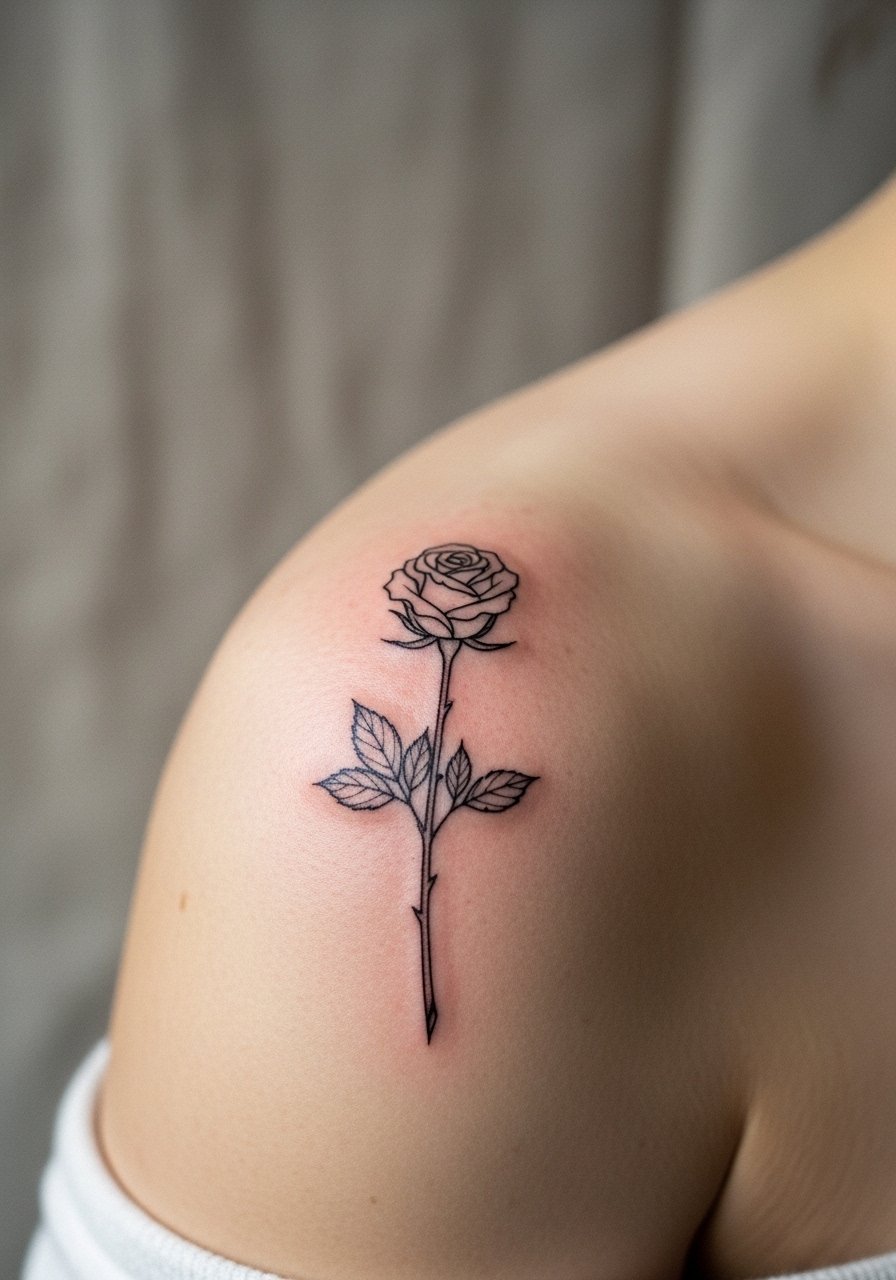
A single stem rose is timeless and reads delicate from a distance but rewards close inspection. This version uses ultra-fine single-needle lines and minimal stipple shading so the petals look airy. It's small enough to hide under straps or show off with off-the-shoulder tops. First-timers who want something understated will love this.
Style & Design Details
- Tattoo style: Fine line, single-needle
- Recommended size: 1.5–3 inches
- Best placements: Shoulder cap (deltoid peak), upper chest near clavicle, outer bicep — all show the stem flow naturally
- Color vs. blackwork: Black fine line with optional soft pink wash for petal tips
- Design elements: single-needle outline, micro-dot shading, negative-space highlights, slender stem, tiny thorns
- Longevity note: Fine line ages fastest; UV exposure and friction (bra straps) speed fading
- Who it suits: pale to medium skin tones shine here; first-timers and minimalists
Finding the Right Artist
Look for portfolios with clear single-needle work and healed photos. Ask about needle size, stencil scaling, and whether the artist can keep line weight consistent. Avoid artists who push thicker lines on fine designs. For this level of detail, a mid-level to experienced artist is best — apprentices might struggle with evenness. Search Instagram tags like #finelinetattoo and #singleneedle.
Aftercare & Healing Tips
Most artists will wrap; leave the initial bandage on per shop directions. After removal, wash gently with a fragrance-free soap like Dr. Bronner's pure-castile unscented soap and pat dry. Apply a thin layer of Hustle Butter Deluxe during the peeling phase. Keep out of direct sun and reapply SPF 50 when healed.
- Watercolor Peony Sweep Across the Shoulder Cap
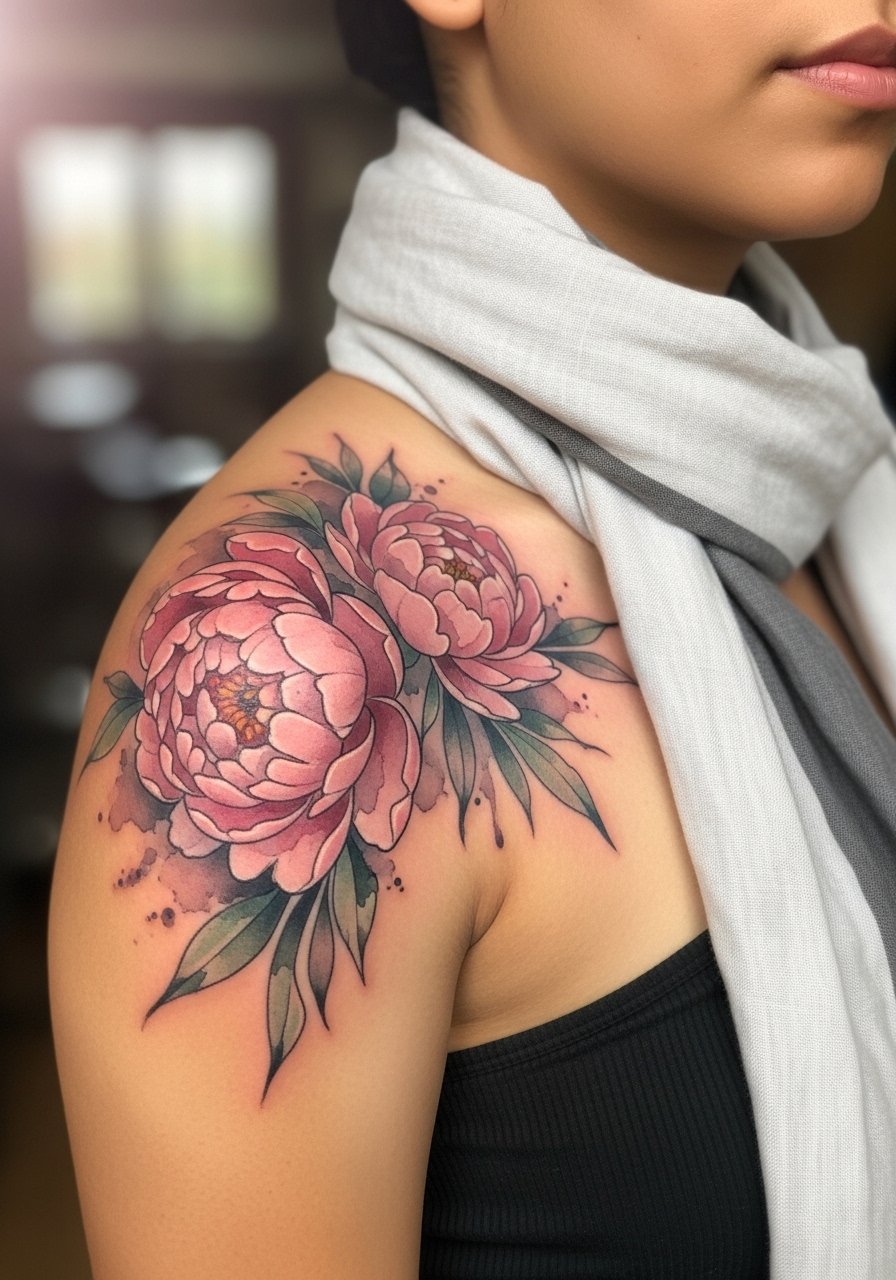
If you love painterly ink, a watercolor peony that arcs across the shoulder cap creates motion and softness. The design uses diluted color washes and gentle outlines for a dreamlike finish. Because watercolor fades differently than solid black, you’ll want periodic color refreshes if you love bold pigment.
Style & Design Details
- Tattoo style: Watercolor / illustrative
- Recommended size: palm-sized to large (3–6 inches)
- Best placements: Shoulder cap to clavicle sweep, upper back, or deltoid wrap
- Color vs. blackwork: Soft color washes with faint line accents
- Design elements: diluted pigment layering, negative-space highlights, soft edge blending, petal watermarks, light line anchors
- Longevity note: Watercolor fades faster; sun and shallow ink placement cause faster color loss
- Who it suits: cottagecore or romantic aesthetics; medium to darker skin tones handle saturated blush differently
Finding the Right Artist
Book artists with a portfolio of healed watercolor pieces — these photos tell you more than fresh work. Ask how they layer color and whether they use single passes or multiple sessions. Red flag: artists who show only fresh photos or inconsistent blending. A seasoned illustrator-style tattooist is best. Try searching #watercolortattoo and checking studio healed galleries.
Aftercare & Healing Tips
Watercolor tattoos often blister and peel more visibly. Keep the area wrapped with Saniderm/Tegaderm for the initial 48–72 hours if your artist recommends it. Use an unscented lotion like Aveeno fragrance-free during the peeling phase and avoid hot baths. Plan a touch-up at 8–12 weeks for color boost.
- Minimalist Daisy Cluster on the Shoulder Cap (Floral Shoulder Cap Tattoo)
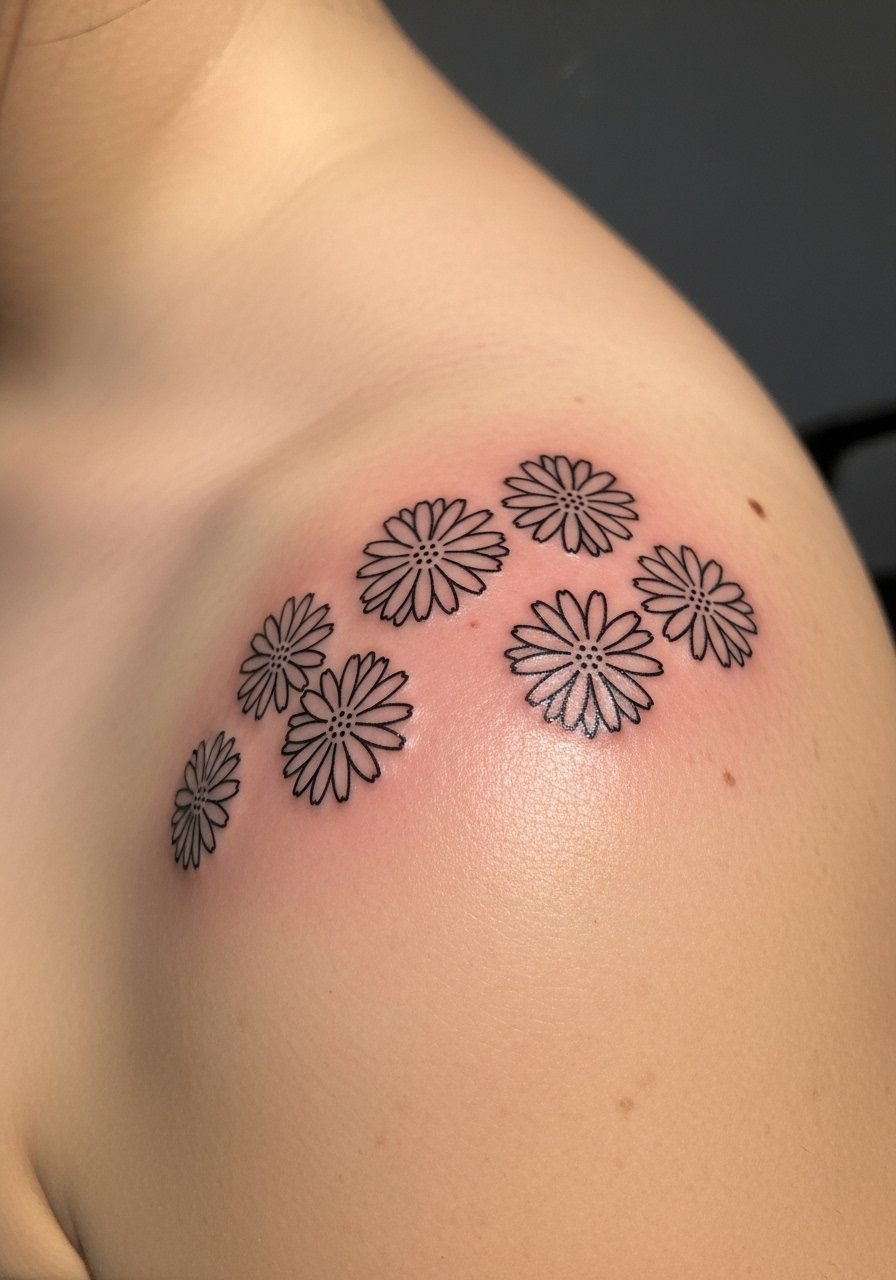
A cluster of tiny daisies keeps things playful and wearable. The minimal ink reads like jewelry: light, repetitive, and perfect for layering with other tattoos later. Because the petals are mostly negative space, the composition breathes on the shoulder cap.
Style & Design Details
- Tattoo style: Minimalist / dotted illustration
- Recommended size: cluster totals 2–4 inches
- Best placements: Shoulder cap, outer shoulder, or near the clavicle
- Color vs. blackwork: Black fine line; optional soft yellow centers
- Design elements: micro-line petals, dotwork centers, slight asymmetry, airy spacing
- Longevity note: High-contrast dots hold well; thin petals need SPF protection
- Who it suits: minimalists, first-timers, those who want a subtly feminine touch
Finding the Right Artist
Find artists who post healed minimal work and close-up detail shots. Ask about needle configuration and whether the artist uses single-needle or fine-liner setups. Apprentices can do minimal clusters, but make sure they’ve done similar pieces successfully.
Aftercare & Healing Tips
Minimal pieces heal fast. Clean twice daily with a gentle soap and apply a thin layer of Tattoo Goo aftercare ointment or Hustle Butter Deluxe as instructed. Expect light flaking within a week. Once settled, use an SPF 50 stick when exposed.
- Crescent Floral Vine Curling Over the Deltoid
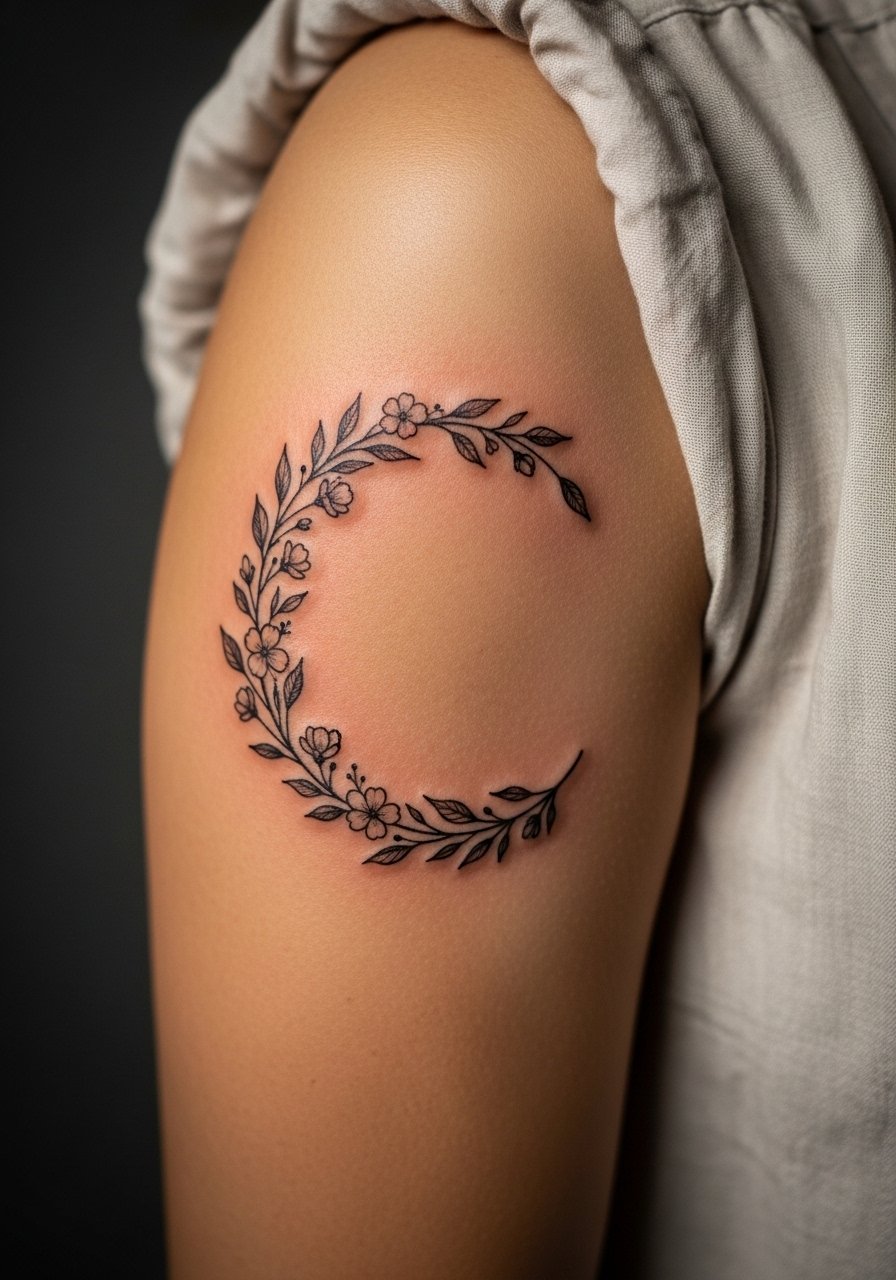
A crescent vine follows the shoulder’s natural curve, echoing movement and silhouette. This composition frames the shoulder cap without overpowering it. It reads like lace from a distance and shows botanical detail up close.
Style & Design Details
- Tattoo style: Illustrative blackwork with fine-dot shading
- Recommended size: 3–5 inches along curve
- Best placements: Deltoid/shoulder cap, upper back near shoulder blade, sleeve cuff
- Color vs. blackwork: Blackwork for longevity; tiny colored blossoms optional
- Design elements: flowing vine, micro-flowers, stippling, negative-space leaves, subtle asymmetry
- Longevity note: Blackwork holds well; stippling may soften slightly over years
- Who it suits: those who like feminine but bold silhouettes
Finding the Right Artist
Look for blackwork portfolios that balance bold shapes and delicate detail. Ask how they handle dotwork density and scale to avoid over-saturation. This design is suited to a confident mid-level to senior artist.
Aftercare & Healing Tips
Dotwork can scab more densely; follow wrap advice (Saniderm for 2–4 days) then wash gently. Use an unscented lotion like Lubriderm fragrance-free during peeling. Expect minor touch-up needs in a year if stippling softens.
- Hidden Lavender Sprig Tucked into the Shoulder Cap Seam
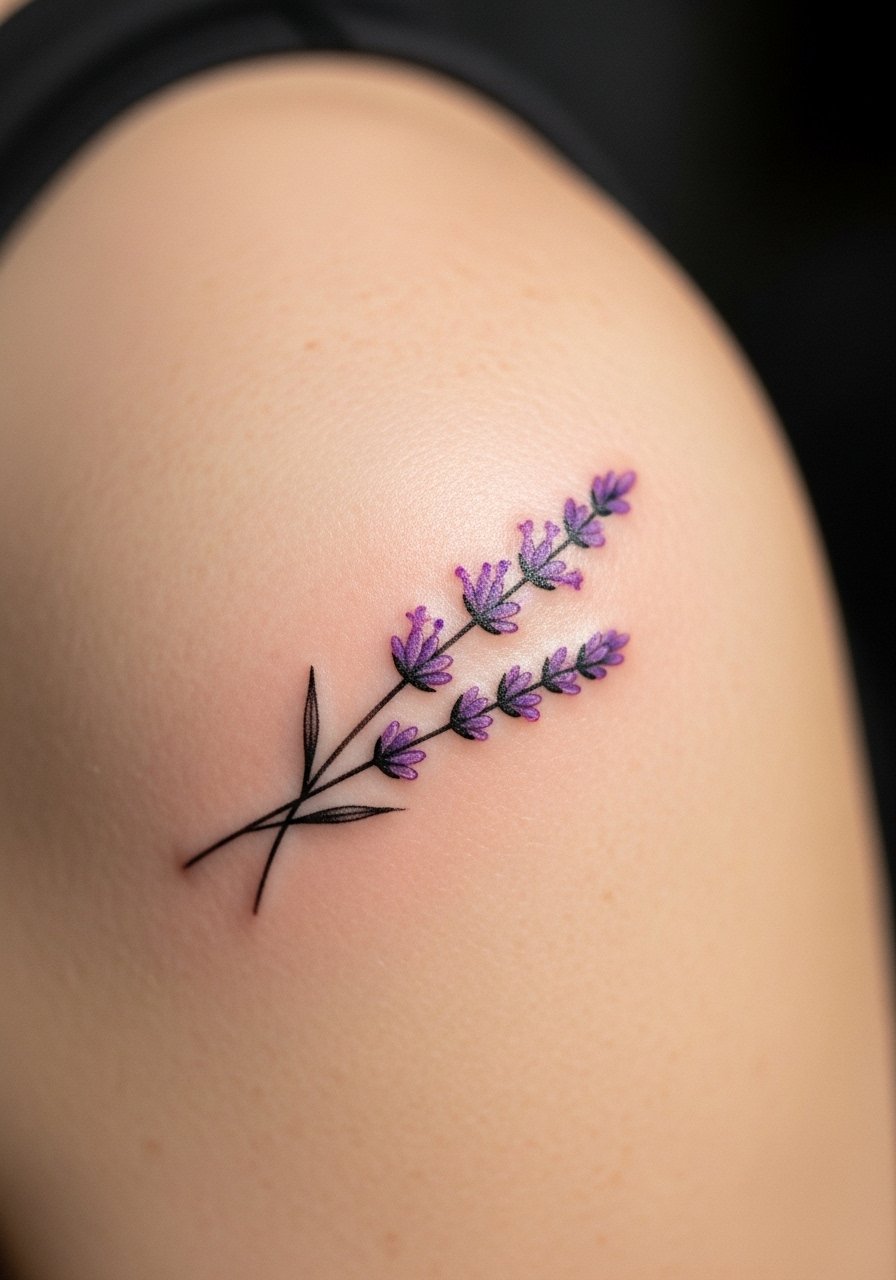
A slender lavender sprig hidden near the seam of the shoulder cap feels intimate and fragrant on sight. It’s an excellent choice for someone who wants a discreet floral nod that still reads feminine when revealed.
Style & Design Details
- Tattoo style: Botanical fine line with soft color wash
- Recommended size: 2–3 inches vertical
- Best placements: Shoulder cap seam, behind deltoid, upper tricep
- Color vs. blackwork: muted purple wash over black outline for dimension
- Design elements: tiny floret clusters, delicate stems, light watercolor wash, minimal leaves
- Longevity note: Light washes fade; purple pigments often need periodic refreshes
- Who it suits: private aesthetic, those who want a soft secret tattoo
Finding the Right Artist
Choose artists who show small botanical pieces with healed photos, especially color wash work. Ask about pigment types and layering technique. A practiced botanical artist is ideal.
Aftercare & Healing Tips
Because of the fine color, avoid abrasive clothing while healing. Apply a thin layer of Hustle Butter Deluxe and avoid direct sun for at least six weeks. Consider a color touch-up at 3 months if your purple softens.
- Neo-Traditional Gardenia with Bold Outlines on the Shoulder Cap
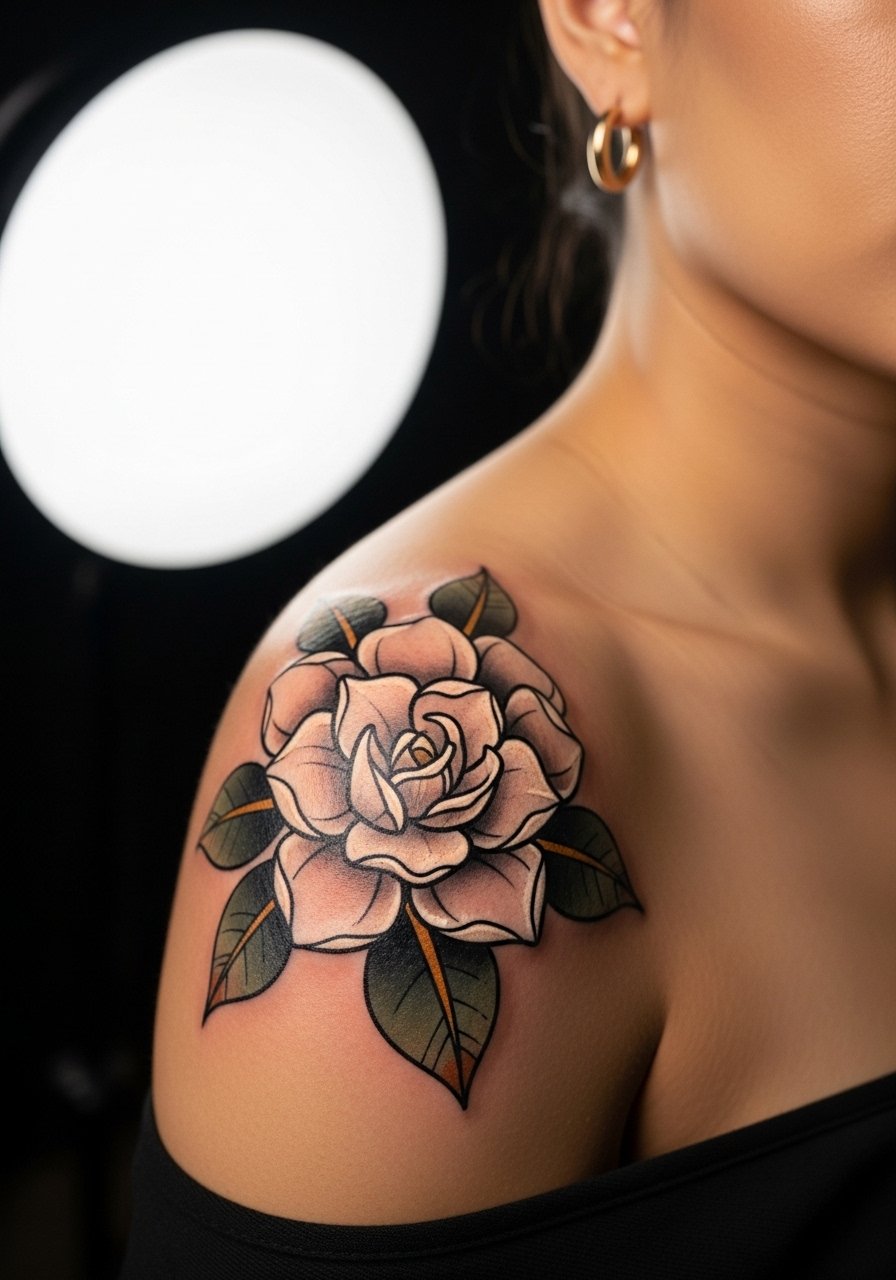
For something with personality, a neo-traditional gardenia brings bold linework and soft shading. It feels feminine and sculptural — the thick outlines give longevity and translate well into clothing changes.
Style & Design Details
- Tattoo style: Neo-traditional
- Recommended size: 3–5 inches
- Best placements: Shoulder cap, outer shoulder, upper arm
- Color vs. blackwork: muted color palette with bold black contours
- Design elements: heavy outlines, layered petals, saturated leaf shading, slight drop shadow, ornamental accents
- Longevity note: Strong outlines age well; color may need refresh
- Who it suits: collectors, lovers of vintage tattoo aesthetics, those who want a statement floral
Finding the Right Artist
Seek neo-traditional portfolios with bold florals and healed shots. Ask about line consistency and color saturation. An experienced artist is recommended — apprentices rarely master the shading-to-outline balance here.
Aftercare & Healing Tips
Bold color tattoos respond well to Saniderm for 48–72 hours. After that, clean with unscented soap and hydrate with Tattoo Goo aftercare. Plan a touch-up around 3 months for color settling.
- Lace-Like Floral Mandala Halo Around the Shoulder Cap
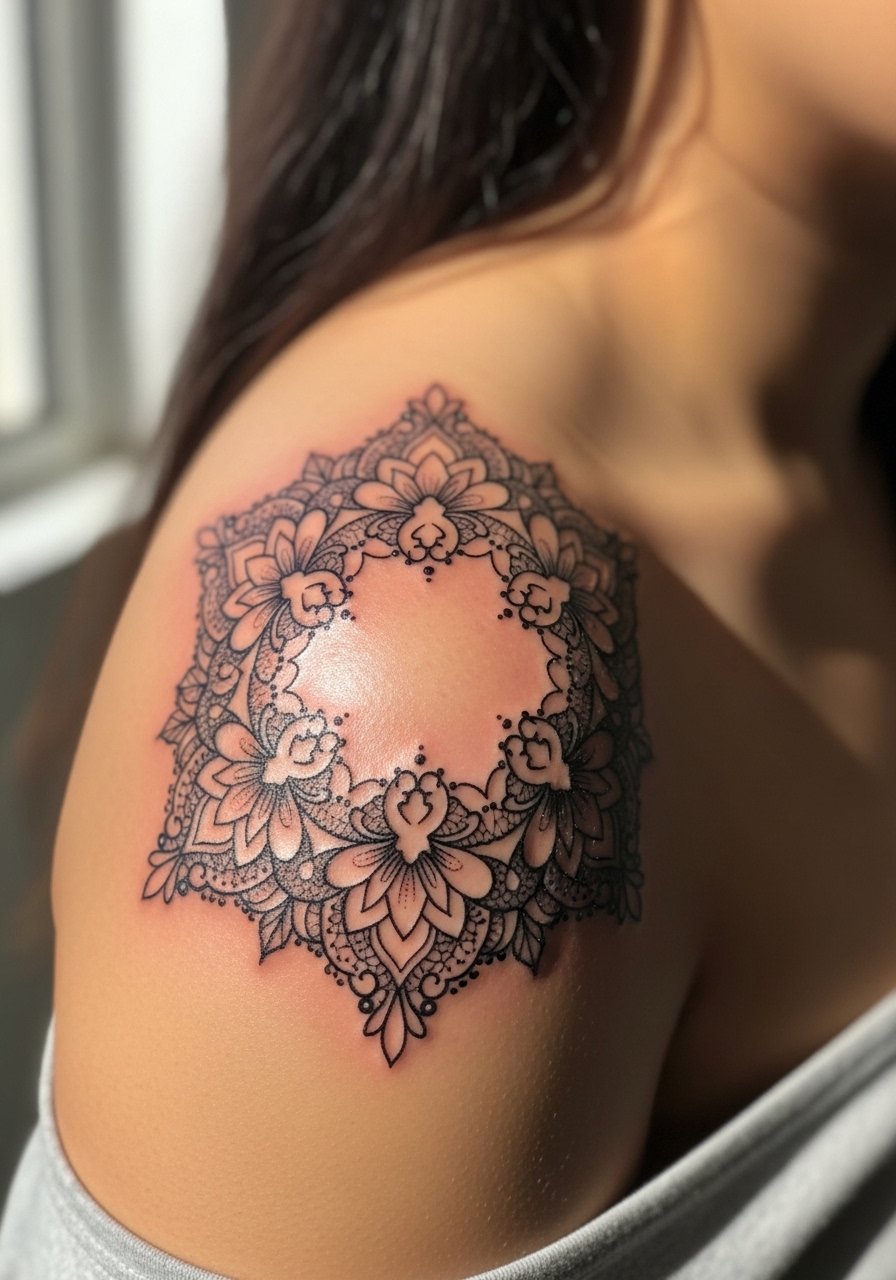
This fusion of floral motifs and mandala symmetry creates a lace-like halo that flatters rounded shoulders. It looks deliberate and ornamental, perfect for those who want a decorative statement.
Style & Design Details
- Tattoo style: Geometric + illustrative (mandala floral)
- Recommended size: 4–6 inches
- Best placements: Shoulder cap center, upper back, rounded chest pieces
- Color vs. blackwork: solid black for clarity; tiny color accents optional
- Design elements: radial petals, spaced dotwork, lace-like filigree, crisp negative spaces
- Longevity note: Lines and dotwork age predictably; keep out of sun to preserve crispness
- Who it suits: lovers of dark academia or refined geometric aesthetics
Finding the Right Artist
Find artists who photograph perfectly centered, healed mandala work. Ask how they ensure symmetry and stencil placement for curved anatomy. Experienced artists with geometric portfolios are best.
Aftercare & Healing Tips
Mandala work benefits from careful wrap removal to avoid stretching. Use a fragrance-free lotion like Aveeno and, once healed, apply a daily SPF 50 over exposed areas.
- Small Bouquet That Peeks Over the Shoulder Cap Edge
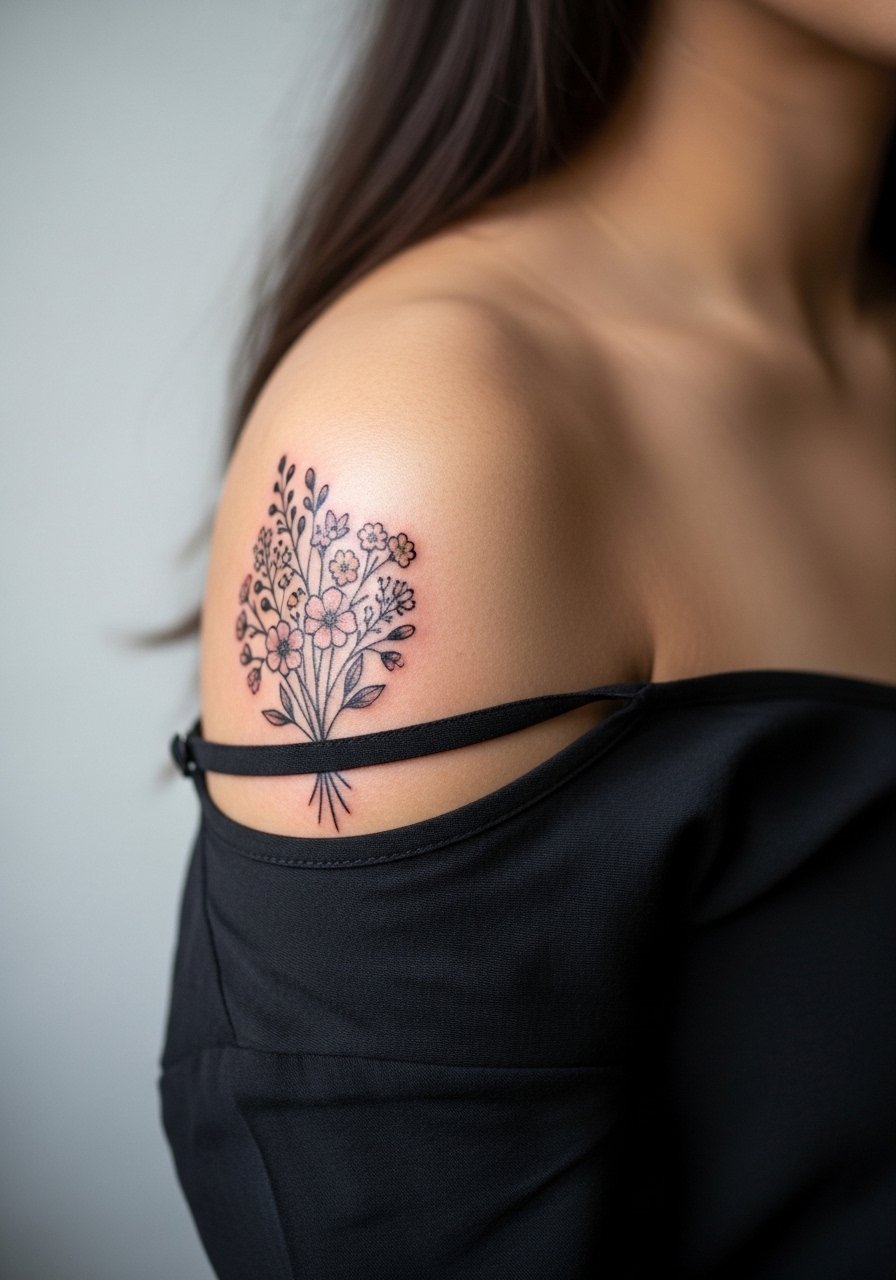
A petite bouquet that peeks over the shoulder edge creates an effortless “caught-by-the-wind” aesthetic. It hints at larger compositions without being heavy.
Style & Design Details
- Tattoo style: Illustrative / micro-realism
- Recommended size: 2.5–4 inches
- Best placements: Shoulder cap edge, clavicle junction, upper arm cap
- Color vs. blackwork: selective color in centers or petals adds depth
- Design elements: layered tiny blooms, thin stems, subtle leaf clusters, light shading
- Longevity note: Micro-realism is sensitive; pigment settling requires touch-ups
- Who it suits: collectors, romantic looks, people who like layered future expansions
Finding the Right Artist
Search for artists showing small bouquet healed photos. Ask how they’ll scale the design to your anatomy and whether they plan for expansion. Mid-level to experienced artists preferred for blending micro and realism.
Aftercare & Healing Tips
Use Saniderm initially if recommended. Clean with a gentle soap and moisturize with Hustle Butter Deluxe. Expect light peeling within a week and schedule a 3-month touch-up if needed.
- Fine-Threaded Ivy Trail Along the Shoulder Cap Seam
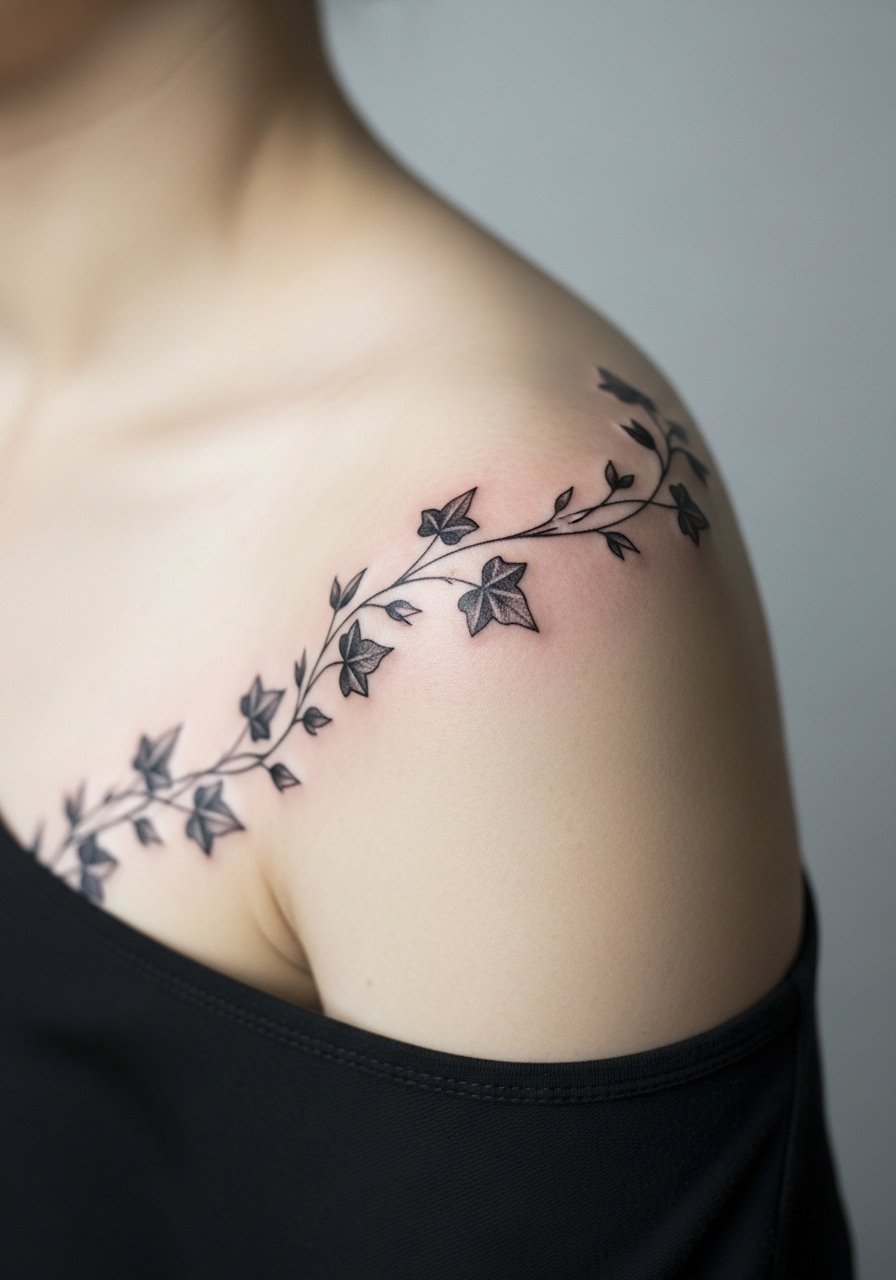
Ivy offers organic movement and a slightly wild feel. A trail that follows the shoulder seam looks like natural growth, flattering curves and elongating the upper arm line.
Style & Design Details
- Tattoo style: Fine-line botanical
- Recommended size: 3–6 inches depending on wrap
- Best placements: Shoulder seam, upper arm, around the collarbone
- Color vs. blackwork: black or deep green accents
- Design elements: continuous vine, alternating leaf shapes, tiny tendrils, micro-shading
- Longevity note: Continuous thin lines risk softening; SPF helps extend life
- Who it suits: lovers of cottagecore, outdoor people, those who want wrap-around pieces
Finding the Right Artist
Look for portfolios with wrap-around botanical pieces and healed photos. Ask how the design will sit when you move your shoulder. An artist experienced with body flow is ideal.
Aftercare & Healing Tips
Wrap for 24–72 hours as advised. Clean twice daily and use Lubriderm fragrance-free during the peeling phase. Avoid friction from straps for two weeks.
- Tiny Wildflower Chain Dripping Off the Shoulder Cap
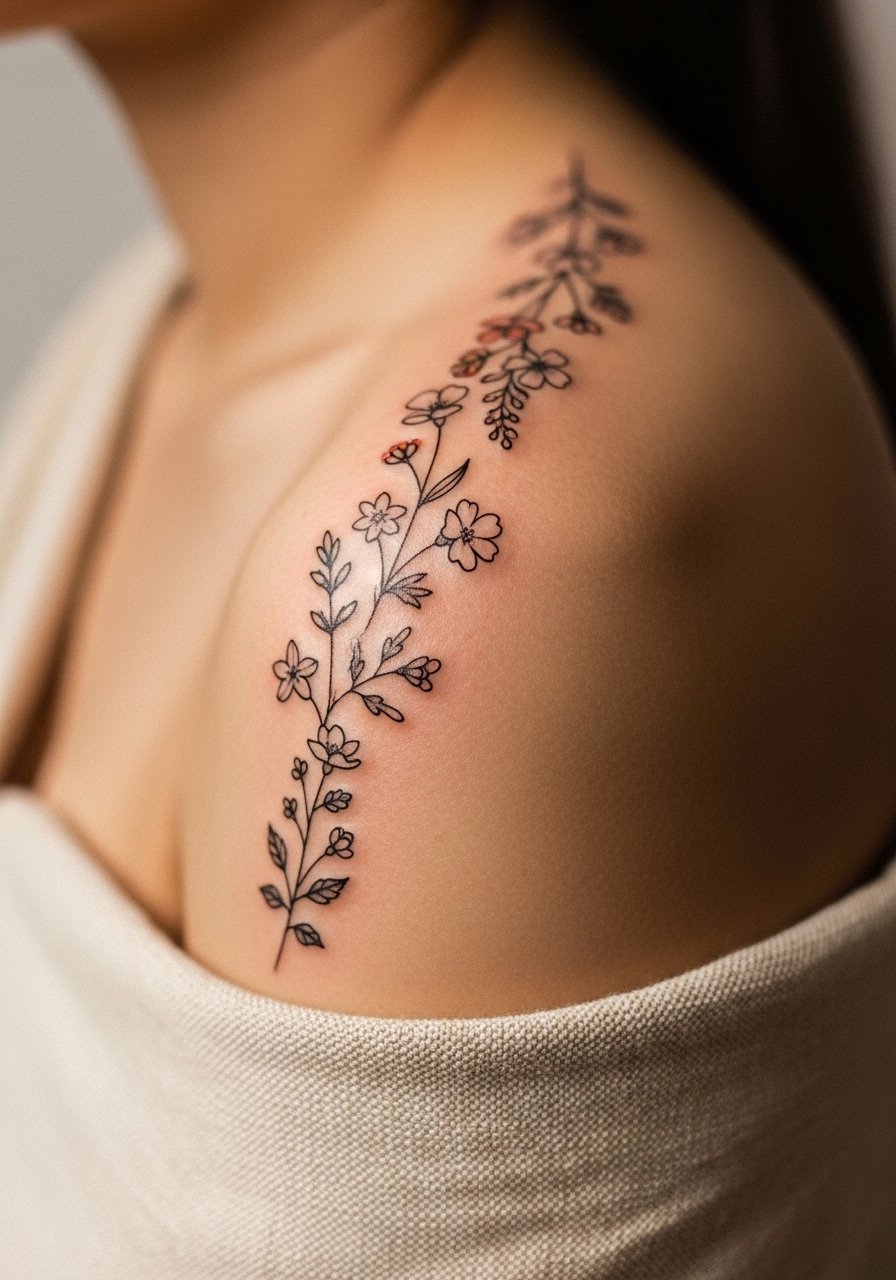
A string of tiny wildflowers makes for a whimsical edge tattoo — playful and light. It reads like a necklace when your top sits just right.
Style & Design Details
- Tattoo style: Minimal illustrative
- Recommended size: chain length 3–5 inches
- Best placements: Edge of shoulder cap, clavicle, neckline
- Color vs. blackwork: subtle color pops in centers or petals
- Design elements: tiny bloom repeats, short connecting stems, irregular spacing
- Longevity note: Small motifs last well if lines are not too thin
- Who it suits: playful personalities, festival-style lovers, first-timers
Finding the Right Artist
Choose someone comfortable with repetitive small motifs. Request healed photos of small-row work. An apprentice with steady hands can do this if they’ve practiced similar repeats.
Aftercare & Healing Tips
Gentle cleansing and thin moisturizer (Hustle Butter or Lubriderm) should suffice. Protect from chafing and direct sun. Waxed clothing or straps can rub; avoid for two weeks.
- Vintage Botanical Sketch with Crosshatching Shading

For a more literary look, vintage botanical sketches with crosshatching feel like an old field journal page. This style has a study-like quality and pairs well with fine-lined text if you expand later.
Style & Design Details
- Tattoo style: Illustrative / engraving-style
- Recommended size: 3–5 inches
- Best placements: Shoulder cap, upper back, inner bicep
- Color vs. blackwork: blackwork with heavy line texture
- Design elements: crosshatch shading, scientific-style bloom rendering, small labels optional
- Longevity note: High-contrast lines age predictably; detail may soften over years
- Who it suits: lovers of dark academia, vintage illustration, botanists
Finding the Right Artist
Find artists who show engraving-style tattoos with healed photos. Ask about needle grouping used for hatching to ensure crispness. An experienced illustrative artist is necessary.
Aftercare & Healing Tips
Engraving lines need careful protection. Use Saniderm for initial days if artist recommends, then switch to an unscented lotion. Touch-ups can restore tiny softened lines.
- Sunflower Facing Forward on the Shoulder Cap
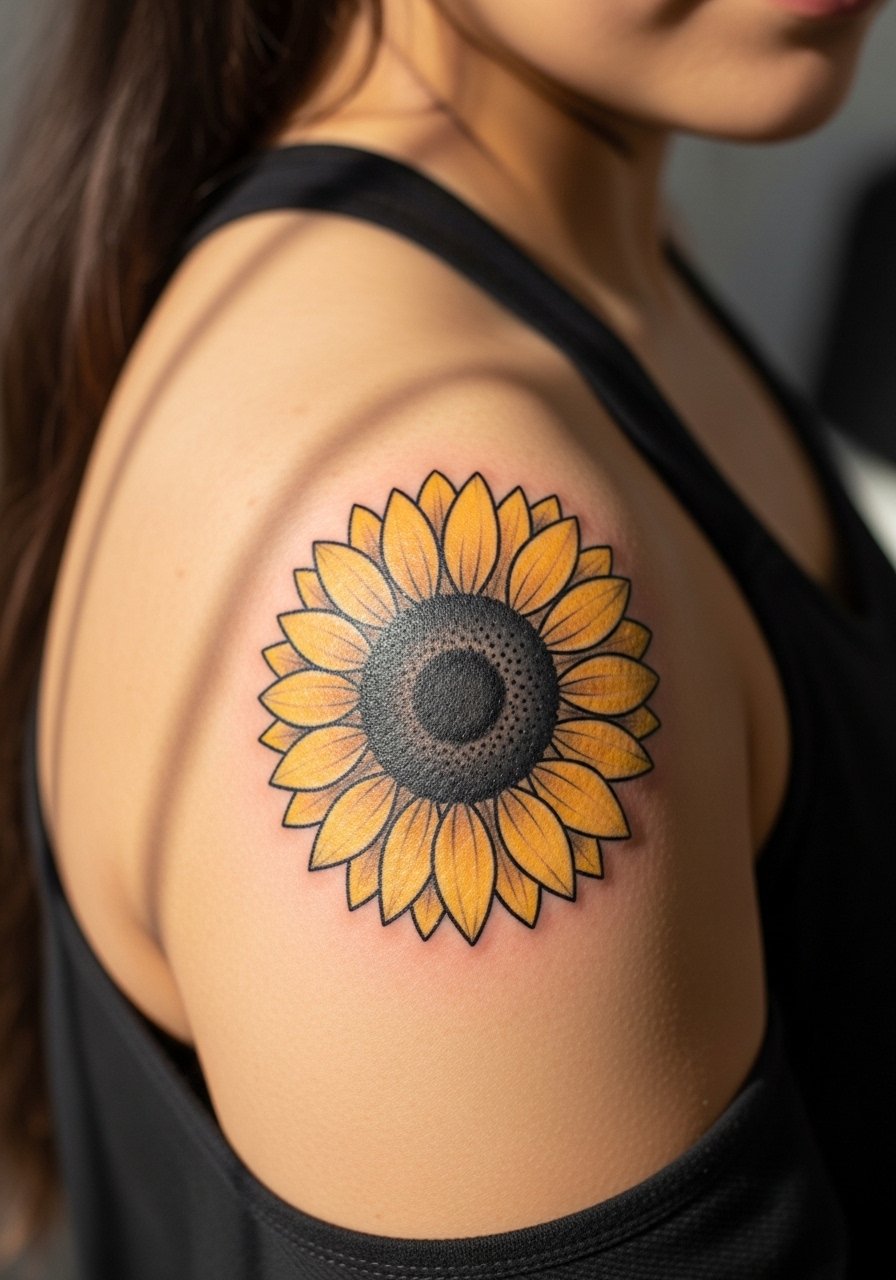
A forward-facing sunflower reads sunny and confident. The radial petals flatter rounded shoulders and the center provides focal depth. It’s an upbeat floral that reads well at a distance.
Style & Design Details
- Tattoo style: Illustrative with color accents
- Recommended size: 3–5 inches
- Best placements: Shoulder cap center, upper arm, scapula
- Color vs. blackwork: black center with yellow/gold petals for contrast
- Design elements: radial petals, stippled center, slight shadowing, subtle leafwork
- Longevity note: Yellow fades faster; strong outline prolongs shape
- Who it suits: extroverted or optimistic personalities, vintage lovers
Finding the Right Artist
Choose someone comfortable with circular symmetry and color saturation. Ask how they’ll prevent yellow from becoming muddy on your skin tone. A practiced color artist is ideal.
Aftercare & Healing Tips
Yellow pigments often need a touch-up at 3–6 months. Use Saniderm initially and then a fragrance-free lotion. Once healed, a tattoo sunscreen stick with SPF 50 helps preserve the yellow pigment.
- Asymmetrical Tulip Pair on the Shoulder Cap
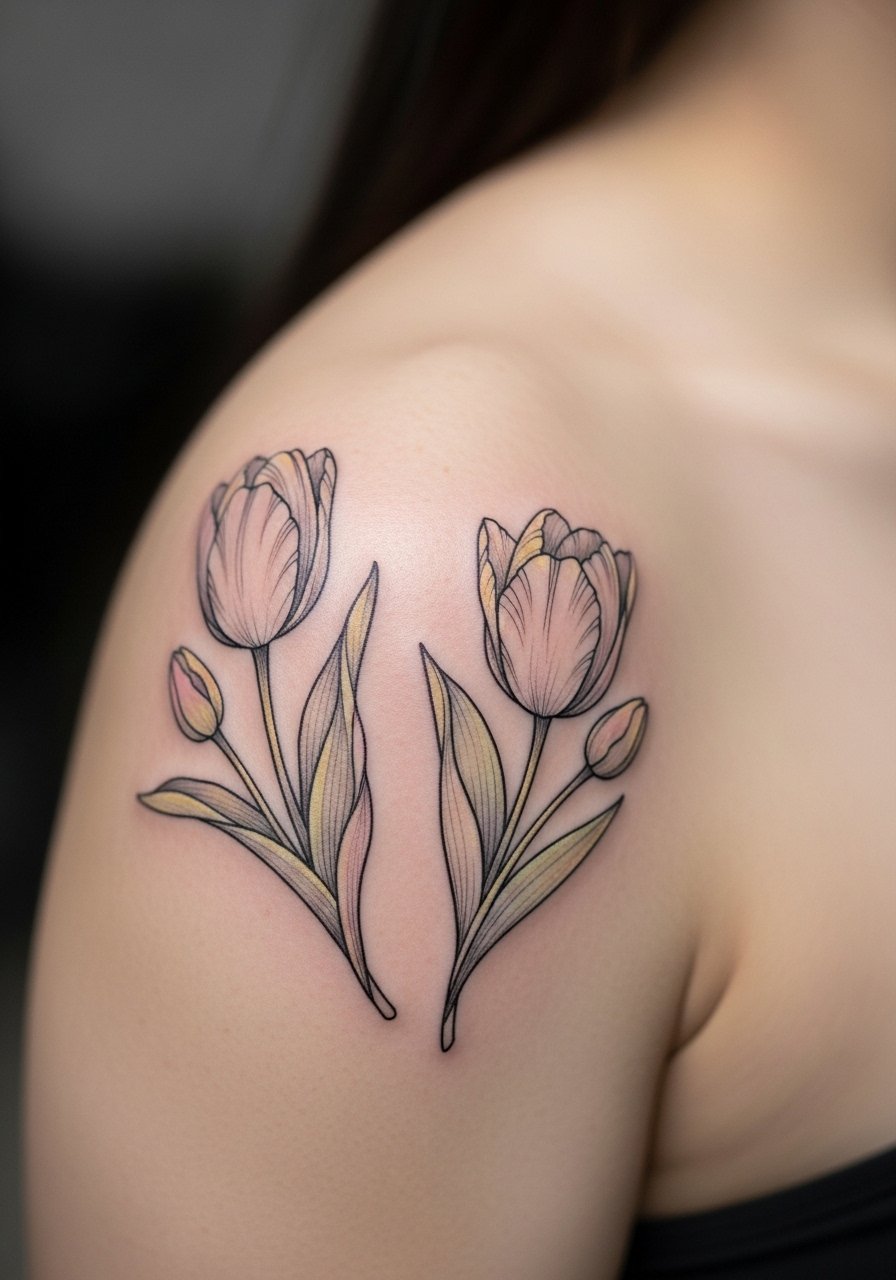
Two tulips in different heights create a poetic asymmetry. Tulips read classic and understated — great if you want floral symbolism without overt complexity.
Style & Design Details
- Tattoo style: Fine-line illustrative with minimal color
- Recommended size: 2–4 inches combined
- Best placements: Shoulder cap, along clavicle, inner bicep
- Color vs. blackwork: light pastel wash on petals recommended
- Design elements: paired stems, subtle bud details, thin-vein petal lines, small leaf clusters
- Longevity note: Pastels need care; thin linework should be kept protected
- Who it suits: those who want symbolic florals, romantic aesthetics
Finding the Right Artist
Book someone experienced with fine-line florals and color washes. Ask for healed photos and discuss pigment choices for your skin tone.
Aftercare & Healing Tips
Use a fragrance-free soap and apply thin layers of Hustle Butter Deluxe or Tattoo Goo. Avoid vigorous activity that causes heavy sweating for 48 hours.
- Petite Anemone with Lace Dots Over the Shoulder Cap
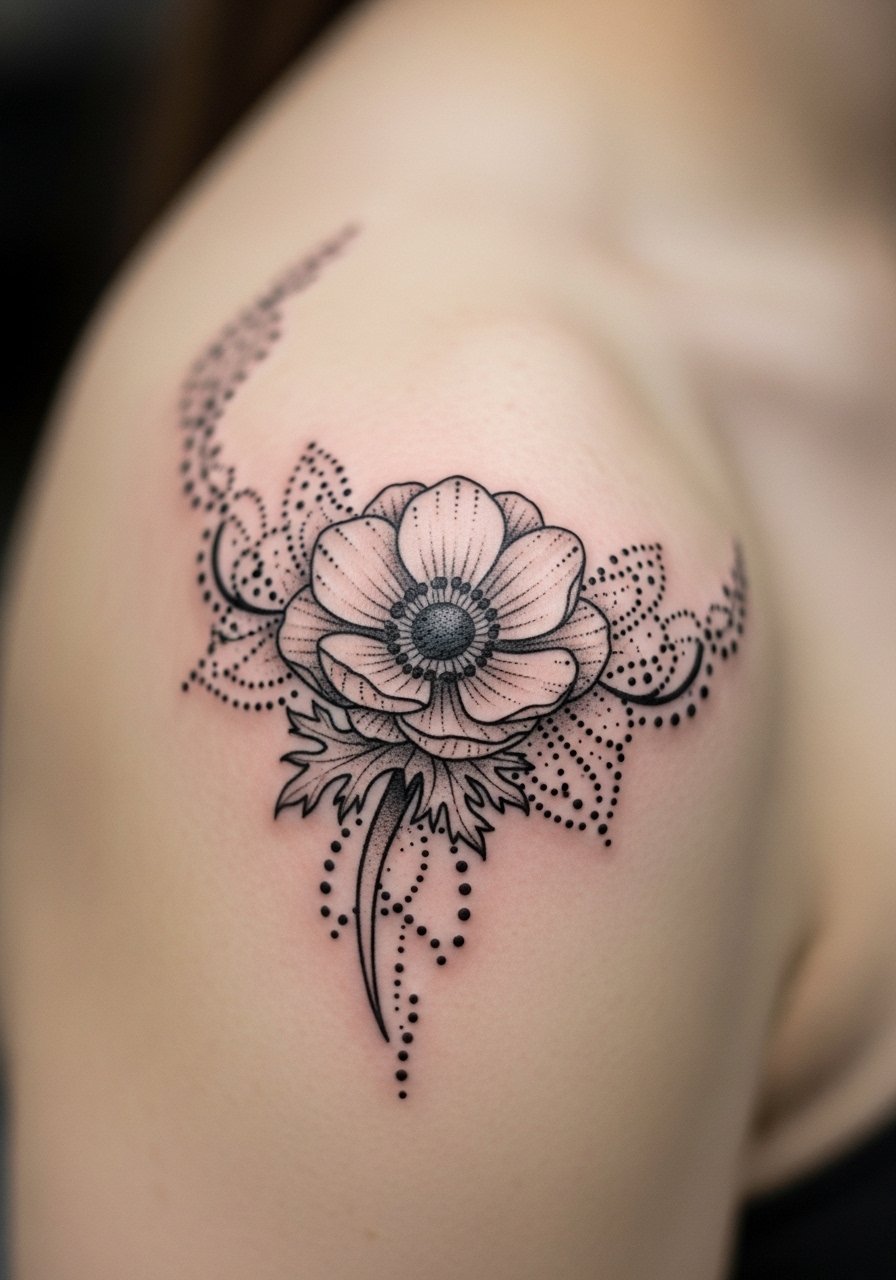
Anemones have a graphic center and soft petals that work beautifully with dot-lace accents. The dotwork adds a delicate texture that feels both feminine and modern.
Style & Design Details
- Tattoo style: Blackwork with dotwork accents
- Recommended size: 2–3 inches
- Best placements: Shoulder cap, outer chest, arm cuff
- Color vs. blackwork: bold black center with negative space petals
- Design elements: stippled lace, bold center disk, petal negative space, tiny filigree
- Longevity note: Dotwork holds well if not over-saturated
- Who it suits: modern minimalists, those wanting a decorative focal point
Finding the Right Artist
Find portfolios showing dense stippling done consistently. Ask how they control dot density to avoid a muddy patch. An experienced dotwork artist is recommended.
Aftercare & Healing Tips
Dotwork scabs can appear denser; follow wrap guidance and keep moisturized with a fragrance-free lotion like Lubriderm. Schedule a touch-up if dots soften.
- Japanese-Inspired Cherry Blossom Spray Across the Shoulder Cap
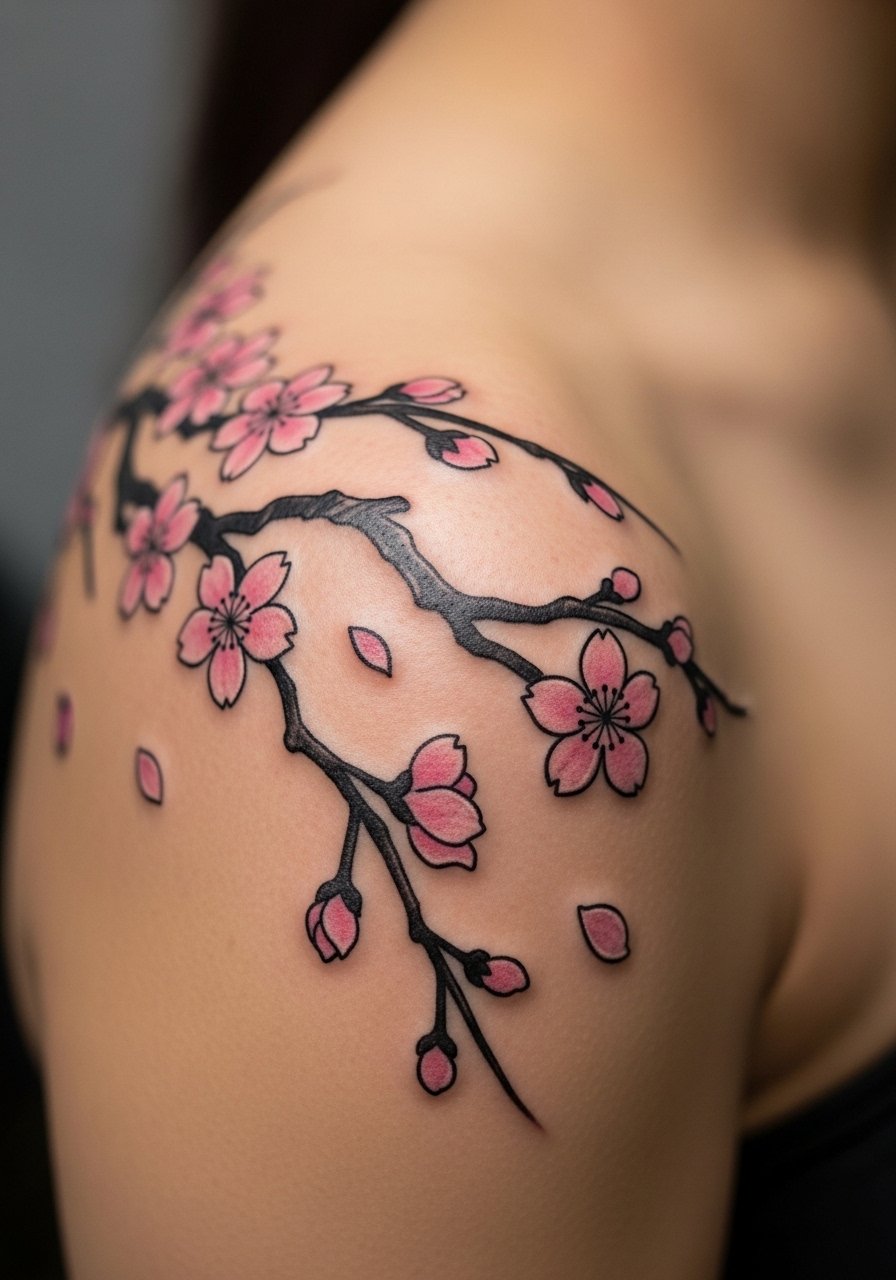
Cherry blossoms bring cultural nods and soft, fleeting beauty to the shoulder cap. The cascading petal motif flatters movement and looks gorgeous with kimono-style or off-shoulder garments.
Style & Design Details
- Tattoo style: Neo-Japanese / illustrative
- Recommended size: 4–7 inches cascade
- Best placements: Shoulder cap to upper back, shoulder-to-chest sweep
- Color vs. blackwork: soft pinks over black branches
- Design elements: slender branches, falling petals, subtle shading, stylized cloud motifs optional
- Longevity note: Pink tones fade faster; outline helps keep silhouette
- Who it suits: fans of Eastern tattoo aesthetics, romantic looks
Finding the Right Artist
Look for artists trained in Japanese floral work or illustrative sakura pieces. Ask about pigment layering and how they’ll retain delicate petal edges.
Aftercare & Healing Tips
Use Saniderm early if recommended and then keep moisturized with an unscented lotion. For long-term color preservation, use SPF 50 once healed.
- Botanical Script Wreath Framing the Shoulder Cap
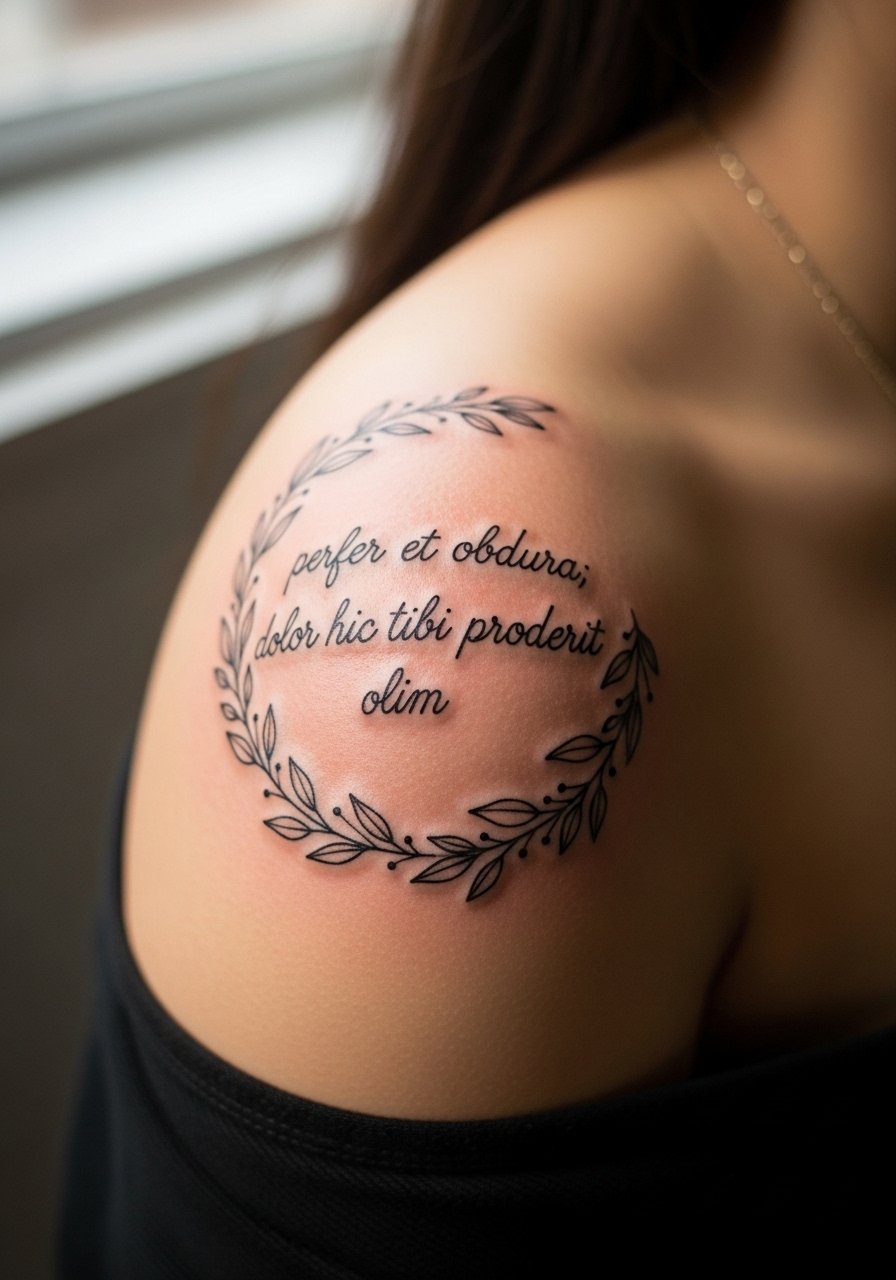
Combine script and florals with a wreath that arcs around the shoulder cap. Use a single word or name integrated into the botanical curve for a personal touch.
Style & Design Details
- Tattoo style: Illustrative + script
- Recommended size: 3–6 inches depending on script length
- Best placements: Shoulder cap arc, collarbone, chest curve
- Color vs. blackwork: black script with fine botanical linework
- Design elements: cursive script, leaf clusters, negative space wreath, subtle ligatures
- Longevity note: thin script is vulnerable to blurring; size matters for legibility
- Who it suits: sentimental people, memorial pieces, those who like text-floral combos
Finding the Right Artist
Ensure the artist writes clean, legible cursive and has experience integrating text with imagery. Ask for stencil previews to confirm spacing.
Aftercare & Healing Tips
Keep lines clear with diligent hygiene. Use a gentle antibacterial soap and thin application of Hustle Butter Deluxe. Wait 8–12 weeks before re-evaluating legibility for touch-ups.
- Bright Poppy Accent at the Shoulder Cap Apex
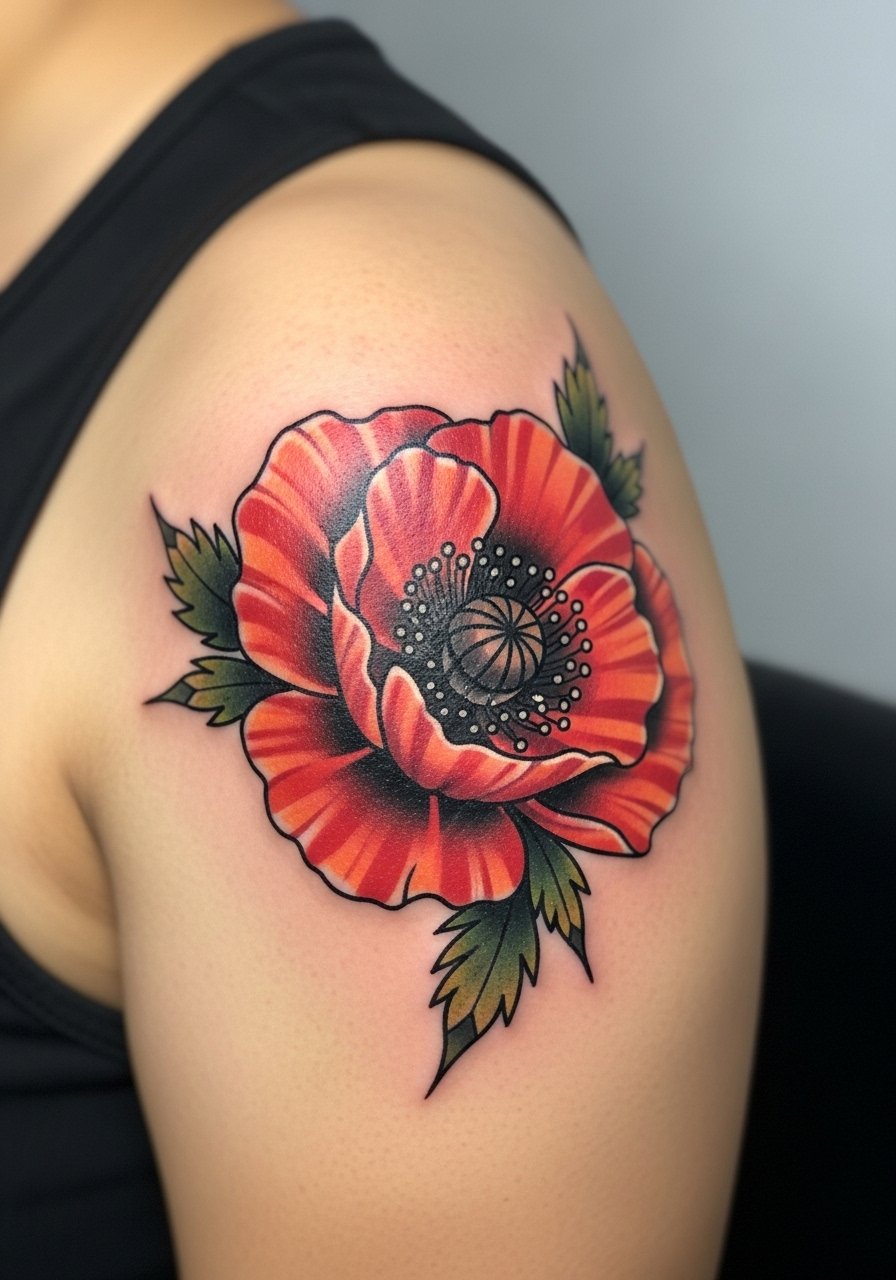
A poppy is bold yet feminine. Centered at the shoulder cap apex, it reads like a colorful gem. The saturated petals contrast with skin tone and look striking from any angle.
Style & Design Details
- Tattoo style: Illustrative color realism
- Recommended size: 3–5 inches
- Best placements: Shoulder cap apex, upper arm, scapula
- Color vs. blackwork: vivid colors recommended for poppy petals
- Design elements: layered petals, deep center contrast, light petal veining, subtle shadowing
- Longevity note: Reds and oranges can blur and fade; touch-ups may be needed
- Who it suits: bold personalities, color collectors
Finding the Right Artist
Pick an artist known for saturated color and smooth blending. Ask about red pigment choices and allergy history. An experienced color tattooist is best.
Aftercare & Healing Tips
Use Saniderm initially if advised. After removal, apply a thin layer of Tattoo Goo and avoid direct sun while healing. Plan for a color touch-up if pigments settle less vibrant than expected.
- Delicate Magnolia Cradle Sitting on the Shoulder Cap
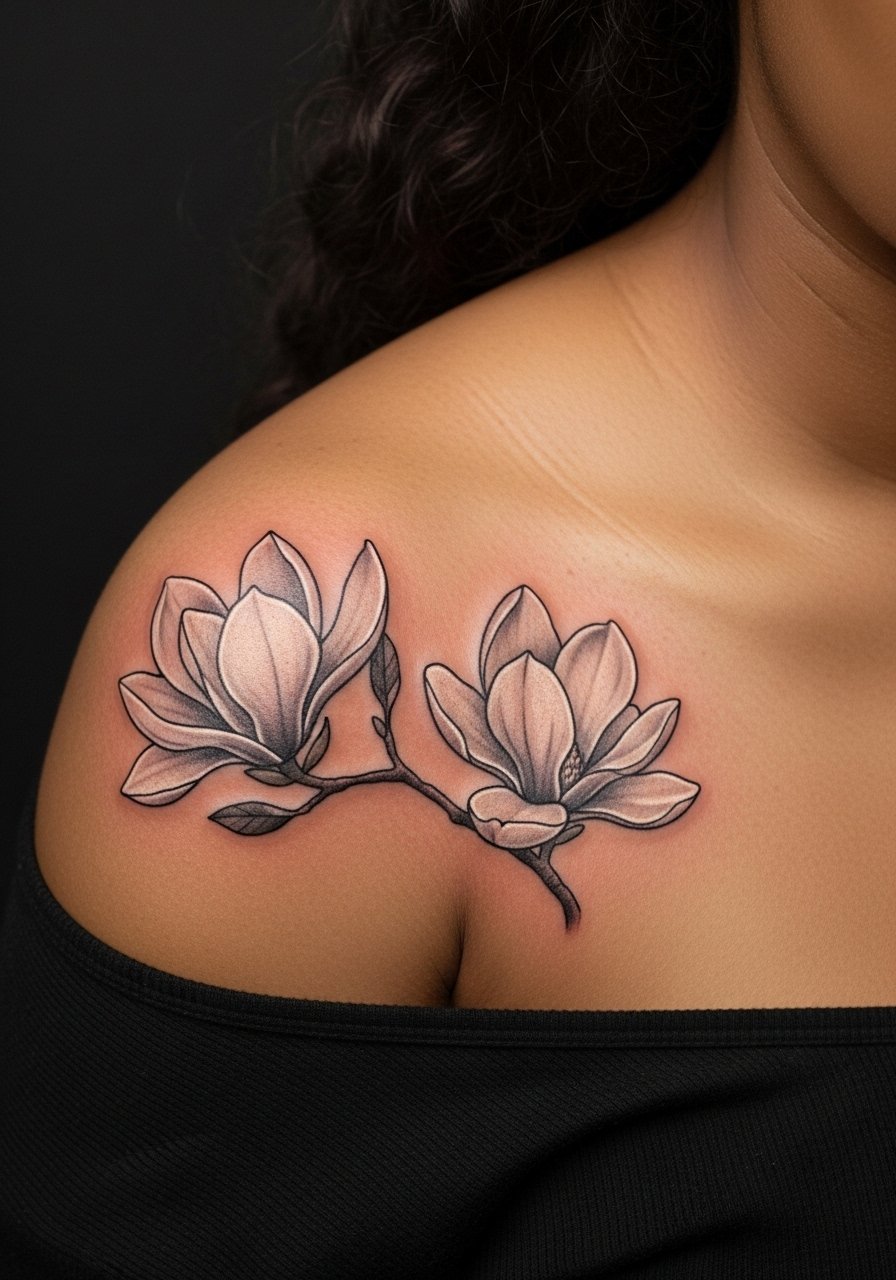
Magnolias read classic and soft. Large, creamy petals make for a gentle statement that pairs well with neutral wardrobes and jewelry.
Style & Design Details
- Tattoo style: Realistic illustrative
- Recommended size: 3–6 inches
- Best placements: Shoulder cap, upper chest, near the collarbone
- Color vs. blackwork: soft neutrals and gray shading for petal depth
- Design elements: layered large petals, subtle vein lines, soft shadow base, small bud accents
- Longevity note: Light colors may need top-ups; strong outlines help retain silhouette
- Who it suits: people seeking graceful, feminine florals
Finding the Right Artist
Choose someone with floral realism experience. Ask about pigment layering and how they plan to render light petals against your skin tone.
Aftercare & Healing Tips
Gray/white shading can fade; follow aftercare carefully with unscented lotion. Use an SPF 50 stick post-healing to prevent premature yellowing of whites.
- Midsized Mixed Bloom Cluster With Negative Space
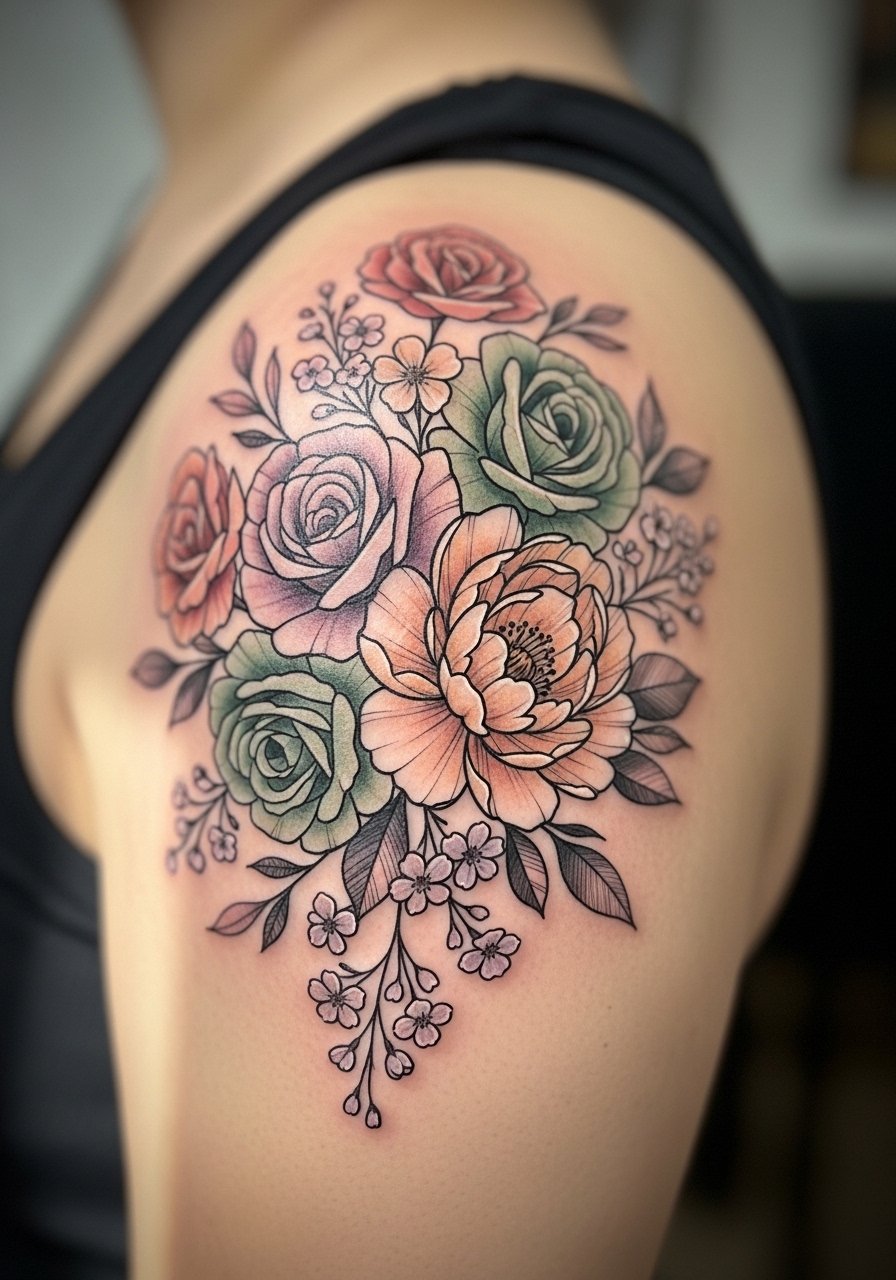
A mixed cluster lets you combine favorites—ranunculus, anemone, and small leaves—while using negative space to keep the piece airy. It’s a versatile option that’s easy to expand into a sleeve later.
Style & Design Details
- Tattoo style: Illustrative with negative-space
- Recommended size: 3–5 inches cluster
- Best placements: Shoulder cap, upper arm wrap, front chest
- Color vs. blackwork: combination of black line and muted washes
- Design elements: overlapping petals, intentional blank areas, light shading, small filler leaves
- Longevity note: Contrast lines and negative space age well; colored washes may need retouching
- Who it suits: those wanting mix-and-match florals and future expandability
Finding the Right Artist
Look for portfolios with mixed-bloom clusters and healed photos. Ask how they’ll balance negative space to prevent filling-in over time.
Aftercare & Healing Tips
Keep the area protected and moisturized with Hustle Butter Deluxe and use Saniderm early if recommended. Expect minor touch-ups for color settling.
- Crescent Moon and Floral Accent Draped Over the Shoulder Cap
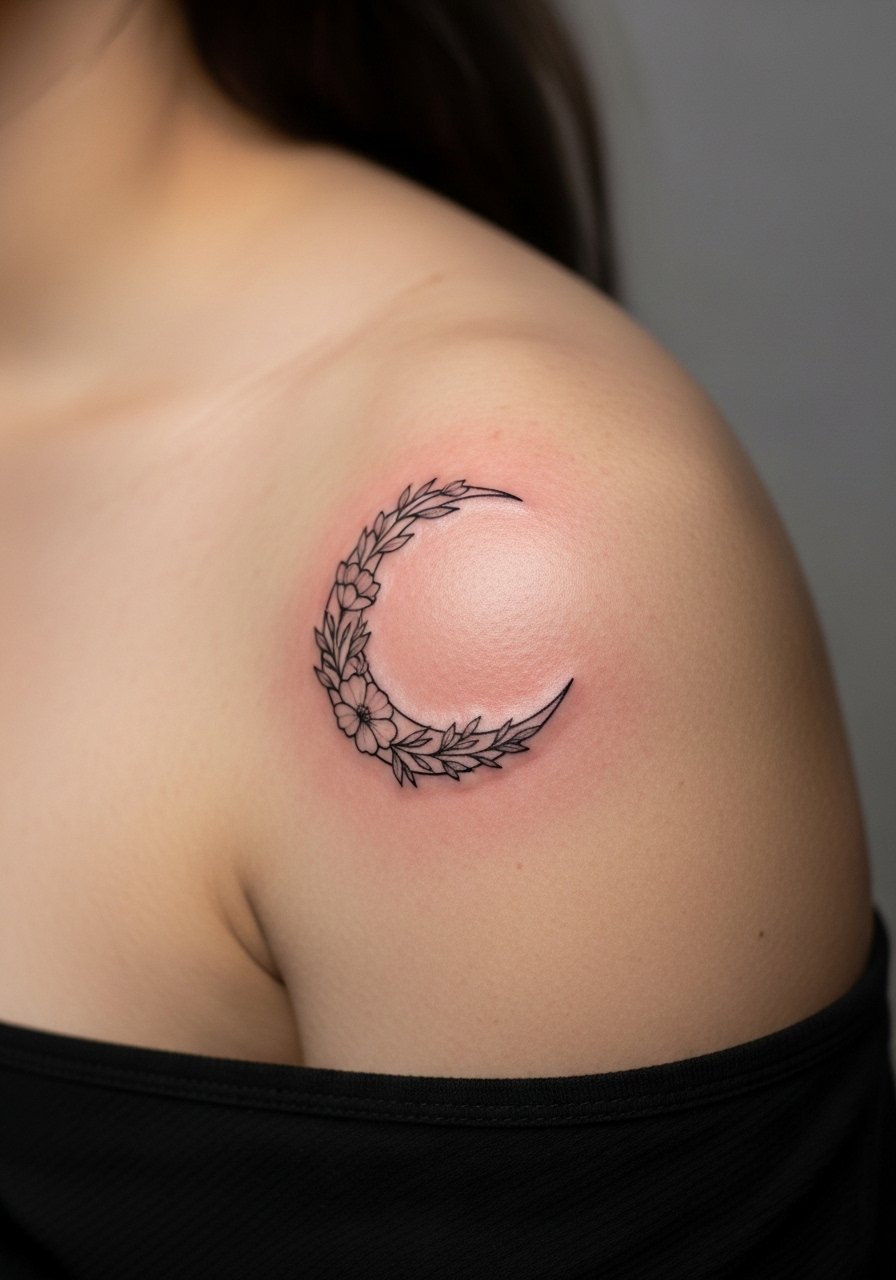
Merging celestial and botanical motifs gives a gentle mystical vibe. A crescent moon decorated with sprigs and tiny blooms hugs the shoulder cap in a poetic curve.
Style & Design Details
- Tattoo style: Minimal illustrative with symbolic elements
- Recommended size: 2.5–4 inches
- Best placements: Shoulder cap, upper back, collarbone arc
- Color vs. blackwork: blackwork with optional tiny blush accents
- Design elements: crescent outline, small floral clusters, dot accents, faint shadowing
- Longevity note: Simple lines and small details age predictably; protect with SPF
- Who it suits: lovers of subtle symbolism, boho and mystical aesthetics
Finding the Right Artist
Search for artists who do delicate symbolic pieces and healed celestial/botanical combos. Ask to see prior moon-floral work.
Aftercare & Healing Tips
Keep clean with fragrance-free soap, apply thin layers of Hustle Butter Deluxe, and protect from friction and sun during healing. Long-term, use a high-SPF stick when exposed.
Which of these 20 floral shoulder cap tattoo ideas fits your aesthetic — a tiny lavender sprig, bold poppy, or a watercolor peony? Save this guide to bring to your consultation and pin your favorites for easy reference. If you want a softer session, try applying Zensa numbing cream before longer sittings, and consider pre-ordering a Saniderm bandage roll so it’s ready after your appointment.
Honestly, buying an aftercare kit like Hustle Butter Deluxe and a high-SPF tattoo sunscreen stick ahead of your session removes one small stress on healing day. Which style are you leaning toward, and where on the shoulder cap do you picture it sitting? Pin this and bring your favorites to your artist — they’ll help fine-tune scale and flow for your body.