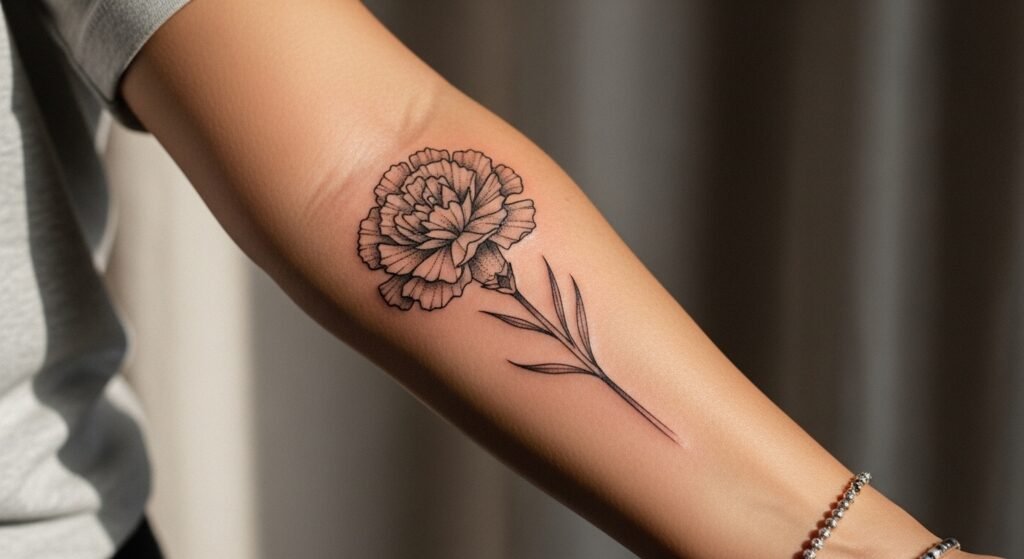
Sitting in a consultation, scrolling late-night, or finally deciding to book that appointment — the black and grey carnation flower tattoo idea has been on your mind for a reason. Carnations read as romantic, moody, and quietly bold when done in grayscale. Whether you want a whisper-thin fine line bloom or a dramatic blackwork spray across the ribs, these designs translate beautifully across aesthetics like dark academia, cottagecore, and modern minimalist ink.
Below you'll find 20 carefully chosen concepts that show the carnation's versatility: from single-needle detail to chunky neo-traditional stems. Each entry includes a photo prompt, a short design intro with a product tip, style breakdown, artist guidance, and realistic aftercare notes. I recommend grabbing a roll of Saniderm second-skin bandages for the first few days and, if you get anxious about pain on sensitive placements, try Zensa numbing cream about 45–60 minutes before your session. Save the ideas you love and bring them to your consultation — they'll help you and your artist lock in scale and flow.
- Petite Fine-Line Carnation on the Inner Wrist
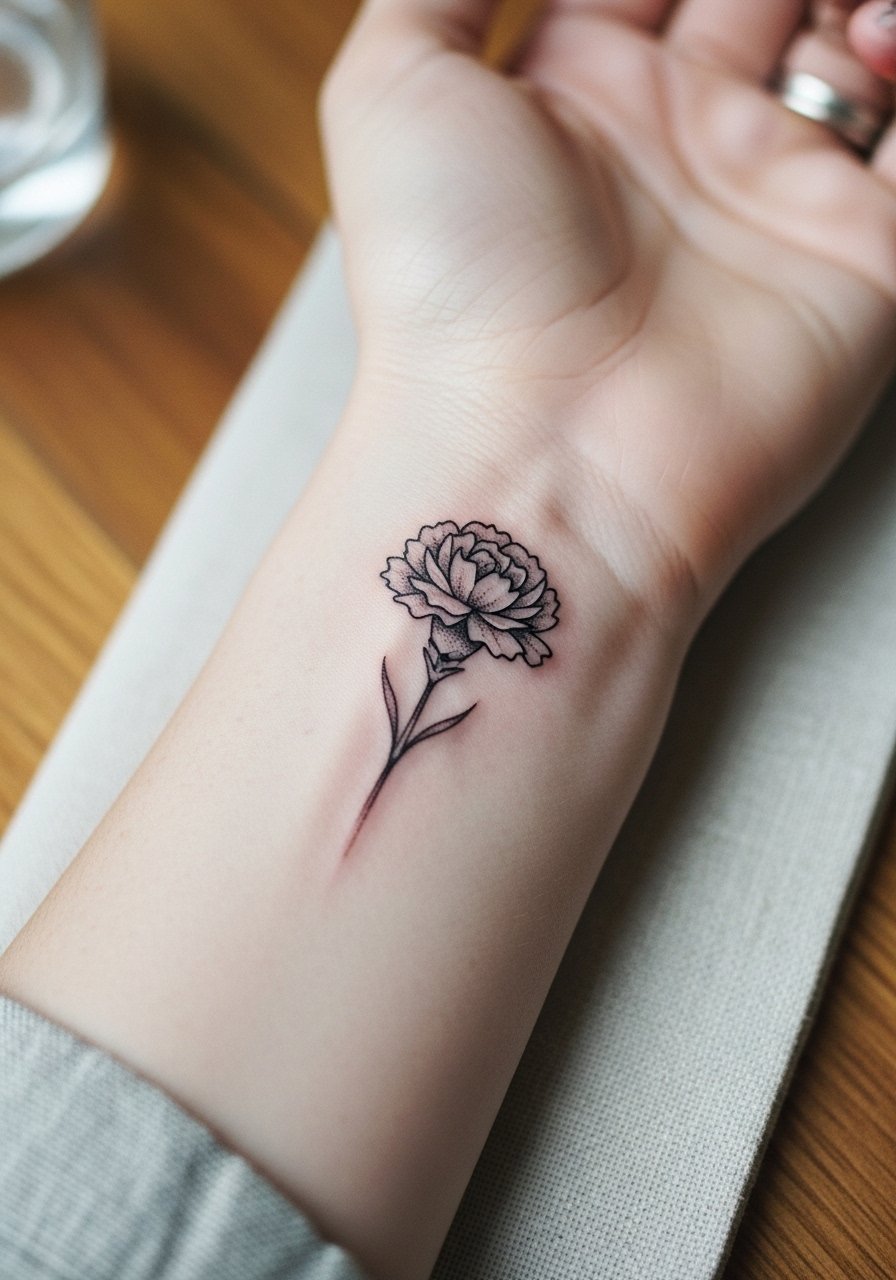
A tiny single-needle carnation sits like a whisper on the inner wrist. This option is perfect if you want subtle symbolism — a keepsake bloom that reads like jewelry. The delicate petals use ultra-fine outlines and light stippling for depth, keeping the piece intentionally minimal. If you're nervous about the sting here, consider applying a thin layer of EMLA-style numbing cream as a prep step for sensitive wrists.
Style & Design Details
- Tattoo style: fine line, single-needle, micro-dot shading
- Recommended size: 1–1.5 inches (palm-sized or smaller)
- Best placement(s): inner wrist (visibility), behind the ear (discreet), inner ankle (low pain)
- Color vs. blackwork: pure black & grey for crispness and longevity
- Design elements: single-needle outline, micro stipple shading, negative space between petals, tiny stem with leaflets, small script date option
- Longevity note: fine lines can blur over years; keep out of direct sun and re-touch when lines soften
- Who it suits: first-timers, minimalists, sentimental wearers
Finding the Right Artist
Look for artists with strong single-needle portfolios and healed photos. Ask about needle gauge, shading speed, and how they scale tiny details. Avoid artists who only post bold neo-traditional work; this look needs a practiced steady hand. An experienced tattooer (not a new apprentice) is best for micro-work. Search Instagram tags like #finelinetattoo and #singleneedle.
Aftercare & Healing Tips
Leave a Saniderm strip on the wrist for 48–72 hours if your artist uses them; wrist movement causes scabbing otherwise. Wash gently with a fragrance-free soap and pat dry. Switch to a thin layer of unscented Lubriderm during peeling. Avoid bracelets or watches until healed to prevent rubbing.
- Moody Half-Sleeve Carnation Bunch in Blackwork
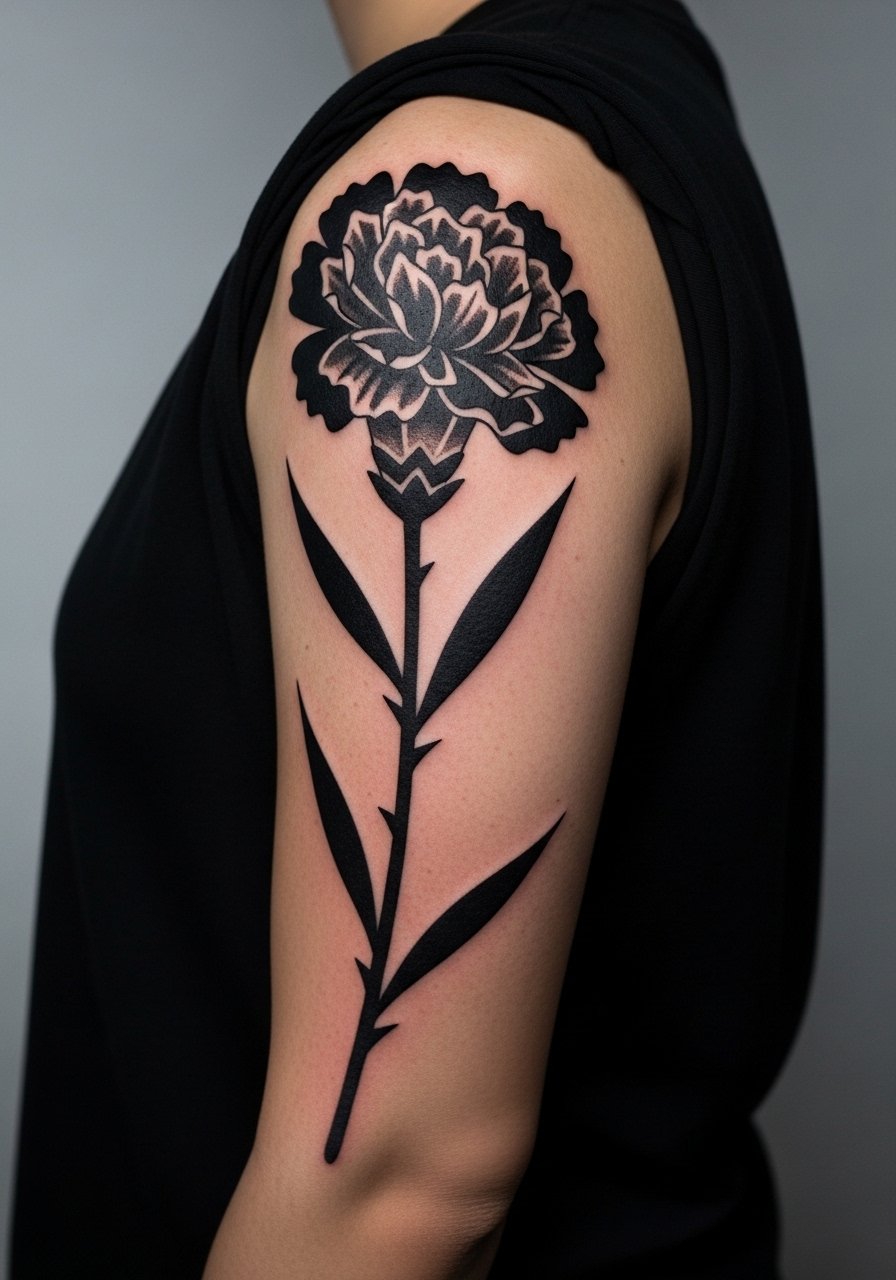
If you love gothic or dark academia vibes, a blackwork carnation bunch brings drama. This design uses large solid blacks and carved negative space to make the petals pop. It’s striking from afar and crisp up close. For longer sessions on the arm, bring a long-lasting unscented lotion like Hustle Butter Deluxe to keep skin supple between breaks.
Style & Design Details
- Tattoo style: blackwork, bold contrast, negative space carving
- Recommended size: palm-sized to half-sleeve depending on coverage
- Best placement(s): outer/inner upper arm, forearm wrap, thigh for more coverage
- Color vs. blackwork: full black strengthens the moody look and ages well
- Design elements: heavy fills, negative petal shapes, dot gradients, ornamental leaves, optional ornamental linework frames
- Longevity note: solid blacks often hold best; careful sun protection keeps contrast longer
- Who it suits: collectors, gothic aesthetic fans, people who want visible bold ink
Finding the Right Artist
Research artists who post healed blackwork sleeves; check for clean edges and consistent saturation. Ask how they plan session pacing — large fills can be painful and need breaks. Avoid artists who overuse greywashing for this look. Shops with established portfolios and sterilization protocols are ideal.
Aftercare & Healing Tips
Blackwork builds a lot of scabbing potential. Expect tightness days 1–5, then peeling. Keep the area moisturized with a fragrance-free lotion and avoid soaking for two weeks. Use SPF 50 once healed to prevent black from turning grey over time.
- Single-Stem Realistic Carnation on the Ribcage
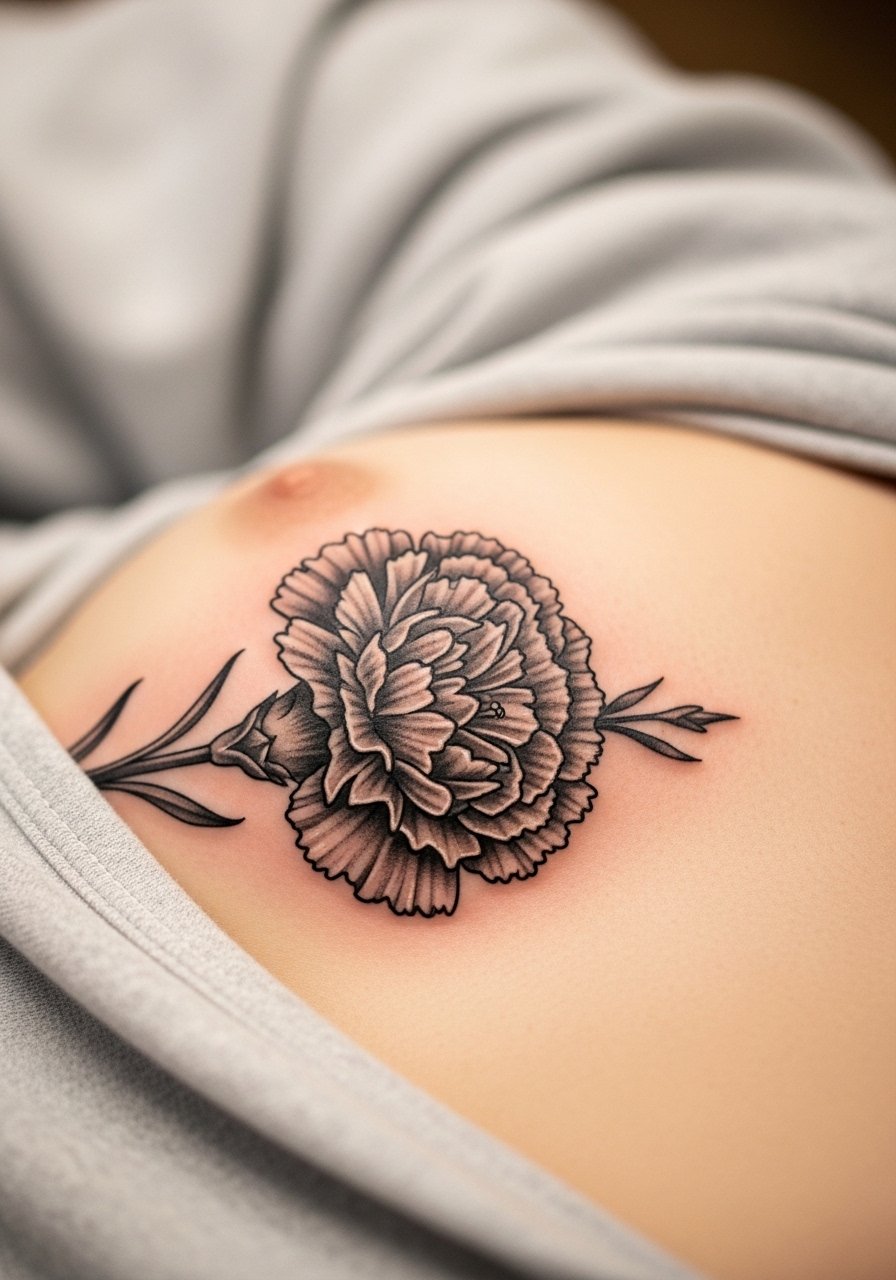
A single realistic carnation curving with the ribcage looks sensual and intimate. The natural shading follows body contours, giving the bloom motion. Rib pieces rank higher on the pain scale, so a pre-appointment Zensa numbing cream can help if you're nervous. This placement ages elegantly if you avoid heavy sun and weight fluctuation.
Style & Design Details
- Tattoo style: realistic/illustrative, soft greywash shading
- Recommended size: 4–8 inches to capture petal texture
- Best placement(s): ribcage, side torso, sternum for body-hugging flow
- Color vs. blackwork: soft black & grey for realistic depth and skin-tone harmony
- Design elements: layered petals, soft gradient greywash, subtle vein lines, long curving stem, light background stippling
- Longevity note: realistic greywash needs occasional refresh to keep mid-tones
- Who it suits: people seeking feminine, intimate pieces; those comfortable with rib pain
Finding the Right Artist
Choose someone known for black-and-grey realism. Look for healed rib photos to judge how the shading settles with movement. Ask about contrast planning and needle groupings for smooth grey-wash. An experienced artist is crucial; realism is not beginner work.
Aftercare & Healing Tips
Rib tattoos flex with breathing; expect more scabbing in first week. Use Saniderm for 2–3 days if recommended, then switch to a fragrance-free lotion. Avoid tight clothing that rubs the area. Return for touch-ups after 3–6 months if midtones soften.
- Delicate Carnation Behind the Ear — Minimalist Chic
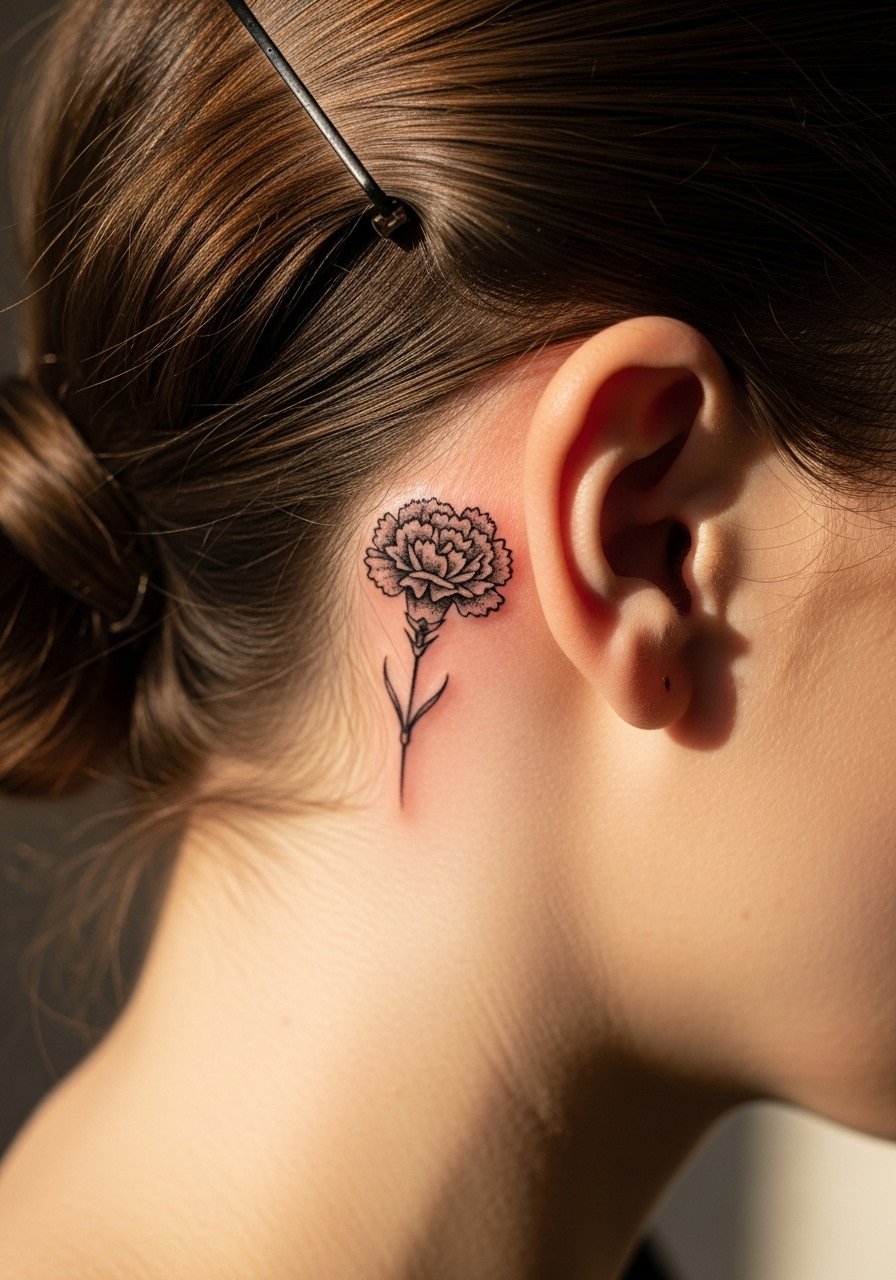
Tiny behind-ear carnations read playful and discreet. They feel like little hidden secrets that peek out only when you tuck hair back. The design keeps linework minimal with light stipple for shadow. This placement is low on visibility but medium on pain due to proximity to bone.
Style & Design Details
- Tattoo style: minimalist, fine line with tiny dot shading
- Recommended size: 0.8–1.5 inches
- Best placement(s): behind ear, nape of neck, behind collarbone for subtlety
- Color vs. blackwork: black & grey keeps it refined and ages well in small scales
- Design elements: slim stem, simplified petals, small leaf sprig, tiny negative-space highlights
- Longevity note: small lines can blur with time; opt for slightly bolder lines if you want longevity
- Who it suits: minimalists, first-timers, people wanting discreet ink
Finding the Right Artist
Find artists who specialize in ear or small-scale tattoos; healed photos matter more than flash. Ask how they plan to scale the design to avoid loss of petal detail. An artist comfortable with quick precision work is ideal.
Aftercare & Healing Tips
Keep hair and hair products away from the fresh tattoo. Clean twice daily with mild soap and pat dry. Use a thin layer of unscented lotion until healed. Avoid sleeping on that side for the first week to minimize irritation.
- Neo-Traditional Carnation with Ornamental Linework
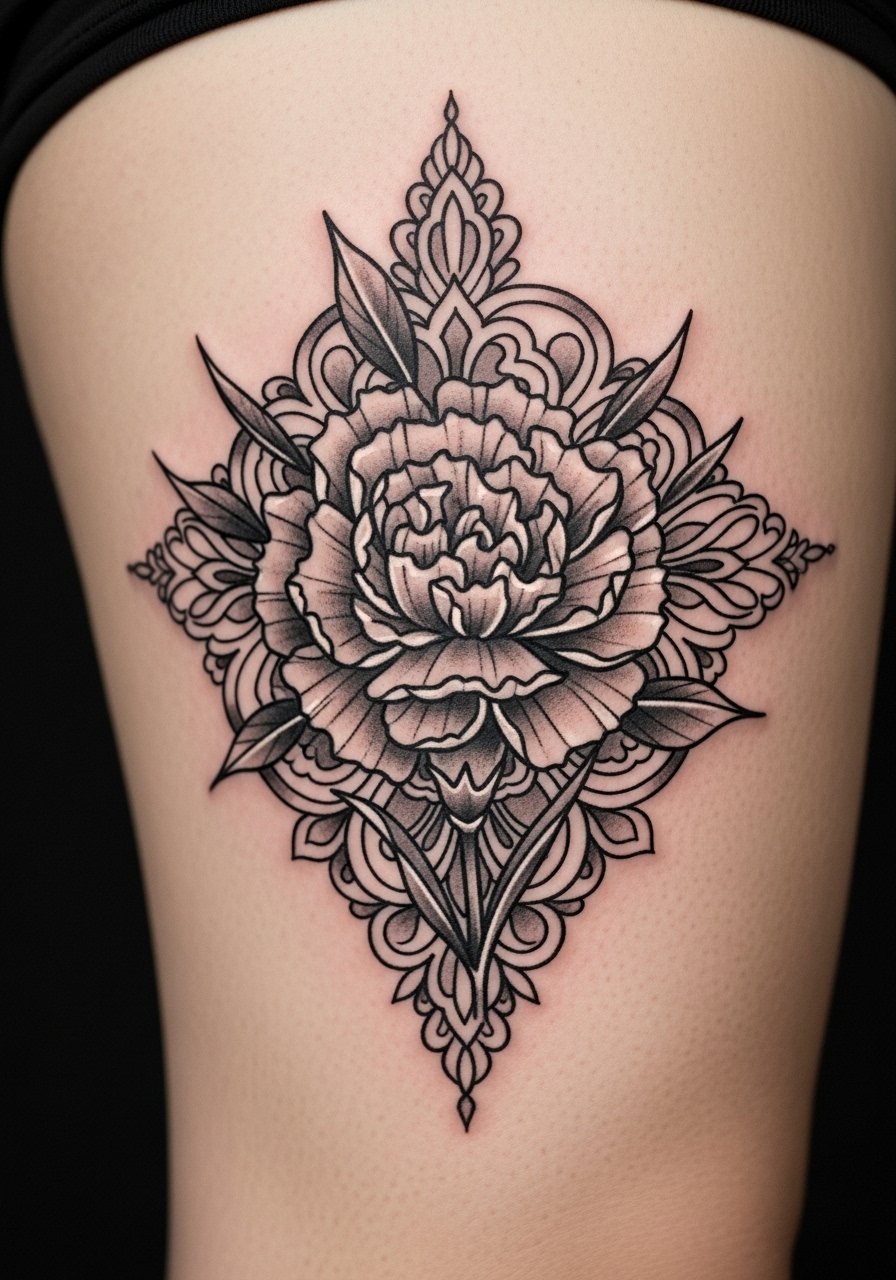
A neo-traditional carnation mixes bold outlines with decorative filigree. It bridges classic flash energy with modern greywash depth. The ornamental lines add a vintage jewelry feel — great if you like statement pieces that read well from a distance. Bring an unscented lotion like Aveeno fragrance-free to keep the area comfortable between sessions.
Style & Design Details
- Tattoo style: neo-traditional, bold outline with illustrative shading
- Recommended size: palm-sized to thigh panel (3–6 inches)
- Best placement(s): thigh, upper arm, calf for larger canvases
- Color vs. blackwork: black & grey enhances the ornamental vibe and keeps it moody
- Design elements: thick outline, greywash fills, filigree frames, dotwork background, banner option for lettering
- Longevity note: outlines hold well; shading may require periodic touch-ups in high-friction spots
- Who it suits: lovers of vintage flash, statement-seekers, collectors
Finding the Right Artist
Pick an artist experienced in neo-traditional black & grey. Their portfolio should show clean lineweights and smooth gradient fills. Ask about how they plan to balance bold outlines with delicate filigree so neither muddies. A mid-to-advanced artist is recommended.
Aftercare & Healing Tips
Thigh or calf placements tolerate sheets friction — avoid rough fabrics while healing. Clean regularly, moisturize lightly, and avoid long hot baths. After healing, use SPF if the piece sees sun to retain crisp contrast.
- Single-Petal Minimal Carnation Finger Tattoo
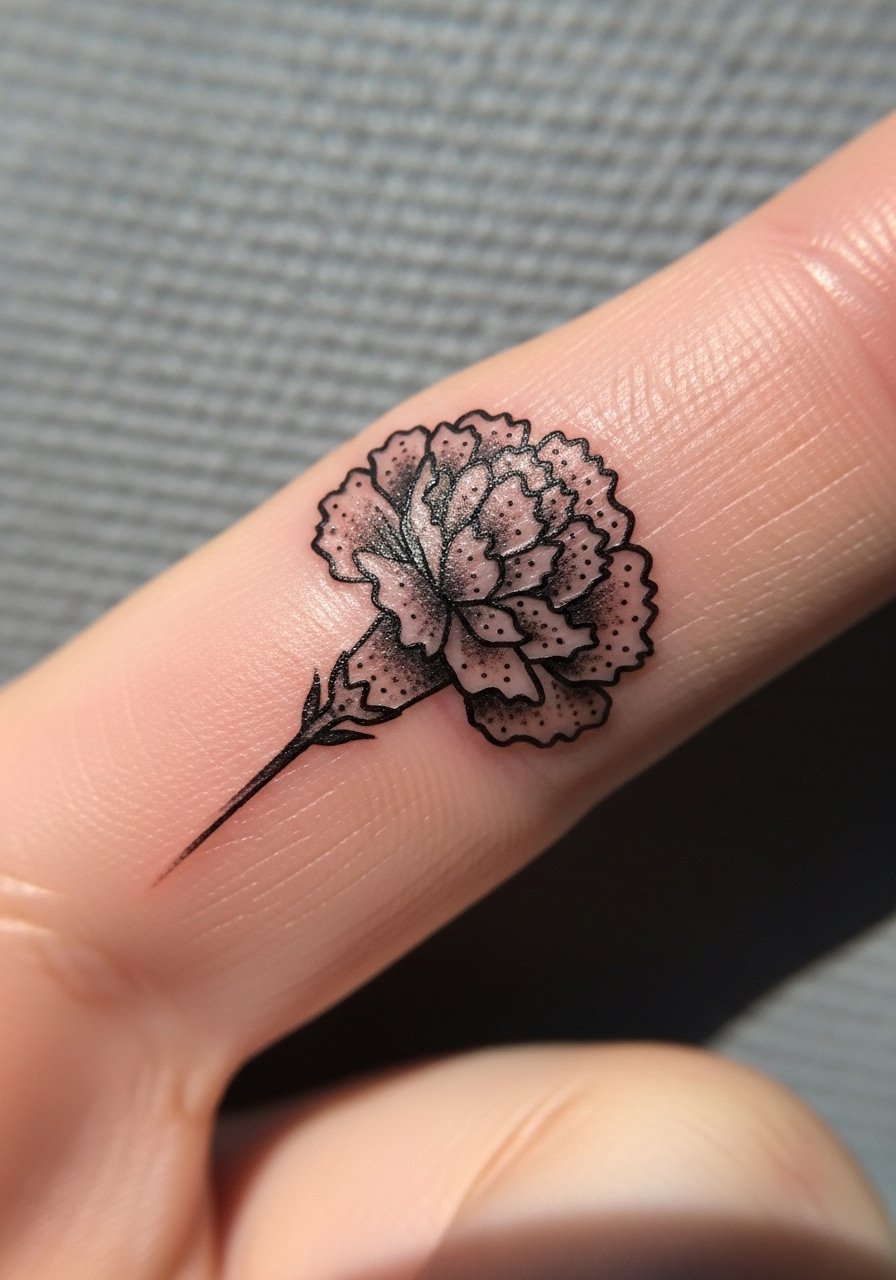
A micro single-petal on the finger is delicate and intimate. Fingers are notorious for fading, so expect yearly refreshes. This is ideal if you want tiny, symbolic ink you can show off with rings. For initial care, be aware of high washing frequency — carry a small bottle of fragrance-free soap if you travel.
Style & Design Details
- Tattoo style: micro/minimal, single-needle tiny motif
- Recommended size: under 1 inch
- Best placement(s): finger side, knuckle, between fingers for discreet charm
- Color vs. blackwork: black & grey only — color fades faster on hands
- Design elements: tiny petal curve, micro dot shadow, short stem tick, tiny negative crescent for highlight
- Longevity note: finger tattoos fade fastest; plan for touch-ups annually
- Who it suits: people who like micro tattoos, ring-wearers, trend followers
Finding the Right Artist
Select an artist who posts hand and finger healed photos. Ask about their technique for preventing blowout on thin skin. Avoid artists who use too wide a needle grouping for this small work.
Aftercare & Healing Tips
Expect scabbing and faster fading. Keep washing to a minimum beyond hygiene needs and moisturize lightly. Avoid submerging hands in water for long periods for two weeks. Plan for a touch-up around 6–12 months.
- Black and Grey Carnation Flower Tattoo Sleeve Accent
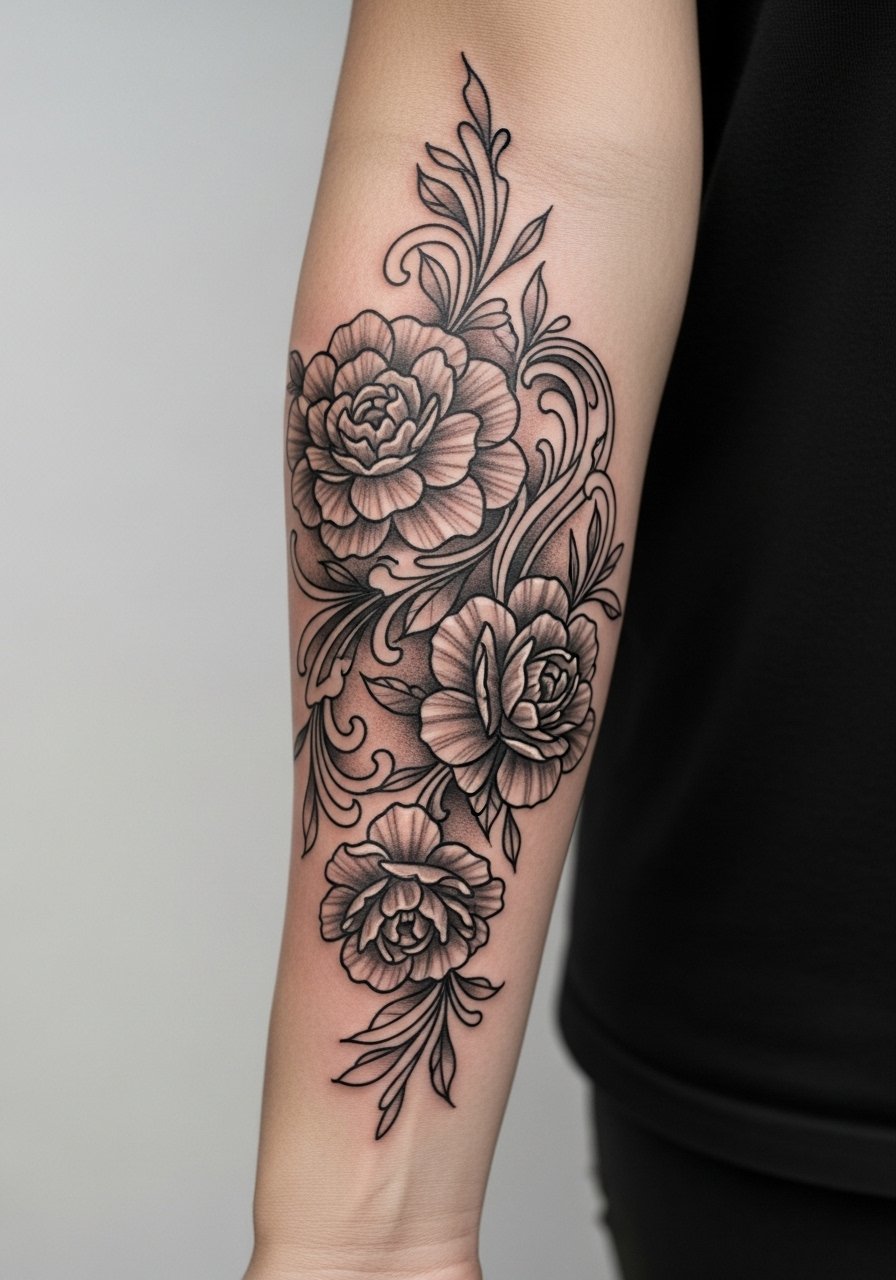
If you're building a botanical sleeve, carnation clusters make sophisticated accents. They can tie in with leaves, moths, or vintage frames to create cohesive narrative sleeves. This piece uses mid-tone greys to separate layers without losing the moody palette. For long sessions, pack unscented lotion and snacks; sleeves take time.
Style & Design Details
- Tattoo style: illustrative sleeve, layered greywash and linework
- Recommended size: full forearm to full sleeve, scaled to flow with existing pieces
- Best placement(s): forearm, full sleeve, half sleeve integrated with other motifs
- Color vs. blackwork: black & grey keeps sleeve cohesive and versatile
- Design elements: overlapping blooms, vine connectors, background stippling, negative-space breaks, optional moths or script
- Longevity note: layered greywash holds well when contrasted with solid linework; sun protection is key
- Who it suits: collectors, people creating themed sleeves, botanical enthusiasts
Finding the Right Artist
Book someone experienced in composition for sleeves; they should sketch full-arm flow maps. Ask how they plan negative space and how many sessions they project. Look for healed sleeve galleries to judge how greys settle across time.
Aftercare & Healing Tips
Sleeves need staged care across sessions. Keep each session wrapped per your artist's protocol. Avoid heavy friction from clothing and use SPF on exposed parts after healing. Hydration and moisture management help prevent flaky patches that obscure shading.
- Gothic Carnation with Script Memorial Tattoo
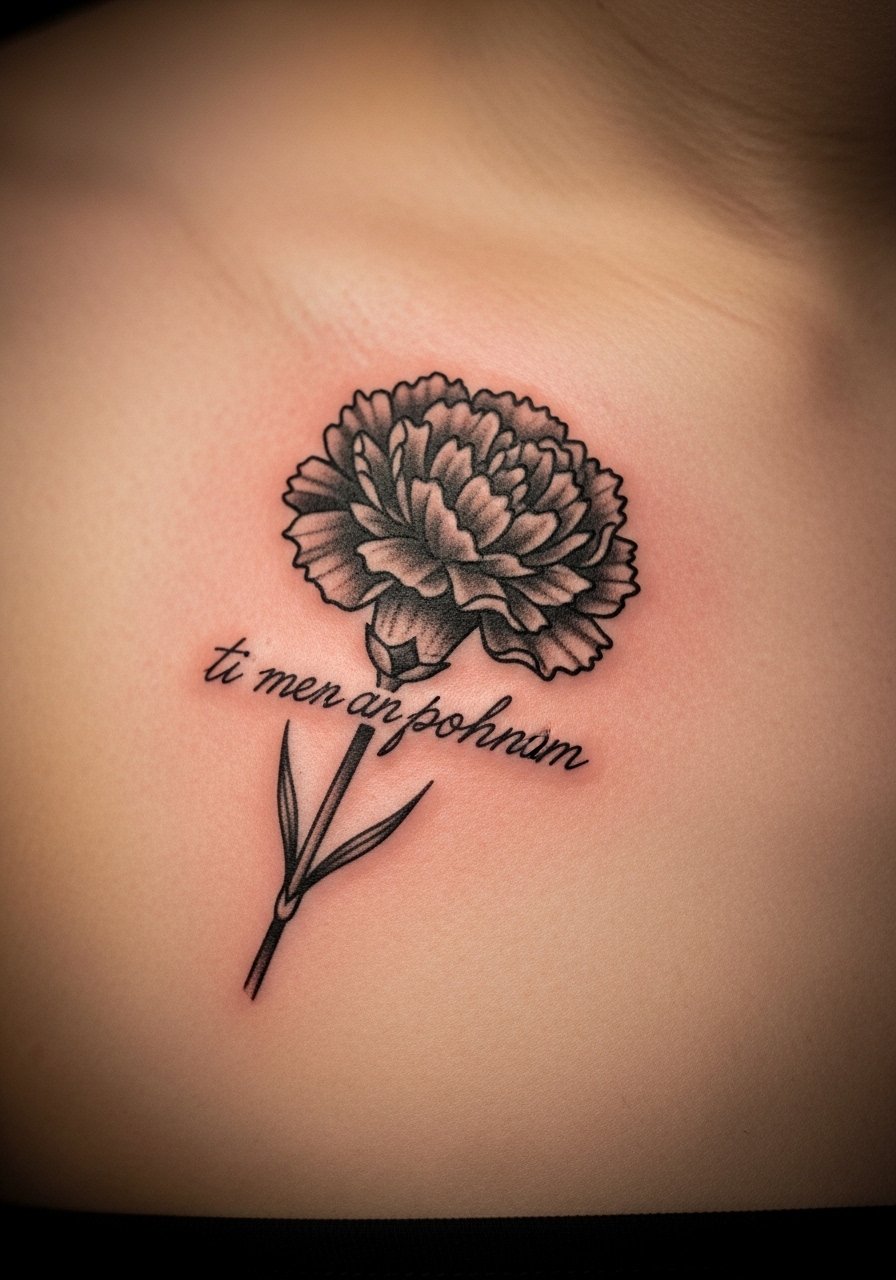
Carnations make thoughtful memorial tattoos, especially when paired with subtle script. This moody black and grey version leans gothic — the petals hold weight and shadow while a small name or date anchors the meaning. For sensitive placements, consider light topical numbing or small-session splits.
Style & Design Details
- Tattoo style: illustrative with script, moody greywash
- Recommended size: 2–5 inches depending on script length
- Best placement(s): collarbone, ribcage, inner forearm for visibility with discretion
- Color vs. blackwork: black & grey preserves solemn tone and reads clearly with lettering
- Design elements: deep petal shading, italic script, negative space, optional halo stippling, thin stems
- Longevity note: script needs crisp edges; avoid overly tiny lettering in aged skin
- Who it suits: memorial seekers, sentimental minimalists, lovers of moody classic looks
Finding the Right Artist
Choose someone who balances lettering and florals. Ask to see examples of small scripts beside greywash florals. Discuss spacing so the script breathes and the flower doesn't overpower it.
Aftercare & Healing Tips
Script areas scar differently; keep them well moisturized. Avoid clothing friction and heavy movement. Return for touch-ups once settled if the lettering softens.
- Stippled Carnation with Geometric Frame
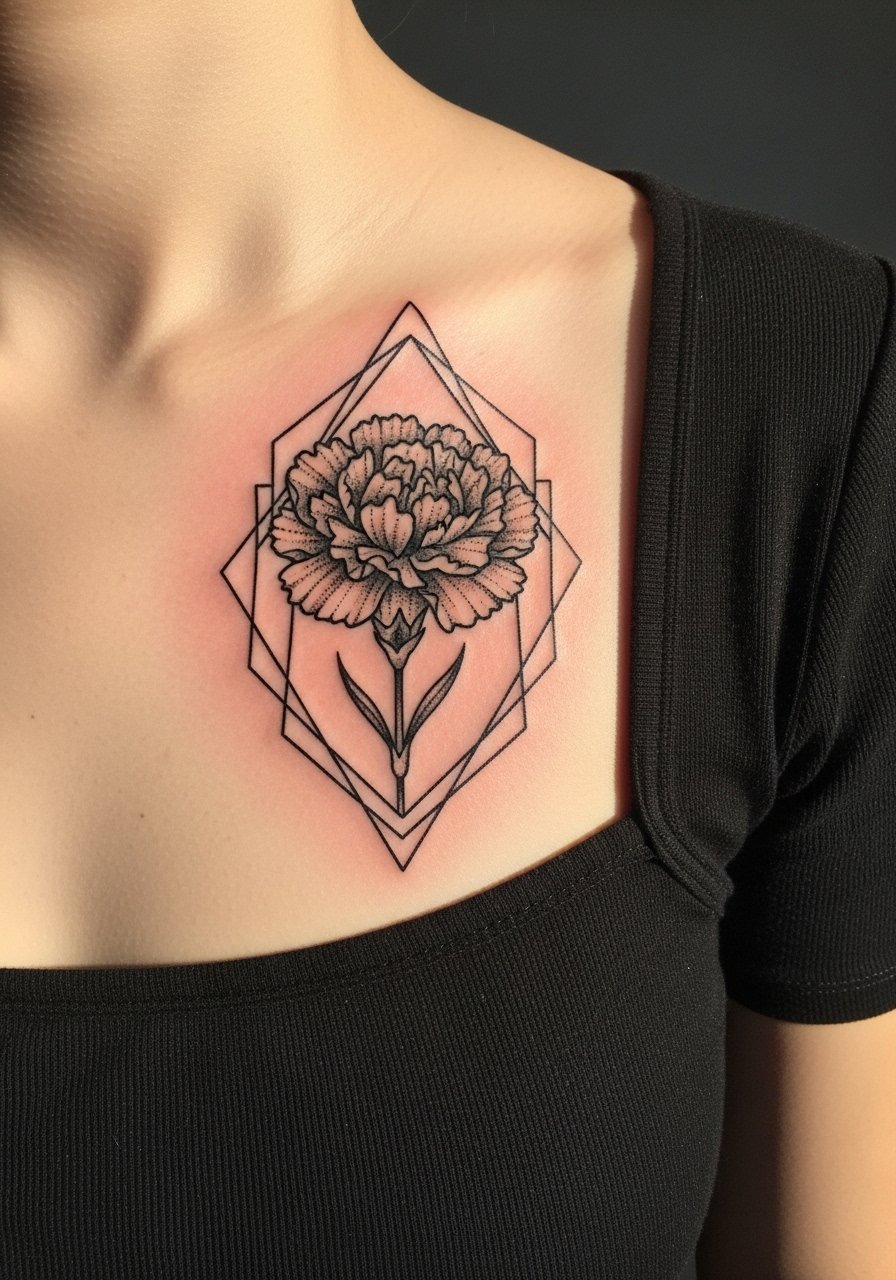
Marry organic petals with crisp geometry for a modern contrast. Stipple shading keeps the carnation soft; the geometric frame adds structure and contemporary edge. This layout works well as a chest or sternum focal point.
Style & Design Details
- Tattoo style: dotwork/geometry, precise stippling and clean lines
- Recommended size: 3–5 inches for frame clarity
- Best placement(s): chest, sternum, upper back between shoulder blades
- Color vs. blackwork: black & grey dotwork gives texture without color noise
- Design elements: stipple gradients, thin geometric border, petal overlap, symmetrical anchors, micro-line stems
- Longevity note: dotwork ages gracefully but can spread slightly; choose an artist with controlled stippling technique
- Who it suits: lovers of graphic design, minimalists who want texture, architectural tastes
Finding the Right Artist
Find artists who showcase stable dotwork across bold and subtle pieces. Ask about needle density for stippling. A mid-to-advanced artist with portfolio examples of geometric+organic work is best.
Aftercare & Healing Tips
Dotwork areas can flake in visible patterns; avoid over-moisturizing early to prevent ink lift. Once healed, keep sunscreen on the frame edges to keep crisp lines sharp.
- Watercolor-Adjacent Greywash Carnation (No Color)

You love the watercolor feel but prefer greyscale. A greywash carnation can give that dreamy bleed effect without color. Light washes of diluted black ink create soft petals as if painted on skin. For this soft technique, an artist's greywash control is crucial.
Style & Design Details
- Tattoo style: greywash (watercolor-adjacent), soft diluted inks
- Recommended size: 3–6 inches to capture washes
- Best placement(s): forearm, side rib, upper back for larger blur areas
- Color vs. blackwork: greywash mimics watercolor but lasts longer than pastel color
- Design elements: soft edge transitions, macro grey gradients, light line anchors, minimal dot accents, splatter-like negative strokes
- Longevity note: soft washes can fade into the skin more than bold lines; SPF and moisturization matter
- Who it suits: people who want painterly looks without color, cottagecore fans
Finding the Right Artist
Choose an artist practiced in greywash and "painterly" tattooing. Ask for healed photos of similar washes and how they layer diluted inks. Avoid artists who only do sharp-lined work.
Aftercare & Healing Tips
Soft washes can look patchy during healing. Follow your artist’s wrap protocol; a brief Saniderm application helps protect delicate washes early. After peeling, moisturize with an unscented lotion and guard from UV.
- Floating Carnation Collarbone Accent
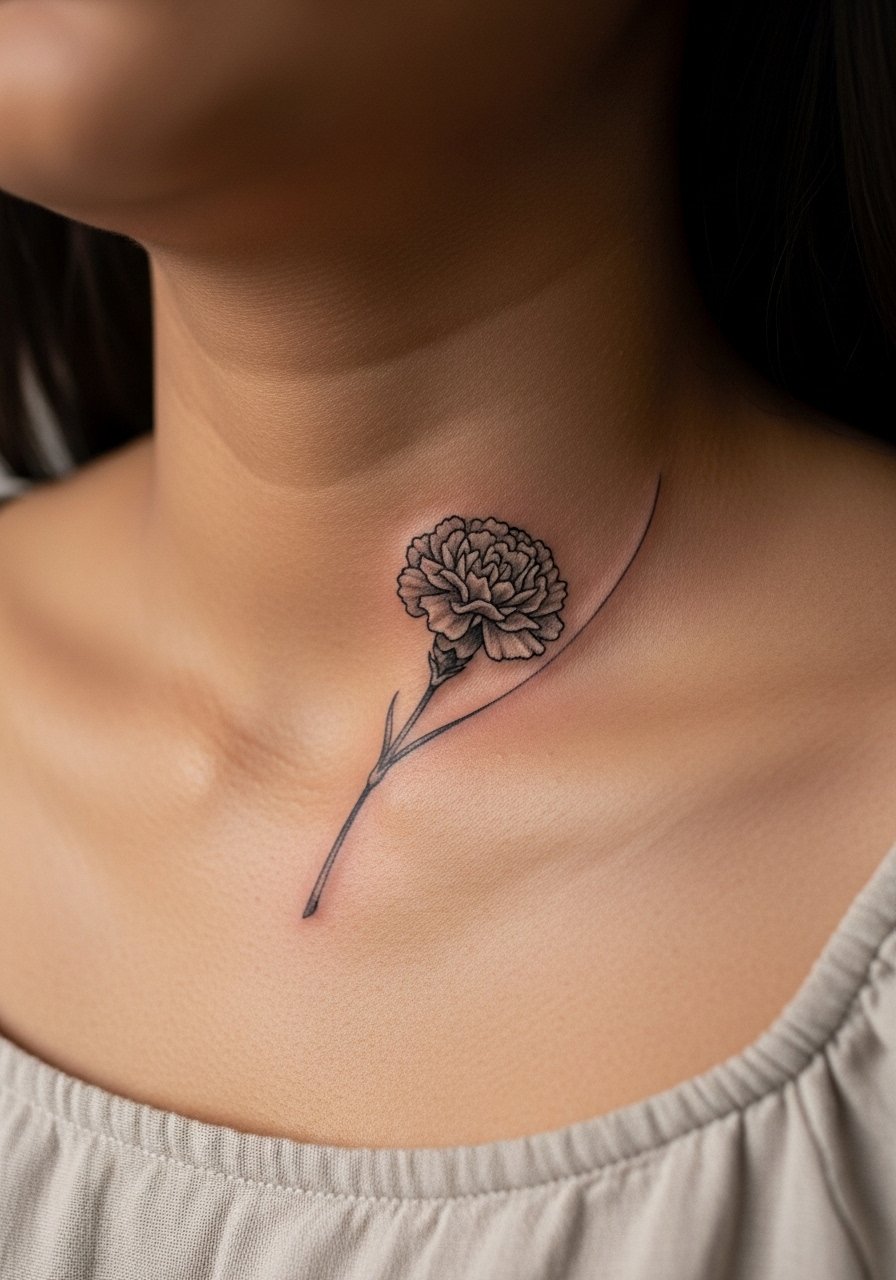
A floating collarbone carnation looks elegant and moves naturally with your body. The design is subtle but eye-catching when paired with open-neck outfits. Choose slightly bolder linework so the piece retains definition as it ages.
Style & Design Details
- Tattoo style: illustrative fine line, slightly bolder than micro to hold up on collarbone
- Recommended size: 1.5–3 inches
- Best placement(s): collarbone, upper chest, clavicle curve for natural flow
- Color vs. blackwork: black & grey keeps it wearable with jewelry and clothing
- Design elements: curved stem that follows clavicle, medium line weights, soft grey petal shading, small leaf accents, optional small star or dot fillers
- Longevity note: collarbone skin shifts with posture; choose slightly thicker lines to maintain shape
- Who it suits: those who like subtle statement pieces and fashion-friendly placements
Finding the Right Artist
Look for artists who do collarbone placements often; they understand how designs sit with bone. Ask about recommended line weight to prevent early blurring.
Aftercare & Healing Tips
Avoid heavy necklaces during healing; they can rub the tattoo. Clean gently twice daily, moisturize lightly, and use SPF once healed for longer-lasting contrast.
- Botanical Wristband of Tiny Carnations
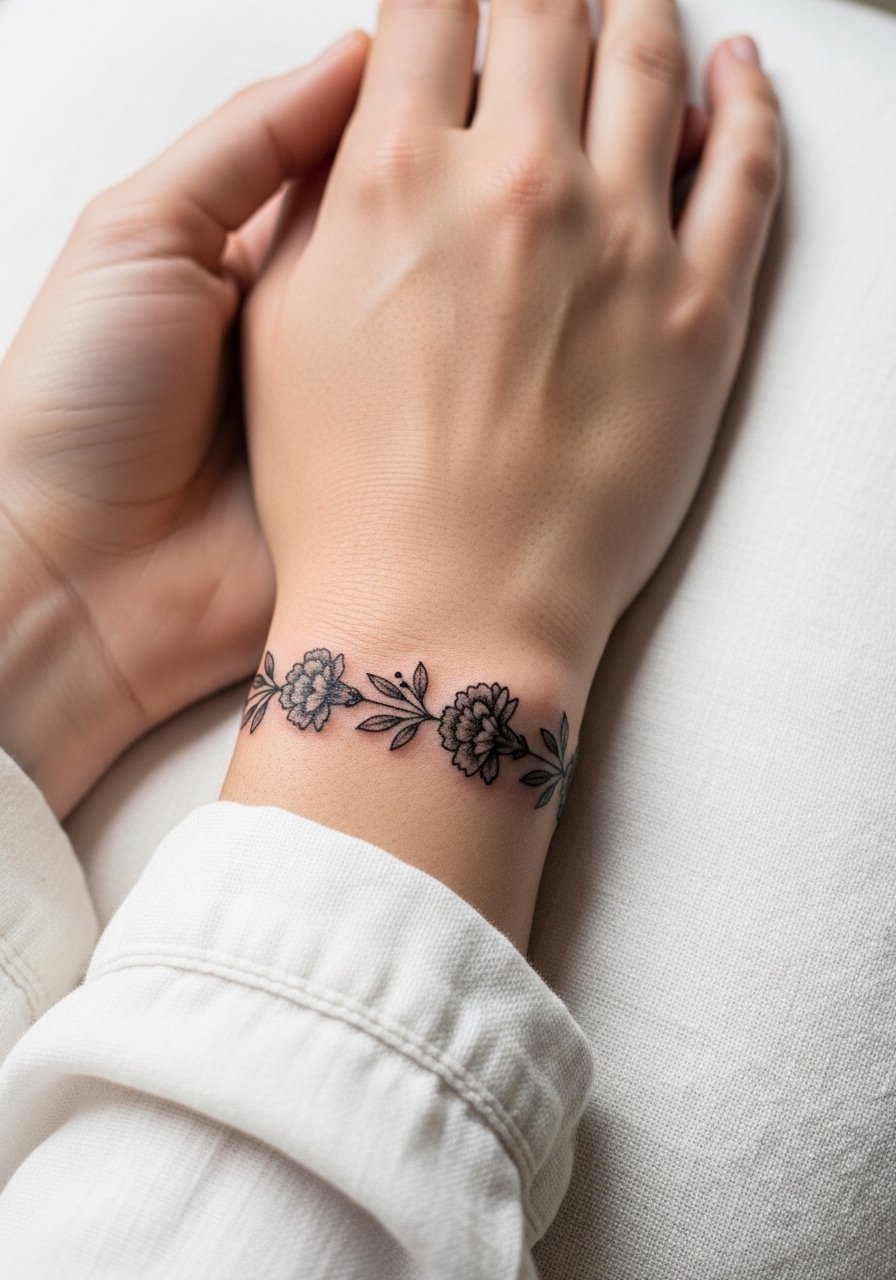
A wristband of miniature carnations wraps the wrist like jewelry. The repeat motif reads feminine and timeless. Because wrists are high-motion, design slightly thicker stems and nodes to prevent early fading.
Style & Design Details
- Tattoo style: botanical band, repetitive small motifs with connecting linework
- Recommended size: full wrist circumference or partial wrap (2–4-inch repeats)
- Best placement(s): wrist, bicep around arm, ankle for similar wrap feel
- Color vs. blackwork: black & grey maintains cohesion and longevity on hands/wrists
- Design elements: repeated blooms, tiny leaf connectors, thin vine, negative space breathing room, small dot separators
- Longevity note: wrist bands will fade faster due to movement and washing; plan touch-ups every 1–3 years
- Who it suits: people who want jewelry-like ink, romantic aesthetic fans
Finding the Right Artist
Choose someone who can plan repeat motifs that flow and line up seam-wise. Ask about how they’ll handle the seam where the band meets. Healed wristband photos are a must.
Aftercare & Healing Tips
Keep the area dry when possible, avoid bracelets during healing. Use gentle soap and light lotion. Expect slightly faster fading and budget for a future touch-up.
- Black and Grey Carnation Flower Tattoo with Lace Detail
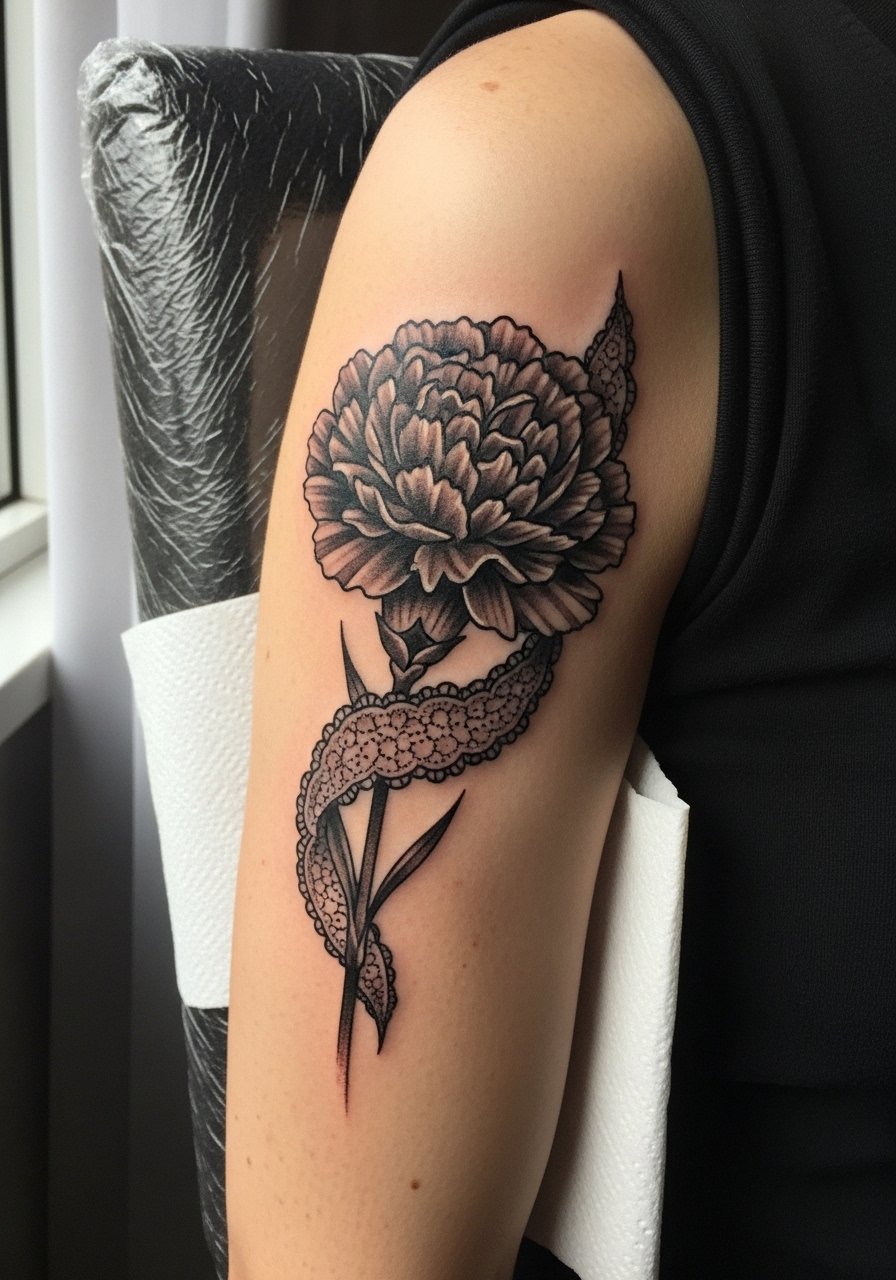
Add lace for a romantic, vintage edge. The lace detail frames the carnation and gives a tactile, fabric-like look. This is particularly striking on the upper arm or ribs, where it can be hidden or shown depending on clothing.
Style & Design Details
- Tattoo style: ornamental/illustrative, lace and floral hybrid
- Recommended size: 3–6 inches for lace detail to remain crisp
- Best placement(s): upper arm, ribs, lateral thigh where lace can drape
- Color vs. blackwork: detailed black & grey keeps lace crisp and readable
- Design elements: micro line lace, petal overlays, stipple shadows, filigree bands, small bead dots
- Longevity note: micro lace needs space to avoid blurring; scale up if you want lasting detail
- Who it suits: romantic, vintage lovers, those wanting feminine detail
Finding the Right Artist
Find artists who post ornamental and fine-line lace work electrography. Ask how they handle tiny lace mesh and whether they recommend scaling up.
Aftercare & Healing Tips
Lace areas may show patching in peeling phases; follow wrap guidance and moisturizing protocols. Avoid friction against bras or straps while healing.
- Negative Space Carnation with Bold Outlines
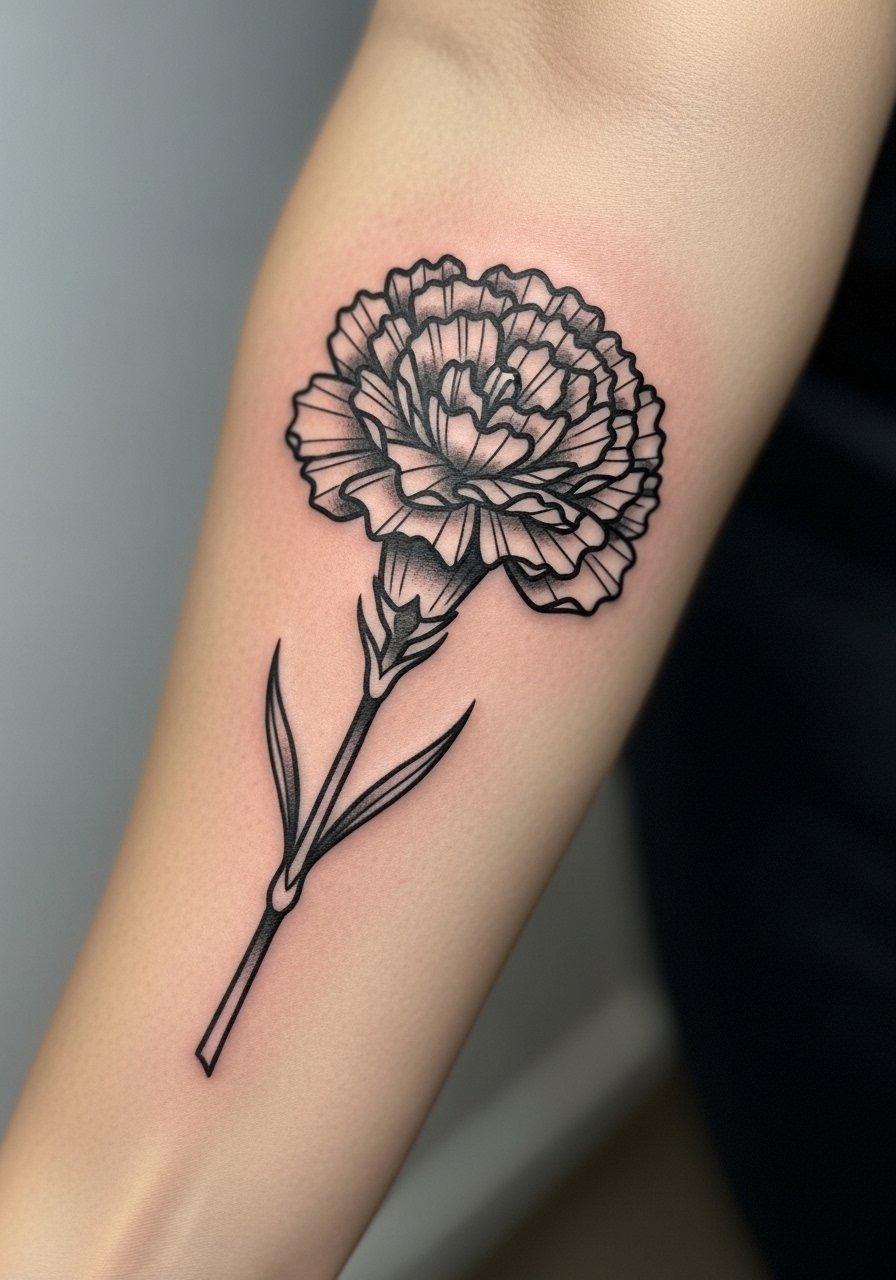
Negative space designs lean graphic — bold outlines with skin-tone petal shapes feel modern and moody. This works especially well on forearms where the outline can read from a distance and close inspection reveals the subtlety.
Style & Design Details
- Tattoo style: bold outline + negative space, graphic contrast
- Recommended size: 2–5 inches for clear negative shapes
- Best placement(s): forearm, shin, calf where contrast reads well
- Color vs. blackwork: solid black outlines with skin-carved petal interiors
- Design elements: thick border lines, carved negative petal forms, shallow grey edges for separation, compact stemwork, geometric hints
- Longevity note: bold outlines last longer and keep design readable as negative space ages very naturally
- Who it suits: people who prefer graphic, modern aesthetics
Finding the Right Artist
Pick artists with crisp linework and healed photos showing negative space. Ask how they prevent ink migration along thick borders.
Aftercare & Healing Tips
Solid blacks may tighten the skin initially. Keep moisturized and avoid long sun exposure. Bold designs generally require less frequent touch-ups.
- Subtle Carnation with Tiny Bee Accent
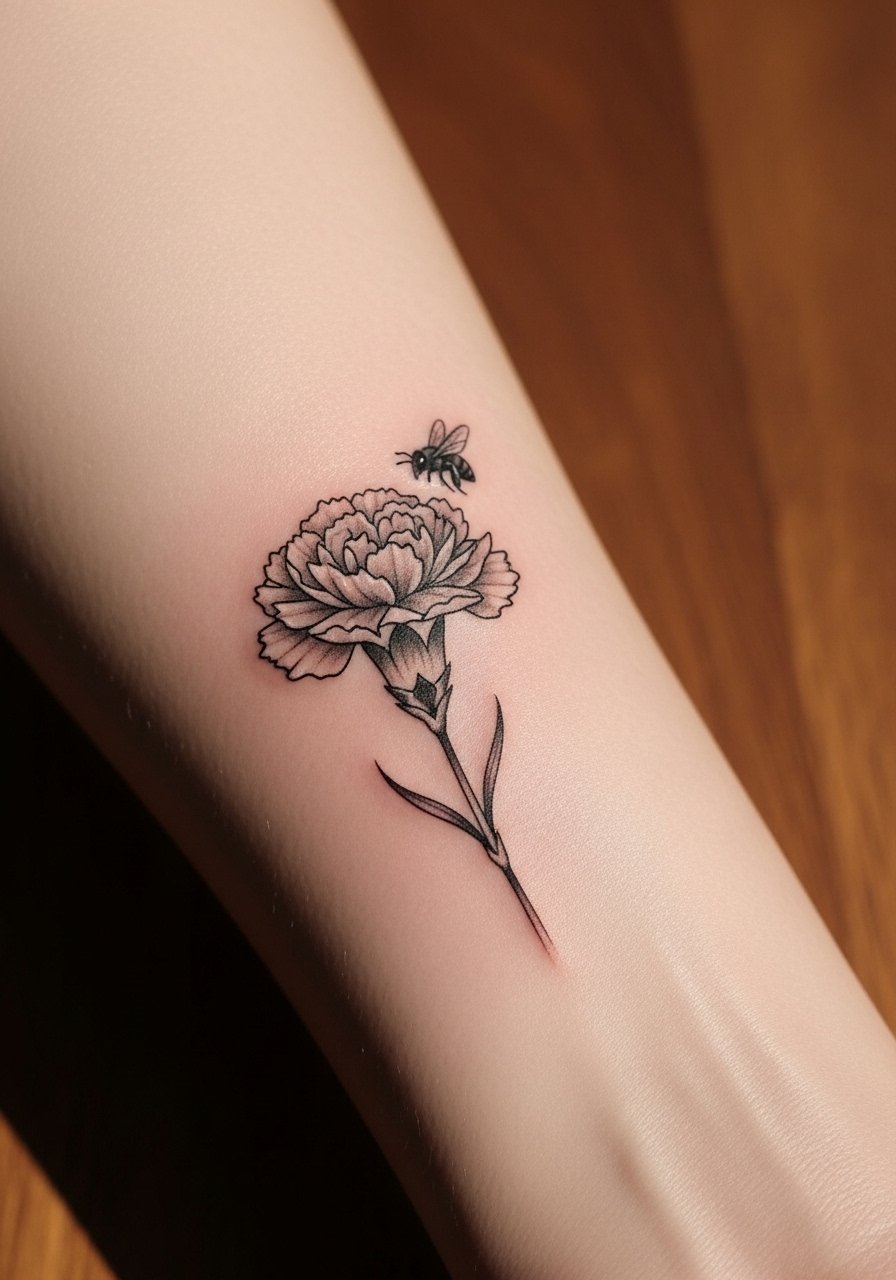
Pair a carnation with a tiny bee for a narrative touch. The bee brings playfulness and symbolism of pollination — life, work, and memory. Keep both motifs small but with slightly stronger outlines to survive washing.
Style & Design Details
- Tattoo style: illustrative combo, small animal + floral pairing
- Recommended size: 1–3 inches depending on detail for the bee
- Best placement(s): forearm, wrist, ankle where movement brings life to the bee
- Color vs. blackwork: black & grey keeps focus on shape and shadow rather than color
- Design elements: micro bee with linework wings, soft carnation shading, tiny motion lines, negative-space highlights
- Longevity note: small fauna details need deliberate line weight to prevent loss over time
- Who it suits: nature-lovers, sentimentalists, people who want a small storytelling piece
Finding the Right Artist
Choose an artist who posts small fauna and floral healed photos. Ask how they’ll size the bee so wings don’t blur. Mid-level experience preferred.
Aftercare & Healing Tips
Be mindful of the bee’s wings while healing; keep moisturized and avoid contact with abrasive surfaces. Use fragrance-free soap and light lotion until the area stops flaking.
- High-Contrast Carnation for Dark Skin Tones
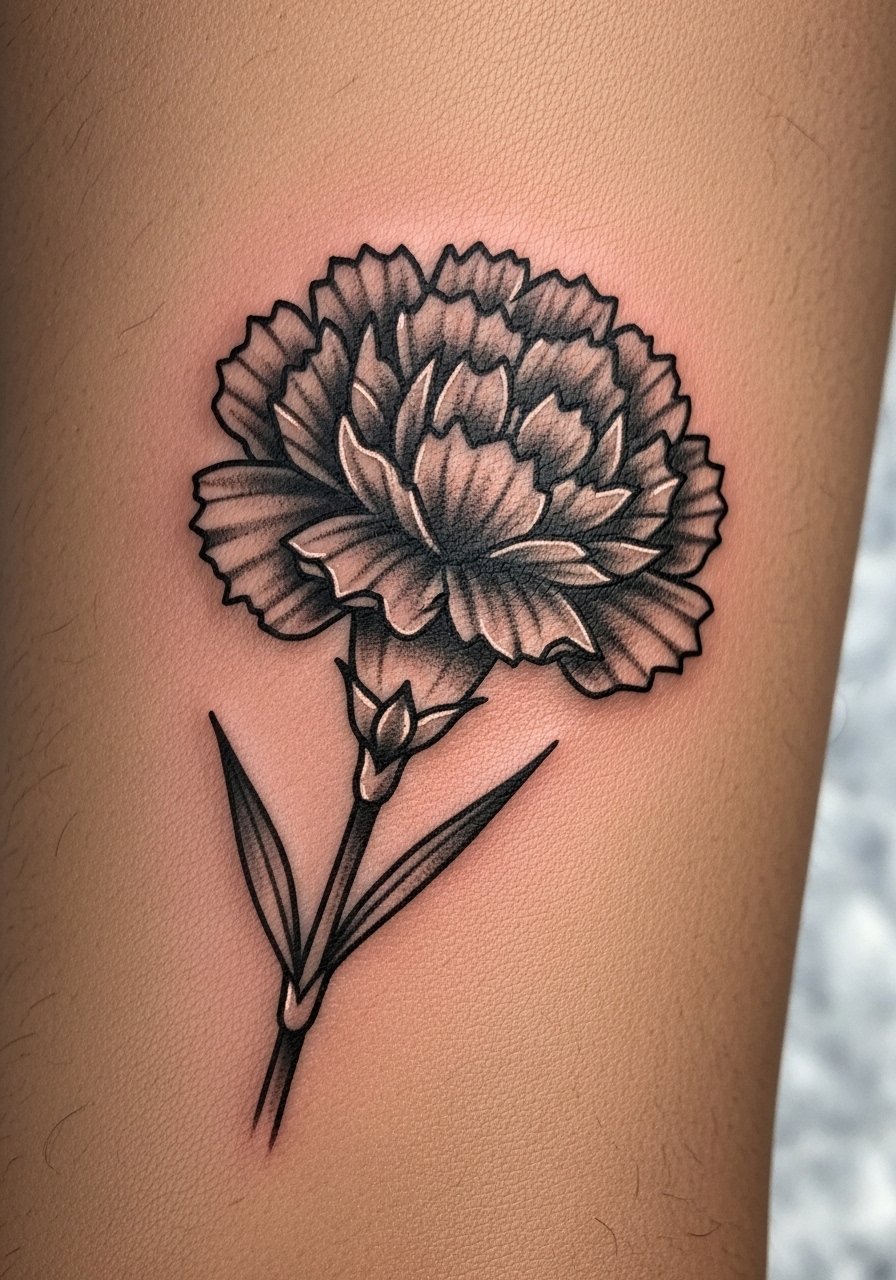
Designs for deeper skin tones benefit from higher contrast and slightly thicker line weights. This carnation emphasizes clear blacks and layered grey tones to ensure the petals and stems remain distinct over time.
Style & Design Details
- Tattoo style: high-contrast illustrative, adaptive line weights
- Recommended size: 2–5 inches for visible detail
- Best placement(s): shoulder, chest, outer forearm — flat areas that show contrast well
- Color vs. blackwork: solid black with defined grey steps for readability on darker skin
- Design elements: bold petal shadows, thicker outline options, high-contrast negative highlights, stipple texturing for depth
- Longevity note: deeper skin tones show healed contrast differently; plan slightly bolder lines to maintain crispness
- Who it suits: anyone wanting flattering contrast on medium-to-dark skin
Finding the Right Artist
Seek artists experienced with all skin tones; portfolios should include healed photos on darker skin. Ask them how they tweak line weight and saturation for contrast.
Aftercare & Healing Tips
All skin tones benefit from Saniderm early on. Moisturize with unscented lotion and keep out of prolonged sun. Follow artist guidance on saturation for best long-term clarity.
- Two-Tone Grey Carnation with Deep Shadows
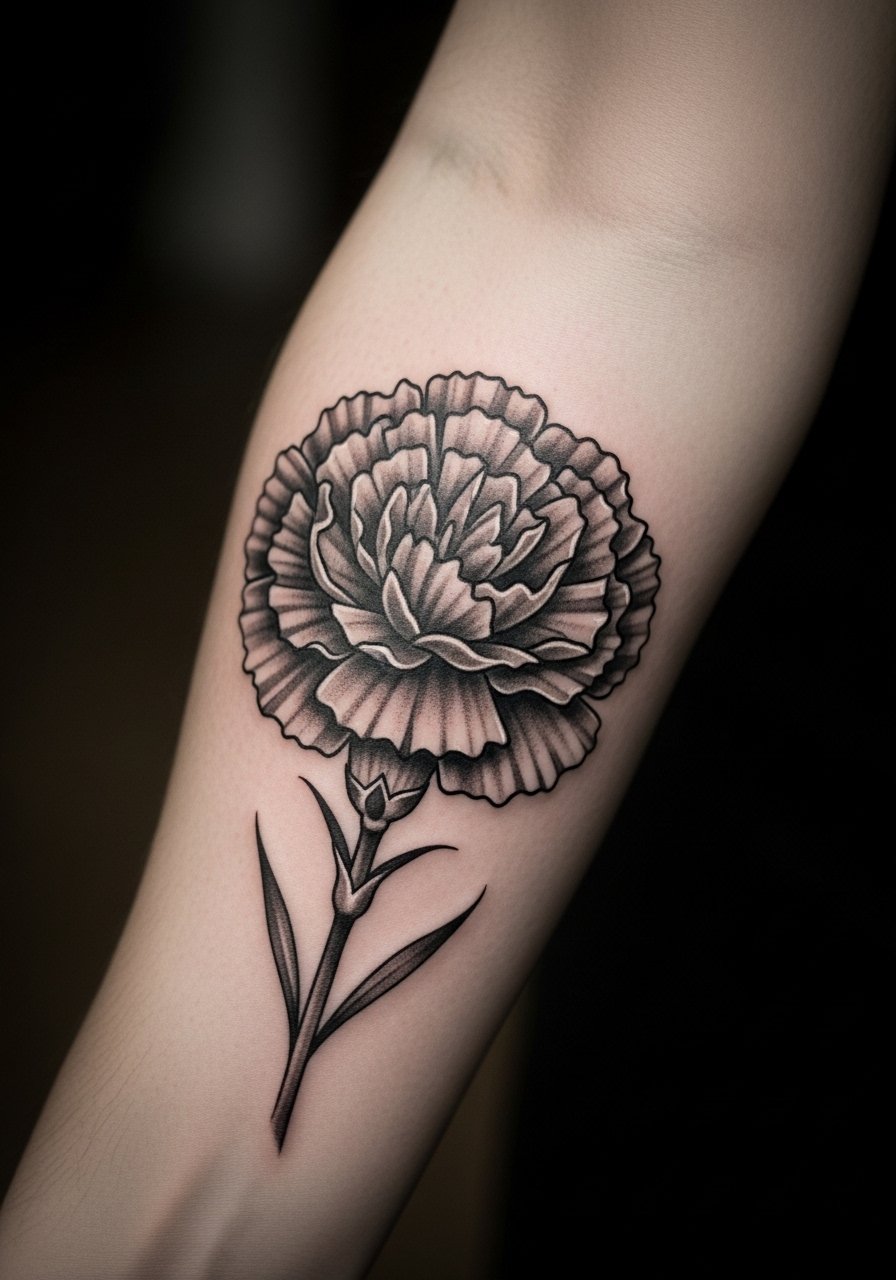
Two-tone grey designs use deep blacks and pale greys to create a sculptural effect. This carnation looks three-dimensional and dramatic without color. It plays well in portfolios that value contrast and form.
Style & Design Details
- Tattoo style: two-tone greywash, sculptural shading
- Recommended size: 3–5 inches to appreciate tonal shifts
- Best placement(s): forearm, ribcage, thigh for breadth of shading
- Color vs. blackwork: layered greys produce depth and sculpted petal shapes
- Design elements: deep shadow under petals, pale midtones, crisp edge lines, subtle texture marks, optional background wash
- Longevity note: midtones can fade; strong blacks maintain shape — SPF and moisturizing help retain steps
- Who it suits: people who want sculpted, artistic black & grey work
Finding the Right Artist
Look for experienced greywash artists with a portfolio of varied tonal pieces. Ask how they plan saturations and session timing to avoid overworking skin.
Aftercare & Healing Tips
Expect more visible contrast loss if overexposed to sun. Keep the area moisturized and protected with sunscreen after healing. Plan touch-ups if midtones soften.
- Carnation with Script Wrap — Personal Phrase Around Stem
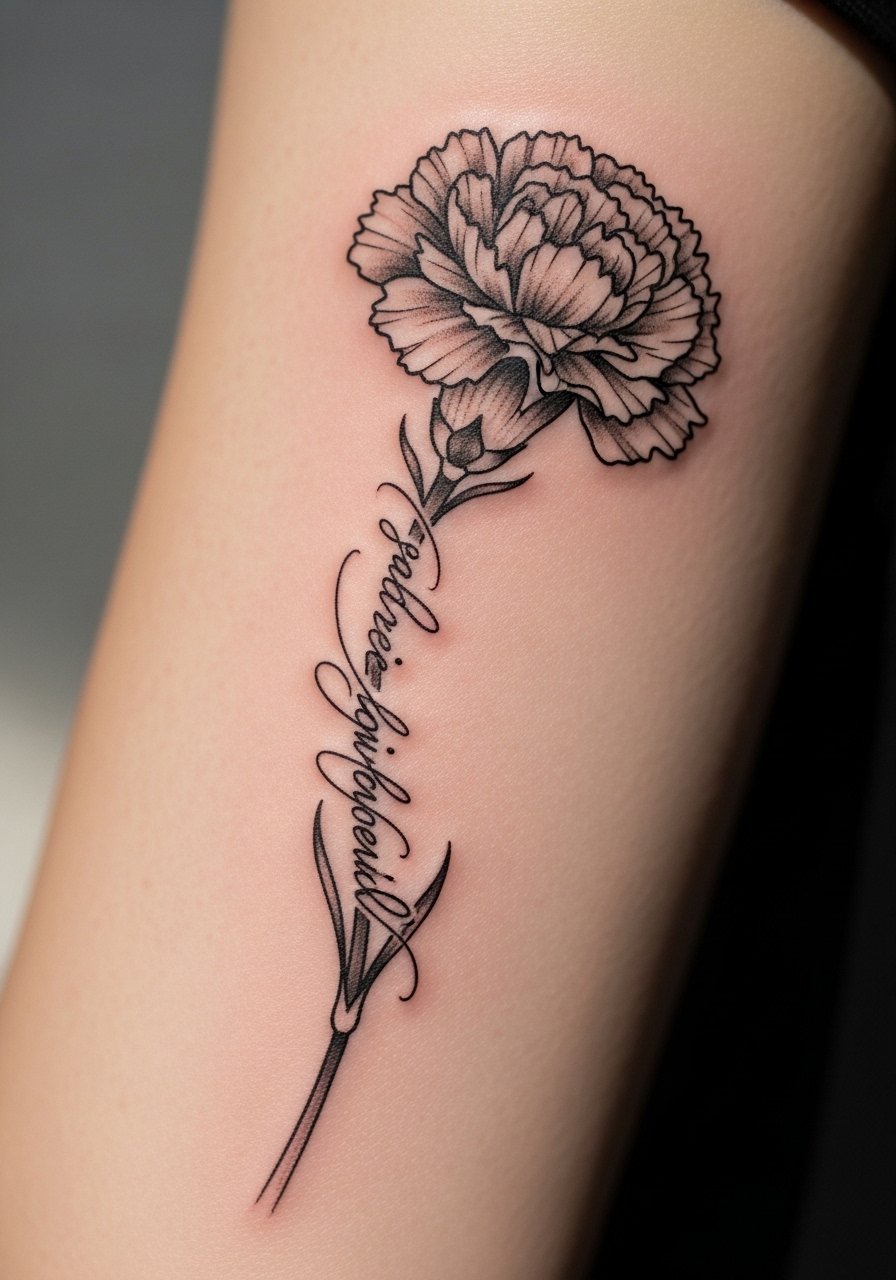
Wrap a short phrase around the stem for a personal touch. Curved script follows the stem's motion and becomes part of the composition. Keep lettering size moderate for longevity.
Style & Design Details
- Tattoo style: script + botanical, integrated lettering
- Recommended size: 2–4 inches depending on phrase length
- Best placement(s): inner forearm, side rib, along the stem on a thigh
- Color vs. blackwork: black & grey keeps script legible and timeless
- Design elements: flowing script, tied-around stem effect, small punctuation dots, slight grey shadow under script for legibility
- Longevity note: script needs space; tiny cursive can blur with time — choose a slightly bolder script weight
- Who it suits: storytellers, people commemorating vows, personal mantra wearers
Finding the Right Artist
Pick an artist with clean lettering and intertwined botanical examples. Ask them to write your phrase in different scales so you can choose the best balance.
Aftercare & Healing Tips
Avoid stretching the skin where script sits during healing (yawning, deep stretching poses). Keep the area moisturized; return for touch-ups if lines feather.
- Trio of Mini Carnations on the Shoulder Blade
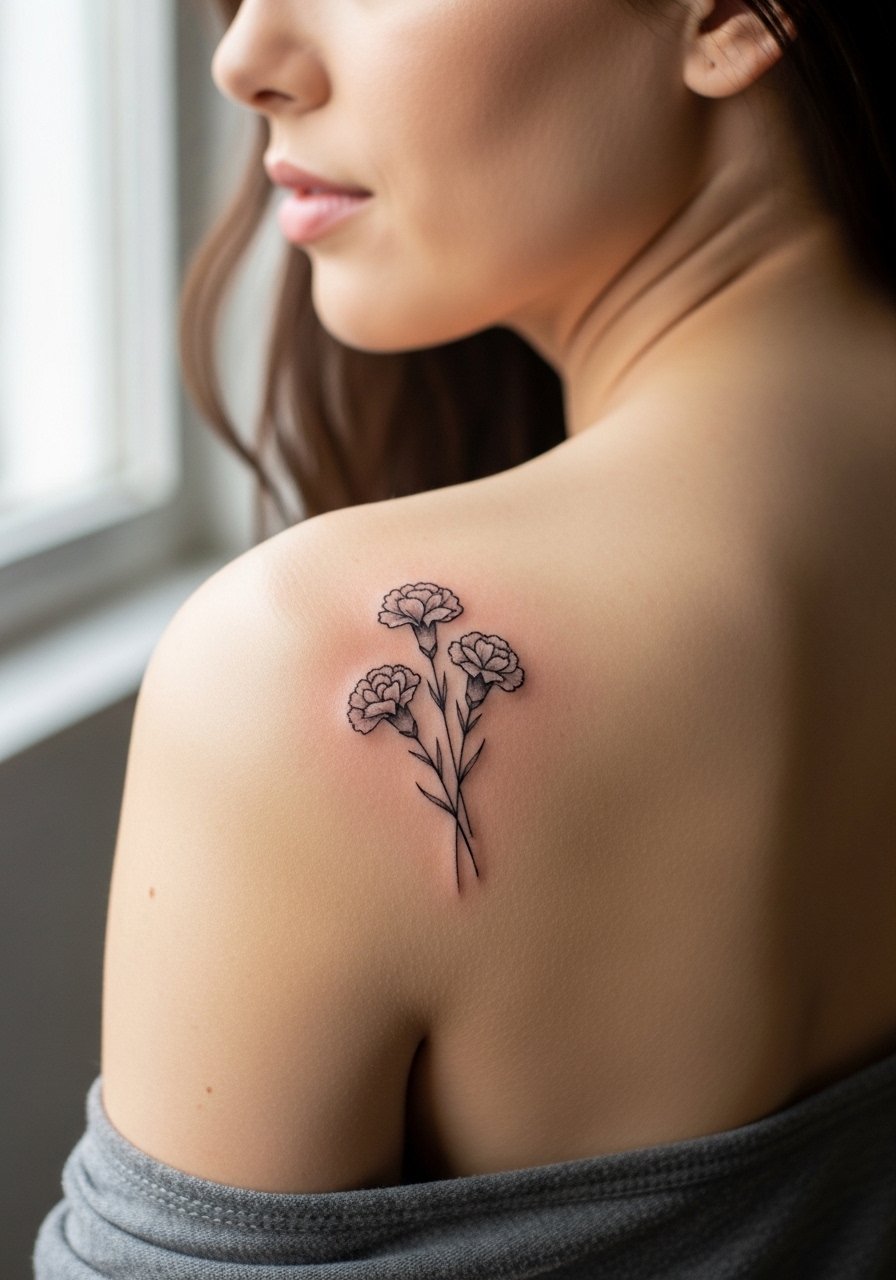
A trio reads like a visual sentence — three small carnations can represent family, milestones, or seasons. Shoulder blades offer flat canvas with low daily friction and great concealability.
Style & Design Details
- Tattoo style: mini illustrative cluster, slight greywash
- Recommended size: three blooms at 1–1.5 inches each spaced 1/2–1 inch apart
- Best placement(s): shoulder blade, upper back, between shoulder blades for symmetry
- Color vs. blackwork: black & grey remains elegant and understated
- Design elements: small bloom repetition, tiny leaf sprigs, negative highlights, subtle dot backgrounds
- Longevity note: shoulder placement ages well; minis still may require touch-ups but less often than hands/wrists
- Who it suits: sentimental minimalists, people who want small yet meaningful groupings
Finding the Right Artist
Find someone who composes small clusters and spaces motifs properly. Ask for mockups to ensure spacing works when you move.
Aftercare & Healing Tips
Shoulder blade tattoos tolerate clothing well but avoid tight straps. Clean gently and moisturize. Use SPF if you often wear tank tops outdoors.
- Large Petal Dramatic Carnation Across the Thigh
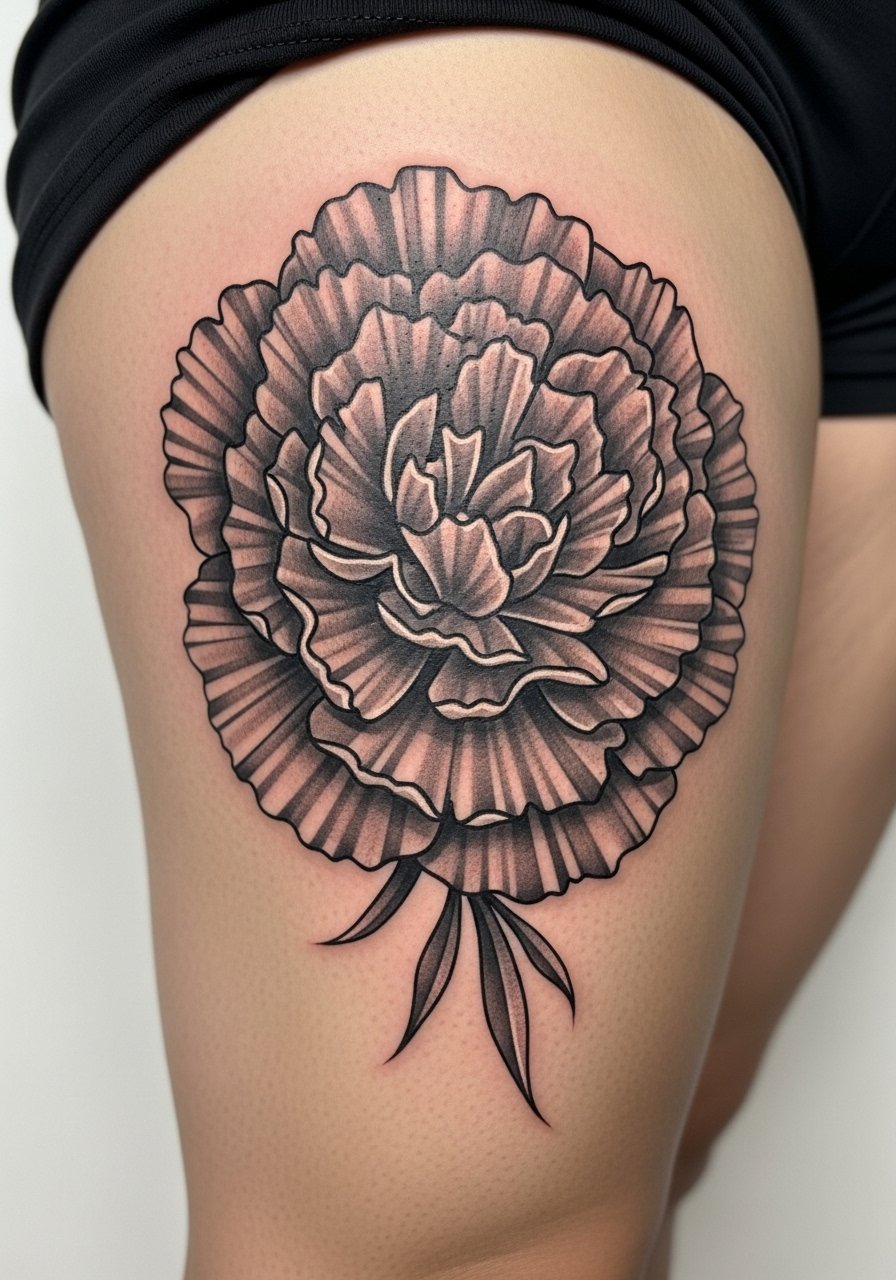
If you want a statement that can stay private or be shown selectively, a large thigh carnation gives scale and drama. The skin here handles larger greywash areas well and allows for intricate petal layering.
Style & Design Details
- Tattoo style: large illustrative, dramatic greywash depth
- Recommended size: 6–12 inches depending on coverage preference
- Best placement(s): lateral thigh, full thigh wrap, hip to thigh flow for extended composition
- Color vs. blackwork: full greywash allows subtle shading and soft edges across a wide area
- Design elements: oversized petals, deep shadow zones, overlapping layers, optional background filigree, trailing stem/leafwork for flow
- Longevity note: large pieces settle over months; contour changes (weight loss/gain) can slightly alter appearance — keep in mind for future touch-ups
- Who it suits: people wanting statement tattoos that can remain private or visible by choice
Finding the Right Artist
Large compositions require artists who can plan multi-session builds. Ask for full-scale mock-ups and session estimates. Choose a studio with good reputational hygiene and a steady hand at greywash fills.
Aftercare & Healing Tips
Large thigh pieces can take multiple sessions; treat each session like its own tattoo. Expect tightness after fills and keep moisturized with an unscented lotion. Avoid hot tubs and long baths during the healing window for each session.
Which one resonates most? Save this article to your Pinterest board, bring a few favorites to your consult, and chat openly about scale and flow with your artist. Honestly, buying a small Hustle Butter Deluxe aftercare balm and a roll of Saniderm before you go means you're prepared the moment you leave the chair. Which style are you leaning toward — fine line, blackwork, or realistic greywash — and where would you place it? Pin this for later and share with a friend who’s planning their next piece.