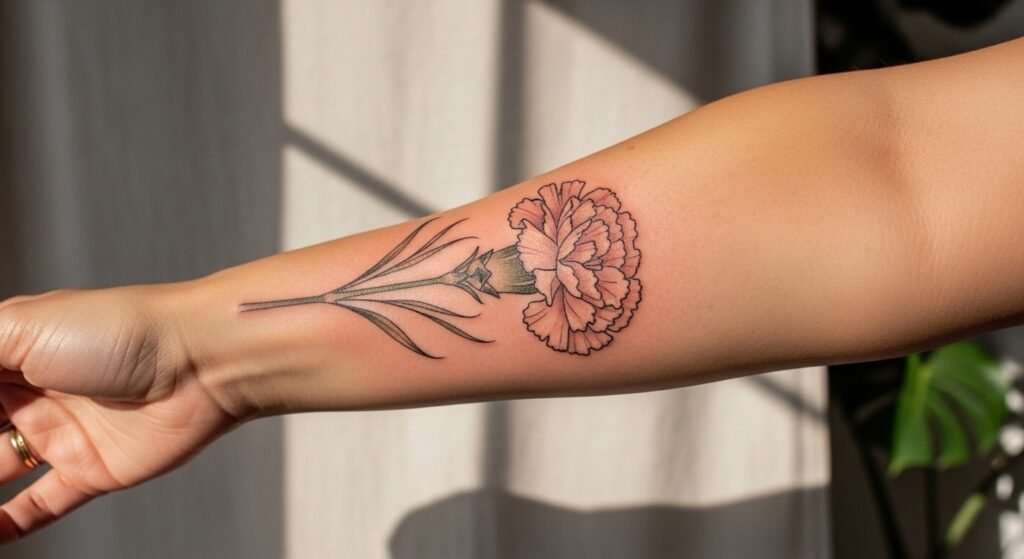
Sitting in a consultation, scrolling for inspo at midnight, or finally booking your artist—those moments before your first stroke of black ink feel electric. If you've been bookmarking floral work, the carnation has quietly become a favorite for its texture, symbolism, and versatility. A carnation flower tattoo can be tender and delicate or bold and graphic, fitting everything from minimalist wrists to neo-traditional sleeves.
This list of 25 carnation flower tattoo ideas covers styles, placements, and realistic healing tips so you can pick a direction and bring it to your artist. You'll find everything from fine-line single blooms to layered blackwork compositions. If you're prepping skin, a pre-session numbing ointment like Zensa numbing cream can help with sensitive placements. And once you leave the chair, I recommend a reliable balm such as Hustle Butter Deluxe tattoo aftercare balm or a breathable second-skin wrap like Saniderm tattoo bandage to protect fresh ink.
Flip through these 25 carnation flower tattoo ideas for concrete visuals, artist guidance, and aftercare recommendations that actually work. Pin your favorites and bring them to your consultation.
- Petite Single Carnation Flower Tattoo (Fine Line Wrist Accent)
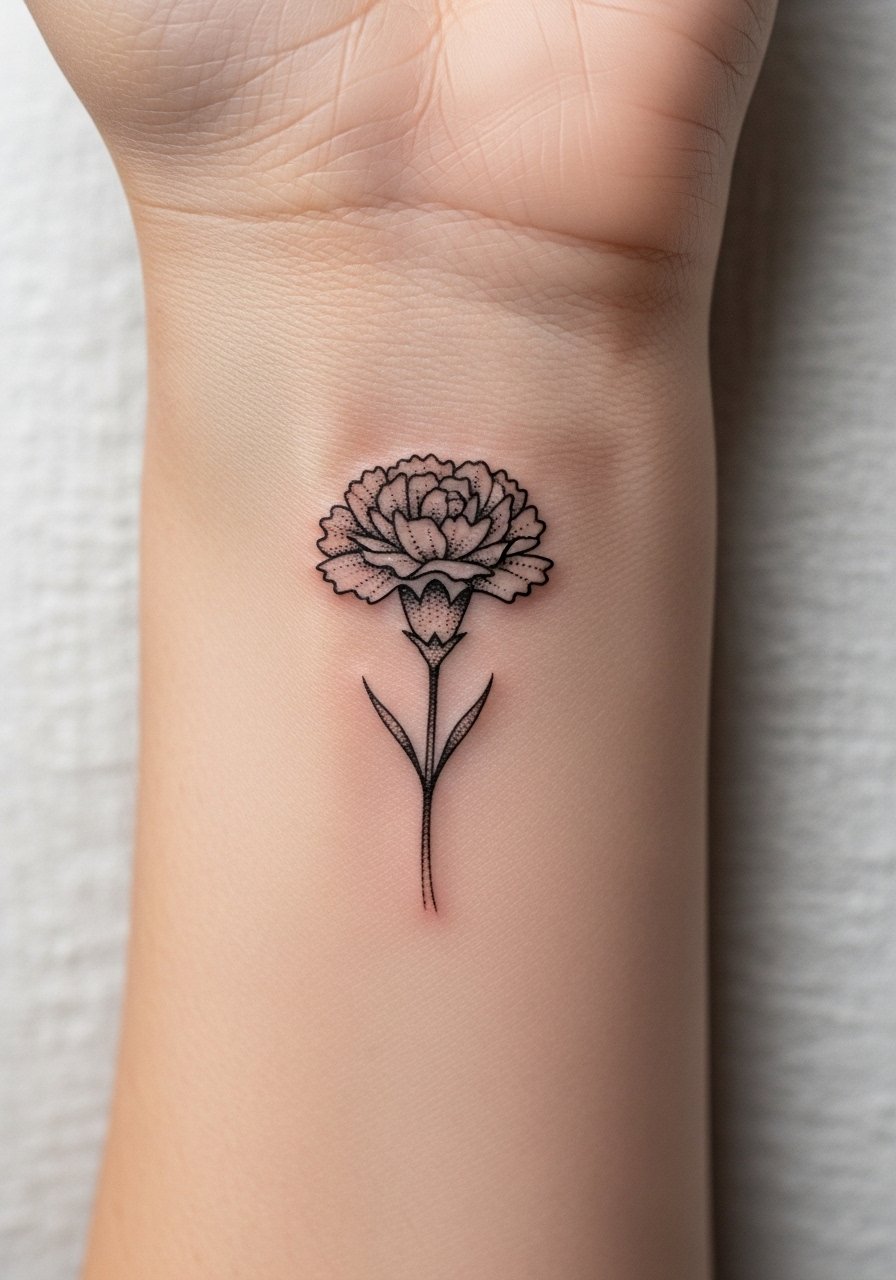
A tiny single carnation is whisper-quiet but full of detail. This piece uses single-needle fine line work with micro-stippling to suggest petal texture. It’s delicate, very readable at 1–2 inches, and works as a subtle sentimental piece or first tattoo.
Style & Design Details
- Tattoo style: Fine line / single-needle
- Recommended size: 1–2 inches (palm-sized)
- Best placements: inner wrist, behind the ear, ankle — spots that suit small scale
- Color vs. blackwork: Black fine line ages more predictably; add pale pink wash if you want color
- Design elements: single-needle outline, micro-stippling, tiny negative-space highlights, thin stem, optional mini script date
- Longevity note: Fine line fades faster in high-motion areas; SPF protects lines
- Who it suits: First-timers, minimalists, memorial seekers
Finding the Right Artist
Look for portfolios with crisp single-needle florals and healed photos. Ask about needle size (single-needle or 3RL), how they scale tiny details, and whether they recommend adding slight bolding for longevity. Avoid artists who only do heavy blackwork if you want a fine-line look. Search Instagram tags like #finelinetattoo and bring a printed reference. If you're experimenting with placement, a temporary kit like Inkbox temporary tattoo kit helps test wrist visibility.
Aftercare & Healing Tips
Leave a recommended second-skin wrap on for 24–48 hours if provided. Wash gently twice a day with a fragrance-free soap like Dr. Bronner's unscented liquid soap and apply a thin layer of unscented lotion such as Lubriderm fragrance free lotion. Expect light peeling around days 4–10; keep it out of direct sun and avoid friction from watches or bracelets. Plan a touch-up after 8–12 weeks if lines soften.
- Small Carnation Flower Behind-the-Ear (Hidden & Romantic)
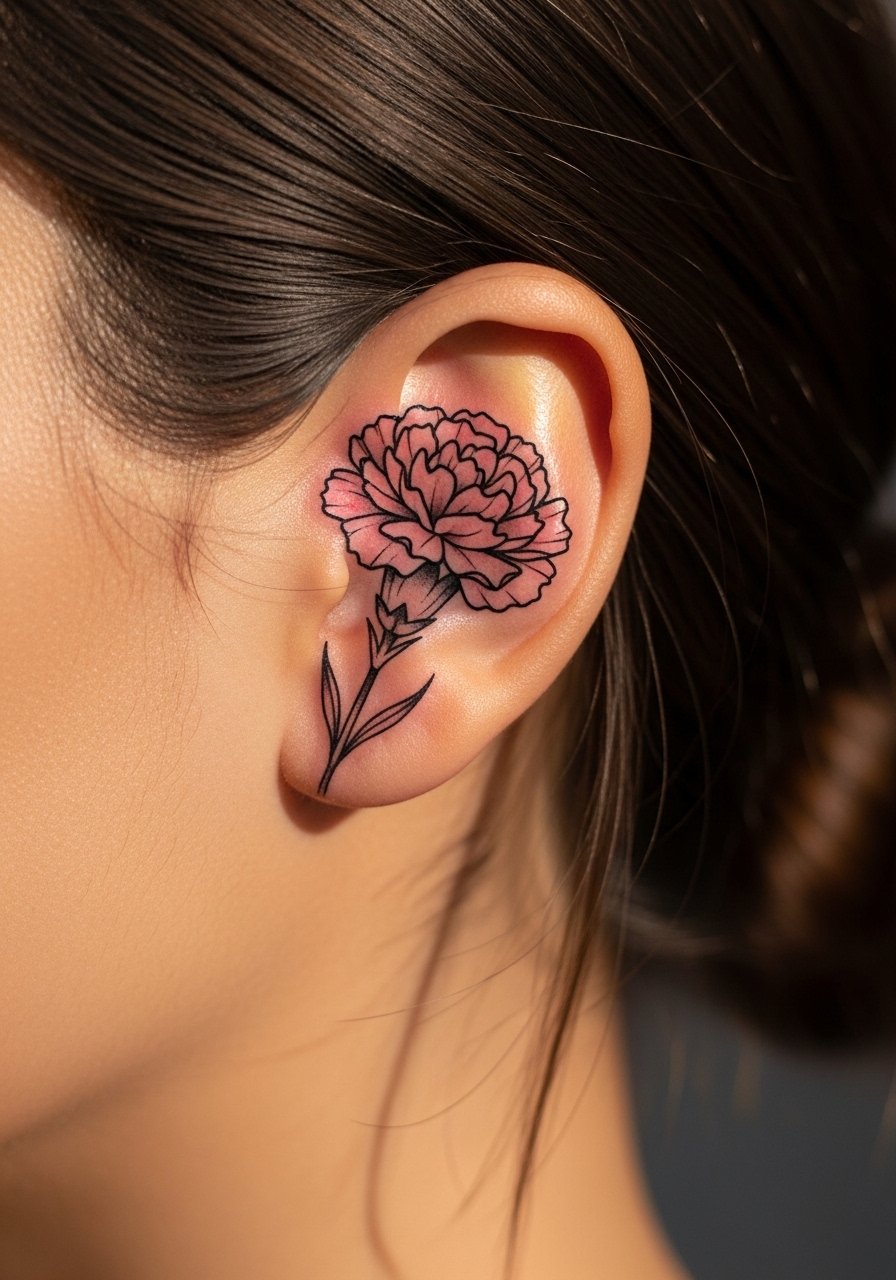
A behind-the-ear carnation is intimate and easy to conceal. The curved petals complement the head’s contour, and a tiny watercolor wash adds a dreamy cottagecore feel without overwhelming the placement. This is great if you want floral symbolism but need discretion.
Style & Design Details
- Tattoo style: Fine line with subtle watercolor wash
- Recommended size: 1–1.5 inches
- Best placements: behind the ear, nape of neck, behind shoulder blade for similar concealment
- Color vs. blackwork: Pale pink wash reads soft; black outline keeps shape over time
- Design elements: curved petals, light wash bleed, minimal stem, negative space highlights
- Longevity note: Watercolor can fade faster; plan for color refreshes in a couple years
- Who it suits: Discreet lovers, cottagecore fans, first-timers
Finding the Right Artist
Choose artists who display subtle color blends and soft washes in small scale. Ask to see healed color photos to judge true longevity. Avoid artists who only do heavy color saturation. If you’re nervous about permanence, try Inkbox temporary tattoo kit before committing.
Aftercare & Healing Tips
Small ear-area tattoos handle Saniderm well if your artist applies it. Keep hair away for the first week and wash with mild soap. Use a thin layer of Hustle Butter Deluxe sparingly during the peeling phase. Avoid hairspray or heavy hair products near the site until fully healed.
- Carnation Flower Tattoo on the Ribcage (Delicate Rib Piece)
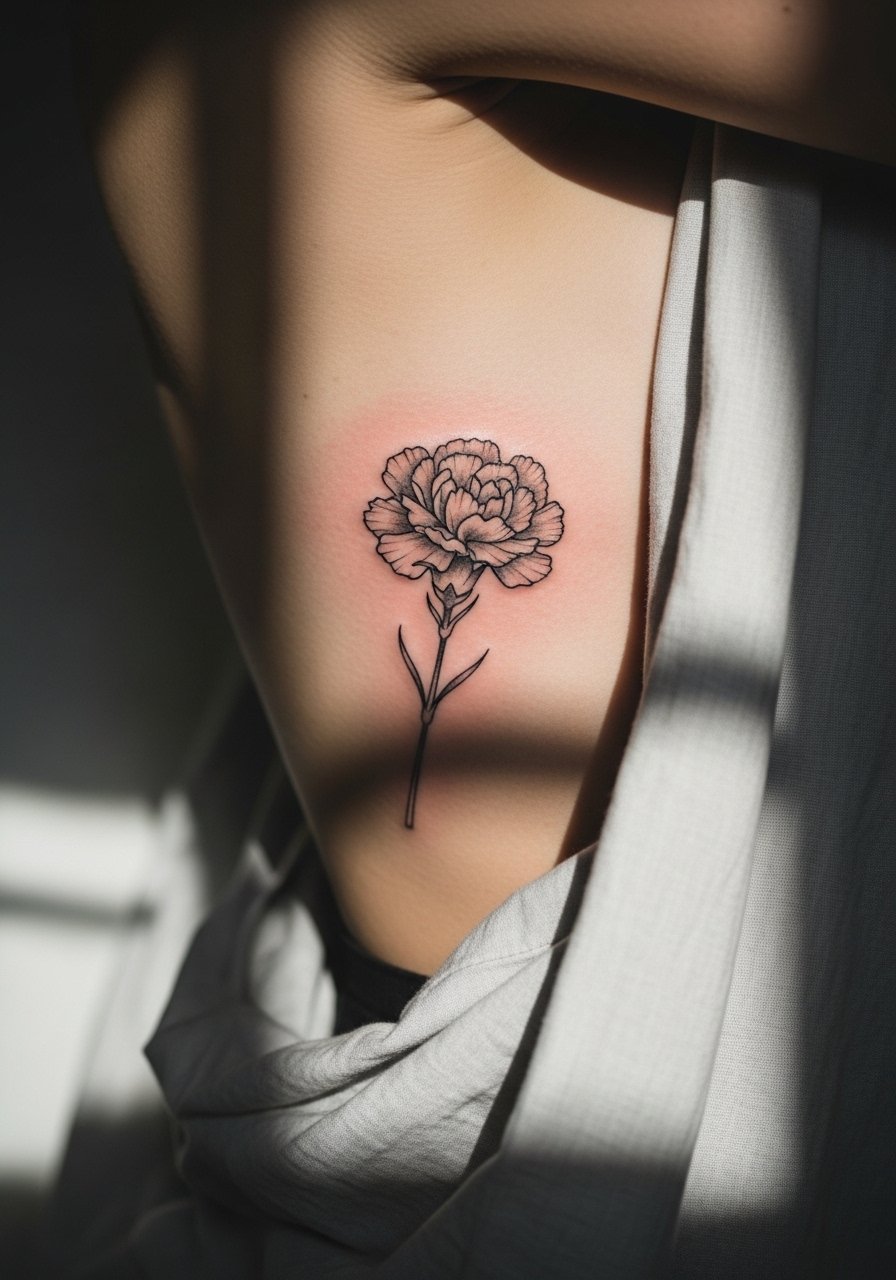
Ribcage carnations feel private and sensual. The curved canvas lets petals flow naturally. Rib pieces can be pricier due to stencil adjustments but yield graceful results that move with the body.
Style & Design Details
- Tattoo style: Illustrative fine line with soft shading
- Recommended size: 3–5 inches (quarter-sized)
- Best placements: ribcage, side torso, underbust — areas that follow body contours
- Color vs. blackwork: Soft grey wash or muted pink keeps it tender; heavy color might need touch-ups
- Design elements: petal layering, soft grey shading, fine stem, optional name or date in script
- Longevity note: Low friction area ages well but sun exposure from swimwear can fade color
- Who it suits: Sentimental collectors, mid-sized piece seekers
Finding the Right Artist
Rib tattoos need steady hand and an eye for anatomy. Look for artists with torso florals and healed ribs shots. Ask about session length and breathing technique. For pain management, some people use pre-session numbing like Ebanel numbing cream after checking with the artist.
Aftercare & Healing Tips
Ribs are a flexible area — wear loose clothing for the first 2 weeks to avoid scabbing from tight bras or tops. Saniderm for 3–5 days can prevent irritation; I often recommend Saniderm tattoo bandage. Wash gently, then use an unscented lotion. Plan a touch-up at 8–12 weeks for any softened linework.
- Carnation Flower Tattoo Sleeve Accent (Botanical Sleeve Element)
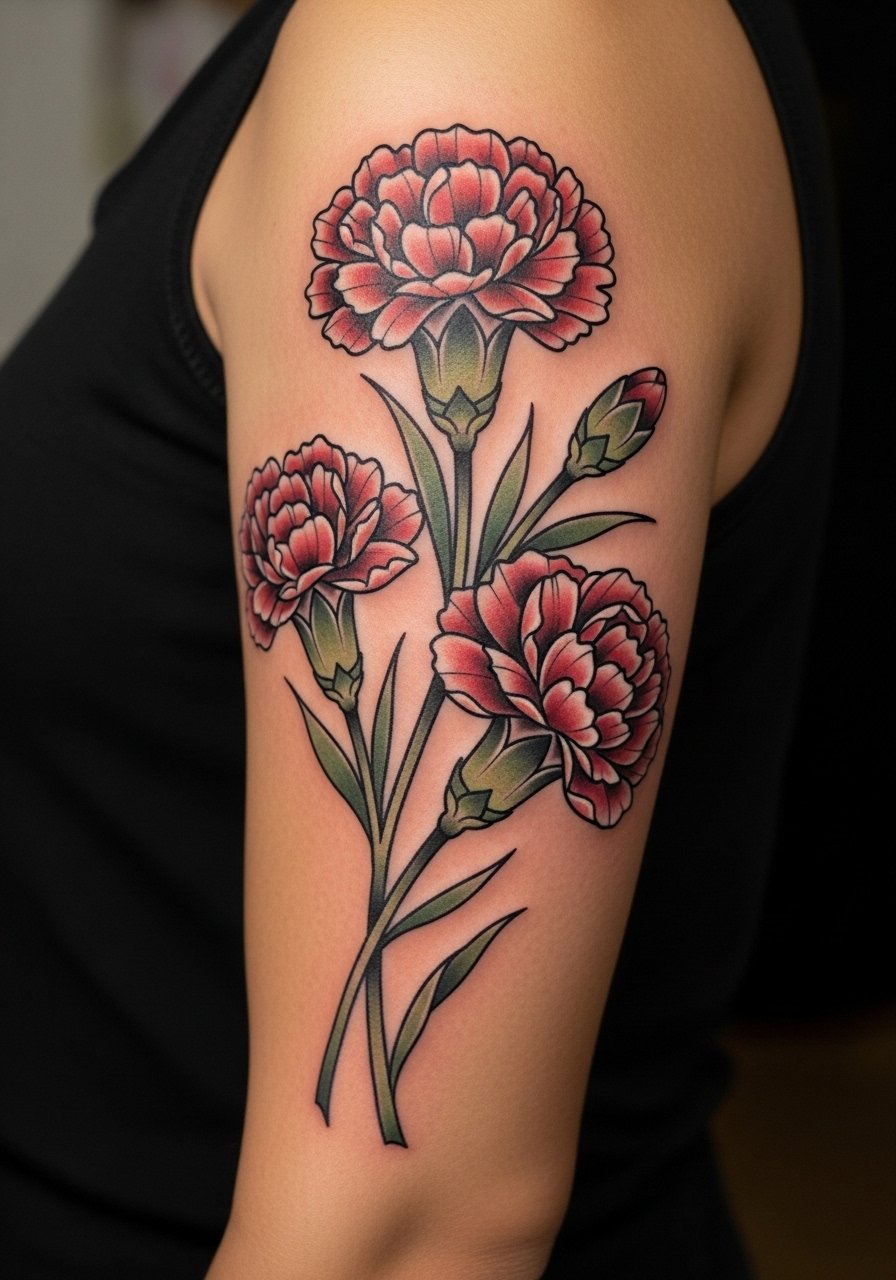
Adding carnations to a sleeve lets you play with scale and repetition. Use them as focal blooms or repeating motifs between leaves and ornamental fills. They can bridge styles from neo-traditional to blackwork.
Style & Design Details
- Tattoo style: Neo-traditional or illustrative with bold outlines
- Recommended size: Palm-sized to larger, arranged across forearm or upper arm
- Best placements: full/half sleeve, upper arm, outer forearm — areas that let you repeat motifs
- Color vs. blackwork: Color brings richness; blackwork creates contrast and longevity
- Design elements: bold outlines, layered petals, ornamental leaves, dot-fill backgrounds, geometric connectors
- Longevity note: Bold lines and solid color age best; intricate micro-details may blur over years
- Who it suits: Collectors, sleeve planners, people who love structure with floral motifs
Finding the Right Artist
For sleeve work, pick an artist experienced in composition and flow. Bring reference sheets showing your desired palette and any existing tattoos. Ask how they plan to transition between motifs. For layout planning, a stencil transfer or digital mockup using an iPad app can help — consider printing stencils on tattoo stencil transfer paper for at-home trials.
Aftercare & Healing Tips
Sleeves need consistent aftercare across multiple sessions. Expect layered healing; each session interacts with previous ink. Use fragrance-free soap and a thin layer of After Inked tattoo moisturizer during peeling. Avoid heavy sun exposure for a year and apply an SPF stick like Sun Bum SPF 50 sunscreen stick when outdoors.
- Single Stem Carnation (Minimalist Forearm Tattoo)
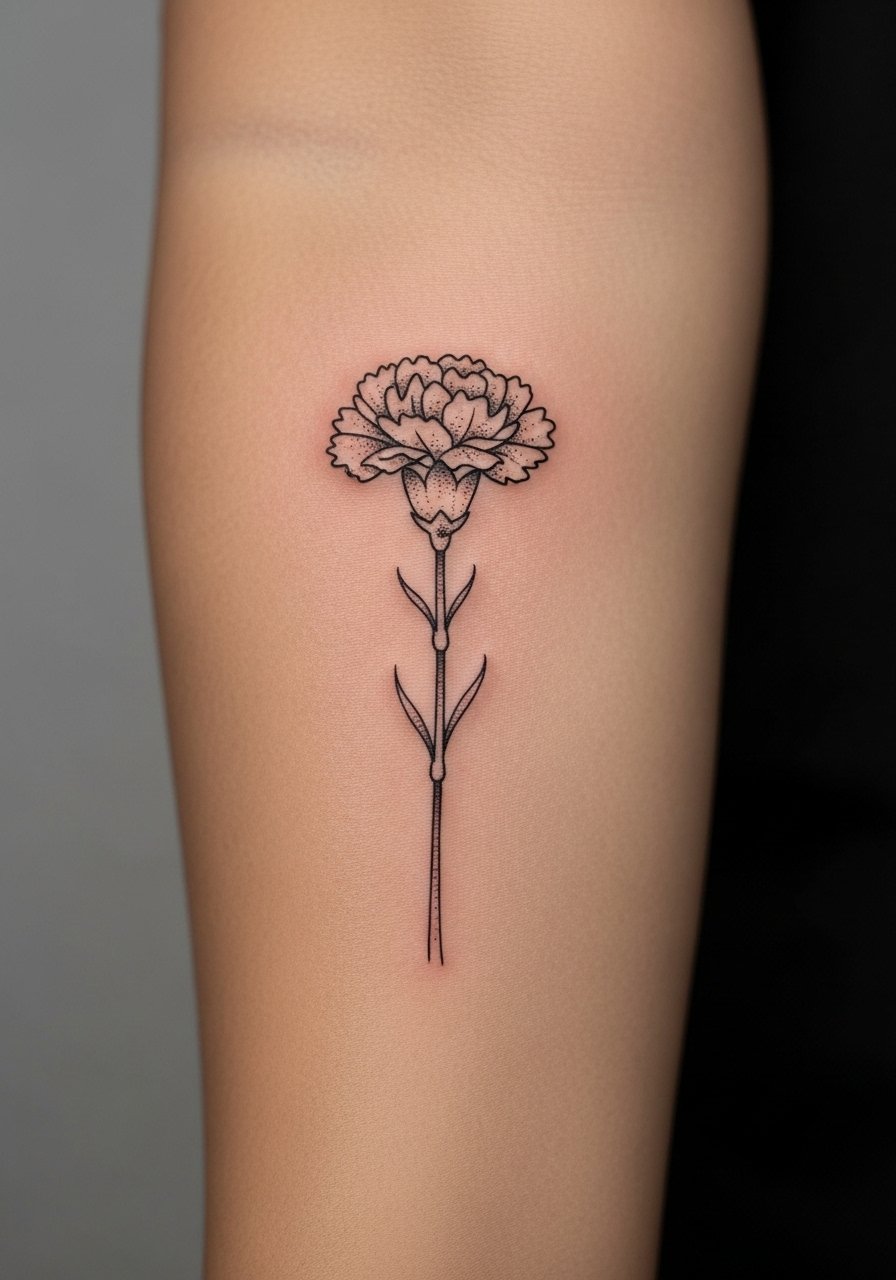
A single-stem carnation reads as calm and intentional. This minimalist approach highlights form and negative space. It's ideal for linear placements and ages gracefully when lines are slightly reinforced.
Style & Design Details
- Tattoo style: Minimalist / fine line
- Recommended size: 2–4 inches (forearm-friendly)
- Best placements: outer forearm, calf, side of the ribcage — elongated spots
- Color vs. blackwork: Black line stays crisp; faint color wash is optional
- Design elements: continuous stem, single bloom, sparse leaves, micro-stippling shadows, negative space
- Longevity note: Simple lines can blow out if too close to joints; keep a little weight in the stem
- Who it suits: Minimalists, textural lovers, linear aesthetic fans
Finding the Right Artist
Search portfolios for long, clean single-stem botanicals. Ask about line weight—request slight boldening for high-motion areas like forearms. Avoid artists who lack healed photos of linear work. A stencil mockup helps with curvature on the forearm.
Aftercare & Healing Tips
Forearm tattoos are visible and often exposed. Protect with SPF once healed. For early care, wash gently, then use a small amount of Hustle Butter Deluxe to keep skin supple. If you work with your hands, consider wearing breathable sleeves to reduce irritation during week one.
- Watercolor Carnation Bouquet (Soft Color Back Piece)
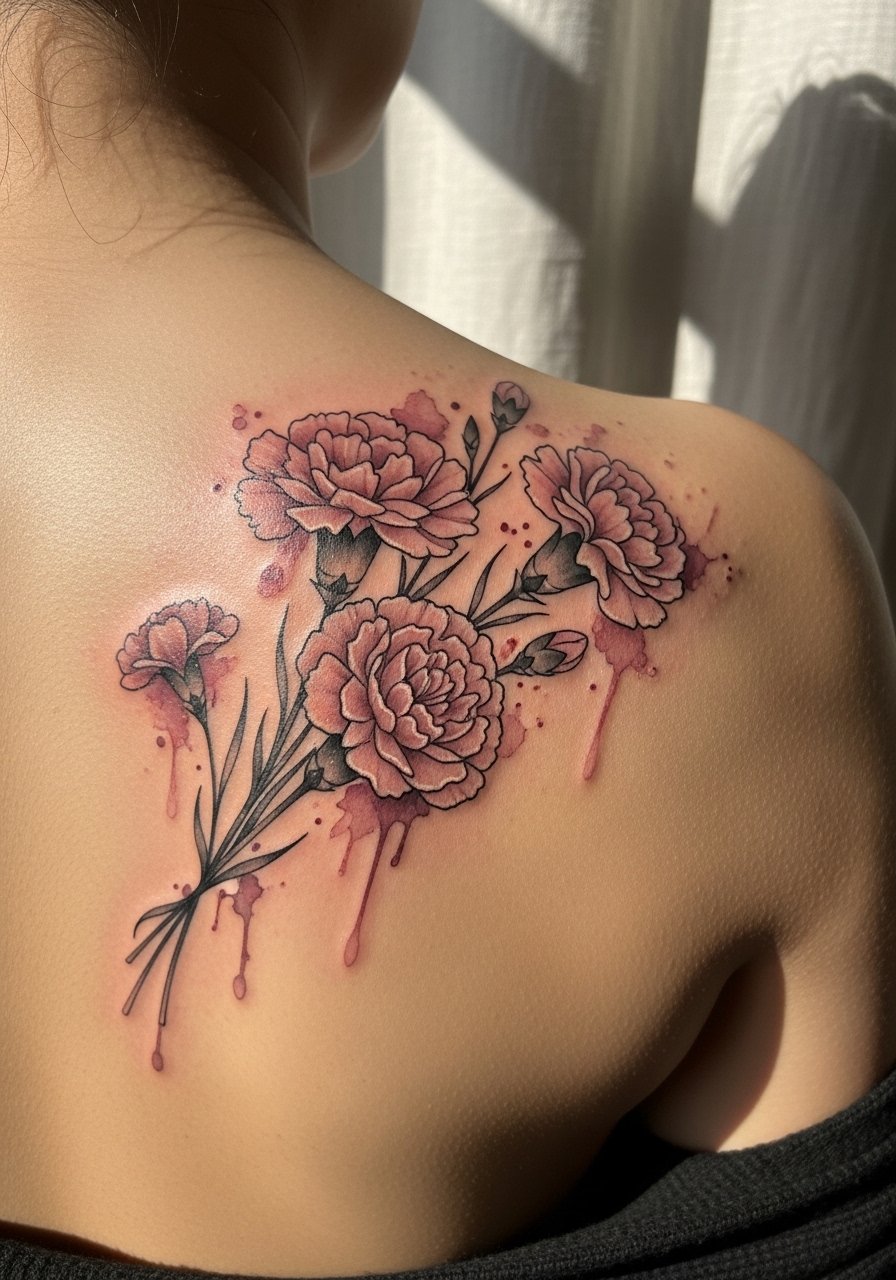
A watercolor carnation bouquet lets colors blend and create painterly depth. This aesthetic suits larger canvases where the bleed and soft edges can breathe. The look is romantic and leans into cottagecore and soft academia vibes.
Style & Design Details
- Tattoo style: Watercolor / illustrative
- Recommended size: Palm-sized to full-back elements (4–8 inches)
- Best placements: upper back, shoulder blade, thigh — open flat areas for color wash
- Color vs. blackwork: Faded pastels or muted pinks read dreamy; minimal outline anchors form
- Design elements: pooled color washes, soft petal edges, translucent layering, minimal outlines, leaf washes
- Longevity note: Watercolor fades faster; color refresh every few years may be needed
- Who it suits: Color lovers, cottagecore fans, collectors seeking soft palettes
Finding the Right Artist
Pick an artist known for watercolor florals and healed color photos. Confirm they can control saturation to avoid muddying. Ask about how they layer color to prevent blowouts. For planning, print reference art and consider using tattoo stencil transfer paper for positioning.
Aftercare & Healing Tips
Watercolor pieces need gentle, consistent hydration to keep colors bright during healing. Use fragrance-free lotion and avoid long swims for 2–3 weeks. Saniderm helps prevent scabbing that can trap pigment; try Saniderm tattoo bandage if your artist offers it. Long-term, protect with SPF.
- Blackwork Carnation (Bold Contrast Thigh Tattoo)
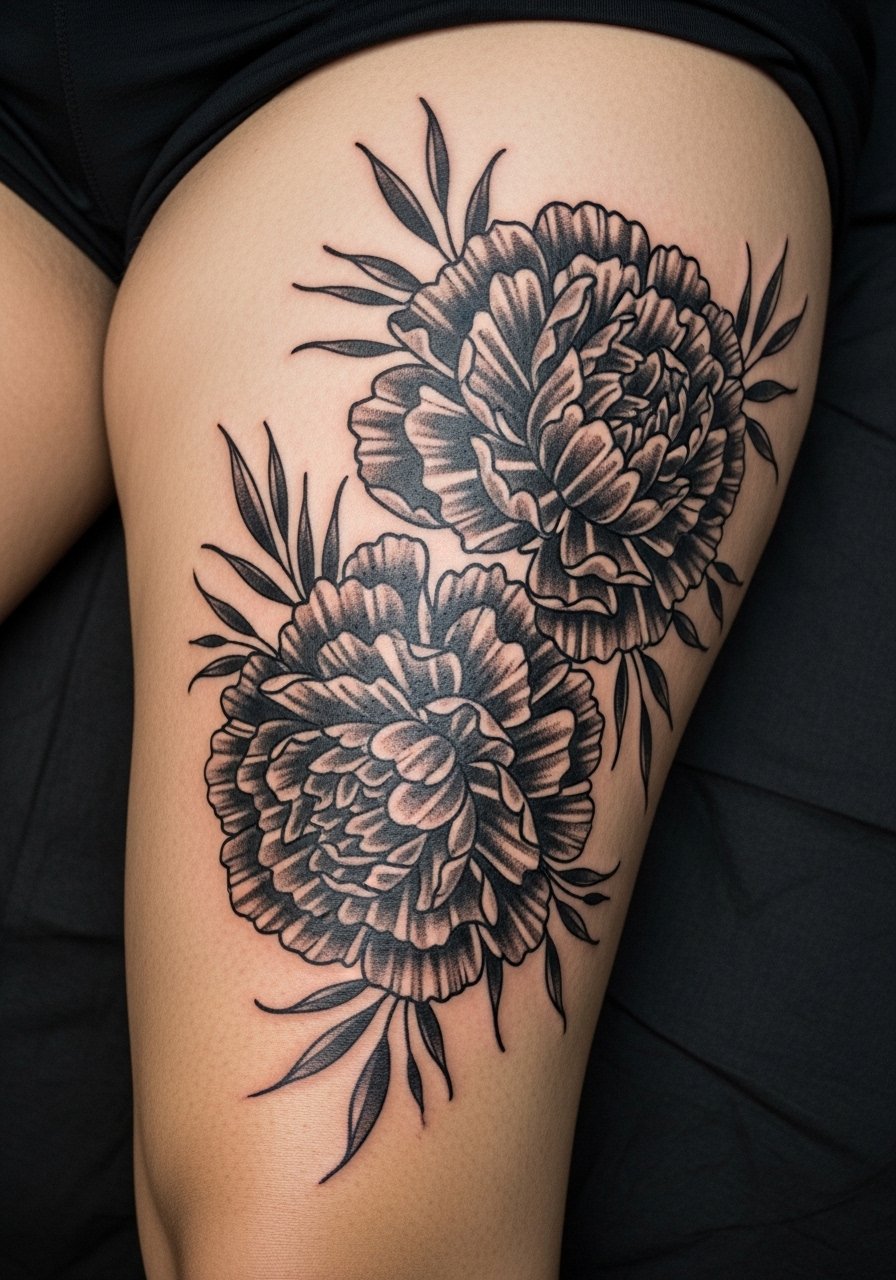
Blackwork carnations are graphic and long-lasting. Heavy black fills resist fading, and negative-space petal carving creates dimensionality. Thigh placements let artists go bold without work-wardrobe conflicts.
Style & Design Details
- Tattoo style: Blackwork / illustrative
- Recommended size: 4–6 inches (palm to thigh-sized)
- Best placements: outer thigh, calf, back — areas that handle larger black blocks
- Color vs. blackwork: Pure blackwork offers best longevity; consider dotwork for texture
- Design elements: heavy fills, negative-space petal shapes, stippling gradients, bold outlines, geometric accents
- Longevity note: Black fills stay crisp, though heavy ink may cause more initial swelling
- Who it suits: Bold aesthetes, people wanting statement pieces
Finding the Right Artist
Look for blackwork specialists with clear healed photos and consistent fills. Ask about session time and aftercare for dense black areas. Apprentices may be okay for simple black fills, but larger blocks need experienced hands to ensure even saturation.
Aftercare & Healing Tips
Blackwork pieces often scab thicker; keep them clean and moisturized with products like Tattoo Goo aftercare kit or Hustle Butter during the peeling phase. Avoid tight clothing rubbing the site and expect full settling by 6–8 weeks.
- Neo-Traditional Carnation with Banner (Memorial or Name Piece)
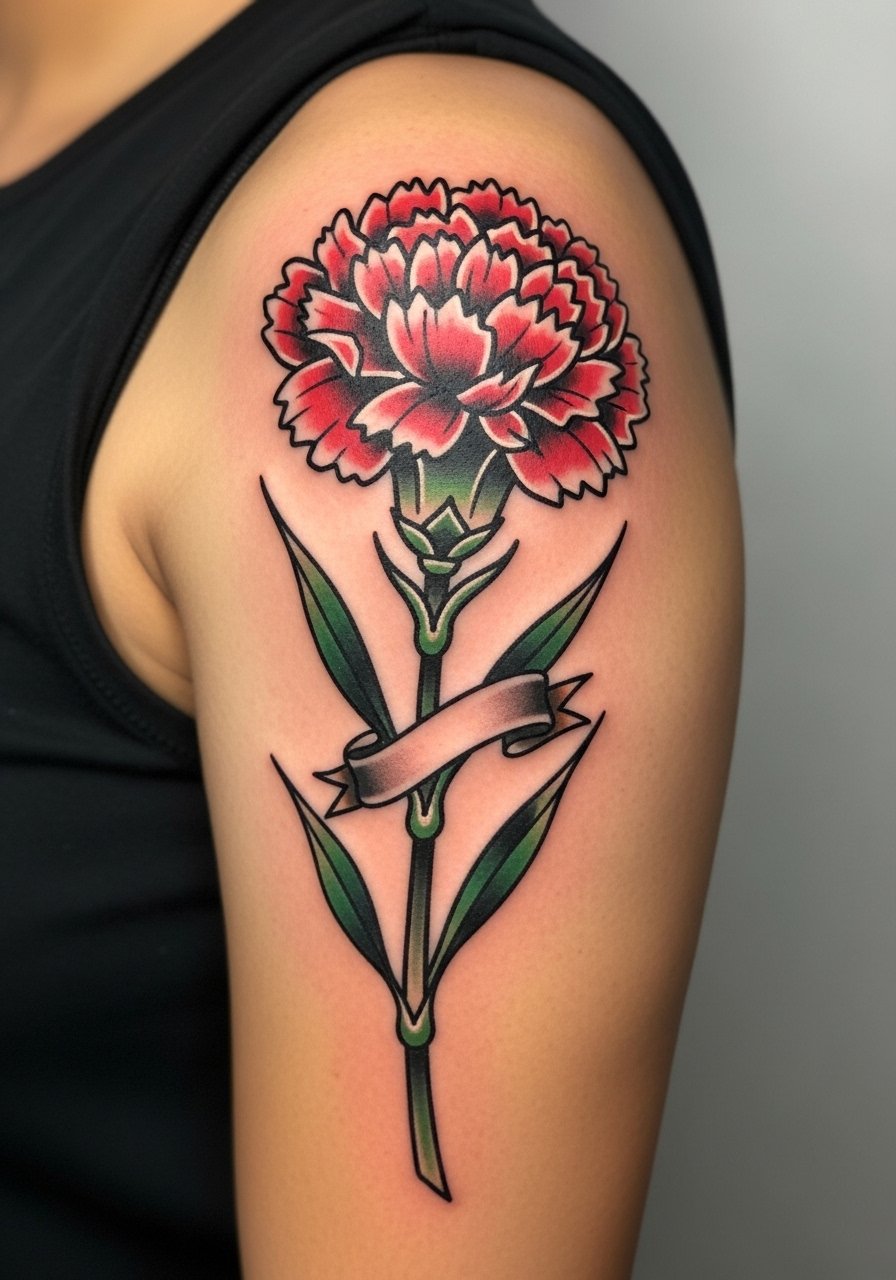
A neo-traditional carnation with a banner lets you add names or dates in a classic tattoo layout. The style balances bold linework and saturated color for a look that reads clearly from a distance.
Style & Design Details
- Tattoo style: Neo-traditional
- Recommended size: 2–4 inches (palm-sized to upper arm)
- Best placements: upper arm, chest, forearm — visible display areas
- Color vs. blackwork: Vibrant color with solid black outlines holds strong over time
- Design elements: bold outlines, saturated petals, banner with lettered script, ornamental leaves, subtle shading
- Longevity note: Bold lines preserve shape; color may need refresh in sun-exposed spots
- Who it suits: Traditional tattoo fans, memorial tattoos, statement lovers
Finding the Right Artist
Seek artists who post neo-traditional florals and bold lettering. Ask about font spacing and how the banner will age. Avoid artists who avoid lettering or have poor line consistency. A simple reference flash sheet helps.
Aftercare & Healing Tips
Lettered banners need crisp edges — avoid heavy ointments that can trap pigment. Use an unscented lotion like After Inked tattoo moisturizer during weeks 1–3. Plan for touch-ups after complete settling if letters blur.
- Single Carnation with Script (Memorial Wrist Band)
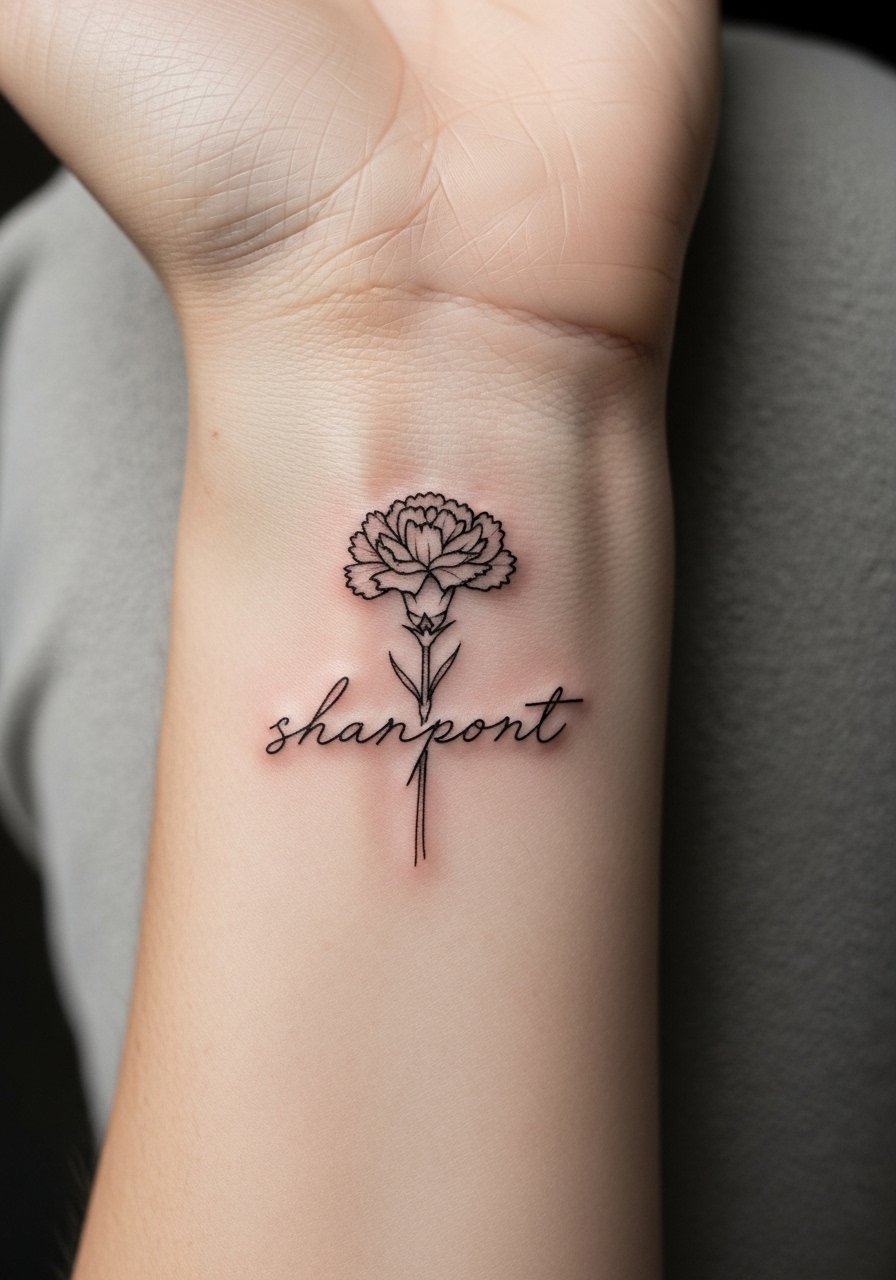
Pairing a carnation with a short script turns a floral into a direct message. This design reads intimate and can be scaled for wrists or collarbones. The script should be bold enough to remain legible over time.
Style & Design Details
- Tattoo style: Fine line with hand-lettered script
- Recommended size: 1.5–3 inches
- Best placements: inner wrist, collarbone, forearm — areas for short phrases
- Color vs. blackwork: Black ink is best for script legibility
- Design elements: single bloom, thin stem, cursive or typewriter font, negative-space highlights
- Longevity note: Script can blur if too thin—pick an artist who thickens lines slightly for durability
- Who it suits: Memorial tattoos, lovers of subtle text
Finding the Right Artist
Look for artists with clean script portfolios and healed lettering photos. Ask for a mockup at the exact scale you want. Avoid artists who won’t do stencil placement checks or who only show fresh photos.
Aftercare & Healing Tips
Wrist tattoos face frequent washing and friction. Keep it covered with light clothing when possible and moisturize with Lubriderm fragrance free lotion. Expect slight softness in script lines; schedule a touch-up if letters lose edge.
- Geometric Carnation Tattoo (Petal + Sacred Geometry Combo)
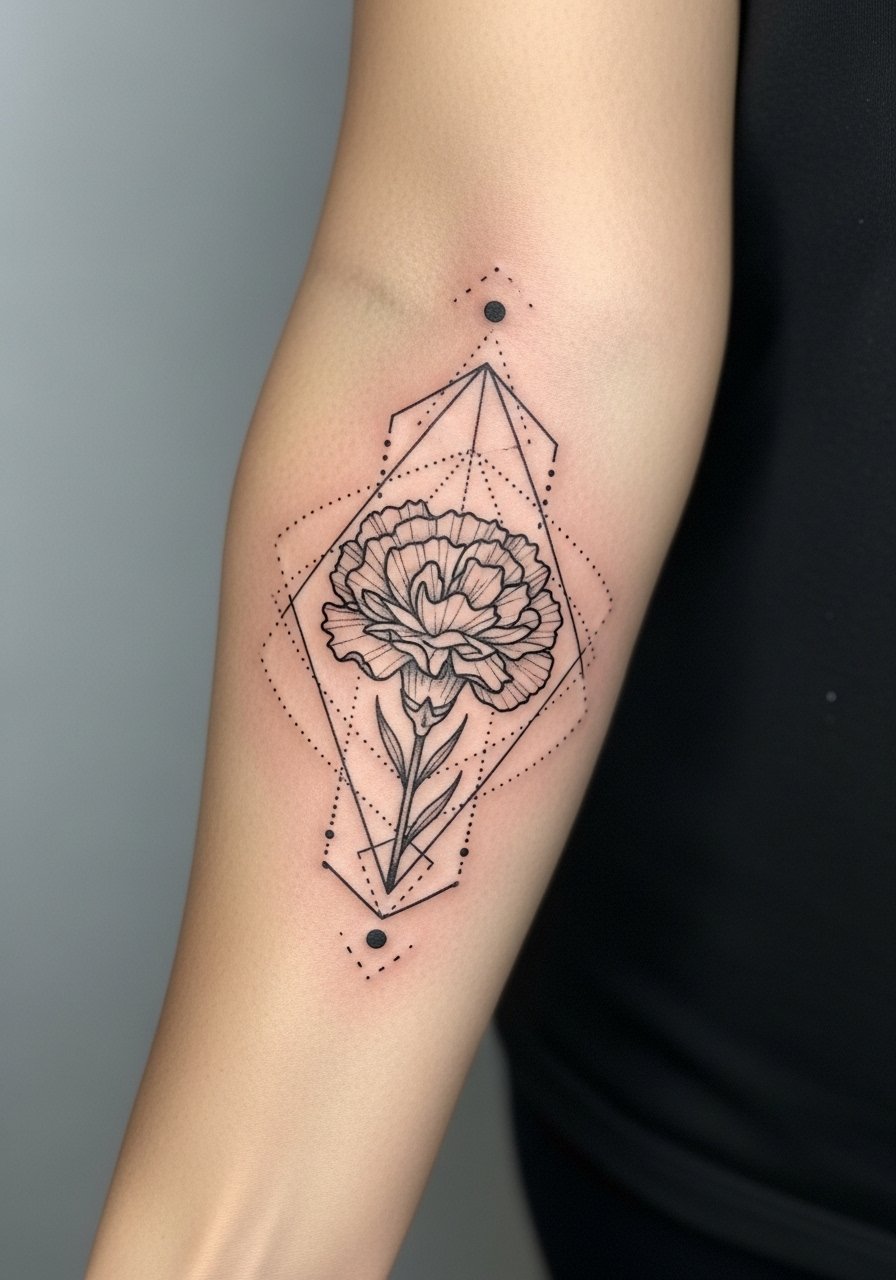
Combining carnations with geometry gives a modern edge. The angular shapes contrast the soft petals, which reads contemporary and balanced—great for minimalists who like structure.
Style & Design Details
- Tattoo style: Geometric / illustrative
- Recommended size: 2–5 inches
- Best placements: inner forearm, sternum, calf — long flat areas suit geometry
- Color vs. blackwork: Blackwork with dotwork shading preserves crisp geometry
- Design elements: mandala-esque frame, dotwork gradients, negative-space petal carving, single or multiple blooms
- Longevity note: Fine geometric lines should be slightly bolder to resist blur
- Who it suits: Modern stylists, symmetry lovers, minimal maximalists
Finding the Right Artist
Find artists comfortable with precise linework and geometric composition. Ask about how they handle intersections between dots and lines. Bring clear references and request a digital mockup for placement preview.
Aftercare & Healing Tips
Geometric details benefit from consistent moisturization to prevent patchy peeling. Use a thin layer of Tattoo Goo aftercare kit during healing and protect with SPF once settled.
- Japanese-Inspired Carnation (Irezumi Accent)
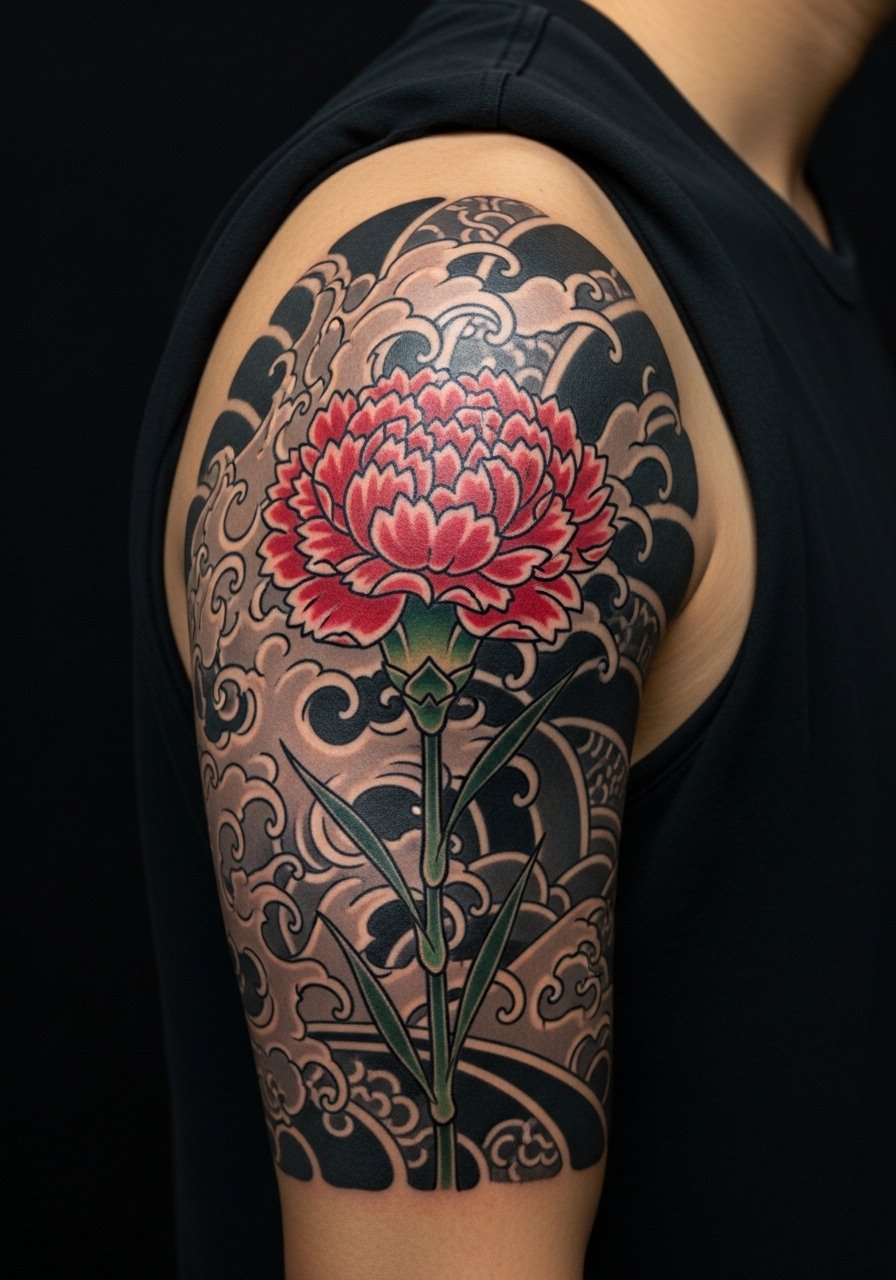
A Japanese-inspired carnation borrows from irezumi motifs—bold forms, flowing background fills, and rhythmic composition. It pairs well with koi, waves, or cloud fills for thematic sleeves.
Style & Design Details
- Tattoo style: Japanese / illustrative
- Recommended size: 3–7 inches (as an accent)
- Best placements: upper arm, back, thigh — areas for larger panels
- Color vs. blackwork: Traditional colors or muted palettes work well
- Design elements: bold outlines, petal layering, wave or cloud background, gold accents, filler patterns
- Longevity note: Bold outlines age well; colored fills may need refresh in sun-prone spots
- Who it suits: Traditionalists, collectors, narrative sleeve planners
Finding the Right Artist
Choose an artist with documented experience in Japanese-style work. Request a composition sketch and ask how they’ll integrate filler elements. Apprentices may assist on larger pieces, but the main artist should handle linework and key details.
Aftercare & Healing Tips
Large panels benefit from staged sessions and targeted aftercare across sessions. Keep each session’s area clean and moisturized with a product like Hustle Butter Deluxe. Protect from sun after healing.
- Tiny Matching Carnation Tattoos (Couples or Friends)
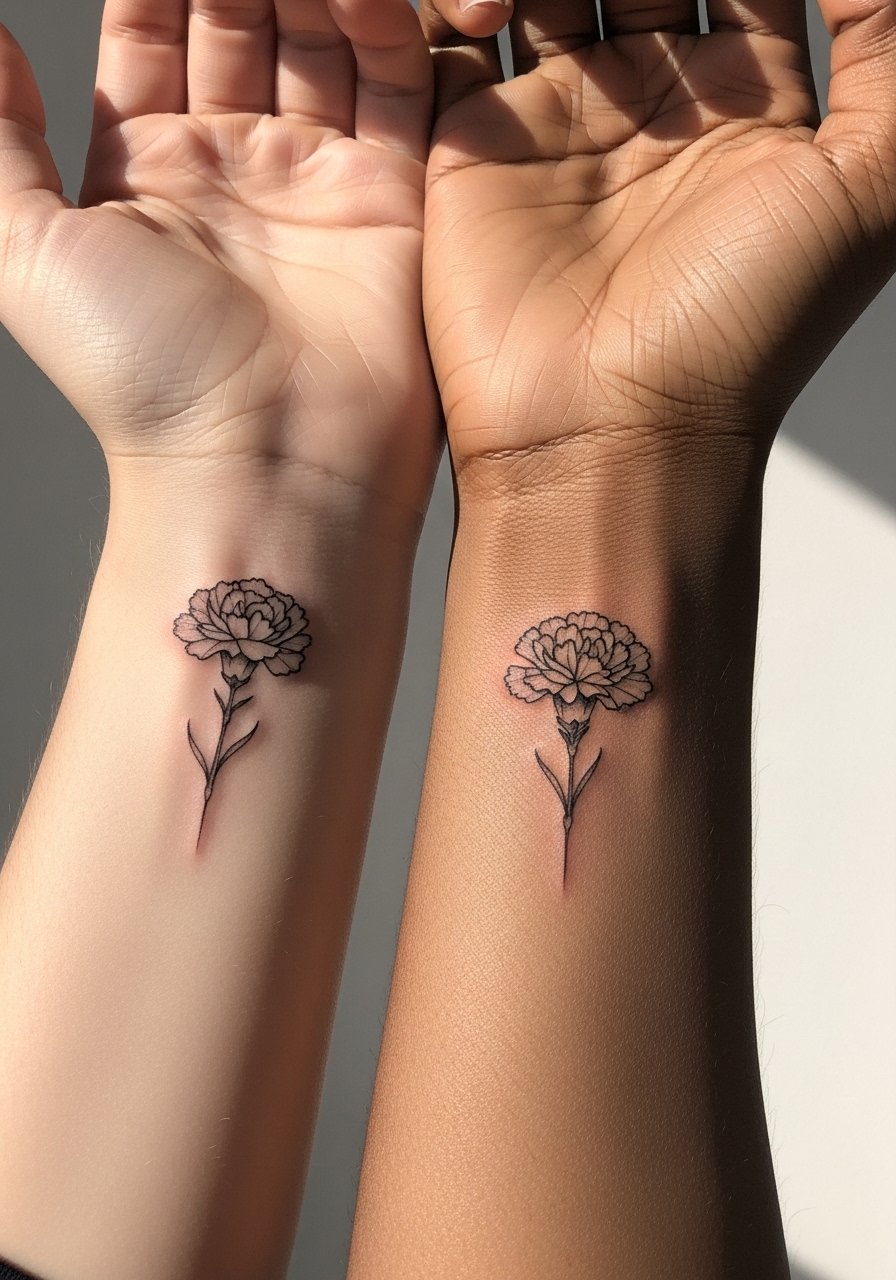
Matching carnations make sweet symbols for friendships or partnerships. Tiny versions are easy to coordinate and low-commitment if you both prefer subtle shared ink.
Style & Design Details
- Tattoo style: Fine line / mini illustrations
- Recommended size: 0.8–1.5 inches
- Best placements: inner wrist, side of finger, ankle — small, visible spots
- Color vs. blackwork: Black line keeps matching easier to maintain over time
- Design elements: single bloom, mini stem, optional small hearts or initials, mirror placement
- Longevity note: Small lines can fade; keep a record of stencil size for future touch-ups
- Who it suits: Couples, best friends, low-profile connectors
Finding the Right Artist
Ask for micro-scale healed photos and confirm they’ve done matching work. Discuss symmetry and scaling. Use Inkbox temporary tattoo kit to test different placements together.
Aftercare & Healing Tips
Small matching tattoos heal quickly. Keep them dry for 24 hours, then wash gently and apply thin lotion. Avoid putting wrist-to-wrist contact during initial week to reduce scabbing transfer. Plan joint touch-ups if lines soften at different rates.
- Carnation and Butterfly (Symbolic Growth Piece)
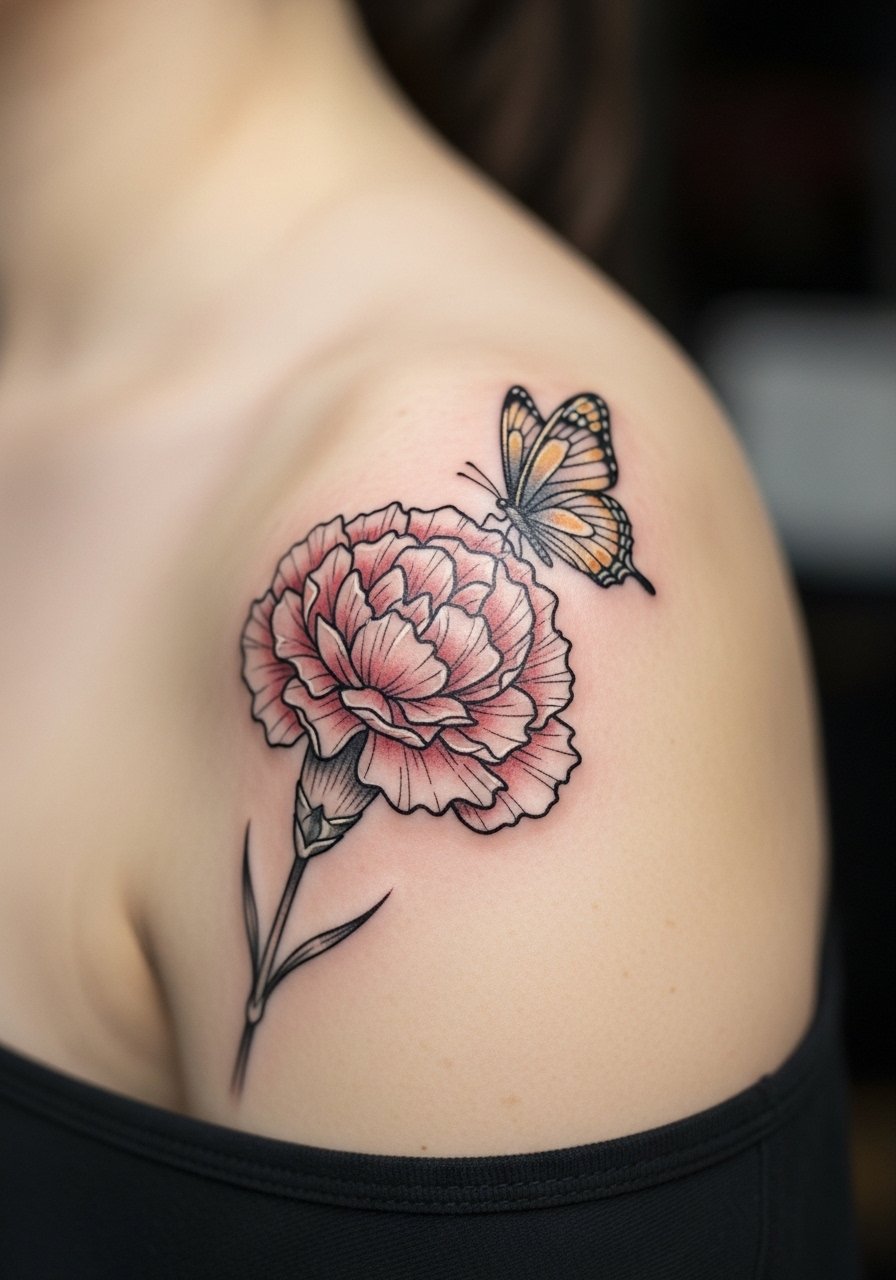
A carnation plus butterfly symbolizes transformation and remembrance. This pairing reads light and hopeful. The butterfly adds movement and can be scaled tiny or larger depending on placement.
Style & Design Details
- Tattoo style: Illustrative / fine line
- Recommended size: 2–4 inches
- Best placements: shoulder, clavicle, forearm — areas for motion and visibility
- Color vs. blackwork: Color for butterfly adds vibrancy; keep bloom subdued for balance
- Design elements: delicate wings, petal texture, negative-space highlights, dotted flight trail
- Longevity note: Small color details may require refresh; black line anchors composition
- Who it suits: Symbolic tattoo seekers, playful aesthetes
Finding the Right Artist
Find artists who combine florals and small fauna gracefully. Ask to see healed color photos and how they handle tiny wing details. If unsure, a stencil test aids placement confidence.
Aftercare & Healing Tips
Butterfly wings often contain tiny color blocks—keep them well-hydrated with After Inked tattoo moisturizer and out of direct sun. Avoid picking at scabs that form along wing edges.
- Botanical Linework Sleeve (Multiple Carnations in Linear Flow)
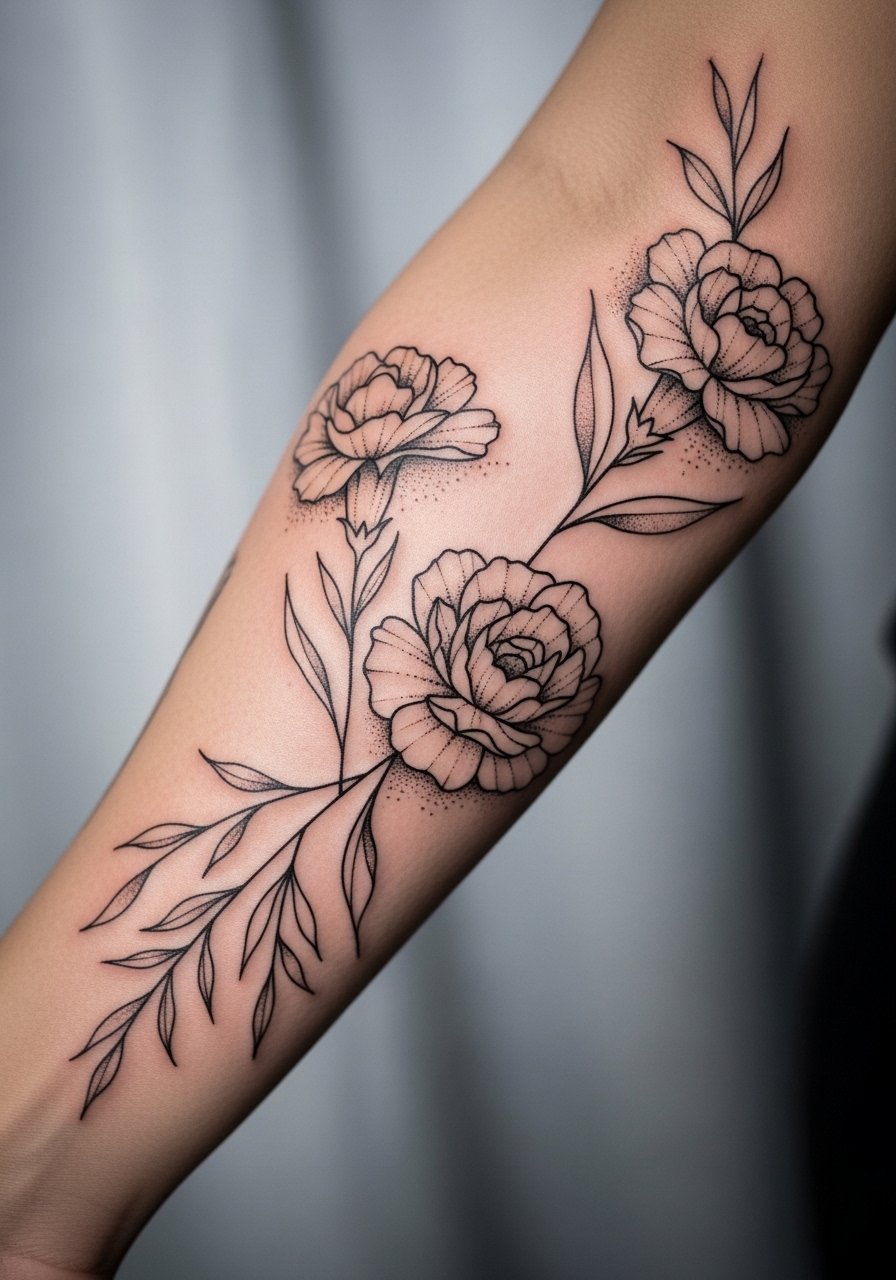
A botanical linework sleeve places multiple carnations in a rhythmic band. It reads airy and cohesive, letting negative space breathe between blooms. Great for someone who wants an elegant botanical collection rather than solid color.
Style & Design Details
- Tattoo style: Linework / illustrative
- Recommended size: full/half sleeve composition, multiple blooms sized 2–4 inches each
- Best placements: forearm sleeve, full arm, calf — continuous surfaces for flow
- Color vs. blackwork: Black line with minimal shading emphasizes form; color spots are optional
- Design elements: repeating blooms, leaf clusters, trailing stems, dotwork fill, negative space bands
- Longevity note: Lines across a sleeve should vary in weight to prevent uniform fade
- Who it suits: Sleeve planners, botanical collectors, minimalist maximalists
Finding the Right Artist
Choose an artist experienced in multi-session composition and flow. Discuss how each session will connect pieces. Ask for a sleeve mockup or charcoal layout and keep a record of pigment choices for harmony.
Aftercare & Healing Tips
Sleeves heal in stages—follow aftercare per session. Keep each area wrapped or protected if recommended and use Saniderm tattoo bandage selectively. Moisturize regularly to keep the sleeve cohesive in texture.
- Realistic Carnation (Photorealism Petal Detail)
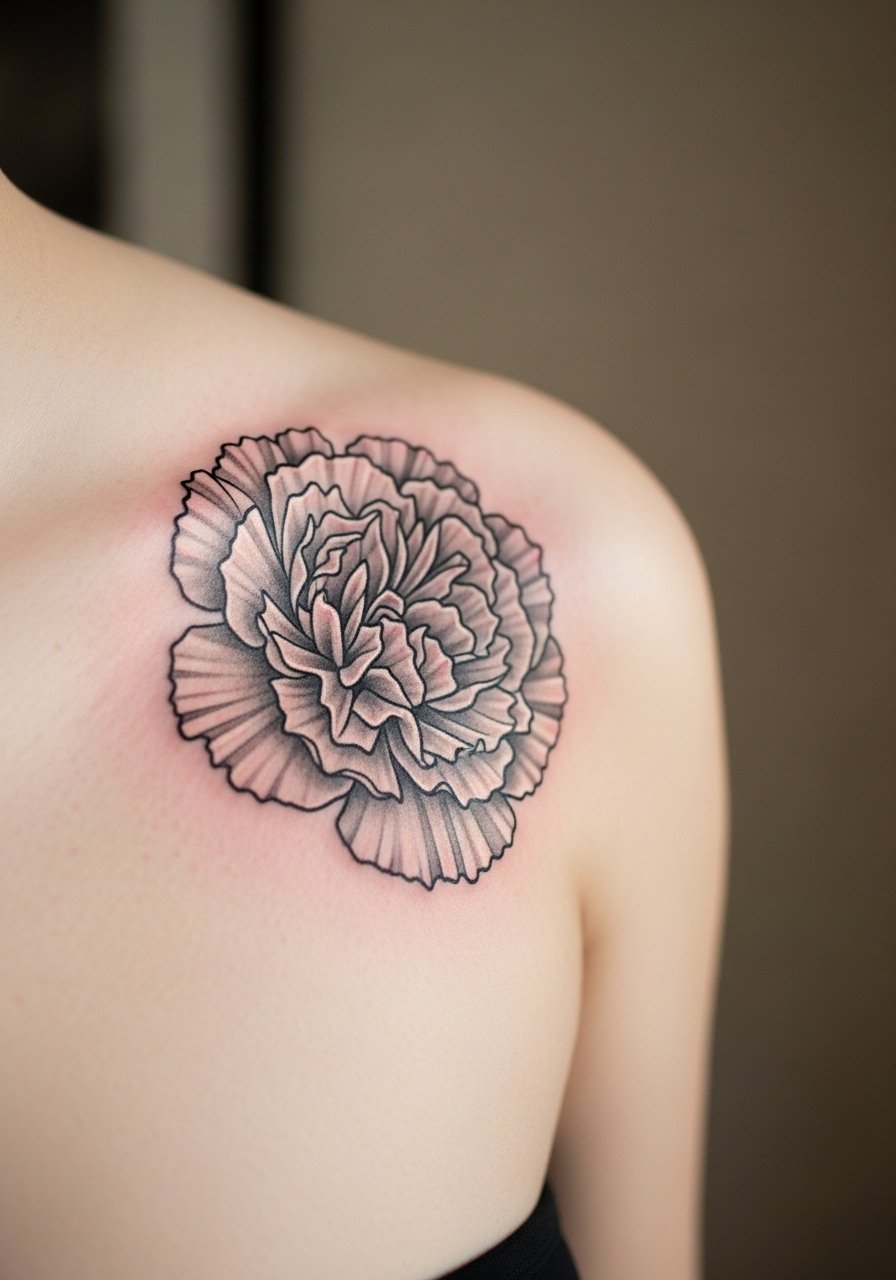
Photorealism captures the carnation’s ruffled texture with layered shading. This style requires a practiced hand and is striking on chest, thigh, or scapula placements.
Style & Design Details
- Tattoo style: Realism / photorealistic
- Recommended size: 3–6 inches to preserve detail
- Best placements: upper chest, thigh, back — larger flat areas for detail
- Color vs. blackwork: Muted color palettes mimic real petals best
- Design elements: layered petal shading, soft edge transitions, glossy highlights, subtle stem shadowing
- Longevity note: Fine gradations may soften; larger scale helps preserve realism
- Who it suits: Collectors, realism fans, people with the patience for longer sessions
Finding the Right Artist
Only pick artists who specialize in realism and can show healed images. Ask about reference photos and how they translate light sources. Expect longer sessions and consider staged sittings.
Aftercare & Healing Tips
Realistic pieces need gentle care to preserve gradients. Use an unscented lotion like Lubriderm fragrance free lotion and avoid heavy scabbing by following Saniderm or recommended wrap protocols. Touch-ups may be needed to restore subtle midtones.
- Gothic Black Carnation (Dark Academia Aesthetic)
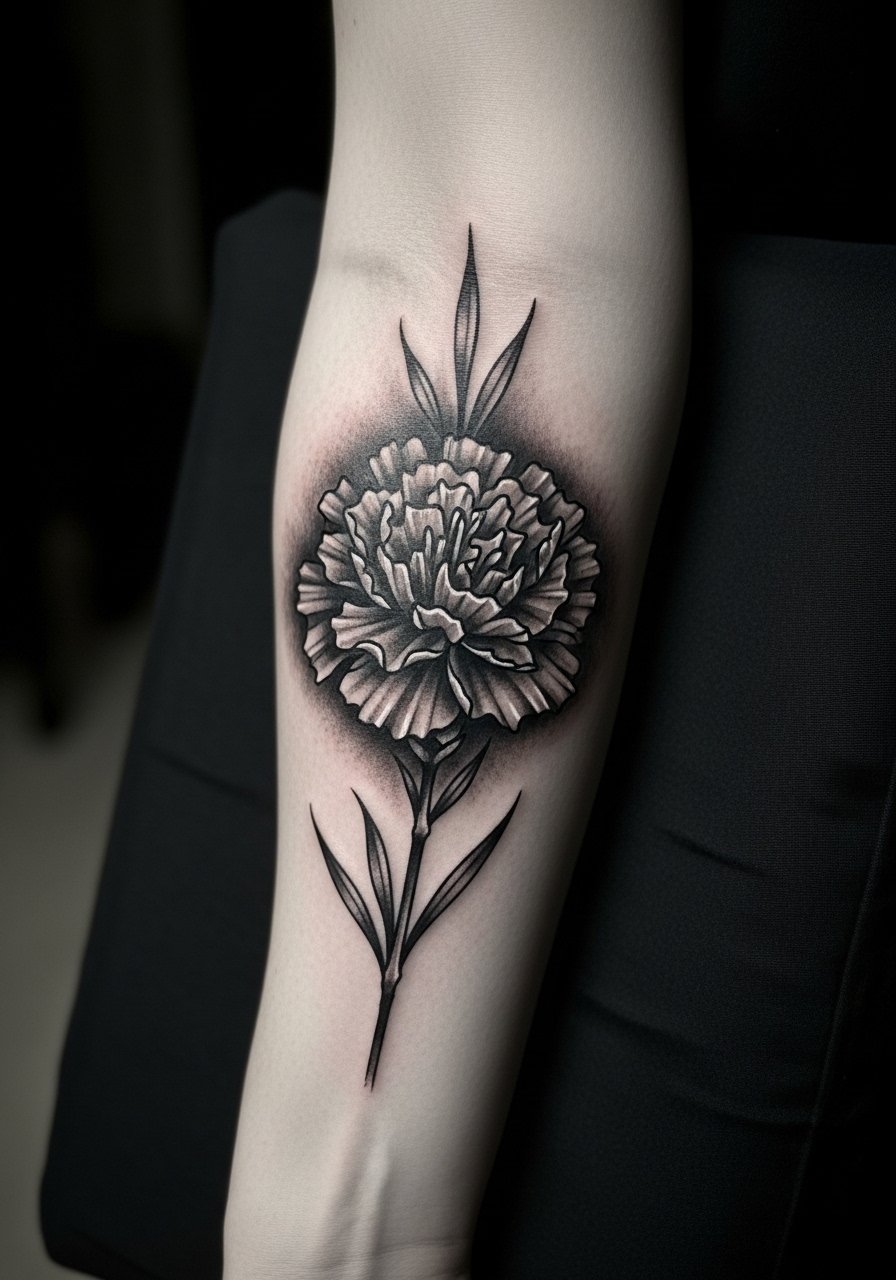
A gothic black carnation leans into dark academia aesthetics—moody, introspective, and rich in shadow. Use strong greys and deep blacks for dramatic petals.
Style & Design Details
- Tattoo style: Black & grey realism / dark illustrative
- Recommended size: 3–5 inches
- Best placements: inner forearm, sternum, upper arm — intimate yet visible spots
- Color vs. blackwork: Black and grey gradients for moody depth
- Design elements: deep shadowing, crisp highlights, textured petal edges, possible script or hourglass element
- Longevity note: Black and grey holds well when properly saturated
- Who it suits: Dark academia fans, people drawn to moody statements
Finding the Right Artist
Find an artist with strong black-and-grey gradation skills. Ask for healed photos showing shadow transitions. Avoid artists who over-saturate without smooth blending.
Aftercare & Healing Tips
Use fragrance-free soap and keep heavy shadows from becoming scabby by moisturizing with After Inked tattoo moisturizer. Avoid sun during the first year to keep blacks deep.
- Mini Carnation Tattoo on Finger (Tiny but Meaningful)
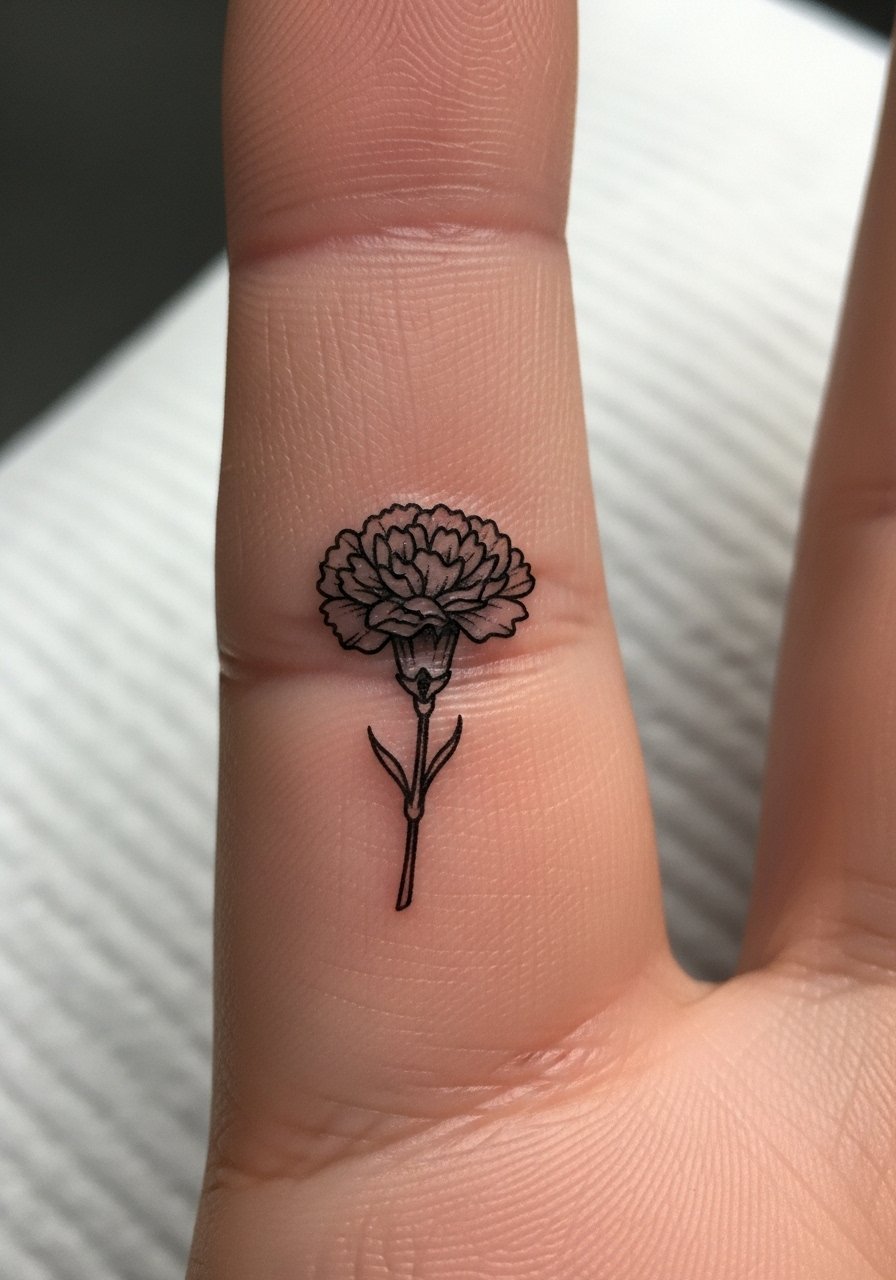
Fingertip and finger-side tattoos are high-contact but charming. A micro carnation here reads like jewelry. Be aware of faster fading and potential touch-ups.
Style & Design Details
- Tattoo style: Micro fine line
- Recommended size: 0.4–0.8 inches
- Best placements: side of finger, between knuckles, under ring finger — delicate spots
- Color vs. blackwork: Black is recommended for durability
- Design elements: tiny bloom, tiny stem, minimized detail, bolded focal line to reduce blur
- Longevity note: Fingers fade quickly; plan on touch-ups yearly
- Who it suits: People who love micro tattoos and don’t mind maintenance
Finding the Right Artist
Seek artists with experience in finger tattoos and healed photos. Ask how they recommend thickening specific lines to preserve shape. Avoid low-cost walk-ins for fingers—good technique matters.
Aftercare & Healing Tips
Keep finger tattoos dry for the first 24 hours and wash after tasks. Expect faster fading; apply thin layers of Hustle Butter Deluxe during healing. Avoid submerging hands in water for long periods during week one.
- Carnation and Skull (Contrast of Life & Mortality)
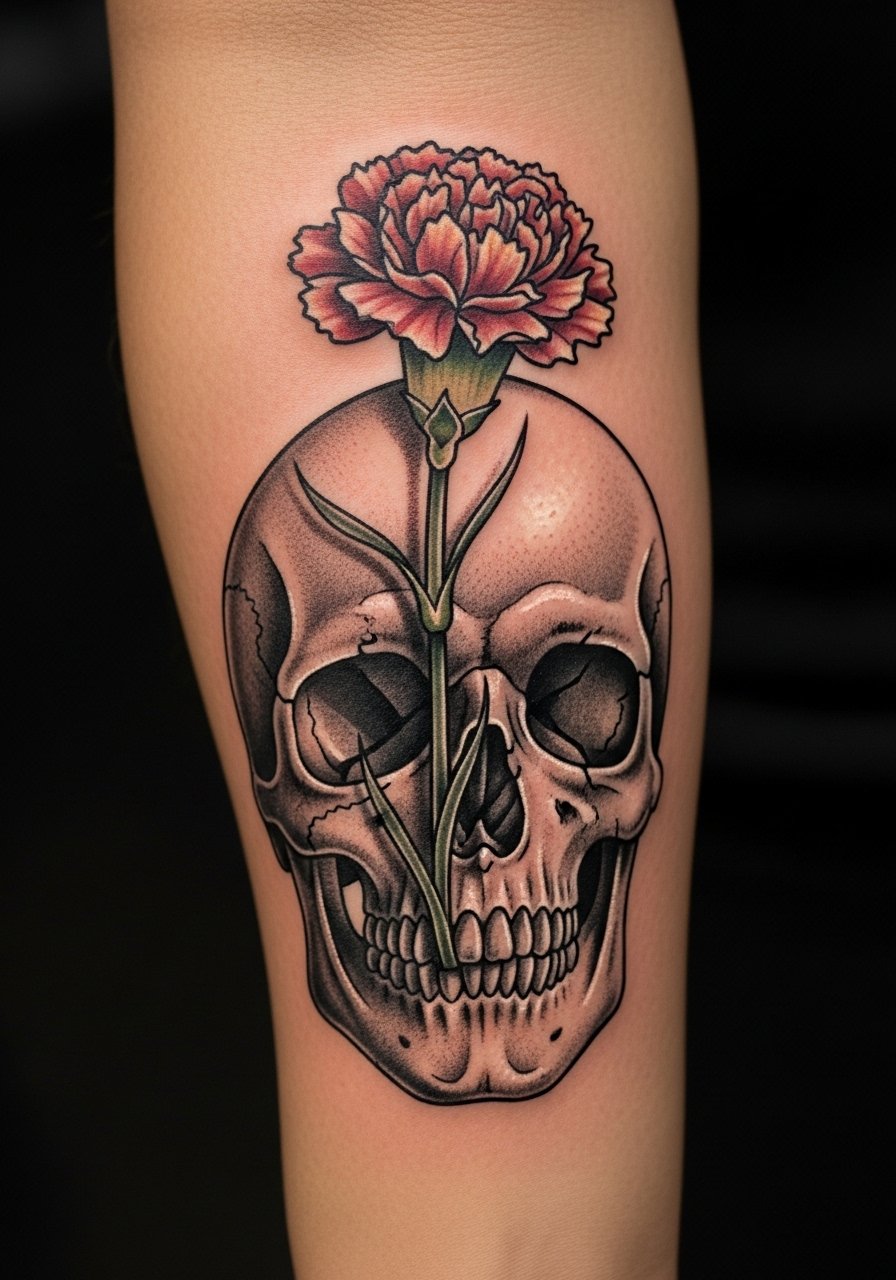
Pairing a carnation with a skull creates contrast—soft life sprouting from hard anatomy. It’s a bold narrative piece that suits darker palettes or symbolic statements.
Style & Design Details
- Tattoo style: Realistic illustrative
- Recommended size: 3–6 inches
- Best placements: outer forearm, thigh, back — areas for storytelling
- Color vs. blackwork: Black & grey skull with a colored carnation stands out
- Design elements: realistic skull shading, layered petals, negative-space highlights, vines or roots
- Longevity note: Contrast helps maintain visual interest as color fades
- Who it suits: Narrative art lovers, people who enjoy symbolic contrast
Finding the Right Artist
Choose artists with both skull realism and floral work. Ask how they plan to keep petal edges crisp against heavy skull shading. Seek healed photos of similar compositions.
Aftercare & Healing Tips
Large contrast pieces should be moisturized well to prevent uneven scab formation. Use fragrance-free products and avoid sun to protect both skin tones and dark shading. Consider Saniderm if your shop supports it.
- Carnation Collarbone Tattoo (Delicate Symmetry)
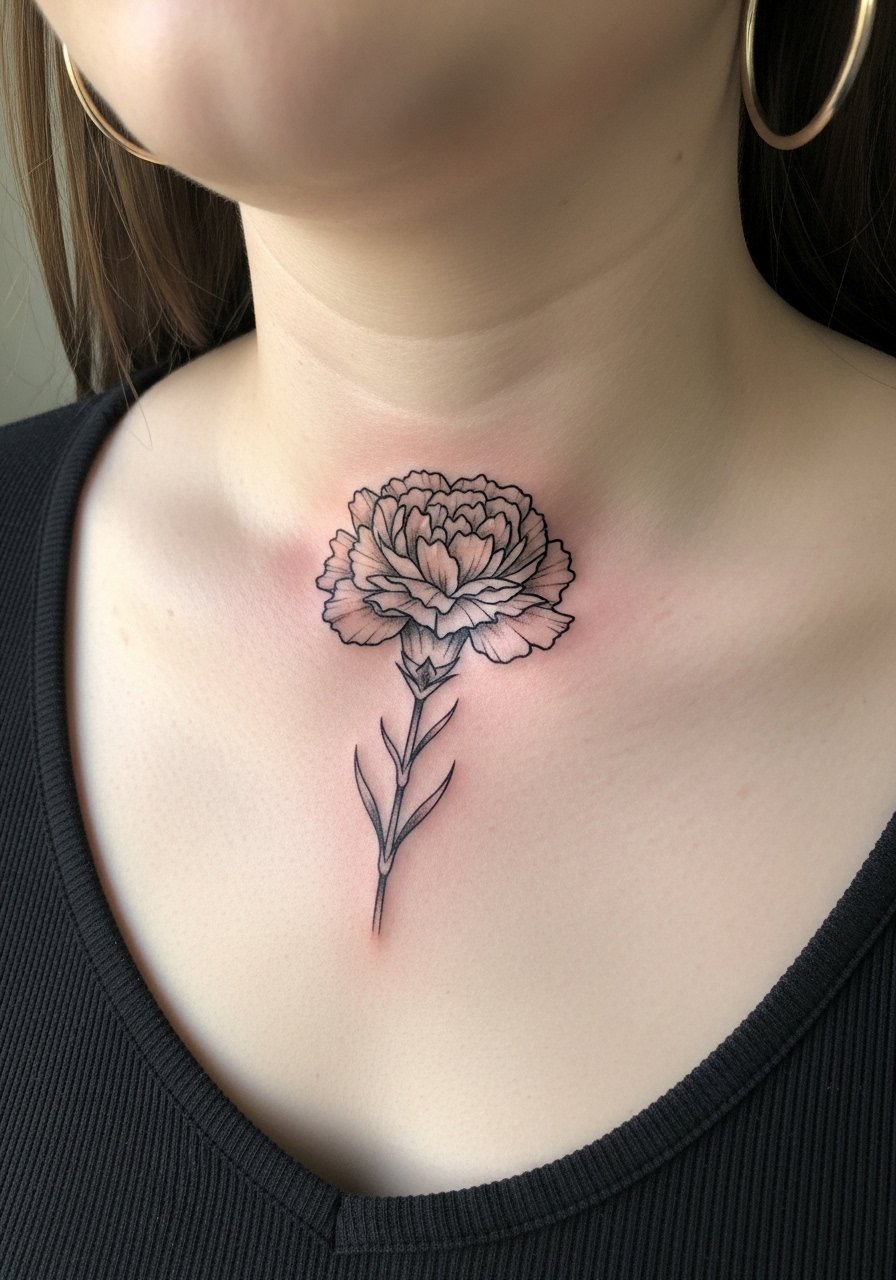
A collarbone carnation sits elegantly with natural body lines. It can be centered or offset, paired with small script or left as a single statement.
Style & Design Details
- Tattoo style: Fine line or small illustrative
- Recommended size: 2–4 inches
- Best placements: collarbone, sternum, upper chest — flattering horizontal areas
- Color vs. blackwork: Subtle color looks feminine; black line keeps structure
- Design elements: gently curved stem to follow bone, petal depth, light shading, optional dotwork halo
- Longevity note: Collarbone sees sun; apply SPF after healing for color pieces
- Who it suits: People who love visible yet elegant placements
Finding the Right Artist
Pick artists with chest floral work and healed photos. Ask for a stencil to check how it sits over the bone. Avoid artists who shortcut stencil placement.
Aftercare & Healing Tips
Keep clothing soft and breathable to avoid friction. Use After Inked or Hustle Butter during peeling. Apply SPF when exposed to sunlight.
- Line-Only Carnation (Contemporary Single-Line Art)
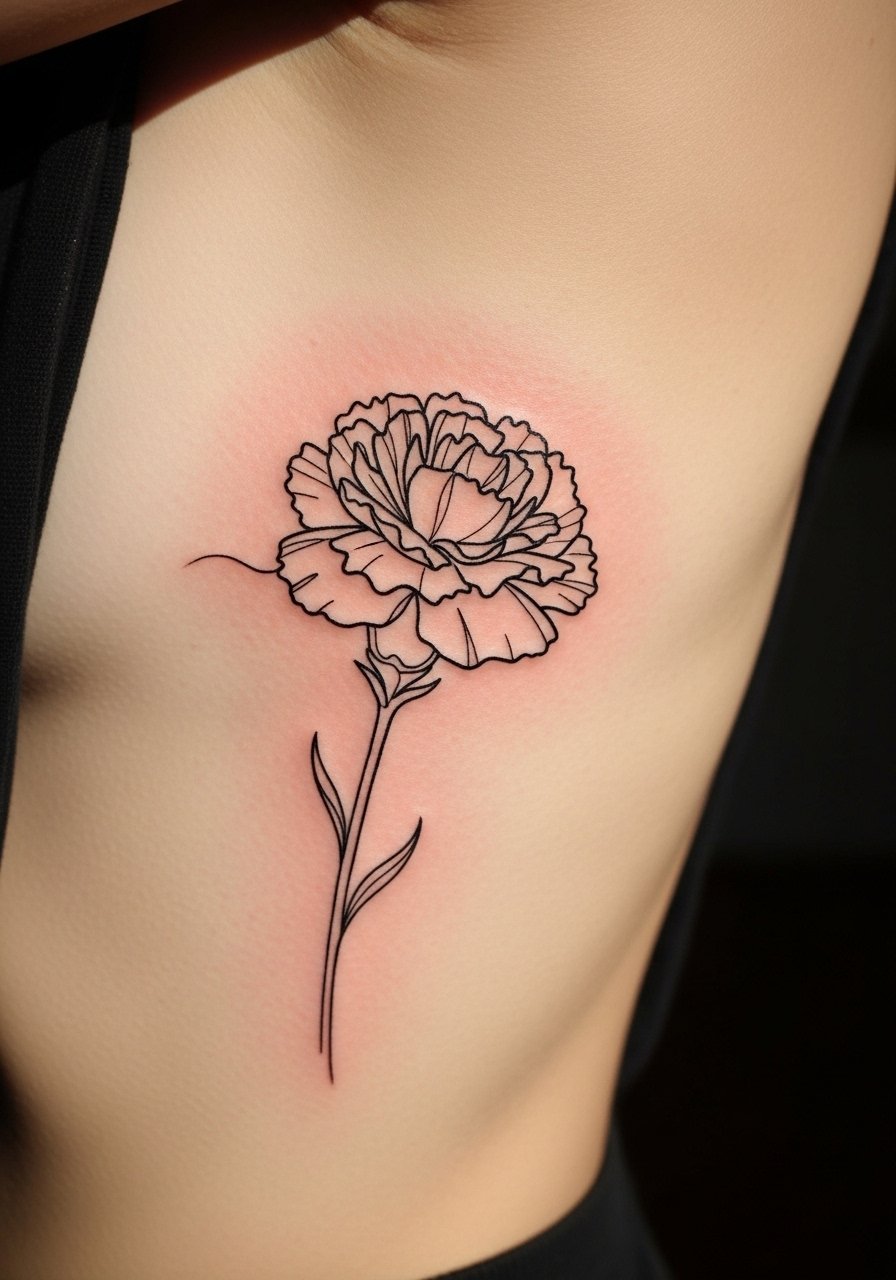
Continuous single-line tattoos are modern and sculptural. A single line forming a carnation feels elegant and minimal, like a drawn sketch resting on skin.
Style & Design Details
- Tattoo style: Continuous line / single-line
- Recommended size: 2–5 inches
- Best placements: ribcage, inner forearm, thigh — places that suit flowing lines
- Color vs. blackwork: Black line is best to preserve the visual effect
- Design elements: continuous unbroken line, minimal shading, negative space, rhythmic petal curves
- Longevity note: Single-line work needs consistent thickness to avoid parts fading out entirely
- Who it suits: Modern art lovers, minimalists
Finding the Right Artist
Not all artists nail the continuous-line look. Look for portfolios with confident single-stroke florals and healed photos. Ask about line thickness to prevent parts from disappearing.
Aftercare & Healing Tips
Follow standard wash-and-moisturize protocol. Keep out of tight clothing that may rub and use Hustle Butter Deluxe during peeling. Plan a touch-up if any segment fades unevenly.
- Vintage Botanical Carnation (Herbarium-Style)
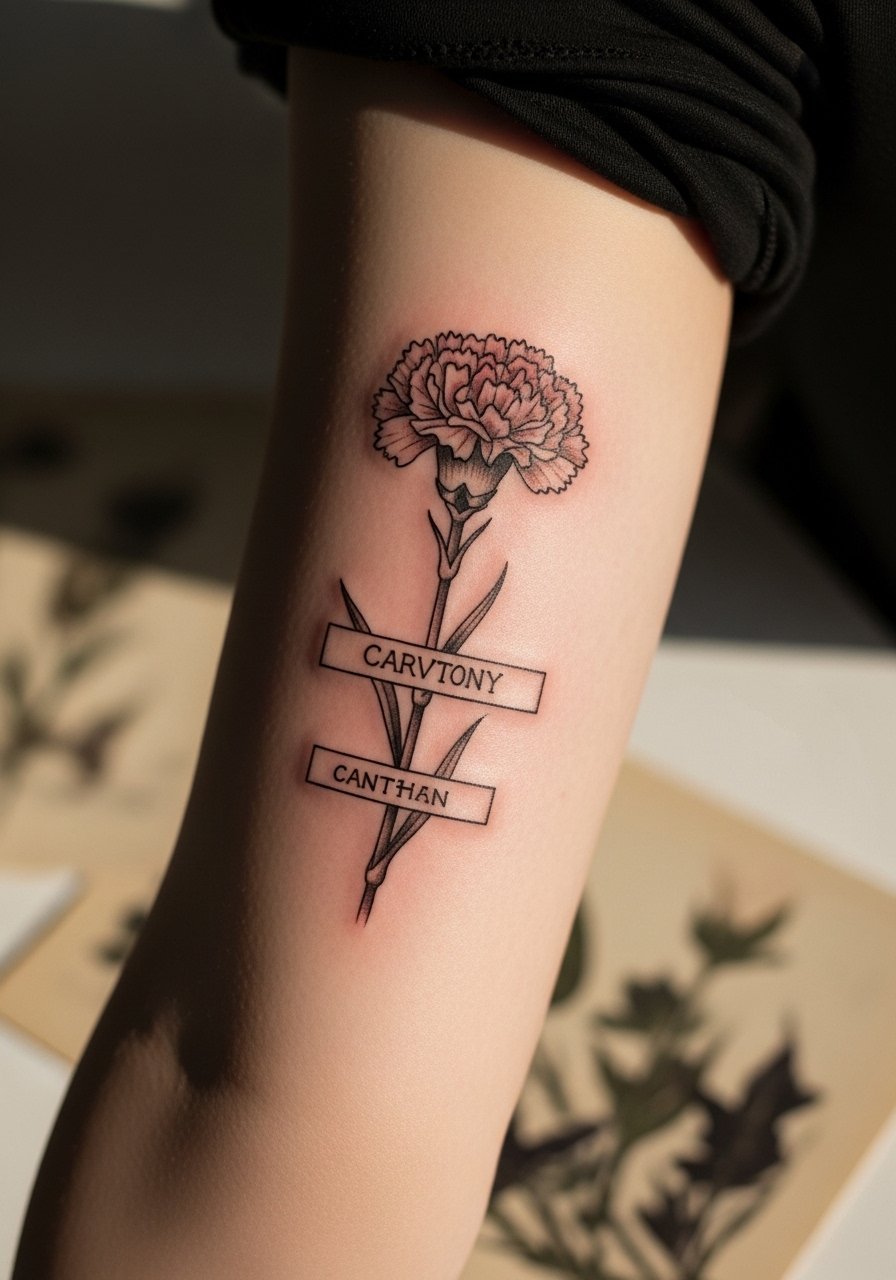
A vintage botanical carnation mimics herbarium sketches—clean lines, thin labels, and muted washes create a study-like piece. It feels scholarly and timeless.
Style & Design Details
- Tattoo style: Botanical / illustrative
- Recommended size: 3–5 inches
- Best placements: inner bicep, forearm, upper back — flat areas good for detail
- Color vs. blackwork: Muted sepia or grey ink can mimic aged prints; subtle color adds authenticity
- Design elements: scientific label, thin stems, petal cross-sections, stippling for shade, subtle wash
- Longevity note: Line-detail benefits from slightly heavier lines to avoid loss over time
- Who it suits: Botanical lovers, vintage aesthetic fans, intellectual vibes
Finding the Right Artist
Choose artists who post botanical illustrations and healed photos. Ask how they create antique ink effects and whether they’ll age the piece so it looks natural over time.
Aftercare & Healing Tips
Keep the piece moisturized and out of sun. Use Dr. Bronner's unscented liquid soap for gentle cleaning and After Inked while peeling.
- Petal Cluster Behind the Knee (Unexpected Placement)
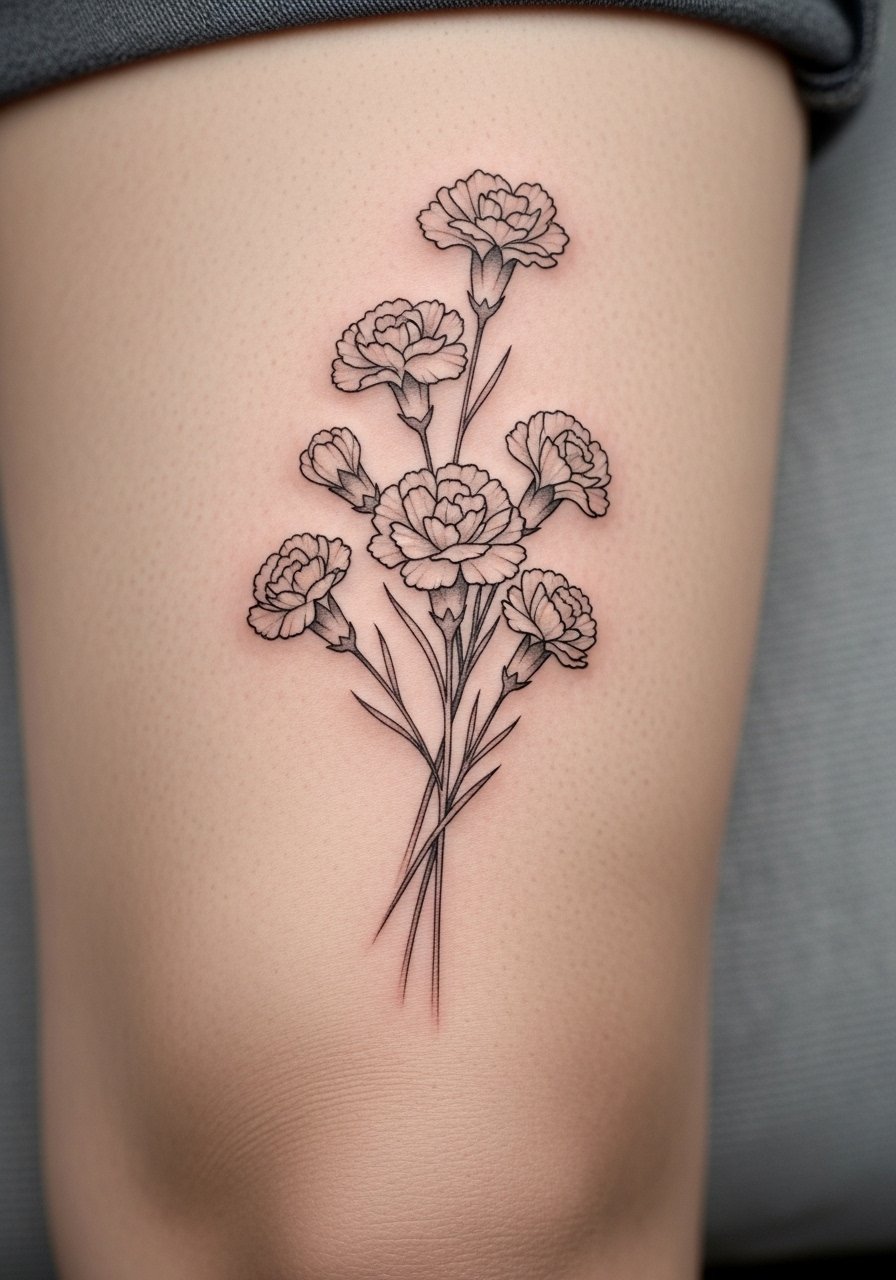
Behind-the-knee tattoos are playful and somewhat hidden. A cluster of small carnations fits the curvature and looks lovely when visible in dresses or shorts.
Style & Design Details
- Tattoo style: Fine line / illustrative
- Recommended size: 2–4 inches cluster
- Best placements: behind the knee, calf, back of thigh — curved areas for playful peeks
- Color vs. blackwork: Black and soft grey work well; color can fade faster in high-motion zones
- Design elements: small clusters, trailing stems, dotwork shadows, curved composition
- Longevity note: High movement means more frequent touch-ups; keep lines slightly bolder
- Who it suits: Quirky placement lovers, hidden tattoo fans
Finding the Right Artist
Ask artists about experience with behind-the-knee projects. Motion areas need confident linework. Request a stencil test to check elbow/knee flex points.
Aftercare & Healing Tips
Motion areas can scab more; keep the joint gently mobile but avoid over-flexing during week one. Apply an unscented lotion like Lubriderm fragrance free lotion. Expect to come back for touch-ups.
- Carnation Wristband Tattoo (Wrap-Around Floral Band)
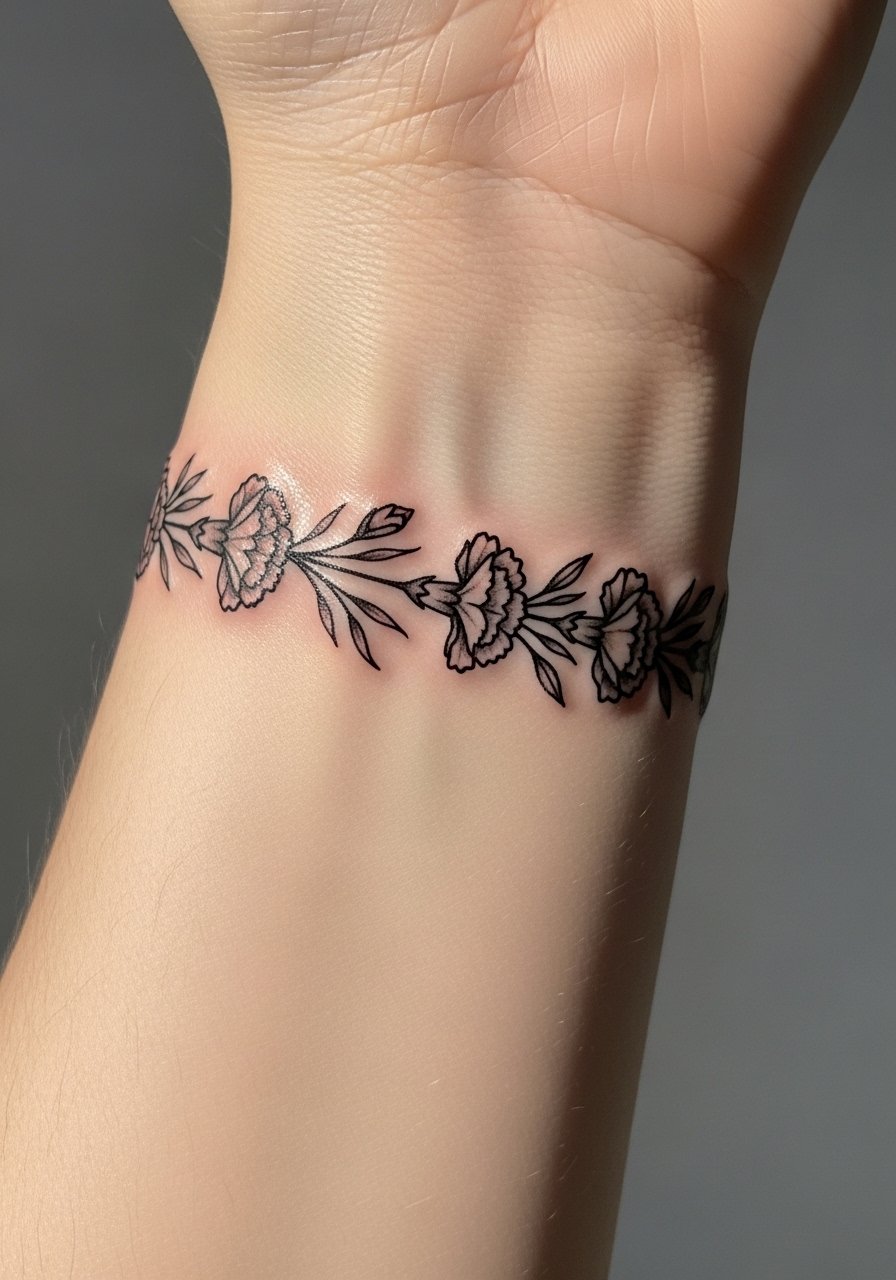
A carnation wristband reads like a floral bracelet. It can be continuous or break at the underside for comfort. Bands are decorative and very photogenic.
Style & Design Details
- Tattoo style: Illustrative band / fine line
- Recommended size: Circumference-matched band, blooms 0.8–1.5 inches each
- Best placements: wrist, ankle, upper arm band — circular spots
- Color vs. blackwork: Black line with minimal color keeps band timeless
- Design elements: repeated blooms, trailing leaves, tiny connectors, optional bead or dot separators
- Longevity note: Bands see friction from watches and clothing; slightly bolder lines help
- Who it suits: Decorative ink lovers, bracelet-alternative fans
Finding the Right Artist
Ask for symmetric stencil placement and to test wrist movement. Make sure the artist maps where the band meets so your wrist hair or watch won’t interfere.
Aftercare & Healing Tips
Wristbands need regular moisturizing and SPF on the outer band. Use a breathable wrap like Saniderm tattoo bandage if recommended and After Inked during peeling.
- Micro Realistic Carnation on Ear Cartilage (Tiny & Textured)
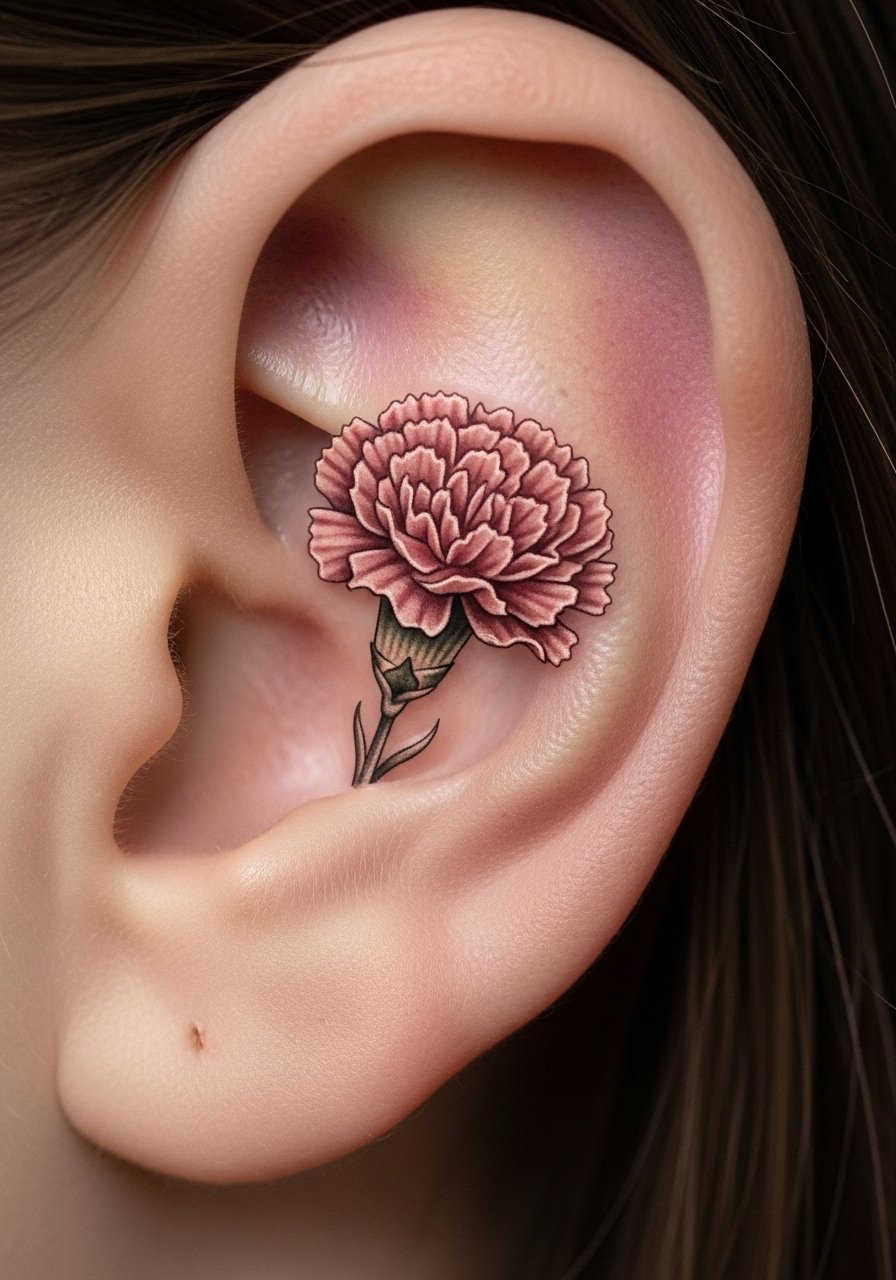
Cartilage is a unique canvas—micro realistic carnations here look like delicate jewelry. Pain can be higher, but results are refined and very personal.
Style & Design Details
- Tattoo style: Micro realism / fine shade
- Recommended size: 0.5–1 inch
- Best placements: ear cartilage, behind ear, small facial-adjacent spots — low-scale places
- Color vs. blackwork: Soft grey likely best; color may not hold as well on thin cartilage skin
- Design elements: fine petal shading, crisp negative-space highlights, tiny stem or bead connector
- Longevity note: Cartilage heals differently—tat too shallow will fade faster; well-placed shading matters
- Who it suits: Those who like unique micro placements, jewelry-alternative fans
Finding the Right Artist
Pick artists used to piercing-adjacent or cartilage tattoos with micro realism experience. Confirm needle depth practice and view healed photos of similar placements.
Aftercare & Healing Tips
Cartilage tattoos can crust more; keep the area clean and avoid sleeping on it for the first two weeks. Use a mild soap and small dab of Hustle Butter Deluxe. Watch for swelling; contact your artist if prolonged redness occurs.
- Carnation Flower Tattoo as a Shoulder Cap (Floral Shoulder Panel)
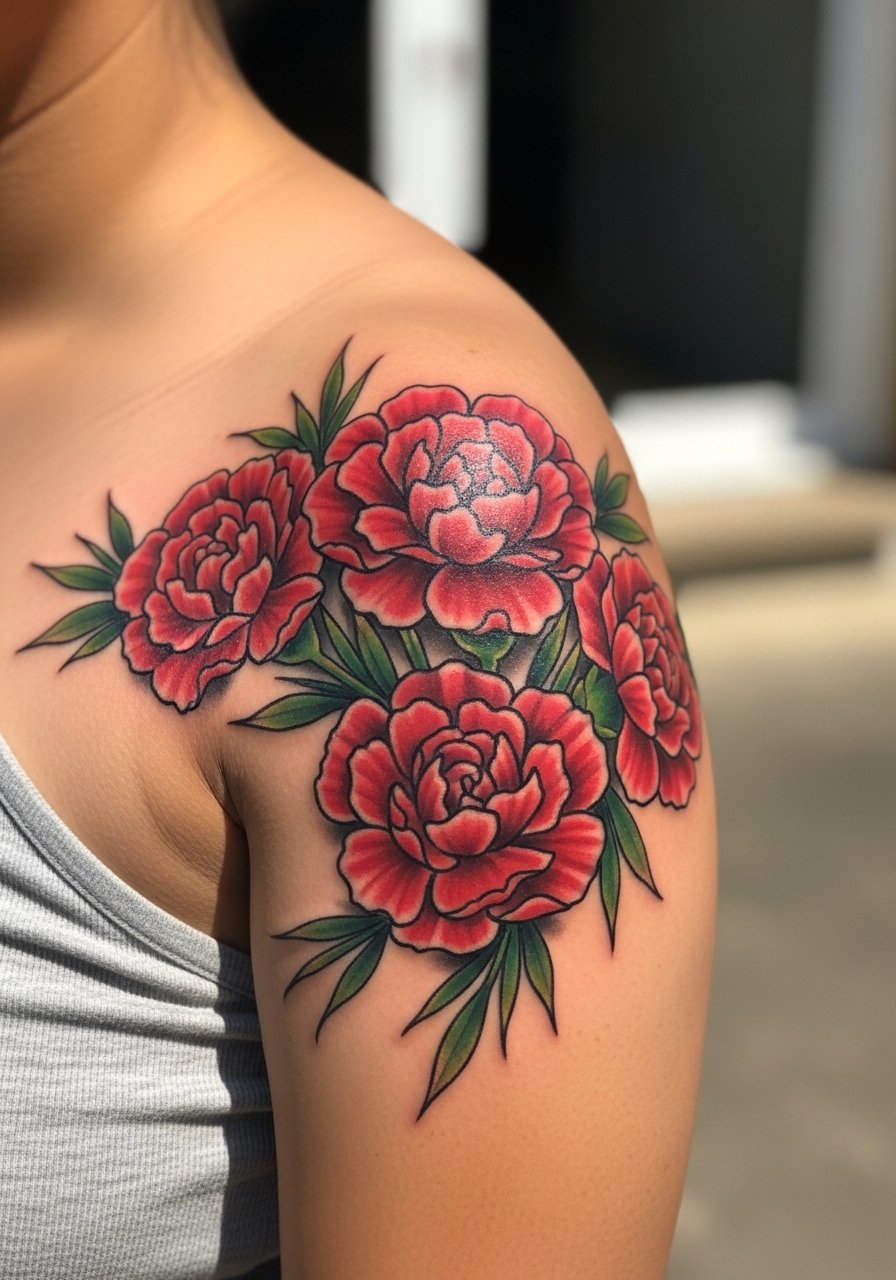
A shoulder cap carnation creates a confident, wearable panel that sits nicely under sleeves. It reads both floral and sculptural, with room to expand into a back or sleeve piece later.
Style & Design Details
- Tattoo style: Illustrative / neo-traditional blend
- Recommended size: 3–6 inches (shoulder cap)
- Best placements: shoulder cap, upper arm, partial back panel — flexible modular areas
- Color vs. blackwork: Color adds pop; black outlines keep shape for expansion
- Design elements: layered blooms, sweeping leaves, filler dots, possible small script along the rim
- Longevity note: Shoulder is sun-exposed if you wear tanks—use SPF to protect color
- Who it suits: People wanting a standalone piece with expansion potential
Finding the Right Artist
Choose an artist with shoulder panels in their portfolio and who can show healed expansion work. Talk through future sleeve plans if you might continue the piece later.
Aftercare & Healing Tips
Shoulder pieces benefit from good sun protection after healing. Use Sun Bum SPF 50 sunscreen stick when exposed. Keep moisturized with After Inked and expect full settling at 6–8 weeks.
Thanks for scrolling—whether you prefer a whisper of linework or a bold blackwork bloom, these carnation flower tattoo ideas show just how versatile a single flower can be. Save this pin and bring your top picks to your consultation so your artist can scale and refine them for your unique placement. Which style resonated with you most—fine line, neo-traditional, or blackwork—and where would you put a carnation? If you want one hero product for near-universal use, I keep a small tub of Hustle Butter Deluxe tattoo aftercare balm on hand; it’s gentle during peeling and works for most skin types.
Happy planning—and don’t forget to protect fresh ink with gentle cleansing, steady moisturization, and SPF as soon as it’s healed.