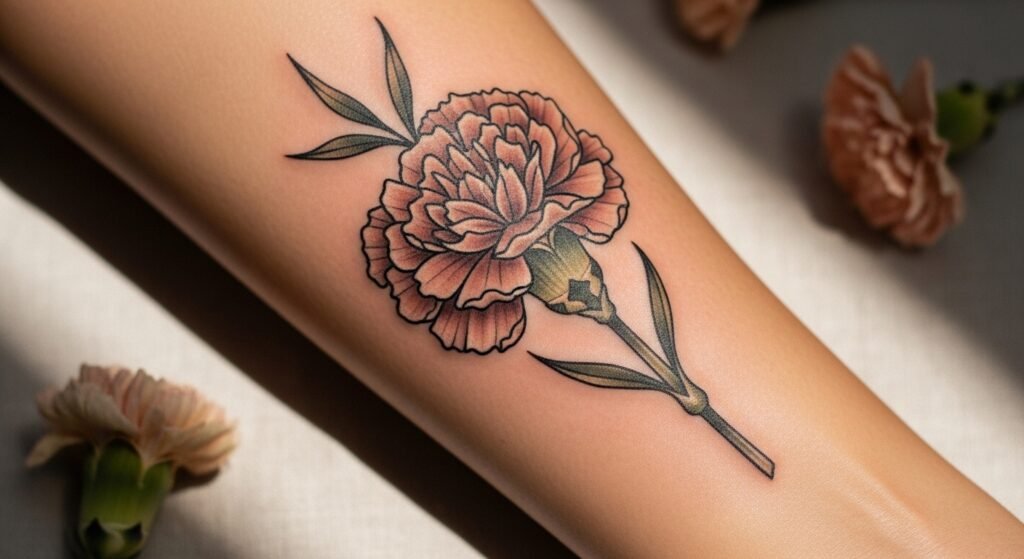
You’re scrolling reference photos at 2 a.m., circling the same carnation idea because it feels like yours. A carnation flower tattoo can read romantic, moody, or modern depending on line weight, color, and placement — and choosing the right carnation tattoo design means matching style with what the flower means to you.
If you’re nervous about the pain, try a thin coat of numbing cream about an hour before sensitive placements. For post-session protection, a second-skin wrap like a Saniderm roll stashed in your aftercare kit keeps the area clean during the first few days.
This short guide walks you through picking a carnation flower tattoo design, testing placement, prepping for the appointment, and an aftercare routine that helps healed results stay vivid. You’ll get placement tips, pain expectations, and practical product suggestions.
Match Style and Meaning: fine line, neo-traditional, or minimalist carnation tattoo
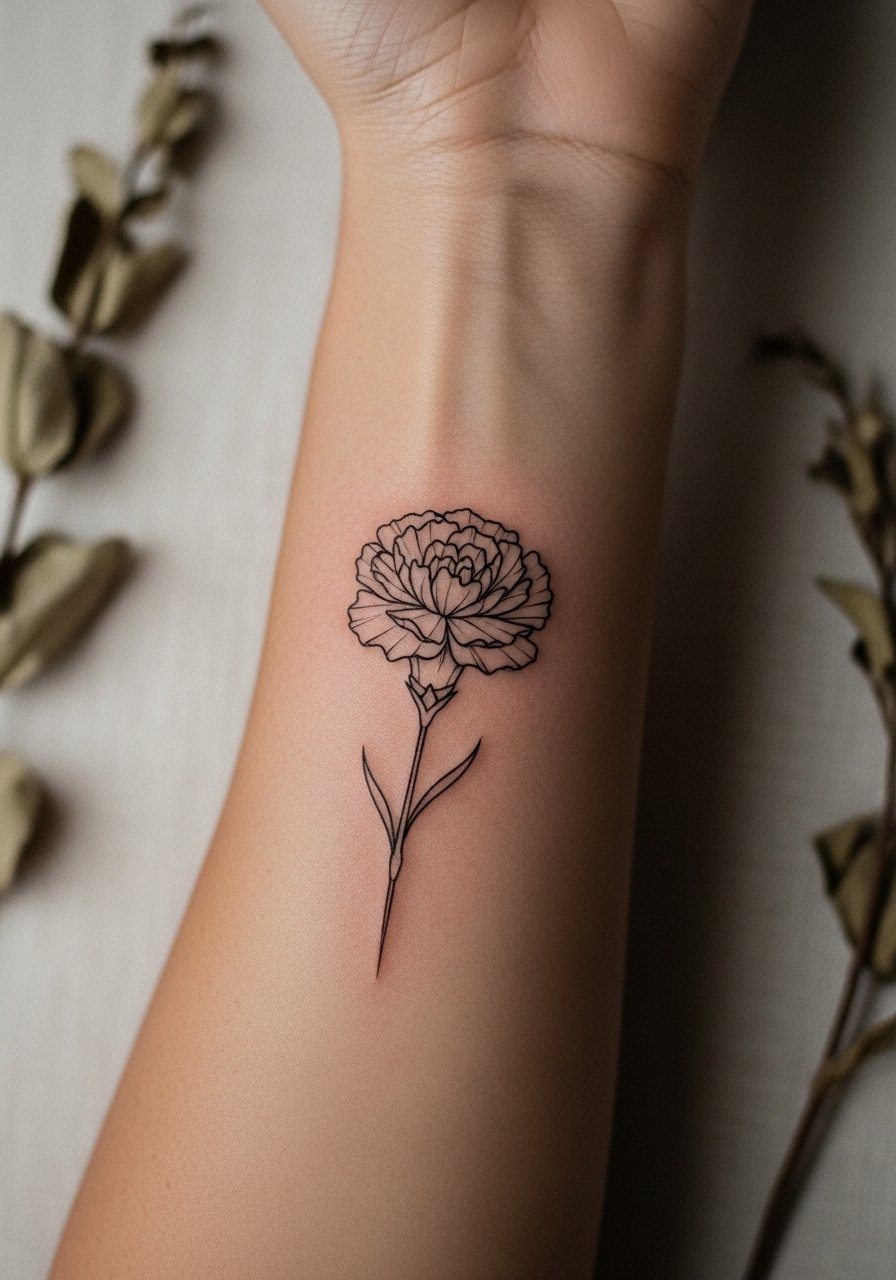
First decide what the carnation should say — love, remembrance, or personal flair — then pick a visual language. Fine line carnation tattoos read delicate at small sizes; neo-traditional carnations hold up with bold outlines and color. Minimalist single-stem carnations work well for finger or wrist placements.
- If you want to test scale, try an Inkbox semi-permanent tattoo kit to see daily wear.
- Use stencil transfer paper to place life-size designs on skin before booking.
Test placement & pain expectations: beginner placement tips and what hurts more
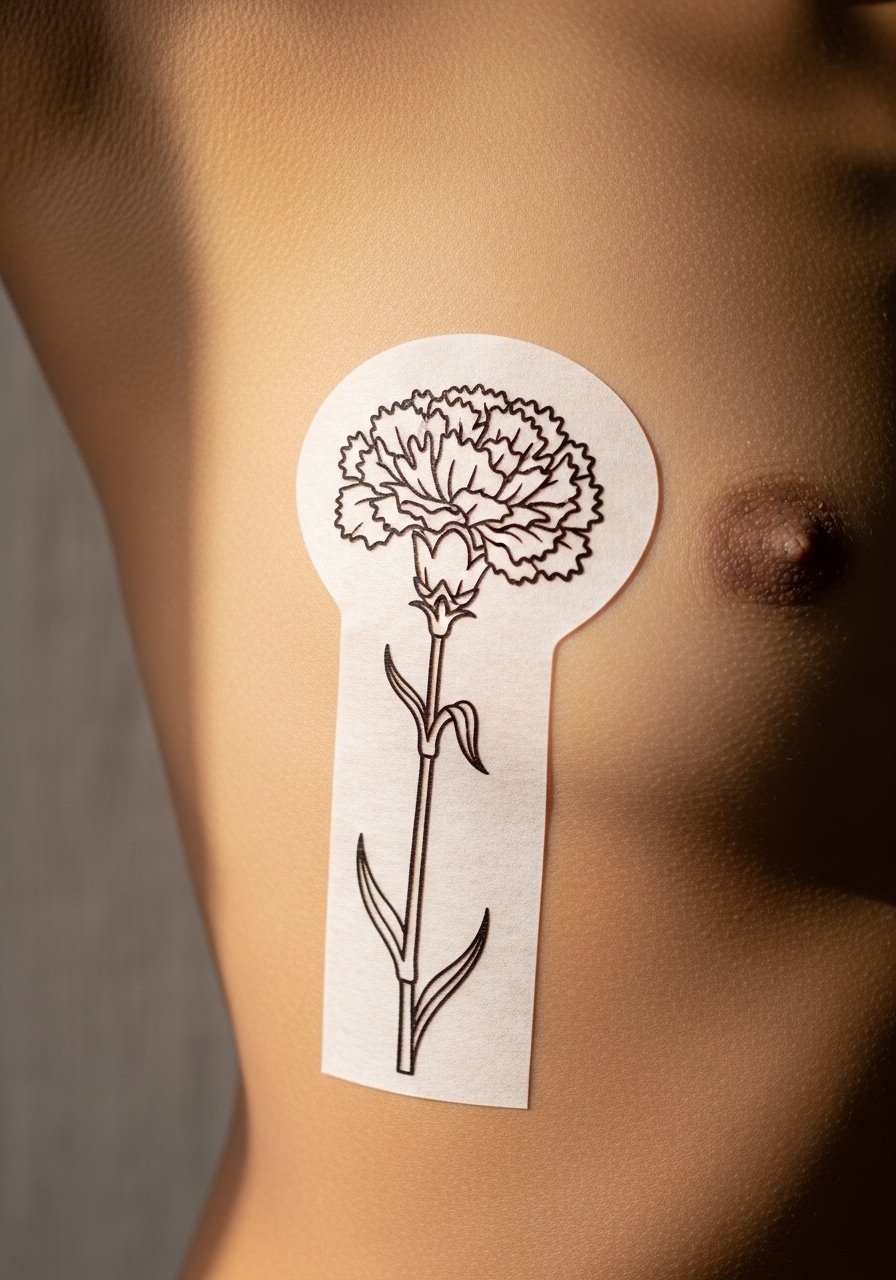
Some placements read better for carnations — forearm, collarbone, behind the ear, or rib. Beginner placement usually means lower pain and easier healing: outer forearm, thigh, or upper arm.
- Expect sharper pain on ribs, ankles, and hands; flatter areas are easier.
- Consider applying a thin layer of numbing cream an hour before a highly sensitive spot.
- Use a single-use prep razor the morning of your session for a clean stencil transfer.
Prep and day-of: what to tell your artist and how to protect the session
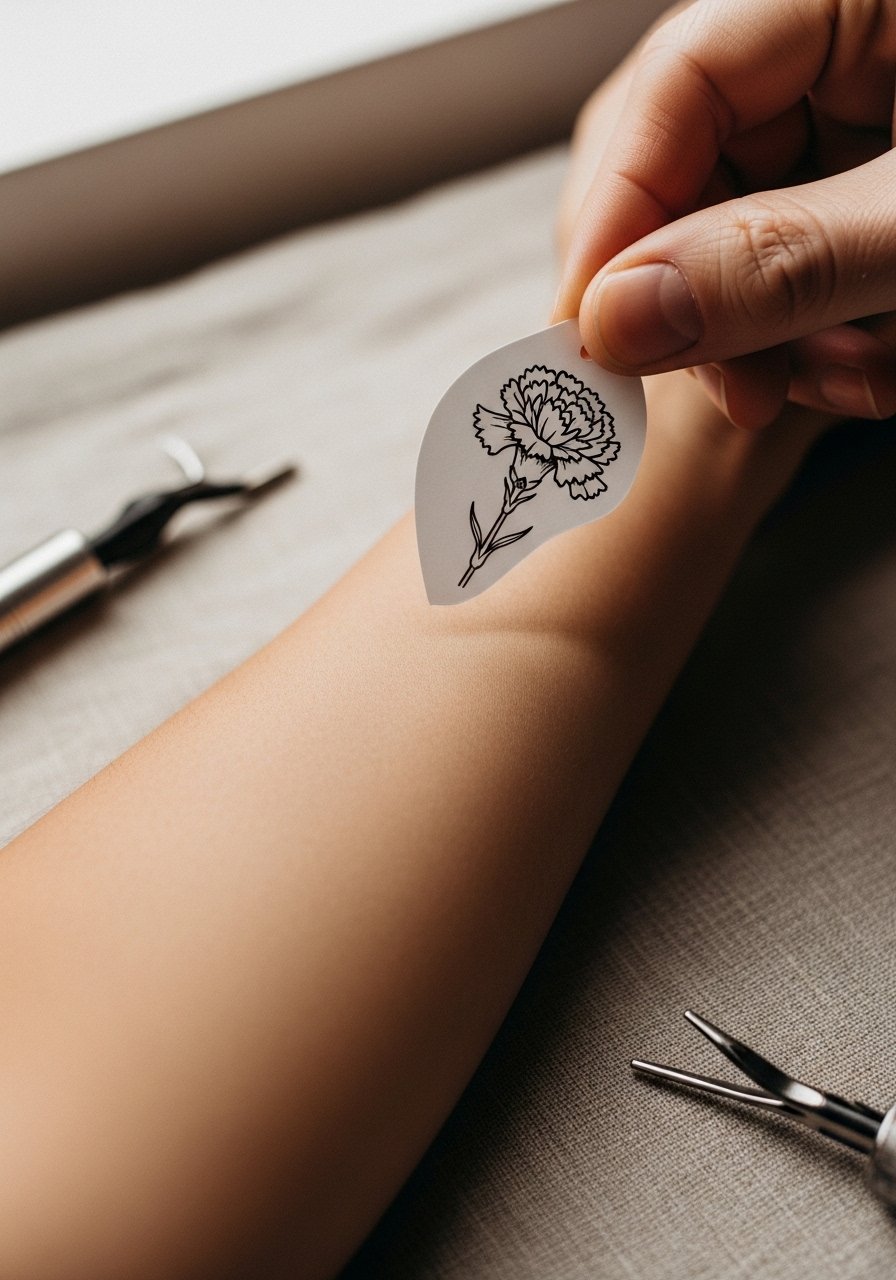
Good communication saves design details. Tell the artist your desired size, whether you want fine shading or saturated color, and what the carnation symbolizes to you. Bring clear references and be open to scaling adjustments so the motif flows with body contours.
Day-of checklist:
- Shave carefully with your single-use prep razor if needed.
- Eat and hydrate to reduce dizziness.
- If your artist applies a second-skin, plan to leave it on 3–5 days — it protects against friction and bacteria.
Aftercare routine to keep your carnation tattoo fresh: healing, touch-up timing, and healed results
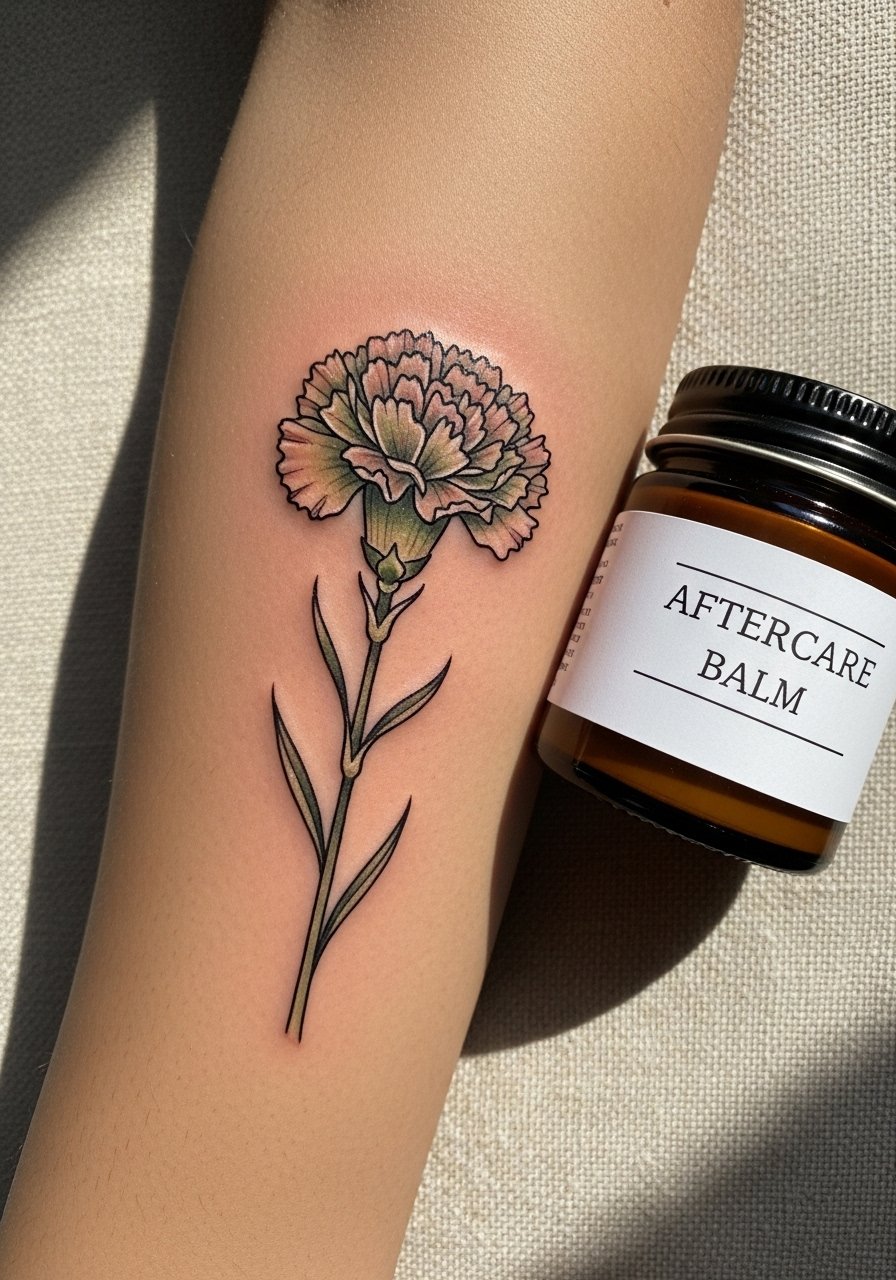
Healing looks like: redness and slight swelling day 1–3, light scabbing or peeling days 4–14, and faded-but-settled color around 4–8 weeks. Avoid picking scabs; pickiness risks patchy healed results.
- Wash gently twice a day with a fragrance-free antibacterial soap for the first 2 weeks.
- Apply a thin layer of unscented tattoo aftercare lotion 2x/day during peeling.
- For dry patches, rub sparingly with Hustle Butter Deluxe once daily.
- Once healed, protect your carnation with a mineral SPF stick to slow fading, and consider a tattoo brightening lotion for color refresh.
Wait 8–12 weeks before booking touch-ups so the skin and pigment settle. If you see excess plasma, persistent redness beyond two weeks, or raised areas, message your artist — they’ll tell you whether it’s normal or needs medical attention.
You’re closer than you think to having a carnation flower tattoo that matches your look and your story. Pin this guide, set up your aftercare kit with a Saniderm roll and a simple lotion, and book that consult. Which placement are you leaning toward? Drop it below and save this before your appointment!