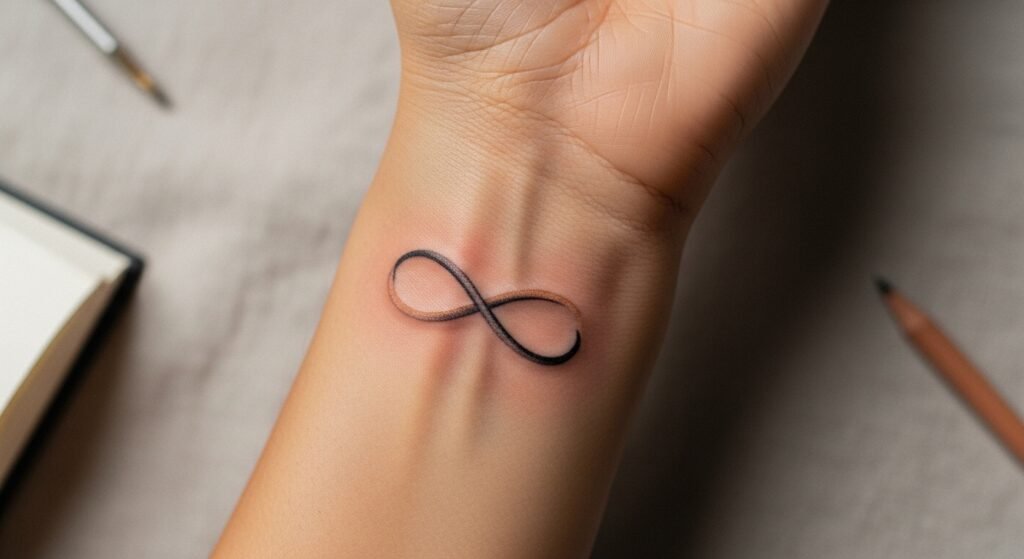
You’re scrolling inspo at 2 a.m., staring at the same infinity sketch you’ve been tweaking for months. Booking the wrong artist for a fine line infinity tattoo can mean a blown tiny detail or uneven linework that won’t sit right when healed. You want flawless, precise, and long-lasting results — not a redo.
This guide shows how to find the perfect tattoo artist for your infinity tattoo, what to say at consultation, and how to prep and care for that delicate piece so it heals crisp. I keep a roll of Saniderm second-skin wrap in my kit and a tube of numbing cream for sensitive placements — both make the session and healing easier. Read on to lock down placement, assess portfolios, and build a simple aftercare routine.
Narrow artists by style: find someone who masters fine line and minimalist work
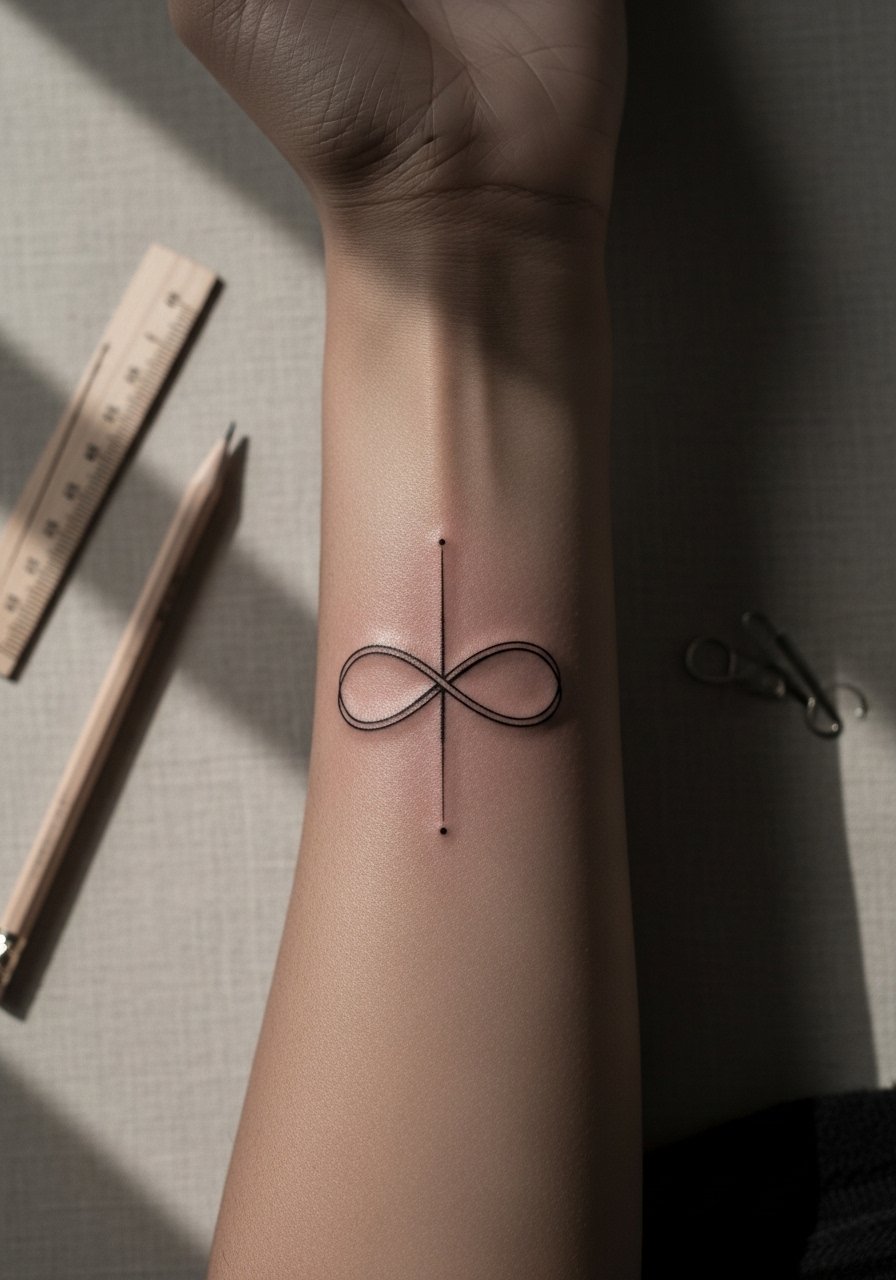
Start by searching portfolios for healed fine line and minimalist work rather than fresh photos only. Healed shots show how lines settle, whether dots connect cleanly, and whether thin blackwork fades into a gray blur.
- Look for consistent line weight and stable negative space in healed photos.
- Favor artists who post multiple healed shots of small pieces like wrist or ankle placements.
- Test your placement with an Inkbox semi-permanent kit to see flow and scale on your own skin.
If an artist’s small pieces look shaky or patched in healed photos, move on. You want someone who treats tiny designs with the same precision as a larger piece.
Vet portfolios and ask the right questions in consultation
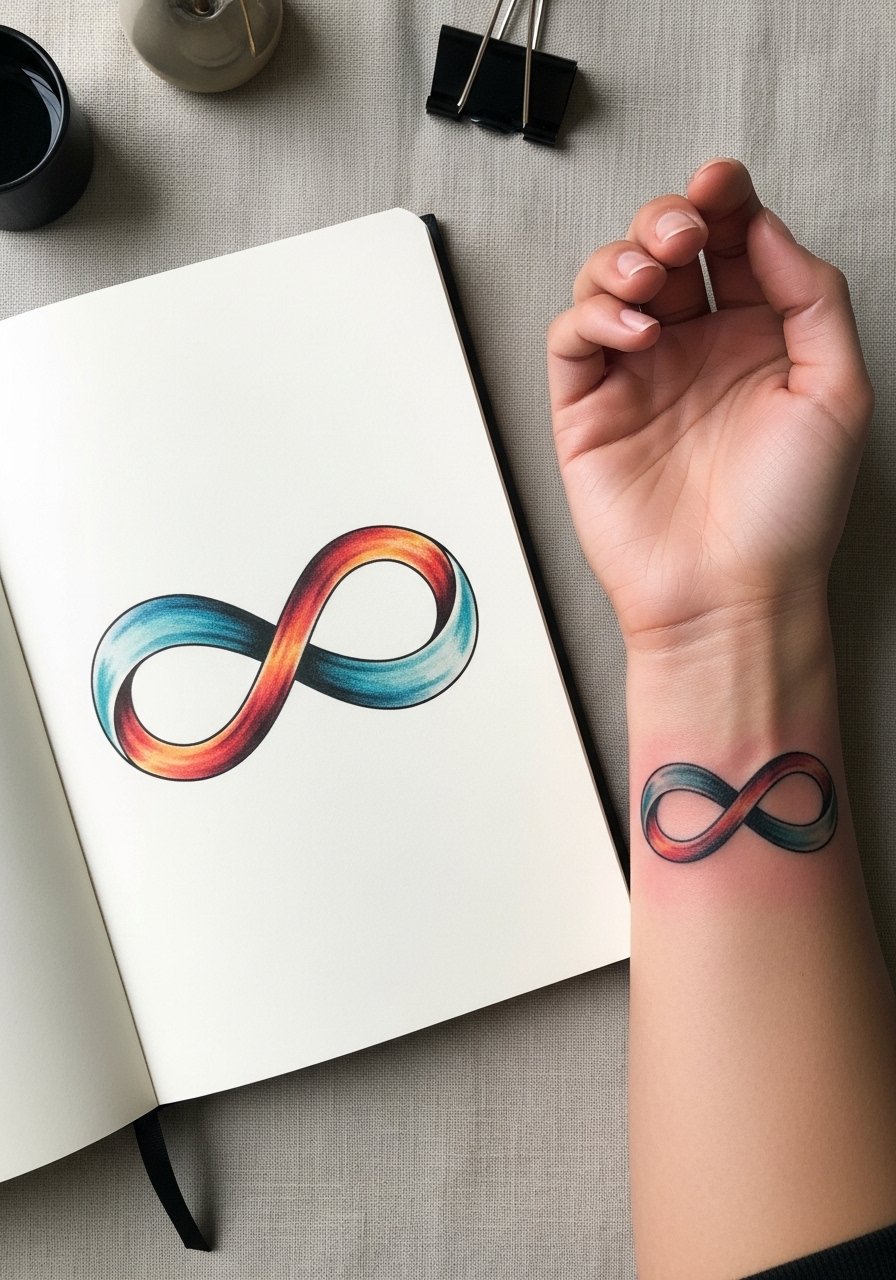
During a consultation, bring references and ask for healed photos of similar placements. Ask how they handle line thickness, needle configuration, and ink saturation for tiny blackwork.
Ask these questions:
- How do you prevent blowout on thin lines?
- Can I see healed shots of similar-size work?
- Do you recommend scaling up slightly for longevity?
Bring a tattoo stencil transfer paper or ask them to print a stencil so you can see flow. If an artist bristles at showing healed work or dismisses concerns about fading, that’s a red flag.
Prep and sit smart: skin, numbing, and placement testing
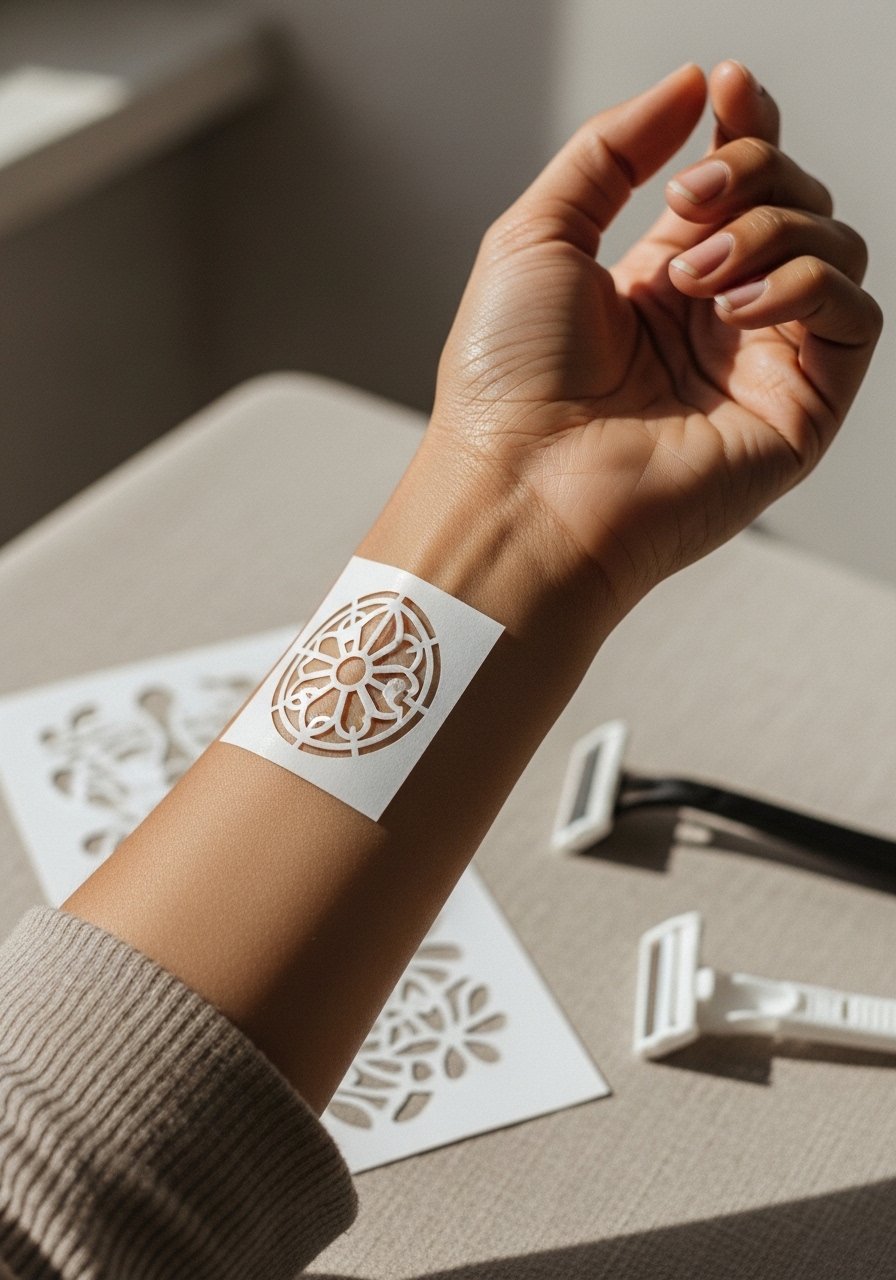
Prepping skin and body improves how an infinity tattoo takes ink and heals. Shave the area gently the night before with a single-use prep razor and avoid heavy alcohol the day before.
- Apply numbing cream like EMLA-style numbing cream about 60–90 minutes before your sit for sensitive placements.
- Hydrate skin for a week before; dry, flaky skin breaks line consistency.
- Use a stencil or a test Inkbox design for one day to confirm scale and placement.
If you’re getting a wrist or finger infinity tattoo, accept that touch-ups are common — plan for a small touch-up at 6–12 months if lines thin.
Aftercare routine and long-term care for crisp healed results
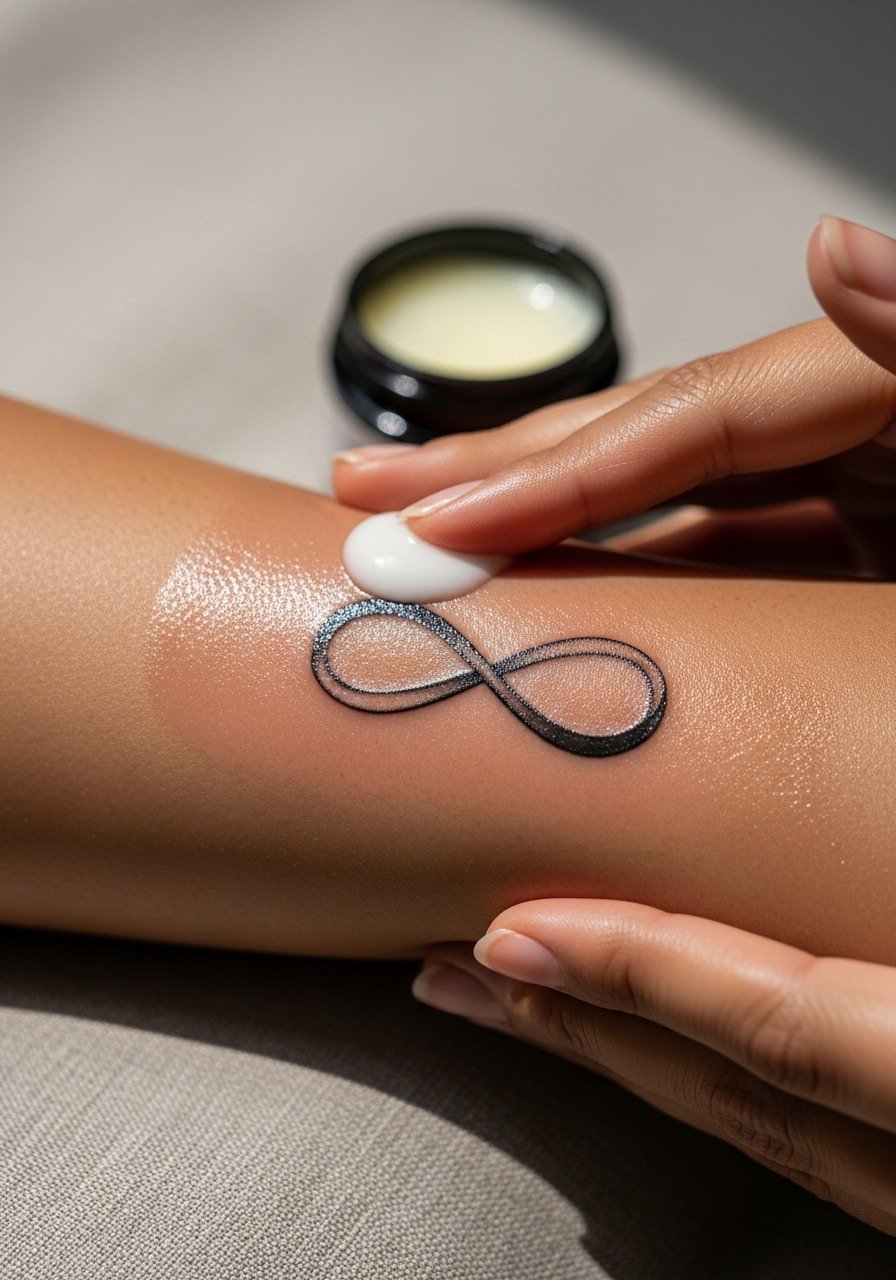
How you treat fresh ink directly affects precision once healed. Follow the studio’s wrap instructions, then adopt a gentle routine.
- First wash: wash gently twice a day with a fragrance-free antibacterial soap for the first two weeks. Pat dry; don’t rub.
- Moisturize: apply a thin layer of unscented tattoo aftercare lotion twice a day during peeling (typically days 4–14).
- Bandage option: many people leave a Saniderm second-skin wrap on for 3–5 days to reduce scabbing and scuffing.
- For long-term color protection, use a mineral SPF 50 sunscreen stick on healed ink whenever it sees sun.
Troubleshooting: expect peeling and light itching around days 4–14; heavy ooze, severe redness, or raised hot patches need a studio check. Avoid picking scabs; that’s the fastest path to uneven healed lines.
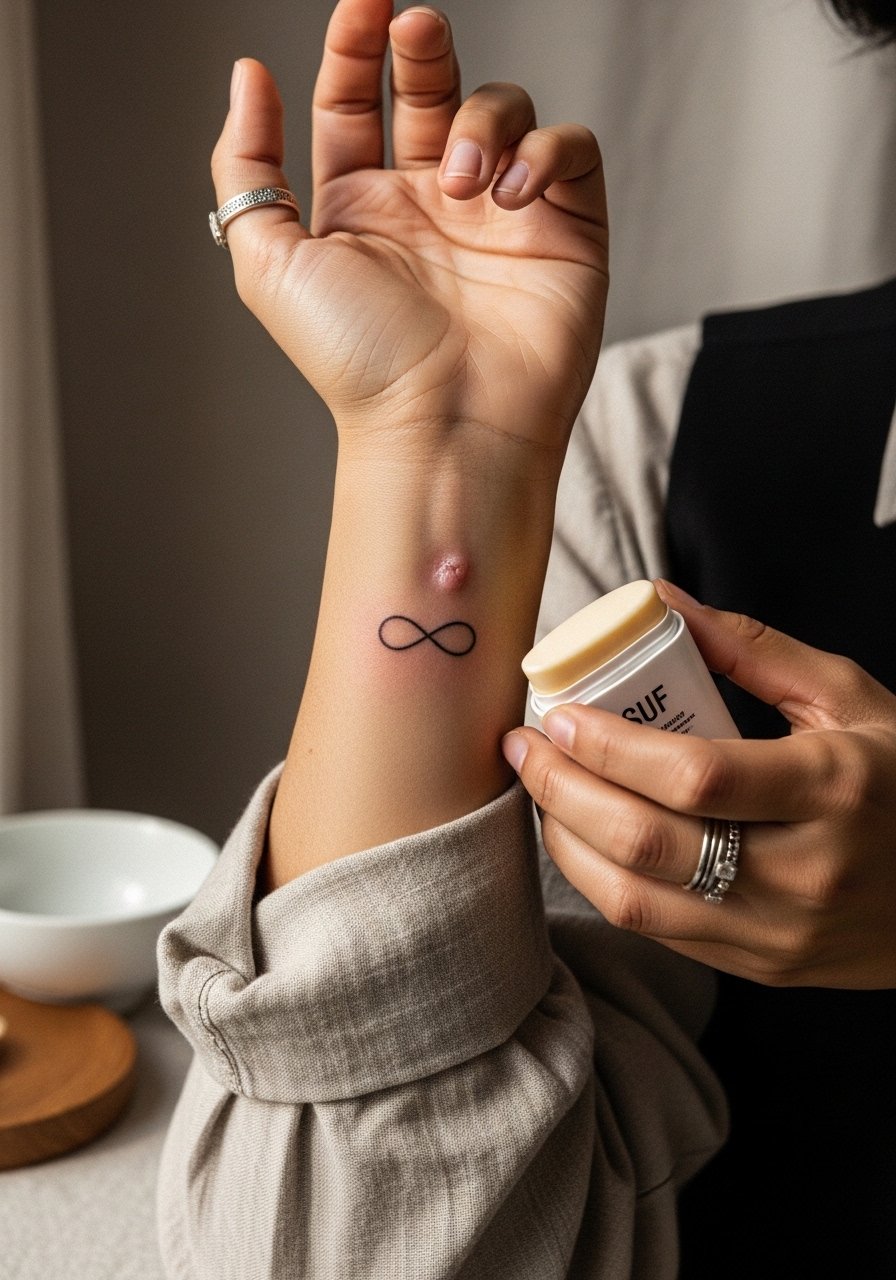
You can find the right artist for your infinity tattoo by focusing on healed portfolios, asking clear questions, testing placement, and planning aftercare. Build a simple kit the night before with Saniderm second-skin wrap and fragrance-free soap so you’re not scrambling when you leave the studio. Pin this guide before your consultation — which placement are you leaning toward?