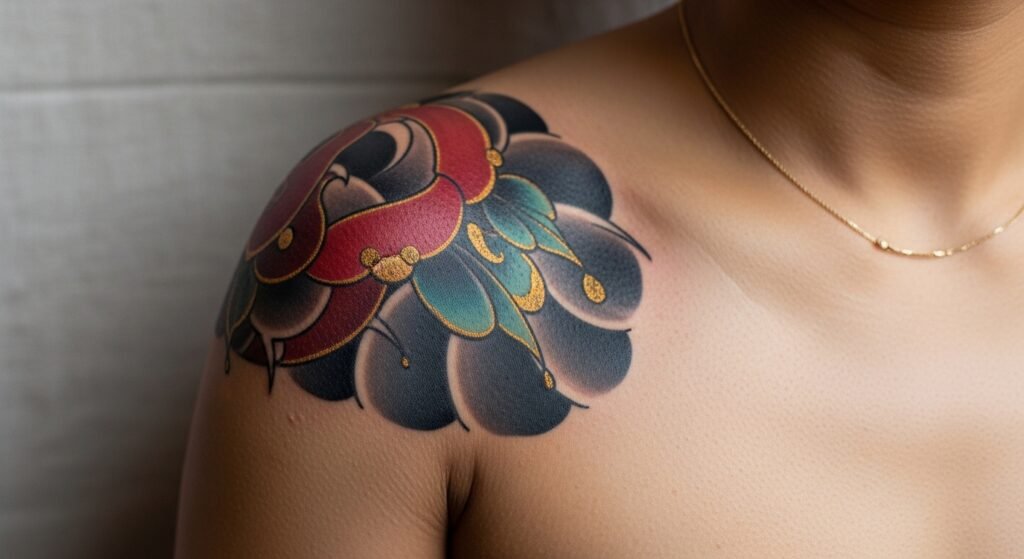
You’re sitting in a late-night scroll session, saving screenshots and scribbling notes for the tattoo you’ve been planning for years. That exact moment—when you finally commit to something bold on your shoulder—feels different. A Japanese shoulder cap tattoo brings strong cultural imagery, sweeping composition, and enough color or contrast to read beautifully from the street.
This list gives you 25 Japanese shoulder cap tattoo ideas that are intricate, colorful, and steeped in meaning. You’ll find styles from traditional Irezumi-inspired pieces to delicate neo-traditional and fine-line takes. I also include realistic placement notes, artist tips, pain and healing guidance, and product suggestions like Saniderm second-skin bandages so you’re prepared before you sit down.
Save the ideas you love. Bring the descriptions to your consult. And if pain is a concern for you, consider a numbing cream like Zensa topical numbing cream applied per the artist’s guidance.
- Koi Swimming Upward — Traditional Color Shoulder Cap
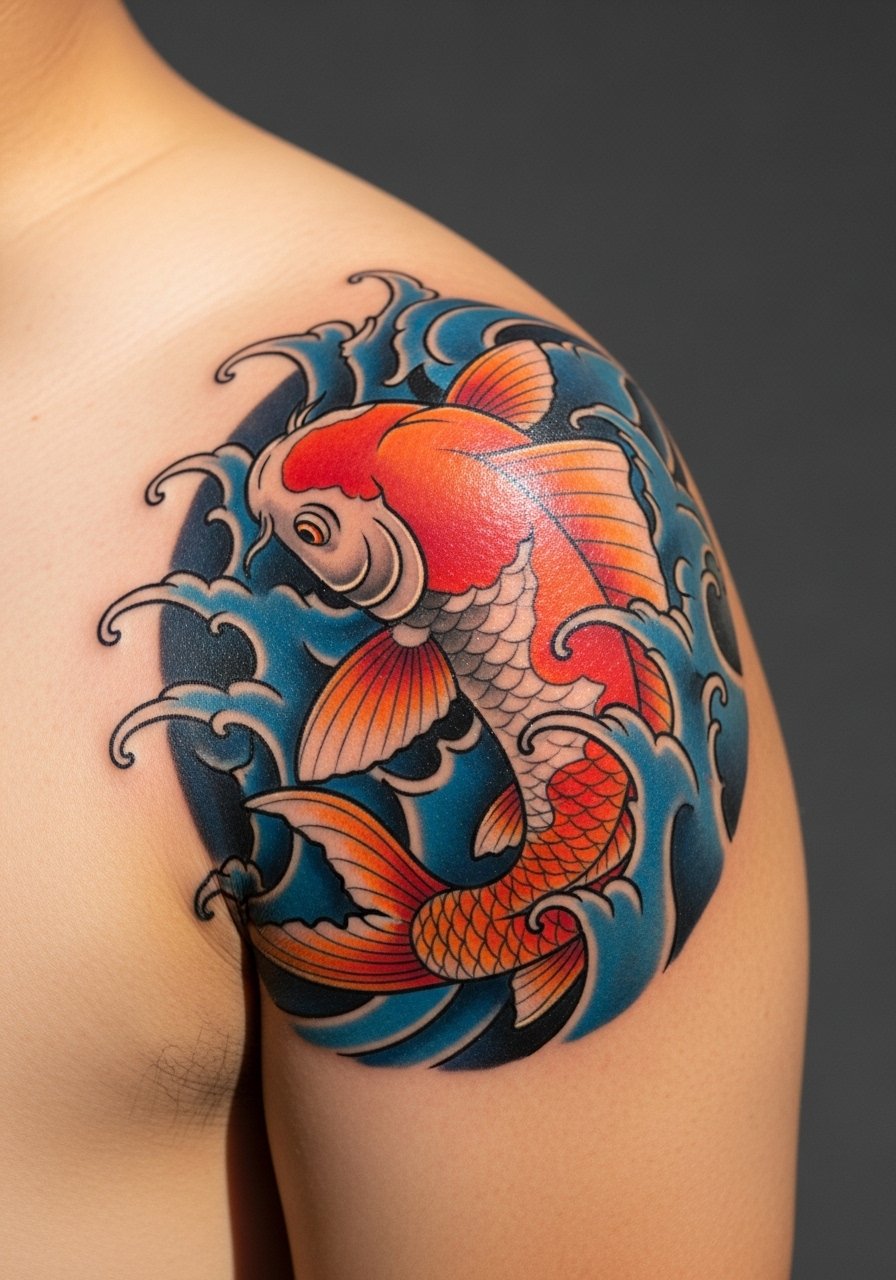
This classic design shows a koi swimming upward across the deltoid into the chest, symbolizing perseverance and success. The piece uses bold outlines with saturated color fills and layered water waves for movement. It reads well at arm length and ages gracefully if saturated properly.
Style & Design Details
- Tattoo style: Traditional Japanese / Irezumi
- Recommended size: Palm-sized to large (6–12 inches) to keep detail
- Best placement(s): Deltoid shoulder cap, upper chest, wrapping slightly toward back
- Color vs. blackwork: Full color recommended for dramatic contrast (deep oranges, indigos, green shading)
- Design elements: Thick outlines, solid color blocking, water waves, wind bars, scale stippling, kanji accent optional
- Longevity note: Color holds if properly saturated and sun-protected
- Who it suits: Those wanting a bold cultural statement; suits medium-to-deeper skin tones well
Finding the Right Artist
Look for portfolios with full-color koi or Irezumi pieces. Ask about their color saturation technique and layering for bright oranges and indigos. Red flags: an artist who avoids showing healed photos or says they "only do blackwork." This complexity is for an experienced color tattooist, not an apprentice.
Aftercare & Healing Tips
Keep the Saniderm wrap on for 2–4 days if your artist uses it. Wash gently with a fragrance-free antibacterial soap like Dr. Bronner’s unscented liquid soap during the first week, then switch to a thin layer of Lubriderm fragrance-free lotion while peeling. Expect bright color that slightly softens by week 6.
- Peony and Wind Bars — Ornamental Shoulder Cap Bloom
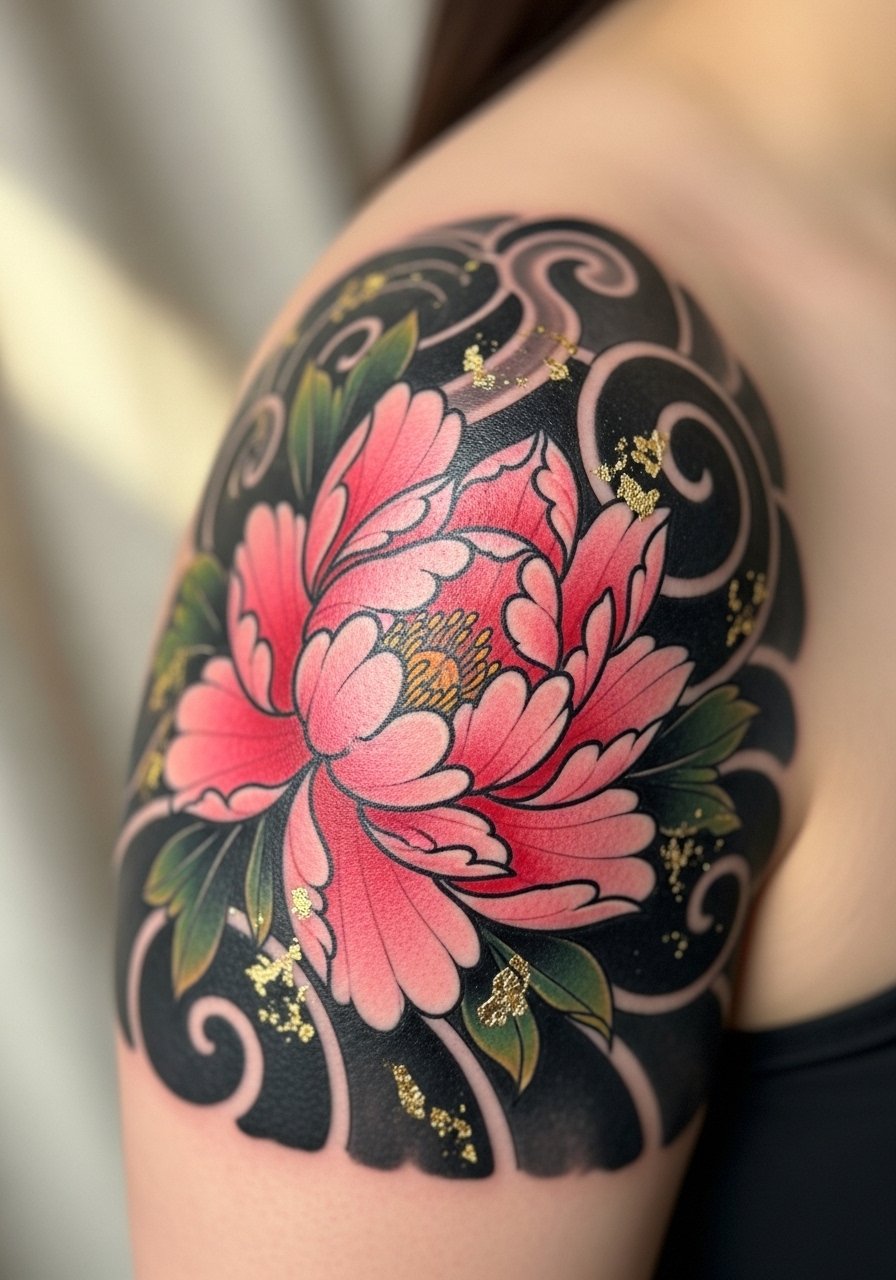
Peonies are a staple in Japanese tattoos, symbolizing wealth and honor. Paired with wind bars and negative-space cloud work, this shoulder cap reads like an ornamental crest. It’s elegant, colorful, and works well as a standalone or as part of a larger sleeve.
Style & Design Details
- Tattoo style: Neo-traditional Japanese floral
- Recommended size: 5–8 inches for petal detail
- Best placement(s): Outer shoulder cap, upper arm, or over clavicle
- Color vs. blackwork: Color recommended for petal gradients; blackwork background for contrast
- Design elements: Bold petal shading, sumi-style strokes, negative space, gold or yellow highlights, dotwork centers
- Longevity note: Fine color gradations need solid saturation and touch-ups over years
- Who it suits: Lovers of floral aesthetics and ornamental pieces
Finding the Right Artist
Choose someone with floral neo-traditional work and crisp line control. Ask to see healed photos, especially for red/pink pigments. Avoid artists who only show fresh flash photos.
Aftercare & Healing Tips
Follow standard wash-and-lotion routine. For the peeling phase, a fragrance-free lotion like Aveeno fragrance-free daily moisturizing lotion preserves color without clogging. Keep out of direct sun; SPF is your long-term friend.
- Hannya Mask Shoulder Cap — Dark, Detailed, Traditional
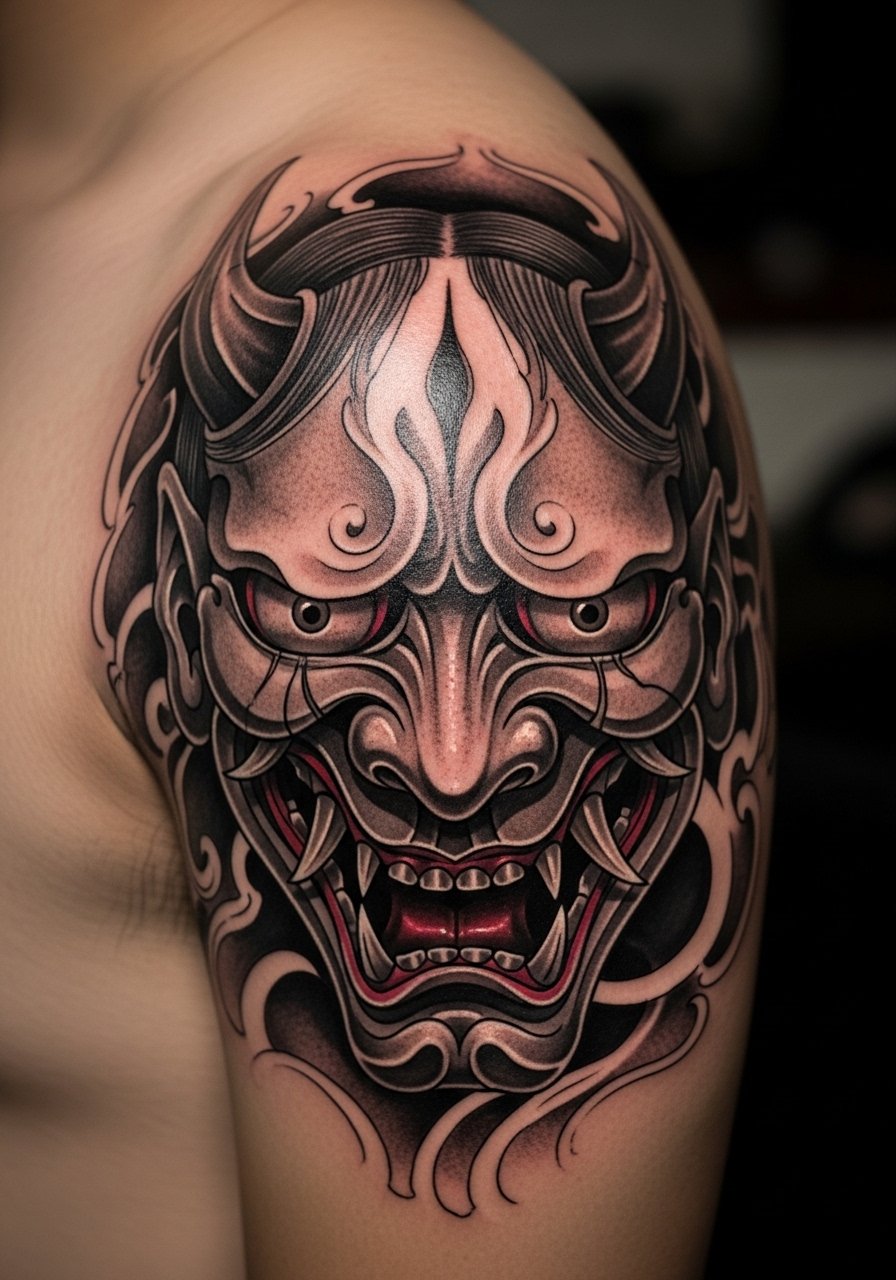
A Hannya mask carries heavy meaning—jealousy, sorrow, and transformation. On the shoulder cap it feels like a theater mask anchoring the composition. This is a bold, high-contrast piece that reads even from a distance.
Style & Design Details
- Tattoo style: Traditional Japanese black-and-gray with color accents
- Recommended size: Medium to large (6–10 inches)
- Best placement(s): Deltoid cap, upper back near shoulder blade
- Color vs. blackwork: Primarily blackwork with selective red or gold highlights
- Design elements: Heavy shading, negative space teeth, horn highlights, traditional wave or maple background, lacquer shine effects
- Longevity note: High-contrast black ages well; red accents may need maintenance
- Who it suits: Fans of theatrical, symbolic imagery; collectors of Irezumi elements
Finding the Right Artist
Look for mastery of black-and-gray contrast and tradition-inspired masks. Ask how the artist layers black for depth. Avoid someone unfamiliar with mask symbolism or one who rushes design placement.
Aftercare & Healing Tips
Use Saniderm for the first 48–72 hours if your artist approves. Clean with a mild soap and switch to a thin film of Hustle Butter Deluxe tattoo aftercare balm after the initial wrap comes off to soothe and lock in shine.
- Colorful Phoenix Rising Across the Cap
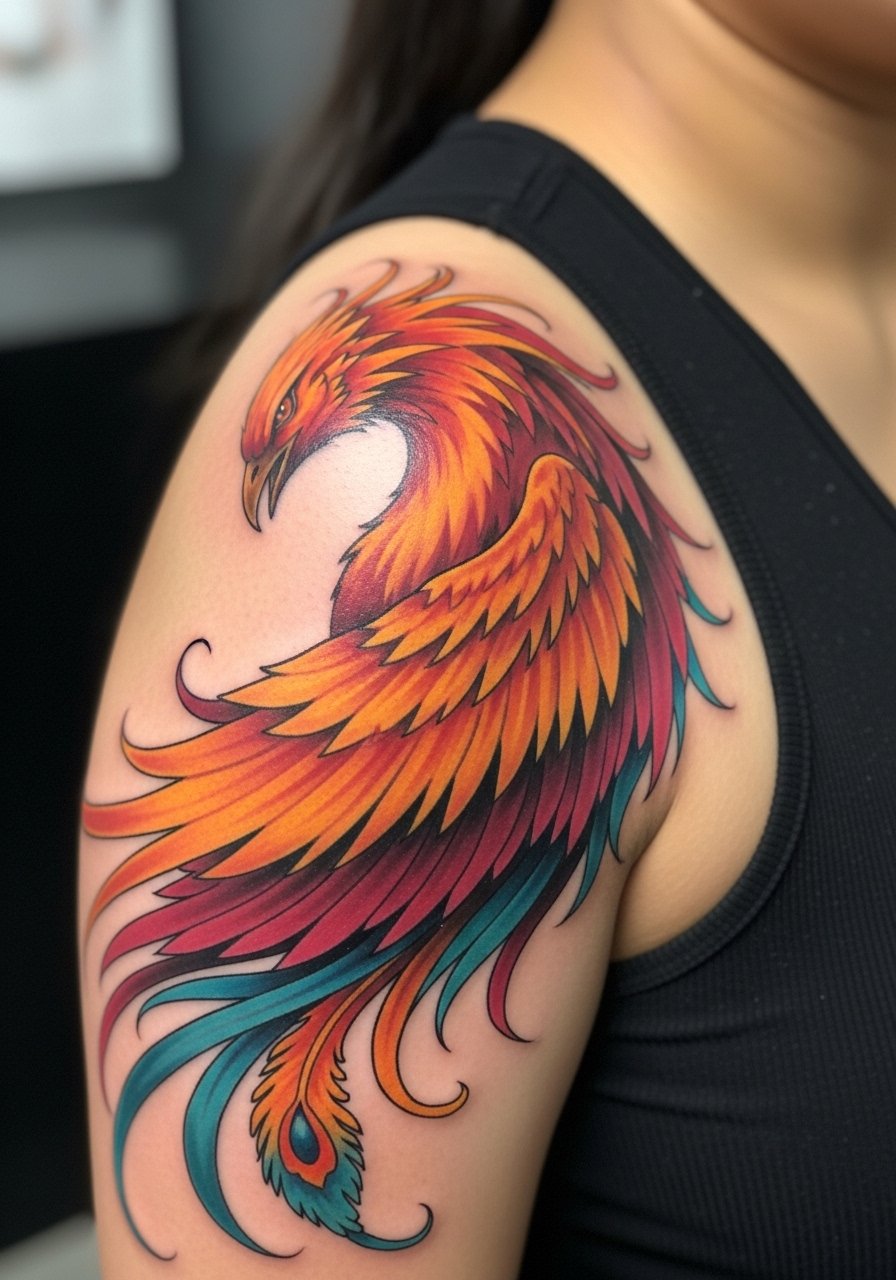
A phoenix rising is perfect for a shoulder cap because the arc of the wing complements shoulder curvature. This design reads as movement and rebirth, with layered feathers and flame motifs.
Style & Design Details
- Tattoo style: Neo-traditional color with illustrative shading
- Recommended size: Large (8–12 inches) for feather detail
- Best placement(s): Full shoulder cap wrapping toward chest/back
- Color vs. blackwork: Full color recommended for feather gradients
- Design elements: Layered feathers, flame accents, stipple shading, negative-space highlights, wind bars
- Longevity note: Bright warm pigments can shift; sun protection essential
- Who it suits: People wanting symbolic rebirth imagery with bold color
Finding the Right Artist
Book an artist known for colorful bird anatomy or neo-traditional work. Ask about pigment brands and colorfast techniques. Avoid artists who under-saturate color in initial passes.
Aftercare & Healing Tips
Wash with a fragrance-free soap and apply a light layer of After Inked tattoo moisturiser during the peeling weeks. Once healed, use a mineral SPF 50 tattoo sunscreen stick on exposed placements.
- Dragon Coil over the Shoulder Cap — Classic Irezumi Flow
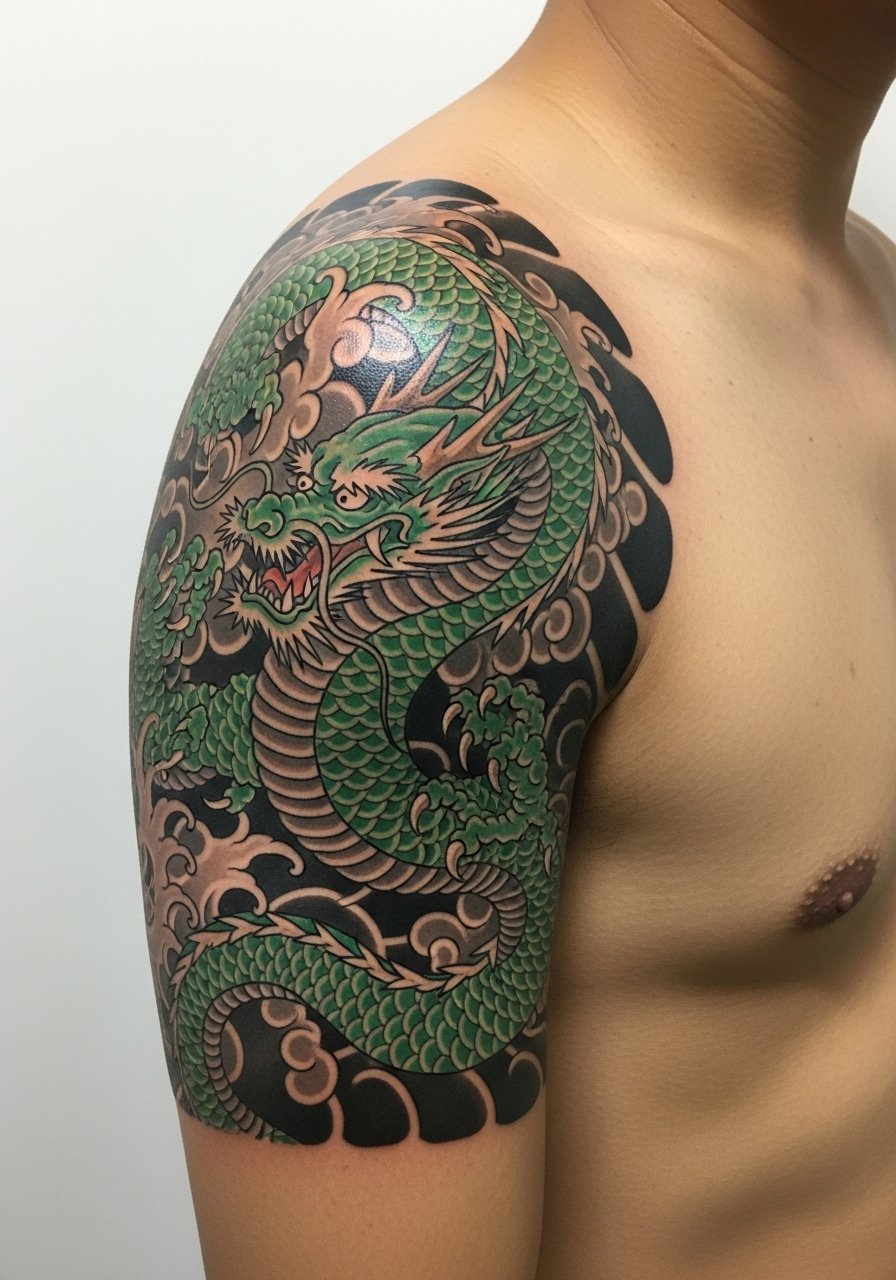
Dragons demand scale and flow—perfect for wrapping around the shoulder. This piece pairs scales, claws, and swirling clouds for an energetic look tied to strength and protection.
Style & Design Details
- Tattoo style: Traditional Japanese / full-color Irezumi
- Recommended size: Large (8–14 inches) for scale detail
- Best placement(s): Full shoulder cap wrapping toward bicep and chest
- Color vs. blackwork: Deep greens, teal, and black shading
- Design elements: Koi-scale texture, claw detail, cloud fills, sumi shading, wind bars
- Longevity note: Dense blackwork and saturated greens age well with proper SPF
- Who it suits: Collectors building a full back or sleeve; those into mythic symbolism
Finding the Right Artist
Search portfolios for full-dragon compositions that wrap cleanly around joints. Ask about how they scale the design to avoid bad proportions on curved anatomy.
Aftercare & Healing Tips
Gentle cleansing and a light layer of Hustle Butter Deluxe during the flaky stage helps scales stay crisp. Keep sunlight off for months.
- Subtle Fine-Line Sakura Shoulder Cap (Minimal Color)
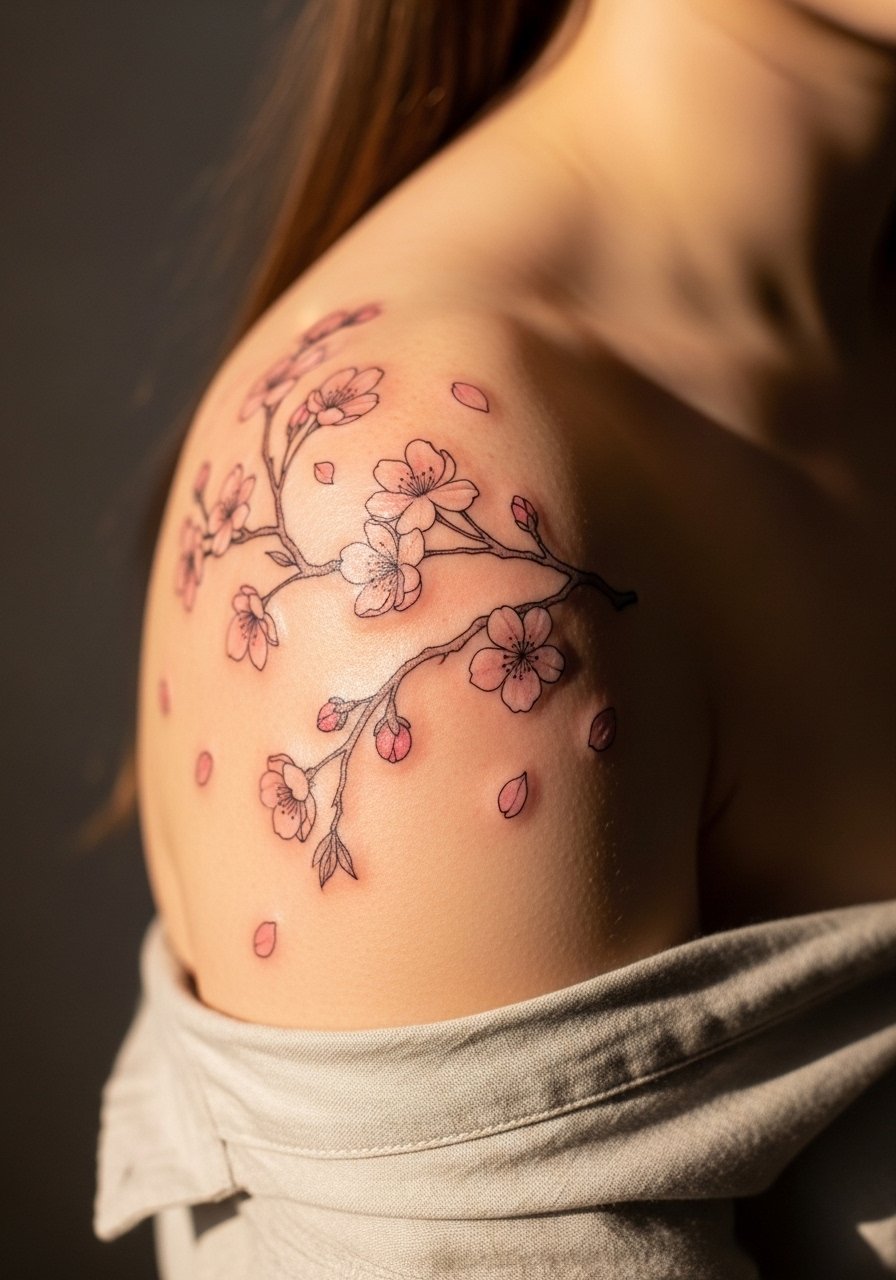
If you want Japanese motifs but prefer minimal color, a fine-line sakura cluster sits beautifully on the deltoid. It’s feminine, breathy, and ages more subtly than heavy color.
Style & Design Details
- Tattoo style: Fine line / illustrative
- Recommended size: 3–6 inches for petal detail
- Best placement(s): Outer shoulder cap or clavicle wrap
- Color vs. blackwork: Light pink washes with black single-needle lines
- Design elements: Single-needle linework, micro-shading, tiny stamen dots, soft watercolor wash
- Longevity note: Fine lines can blur over years; SPF prevents fading
- Who it suits: Minimalists, first-timers, or subtle aesthetic lovers
Finding the Right Artist
Look for single-needle portfolios and healed photos on similar skin tones. Ask about line thickness and whether a bolder version is better for longevity.
Aftercare & Healing Tips
Fine-line tattoos can be fragile—follow wash-and-pat routine and use a thin unscented lotion like Lubriderm. Avoid heavy crust picking; touch-ups are common around 6–12 months for single-needle pieces.
- Samurai Helmet (Kabuto) Shoulder Cap — Honor and Armor
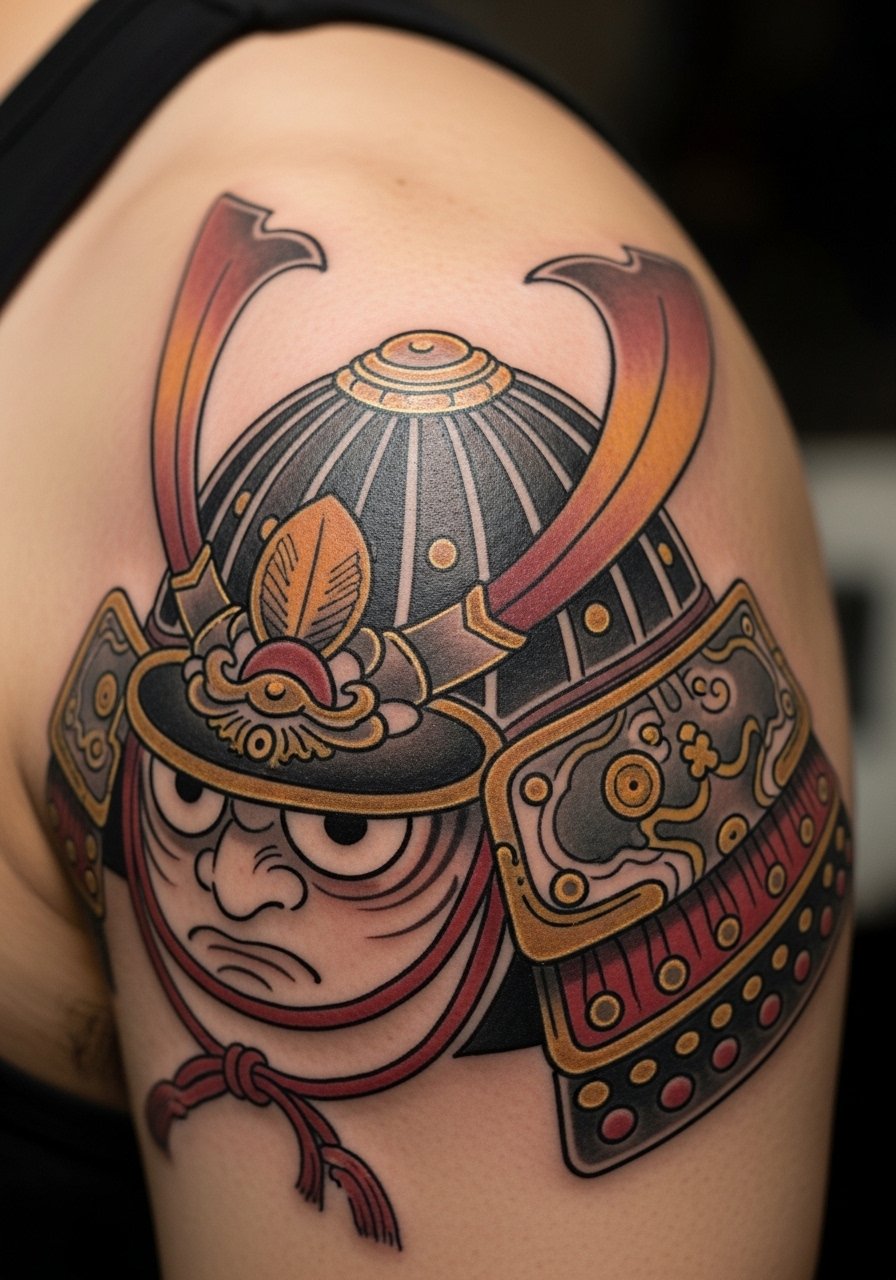
A kabuto helmet symbolizes honor and protection. Placed on the shoulder cap, it reads like armor over the body. It works well with additional elements like chrysanthemums or waves.
Style & Design Details
- Tattoo style: Illustrative / neo-traditional with metallic touches
- Recommended size: 6–10 inches for crest detail
- Best placement(s): Deltoid cap, upper chest, or back of shoulder
- Color vs. blackwork: Mixed—solid blackwork base with metallic gold and red accents
- Design elements: Crest detail, lacquer highlights, rope ties, floral insets, dotwork
- Longevity note: Metallic-look pigments depend on artist skill
- Who it suits: Those wanting martial symbolism or historic references
Finding the Right Artist
Ask to see metal-effect shading and healed photos. Confirm experience with layered black and colored metallic inks.
Aftercare & Healing Tips
Saniderm for the first few days can reduce scab contact. Use a fragrance-free soap and a light balm like Hustle Butter Deluxe to maintain sheen without suffocating ink.
- Hokusai Wave with Mount Fuji Accent — Scenic Shoulder Cap
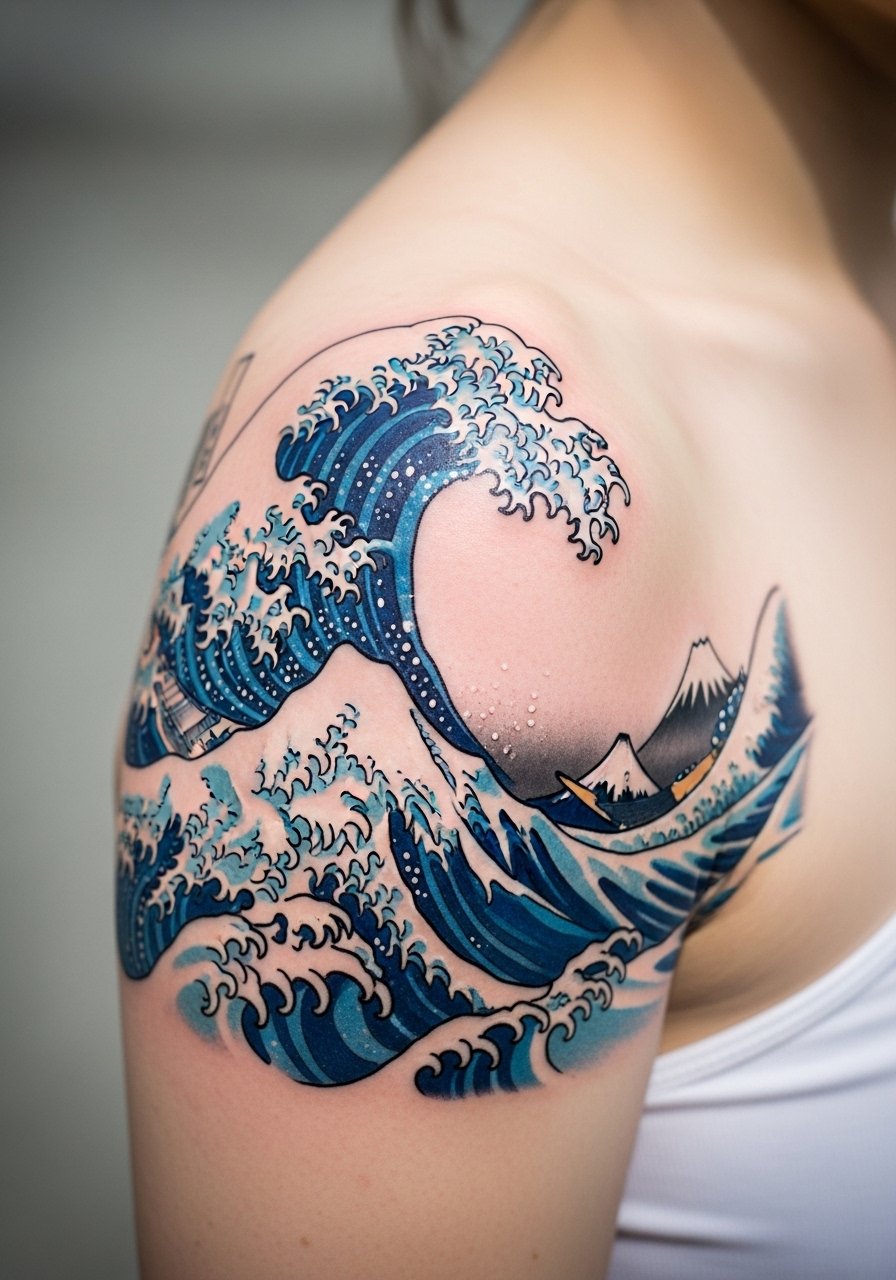
This iconic wave motif looks graphic and modern on the shoulder cap. It plays with negative space and crisp blue pigment to create motion across the deltoid.
Style & Design Details
- Tattoo style: Illustrative Japanese with woodblock inspiration
- Recommended size: 6–10 inches to capture wave curls
- Best placement(s): Outer shoulder cap, upper chest near clavicle
- Color vs. blackwork: Primarily cool blues with black linework
- Design elements: Wave crests, splashing spray dots, small Mt. Fuji silhouette, woodblock texture lines
- Longevity note: Blues can fade; saturation and SPF help
- Who it suits: Fans of classic Japanese art and bold graphic shapes
Finding the Right Artist
Look for illustrators who recreate woodblock textures. Ask about pigment shades and healed color photos on similar skin tones.
Aftercare & Healing Tips
Cold-water rinses post-session help reduce swelling. Use Dr. Bronner’s unscented soap and a light unscented lotion while peeling.
- Kitsune (Fox Spirit) Shoulder Cap — Playful and Mythic
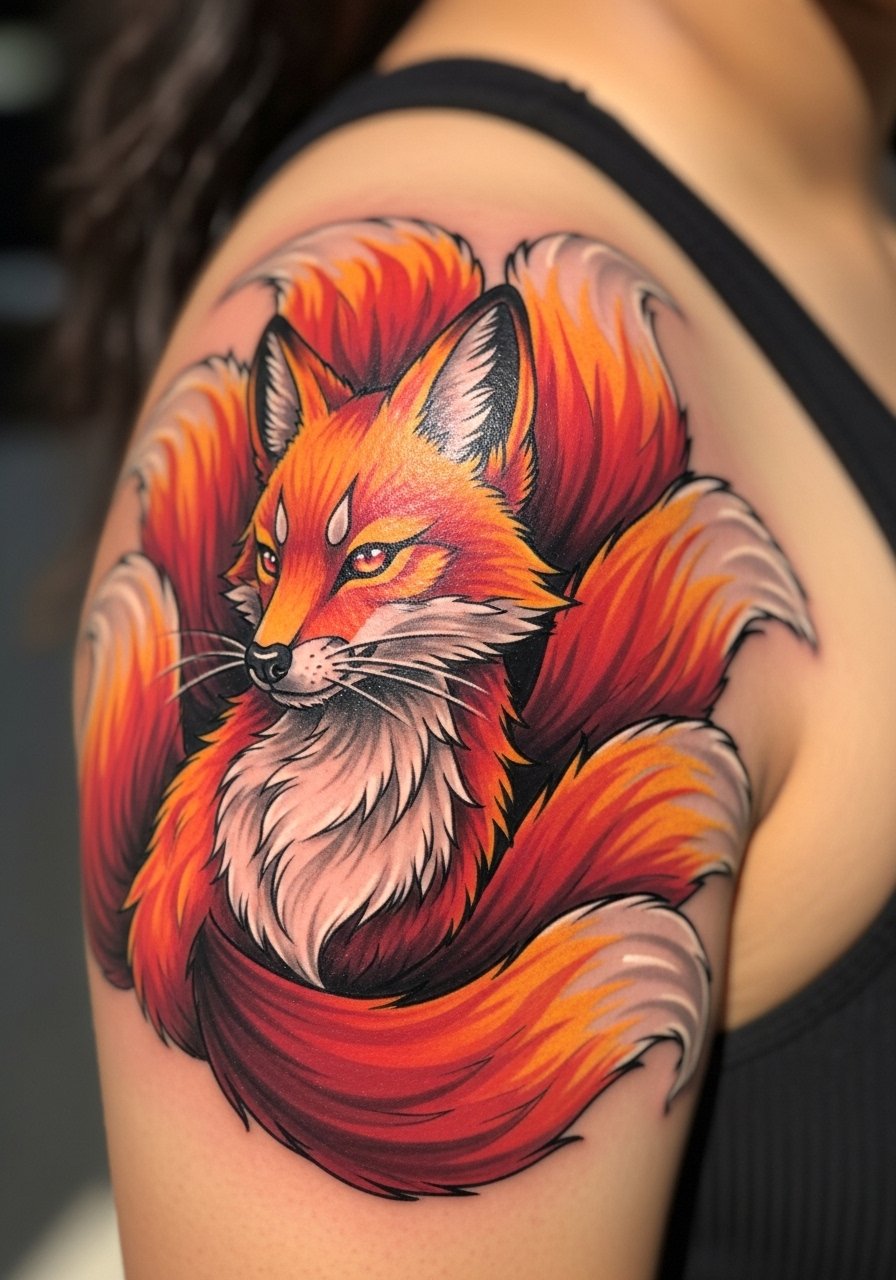
Kitsune tattoos bring myth and personality. A multi-tailed fox across the shoulder cap can be rendered with playful color and cunning expression—perfect if you want folklore with personality.
Style & Design Details
- Tattoo style: Neo-traditional illustrative
- Recommended size: 5–9 inches to show facial and tail detail
- Best placement(s): Outer shoulder cap into upper arm
- Color vs. blackwork: Warm oranges and reds with black line anchors
- Design elements: Nine tails, whisker lines, stylized eyes, flame or sakura accents, subtle dotwork
- Longevity note: Warm pigments need SPF to hold brightness
- Who it suits: Those who like folklore, playful motifs, or anime-adjacent styles
Finding the Right Artist
Find artists comfortable with animal anatomy and expressive faces. Ask if they can render multiple tails without visual clutter.
Aftercare & Healing Tips
Keep it out of intense sun and moisturize lightly. For the initial wound care use Saniderm or follow artist instructions, and after first week shift to After Inked moisturiser.
- Crane and Bamboo Composition — Graceful Shoulder Cap

Cranes symbolize longevity and good fortune. Paired with bamboo, this design feels vertical and elegant—great for a shoulder cap that tapers into the arm.
Style & Design Details
- Tattoo style: Illustrative minimal color with Japanese sumi influence
- Recommended size: 5–8 inches for line and negative space breathing room
- Best placement(s): Outer shoulder cap or near the clavicle for vertical flow
- Color vs. blackwork: Mostly blackwork with muted green accents
- Design elements: Longline neck, feather suggestion, bamboo stalks, negative space, subtle stippling
- Longevity note: Strong lines hold; thin feather details may blur years later
- Who it suits: Minimalists, nature lovers, people seeking classic motifs
Finding the Right Artist
Pick someone who shows mastery in long clean strokes and elegant negative space. Ask for healed shots; avoid artists who only show flash.
Aftercare & Healing Tips
Use mild soap and apply a thin layer of Lubriderm unscented lotion during peeling. Long-term, use an SPF stick when outdoors.
- Samurai vs. Oni Scene — Storytelling Shoulder Cap
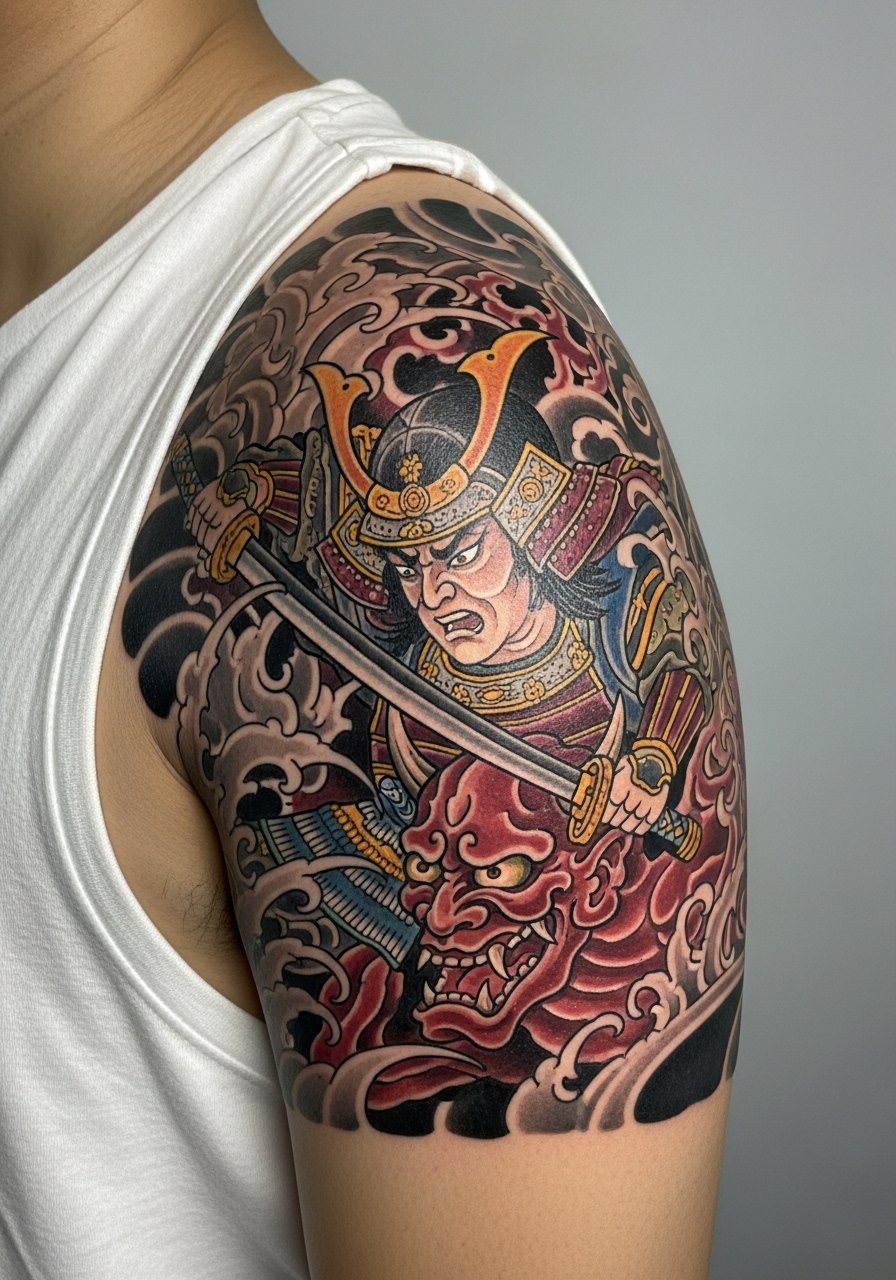
This narrative scene creates a mini epic on your shoulder cap. It’s busy, dramatic, and perfect if you want a piece with a story and movement.
Style & Design Details
- Tattoo style: Irezumi narrative / illustrative
- Recommended size: Large (8–14 inches) to hold detail
- Best placement(s): Full shoulder cap wrapping toward arm and chest
- Color vs. blackwork: High-contrast color with dominant reds and blacks
- Design elements: Dynamic poses, action lines, armor detail, blood/ink splatter treated stylistically, cloud and wave fills
- Longevity note: Crowded scenes need strong lineweights to avoid muddiness over time
- Who it suits: People who want story-driven, bold imagery
Finding the Right Artist
You’ll want an artist who composes action scenes and manages negative space. Ask to see multi-figure compositions and healed photos.
Aftercare & Healing Tips
Because larger scenes can develop thicker scabs, follow Saniderm or the artist’s wrap instructions and finish with Hustle Butter Deluxe during the flaky phase.
- Minimal Blackwork Wave Cap — Subtle, Graphic, Modern
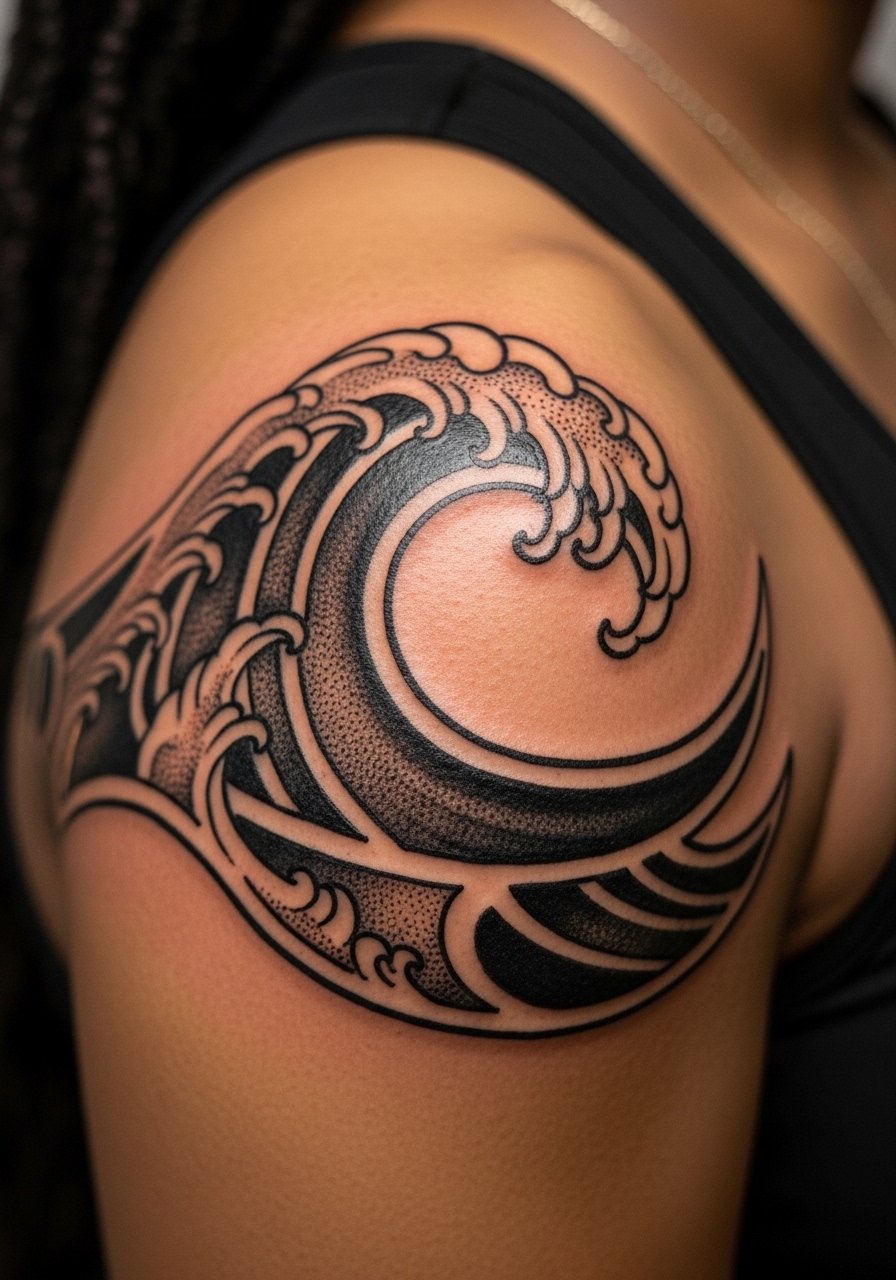
If you love Japanese motifs but want a modern graphic edge, a blackwork wave across the shoulder cap is sleek and low-maintenance. It reads strong without color.
Style & Design Details
- Tattoo style: Blackwork / graphic
- Recommended size: 4–8 inches
- Best placement(s): Deltoid cap, upper chest edge
- Color vs. blackwork: Pure black recommended
- Design elements: Bold silhouettes, negative space curls, thick outlines, micro-dot spray
- Longevity note: Blackwork holds very well if solidly saturated
- Who it suits: Minimalists, modernists, people who prioritize longevity
Finding the Right Artist
Choose someone known for bold black pieces and healed contrast. Confirm they pack black ink properly; poorly packed blackwork fades unevenly.
Aftercare & Healing Tips
Blackwork heals predictably; use an unscented lotion and avoid excess sun. For daily maintenance, apply an SPF 50 stick to prevent premature contrast loss.
- Colorwash Lotus Cap — Spiritual and Softer Palette
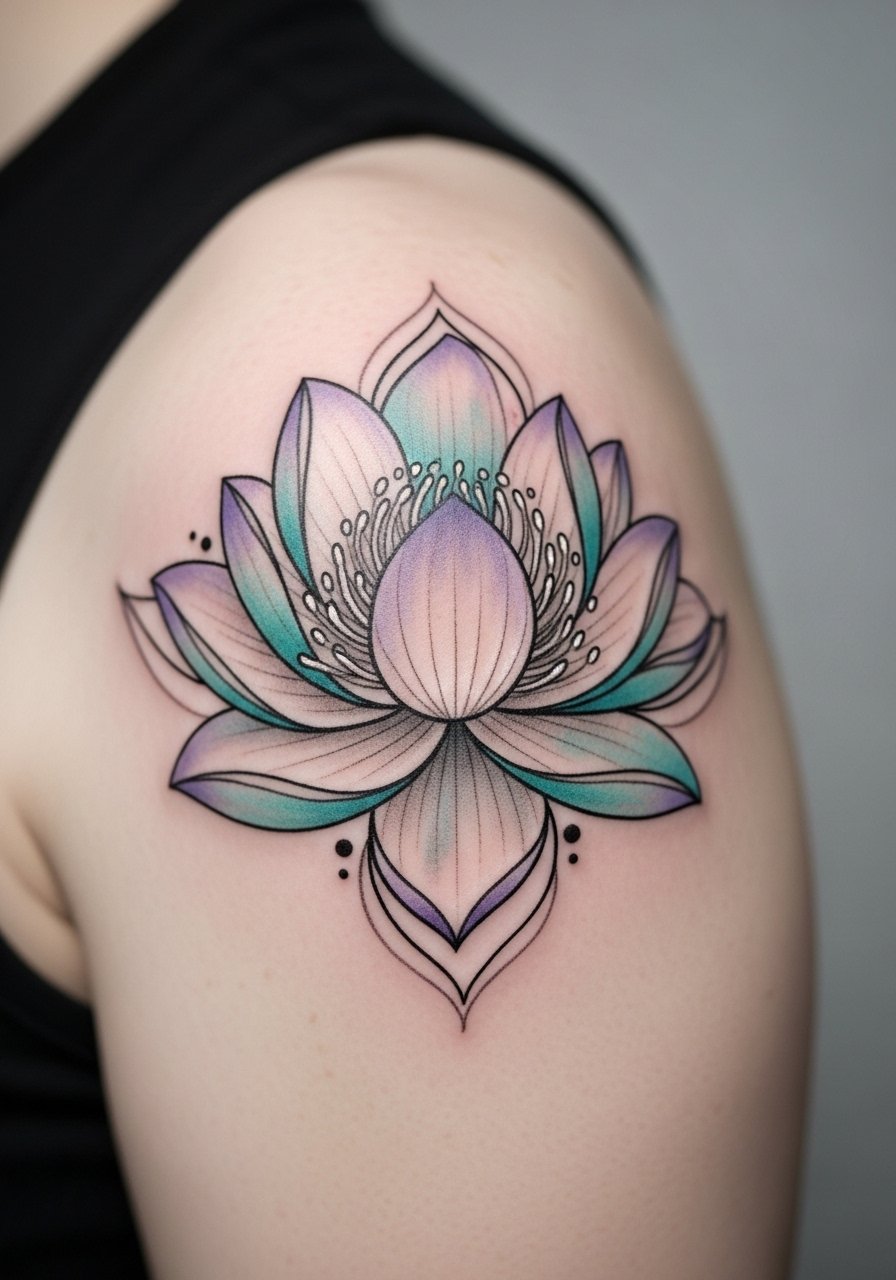
The lotus is spiritual and pairs beautifully with Japanese cloud elements. A watercolor approach can soften the iconography for a gentler vibe on the shoulder.
Style & Design Details
- Tattoo style: Watercolor / illustrative
- Recommended size: 4–8 inches for petal wash
- Best placement(s): Outer shoulder cap or upper chest
- Color vs. blackwork: Soft pastels and muted teals with light line anchors
- Design elements: Petal washes, soft edge bleed, thin ink outlines, subtle dotwork
- Longevity note: Watercolor fades faster; touch-ups common
- Who it suits: Those seeking spiritual symbolism with a painterly finish
Finding the Right Artist
Watercolor requires a steady hand and color knowledge. Ask to see healed watercolor pieces; avoid artists who only show fresh photos.
Aftercare & Healing Tips
Use gentle washing and a thin layer of After Inked moisturiser while peeling. Plan on color refreshes in a few years.
- Maple Leaves Falling Across the Cap — Seasonal and Warm
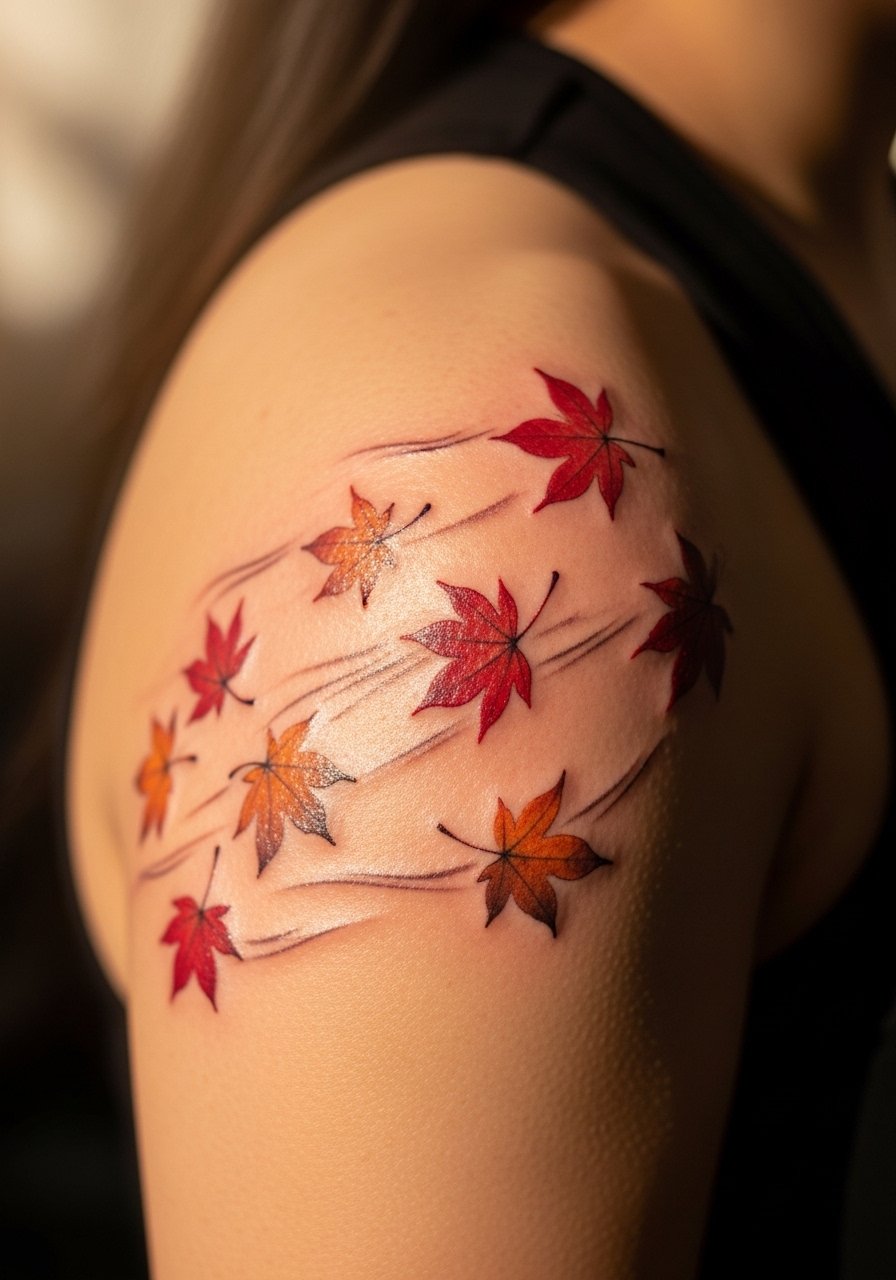
Maple leaves read as seasonal change and are a gorgeous way to build composition from shoulder to arm. They work in color or blackwork.
Style & Design Details
- Tattoo style: Neo-traditional illustrative
- Recommended size: 4–8 inches per cluster
- Best placement(s): Shoulder cap cascading to upper arm
- Color vs. blackwork: Warm reds/oranges or monochrome black with shading
- Design elements: Veined leaf detail, wind bars, negative space, stippling
- Longevity note: Reds can dull; SPF preserves vibrancy
- Who it suits: Nature lovers, those who like seasonal symbolism
Finding the Right Artist
Find an artist who handles delicate foliage detail well. Ask about pigment retention for reds on your skin tone.
Aftercare & Healing Tips
Use unscented soap and a light lotion like Aveeno fragrance-free lotion. Avoid tanning beds during healing.
- Tiger Head Shoulder Cap — Fierce Traditional Motif
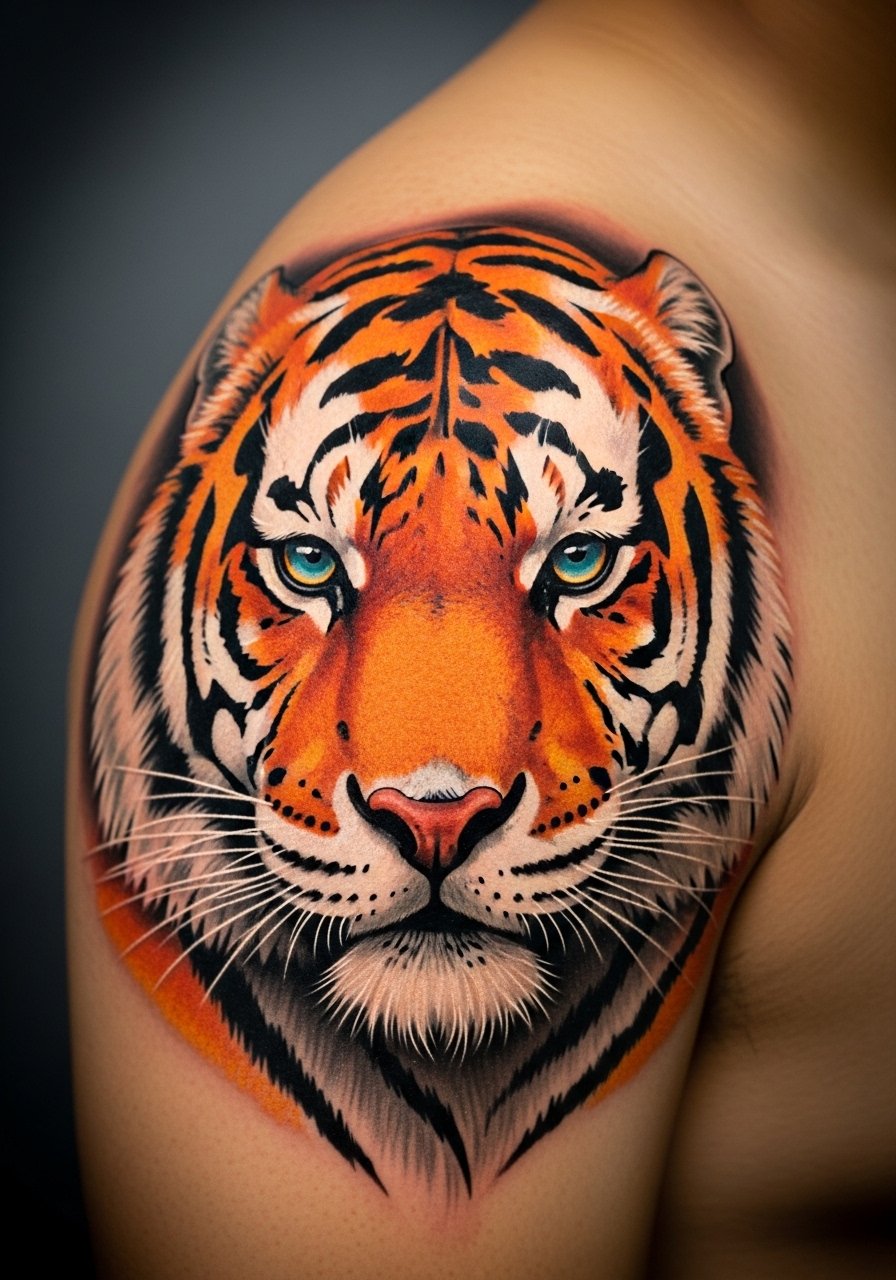
A tiger head makes a strong shoulder cap anchor. It’s protective symbolism and dramatic visual impact—perfect for someone who wants a bold animal portrait.
Style & Design Details
- Tattoo style: Traditional Japanese / neo-traditional
- Recommended size: 6–10 inches for facial detail
- Best placement(s): Deltoid cap, upper chest
- Color vs. blackwork: Full color with saturated oranges and deep blacks
- Design elements: Facial stripes, fierce eyes, whisker stroke detail, wind bars or peony background
- Longevity note: Bold black lines help preserve facial features over time
- Who it suits: Bold personalities, collectors of traditional motifs
Finding the Right Artist
Look for animal portraits in Japanese or neo-traditional style. Ask to see healed close-ups of facial features.
Aftercare & Healing Tips
Follow standard wash-and-moisturize instructions. During the first month, avoid heavy friction from straps or backpacks on the placement.
- Koi-to-Dragon Transition Shoulder Cap — Mythic Transformation
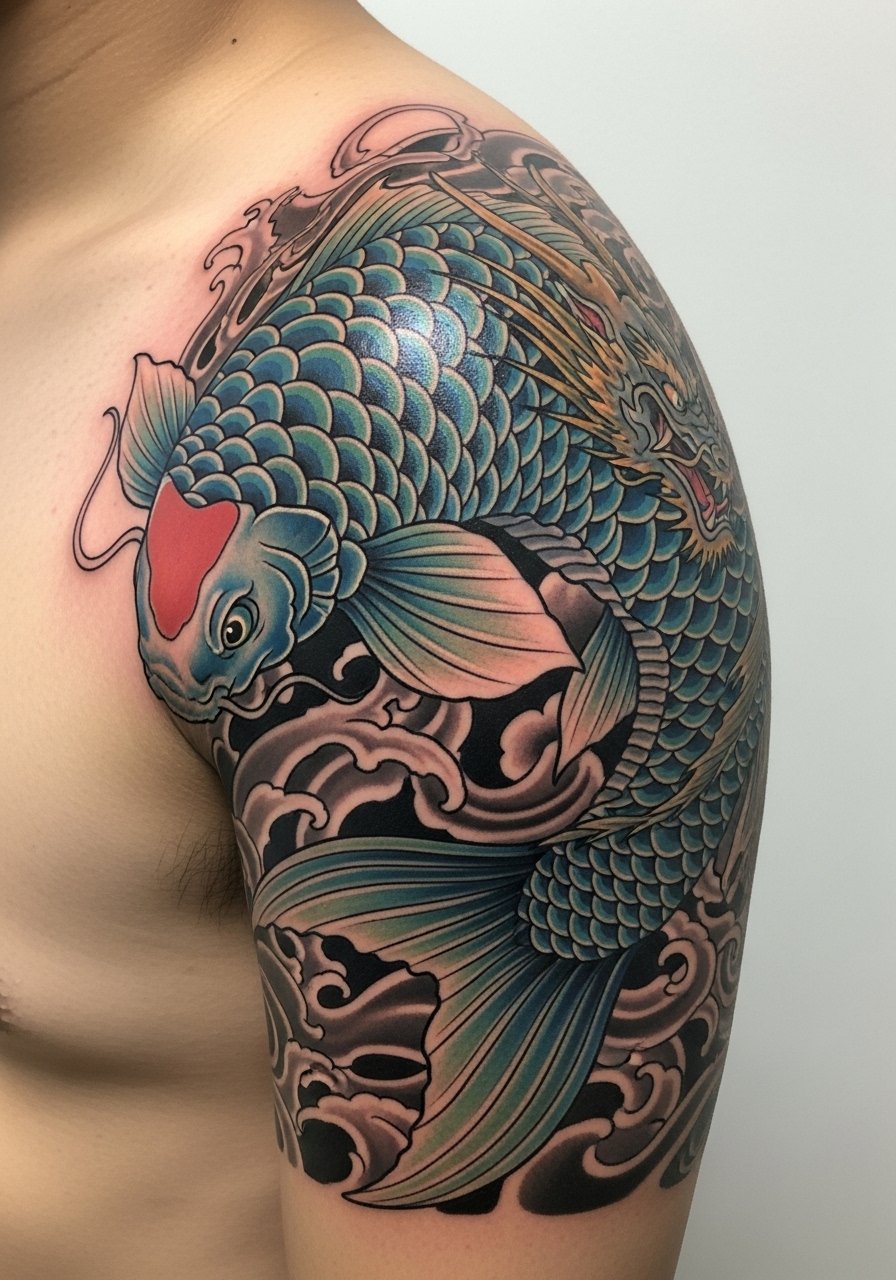
This concept shows transformation and achievement visually—ideal for a large shoulder cap that moves into the arm or chest. It’s dramatic and storytelling.
Style & Design Details
- Tattoo style: Illustrative / Irezumi hybrid
- Recommended size: Large (10–14 inches) for the morphing detail
- Best placement(s): Full shoulder cap wrapping to chest or arm
- Color vs. blackwork: Deep saturated blues and greens for scale contrast
- Design elements: Scale blending, transitional fins, wind bars, cloud texture
- Longevity note: Dense blackwork stabilizes transition lines for longevity
- Who it suits: People wanting a transformational narrative
Finding the Right Artist
Choose someone experienced with both koi and dragon anatomy. Ask to see progressive composition work, not just single-subject pieces.
Aftercare & Healing Tips
Use Saniderm for the early days if your artist recommends it. Keep the area moisturized with Hustle Butter Deluxe during peeling to preserve scale crispness.
- Fan (Sensu) with Geometric Pattern — Cultural Motif with Modern Twist
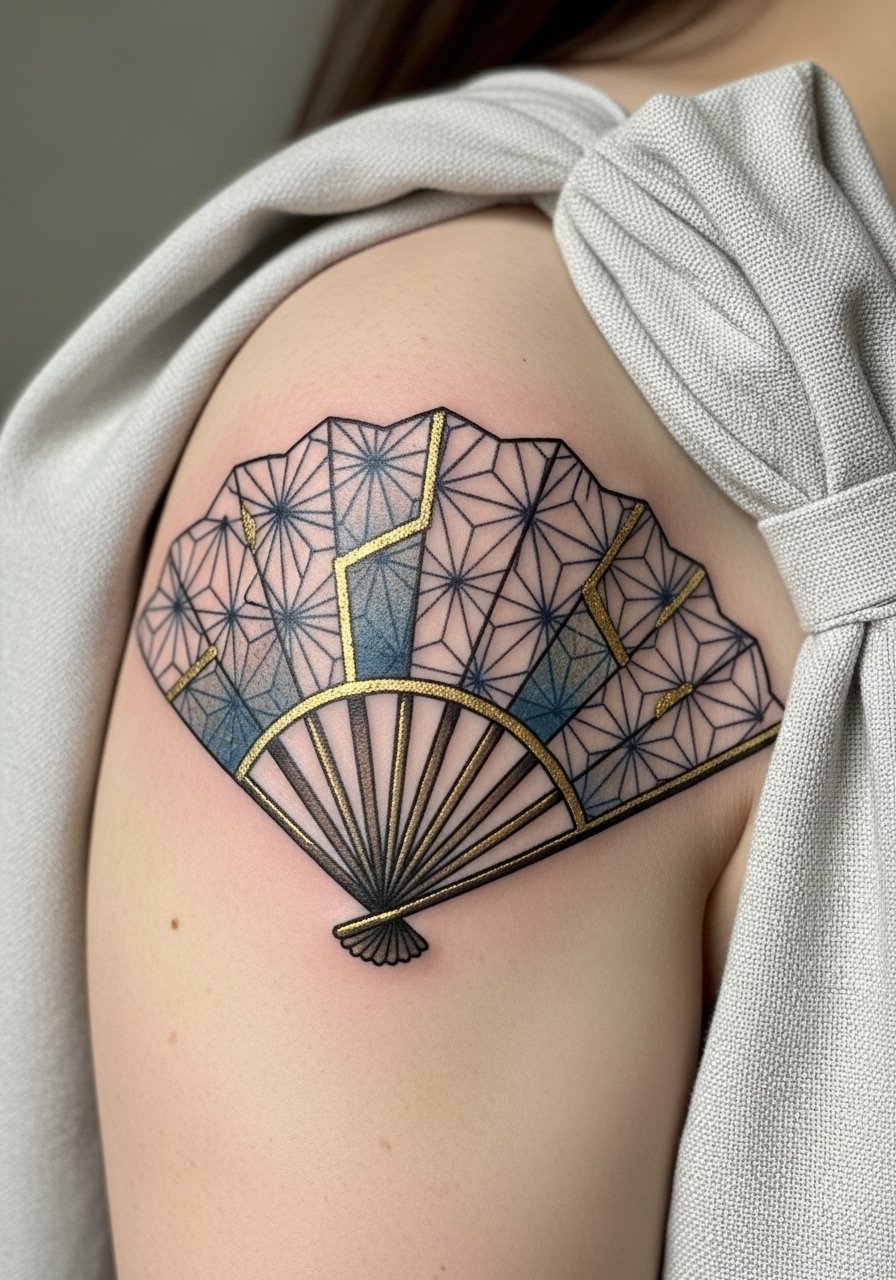
A sensu fan gives you a contained canvas on the shoulder cap for patterns, faces, or landscapes. It’s flexible and symbolic of elegance.
Style & Design Details
- Tattoo style: Neo-traditional with geometric elements
- Recommended size: 4–7 inches to keep pattern readable
- Best placement(s): Outer shoulder cap or clavicle wrap
- Color vs. blackwork: Muted palette with gold/yellow highlights
- Design elements: Fan ribs, repeating geometric motif, lacquer shine, small landscape or portrait inside the fan
- Longevity note: Fine geometric lines need clean execution to age well
- Who it suits: Lovers of contained design and pattern work
Finding the Right Artist
Portfolio should show geometric precision and ornamental surfaces. Ask how they transfer the stencil to fit the shoulder curve.
Aftercare & Healing Tips
Follow wash routine; use a thin fragrance-free lotion like Lubriderm while peeling. Avoid friction from clothing seams over the fan.
- Tengu Mask and Pine Sprigs — Mysterious Shoulder Cap
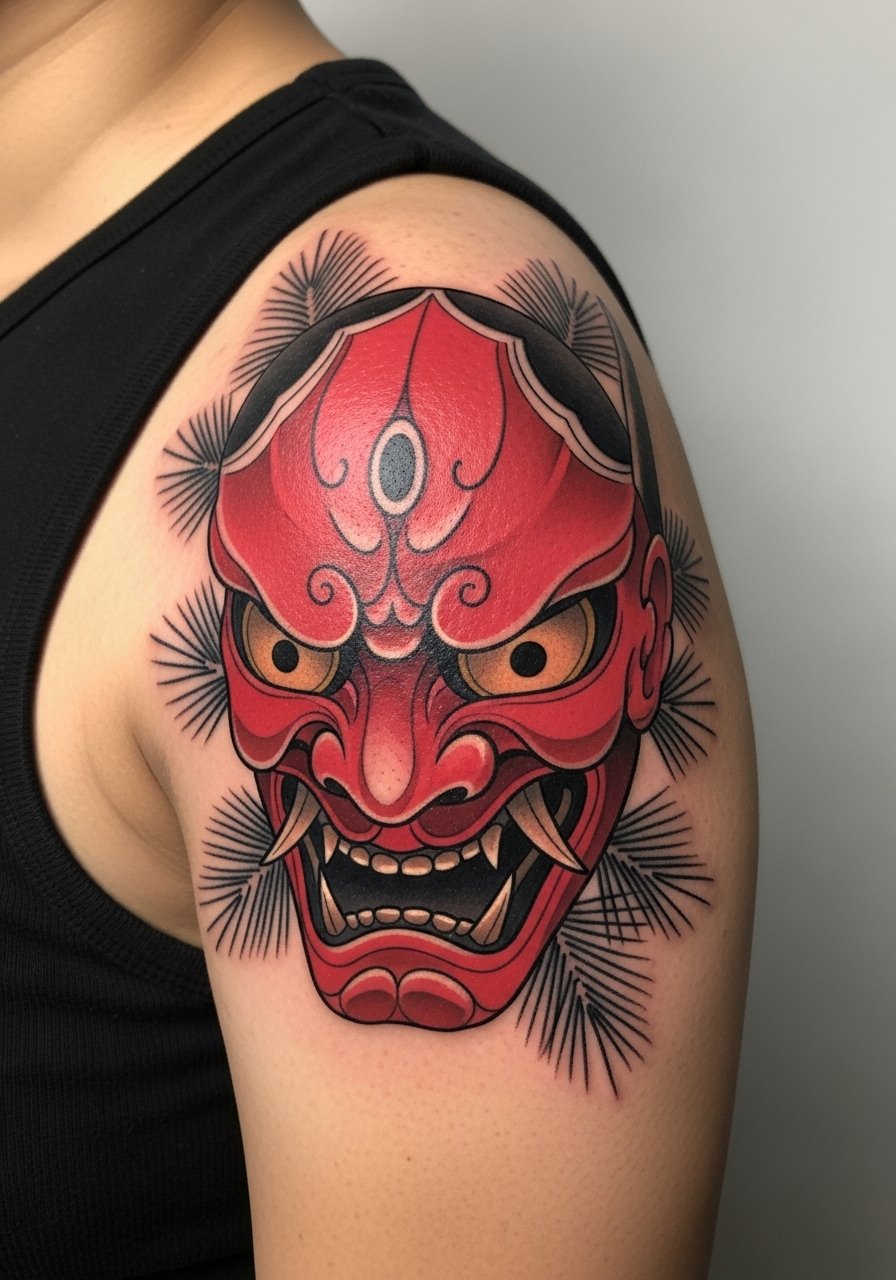
Tengu masks carry mysterious folklore energy. Paired with pine sprigs, the piece feels rooted in forest spirit themes and sits nicely as a cap accent.
Style & Design Details
- Tattoo style: Traditional Japanese illustrative
- Recommended size: 6–9 inches
- Best placement(s): Deltoid cap, near upper back for a slightly hidden feel
- Color vs. blackwork: Red and black dominant with green pine accents
- Design elements: Mask expression, nostril highlight, pine needles, negative space
- Longevity note: Strong blacks preserve mask expression over time
- Who it suits: Fans of folklore and darker mythology motifs
Finding the Right Artist
Pick someone who handles masks with mood and expression. Ask for healed images in similar pigment palettes.
Aftercare & Healing Tips
Use Saniderm for the first days for reduced scab disruption. After skin peels, apply After Inked moisturiser to keep the greens and reds vibrant.
- Sakura Storm — Dynamic Petals and Wind Bars
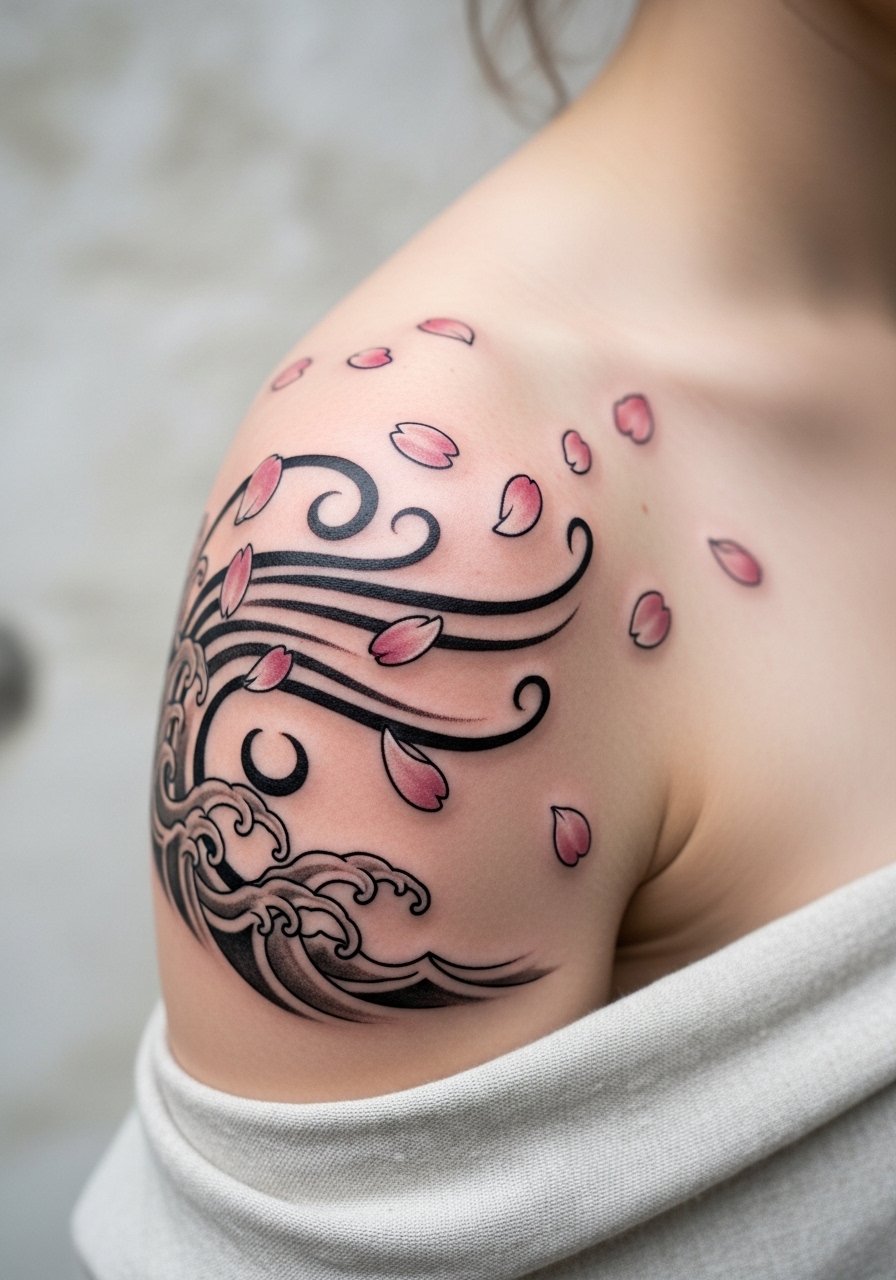
Sakura petals in motion create energy and softness at once. This composition sweeps across the shoulder and can be extended later into a sleeve.
Style & Design Details
- Tattoo style: Illustrative Japanese with motion elements
- Recommended size: 6–10 inches for flow
- Best placement(s): Shoulder cap wrapping toward upper arm
- Color vs. blackwork: Soft pinks with black wind bars for contrast
- Design elements: Floating petals, motion lines, wind bars, subtle shading
- Longevity note: Soft pinks need saturation and sun care
- Who it suits: Those who like delicate movement and floral themes
Finding the Right Artist
Look for artists who capture motion with petals and negative space. Ask how they handle light-pink saturation.
Aftercare & Healing Tips
Use a mild soap and thin unscented lotion. For long-term color retention, apply an SPF stick when outdoors.
- Geisha Profile with Fan — Portrait-Style Shoulder Cap
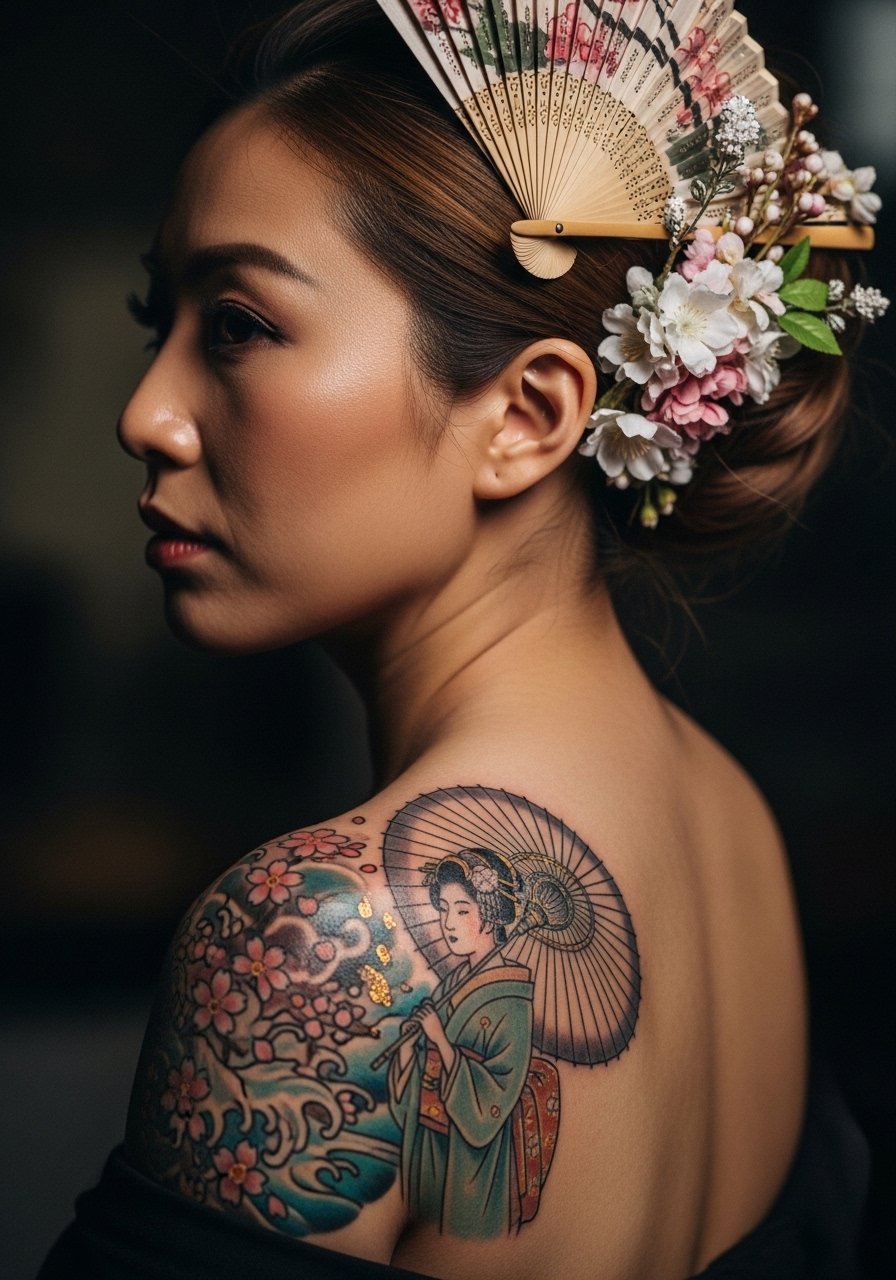
A geisha portrait needs subtle shading to keep the face elegant rather than cartoonish. On the shoulder cap it reads like a classic cameo.
Style & Design Details
- Tattoo style: Illustrative portrait with Japanese elements
- Recommended size: Medium-large (6–10 inches) for facial detail
- Best placement(s): Outer shoulder cap, slightly toward chest
- Color vs. blackwork: Muted palette with soft skin tones and black hair
- Design elements: Profile face, delicate line lashes, hair ornaments, fan pattern, soft wash shading
- Longevity note: Portrait detail can blur; strong anchors help
- Who it suits: Those wanting refined portraiture with cultural motifs
Finding the Right Artist
Portrait skill is key—look for realistic portrait work with decorative elements. Ask about healed detail-level on curved anatomy.
Aftercare & Healing Tips
Tiny facial lines need careful protection—avoid exfoliants and use Lubriderm unscented lotion during the flaking phase.
- Minimal Hannya Outline for a Modern Edge
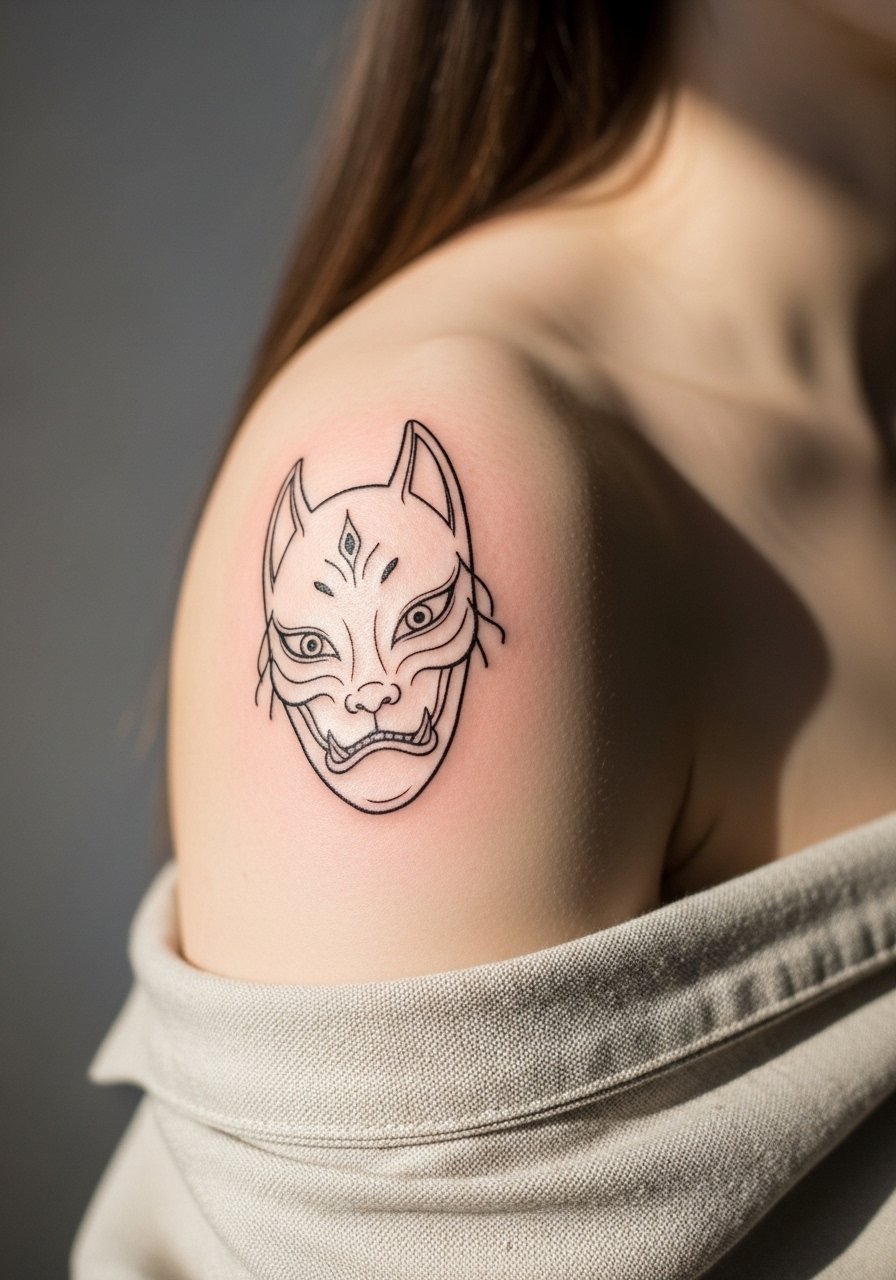
If you want the Hannya symbol but prefer minimalism, a thin-outline mask gives a modern edge without heavy color. It’s subtle and graphic.
Style & Design Details
- Tattoo style: Fine-line blackwork
- Recommended size: 3–6 inches
- Best placement(s): Shoulder cap or slightly toward collarbone
- Color vs. blackwork: Black single-needle lines only
- Design elements: Thin horns, minimalist teeth suggestion, hollow eyes, micro-shading
- Longevity note: Fine lines may need touch-ups; avoid sun during healing
- Who it suits: Minimalists, first-timers, contemporary aesthetic lovers
Finding the Right Artist
Choose a single-needle specialist with healed-line examples. Ask about how they plan to reinforce thin lines for longevity.
Aftercare & Healing Tips
Fine-line pieces benefit from careful moisturizing. Use After Inked lightly through peeling to avoid saturating the lines.
- Chrysanthemum Cluster with Cloud Fills — Classic and Balanced
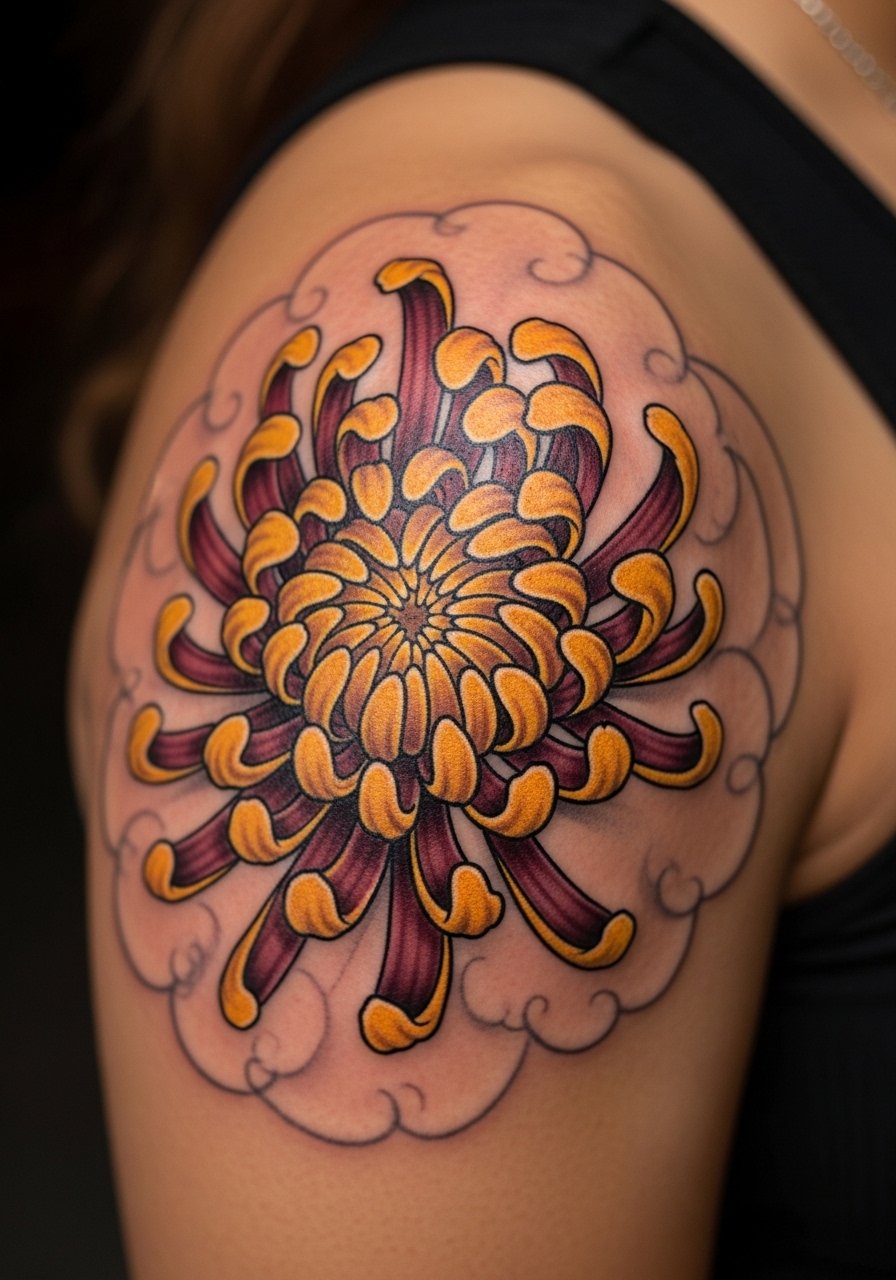
Chrysanthemums are a core Irezumi element. As a shoulder cap cluster, they provide ornate texture that layers well with other motifs.
Style & Design Details
- Tattoo style: Traditional Japanese floral
- Recommended size: 6–10 inches for petal layering
- Best placement(s): Shoulder cap, upper chest or back
- Color vs. blackwork: Rich golds and maroons with black cloud fills
- Design elements: Overlapping petals, concentric centers, cloud/wind bars, dotwork
- Longevity note: Dense petal shading holds well; reds may need refresh
- Who it suits: Fans of classic Japanese floral symbolism
Finding the Right Artist
Find portfolios with chrysanthemum clusters and healed photos. Confirm their approach to petal layering on rounded anatomy.
Aftercare & Healing Tips
Use an unscented soap and keep moisturized with Lubriderm while peeling. Watch for color settling at 4–6 weeks.
- Minimalist Mount Fuji with Rising Sun — Clean and Iconic
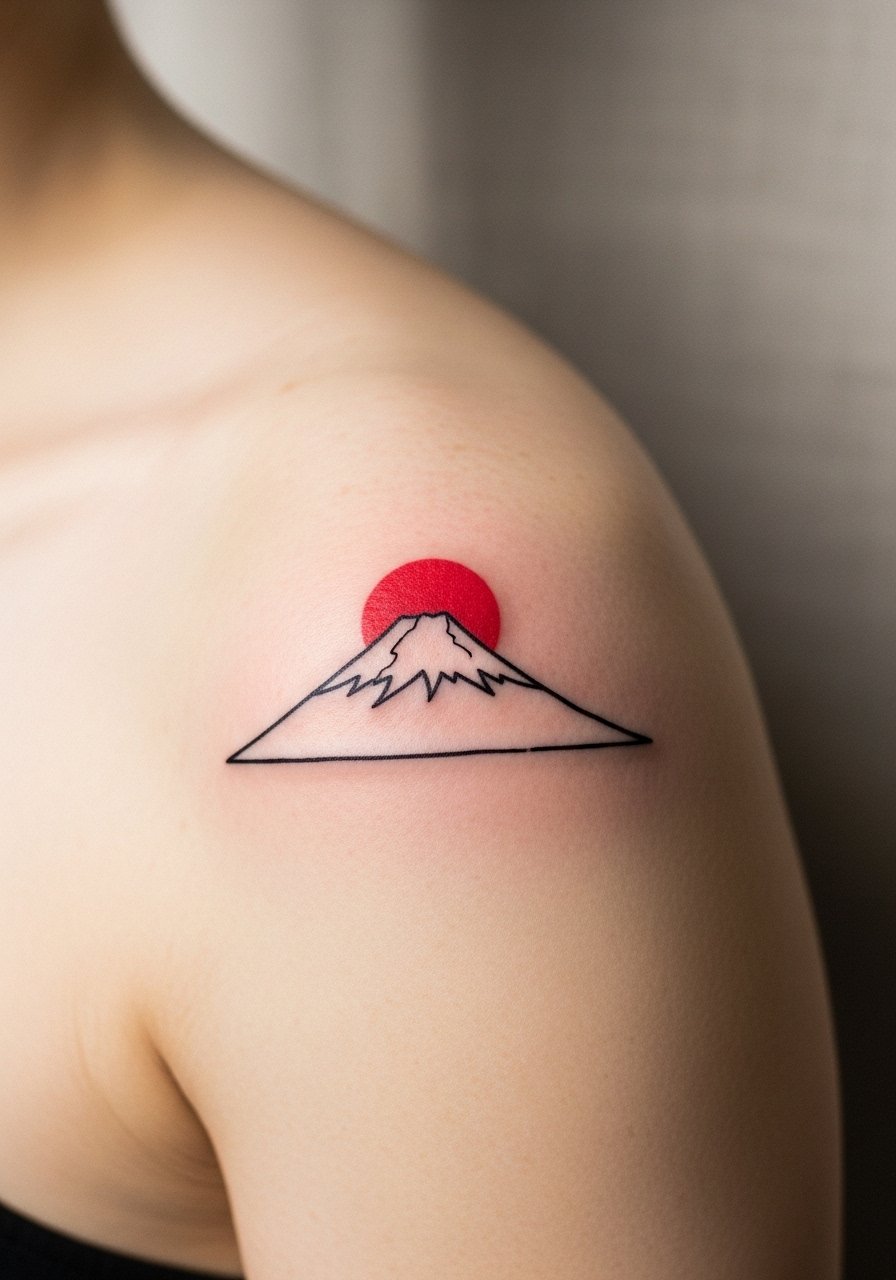
A minimal Mount Fuji with the red sun is iconic and clean. It’s a small, meaningful shoulder cap that reads clearly and keeps a cultural nod.
Style & Design Details
- Tattoo style: Minimalist / iconographic
- Recommended size: 3–5 inches
- Best placement(s): Upper deltoid or near clavicle
- Color vs. blackwork: Black outline with red sun accent
- Design elements: Crisp silhouette, small wave dashes, single-color accent
- Longevity note: Simple shapes hold well; red may soften
- Who it suits: Minimalists, travel-nostalgic collectors
Finding the Right Artist
Seek a clean-line artist that shows crisp small-scale silhouettes. Ask about line weight for longevity.
Aftercare & Healing Tips
Classic wash and lotion routine. For long-term protection, use an SPF 50 stick when the area is exposed.
- Floral Crest with Kanji — Personalized Cultural Blend
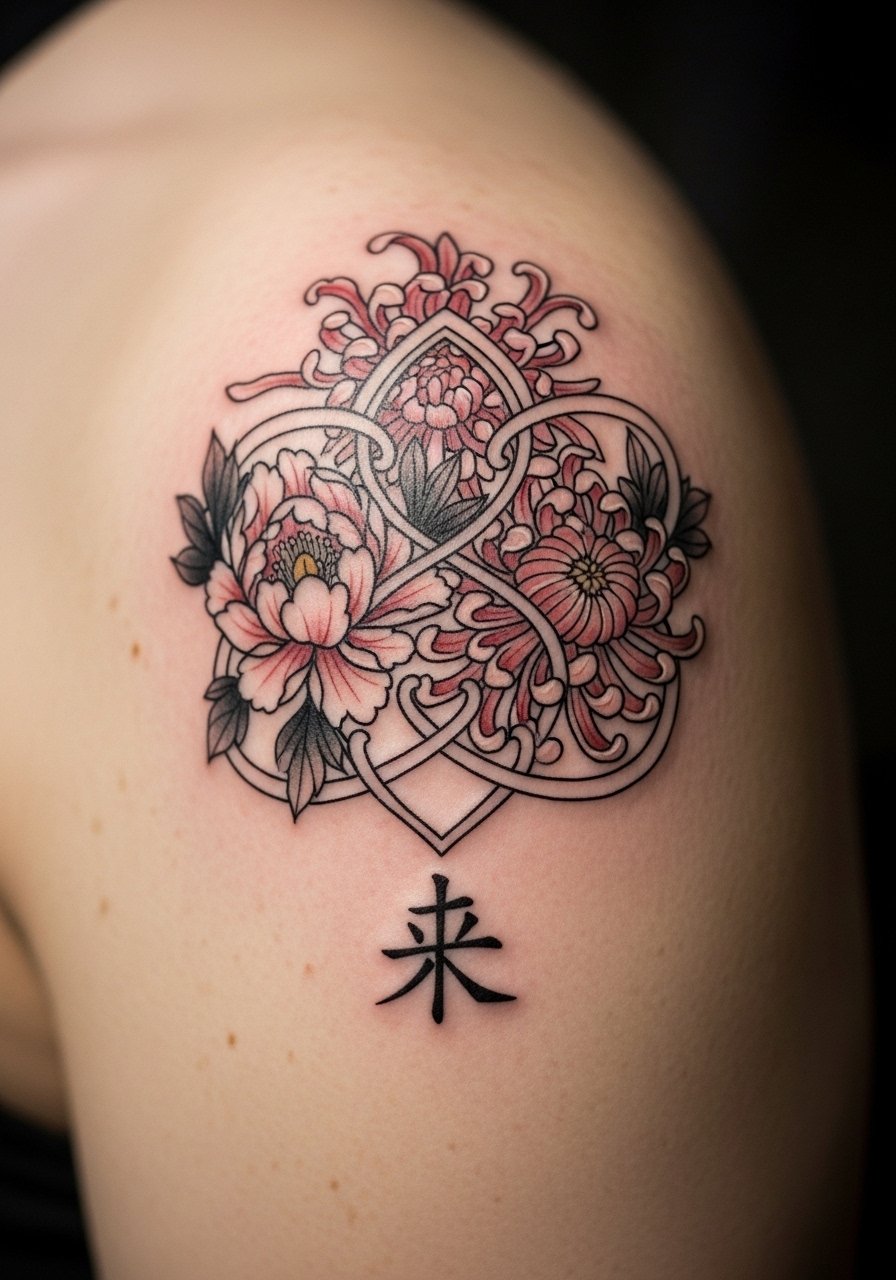
Combining florals and a single kanji—perhaps a meaningful word—creates a personalized crest on the shoulder cap. Keep kanji stylized and checked by a native reader.
Style & Design Details
- Tattoo style: Neo-traditional with typographic element
- Recommended size: 5–9 inches so kanji stays legible
- Best placement(s): Outer shoulder cap, upper chest
- Color vs. blackwork: Muted reds with black anchors
- Design elements: Integrated floral frames, bold kanji stroke, negative-space balances
- Longevity note: Kanji needs correct proportions and strong black to remain legible
- Who it suits: Those wanting personalized cultural statements
Finding the Right Artist
Bring references and verify kanji with a fluent reader before inking. Choose an artist who composes text with imagery.
Aftercare & Healing Tips
Care for letters like fine lines—clean gently, moisturize with After Inked, and schedule a touch-up if strokes fade.
- Watercolor Sakura and Crane Fusion — Ethereal Cap Piece
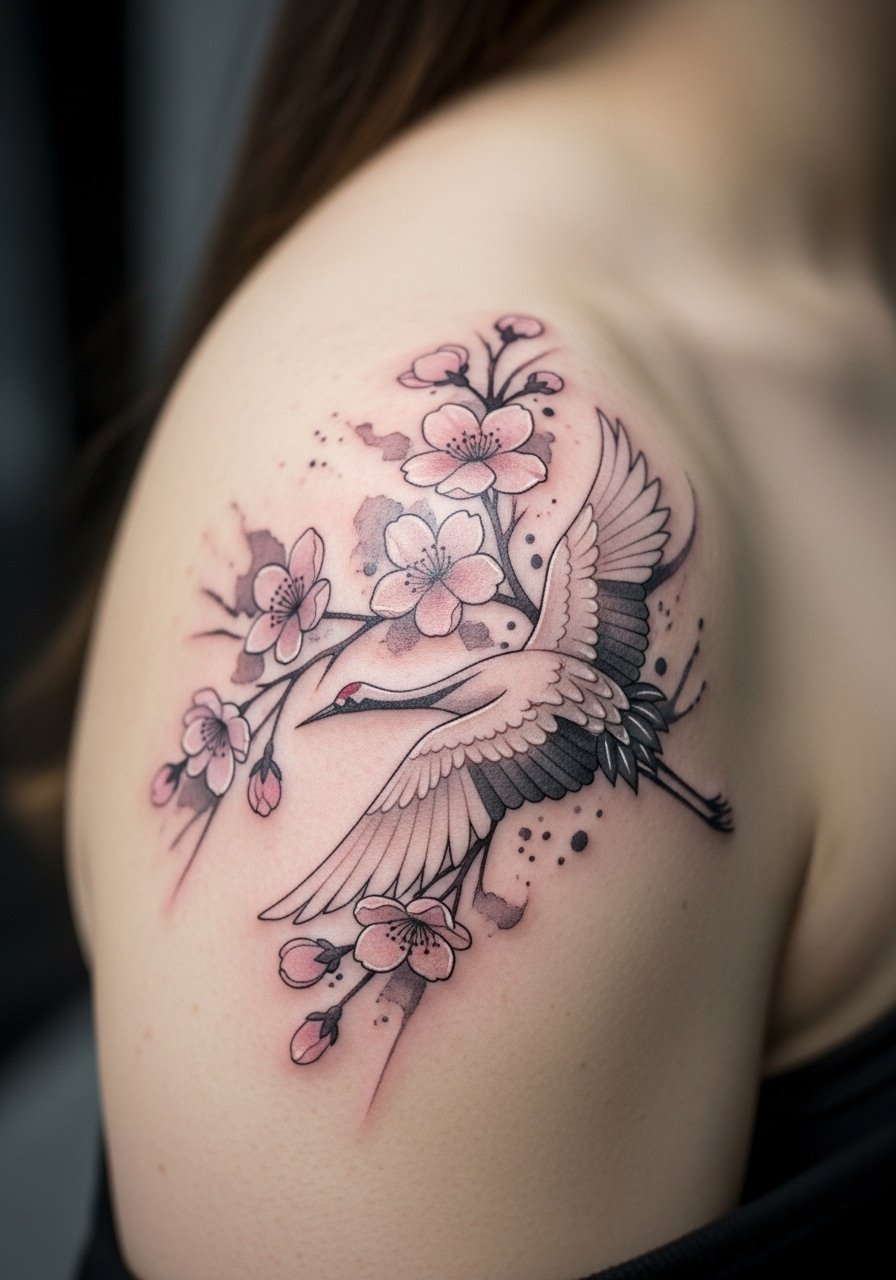
This fusion blends delicate sakura watercolor with a pale crane silhouette for an ethereal legal contrast. It’s light, wearable, and painterly.
Style & Design Details
- Tattoo style: Watercolor / illustrative
- Recommended size: 6–10 inches to balance wash and silhouette
- Best placement(s): Shoulder cap wrapping slightly toward back
- Color vs. blackwork: Pastel washes with soft gray anchors
- Design elements: Washed petals, feather-suggestive lines, soft gradient transitions, controlled bleed
- Longevity note: Watercolor requires touch-ups; keep out of direct sun
- Who it suits: Soft aesthetic fans, cottagecore-adjacent looks, watercolor admirers
Finding the Right Artist
Watercolor demands a practiced hand. Choose an artist with healed watercolor work and a feel for soft edges.
Aftercare & Healing Tips
Treat watercolor as delicate—Saniderm early, gentle washes, and moisturizing with a light lotion like Aveeno fragrance-free while peeling. Plan to refresh color in a couple of years.
Which Japanese shoulder cap tattoo spoke to you? These 25 ideas range from bold Irezumi classics to soft watercolor and fine-line takes, so you can match your aesthetic and pain tolerance. Save the images you love, bring a couple of favorites to your consult, and ask your artist about colorfast pigments and healed-photo references.
If you want one practical tip before your session: pick up a roll of Saniderm second-skin bandage. Personally, having a trusted aftercare balm like Hustle Butter Deluxe waiting at home makes the first week so much calmer. Which style are you leaning toward for your shoulder cap—traditional, minimal, or watercolor? Pin this and bring it to your consult so you and your artist can adapt a favorite idea into something that fits your anatomy and story.